


 |
 |
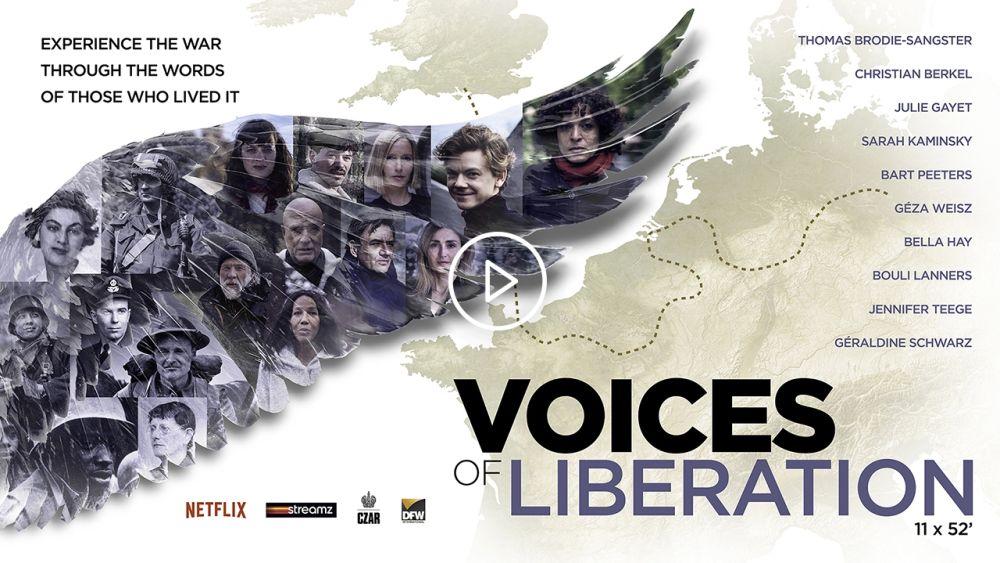 |
| Synopsis ‘Voices of Liberation’ is an 11-part documentary series about the international commemoration route which joins together the important milestones of the Second World War. The route forms a chain between the most important regions during the advance of the western allies. The series guides us along this route accompanied by local hosts who each one of them have a link with the Second World War. Along the actual facts told through the use of personal documents (letters, diaries, memoirs, …) they also tell us their personal stories, which offers the public an alternative view of the events. In addition, this television series does not only focus on the story of ‘the Allied liberator’, but also on that of ‘the civilian’, ‘the resistance fighter’, ‘the collaborator’ and even ‘the enemy’. Therefore, ‘Voices of Liberation’ wants to find a balance with this angle by giving a voice to all people, from different angles and with different backgrounds, which will give us insights into the minds of the people who lived, fought and in the best case, survived the Second World War. |
|
Documentary television series — Belgium / Netherlands |
Official production company
— Czar Film & TV: Official trailer — Czar
Film & TV, Vimeo: Episode 11 — Complete
English transcript: Episode 11 — SkyShowtime
Netherlands: Episode 11 — Apple TV
catalogue: Flanders Image — Film
information and credits: Cinematographer Jordan Vanschel
— Production information: |
|
| Voices of Liberation (2022) is an eleven-part historical documentary series directed by Belgian filmmaker Koen Mortier. Combining archival footage, personal letters, diaries, memoirs and eyewitness accounts, the series tells the story of the liberation of Europe during the Second World War. It follows the advance of the Allied forces from southern England and the Normandy landings through France, Belgium and the Netherlands to Germany and Berlin, presenting the war through the personal experiences of soldiers, civilians, resistance fighters and others whose lives were profoundly affected by the conflict. Each episode is guided by a presenter with a personal or family connection to the history of the war. The final episode, The End of WWII in Europe, focuses on the Battle of Berlin, the advance of the Soviet Red Army, the collapse of Nazi Germany and the end of the war in Europe in May 1945. Presented by German-French journalist and author Géraldine Schwarz, it explores the final days of the Nazi regime, the suffering of Berlin's civilian population and the complex consequences of the Soviet occupation. Through historical footage, contemporary diaries and personal testimonies, the episode offers a multifaceted account of the destruction of Berlin and the final days of the war. Produced by Belgian production company CZAR Film & TV, with Eurydice Gysel as producer and Koen Mortier as director and writer, the series premiered on Netflix in the Netherlands in May 2022 and was subsequently released on Streamz in Belgium in September 2022. International distribution is handled by Dutch FilmWorks. |
| Bio director Koen Mortier has been active in the film world as an author, director and producer. He set his first step into the film industry with 2 shorts, Ana Temnei and A Hard Day’s Work. In 2007 Koen directed Ex Drummer, which received many festival selections and prizes and was sold to more then 20 countries. Three years later his second film followed: 22nd May that also won prizes and was sold to 10 countries. His most recent feature film Angel had its international premiere at Toronto International Film Festival. Currently he is working on Voices of Liberation and Skunk. |
| The
Red Army's capture of Berlin and the surrender of the Nazis are
depicted by an American war reporter's writing and an interrogation
interview
|
| Belgium
/ Netherlands ⁕ Netflix / Streamz ⁕ May '22
⁕ The End of WWII in Europe ⁕ Average Runtime:
54 minutes ⁕ Episode 1x11 ⁕ May 2, 2022
⁕ WarHistory ⁕ 11 episodes
|
 |
||
| © CZAR.be Film & TV Voices of Liberation |
||
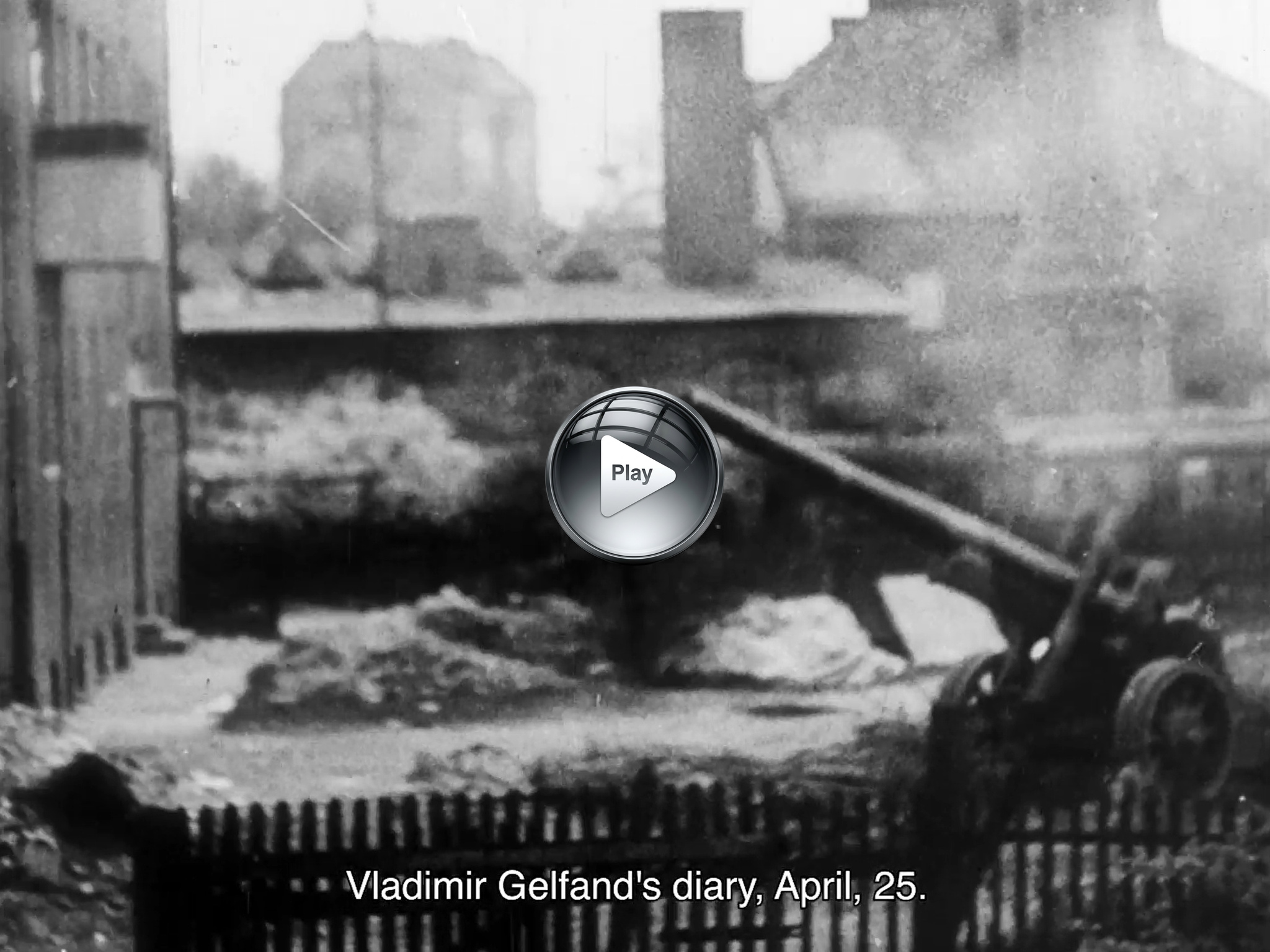
| "I asked the German women where do they live in broken German. I wanted to know why did they leave their house. And they spoke with horror about the grief that the front line soldiers had caused them during the first night the Red Army was here. They lived not far from where we were stationed and from my bicycle rides. So I could easily go to their home and sort out the whole story in detail. Moreover, the wonderful girl attracted me most of all. She became so accidentally and so unexpectedly for herself and her parents the reason for so many worries. I went with them. They were wealthy. They had a huge two-storey house with luxurious furnishings and excellent interior finishes and wall and ceiling paintings. The family was numerous. When our soldiers came, they sent everyone to live in the basement. And the youngest woman and the most beautiful one they took with them and started to sneer at her. 'They poked me here', the beautiful German woman explained, lifting up her skirt. 'The entire night. There were so many of them. I was a virgin.' She sighed and started crying. 'They spoiled my youth. Among them there were old men, pimply men, and all of them climbed on me and poked, and there were at least 20 of them. Yes, yes.' And she cried even harder. 'They rped my daughter in front of me,' her poor mother added. And they can return and rpe my girl again." |
||
 |
||
| © CZAR.be Film & TV Voices of Liberation |
||
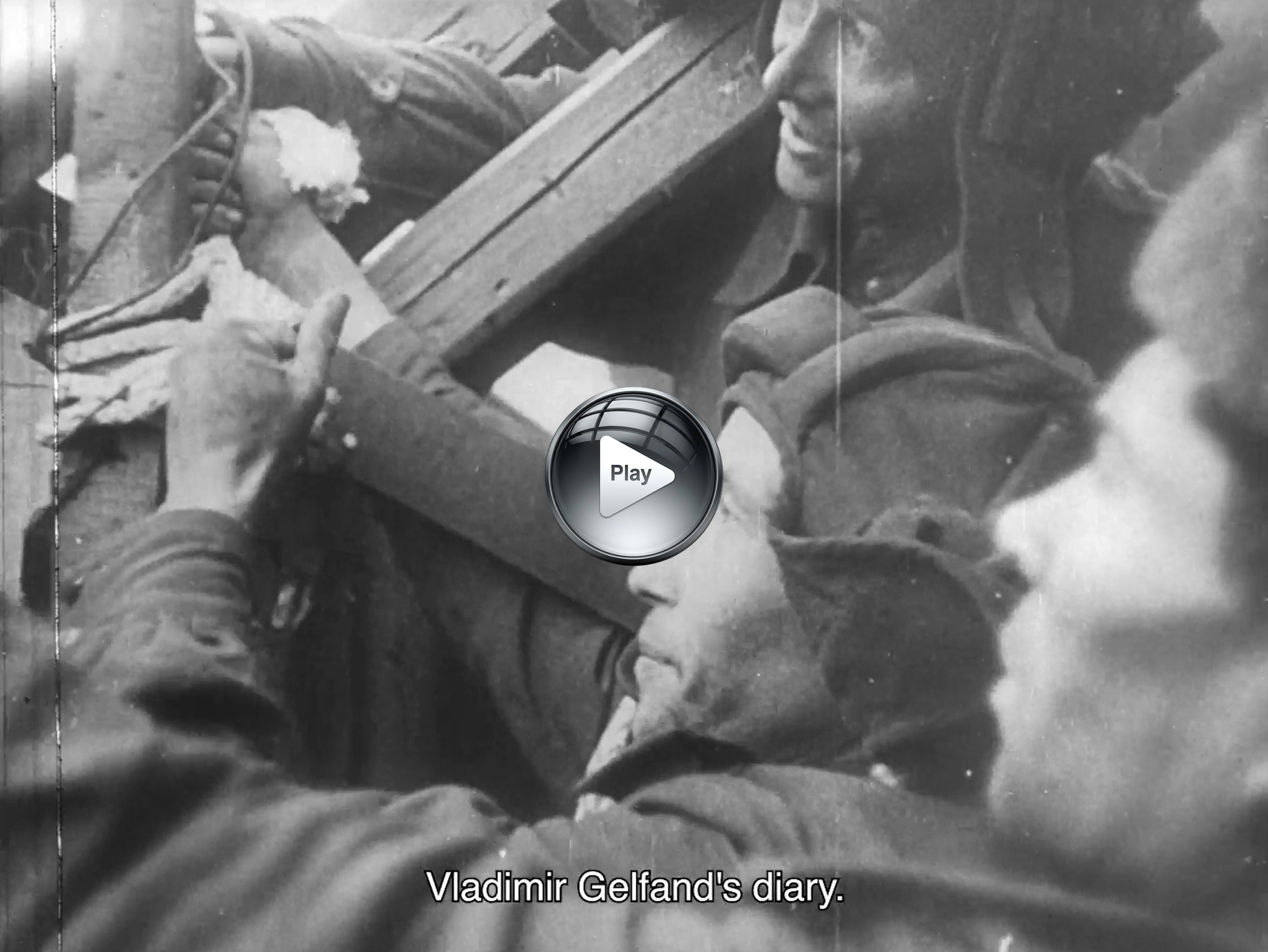
| "On the evening of April 30, a*tillery preparation of the division's units began. By this time, our soldiers were on the second floor of the building. The Germans were downstairs. I suddenly noticed them waving the signal flags. The shting stopped. And then they came out to meet the foremost people of our army." |

| Zusammenfassung „Voices of Liberation“ ist eine elfteilige Dokumentarserie über die internationale Gedenkroute, die wichtige Stationen des Zweiten Weltkriegs miteinander verbindet. Sie bildet eine Kette zwischen den bedeutendsten Regionen des Vormarsches der westlichen Alliierten. Die Serie führt entlang dieser Route, begleitet von Gastgeberinnen und Gastgebern vor Ort, die jeweils einen Bezug zum Zweiten Weltkrieg haben. Neben den historischen Fakten, die anhand persönlicher Dokumente wie Briefen, Tagebüchern und Erinnerungen erzählt werden, berichten sie auch von ihren eigenen Erlebnissen und eröffnen dem Publikum so eine andere Sicht auf die Ereignisse. Die Fernsehserie konzentriert sich nicht nur auf die Geschichte des „alliierten Befreiers“, sondern auch auf die des „Zivilisten“, des „Widerstandskämpfers“, des „Kollaborateurs“ und sogar des „Feindes“. Mit diesem Blickwinkel will „Voices of Liberation“ ein ausgewogenes Bild schaffen und Menschen mit unterschiedlichen Perspektiven und Hintergründen zu Wort kommen lassen. So erhalten wir Einblicke in die Gedankenwelt der Menschen, die den Zweiten Weltkrieg erlebt, gekämpft und im besten Fall überlebt haben. |
| Dokumentarfilmserie — Belgien / Niederlande Folge 11: „The End of WWII in Europe“ Erscheinungsdatum: 2. Mai 2022 Regie und Drehbuch: Koen Mortier Produzentin: Eurydice Gysel Produktion: Czar Film & TV (Belgien) Koproduktion: Interstellar Pictures / NL Film (Niederlande) Schnitt: Manu Van Hove Kamera (Folge 11): Jordan Vanschel Originalmusik: Soulsavers Internationaler Vertrieb: Dutch FilmWorks Ausstrahlung: Netflix Niederlande (Mai 2022); Streamz Belgien (September 2022) Genre: Historische Dokumentation / Zweiter Weltkrieg Zahl der Folgen: 11 Laufzeit von Folge 11: 54 Minuten Moderatorin von Folge 11: Géraldine Schwarz, deutsch-französische Journalistin und Autorin Vertrieb: Dutch FilmWorks Veröffentlichung auf Netflix Niederlande: Mai 2022 Veröffentlichung auf Streamz Belgien: September 2022 |
Offizielle Produktionsfirma — Czar Film & TV: Offizieller Trailer — Czar Film & TV, Vimeo: Folge 11 — vollständiges englisches Transkript: Folge 11 — SkyShowtime Niederlande: Folge 11 — Apple-TV-Katalog: Flanders Image — Filminformationen und Stabangaben: Kameramann Jordan Vanschel — Produktionsinformationen: |
|
|
Voices of Liberation (2022) ist
eine elfteilige historische Dokumentarserie des belgischen Filmemachers
Koen Mortier. Die Serie verbindet Archivaufnahmen, persönliche
Briefe, Tagebücher, Erinnerungen und Augenzeugenberichte und
erzählt die Befreiung Europas während des Zweiten Weltkriegs. |
Biografie des Regisseurs Koen Mortier ist als Autor, Regisseur und Produzent in der Filmbranche tätig. Seine ersten Schritte in der Filmindustrie machte er mit den beiden Kurzfilmen Ana Temnei und A Hard Day’s Work. 2007 führte Koen Regie bei Ex Drummer, der auf zahlreichen Festivals ausgewählt und ausgezeichnet und in mehr als 20 Länder verkauft wurde. Drei Jahre später folgte sein zweiter Film, 22nd May, der ebenfalls Preise gewann und in zehn Länder verkauft wurde. Sein jüngster Spielfilm Angel feierte seine internationale Premiere beim Toronto International Film Festival. Derzeit arbeitet er an Voices of Liberation und Skunk. |
| Die
Einnahme Berlins durch die Rote Armee und die Kapitulation der
Nationalsozialisten werden anhand des Berichts eines amerikanischen
Kriegskorrespondenten und eines Verhörprotokolls.
|
|
Belgien
/ Niederlande ⁕ Netflix / Streamz ⁕ Mai 2022 ⁕ The End of WWII in
Europe ⁕ 54 Minuten ⁕ Folge 1x11 ⁕ 2. Mai 2022 ⁕ Kriegsgeschichte ⁕ 11
Folgen
|
| Aus dem Tagebuch von Wladimir Gelfand (25. April 1945) In gebrochenem Deutsch fragte ich die deutschen Frauen, wo sie wohnten. Ich wollte wissen, warum sie ihr Haus verlassen hatten. Entsetzt erzählten sie von dem Leid, das ihnen die Frontsoldaten in der ersten Nacht zugefügt hatten, als die Rote Armee hier war. Sie wohnten nicht weit von unserem Standort und von den Wegen meiner Fahrradtouren entfernt. Deshalb konnte ich leicht zu ihrem Haus fahren und die ganze Geschichte im Einzelnen erfahren. Am meisten zog mich außerdem das wunderschöne Mädchen an. Ganz zufällig und völlig unerwartet war sie für sich selbst und ihre Eltern zum Grund so vieler Sorgen geworden. Ich ging mit ihnen. Sie waren wohlhabend. Sie hatten ein riesiges zweistöckiges Haus mit luxuriöser Einrichtung, hervorragender Innenausstattung sowie Wand- und Deckenmalereien. Die Familie war groß. Als unsere Soldaten kamen, schickten sie alle in den Keller. Die jüngste und schönste Frau aber nahmen sie mit und begannen, sie zu verhöhnen. „Hier haben sie mich gestoßen“, erklärte die schöne Deutsche und hob ihren Rock. „Die ganze Nacht. Es waren so viele. Ich war Jungfrau.“ Sie seufzte und begann zu weinen. „Sie haben mir meine Jugend geraubt. Unter ihnen waren alte Männer und Männer mit Pickeln, und alle stiegen auf mich und stießen zu; es waren mindestens zwanzig. Ja, ja.“ Sie weinte noch heftiger. „Sie haben meine Tochter vor meinen Augen vergewaltigt“, fügte ihre unglückliche Mutter hinzu. „Und sie können zurückkommen und mein Mädchen erneut vergewaltigen.“ |
| Aus dem Tagebuch von Wladimir Gelfand (30. April 1945) Am Abend des 30. April begann die Artillerievorbereitung der Divisionseinheiten. Zu diesem Zeitpunkt befanden sich unsere Soldaten im zweiten Stock des Gebäudes. Die Deutschen waren unten. Plötzlich bemerkte ich, dass sie Signalflaggen schwenkten. Der Beschuss hörte auf. Dann kamen sie heraus, um den vordersten Soldaten unserer Armee entgegenzugehen. |

 English