• museum-digital berlin "Vladimir Natanovič Gel'fand"
  •  


    Person/Institution: Vladimir Natanovič Gel'fand
     
    Wladimir Natanowitsch Gelfand (russisch Влади́мир Ната́нович Ге́льфанд; wiss. Transliteration Vladimir Natanovič Gel’fand; * 1. März 1923 in Nowoarchangelsk, Ukrainische SSR; † 25. November 1983 in Dnepropetrowsk)
    war ein Offizier der Roten Armee im Zweiten Weltkrieg. Er arbeitete nach dem Krieg bis zu seinem Tod als Berufsschullehrer.
     
    Die Erlebnisse während seiner Militärzeit zeichnete Gelfand in einem Tagebuch auf, das in unbearbeiteter Form unter dem Titel Deutschland-Tagebuch 1945–1946: Aufzeichnungen eines Rotarmisten im Jahr 2005 in Deutschland erschien. Es ist das erste und einzige private Tagebuch eines Offiziers der Roten Armee, das in deutscher Sprache vorliegt. 
     
    [Stand der Information: 22.01.2024]


    Ereignisse

    Empfangen
    wer Zur Personenseite: Gelfand, Natan
    Besessen
    wann
    wo  More about the place

    Bezug zu Personen oder Körperschaften


    Museum Berlin-Karlshorst / Sammlung
    Objekte [208288]


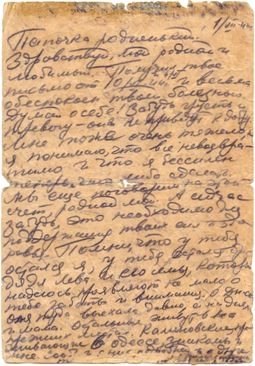
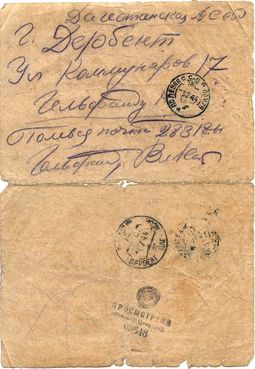
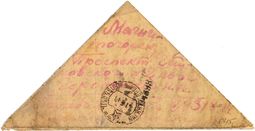
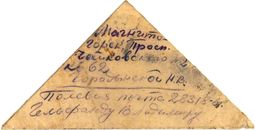
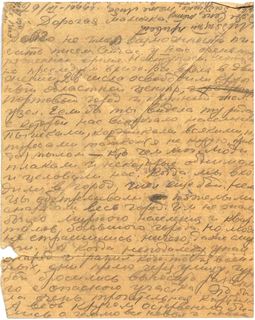
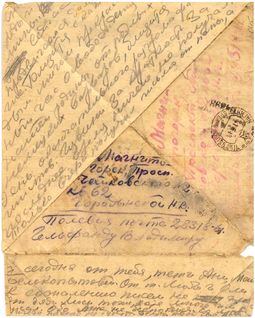
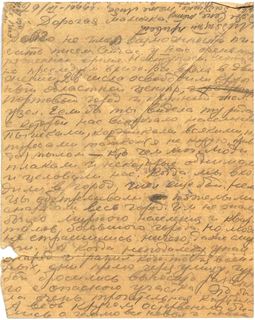
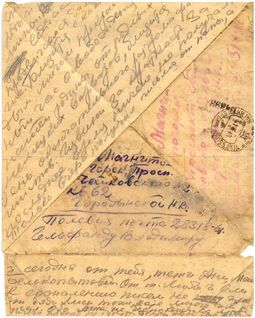
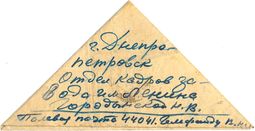
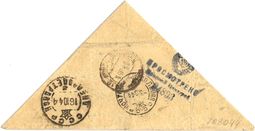
    Feldpostbrief an den Rotarmisten V. Gelfand von seinen Vater, Juli 1944
     

    Beschreibung

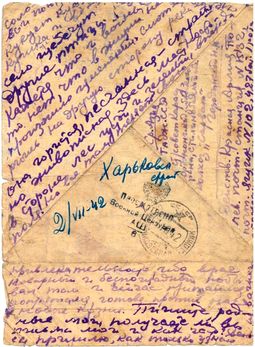
    Feldpostbrief des Rotarmisten Vladimir Natanovič Gel’fand an seinen kranken Vater Natan Gelfand, geschrieben am 1. Juli 1944.
    Gelfand war bis Oktober 1946 Leutnant der Roten Armee und Mitglied der Gruppe der sowjetischen Streitkräfte in Deutschland. Gelfand war Teilnehmer an der Schlacht um Berlin (301. Schützendivision der 5. Stoßarmee) und Autor des ersten in deutscher Sprache veröffentlichten Originaltagebuchs eines Offiziers der Roten Armee.


    Material/Technik

    Papier / handgescrieben

    Maße

    Höhe: 21,8 cm, Breite: 14,5 cm

    Sprache

    Русский

    1/VII-44 г.
    Папочка родненький!
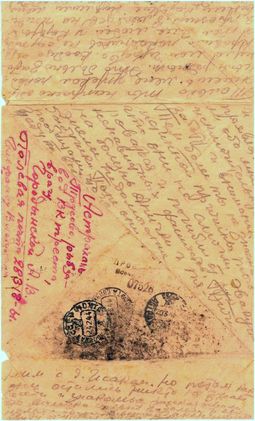
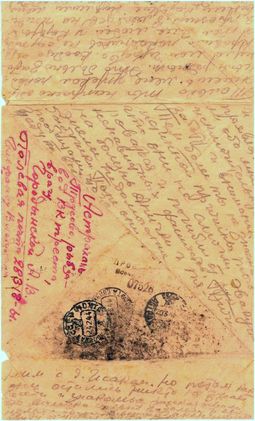
    Здравствуй мой родной и любимый. Получил твое письмо от 10/VI-44 г и весьма обеспокоен твоей болезнью. Думай о себе! Забудь грусть и тревогу – они не приведут к добру. Мне тоже очень тяжело, и я понимаю, что все невозвратимо и что бессилен теперь что-либо сделать. Мы еще поговорим на этот счет, родной мой. А сейчас забудь, это необходимо для поддержания твоих сил и здоровья. Помни, что у тебя остался я, у тебя остался дядя Лева, и его семья, которые надеюсь проявляют не мало о тебе заботы и внимания. О Дн-ск. Оля туда выехала давно, а на днях и мама. Остальные живут на прежних местах. Калиновские, проживающие в Одессе, знакомы и мне. Сообщи о них подробней и о друге т/утрачено 2-3 слова/. Я с ними спишусь. Владимир.
     
    Дагестанская АССР.
    Г. Дербент.
    Ул. Коммунаров 17
    Гельфанду Н.С.
    Полевая почта 28318-ы
    Гельфанду Вл. Нат.
     
    (Почтовые штемпели:) СССР. Полевая почта.3.7.44.
    СССР. Дербернт. Даг. АСССР. 10.7.44
    (Штамп:) Просмотрено военной цензурой. 03648


    Ereignisse

    Besessen
    wann
    wo  More about the place
    Besessen
    wer Zur Personenseite: Museum Berlin-Karlshorst
    wann
    wo  More about the place


    Bezug zu Personen oder Körperschaften


    Museum Berlin-Karlshorst / Sammlung
    Objekte [208269]


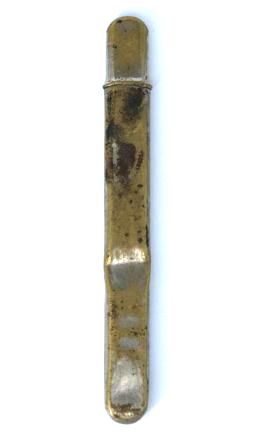
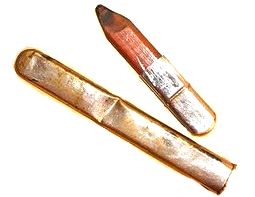
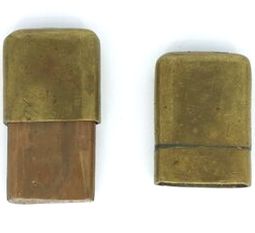
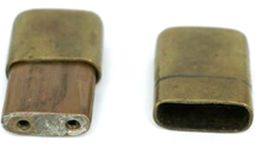
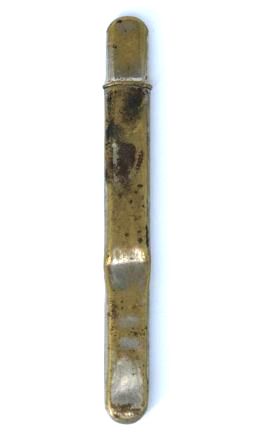
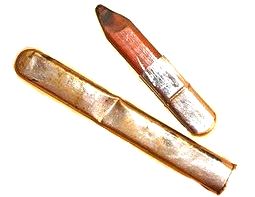
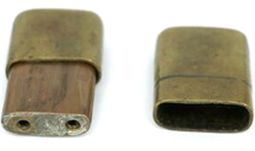
    Bleistift eines Leutnants der Roten Armee, Sowjetunion, ohne Datierung


    Material/Technik

    Holz, Metall

    Maße

    Länge: 9,0 cm, Breite: 0,6 cm

    Beschreibung

    Bleistift in Metallhülle. Das Objekt stammt aus dem Nachlass von Wladimir Gelfand, der bis Oktober 1946 Leutnant in der Roten Armee war und dann Mitglied der Gruppe der sowjetischen Streitkräfte in Deutschland wurde. Gelfand war Teilnehmer an der Schlacht um Berlin (301. Schützendivision der 5. Stoßarmee) und Autor des ersten in deutscher Sprache veröffentlichten Originaltagebuchs eines Offiziers der Roten Armee.


    Ereignisse

    Besessen
    wann
    wo  More about the place

    Bezug zu Personen oder Körperschaften

    Museum Berlin-Karlshorst / Sammlung
    Objekte [208268]


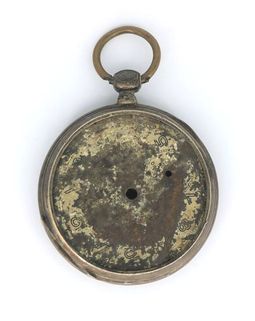
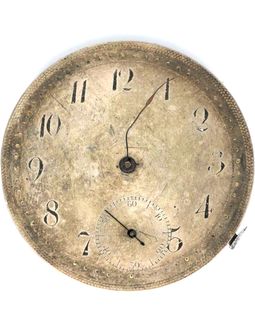
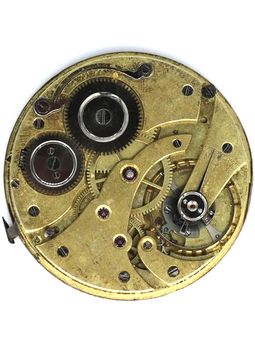
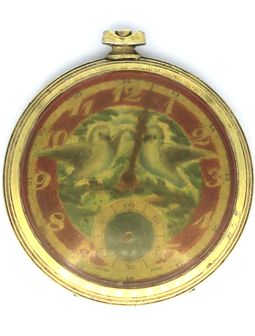
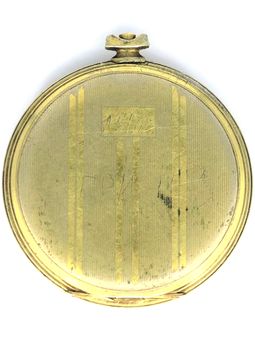
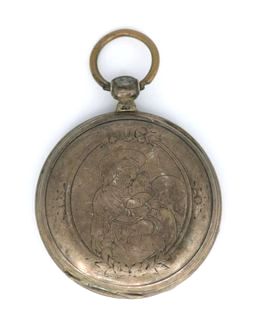
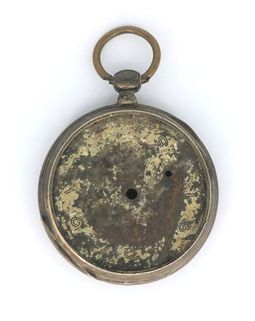
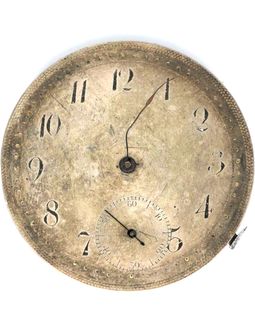
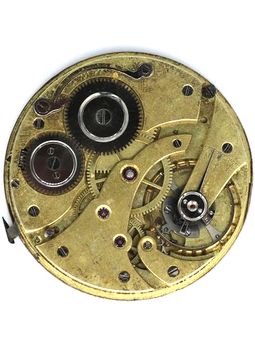
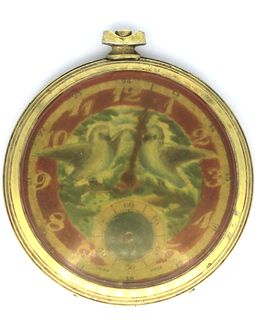
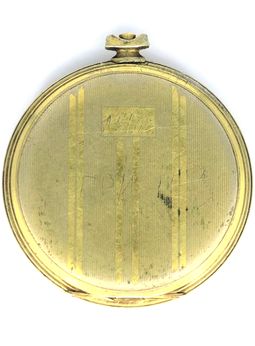
    Taschenuhr eines Leutnants der Roten Armee, ohne Datierung


    Material/Technik

    Metall

    Maße

    Durchmesser: 4,5 cm

    Beschreibung

    Eine Taschenuhr eines Leutnants der Roten Armee mit Gravuren.
    Das Objekt stammt aus dem Nachlass von Wladimir Gelfand, der bis Oktober 1946 Leutnant in der Roten Armee war und dann Mitglied der Gruppe der sowjetischen Streitkräfte in Deutschland wurde. Gelfand war Teilnehmer an der Schlacht um Berlin (301. Schützendivision der 5. Stoßarmee) und Autor des ersten in deutscher Sprache veröffentlichten Originaltagebuchs eines Offiziers der Roten Armee.


    Ereignisse

    Besessen
    wann
    wo  More about the place

    Bezug zu Personen oder Körperschaften

    Museum Berlin-Karlshorst / Sammlung
    Objekte [208267]


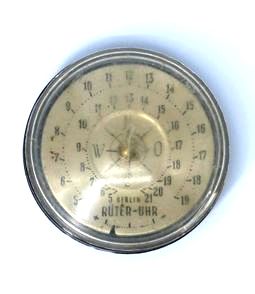
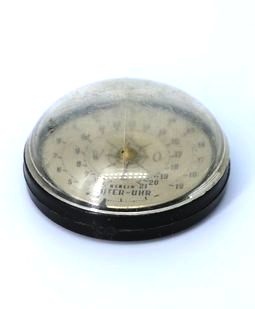
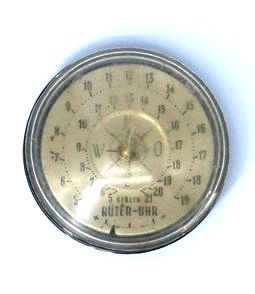
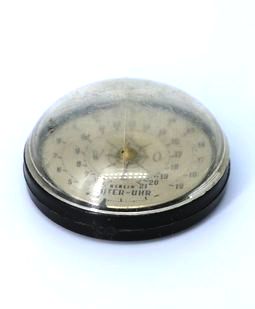
    Sonnenuhr eines Leutnants der Roten Armee, Berlin, 1940er Jahre


    Material/Technik

    Kunststoff

    Maße

    Durchmesser: 5,7 cm

    Beschreibung

    Eine Sonnenuhr des Leutnants der Roten Armee Vladimir Gelfand (1922-1983). Die Uhr wurde von der Firma Rüter-Uhr in Berlin in der 1940er Jahre hergestellt.
    Gelfand war bis Oktober 1946 Leutnant der Roten Armee und Mitglied der Gruppe der sowjetischen Streitkräfte in Deutschland. Gelfand war Teilnehmer an der Schlacht um Berlin (301. Schützendivision der 5. Stoßarmee) und Autor des ersten in deutscher Sprache veröffentlichten Originaltagebuchs eines Offiziers der Roten Armee.


    Ereignisse

    Hergestellt
    wann
    wo  [wahrsch.] More about the place
    Besessen
    wann
    wo  More about the place

    Bezug zu Personen oder Körperschaften

    Museum Berlin-Karlshorst / Sammlung
    Objekte [208266]


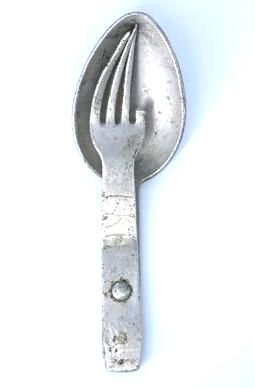
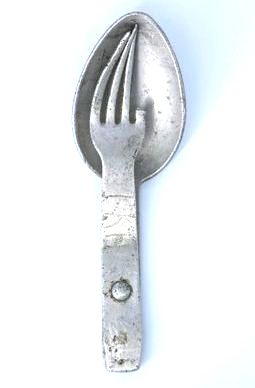
    Feldbesteck eines Leutnants der Roten Armee, Sowjetunion, 1940er Jahre


    Material/Technik

    Aluminium

    Maße

    Höhe: 14,9 cm, Breite: 4,8 cm

    Beschreibung

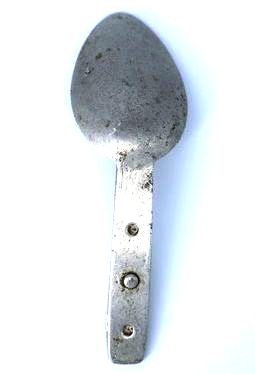
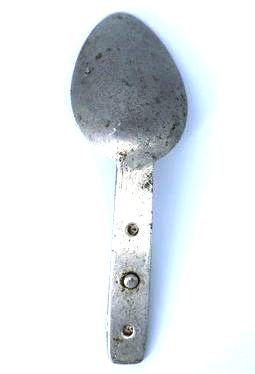
    Feldbesteck von Vladimir Gelfand aus der Kriegszeit.
    Gelfand war bis Oktober 1946 Leutnant der Roten Armee und Mitglied der Gruppe der sowjetischen Streitkräfte in Deutschland. Gelfand war Teilnehmer an der Schlacht um Berlin (301. Schützendivision der 5. Stoßarmee) und Autor des ersten in deutscher Sprache veröffentlichten Originaltagebuchs eines Offiziers der Roten Armee.
    Fotos (DVD) und zusätzliche Information - s. Anlage zum Schenkungsbrief


    Ereignisse

    Hergestellt
    wann
    Besessen
    wann
    wo  More about the place

    Bezug zu Personen oder Körperschaften

    Museum Berlin-Karlshorst / Sammlung
    Objekte [208262]


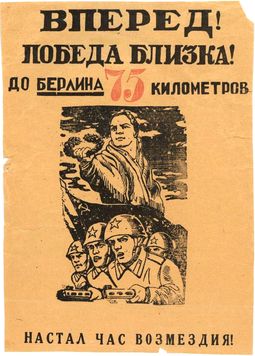
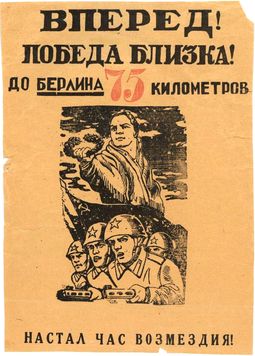
    Flugblatt "Vorwärts! Der Sieg ist nah!", Sowjetunion, 1945


    Beschriftung/Aufschrift

    Vorwärts! Der Sieg ist nah! Berlin ist 75 Kilometer entfernt. Die Stunde der Rache ist gekommen!

    Material/Technik

    Papier / gedruckt

    Maße

    Höhe: 23,0 cm, Breite: 16,6 cm

    Beschreibung

    Ein sowjetisches Flugblatt mit der Überschrift "Vorwärts! Der Sieg ist nah!". Abgebildet sind vier Soldaten der Roten Armee auf Vormarsch und die Figur Mutter Heimat.
    Das Objekt stammt aus dem Nachlass von Wladimir Gelfand, der bis Oktober 1946 Leutnant in der Roten Armee war und dann Mitglied der Gruppe der sowjetischen Streitkräfte in Deutschland wurde. Gelfand war Teilnehmer an der Schlacht um Berlin (301. Schützendivision der 5. Stoßarmee) und Autor des ersten in deutscher Sprache veröffentlichten Originaltagebuchs eines Offiziers der Roten Armee.


    Ereignisse

    Besessen
    wann
    wo  More about the place

    Bezug zu Personen oder Körperschaften

    Bezug zu Zeiten

    Museum Berlin-Karlshorst / Sammlung
    Objekte [208103]


    Feldpostbrief des Rotarmisten V. Gelfand an seine Tante, Sowjetunion, Januar 1944


    Beschreibung

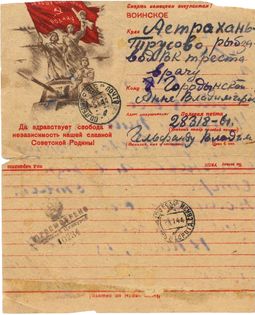
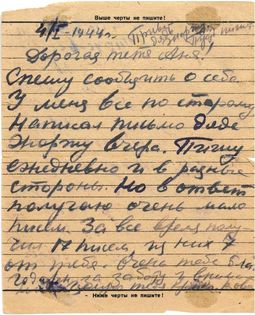
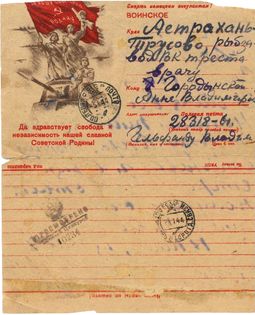
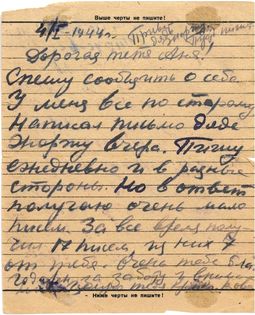
    Feldpostbrief des Rotarmisten Vladimir Natanovič Gel’fand an seine Tante Anna W. Gorodinskaja, geschrieben am 4. Januar1944.
    Gelfand war bis Oktober 1946 Leutnant der Roten Armee und Mitglied der Gruppe der sowjetischen Streitkräfte in Deutschland. Gelfand war Teilnehmer an der Schlacht um Berlin (301. Schützendivision der 5. Stoßarmee) und Autor des ersten in deutscher Sprache veröffentlichten Originaltagebuchs eines Offiziers der Roten Armee.


    Material/Technik

    Papier / gedruckt, handgeschrieben

    Maße

    Höhe: 18,6 cm, Breite: 15,2 cm

    Sprache

    Русский

    Abschrift des Textes:

    1/2
    (Печатный текст бланка:) Смерть немецким оккупантам!
    ВОИНСКОЕ
    Да здравствует свобода и независимость нашей славной Советской Родины!
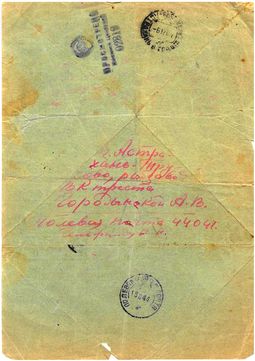
    Куда: Астрахань-Трусово, рыбзавод ВК треста, врачу Городынской Анне Владимировне.
    Адрес отправителя. Полевая почта 28318-ы Гельфанду Владим.
    (Штамп:) Просмотрено военной цензурой 10234.
    (Почтовый штемпель:) СССР. Астрахань. 6 горотд. связи. 24.1.44.

    2/2
    (Бланк:) Выше черты не пишите!
    4/I-1944 г.
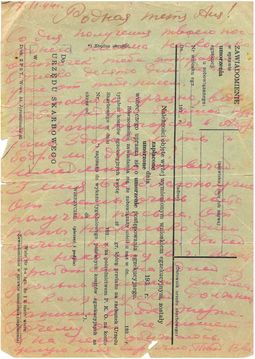
    Дорогая тетя Аня!
    Спешу сообщить о себе. У меня все по старому. Написал письмо дяде Жоржу вчера. Пишу ежедневно и в разные стороны. Но в ответ получаю очень мало писем. За все время получил 17 писем, из них 7 от тебя. Очень тебе благодарен за заботу и внимание. Целую тебя крепко. Вова.
    (Бланк:) Ниже черты не пишите!
    (Приписка выше основного текста:) Привет дяде Жоржу. Пусть пишет.


    Ereignisse

    Besessen
    wann
    wo  More about the place

    Bezug zu Personen oder Körperschaften

    Museum Berlin-Karlshorst / Sammlung
    Objekte [208102]


    Feldpostbrief des Rotarmisten V. Gelfand an seine Mutter, Sowjetunion, Juni 1942

    Beschreibung

    Feldpostbrief des Rotarmisten Vladimir Natanovič Gel’fand an seine Tante Anna W. Gorodinskaja, geschrieben am 28. Juni 1942.
    Gelfand war bis Oktober 1946 Leutnant der Roten Armee und Mitglied der Gruppe der sowjetischen Streitkräfte in Deutschland. Gelfand war Teilnehmer an der Schlacht um Berlin (301. Schützendivision der 5. Stoßarmee) und Autor des ersten in deutscher Sprache veröffentlichten Originaltagebuchs eines Offiziers der Roten Armee.


    Material/Technik

    Papier / handgeschrieben

    Maße

    Höhe: 12,5 cm, Breite: 17,4 cm

    Sprache

    Русский

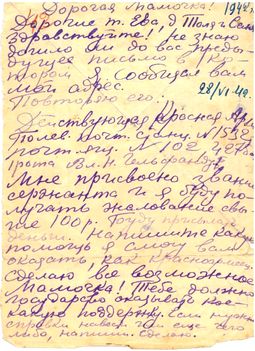
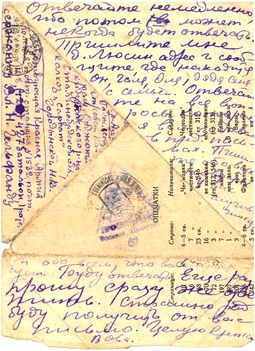
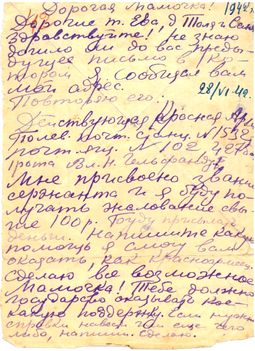
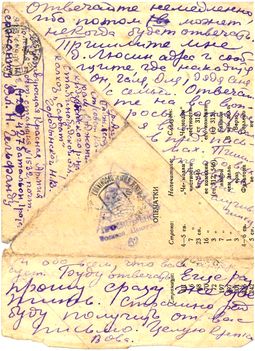
    28/VI-42 Дорогая мамочка!
    Дорогие т. Ева, д. Толя и Саня Здравствуйте! Не знаю дошло ли до вас предыдущее письмо в котором я сообщал вам мой адрес.
    Повторяю его:
    Действующая Красная Армия
    Полев. почт. станц. №1532 почт. ящ. №102, 427 бат. 1 рота. Вл. Н. Гельфанду.
    Мне присвоено звание сержанта и я буду получать жалование свыше 100 р. Буду присылать деньги. Напишите какую помощь я смогу вам оказать, как красноармеец. Сделаю все возможное. Мамочка! Тебе должно государство оказывать кое-какую поддержку. Если нужно справки навести или еще чего либо, напиши. Сделаю.

    Отвечайте немедленно, ибо потом может некогда будет отвечать. Пришлите мне д. Люсин адрес и сообщите, где находятся Он, Галя, Оля, дядя Саня с семьей. Отвечайте на все вопросы, которые я вам задавал в пред. Письмах, Пишите обо всех новостях у всех случившихся и обо всем, что вас интересует. Буду отвечать. Еще раз прошу сразу же ответить. Страшно рад буду получить от вас письмо. Целую крепко. Вова.

    Ср. Азия. (Тадж. ССР) Ст/совет Карасу, Орджоникидзебадского р-на Сталинобадской обл., колхоз «Сарват». Городынской Н.В.
    Действующая Красная Армия
    Полевая почт. станция №1532, почт. ящик №102, 427 батальон, 1 рота сержанту Вл.Н.Гельфанду.

    (Штамп:) Просмотрено военной цензурой. 62. (Почтовые штемпели нрзб)


    Ereignisse

    Hergestellt
    wann
    Besessen
    wann
    wo  More about the place

    Museum Berlin-Karlshorst / Sammlung
    Objekte [208101]


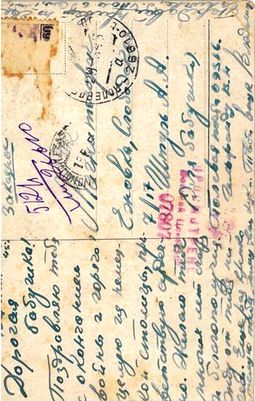
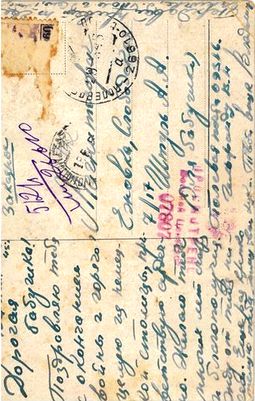
    Postkarte des Rotarmisten V. Gelfand an seine Großmutter, Mai 1945


    Beschreibung

    Postkarte des Rotarmisten Vladimir Natanovič Gel’fand an seine an seine Großmutter A. Stul, geschrieben am 27. Mai 1945.
    Gelfand war bis Oktober 1946 Leutnant der Roten Armee und Mitglied der Gruppe der sowjetischen Streitkräfte in Deutschland. Gelfand war Teilnehmer an der Schlacht um Berlin (301. Schützendivision der 5. Stoßarmee) und Autor des ersten in deutscher Sprache veröffentlichten Originaltagebuchs eines Offiziers der Roten Armee.


    Material/Technik

    Papier / gedruckt, handgeschrieben

    Maße

    Höhe: 13,7 cm, Breite: 8,8 cm

    Sprache

    Русский

     Abschrift des Textes:

    2/2
    (верхняя строка срезана на фотокопии)
    45 г.
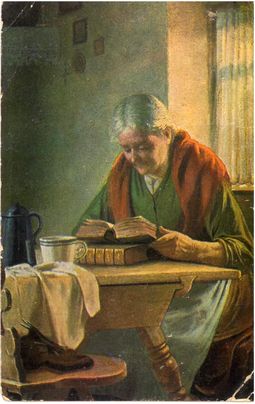
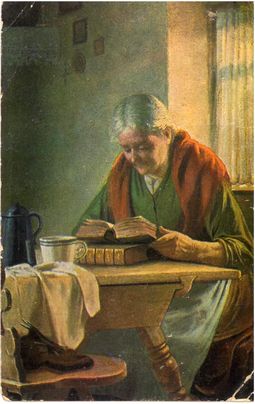
    Дорогая бабушка!
    Поздравляю тебя с окончанием войны и горячо целую из немецкой столицы, приветствую сердечно. Желаю тебе многих лет счастья и благополучия. Жду от тебя писем. Еще раз крепко целую тебя, жму твои руки. Твой внук Владимир. Передавай привет т. Еве, Галичке, д. Толе и д. Сане, т. Любе.

    Заказное. 512/1
    П.п. 26610
    Магнитогорск, Ежовка, Слободская 7/17
    Штуль А.А. (для бабушки)
    Полевая почта 09316.
    Гельфанду В.Н.


    Ereignisse

    Besessen
    wann
    wo  More about the place

    Museum Berlin-Karlshorst / Sammlung
    Objekte [208100]


    Brief des Rotarmisten V. Gelfand an seine Mutter, Berlin, August 1945


    Beschreibung

    Brief des Rotarmisten Vladimir Natanovič Gel’fand an seine Mutter N. Gorodinskaja, geschrieben am 6. August 1945 in Berlin.
    Gelfand war bis Oktober 1946 Leutnant der Roten Armee und Mitglied der Gruppe der sowjetischen Streitkräfte in Deutschland. Gelfand war Teilnehmer an der Schlacht um Berlin (301. Schützendivision der 5. Stoßarmee) und Autor des ersten in deutscher Sprache veröffentlichten Originaltagebuchs eines Offiziers der Roten Armee.

    Material/Technik

    Papier / handgeschrieben

    Maße

    Höhe: 14,5 cm, Breite: 10,0 cm

    Sprache

    Русский
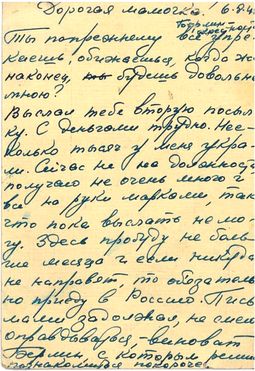
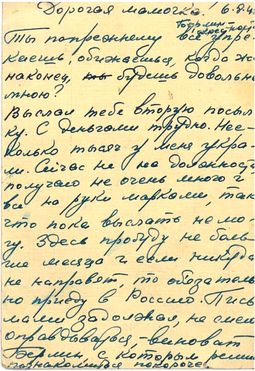
    6.8.45 Берлин - окрестности
    Дорогая мамочка!
    Ты попрежнему все упрекаешь, обижаешься, когда же наконец, ты будешь довольна мною?
    Высылаю тебе вторую посылку. С деньгами трудно. Несколько тысяч у меня украли. Сейчас не на должности, получаю не очень много и все на руки марками, так что пока выслать не могу. Здесь пробуду не больше месяца и если никуда не направят, то обязательно приеду в Россию. Письмами задолжал, не смею оправдываться, - виноват Берлин, с которым решил познакомиться покороче.

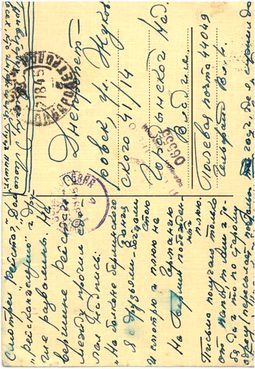
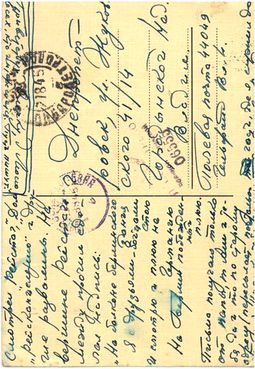
    Смотрел «Рейстаг», «Дом», «Рейсканцелярию» и другие развалины. На вершине Рейстага между прочим сделал надпись:
    «На балконе берлинского здания
    Я с друзьями – бойцами стою
    И смотрю и плюю на Германию
    На Берлин побежденный плюю.
    Письма получаю только от папы, т. Ани и тебя, да и то по старому адресу (пересылает почтальон той части, где я служил до…
    (Последняя строка не видна на фотокопии)
    (Вписано вверх ногами выше адреса:) Приветствуй Олечку, д. Люсю, всех кто интересуется. Пусть пишут.
    Днепропетровск, ул. Жуковского 41/14. Городынской Над. Владим.
    Полевая почта 44049. Гельфанд Вл. Н.

    (Штамп:) Просмотрено военной цензурой 06555


    Ereignisse

    Besessen
    wann
    wo  More about the place

    Bezug zu Personen oder Körperschaften

    Museum Berlin-Karlshorst / Sammlung
    Objekte [208099]


    Feldpostkarte des Rotarmisten V. Gelfand an seine Mutter, Sowjetunion, Oktober 1944


    Beschreibung

    Feldpostkarte des Rotarmisten Vladimir Natanovič Gel’fand an seine Mutter N. Gorodinskaja, geschrieben am 30. Oktober 1944.
    Gelfand war bis Oktober 1946 Leutnant der Roten Armee und Mitglied der Gruppe der sowjetischen Streitkräfte in Deutschland. Gelfand war Teilnehmer an der Schlacht um Berlin (301. Schützendivision der 5. Stoßarmee) und Autor des ersten in deutscher Sprache veröffentlichten Originaltagebuchs eines Offiziers der Roten Armee.


    Material/Technik

    Papier / gedruckt, handgeschrieben

    Maße

    Höhe: 10,0 cm, Breite: 15,0 cm

    Sprache

    Русский

    Abschrift des Textes:

    1/2
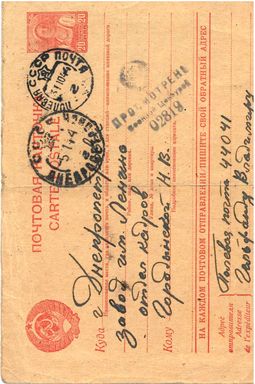
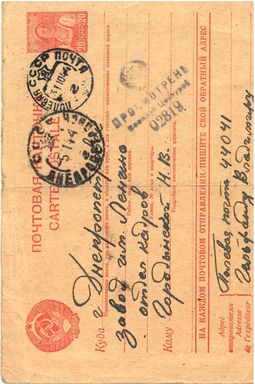
    Почтовая карточка
    Carte postale
    Куда: г. Днепропетровск, завод им. Ленина, отдел кадров
    Кому: Городынской Н.В.
    (Штамп:) Просмотрено военной цензурой.
    Адрес отправителя: Полевая почта 44041
    Гельфанду Владимиру.

    2/2
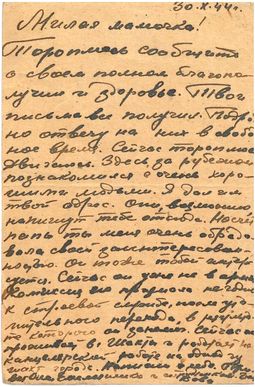
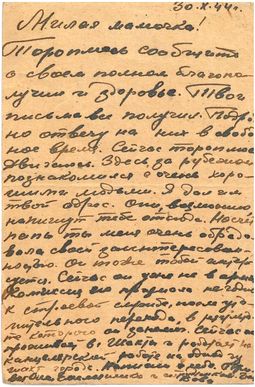
    30.X.44 г.
    Милая мамочка!
    Тороплюсь сообщить о своем полном благополучии и здоровье. Твои письма получал. Подробно отвечу на них в свободное время. Сейчас тороплюсь. Двигаюсь. Здесь за рубежом познакомился с очень хорошими людьми. Я дал им твой адрес. Они возможно напишут тебе отсюда. Насчет папы ты меня очень обрадовала своей заинтересованностью. Он тоже тобой интересуется. Сейчас он уже не в армии. Комиссия его признала негодным к строевой службе, после утомительного перехода, в результате которого он занемог. Сейчас он проживает в г. Шахты и работает на канцелярской работе на одной из шахт города. Напиши о себе. Привет Оле, Емельяненко и сотрудникам. Твой Вова.


    Bezug zu Personen oder Körperschaften

    Museum Berlin-Karlshorst / Sammlung
    Objekte [208098]


    Feldpostkarte des Rotarmisten V. Gelfand an seine Mutter, Tadschikische SSR, Oktober 1942


    Beschreibung

    Feldpostkarte des Rotarmisten Vladimir Natanovič Gel’fand an seine Mutter N. Gorodinskaja, geschrieben am 1. Oktober 1942.
    Gelfand war bis Oktober 1946 Leutnant der Roten Armee und Mitglied der Gruppe der sowjetischen Streitkräfte in Deutschland. Gelfand war Teilnehmer an der Schlacht um Berlin (301. Schützendivision der 5. Stoßarmee) und Autor des ersten in deutscher Sprache veröffentlichten Originaltagebuchs eines Offiziers der Roten Armee.


    Material/Technik

    Papier / gedruckt, handgeschrieben

    Maße

    Höhe: 9,8 cm, Breite: 14,2 cm

    Sprache

    Русский

    Abschrift des Textes:

    1/2
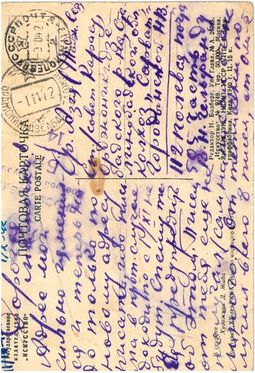
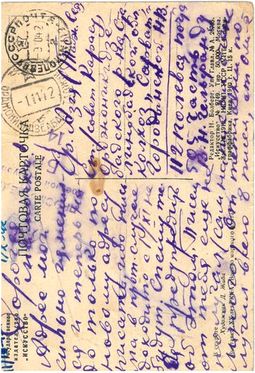
    Жду от тебя с нетерпением весточек, столь дорогих и приятных для меня. Тетя Ева и семья пускай тоже напишут. Письма идут очень долго (от тети Ани из Астрахани!) я получил письмо через мец, так что нужно писать чаще письма, чтобы они регулярно шли. Пишу поздно вечером /последняя строка срезана в фотокопии/ так что не обижайся что грязно.

    2/2
    (Почтовая карточка)
    Дорогая мамочка!
    Адрес мой сильно изменился и теперь надо только по новому адресу писать, ибо письма в прот. случае доходить с 1/XI не будут. Спешу тебя предупредить об этом. Писем от тебя еще не получал (сам написал их очень много). От тети Ани получил всего 8 писем, от Оли – 2.

    Ср. Азия (Тадж. ССР, Ст./совет Карасу, Орджоникидзебадского р-на, Сталинобадской обл., колхоз «Сарват».
    Городынской Н.В.
    112 полевая почта
    505 часть
    В.Н. Гельфанду.

    (Почтовые штемпели:) СССР полевая почта № 112. 8.10.42
    СССР Ордзоникидзебад. Таджик. 1.11.42


    Events

    Created
    When
    Owned
    When
    Where  More about the place

    Museum Berlin-Karlshorst / Sammlung
    Objekte [208096]


    Feldpostbrief des Rotarmisten V. Gelfand an seine Tante, Sowjetunion, Februar 1944


    Description

    Feldpostbrief des Rotarmisten Vladimir Natanovič Gel’fand an seine Tante A. Gorodinskaja, geschrieben am 23. Februar 1944.
    Gelfand war bis Oktober 1946 Leutnant der Roten Armee und Mitglied der Gruppe der sowjetischen Streitkräfte in Deutschland. Gelfand war Teilnehmer an der Schlacht um Berlin (301. Schützendivision der 5. Stoßarmee) und Autor des ersten in deutscher Sprache veröffentlichten Originaltagebuchs eines Offiziers der Roten Armee.


    Material/Technik

    Papier / handgeschrieben

    Maße

    Höhe: 24,0 cm, Breite: 14,5 cm

    Sprache

    Русский

    Астрахань. Трусово, рыбзавод ВК треста, врачу Городынской А.В.
    Полевая почта 28318-Ы
    Гельфанду Владимиру

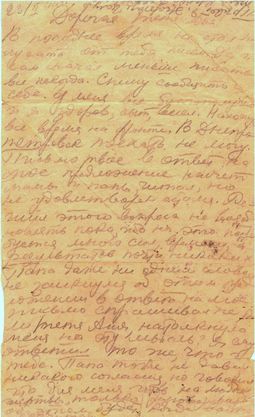
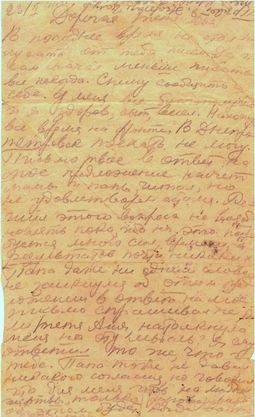
    Дорогая тетя Аня!
    В последнее время не стал получать от тебя писем. Да и сам начал меньше писать – все некогда. Спешу сообщить о себе. У меня все благополучно и я здоров, сыт, весел. Нахожусь все время на фронте. В Днепропетровск поехать не могу. Письмо твое в ответ на мое предложение насчет мамы и папы, читал, но не удовлетворен остался. Решил этого вопроса не возобновлять пока, ибо на это потребуется много сил, времени и результатов почти никаких. Папа даже ни одним словом не заикнулся об этом предложении в ответ на мое письмо спрашивал не ты ли тетя Аня натолкнула меня на эту мысль? Я ему ответил то же, что и тебе. Папа доже не давал никакого согласия, но говорил, что для меня готов на любые жертвы, только разговаривать об этом будет, когда война кончится.

    Только ты напрасно обижаешь меня упреком родным. Это больно затронуло мои чувства. Вообще есть правило покойников не осуждать, а тем более людей у которых я прожил 8 месяцев на иждивении, которые кормили меня // и проявляли обо мне исключительную заботу и внимание. Тем более ты не знаешь истинной причины того что они не смогли эвакуироваться и погибли от рук ненавистных фашистов. Несмотря на болезнь Анички и тяжелое недомогание бабушки Папе они пообещали, что уедут все за // ним с д. Исаком. Но потом как они остались никто не знает. Соседи и знакомые рассказывали, что Аничка сильно заболела и ее нельзя было перевозить. Заканчиваю ввиду отсутствия места.


    Ereignisse

    Besessen
    wann
    wo  More about the place

    Bezug zu Personen oder Körperschaften

    Museum Berlin-Karlshorst / Sammlung
    Objekte [208095]


    Feldpostkarte des Rotarmisten V. Gelfand an seine Mutter, Sowjetunion, November 1944

    Beschreibung

    Feldpostkarte des Rotarmisten Vladimir Natanovič Gel’fand an seine Mutter N. Gorodinskaja, geschrieben am 24. November 1944.
    Gelfand war bis Oktober 1946 Leutnant der Roten Armee und Mitglied der Gruppe der sowjetischen Streitkräfte in Deutschland. Gelfand war Teilnehmer an der Schlacht um Berlin (301. Schützendivision der 5. Stoßarmee) und Autor des ersten in deutscher Sprache veröffentlichten Originaltagebuchs eines Offiziers der Roten Armee.


    Material/Technik

    Papier / gedruckt, handgeschrieben

    Maße

    Höhe: 15,0 cm, Breite: 10,0 cm

    Sprache

    Русский

    Abschrift des Textes:

    1/2
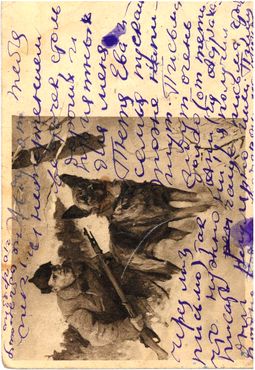
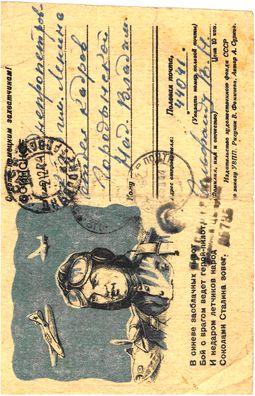
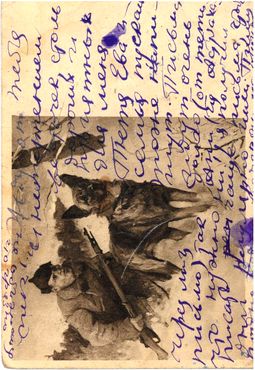
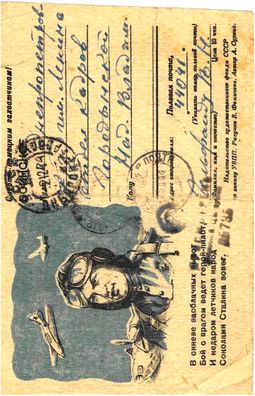
    (Печатный текст открытки) Смерть немецким захватчикам!
    ВОИНСКОЕ
    В синеве заоблачных высот
    Бой с врагом ведет герой-пилот,
    И недаром летчиков народ
    Соколами Сталина зовет.
    Издательство художественного фонда СССР по заказу УВПП. Рисунок В. Фомичева. Автор А.Сурков.
    Днепропетровск, з-д им. Ленина отдел кадров Городынской Над. Владимир.

    Адрес отправителя: Полевая почта 44041
    Гельфанду В.Н.

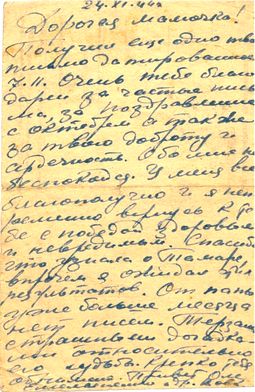
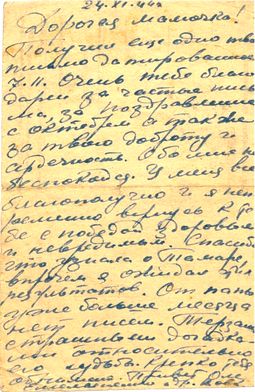
    2/2
    24.XI.44 г.
    Дорогая мамочка!
    Получил еще одно твое письмо датированное 7.11. Очень тебе благодарен за частые письма, за поздравление с октябрем а также за твою доброту и сердечность. Обо мне не беспокойся. У меня все благополучно и я непременно вернусь к тебе с победой здоровым и невредимым. Спасибо что узнала о Тамаре, впрочем я ожидал этих результатов. От папы уже больше месяца нет писем. Терзаем страшными догадками относительно его судьбы. Крепко тебя обнимаю. Привет Оле, Емельяненко и др. Вова.


    Ereignisse

    Besessen
    wann
    wo  More about the place
    Wurde abgebildet (Akteur)
    wer Zur Personenseite: Anton Pawlowitsch Tschechow (1860-1904)

    Bezug zu Personen oder Körperschaften

    Museum Berlin-Karlshorst / Sammlung
    Objekte [208094]


    Feldpostkarte des Rotarmisten V. Gelfand an seine Mutter, Sowjetunion, März 1942


    Beschreibung

    Feldpostkarte des Rotarmisten Vladimir Natanovič Gel’fand an seine Mutter N. Gorodinskaja, geschrieben am 17. März 1942.
    Gelfand war bis Oktober 1946 Leutnant der Roten Armee und Mitglied der Gruppe der sowjetischen Streitkräfte in Deutschland. Gelfand war Teilnehmer an der Schlacht um Berlin (301. Schützendivision der 5. Stoßarmee) und Autor des ersten in deutscher Sprache veröffentlichten Originaltagebuchs eines Offiziers der Roten Armee.


    Material/Technik

    Papier / gedruckt, handgeschrieben

    Maße

    Höhe: 13,9 cm, Breite: 8,7 cm

    Sprache

    Русский

    Abschrift des Textes:

    1/2
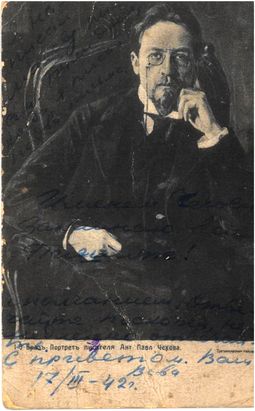
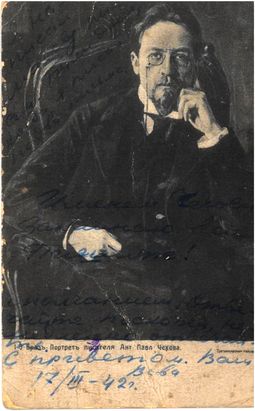
    I.Э. Браз. Портрет писателя Ант. Павл. Чехова.
    Именем Чехова заклинаю вас. Пишите!
    Молчанием. Отвечайте поскорей, Немедленно отвечайте.
    С приветом. Ваш Вова.
    17/III-42 г.

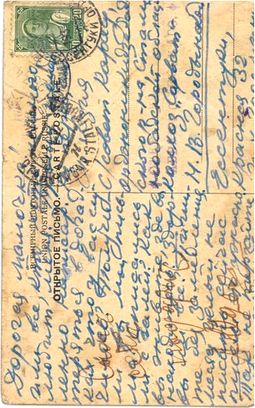
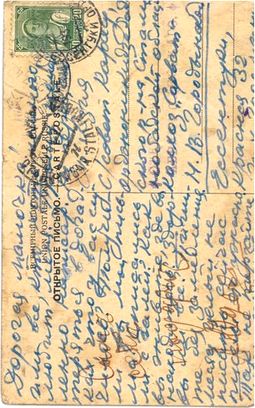
    2/2
    Дорогая мамочка!
    И мы все, кто хотя немного любит меня. Прошу немедленно написать. Не перестаю теряться в догадках, что у вас случилось? Получили вы мои письма? Списались ли с Галей? Как вы живете, где вы находитесь? Здоровы ли все? Пишите без замедления. Месяц целый не писать сейчас писем это ужасно. Так не терзайте /последняя строка срезана на фотокопии/

    Ср. Азия.
    С/совет Карасу
    Орджоникидзебадского р-на, Сталинобадской области колхоз «Сарват»
    Н.В. Городынской
    Ессентуки, Красная 32
    /последняя строка срезана на фотокопии/


    Ereignisse

    Besessen
    wann
    wo  More about the place

    Bezug zu Personen oder Körperschaften

    Museum Berlin-Karlshorst / Sammlung
    Objekte [208093]


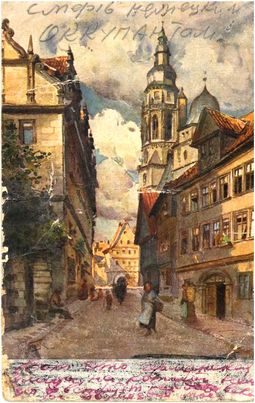
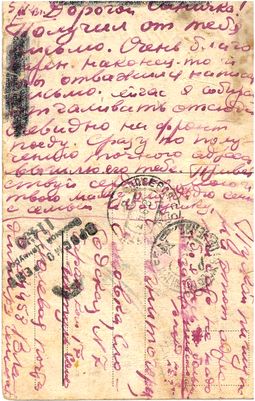
    Feldpostkarte des Rotarmisten V. Gelfand an seinen Bruder, Sowjetunion, Mai 1943


    Beschreibung

    Feldpostkarte des Rotarmisten Vladimir Natanovič Gel’fand an seinen Bruder A.Stul, geschrieben im Mai 1943.
    Gelfand war bis Oktober 1946 Leutnant der Roten Armee und Mitglied der Gruppe der sowjetischen Streitkräfte in Deutschland. Gelfand war Teilnehmer an der Schlacht um Berlin (301. Schützendivision der 5. Stoßarmee) und Autor des ersten in deutscher Sprache veröffentlichten Originaltagebuchs eines Offiziers der Roten Armee.


    Material/Technik

    Papier / gedruckt, handgeschrieben

    Maße

    Höhe: 14,0 cm, Breite: 9,0 cm

    Sprache

    Русский

    1/2
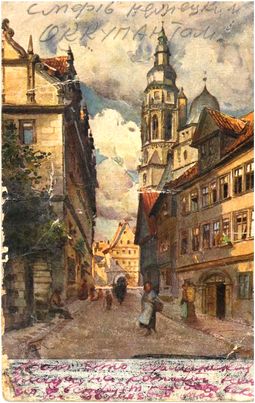
    (На лицевой стороне открытки поверх изображения написано от руки:)
    Смерть немецким оккупантам!
    Вот это германская улица, на которой немцы встретят на недеюсь вскоре возмездие мое.

    2/2
    5/V-43 г.
    Саничка!
    Получил от тебя письмо. Очень благодарен. Наконец-то и ты отважился написать письмо. Сейчас я собираюсь отчаливать отсюда. Очевидно на фронт поеду. Сразу по получению точного адреса вышлю его тебе. Приветствуй сердечно мою и твою маму, дядю Сеню с семьей и бабушку.
    Пускай пишут. На этот адрес писать не надо ибо я здесь больше не задерживаюсь. Вперед на запад!

    Магнитогорск, Ежовка, Слободская №7
    Барак ком. 17
    Штуль Сане

    Полевая почта
    № 34458
    Владимиру Гельфан.

    (Штамп) Просмотрено военной цензурой 11430
    (Печатное название изображения зачеркнуто цензором)


    Ereignisse

    Besessen
    wann
    wo  More about the place

    Bezug zu Personen oder Körperschaften

    Museum Berlin-Karlshorst / Sammlung
    Objekte [208092]


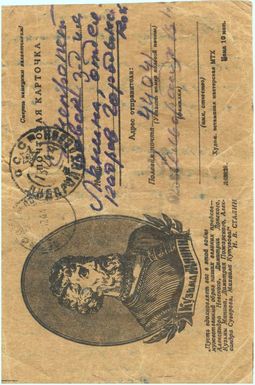
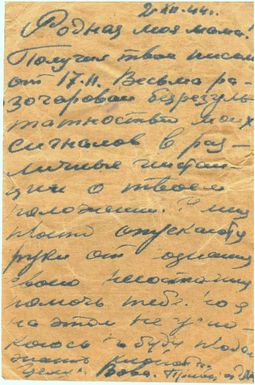
    Feldpostkarte des Rotarmisten V. Gelfand an seine Mutter, Sowjetunion, Dezember 1944


    Beschreibung

    Feldpostkarte des Rotarmisten Vladimir Natanovič Gel’fand an seine Mutter N. Gorodinskaja, geschrieben am 2. Dezember 1944.
    Gelfand war bis Oktober 1946 Leutnant der Roten Armee und Mitglied der Gruppe der sowjetischen Streitkräfte in Deutschland. Gelfand war Teilnehmer an der Schlacht um Berlin (301. Schützendivision der 5. Stoßarmee) und Autor des ersten in deutscher Sprache veröffentlichten Originaltagebuchs eines Offiziers der Roten Armee.

    Material/Technik

    Papier / gedruckt, handgeschrieben

    Maße

    Höhe: 15,0 cm, Breite: 10,0 cm

    Sprache

    Русский

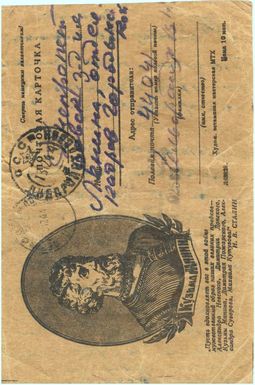
    (На лицевой стороне открытки печатный текст:)
    Смерть немецким оккупантам!
    (Портрет) Кузьма Минин.
    «Пусть вдохновляет вас в этой войне
    Мужественный образ наших великих предков –
    Александра Невского, Дмитрия Донского,
    Кузьмы Минина, Дмитрия Пожарского, Алек-
    Сандра Суворова, Михаила Кутузова»!
    И.В. Сталин.
    Худож. Эстампная мастерская МТХ
    Л68828
    Цена 10 коп.
    Куда
    Днепропетровск з-д им. Ленина, отдел кадров Городынской
    Адрес отправителя:
    Полевая почта 44041
    Гельфанду В.Н.
    (Почтовый штемпели) СССР полевая почта 3.12.44
    СССР Днепропетровск 13.12.44

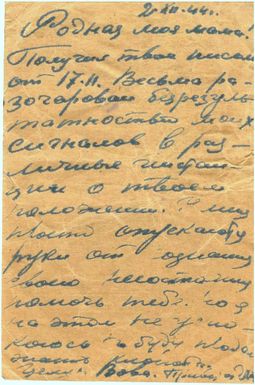
    2.XII.44 г.
    Родная моя мама!
    Получил твое письмо от 17.II. Весьма разочарован безрезультатностью моих сигналов в различные инстанции о твоем положении. У меня просто опускаются руки от сознания своего несостояния помочь тебе. Но я на этом не успокоюсь и буду продолжать хлопоты.
    Целую Вова. Привет (нрзб)


    Ereignisse

    Hergestellt
    wann
    Besessen
    wann
    wo  More about the place

    Bezug zu Personen oder Körperschaften

    Bezug zu Orten oder Plätzen

    Museum Berlin-Karlshorst / Sammlung
    Objekte [208090]


    Feldpostbrief des Rotarmisten V. Gelfand an seine Mutter, Sowjetunion, Januar 1944


    Beschreibung

    Feldpostbrief des Rotarmisten Vladimir Natanovič Gel’fand an seine Mutter N. Gorodinskaja, geschrieben am 10. Januar 1944.
    Gelfand war bis Oktober 1946 Leutnant der Roten Armee und Mitglied der Gruppe der sowjetischen Streitkräfte in Deutschland. Gelfand war Teilnehmer an der Schlacht um Berlin (301. Schützendivision der 5. Stoßarmee) und Autor des ersten in deutscher Sprache veröffentlichten Originaltagebuchs eines Offiziers der Roten Armee.


    Material/Technik

    Papier / handgeschrieben

    Maße

    Höhe: 20,8 cm, Breite: 14,7 cm

    Sprache

    Русский

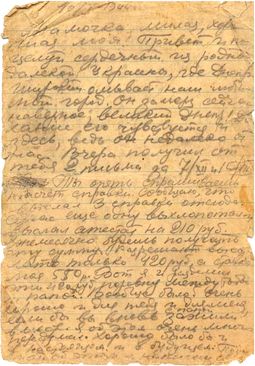
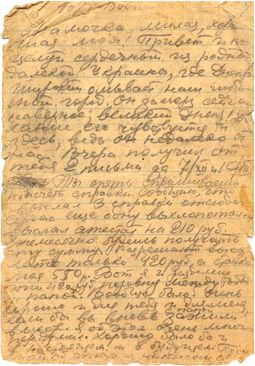
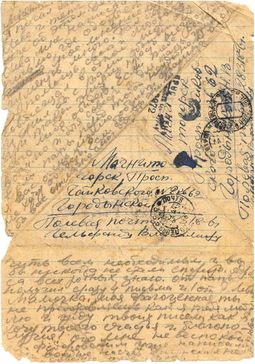
    10/I-1944 г.
    Мамочка, милая, хорошая моя! Привет и поцелуй сердечный из родной далекой Украины, где Днепр широкий омывает наш любимый город. Он замерз сейчас наверное, великий Днепр! Дыхание его чувствуется и здесь, ведь он недалеко от нас.
    Вчера получил от тебя 2 письма за 7/XII и 15/XII. Ты опять спрашиваешь насчет справки. Сообщаю, что выслал 3 справки отсюда. Сейчас еще одну выхлопотал, выслал атестат на 210 руб. Ежемесячно будешь получать эту сумму. Разрешают высылать только 420 руб. А ставка моя 550 р. Вот я и разделил эти 420 руб. поровну между тобой и папой. Вообще было б очень хорошо и для тебя и для меня если бы вы вновь с папой зажили вместе. Я об этом очень много передумал. Хорошо было бы и в настоящем и в будущем. Подумай об этом и напиши ему.
    2/2
    Мнение я писал дяде Леве и тете Ане об этом. Дядя Лева мне написал письмо, где одобряет мое мнение. Аргументов много. Так помощь свою и любовь совмещал в одном месте и жил бы с вами обоими. А при такой жизни мне просто неудобно кого-либо из вас обидеть. Если тебе больше вышлю то и для совести и для папы удар, если папы перед тобой неудобно. Я вас очень люблю обоих и страшно не хочу обидеть. Если бы вы жили вместе, я бы вас отлично смог обеспе // чить всем необходимым, и вы бы никогда не стали спорить. Адреса всех родных знаю. От папы получил сразу 4 письма и 1 от д. Левы. Мамочка моя драгоценная ты не представляешь как я тебя люблю и жду твоих писем, как хочу твоего счастья и благополучия! Обо мне не беспокойся. Я Федоровским уже написал, и вообще насчет Днепр-ска я не советую тебе унывать. Обнимаю. Вова.

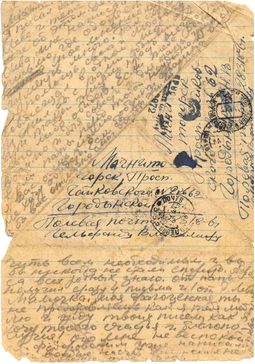
    Магнитогорск, Проспект Чайковского №2 кв 62. Городынской Н.В.
    Полевая почта 28318-Ы
    Гельфанду Владимиру.


    Ereignisse

    Hergestellt
    wann
    wo  More about the place

    Bezug zu Personen oder Körperschaften

    Bezug zu Orten oder Plätzen

    Museum Berlin-Karlshorst / Sammlung
    Objekte [208089]


    Brief von Anna Korotkina an Vladimir Gelfand, Ukraine, Januar 1946


    Beschreibung

    Brief von Anna Korotkina an Vladimir Natanovič Gel’fand, geschrieben am 10. Januar 1946.
    Gelfand war bis Oktober 1946 Leutnant der Roten Armee und Mitglied der Gruppe der sowjetischen Streitkräfte in Deutschland. Gelfand war Teilnehmer an der Schlacht um Berlin (301. Schützendivision der 5. Stoßarmee) und Autor des ersten in deutscher Sprache veröffentlichten Originaltagebuchs eines Offiziers der Roten Armee.


    Material/Technik

    Papier / handgeschrieben

    Maße

    Höhe: 18,8 cm, Breite: 15,5 cm

    Sprache

    Русский

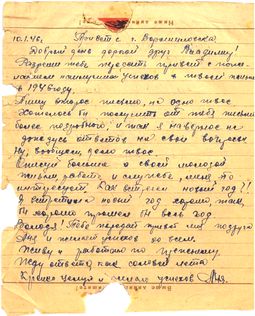
    Abschrift des Textes:

    1/1
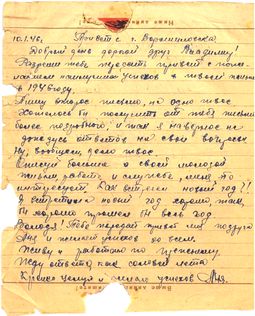
    10.1.46 г.
    Привет с г. Ворошиловска.
    Добрый день дорогой друг Владимир!
    Разреши тебе передать привет с пожеланием наилучших успехов в твоей жизни в 1946 году.
    Пишу второе письмо, на одно твое. Хотелось бы получить от тебя письма более подробного. И жаль я наверное не дождусь ответов на свои вопросы. Ну, вообщем, дело твое.
    Описуй больше о своей молодой жизни, работе и службе, меня это интересует. Как встречал новый год?! Я встретила новый год хорошо, так бы хорошо прошел бы весь год. Володя! Тебе передает привет моя подруга Аня и желает успехов во всем. Живу и работаю по прежнему. Жду ответа, как соловей лета.
    Крепка целую и желаю успехов Аня.


    Ereignisse

    Besessen
    wann
    wo  More about the place

    Bezug zu Personen oder Körperschaften

    Bezug zu Zeiten

    Museum Berlin-Karlshorst / Sammlung
    Objekte [208088]


    Feldpostbrief des Rotarmisten V. Gelfand an seine Mutter, Sowjetunion, November 1944


    Beschreibung

    Feldpostbrief des Rotarmisten Vladimir Natanovič Gel’fand an seine Mutter N. Gorodinskaja, geschrieben am 3. November 1944.
    Gelfand war bis Oktober 1946 Leutnant der Roten Armee und Mitglied der Gruppe der sowjetischen Streitkräfte in Deutschland. Gelfand war Teilnehmer an der Schlacht um Berlin (301. Schützendivision der 5. Stoßarmee) und Autor des ersten in deutscher Sprache veröffentlichten Originaltagebuchs eines Offiziers der Roten Armee.


    Material/Technik

    Papier / handgeschrieben

    Maße

    Höhe: 17,8 cm, Breite: 12,9 cm

    Sprache

    Русский

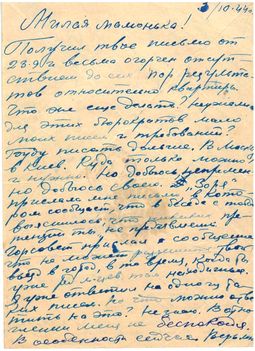
    Abschrift des Textes:

    1/1
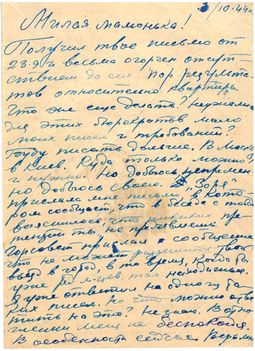
    3/10-44 г.
    Милая мамонька!
    Получил твое письмо от 23.9 и весьма огорчен отсутствием до сих пор результатов относительно квартиры. Что же еще делать? Неужели для этих бюрократов мало моих писем и требований? Буду писать дальше. В Москву, в Киев. Куда только можно и нужно. Но добьюсь, непременно добьюсь своего. «Зоря» прислала мне письмо, в котором сообщает, что в беседе с тобой выяснилось, что никаких претензий ты «не предъявляешь. Горсовет прислал сообщение, что не может разрешить твой въезд в город, в то время, когда ты уже ряд м-цев там находишься. Я уже ответил на одно из таких писем. Но что можно ответить на это? Не знаю. В отношении меня не беспокойся. В особенности сейчас. Верь мне.


    Ereignisse

    Besessen
    wann
    wo  More about the place

    Museum Berlin-Karlshorst / Sammlung
    Objekte [208084]


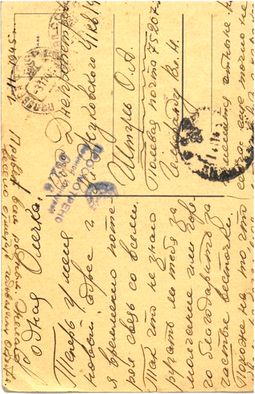
    Postkarte des Rotarmisten V. Gelfand, Sowjetunion, November 1945


    Beschreibung

    Postkarte des Rotarmisten Vladimir Natanovič Gel’fand an Olga Stul, geschrieben am 1. November 1945.
    Gelfand war bis Oktober 1946 Leutnant der Roten Armee und Mitglied der Gruppe der sowjetischen Streitkräfte in Deutschland. Gelfand war Teilnehmer an der Schlacht um Berlin (301. Schützendivision der 5. Stoßarmee) und Autor des ersten in deutscher Sprache veröffentlichten Originaltagebuchs eines Offiziers der Roten Armee.


    Material/Technik

    Papier / gedruckt, handgeschrieben

    Maße

    Höhe: 9,6 cm, Breite: 14,7 cm

    2/2
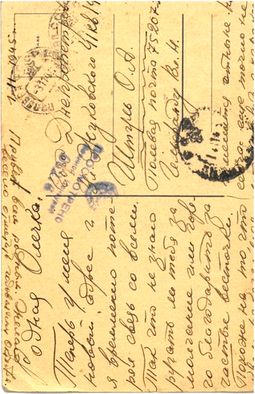
    Город Днепропетровск Ул. Жуковского 41 кв 14
    Штуль О.А.
    Полевая почта 75207-ж
    Гельфанду Вл. Н.

    1.11.1945 г.
    Родная Олечка!
    Теперь у меня новый адрес и я временно потерял связь со всеми. Так что не знаю ругать ли тебя за молчание или горяча благодарить за частые весточки. Похоже на то, что квалификация моя изменится отныне. Но сейчас еще точно не могу говорить о характе…
    Привет всем родным. Желаю весело отметить годовщину Октября.

    1/2
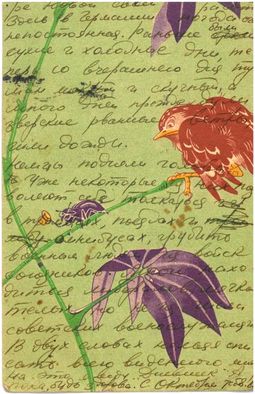
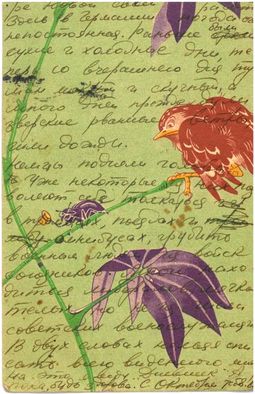
    …ре новой своей работы. Здесь в Германии погода непостоянная. Раньше были сухие и холодные дни, теперь со вчерашнего дня туман мокрый и скучный, а много дней прежде дули зверские рванные ветры, шли дожди.
    Немцы подняли головы. Уже некоторые из них позволяют себе толкаться в трамваях, поездах и омнибусах, грубить военным людям из войск союзников. Много находится либералов, мягкотелых, но не из числа советских военослужащих. В двух словах нельзя описать всего виденного мной. На это веду «Дневник». А пока будь здорова. С октябрем тебя! Вова.


    Ereignisse

    Besessen
    wann
    wo  More about the place

    Bezug zu Personen oder Körperschaften

    Museum Berlin-Karlshorst / Sammlung
    Objekte [208081]


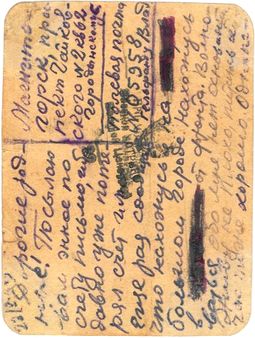
    Postkarte des Rotarmisten V. Gelfand, Mai 1943


    Beschreibung

    Postkarte des Rotarmisten Vladimir Natanovič Gel’fand an Olga Stul, geschrieben am 23.05.1943
    Gelfand war bis Oktober 1946 Leutnant der Roten Armee und Mitglied der Gruppe der sowjetischen Streitkräfte in Deutschland. Gelfand war Teilnehmer an der Schlacht um Berlin (301. Schützendivision der 5. Stoßarmee) und Autor des ersten in deutscher Sprache veröffentlichten Originaltagebuchs eines Offiziers der Roten Armee.


    Material/Technik

    Papier / gedruckt, handgeschrieben

    Maße

    Höhe: 13,0 cm, Breite: 9,8 cm

    Sprache

    Русский

    Beschriftung/Aufschrift

    1/2
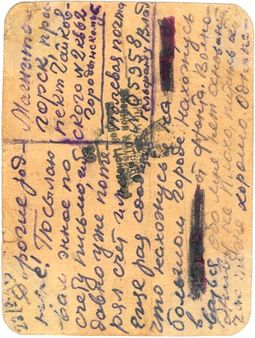
    Магнитогорск, проспект Чайковского №2 кв 62 Городынскому С.
    Полевая почта №05958 Гельфанду Влад.
    Просмотрено военной цензурой.

    23.V-43 г.
    Дорогие родные! Посылаю вам энное по счету письмо, ибо давно потерял счет им. Еще раз сообщаю, что нахожусь на в большом городе. Нахожусь в от фронта. Волноваться обо мне нет оснований. Живу не плохо, питаюсь сейчас тоже хорошо. Одно пе -

    1/1
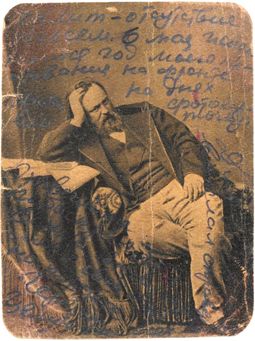
    чалит - отсутствие писем. 6 мая исполняется год моего пребывания на фронте. На днях послал вам фотокарточку. Для мамы выслал справку. Отвечайте побыстрей, ибо я вскоре вновь переменю свой адрес. На портрете Герцен. Целую вас всех. Вова.


    Ereignisse

    Besessen
    wann
    wo  More about the place

    Bezug zu Personen oder Körperschaften

    Museum Berlin-Karlshorst / Sammlung
    Objekte [208080]


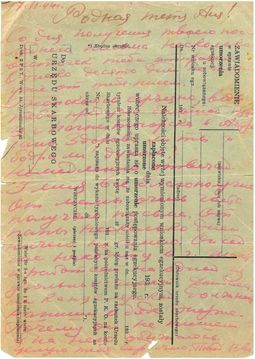
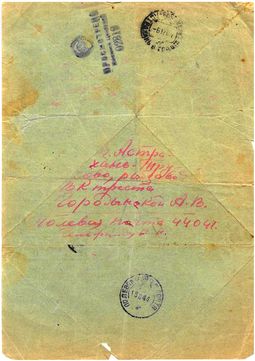
    Feldpostbrief des Rotarmisten V. Gelfand an seine Tante, Sowjetunion, November 1944


    Beschreibung

    Feldpostbrief des Rotarmisten Vladimir Natanovič Gel’fand an seine Tante Anna Gorodinskaja, geschrieben am 3. November 1944.
    Gelfand war bis Oktober 1946 Leutnant der Roten Armee und Mitglied der Gruppe der sowjetischen Streitkräfte in Deutschland. Gelfand war Teilnehmer an der Schlacht um Berlin (301. Schützendivision der 5. Stoßarmee) und Autor des ersten in deutscher Sprache veröffentlichten Originaltagebuchs eines Offiziers der Roten Armee.


    Material/Technik

    Papier / handgeschrieben

    Maße

    Höhe: 20,6 cm, Breite: 14,7 cm

    Sprache

    Русский

    Г. Астрахань-Трусово, рыбзавод ВК треста
    Городынской А.В.
    Полевая почта 44041
    Гельфанду В.Н.
    Просмотрено военной цензурой 02819
    СССР Полевая почта 18.11.44
    СССР Астрахань 8 гор отд связи 6.12.44

    2/2
    17.11.44 г.
    Родная тетя Аня!
    Со дня получения твоего последнего письма несколько весточек тебе отправил. Однако десять дней не имею уже от тебя писем.
    Беспокоюсь серьезно, ведь тебе предстоит большой путь из Магнитогорска в Астрахань. Здорова ли ты и бодра ли духом?
    Немедленно отвечай. У меня все благополучно. От мамы очень часто получаю письма. От папы несколько дней ничего не имею Он сейчас находится в г. Шахты и работает на одной из угольных шахт Донбаса на канцелярской должности. Напиши о дяде Жорже. Почему он не пишет? Я на него обижаюсь.
    Целую тебя сердечно. Твой Вова.

    Письмо написано на польском бланке извещения о прекращении исполнительного производства.


    Ereignisse

    Hergestellt
    wann
    Besessen
    wann
    wo  More about the place

    Bezug zu Personen oder Körperschaften


    Museum Berlin-Karlshorst / Sammlung
    Objekte [208079]


    Brief von Zoja Gorodinskaja an Vladimir Gelfand, Moskau, Juni 1944


    Beschreibung

    Brief von Zoja Gorodinskaja an Vladimir Natanovič Gel’fand, geschrieben am 7. Juni 1944 in Moskau.
    Gelfand war bis Oktober 1946 Leutnant der Roten Armee und Mitglied der Gruppe der sowjetischen Streitkräfte in Deutschland. Gelfand war Teilnehmer an der Schlacht um Berlin (301. Schützendivision der 5. Stoßarmee) und Autor des ersten in deutscher Sprache veröffentlichten Originaltagebuchs eines Offiziers der Roten Armee.


    Material/Technik

    Papier / gedruckt, handgeschrieben

    Maße

    Höhe: 19,7 cm, Breite: 14,6 cm

    Sprache

    Русский

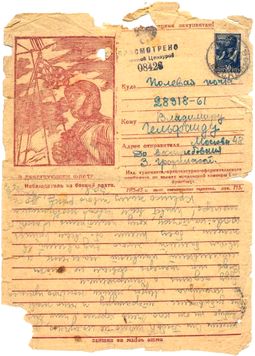
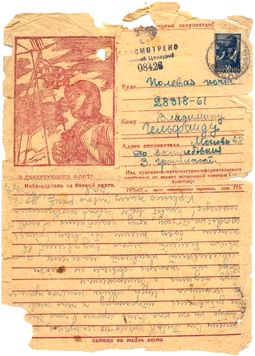
    Смерть немецким оккупантам. В действующем флоте. Наблюдатель на боевой вахте.
    Изд. художеств.-архитектурно-оформительского комбината по заказу московской конторы Главбумсбыта
    19/5-43 г. тип. таганского треста. зак. 175.

    Просмотрено военной цензурой 08426
    Куда Полевая почта 28318-61
    Кому Владимиру Гельфанду
    Адрес отправителя Москва 48
    До востребования
    З. Гродинской.
    Выше черты не пишите

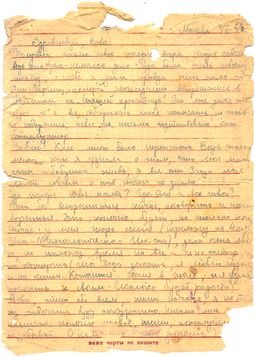
    Пиши. От Бебы К ничего не получаю, и вообще ни от кого. Очень хорошо, что ты не забываешь литературу и что тебя не покинула Муза, стихи, конечно, присылай, буду ждать с нетерпением. Ведь ты теперь совсем не тот маленький наивный мальчик, совсем большой, много видавший в жизни, боец. Пиши обо всем. Пришли фото-карточку, хочу посмотреть какой ты теперь. Привет всем твоим товарищам. Крепко жму твою руку, до скорой встречи.
    Зоя

    2/2
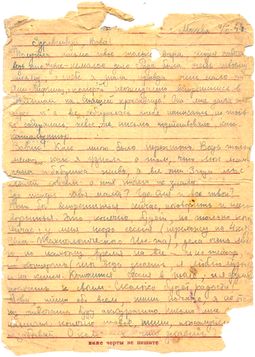
    Здравствуй, Вова!
    Получила письмо твое только вчера, сегодня отвечаю, ведь это уже – немалое дело. Рада была очень твоему письму. О тебе я знала, правда очень мало от Ани Лифшиц, с которой неожиданно встретилась в Большом на «Спящей красавице». Она мне дала твой адрес и я все собиралась тебе написать, но только собиралась, твое же письмо подействовало, как катализатор.
    Вовик! Как много было пережито. Ведь только месяц, как я узнала о том, что мои мама, папа и бабушка живы, а все эти 3 года мы с Лялей совсем о них ничего не знали. Где теперь твоя мама? Где Оля и все твои? Вот бы встретиться сейчас, поговорить и наговориться. Это, конечно, будет, но только когда. Сейчас у меня скоро сессия (перехожу на 4 курс Авиа-Технологического ин-та), дела очень много, но нахожу время на все – и на театр, на концерты (ты ведь знаешь, я люблю музыку) и на книги. Кончится сессия в июле, и я думаю поехать к своим. Сколько будет радости! Вова, пиши обо всем, пиши почаще, я не отстану, отвечать буду аккуратно. Письмо мне ты написал, конечно первое. Пиши, пожалуйста, не забывай. О ком ты что знаешь?
    Ниже черты не пишите


    Ereignisse

    Hergestellt
    wann
    Besessen
    wann
    wo  More about the place

    Bezug zu Personen oder Körperschaften

    Museum Berlin-Karlshorst / Sammlung
    Objekte [208078]


    Feldpostbrief des Rotarmisten V. Gelfand an seine Mutter, Sowjetunion, Juli 1942


    Beschreibung

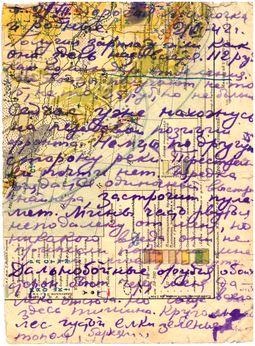
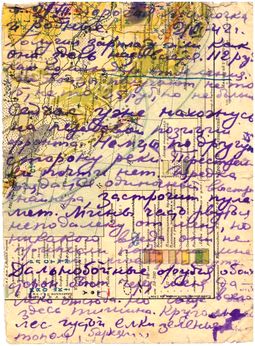
    Feldpostbrief des Rotarmisten Vladimir Natanovič Gel’fand an seine Mutter N. Gorodinskaja, geschrieben am 2. Juli 1942. Der Brief wurde auf einer Landkarte geschrieben.
    Gelfand war bis Oktober 1946 Leutnant der Roten Armee und Mitglied der Gruppe der sowjetischen Streitkräfte in Deutschland. Gelfand war Teilnehmer an der Schlacht um Berlin (301. Schützendivision der 5. Stoßarmee) und Autor des ersten in deutscher Sprache veröffentlichten Originaltagebuchs eines Offiziers der Roten Armee.


    Material/Technik

    Papier / gedruckt, handgeschrieben

    Maße

    Höhe: 17,0 cm, Breite: 12,6 cm

    Sprache

    Русский

    ½
    2/VII. Дорогая мамочка и родные.
    2/VII- 42 г.
    Получил зарплату или как она здесь называется. 112 руб. как командир отделения. Бойцы получают не то 15, не то 25 руб, но не больше. Сейчас уже нахожусь на передовой позиции фронта. Немцы по другую сторону реки. Перестрелки почти нет. Изредка раздается одиночный выстрел, застрочит пулемет. Мины часто рвуться неподалеку от меня, но никакого вреда они не принесли пока ни мне ни моему рассчету. Дальнобойные орудия обоих сторон бьют через меня далеко отсюда. Но чаще всего здесь тишина. Кругом лес густой, елки зеленые, тополя, березки.
    2/2
    Соловьи поют, кукует кукушка и весело щебечут другие птицы. Кажется что и войны то нет, что в жизни не произошло изменений. Смотришь на другую сторону реки, она гористая, песчаная – страшно живописная здесь местность. В стороне лес густой и зеленый, впереди поля. Но все там теряет свою // привлекательность, ибо враг коварный и беспощадный побывал там и сейчас притаился, попрятался, готовя против нас новые козни. Пишите, родные мои, получаете ли вы письма мои и как часто? Деньги пришлю, как только узнаю /одна строка среза на фотокопии/

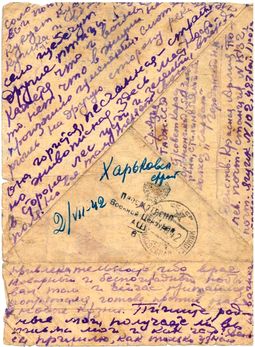
    Ср. Азия. Тадж. ССР Ст/совет Карасу,
    Орджоникидзебадского р-на, Сталинобадской обл. Колхоз «Сарват»
    Городынской Н.В.
    Действ. Красная Армия, Полев. почт. станция №1532, почт. ящик № 102, 427 бат. 1 рота /одна строка среза на фотокопии/

    Просмотрено военной цензурой АШ 6
    СССР. Орджоникидзебад. Тадж. 11.8.42
    2/VII-42 Харьковск. фронт


    Ereignisse

    Besessen
    wann
    wo  More about the place

    Bezug zu Personen oder Körperschaften

    Bezug zu Orten oder Plätzen

    Bezug zu Zeiten

    Museum Berlin-Karlshorst / Sammlung
    Objekte [208047]


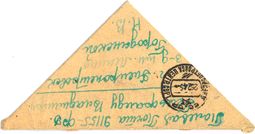
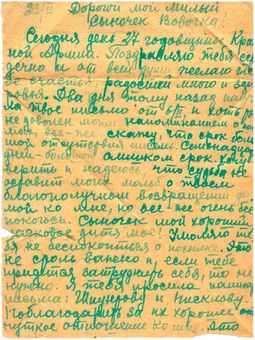
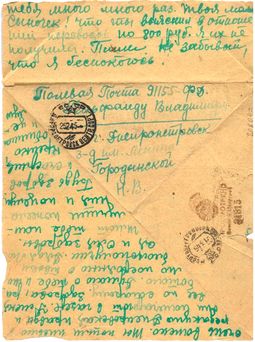
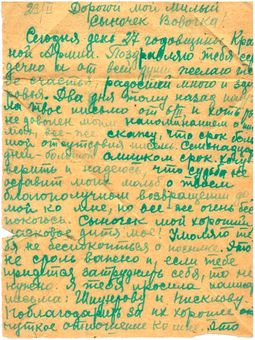
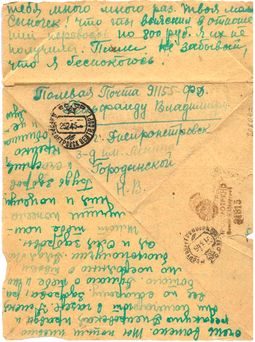
    Feldpostbrief an den Rotarmisten V. Gelfand von seiner Mutter, Februar 1945


    Beschreibung

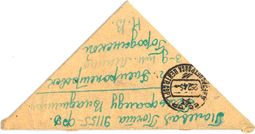
    Feldpostbrief an den Rotarmisten Vladimir Natanovič Gel’fand, geschrieben von seiner Mutter am 23. Februar 1945.
    Gelfand war bis Oktober 1946 Leutnant der Roten Armee und Mitglied der Gruppe der sowjetischen Streitkräfte in Deutschland. Gelfand war Teilnehmer an der Schlacht um Berlin (301. Schützendivision der 5. Stoßarmee) und Autor des ersten in deutscher Sprache veröffentlichten Originaltagebuchs eines Offiziers der Roten Armee.


    Material/Technik

    Papier / handgeschrieben

    Maße

    Höhe: 21,0 cm, Breite: 15,8 cm

    Sprache

    Русский

    1/4
    Полевая почта 91155-ФД
    Гельфанду Владимиру
    Г. Днепропетровск, завод им. Ленина, Городынской Н.В.
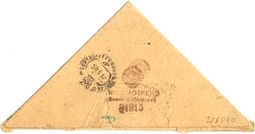
    (Почтовый штемпель:) СССР, Днепропетровск центр. сорт. 25245

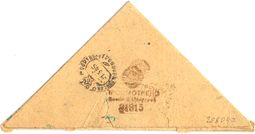
    2/4
    (Штамп:) Просмотрено военной цензурой. 31315
    (Почтовый штемпель:) СССР, 1.3.45

    3/4
    23/II Дорогой мой милый сыночек Вовочка!
    Сегодня день 27 годовщины Красной Армии. Поздравляю тебя сердечно и от всей души желаю тебе счастья, радостей много и здоровья. Два дня тому назад получила твое письмо от 6/II, и хоть ты недоволен моим напоминанием о письмах, все-же скажу, что срок большой отсутствия писем. Семнадцать дней – большой слишком срок. Хочу верить и надеюсь, что судьба не оставит моих мольб о твоем благополучном возвращении домой ко мне, но все же очень беспокоюсь. Сыночек мой хороший, ласковое дитя мое! Умоляю тебя не беспокоиться о посылке. Это не столь важно и, если тебе придется затруднить себя, то не нужно. Я тебя просила написать письма Шпунрову и Писклову. Поблагодарить за их хорошее и чуткое отношение ко мне. Это

    4/4
    очень важно. Ты пошли письмо в редакцию Днепровской правды и они напечатают в газете. У меня все по старому. Здорова, работаю. Думаю о тебе и молю постоянно о твоем благополучии. Дядя Люся и Оля здоровы. Шлют тебе наилучшие пожелания и поцелуи. Будь здоров и счастлив. Крепко обнимаю и целую тебя много много раз. Твоя мама. Сыночек, что ты выяснил в отношении переводов по 800 руб. Я их не получила. Пиши. Не забывай, что я беспокоюсь.


    Ereignisse

    Besessen
    wann
    wo  More about the place

    Bezug zu Personen oder Körperschaften

    Museum Berlin-Karlshorst / Sammlung
    Objekte [208045]


    Feldpostbrief des Rotarmisten V. Gelfand an seine Mutter, Sowjetunion, März 1944


    Beschreibung

    Feldpostbrief des Rotarmisten Vladimir Natanovič Gel’fand an seine Mutter N. Gorodinskaja, geschrieben am 29. März 1944. Das Thema des Briefes sind die Kämpfe um die Befreiung der von der Wehrmacht besetzten Gebiete.
    Gelfand war bis Oktober 1946 Leutnant der Roten Armee und Mitglied der Gruppe der sowjetischen Streitkräfte in Deutschland. Gelfand war Teilnehmer an der Schlacht um Berlin (301. Schützendivision der 5. Stoßarmee) und Autor des ersten in deutscher Sprache veröffentlichten Originaltagebuchs eines Offiziers der Roten Armee.


    Material/Technik

    Papier / handgeschrieben

    Maße

    Höhe: 17,8 cm, Breite: 14,3 cm

    Sprache

    Русский

    1/4
    /Штамп:/ Просмотрено военной цензурой 04893.
    /Почтовый штамп:/ Магнитогорск. Челяб. Обл. 1.05.44

    2/4
    Магнитогорск, Проспект Чайковского, №2, кв. 62.
    Городынской Н.В.
    Полевая почта 28318-Ы
    Гельфанду Владимиру

    3/4
    29/III-1944 г.
    Дорогая мамочка.
    Долго не имел возможности писать писем. Сейчас у нас очень напряженное время. Наступаем. Неотступно преследуем врага. Все время в движении. 28 числа освободили крупный областной центр, город /название зачеркнуто цензором/ портовый город и крупный жел. узел. Если бы видела ту радость с которой нас встречало население. Пышками, коржиками всякими, папиросами табаком (я не курю, правда) мылом – кто чем мог. Люди плакали и некоторые обнимали и целовали нас. Когда мы входили в город, шел еще бой. Немцы обстреливали тяжелыми снарядами весь город. Им не жаль было мирного населения и кварталов большого города. Но люди не страшились ничего, даже смерти. А когда неподалеку упал снаряд и ранил кого-то из военных, они прямо через улицу, гурьбой бросились выносить раненного с опасного участка. Это была очень трогательная картина. А ведь кругом остервенело бились о землю все новые и новые

    4/4
    снаряды и мины. Сейчас продвигаемся дальше. Близится с каждым мигом прекрасный час освобождения нашей родины от подлых немецких варваров, близится день окончательного разгрома фашистов. Извини за краткость. За последнее время ничего не получал. Только вчера получил письмо от папы, а сегодня от тебя, тети Ани, Маи Белокопытовой. От т. Любы и Оли к сожалению писем не было. От дяди Моси тоже, хотя много я и не ждал. Обо мне не беспокойся. Со мной ничего плохого не случится. Целую, твой сын Вова.


    Ereignisse

    Besessen
    wann
    wo  More about the place

    Bezug zu Personen oder Körperschaften

    Museum Berlin-Karlshorst / Sammlung
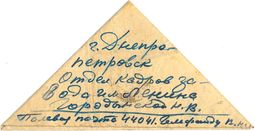
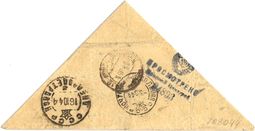
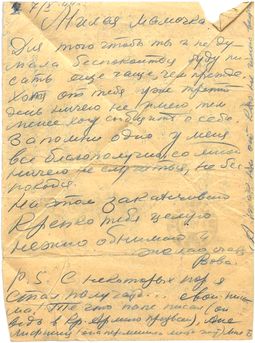
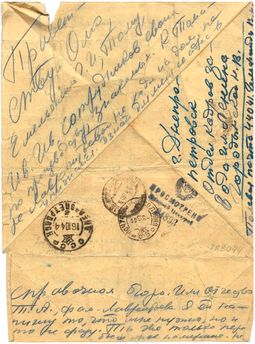
    Objekte [208044]


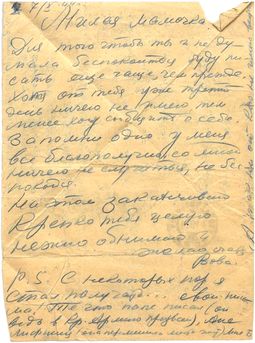
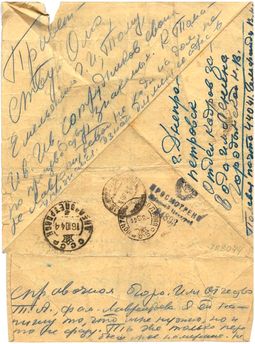
    Feldpostbrief des Rotarmisten V. Gelfand an seine Mutter, Sowjetunion, Oktober 1944


    Beschreibung

    Feldpostbrief des Rotarmisten Vladimir Natanovič Gel’fand an seine Mutter N. Gorodinskaja, geschrieben am 7. Oktober 1944.
    Gelfand war bis Oktober 1946 Leutnant der Roten Armee und Mitglied der Gruppe der sowjetischen Streitkräfte in Deutschland. Gelfand war Teilnehmer an der Schlacht um Berlin (301. Schützendivision der 5. Stoßarmee) und Autor des ersten in deutscher Sprache veröffentlichten Originaltagebuchs eines Offiziers der Roten Armee.


    Material/Technik

    Papier; handgeschrieben

    Maße

    Höhe: 20,3 cm, Breite: 15,0 cm

    Sprache

    Русский

    1/4
    Днепропетровск, отдел кадров завода им. Ленина, Городынской Н.В.
    Полевая почта 44041 Гельфанду В.Н.

    2/4
    /Штамп/ Просмотрено военной цензурой 04893.
    /Почтовые штемпели/
    СССР. Полевая почта. 8.10.44
    СССР. Днепропетровск. 16.10.44

    3/4
    7/X-44
    Милая мамочка.
    Для того чтобы ты и не думала беспокоиться буду писать еще чаще, чем прежде. Хотя от тебя уже третий день ничего не имею, тем не менее хочу сообщить о себе. Запомни одно у меня все благополучно, со мной ничего не случится, не беспокойся.
    На этом заканчиваю.
    Крепко тебя целую.
    Нежно обнимаю и желаю счастья
    Вова
    P.S. С некоторых пор я стал получать … свои письма! Те что папе писал (он ведь в Кр. Армию призван), Лене Лившиц (она переменила место жительства)
    /приписка вдоль длинной стороны листа:/ А так ни от кого не имею весточки.

    4/4
    Приветствую Олю, Емельяненко Г.И., Тому, сотрудников своих по производству, знакомых. К Тамаре Лаврентьевой не ходи на дом, не унижайся. Узнай для меня ее адрес.


    Ereignisse

    Besessen
    wann
    wo  More about the place

    Museum Berlin-Karlshorst / Sammlung
    Objekte [208043]


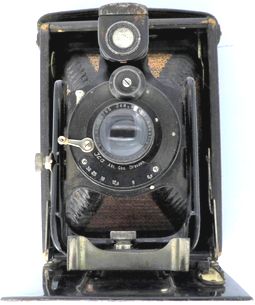
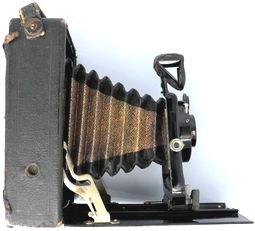
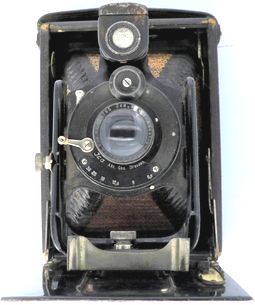
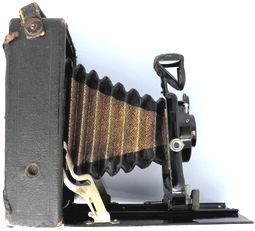
    Fotokamera "Sirene 135", Deutsches Reich, 1914-1926


    Material/Technik

    Metall, Holz, Pappe, Glas

    Maße

    Länge: 4,4 (geschlossen) ; Höhe: 16 ; Breite: 11,8

    Beschreibung

    Eine Fotokamera "Sirene 135". Das Objekt stammt aus dem Nachlass von Wladimir Gelfand, der bis Oktober 1946 Leutnant in der Roten Armee war und dann Mitglied der Gruppe der sowjetischen Streitkräfte in Deutschland wurde. Gelfand war Teilnehmer an der Schlacht um Berlin (301. Schützendivision der 5. Stoßarmee) und Autor des ersten in deutscher Sprache veröffentlichten Originaltagebuchs eines Offiziers der Roten Armee.


    Ereignisse

    Hergestellt
    wann
    Besessen
    wann
    wo  More about the place

    Bezug zu Personen oder Körperschaften

    Museum Berlin-Karlshorst / Sammlung
    Objekte [208042]


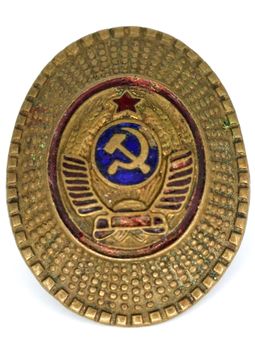
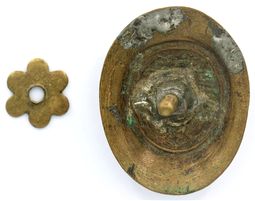
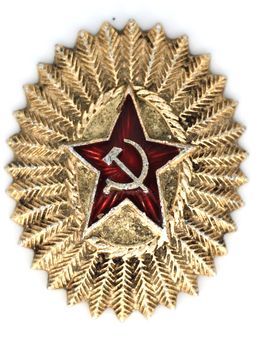
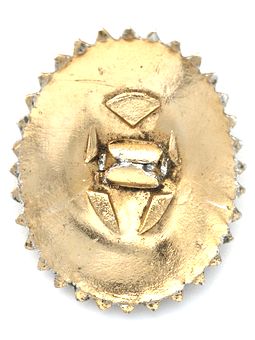
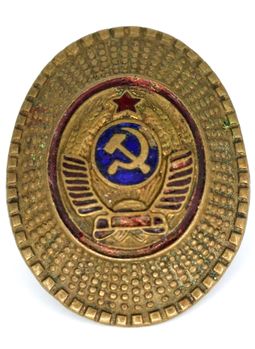
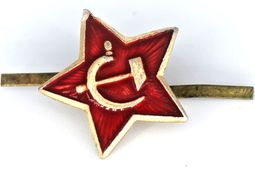
    Mützenabzeichen der Angehörigen der Sowjetarmee, ohne Datierung


    Material/Technik

    Metall; emailliert

    Maße

    Höhe: 4,0 cm, Breite: 3,0 cm

    Beschreibung

    Ein Mützenabzeichen der Angehörigen der Sowjetarmee. Das Abzeichen stammt aus dem Nachlass von Vladimir Gelfand, bis Oktober 1946 Leutnant der Roten Armee und Mitglied der Gruppe der sowjetischen Streitkräfte in Deutschland. Gelfand war Teilnehmer an der Schlacht um Berlin (301. Schützendivision der 5. Stoßarmee) und Autor des ersten in deutscher Sprache veröffentlichten Originaltagebuchs eines Offiziers der Roten Armee.


    Ereignisse

    Hergestellt
    wann
    Besessen
    wann
    wo  More about the place

    Bezug zu Personen oder Körperschaften

    Bezug zu Orten oder Plätzen

    Museum Berlin-Karlshorst / Sammlung
    Objekte [208041]


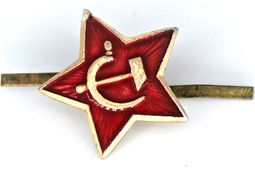
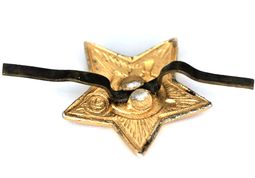
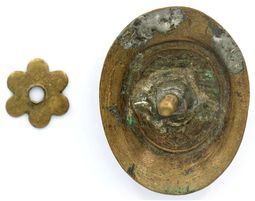
    Mützenabzeichen der Angehörigen der Sowjetarmee, ohne Datierung


    Material/Technik

    Metall; emailliert

    Maße

    Höhe: 3,0 cm, Breite: 2,8 cm

    Beschreibung

    Ein Mützenabzeichen der Angehörigen der Sowjetarmee. Das Abzeichen stammt aus dem Nachlass von Vladimir Gelfand, bis Oktober 1946 Leutnant der Roten Armee und Mitglied der Gruppe der sowjetischen Streitkräfte in Deutschland. Gelfand war Teilnehmer an der Schlacht um Berlin (301. Schützendivision der 5. Stoßarmee) und Autor des ersten in deutscher Sprache veröffentlichten Originaltagebuchs eines Offiziers der Roten Armee.
    Das Abzeichen ist leicht verformt und ohne Nadel.


    Ereignisse

    Hergestellt
    wann
    wo  More about the place
    Besessen
    wann
    wo  More about the place

    Bezug zu Personen oder Körperschaften

    Bezug zu Orten oder Plätzen

    Museum Berlin-Karlshorst / Sammlung
    Objekte [208040]


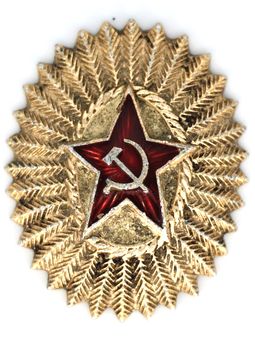
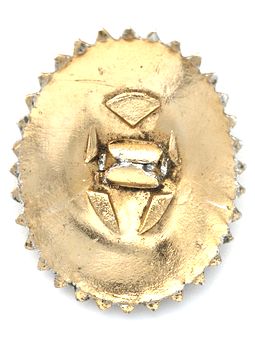
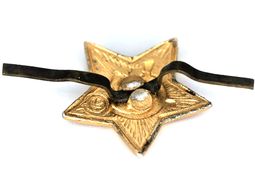
    Mützenabzeichen (Sowjetstern) der Angehörigen der Sowjetarmee


    Material/Technik

    Metall; emailliert

    Maße

    Durchmesser: 2,3 cm (Stern)

    Beschreibung

    Ein Mützenabzeichen (Sowjetstern) der Angehörigen der Sowjetarmee. Das Abzeichen stammt aus dem Nachlass von Vladimir Gelfand (1923-1983), bis Oktober 1946 Leutnant der Roten Armee und Mitglied der Gruppe der sowjetischen Streitkräfte in Deutschland. Gelfand war Teilnehmer an der Schlacht um Berlin (301. Schützendivision der 5. Stoßarmee) und Autor des ersten in deutscher Sprache veröffentlichten Originaltagebuchs eines Offiziers der Roten Armee.


    Ereignisse

    Hergestellt
    wer Zur Personenseite: Münzhof
    Besessen
    wann
    wo  More about the place

    Bezug zu Personen oder Körperschaften

    Bezug zu Orten oder Plätzen

    Museum Berlin-Karlshorst / Sammlung
    Objekte [208039]


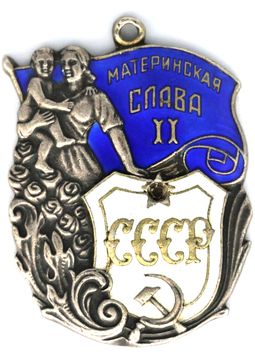
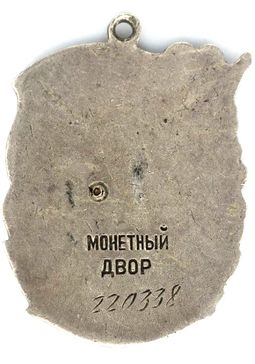
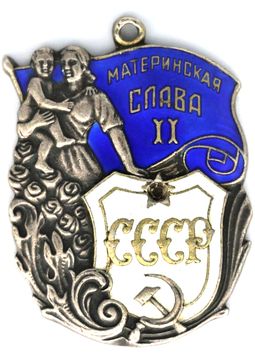
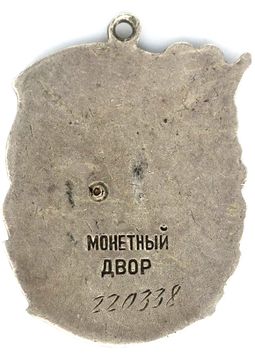
    Orden des mütterlichen Ruhms 2. Klasse UdSSR, nach 1944


    Material/Technik

    Silber (teilweise vergoldet); emailliert

    Maße

    Höhe: 4,0 cm, Breite: 3,0 cm

    Beschreibung

    Ein Orden des mütterlichen Ruhms 2. Klasse in Silber. Der Orden war eine sowjetische zivile Auszeichnung für Mütter mit einer großen Anzahl von Kindern, gestiftet in drei Klassen. Die zweite Klasse in Silber wurde für Mütter verliehen, die acht Kinder geboren und aufgezogen hatten. Der Orden wurde mit dem ersten Geburtstag des letzten Kindes verliehen, vorausgesetzt, dass die anderen Kinder, die zum Erreichen der Mindestzahl erforderlich waren (leibliche oder adoptierte), noch lebten. Kinder, die unter heldenhaften, militärischen oder anderen ehrenvollen Umständen, einschließlich Berufskrankheiten, ums Leben gekommen waren, wurden ebenfalls gezählt. Dieser Orden stammt aus dem Nachlass von Vladimir Gelfand (1923-1983), bis Oktober 1946 Leutnant der Roten Armee und Mitglied der Gruppe der sowjetischen Streitkräfte in Deutschland. Gelfand war Teilnehmer an der Schlacht um Berlin (301. Schützendivision der 5. Stoßarmee) und Autor des ersten in deutscher Sprache veröffentlichten Originaltagebuchs eines Offiziers der Roten Armee.


    Ereignisse

    Besessen
    wann
    wo  More about the place

    Bezug zu Personen oder Körperschaften

    Bezug zu Orten oder Plätzen

    Museum Berlin-Karlshorst / Sammlung
    Objekte [208038]


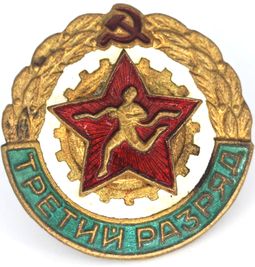
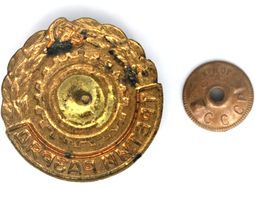
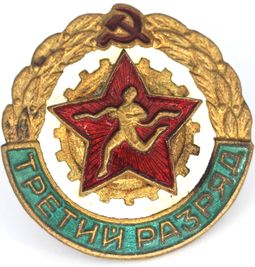
    Sportabzeichen "3. Klasse", Sowjetunion, ohne Datierung


    Material/Technik

    Metall; emailliert

    Maße

    Durchmesser: 3,0 cm

    Beschreibung

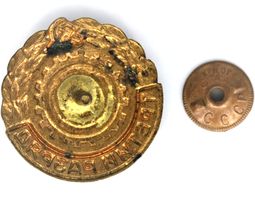
    Ein sowjetisches Sportabzeichen der 3. Klasse mit Gewindestift und Haltemutter. Das Abzeichen stammt aus dem Nachlass von Vladimir Gelfand (1923-1983), bis Oktober 1946 Leutnant der Roten Armee und Mitglied der Gruppe der sowjetischen Streitkräfte in Deutschland. Gelfand war Teilnehmer an der Schlacht um Berlin (301. Schützendivision der 5. Stoßarmee) und Autor des ersten in deutscher Sprache veröffentlichten Originaltagebuchs eines Offiziers der Roten Armee.


    Ereignisse

    Hergestellt
    wann
    wo  More about the place
    Besessen
    wann
    wo  More about the place

    Bezug zu Personen oder Körperschaften

    Bezug zu Orten oder Plätzen

    Museum Berlin-Karlshorst / Sammlung
    Objekte [208037]


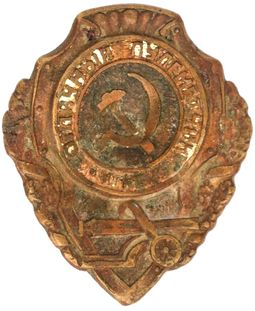
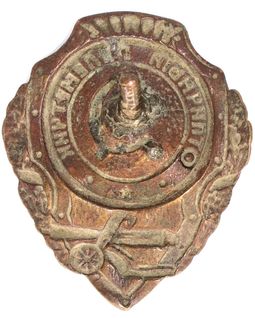
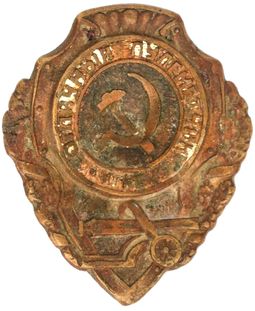
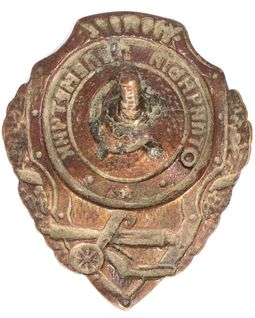
    Abzeichen "Ausgezeichneter Maschinengewehrschütze" der Sowjetarmee, nach 1942


    Material/Technik

    Metall

    Maße

    Höhe: 4,5 cm, Breite: 3,8 cm

    Beschreibung

    Ein Abzeichen "Ausgezeichneter Maschinengewehrschütze" der Sowjetarmee. Das stark verrostetes Abzeichen stammt aus dem Nachlass von Vladimir Gelfand, bis Oktober 1946 Leutnant der Roten Armee und Mitglied der Gruppe der sowjetischen Streitkräfte in Deutschland. Gelfand war Teilnehmer an der Schlacht um Berlin (301. Schützendivision der 5. Stoßarmee) und Autor des ersten in deutscher Sprache veröffentlichten Originaltagebuchs eines Offiziers der Roten Armee.


    Ereignisse

    Besessen
    wann
    wo  More about the place

    Bezug zu Personen oder Körperschaften

    Bezug zu Orten oder Plätzen

    Museum Berlin-Karlshorst / Sammlung
    Objekte [208036]


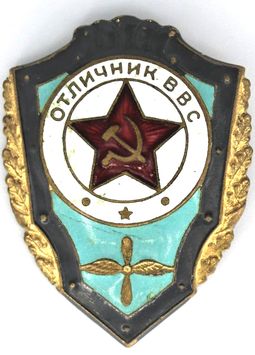
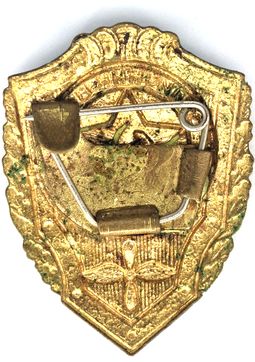
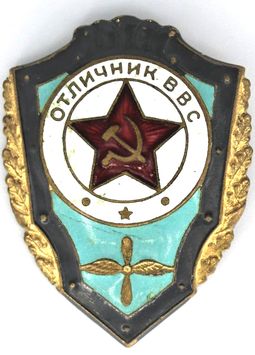
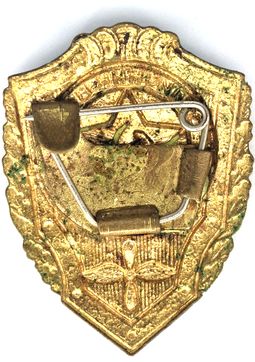
    Abzeichen "Ausgezeichneter der Luftstreitkräfte, Sowjetunion", ohne Datierung


    Material/Technik

    Metall; emailliert

    Maße

    Höhe: 4,0 cm, Breite: 3,0 cm

    Beschreibung

    Ein Abzeichen "Ausgezeichneter der Luftstreitkräfte" der Sowjetarmee. Das Abzeichen stammt aus dem Nachlass von Vladimir Gelfand, bis Oktober 1946 Leutnant der Roten Armee und Mitglied der Gruppe der sowjetischen Streitkräfte in Deutschland. Gelfand war Teilnehmer an der Schlacht um Berlin (301. Schützendivision der 5. Stoßarmee) und Autor des ersten in deutscher Sprache veröffentlichten Originaltagebuchs eines Offiziers der Roten Armee.


    Ereignisse

    Besessen
    wann
    wo  More about the place

    Bezug zu Personen oder Körperschaften

    Bezug zu Orten oder Plätzen

    Museum Berlin-Karlshorst / Sammlung
    Objekte [208036]


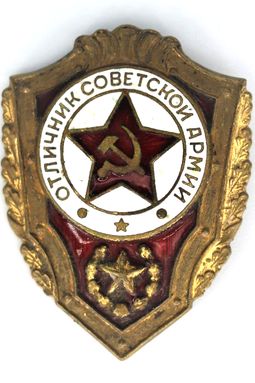
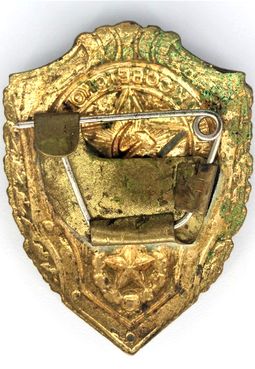
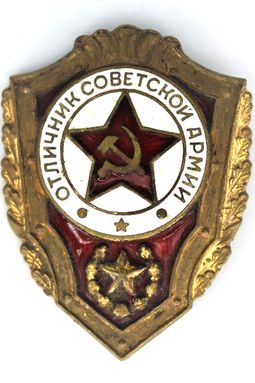
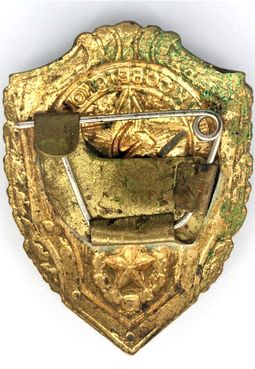
    Brustabzeichen "Ausgezeichneter der Sowjetarmee", Sowjetunion, ohne Datierung


    Material/Technik

    Metall; emailliert

    Maße

    Höhe: 4,0 cm, Breite: 3,0 cm

    Beschreibung

    Ein Abzeichen "Ausgezeichneter der Sowjetarmee". Das Abzeichen stammt aus dem Nachlass von Vladimir Gelfand, bis Oktober 1946 Leutnant der Roten Armee und Mitglied der Gruppe der sowjetischen Streitkräfte in Deutschland. Gelfand war Teilnehmer an der Schlacht um Berlin (301. Schützendivision der 5. Stoßarmee) und Autor des ersten in deutscher Sprache veröffentlichten Originaltagebuchs eines Offiziers der Roten Armee.


    Ereignisse

    Hergestellt
    wer Zur Personenseite: Werk "Pobjeda", Moskau
    wann
    wo  More about the place
    Besessen
    wann
    wo  More about the place

    Bezug zu Personen oder Körperschaften

    Bezug zu Orten oder Plätzen

    Museum Berlin-Karlshorst / Sammlung
    Objekte [208034]


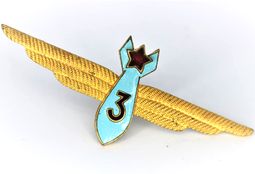
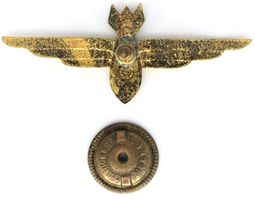
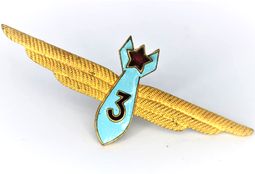
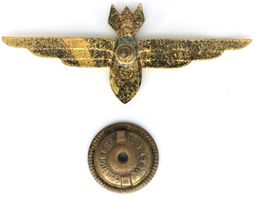
    Klassifizierungsabzeichen "Militärsteuermann 3. Klasse" der Sowjetarmee, 1949


    Material/Technik

    Metall; emailliert, vergoldet

    Maße

    Länge: 1,5 cm; Höhe: 2,7 cm; Breite: 6,5 cm

    Beschreibung

    Ein Klassifizierungsabzeichen der Luftstreitkräfte und der Luftverteidigung der Sowjetarmee mit Gewindestift und Haltemutter. Gestiftet am 19.2.1949. Das Abzeichen stammt aus dem Nachlass von Vladimir Gelfand, bis Oktober 1946 Leutnant der Roten Armee und Mitglied der Gruppe der sowjetischen Streitkräfte in Deutschland. Gelfand war Teilnehmer an der Schlacht um Berlin (301. Schützendivision der 5. Stoßarmee) und Autor des ersten in deutscher Sprache veröffentlichten Originaltagebuchs eines Offiziers der Roten Armee.


    Ereignisse

    Hergestellt
    wer Zur Personenseite: Moskauer Münzhof
    wann
    wo  More about the place
    Besessen
    wann
    wo  More about the place

    Bezug zu Personen oder Körperschaften

    Bezug zu Orten oder Plätzen


    Museum Berlin-Karlshorst / Sammlung
    Objekte [208033]


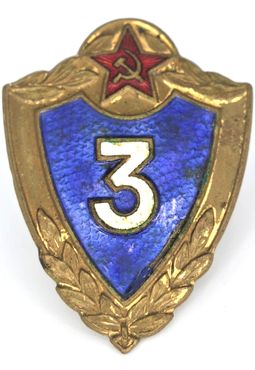
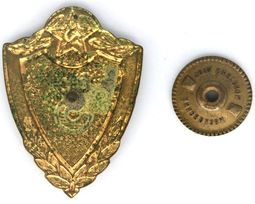
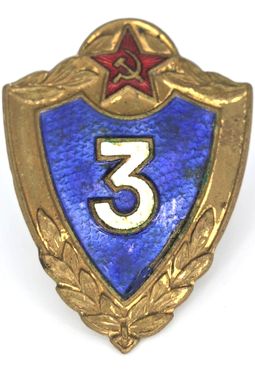
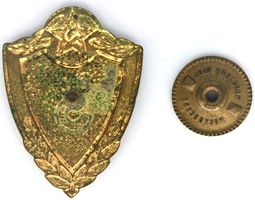
    Spezialistenabzeichen "Spezialist 3. Klasse", Sowjetunion, nach 1954


    Material/Technik

    Messing; emailliert

    Maße

    Höhe: 4,9 cm, Breite: 3,2 cm


    Beschreibung

    Ein sowjetisches Spezialistenabzeichen "Spezialist 3. Klasse", mit Schraube. Das Abzeichen stammt aus dem Nachlass von Vladimir Gelfand (1923-1983), bis Oktober 1946 Leutnant der Roten Armee und Mitglied der Gruppe der sowjetischen Streitkräfte in Deutschland. Gelfand war Teilnehmer an der Schlacht um Berlin (301. Schützendivision der 5. Stoßarmee) und Autor des ersten in deutscher Sprache veröffentlichten Originaltagebuchs eines Offiziers der Roten Armee.


    Ereignisse

    Besessen
    wann
    wo  More about the place

    Bezug zu Personen oder Körperschaften

    Bezug zu Orten oder Plätzen

    Museum Berlin-Karlshorst / Sammlung
    Objekte [208032]


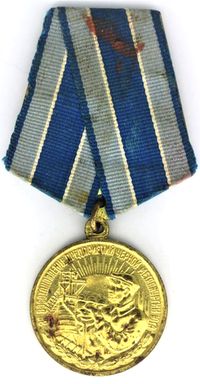
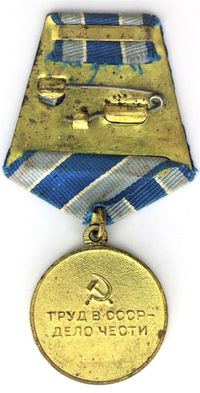
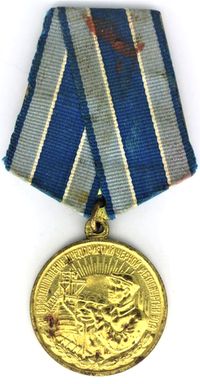
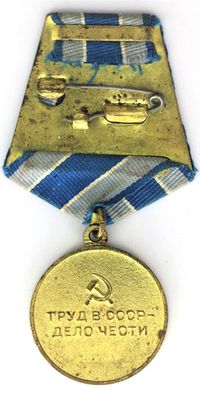
    Medaille Für die Wiederherstellung von Betrieben der Eisenmetallurgie im Süden, Sowjetunion, nach 1984


    Material/Technik

    Messing, vergoldet

    Maße

    Durchmesser: 3,2 cm (Medaille)

    Beschreibung

    Eine sowjetische Medaille "Für die Wiederherstellung von Betrieben der Eisenmetallurgie im Süden". Die Medaille stammt aus dem Nachlass von Vladimir Gelfand (1923-1983), bis Oktober 1946 Leutnant der Roten Armee und Mitglied der Gruppe der sowjetischen Streitkräfte in Deutschland. Gelfand war Teilnehmer an der Schlacht um Berlin (301. Schützendivision der 5. Stoßarmee) und Autor des ersten in deutscher Sprache veröffentlichten Originaltagebuchs eines Offiziers der Roten Armee.


    Ereignisse

    Besessen
    wann
    wo  More about the place
    Wurde abgebildet (Akteur)
    wer Zur Personenseite: Wladimir Iljitsch Lenin (1870-1924)

    Bezug zu Personen oder Körperschaften

    Bezug zu Orten oder Plätzen

    Museum Berlin-Karlshorst / Sammlung
    Objekte [208031]


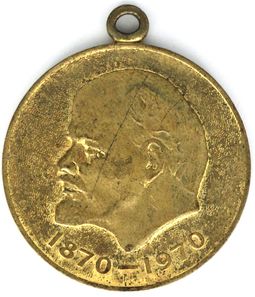
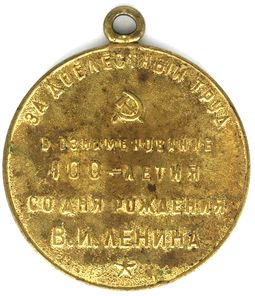
    Medaille "Zum 100. Geburtstag Lenins", Sowjetunion, 1970


    Material/Technik

    Tombak; vergoldet

    Maße

    Durchmesser: 3,2 cm

    Beschreibung

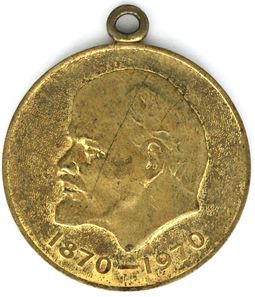
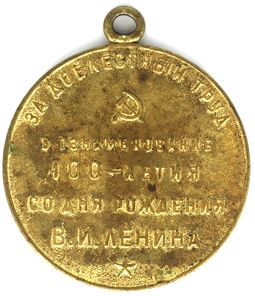
    Eine sowjetische Medaille "Für heldenmütige Arbeit / Zum 100. Geburtstag Lenins". Die Bildseite zeigt ein Seitenporträt Lenins.
    Die Medaille stammt aus dem Nachlass von Vladimir Gelfand, bis Oktober 1946 Leutnant der Roten Armee und Mitglied der Gruppe der sowjetischen Streitkräfte in Deutschland. Gelfand war Teilnehmer an der Schlacht um Berlin (301. Schützendivision der 5. Stoßarmee) und Autor des ersten in deutscher Sprache veröffentlichten Originaltagebuchs eines Offiziers der Roten Armee.


    Ereignisse

    Besessen
    wann
    wo  More about the place

    Bezug zu Personen oder Körperschaften

    Bezug zu Orten oder Plätzen

    Bezug zu Zeiten

    Museum Berlin-Karlshorst / Sammlung
    Objekte [208030]


    Medaille "30 Jahre Sowjetische Armee und Flotte", Sowjetunion, nach 1948


    Material/Technik

    Messing

    Maße

    Durchmesser: 3,3 cm

    Beschreibung

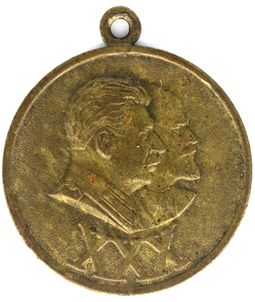
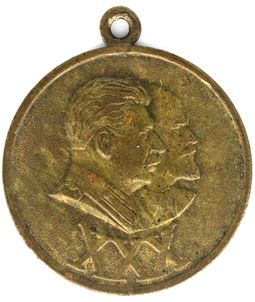
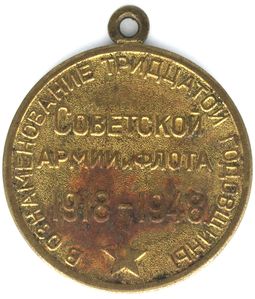
    Eine sowjetische Medaille "30 Jahre Sowjetische Armee und Flotte", verliehen nach 1948. Die Bildseite zeigt Seitenporträts von Stalin und Lenin.
    Die Medaille stammt aus dem Nachlass von Vladimir Gelfand, bis Oktober 1946 Leutnant der Roten Armee und Mitglied der Gruppe der sowjetischen Streitkräfte in Deutschland. Gelfand war Teilnehmer an der Schlacht um Berlin (301. Schützendivision der 5. Stoßarmee) und Autor des ersten in deutscher Sprache veröffentlichten Originaltagebuchs eines Offiziers der Roten Armee.


    Ereignisse

    Besessen
    wann
    wo  More about the place

    Bezug zu Personen oder Körperschaften

    Bezug zu Orten oder Plätzen

    Bezug zu Zeiten

    Museum Berlin-Karlshorst / Sammlung
    Objekte [208029]


    Medaille Für den Sieg über Japan, Sowjetunion, nach 1945


    Material/Technik

    Messing

    Maße

    Durchmesser: 3,2 cm

    Beschreibung

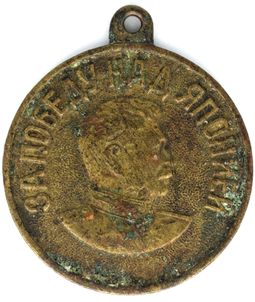
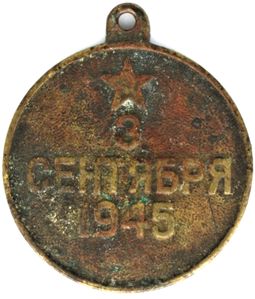
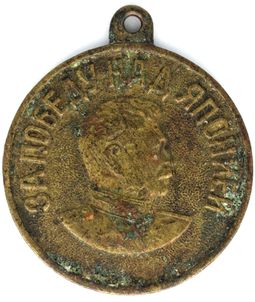
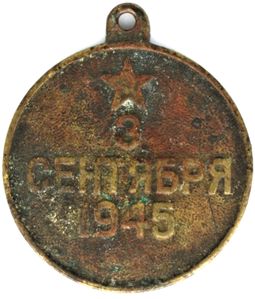
    Eine Medaille "Für den Sieg über Japan". Die goldfarbene Medaille zeigt auf ihrer Bildseite das rechtsblickende Kopfporträt Stalins in Uniform sowie die Umschrift "Für den Sieg über Japan" auf Russisch. Die Rückseite zeigt die dreizeilige Inschrift "3. September 1945", welche für die Kapitulation der japanischen Streitkräfte auf chinesischem Boden steht. Darüber befindet sich ein Sowjetstern. Die Medaille ist ohne Spange.
    Die Medaille stammt aus dem Nachlass von Vladimir Gelfand, bis Oktober 1946 Leutnant der Roten Armee und Mitglied der Gruppe der sowjetischen Streitkräfte in Deutschland. Gelfand war Teilnehmer an der Schlacht um Berlin (301. Schützendivision der 5. Stoßarmee) und Autor des ersten in deutscher Sprache veröffentlichten Originaltagebuchs eines Offiziers der Roten Armee.


    Ereignisse

    Besessen
    wann
    wo  More about the place

    Bezug zu Personen oder Körperschaften

    Bezug zu Orten oder Plätzen

    Museum Berlin-Karlshorst / Sammlung
    Objekte [208028]


    Medaille Für die Einnahme Berlins, Sowjetunion, nach 1945


    Material/Technik

    Messing

    Maße

    Durchmesser: 3,2 cm

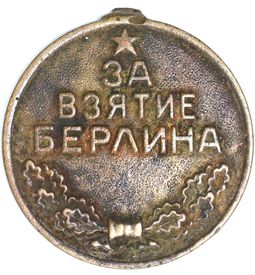
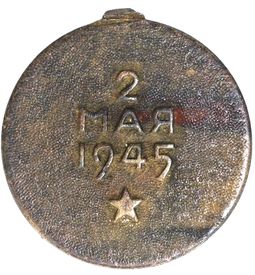
    Beschreibung

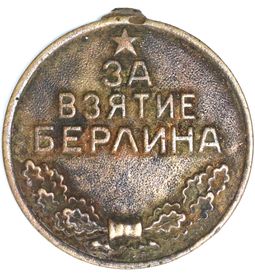
    Eine UdSSR-Medaille für die Einnahme Berlin, verliehen nach 1945. Die Medaille wurde am 9. Juni 1945 gestiftet. Mit ihr wurden mehr als eine Million sowjetische Soldaten für ihre Teilnahme am Kampf um Berlin ausgezeichnet.
    Die Medaille stammt aus dem Nachlass von Vladimir Gelfand, bis Oktober 1946 Leutnant der Roten Armee und Mitglied der Gruppe der sowjetischen Streitkräfte in Deutschland. Gelfand war Teilnehmer an der Schlacht um Berlin (301. Schützendivision der 5. Stoßarmee) und Autor des ersten in deutscher Sprache veröffentlichten Originaltagebuchs eines Offiziers der Roten Armee.


    Ereignisse

    Besessen
    wann
    wo  More about the place

    Bezug zu Personen oder Körperschaften

    Bezug zu Orten oder Plätzen

    Bezug zu Zeiten

    Museum Berlin-Karlshorst / Sammlung
    Objekte [208027]


    UdSSR-Medaille Für die Einnahme Wiens, Sowjetunion, nach 1945


    Material/Technik

    Messing

    Maße

    Durchmesser: 3,2 cm

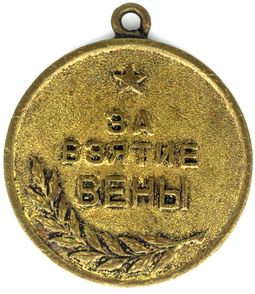
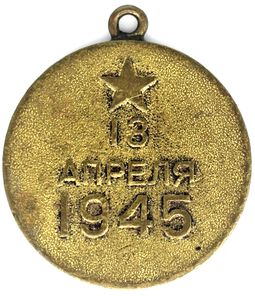
    Beschreibung

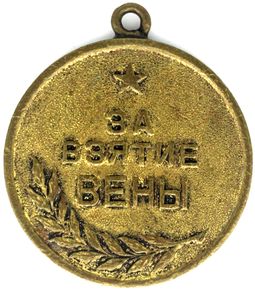
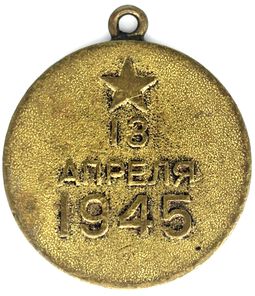
    Eine UdSSR-Medaille Für die Einnahme Wiens am 13. April 1945, gestiftet am 9.6.1945. Die bronzefarbene Medaille zeigt auf ihrer Bildseite mittig die dreizeilige Inschrift "Für die Einnahme Wiens" auf Russisch. Darunter liegt ein nach links gerichteter Lorbeerzweig mit Früchten. Über der Inschrift befindet sich ein Sowjetstern. Die Rückseite zeigt die dreizeilige Inschrift "13. April 1945", das Datum der Einnahme. Darüber ist ebenfalls ein Sowjetstern dargestellt. Die Medaille ist ohne Spange.
    Die Medaille stammt aus dem Nachlass von Vladimir Gelfand, bis Oktober 1946 Leutnant der Roten Armee und Mitglied der Gruppe der sowjetischen Streitkräfte in Deutschland. Gelfand war Teilnehmer an der Schlacht um Berlin (301. Schützendivision der 5. Stoßarmee) und Autor des ersten in deutscher Sprache veröffentlichten Originaltagebuchs eines Offiziers der Roten Armee.


    Ereignisse

    Besessen
    wann
    wo  More about the place

    Bezug zu Personen oder Körperschaften

    Bezug zu Orten oder Plätzen

    Bezug zu Zeiten

    Museum Berlin-Karlshorst / Sammlung
    Objekte [208026]


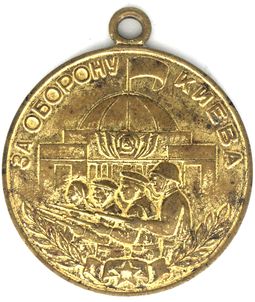
    UdSSR-Medaille Für die Verteidigung Kiews, Sowjetunion, nach 1961


    Material/Technik

    Messing

    Maße

    Durchmesser: 3,2 cm

    Beschreibung

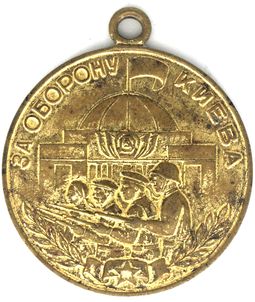
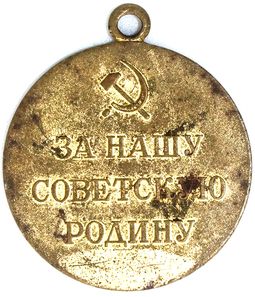
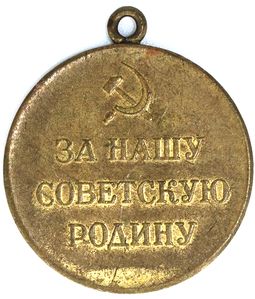
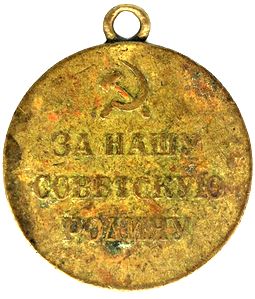
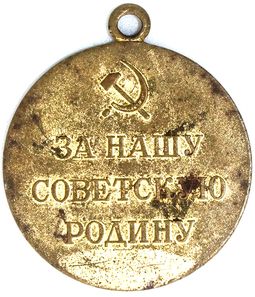
    Eine Medaille Für die Verteidigung Kiews. Die bronzefarbene Medaille zeigt auf ihrer Bildseite das Gebäude der Werchowna Rada mit der wehenden Flagge. Davor marschiert eine Reihe von Menschen, deren Reihenfolge von vorn gesehen mit einem Rotarmisten beginnt, dahinter folgen ein Marinesoldat, ein Arbeiter und eine Bäuerin. Die Figuren schreiten mit aufgesetztem Bajonett nach Links. Oben befindet sich die Inschrift "Für die Verteidigung Kiews". Unten sind zwei gekreuzte Lorbeerzweigen, die in der Mitte durch einen Sowjetstern verbunden sind. Die Rückseite zeigt die dreizeilige Inschrift "Für unsere sowjetische Heimat".
    Die Medaille stammt aus dem Nachlass von Vladimir Gelfand, bis Oktober 1946 Leutnant der Roten Armee und Mitglied der Gruppe der sowjetischen Streitkräfte in Deutschland. Gelfand war Teilnehmer an der Schlacht um Berlin (301. Schützendivision der 5. Stoßarmee) und Autor des ersten in deutscher Sprache veröffentlichten Originaltagebuchs eines Offiziers der Roten Armee.


    Ereignisse

    Besessen
    wann
    wo  More about the place

    Bezug zu Personen oder Körperschaften

    Bezug zu Orten oder Plätzen

    Bezug zu Zeiten

    Museum Berlin-Karlshorst / Sammlung
    Objekte [208024]


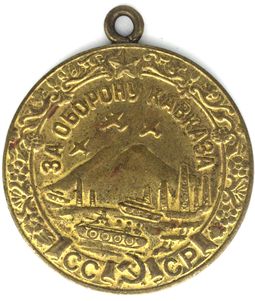
    UdSSR-Medaille Für die Verteidigung des Kaukasus, nach 1943


    Material/Technik

    Messing

    Maße

    Durchmesser: 3,2 cm

    Beschreibung

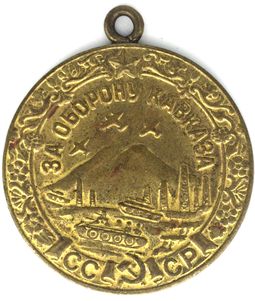
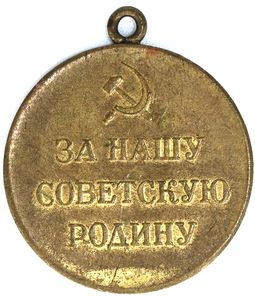
    Eine sowjetische Medaille "Für die Verteidigung des Kaukasus", verliehen nach 1943. Die bronzefarbene Medaille zeigt auf ihrer Bildseite die Berge des Kaukasus über deren Gipfeln Flugzeuge fliegen, sowie ein Erdölfeld mit Fördertürmen vor denen drei Panzer in dieselbe Richtung fahren. Oben ist die Umschrift "Für die Verteidigung des Kaukasus" auf Russisch zu lesen. Umschlossen wird diese Darstellung von einem Gebinde aus Rosenzweigen, wobei sich zwischen den Ästen in der oberen Mitte ein Sowjetstern befindet. An ihrem unteren Kreuzpunkt sind die Buchstaben SSSR zu lesen, die von Hammer und Sichel getrennt sind. Die Rückseite zeigt den Inschrift "Für unsere sowjetische Heimat".
    Die Medaille stammt aus dem Nachlass von Vladimir Gelfand, bis Oktober 1946 Leutnant der Roten Armee und Mitglied der Gruppe der sowjetischen Streitkräfte in Deutschland. Gelfand war Teilnehmer an der Schlacht um Berlin (301. Schützendivision der 5. Stoßarmee) und Autor des ersten in deutscher Sprache veröffentlichten Originaltagebuchs eines Offiziers der Roten Armee.


    Ereignisse

    Besessen
    wann
    wo  More about the place

    Bezug zu Personen oder Körperschaften

    Bezug zu Orten oder Plätzen

    Bezug zu Zeiten

    Museum Berlin-Karlshorst / Sammlung
    Objekte [208023]


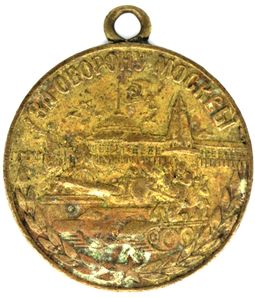
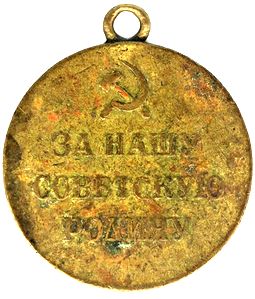
    UdSSR-Medaille "Für die Verteidigung Moskaus", nach 1944


    Material/Technik

    Messing

    Maße

    Durchmesser: 3,2 cm

    Beschreibung

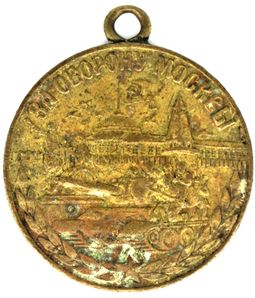
    Eine Medaille "Für die Verteidigung Moskaus" verliehen in der Sowjetunion nach 1944. Die ursprünglich goldfarbene Medaille zeigt auf ihrer Bildseite mittig den Kreml mit wehender Sowjetflagge und darüber gegen Westen fliegende Flugzeuge. Vor dem Gebäudekomplex zeigt die Medaille einen T-34-Panzer mit Rotarmisten. Die Umschrift auf Russisch lautet "Für die Verteidigung Moskaus". Unten befinden sich zwei gekreuzte Lorbeerzweigen, die durch den Sowjetstern verbunden sind. Das Revers zeigt die dreizeilige russische Inschrift: "Für unsere sowjetische Heimat", darüber die Symbole Hammer und Sichel.
    Die Medaille stammt aus dem Nachlass von Vladimir Gelfand, bis Oktober 1946 Leutnant der Roten Armee und Mitglied der Gruppe der sowjetischen Streitkräfte in Deutschland. Gelfand war Teilnehmer an der Schlacht um Berlin (301. Schützendivision der 5. Stoßarmee) und Autor des ersten in deutscher Sprache veröffentlichten Originaltagebuchs eines Offiziers der Roten Armee.


    Ereignisse

    Besessen
    wann
    wo  More about the place

    Bezug zu Personen oder Körperschaften

    Bezug zu Orten oder Plätzen

    Bezug zu Zeiten

    Museum Berlin-Karlshorst / Sammlung
    Objekte [208021]


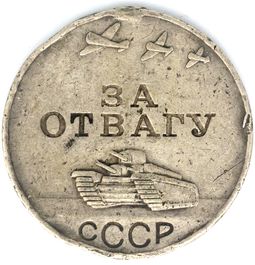
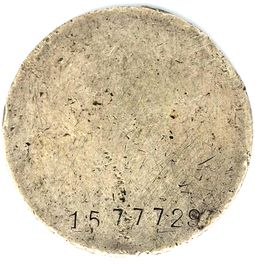
    UdSSR-Medaille Für Tapferkeit, nach 1938


    Material/Technik

    Silber

    Maße

    Durchmesser: 3,7 cm

    Beschreibung

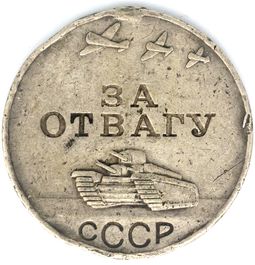
    Die Medaille wurde im Oktober 1938 in der UdSSR eingeführt. Dies ist die höchste Medaille im Auszeichnungssystem der UdSSR. Laut dem Beschluss des Präsidiums der Streitkräfte der UdSSR wurde diese Medaille für persönlichen Mut und Tapferkeit bei der Verteidigung des Vaterlandes und der Erfüllung der militärischen Pflicht verliehen. Sie wurde an etwa 4,5 Millionen Menschen gewährt.
    Die Medaille stammt aus dem Nachlass von Vladimir Gelfand, bis Oktober 1946 Leutnant der Roten Armee und Mitglied der Gruppe der sowjetischen Streitkräfte in Deutschland. Gelfand war Teilnehmer an der Schlacht um Berlin (301. Schützendivision der 5. Stoßarmee) und Autor des ersten in deutscher Sprache veröffentlichten Originaltagebuchs eines Offiziers der Roten Armee.


    Ereignisse

    Besessen
    wann
    wo  More about the place

    Bezug zu Personen oder Körperschaften

    Bezug zu Orten oder Plätzen

    Bezug zu Zeiten

    Museum Berlin-Karlshorst / Sammlung
    Objekte [208020]


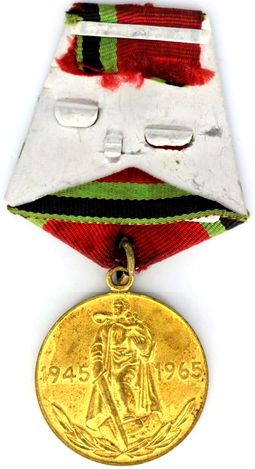
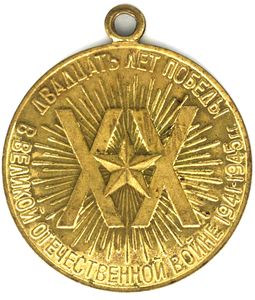
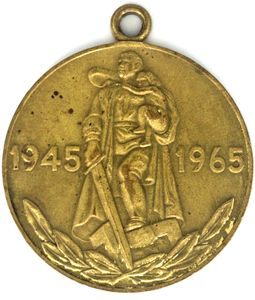
    Medaille "20 Jahre des Sieges im Großen Vaterländischen Krieg", Sowjetunion, nach 1965


    Material/Technik

    Messing, vergoldet

    Maße

    Durchmesser: 3,2 cm

    Beschreibung

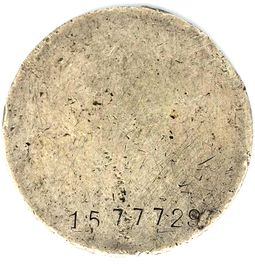
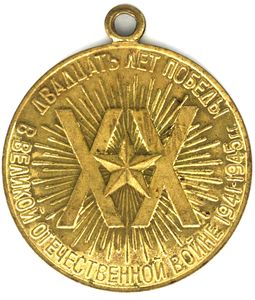
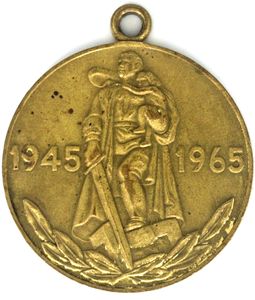
    Eine sowjetische Medaille "20 Jahre des Sieges im Großen Vaterländischen Krieg" ohne Tragespange, verliehen nach 1965. Abgebildet auf der Rückseite ist das Soldatendenkmal im Treptower Park in Berlin.
    Die Medaille stammt aus dem Nachlass von Vladimir Gelfand, bis Oktober 1946 Leutnant der Roten Armee und Mitglied der Gruppe der sowjetischen Streitkräfte in Deutschland. Gelfand war Teilnehmer an der Schlacht um Berlin (301. Schützendivision der 5. Stoßarmee) und Autor des ersten in deutscher Sprache veröffentlichten Originaltagebuchs eines Offiziers der Roten Armee.


    Ereignisse

    Wurde abgebildet (Ort)
    wo  More about the place
    Besessen
    wann
    wo  More about the place

    Bezug zu Personen oder Körperschaften

    Bezug zu Orten oder Plätzen

    Bezug zu Zeiten

    Museum Berlin-Karlshorst / Sammlung
    Objekte [208019]


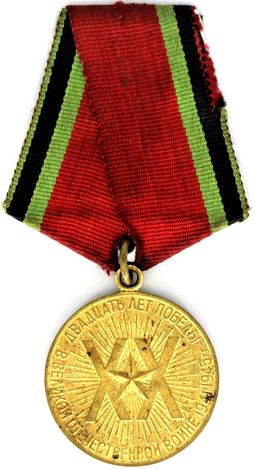
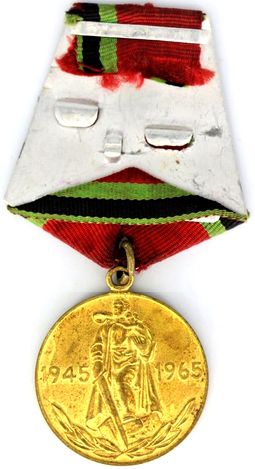
    Medaille "20 Jahre des Sieges im Großen Vaterländischen Krieg", Sowjetunion, nach 1965


    Material/Technik

    Messing, vergoldet, Textil

    Maße

    Durchmesser: 3,2 cm

    Beschreibung

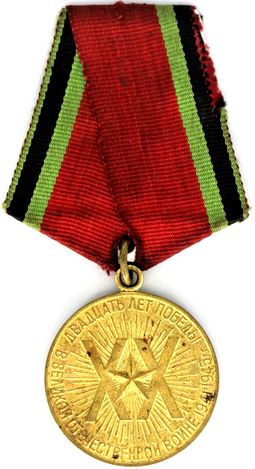
    Eine sowjetische Medaille "20 Jahre des Sieges im Großen Vaterländischen Krieg", verliehen nach 1965. Abgebildet auf der Rückseite ist das Soldatendenkmal im Treptower Park in Berlin.
    Die Medaille stammt aus dem Nachlass von Vladimir Gelfand, bis Oktober 1946 Leutnant der Roten Armee und Mitglied der Gruppe der sowjetischen Streitkräfte in Deutschland. Gelfand war Teilnehmer an der Schlacht um Berlin (301. Schützendivision der 5. Stoßarmee) und Autor des ersten in deutscher Sprache veröffentlichten Originaltagebuchs eines Offiziers der Roten Armee.


    Ereignisse

    Besessen
    wann
    wo  More about the place
    Wurde abgebildet (Akteur)
    wer Zur Personenseite: Josef Stalin (1878-1953)

    Bezug zu Personen oder Körperschaften

    Bezug zu Orten oder Plätzen

    Bezug zu Zeiten

    Museum Berlin-Karlshorst / Sammlung
    Objekte [208018]


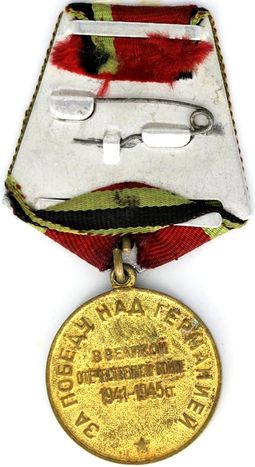
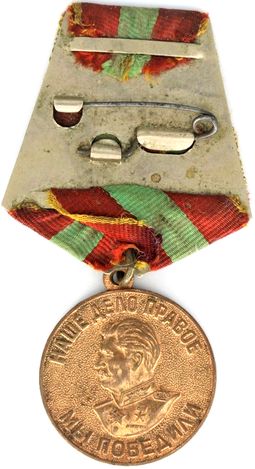
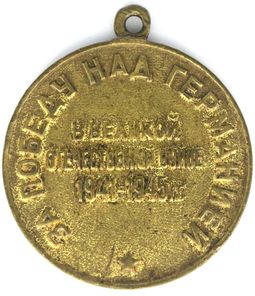
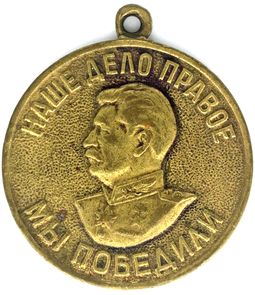
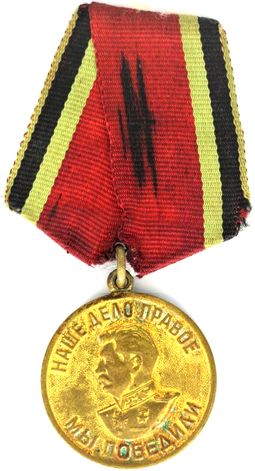
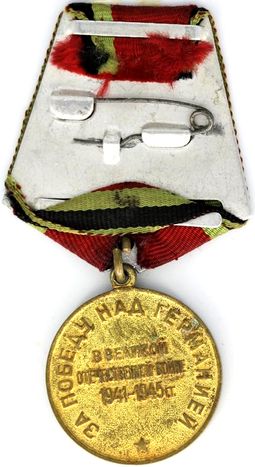
    Medaille Für den Sieg über Deutschland, Sowjetunion, nach 1945


    Material/Technik

    Messing

    Maße

    Durchmesser: 3,2 cm

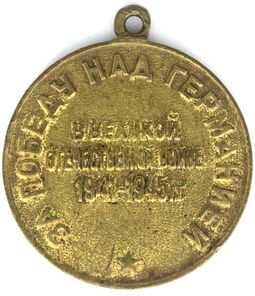
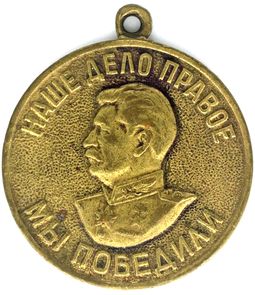
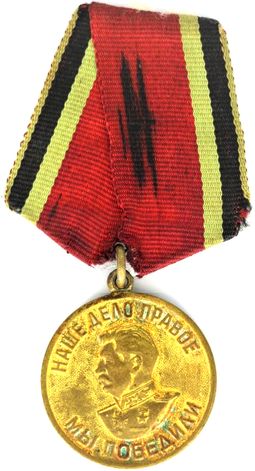
    Beschreibung

    Eine UdSSR-Medaille Für den Sieg über Deutschland im Großen Vaterländischen Krieg. Die Medaille besteht aus Messing und trägt das Profil Stalins auf der Vorderseite, sowie den Text "Unsere Sache ist gerecht. Wir haben gesiegt." Auf der Rückseite befindet sich die Inschrift „Für den Sieg über Deutschland im Großen Vaterländischen Krieg 1941–1945“
    Die Medaille stammt aus dem Nachlass von Vladimir Gelfand, bis Oktober 1946 Leutnant der Roten Armee und Mitglied der Gruppe der sowjetischen Streitkräfte in Deutschland. Gelfand war Teilnehmer an der Schlacht um Berlin (301. Schützendivision der 5. Stoßarmee) und Autor des ersten in deutscher Sprache veröffentlichten Originaltagebuchs eines Offiziers der Roten Armee.


    Ereignisse

    Besessen
    wann
    wo  More about the place
    Wurde abgebildet (Akteur)
    wer Zur Personenseite: Josef Stalin (1878-1953)

    Bezug zu Personen oder Körperschaften

    Bezug zu Orten oder Plätzen

    Bezug zu Zeiten

    Museum Berlin-Karlshorst / Sammlung
    Objekte [208017]


    Medaille Für den Sieg über Deutschland, Sowjetunion, nach 1945


    Material/Technik

    Messing, Textil

    Maße

    Durchmesser: 3,2 cm (ohne Tragespange)

    Beschreibung

    Eine UdSSR-Medaille Für den Sieg über Deutschland im Großen Vaterländischen Krieg. Die Medaille besteht aus Messing und trägt das Profil Stalins auf der Vorderseite, sowie den Text "Unsere Sache ist gerecht. Wir haben gesiegt." Auf der Rückseite befindet sich die Inschrift „Für den Sieg über Deutschland im Großen Vaterländischen Krieg 1941–1945“
    Die Medaille stammt aus dem Nachlass von Vladimir Gelfand, bis Oktober 1946 Leutnant der Roten Armee und Mitglied der Gruppe der sowjetischen Streitkräfte in Deutschland. Gelfand war Teilnehmer an der Schlacht um Berlin (301. Schützendivision der 5. Stoßarmee) und Autor des ersten in deutscher Sprache veröffentlichten Originaltagebuchs eines Offiziers der Roten Armee.


    Ereignisse

    Besessen
    wann
    wo  More about the place

    Bezug zu Personen oder Körperschaften

    Bezug zu Orten oder Plätzen

    Bezug zu Zeiten

    Museum Berlin-Karlshorst / Sammlung
    Objekte [208016]


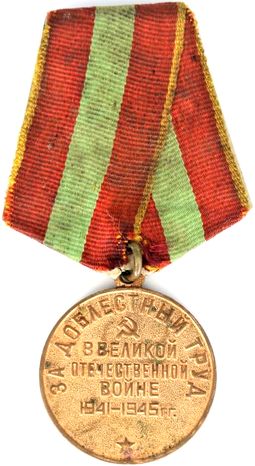
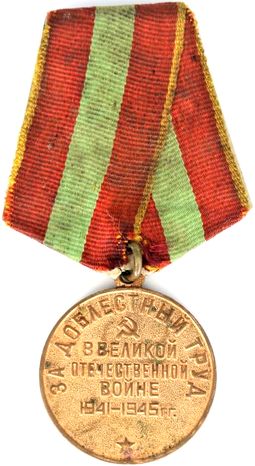
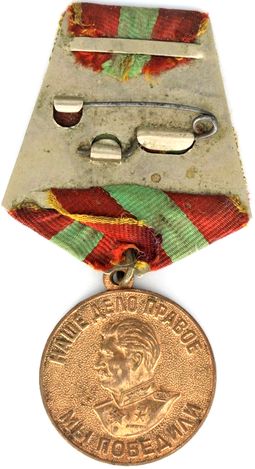
    Medaille Für tapfere Arbeit im Großen Vaterländischen Krieg, Sowjetunion, nach 1945


    Material/Technik

    Kupfer, Textil

    Maße

    Durchmesser: 3,2 cm (ohne Tragespange)

    Beschreibung

    Eine Medaille "Für tapfere Arbeit im Großen Vaterländischen Krieg". Die Medaille wurde am 6. Juni 1945 in der UdSSR eingeführt. Sie wurde meist an Personen verliehen, die in der Zeit von Juni 1941 bis Mai 1945 mindestens ein Jahr lang in einem Unternehmen, einer Institution, einem Transportunternehmen, einem Staatsbetrieb oder einer Maschinen- und Traktorenstation gearbeitet hatten. Bis zum Jahr 1987 wurde die Medaille an mindestens 16 Millionen Menschen verliehen.
    Diese Medaille stammt aus dem Nachlass von Vladimir Gelfand (1923-1983), bis Oktober 1946 Leutnant der Roten Armee und Mitglied der Gruppe der sowjetischen Streitkräfte in Deutschland. Gelfand war Teilnehmer an der Schlacht um Berlin (301. Schützendivision der 5. Stoßarmee) und Autor des ersten in deutscher Sprache veröffentlichten Originaltagebuchs eines Offiziers der Roten Armee.
    Die Tragespange ist an die Medaille falschrum befestigt.


    Ereignisse

    Besessen
    wann
    wo  More about the place

    Bezug zu Personen oder Körperschaften

    Bezug zu Orten oder Plätzen

    Bezug zu Zeiten

    Museum Berlin-Karlshorst / Sammlung
    Objekte [208015]


    Gardeabzeichen der Sowjetarmee, 21.05.1942


    Material/Technik

    Metall; emailliert

    Maße

    Höhe: 4,5 cm, Breite: 3,5 cm

    Beschreibung

    Ein Gardeabzeichen der Sowjetarmee, gestiftet am 21.05.1942. Das Abzeichen stammt aus dem Nachlass von Vladimir Gelfand (1923-1983), bis Oktober 1946 Leutnant der Roten Armee und Mitglied der Gruppe der sowjetischen Streitkräfte in Deutschland. Gelfand war Teilnehmer an der Schlacht um Berlin (301. Schützendivision der 5. Stoßarmee) und Autor des ersten in deutscher Sprache veröffentlichten Originaltagebuchs eines Offiziers der Roten Armee.


    Ereignisse

    Besessen
    wann
    wo  More about the place

    Bezug zu Personen oder Körperschaften

    Bezug zu Orten oder Plätzen

    Bezug zu Zeiten

    Museum Berlin-Karlshorst / Sammlung
    Objekte [208014]


    Gardeabzeichen der Sowjetarmee, 21.05.1942


    Material/Technik

    Metall; emailliert

    Maße

    Höhe: 4,5 cm, Breite: 3,5 cm

    Beschreibung

    Ein Gardeabzeichen der Sowjetarmee, gestiftet am 21.05.1942. Das Abzeichen stammt aus dem Nachlass von Vladimir Gelfand (1923-1983), bis Oktober 1946 Leutnant der Roten Armee und Mitglied der Gruppe der sowjetischen Streitkräfte in Deutschland. Gelfand war Teilnehmer an der Schlacht um Berlin (301. Schützendivision der 5. Stoßarmee) und Autor des ersten in deutscher Sprache veröffentlichten Originaltagebuchs eines Offiziers der Roten Armee.


    Ereignisse

    Besessen
    wann
    wo  More about the place

    Bezug zu Personen oder Körperschaften

    Bezug zu Zeiten

    Museum Berlin-Karlshorst / Sammlung
    Objekte [208014]


    Kartenschutzhülle eines Leutnants der Roten Armee, Sowjetunion, 1940er Jahre


    Material/Technik

    Kunststoff, Metall, Leder

    Maße

    Höhe: 24,5 cm, Breite: 18,5 cm

    Beschreibung

    Kartenschutzhülle von Vladimir Gelfand. Gelfand war bis Oktober 1946 Leutnant der Roten Armee und Mitglied der Gruppe der sowjetischen Streitkräfte in Deutschland. Gelfand war Teilnehmer an der Schlacht um Berlin (301. Schützendivision der 5. Stoßarmee) und Autor des ersten in deutscher Sprache veröffentlichten Originaltagebuchs eines Offiziers der Roten Armee.


    Ereignisse

    Besessen
    wann
    wo  More about the place

    Bezug zu Personen oder Körperschaften

    Bezug zu Zeiten

    Museum Berlin-Karlshorst / Sammlung
    Objekte [208012]


    Feuerzeug aus einer Patronenhülse, vermutlich Sowjetunion, ohne Datierung


    Material/Technik

    Metall / handgemacht

    Maße

    Länge: 1,0 cm, Höhe: 7,0 cm, Breite: 2,0 cm

    Beschreibung

    Ein aus einer Patronenhülse hergestelltes Feuerzeug. Das Objekt stammt aus dem Nachlass von Wladimir Gelfand, der bis Oktober 1946 Leutnant in der Roten Armee war und dann Mitglied der Gruppe der sowjetischen Streitkräfte in Deutschland wurde. Gelfand war Teilnehmer an der Schlacht um Berlin (301. Schützendivision der 5. Stoßarmee) und Autor des ersten in deutscher Sprache veröffentlichten Originaltagebuchs eines Offiziers der Roten Armee.


    Ereignisse

    Besessen
    wann
    wo  More about the place

    Bezug zu Personen oder Körperschaften

    Bezug zu Zeiten

    Museum Berlin-Karlshorst / Sammlung
    Objekte [208011]


    Feuerzeug eines Leutnants der Roten Armee, ohne Datierung


    Material/Technik

    Metall

    Maße

    Länge: 1,0 cm, Höhe: 6,6 cm, Breite: 2,8 cm

    Beschreibung

    Ein Feuerzeug aus Metall. Das Objekt stammt aus dem Nachlass von Wladimir Gelfand, der bis Oktober 1946 Leutnant in der Roten Armee war und dann Mitglied der Gruppe der sowjetischen Streitkräfte in Deutschland wurde. Gelfand war Teilnehmer an der Schlacht um Berlin (301. Schützendivision der 5. Stoßarmee) und Autor des ersten in deutscher Sprache veröffentlichten Originaltagebuchs eines Offiziers der Roten Armee.


    Ereignisse

    Besessen
    wann
    wo  More about the place

    Bezug zu Personen oder Körperschaften

    Museum Berlin-Karlshorst / Sammlung
    Objekte [208010]


    Taschenuhr eines Leutnants der Roten Armee, ohne Datierung


    Material/Technik

    Metall

    Maße

    Durchmesser: 4,4 cm

    Beschreibung

    Eine Taschenuhr aus dem Nachlass von Wladimir Gelfand, der bis Oktober 1946 Leutnant in der Roten Armee war und dann Mitglied der Gruppe der sowjetischen Streitkräfte in Deutschland wurde. Gelfand war Teilnehmer an der Schlacht um Berlin (301. Schützendivision der 5. Stoßarmee) und Autor des ersten in deutscher Sprache veröffentlichten Originaltagebuchs eines Offiziers der Roten Armee.


    Ereignisse

    Hergestellt
    wo  More about the place
    Besessen
    wann
    wo  More about the place

    Bezug zu Personen oder Körperschaften

    Museum Berlin-Karlshorst / Sammlung
    Objekte [208009]


    Taschenuhr eines Leutnants der Roten Armee, Schweiz, ohne Datierung


    Material/Technik

    Metall

    Maße

    Durchmesser: 4,8 cm

    Beschreibung

    Eine Taschenuhr aus dem Nachlass von Wladimir Gelfand, der bis Oktober 1946 Leutnant in der Roten Armee war und dann Mitglied der Gruppe der sowjetischen Streitkräfte in Deutschland wurde. Gelfand war Teilnehmer an der Schlacht um Berlin (301. Schützendivision der 5. Stoßarmee) und Autor des ersten in deutscher Sprache veröffentlichten Originaltagebuchs eines Offiziers der Roten Armee.
    Die Uhr wurde in der Schweiz hergestellt und hat eine Abbildung von zwei Vögeln auf dem Zifferblatt.


    Ereignisse

    Besessen
    wann
    wo  More about the place

    Bezug zu Personen oder Körperschaften

    Bezug zu Zeiten

    Museum Berlin-Karlshorst / Sammlung
    Objekte [208007]


    Fernglas eines Leutnants der Roten Armee Vladimir Gelfand, Sowjetunion, vor 1945


    Material/Technik

    Metall, Glas

    Maße

    Länge: 10,0 cm, Höhe: 5,0 cm, Breite: 11,8 cm

    Beschreibung

    Ein Fernglas eines Leutnants der Roten Armee Vladimir Gelfand. Gelfand war bis Oktober 1946 Leutnant in der Roten Armee war und dann Mitglied der Gruppe der sowjetischen Streitkräfte in Deutschland. Gelfand war Teilnehmer an der Schlacht um Berlin (301. Schützendivision der 5. Stoßarmee) und Autor des ersten in deutscher Sprache veröffentlichten Originaltagebuchs eines Offiziers der Roten Armee.


    Ereignisse

    Besessen
    wann
    wo  More about the place

    Bezug zu Personen oder Körperschaften

    Museum Berlin-Karlshorst / Sammlung
    Objekte [208006]


    Reichskredit­kassenschein 5 Reichsmark, Deutsches Reich, 1938-1945


    Material/Technik

    Papier

    Maße

    Höhe: 7,0 cm, Breite: 12,4 cm

    Beschreibung

    Ein Reichskredit­kassenschein von fünf Reichsmark aus dem Nachlass von Vladimir Gelfand, Leutnant der Roten Armee und Angehöriger der Gruppe der sowjetischen Streitkräfte in Deutschland.


    Ereignisse

    Besessen
    wann
    wo  More about the place

    Bezug zu Personen oder Körperschaften

    Bezug zu Orten oder Plätzen

    Bezug zu Zeiten

    Museum Berlin-Karlshorst / Sammlung
    Objekte [208004]


    Reichskredit­kassenschein Eine Reichsmark, Deutsches Reich, 1938-1945


    Material/Technik

    Papier

    Maße

    Höhe: 6,0 cm, Breite: 9,5 cm

    Beschreibung

    Reichskredit­kassenschein von einen Reichsmark aus dem Nachlass von Wladimir Gelfand, Leutnant der Roten Armee und Angehöriger der Gruppe der sowjetischen Streitkräfte in Deutschland


    Ereignisse

    Hergestellt
    wann
    wo  More about the place
    Besessen
    wann
    wo  More about the place

    Bezug zu Personen oder Körperschaften

    Bezug zu Orten oder Plätzen

    Bezug zu Zeiten

    Museum Berlin-Karlshorst / Sammlung
    Objekte [208000]


    Lebensmittelkarte aus der Ukraine, 1947


    Material/Technik

    Papier

    Maße

    Höhe: 14,8 cm, Breite: 17,5 cm

    Beschreibung

    Eine ukrainische Lebensmittelkarte aus dem Nachlass von Vladimir Gelfand, Leutnant der Roten Armee und Angehöriger der Gruppe der sowjetischen Streitkräfte in Deutschland. Aus der Karte sind mehrere Lebensmittelmarken abgeschnitten.


    العربيةDeutschEnglishFrançaisMagyarBahasa IndonesiaItalianPolskiPortuguêsРусскийTürkçeTagalogУкраїнська                                                                                                              


    © museum-digital berlin 


    German / Russian

    museum-digital berlin — “Vladimir Natanovič Gel'fand”

    Person / Institution: Vladimir Natanovič Gel'fand

    Vladimir Natanovich Gelfand (Russian: Влади́мир Ната́нович Ге́льфанд; scholarly transliteration Vladimir Natanovič Gel’fand; born 1 March 1923 in Novoarkhangelsk, Ukrainian SSR; died 25 November 1983 in Dnepropetrovsk) was an officer of the Red Army during the Second World War. After the war he worked as a vocational-school teacher until his death.

    Gelfand recorded his experiences during military service in a diary. An unedited version appeared in Germany in 2005 under the title Germany Diary 1945–1946: Notes of a Red Army Soldier. It is the first and only private diary of a Red Army officer available in German.

    [Information current as of 22 January 2024]

    Events / provenance shown on the page include production, receipt and ownership records. The person/institution links include Vladimir Natanovič Gel'fand, the Red Army (1918–1946), and the Museum Berlin-Karlshorst collection.
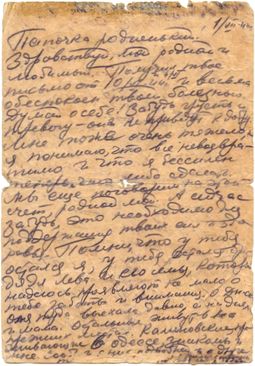
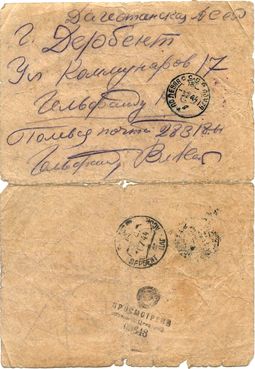


    Field-post letter from Red Army soldier V. Gelfand to his father, July 1944 Field-post letter from Red Army soldier V. Gelfand to his father, July 1944

    Object [208288] — Field-post letter from Red Army soldier V. Gelfand to his father, July 1944

    Description: A field-post letter from Red Army soldier Vladimir Natanovič Gel’fand to his sick father Natan Gelfand, written on 1 July 1944. Gelfand remained a lieutenant of the Red Army until October 1946 and a member of the Group of Soviet Forces in Germany. He took part in the Battle of Berlin with the 301st Rifle Division of the 5th Shock Army and was the author of the first original diary of a Red Army officer published in German.

    Material/technique: paper, handwritten.
    Dimensions: 21.8 cm high, 14.5 cm wide.
    Language: Russian.

    1 July 1944

    My dear Daddy!

    Hello, my dear and beloved one. I received your letter of 10 June 1944 and am very worried about your illness. Think of yourself! Forget sadness and anxiety — they will lead to nothing good. It is very hard for me too, and I understand that everything is irreversible and that I am powerless now to do anything. We will talk about this again, my dear. But for now forget it; that is necessary to preserve your strength and health.

    Remember that you still have me, you still have Uncle Lyova and his family, who I hope are showing you no small amount of care and attention.

    About Dnepropetrovsk: Olya went there long ago, and Mother left a few days ago. The others are living in the same places as before. I also know the Kalinovskys who live in Odessa. Tell me more about them and about your friend [two or three words lost]. I will write to them.

    Vladimir.

    Address: Dagestan ASSR, city of Derbent, 17 Kommunarov Street, to N. S. Gelfand.
    Field Post 28318-y, to Vl. Nat. Gelfand.

    Postal marks: USSR, Field Post, 3 July 1944; USSR, Derbent, Dagestan ASSR, 10 July 1944.
    Stamp: “Inspected by military censorship. 03648.”

    Provenance: owned in Berlin until 2 October 2006; in the Museum Berlin-Karlshorst collection since 2 October 2006.

    Pencil of a Red Army lieutenant, Soviet Union, undated Pencil of a Red Army lieutenant, Soviet Union, undated

    Object [208269] — Pencil of a Red Army lieutenant, Soviet Union, undated

    Material/technique: wood and metal.
    Dimensions: 9.0 cm long, 0.6 cm wide.

    Description: Pencil in a metal casing. The object comes from the estate of Vladimir Gelfand, who was a lieutenant in the Red Army until October 1946 and then a member of the Group of Soviet Forces in Germany. He took part in the Battle of Berlin with the 301st Rifle Division of the 5th Shock Army and was the author of the first original diary of a Red Army officer published in German.

    Provenance: owned in Berlin until 2 October 2006; in the Museum Berlin-Karlshorst collection since 2 October 2006. Related persons/institutions: Vladimir Natanovič Gel'fand; Red Army (1918–1946).

    Pocket watch of a Red Army lieutenant, undated Pocket watch of a Red Army lieutenant, undated

    Object [208268] — Pocket watch of a Red Army lieutenant, undated

    Material/technique: metal.
    Dimensions: diameter 4.5 cm.

    Description: A pocket watch belonging to a lieutenant of the Red Army, with engravings. The object comes from the estate of Vladimir Gelfand, who was a lieutenant in the Red Army until October 1946 and then a member of the Group of Soviet Forces in Germany. He took part in the Battle of Berlin with the 301st Rifle Division of the 5th Shock Army and was the author of the first original diary of a Red Army officer published in German.

    Provenance: owned in Berlin until 2 October 2006; in the Museum Berlin-Karlshorst collection since 2 October 2006.

    Sundial of a Red Army lieutenant, Berlin, 1940s Sundial of a Red Army lieutenant, Berlin, 1940s

    Object [208267] — Sundial of a Red Army lieutenant, Berlin, 1940s

    Material/technique: plastic.
    Dimensions: diameter 5.7 cm.

    Description: A sundial belonging to Red Army Lieutenant Vladimir Gelfand (1922–1983). The watch was made by the Rüter-Uhr company in Berlin in the 1940s. Gelfand was a Red Army lieutenant until October 1946 and a member of the Group of Soviet Forces in Germany. He took part in the Battle of Berlin with the 301st Rifle Division of the 5th Shock Army and was the author of the first original diary of a Red Army officer published in German.

    Event data on the page: produced between 1940 and 1945, probably in the Soviet Union; owned in Berlin until 2 October 2006; in the Museum Berlin-Karlshorst collection since 2 October 2006. Related persons/institutions include Vladimir Natanovič Gel'fand and the Wehrmacht.

    Field cutlery of a Red Army lieutenant, Soviet Union, 1940s Field cutlery of a Red Army lieutenant, Soviet Union, 1940s

    Object [208266] — Field cutlery of a Red Army lieutenant, Soviet Union, 1940s

    Material/technique: aluminum.
    Dimensions: 14.9 cm high, 4.8 cm wide.

    Description: Field cutlery used by Vladimir Gelfand during the war. Gelfand was a Red Army lieutenant until October 1946 and a member of the Group of Soviet Forces in Germany. He took part in the Battle of Berlin with the 301st Rifle Division of the 5th Shock Army and was the author of the first original diary of a Red Army officer published in German.

    Photographs on DVD and additional information: see the appendix to the deed of gift.

    Event data: produced in 1945; owned in Berlin until 2 October 2006; in the Museum Berlin-Karlshorst collection since 2 October 2006.

    Leaflet “Forward! Victory Is Near!”, Soviet Union, 1945

    Object [208262] — Leaflet “Forward! Victory Is Near!”, Soviet Union, 1945

    Inscription:
    “Forward! Victory is near!
    Berlin is 75 kilometres away.
    The hour of revenge has come!”

    Material/technique: paper, printed.
    Dimensions: 23.0 cm high, 16.6 cm wide.

    Description: A Soviet leaflet headed “Forward! Victory Is Near!” Four advancing Red Army soldiers and the figure of Mother Homeland are depicted. The object comes from the estate of Vladimir Gelfand, who was a Red Army lieutenant until October 1946 and then a member of the Group of Soviet Forces in Germany. Gelfand took part in the Battle of Berlin with the 301st Rifle Division of the 5th Shock Army and was the author of the first original diary of a Red Army officer published in German.

    Event data on the page include a production record associated with Vladimir Natanovič Gel'fand dated 4 January 1944, ownership in Berlin until 8 August 2006, and museum ownership from 8 August 2006. Related institutions/persons include the Red Army, Vladimir Natanovič Gel'fand and the period 1941–1945.

    Field-post letter from Red Army soldier V. Gelfand to his aunt, Soviet Union, January 1944 Field-post letter from Red Army soldier V. Gelfand to his aunt, Soviet Union, January 1944

    Object [208103] — Field-post letter from Red Army soldier V. Gelfand to his aunt, Soviet Union, January 1944

    Description: A field-post letter from Red Army soldier Vladimir Natanovič Gel’fand to his aunt Anna V. Gorodinskaya, written on 4 January 1944. Gelfand was a Red Army lieutenant until October 1946 and a member of the Group of Soviet Forces in Germany. He took part in the Battle of Berlin with the 301st Rifle Division of the 5th Shock Army and was the author of the first original diary of a Red Army officer published in German.

    Material/technique: paper, printed and handwritten.
    Dimensions: 18.6 cm high, 15.2 cm wide.
    Language: Russian.

    Transcript:

    1/2 — Printed form:
    “Death to the German occupiers!”
    “MILITARY”
    “Long live the freedom and independence of our glorious Soviet Motherland!”

    To: Astrakhan-Trusovo, fish factory of the VK trust, to physician Anna Vladimirovna Gorodinskaya.
    Sender’s address: Field Post 28318-y, to Vladimir Gelfand.
    Stamp: “Inspected by military censorship 10234.”
    Postal mark: USSR, Astrakhan, 6th city communications branch, 24 January 1944.

    2/2 — Form:
    “Do not write above the line!”

    4 January 1944

    Dear Aunt Anya!

    I am hurrying to let you know about myself. Everything is the same with me. Yesterday I wrote a letter to Uncle Georges. I write every day and in different directions, but I receive very few letters in reply. During all this time I have received seventeen letters, seven of them from you. I am very grateful to you for your care and attention.

    I kiss you warmly.
    Vova.

    Form: “Do not write below the line!”
    Added above the main text: “Greetings to Uncle Georges. Let him write.”

    Provenance: associated event record dated 28 June 1942; owned in Berlin until 8 August 2006; in the Museum Berlin-Karlshorst collection since 8 August 2006.

    Field-post letter from Red Army soldier V. Gelfand to his mother, Soviet Union, June 1942 Field-post letter from Red Army soldier V. Gelfand to his mother, Soviet Union, June 1942

    Object [208102] — Field-post letter from Red Army soldier V. Gelfand to his mother, Soviet Union, June 1942

    Description: Field-post letter from Red Army soldier Vladimir Natanovič Gel’fand, described in the catalogue as addressed to his aunt Anna V. Gorodinskaya, written on 28 June 1942. Gelfand was a Red Army lieutenant until October 1946 and a member of the Group of Soviet Forces in Germany. He took part in the Battle of Berlin with the 301st Rifle Division of the 5th Shock Army and was the author of the first original diary of a Red Army officer published in German.

    Material/technique: paper, handwritten.
    Dimensions: 12.5 cm high, 17.4 cm wide.
    Language: Russian.

    28 June 1942

    Dear Mommy! Dear Aunt Eva, Uncle Tolya and Sanya, hello!

    I do not know whether my previous letter, in which I gave you my address, reached you. I repeat it:

    Active Red Army
    Field Post Station No. 1532
    Post Office Box No. 102
    427th Battalion, 1st Company
    To V. N. Gelfand.

    I have been awarded the rank of sergeant and will receive pay of more than 100 rubles. I will send money. Write what help I can give you as a Red Army soldier. I will do everything possible.

    Mommy! The state should give you some support. If you need me to make inquiries or do anything else, write to me. I will do it.

    Answer immediately, because later there may be no time for me to answer. Send me Uncle Lyusya’s address and tell me where he, Galya, Olya, and Uncle Sanya and his family are. Answer all the questions I asked you in previous letters. Write about all the news, about everything that has happened to everyone, and about everything that interests you. I will answer.

    Once again I ask you to reply at once. I will be terribly happy to receive a letter from you.

    I kiss you warmly.
    Vova.

    Central Asia (Tajik SSR), Karasu village council, Ordzhonikidzeabad District, Stalinabad Region, Sarvat collective farm, to N. V. Gorodinskaya.

    Active Red Army, Field Post Station No. 1532, Post Office Box No. 102, 427th Battalion, 1st Company, to Sergeant V. N. Gelfand.

    Stamp: “Inspected by military censorship. 62.”
    Postal marks: illegible.

    Event/provenance data on the page include a record dated 27 May 1945, ownership in Berlin until 8 August 2006, and museum ownership from 8 August 2006. Related persons/institutions include the Group of Soviet Forces in Germany and Vladimir Natanovič Gel'fand.

    Postcard from Red Army soldier V. Gelfand to his grandmother, May 1945 Postcard from Red Army soldier V. Gelfand to his grandmother, May 1945

    Object [208101] — Postcard from Red Army soldier V. Gelfand to his grandmother, May 1945

    Description: Postcard from Red Army soldier Vladimir Natanovič Gel’fand to his grandmother A. Stul, written on 27 May 1945. Gelfand remained a lieutenant of the Red Army until October 1946 and a member of the Group of Soviet Forces in Germany. He took part in the Battle of Berlin with the 301st Rifle Division of the 5th Shock Army and was the author of the first original diary of a Red Army officer published in German.

    Material/technique: paper, printed and handwritten.
    Dimensions: 13.7 cm high, 8.8 cm wide.
    Language: Russian.

    Transcript:

    [The upper line is cut off in the photocopy.]
    1945.

    Dear Grandmother!

    Congratulations on the end of the war. I kiss you warmly from the German capital and send heartfelt greetings. I wish you many years of happiness and well-being. I am waiting for letters from you. Once again I kiss you firmly and shake your hands.

    Your grandson Vladimir.

    Give my greetings to Aunt Eva, Galichka, Uncle Tolya and Uncle Sanya, and Aunt Lyuba.

    Registered. 512/1.
    Field Post 26610.
    Magnitogorsk, Yezhovka, Slobodskaya 7/17,
    A. A. Stul (for Grandmother).
    Field Post 09316,
    to V. N. Gelfand.

    Event data on the page include a creation record associated with Vladimir Natanovič Gel'fand dated 6 August 1945 in Berlin; ownership in Berlin until 8 August 2006; and museum ownership from 8 August 2006. Related persons/institutions include the Group of Soviet Forces in Germany, Vladimir Natanovič Gel'fand, and the Museum Berlin-Karlshorst collection.

    Letter from Red Army soldier V. Gelfand to his mother, Berlin, August 1945 Letter from Red Army soldier V. Gelfand to his mother, Berlin, August 1945

    Object [208100] — Letter from Red Army soldier V. Gelfand to his mother, Berlin, August 1945

    Description: Letter from Red Army soldier Vladimir Natanovič Gel’fand to his mother N. Gorodinskaya, written on 6 August 1945 in Berlin. Gelfand remained a lieutenant of the Red Army until October 1946 and a member of the Group of Soviet Forces in Germany. He took part in the Battle of Berlin with the 301st Rifle Division of the 5th Shock Army and was the author of the first original diary of a Red Army officer published in German.

    Material/technique: paper, handwritten.
    Dimensions: 14.5 cm high, 10.0 cm wide.
    Language: Russian.

    6 August 1945, Berlin — outskirts

    Dear Mommy!

    You still keep reproaching me and taking offense. When, at last, will you be satisfied with me?

    I am sending you a second parcel. Money is difficult. Several thousand were stolen from me. At present I am not in a staff post, I do not receive very much, and all of it is paid to me in marks, so for now I cannot send any. I shall remain here no more than a month and, if I am not sent anywhere else, I shall definitely come to Russia. I owe you letters and do not dare make excuses — Berlin is to blame; I decided to get to know it more closely.

    I have seen the “Reichstag,” the “House,” the “Reich Chancellery,” and other ruins. On top of the Reichstag, incidentally, I wrote:

    “On the balcony of a Berlin building
    I stand with my friends — the fighters,
    And I look and spit upon Germany,
    I spit upon defeated Berlin.”

    I receive letters only from Daddy, Aunt Anya and you, and even those come to the old address (the postman of the unit where I served before forwards them to me…

    [The last line is not visible in the photocopy.]

    [Written upside down above the address:] Give my greetings to Olechka, Uncle Lyusya, and everyone who asks about me. Let them write.

    Dnepropetrovsk, Zhukovskogo Street 41/14,
    to Nad. Vladim. Gorodinskaya.
    Field Post 44049,
    to Vl. N. Gelfand.

    Stamp: “Inspected by military censorship 06555.”

    Event data on the page include a creation record associated with Vladimir Natanovič Gel'fand dated 30 October 1944; ownership in Berlin until 8 August 2006; and museum ownership from 8 August 2006. Related persons/institutions include the Red Army, Vladimir Natanovič Gel'fand, the Red Army (1918–1946), and the Museum Berlin-Karlshorst collection.

    Field-post postcard from Red Army soldier V. Gelfand to his mother, Soviet Union, October 1944 Field-post postcard from Red Army soldier V. Gelfand to his mother, Soviet Union, October 1944

    Object [208099] — Field-post postcard from Red Army soldier V. Gelfand to his mother, Soviet Union, October 1944

    Description: Field-post postcard from Red Army soldier Vladimir Natanovič Gel’fand to his mother N. Gorodinskaya, written on 30 October 1944. Gelfand remained a lieutenant of the Red Army until October 1946 and a member of the Group of Soviet Forces in Germany. He took part in the Battle of Berlin with the 301st Rifle Division of the 5th Shock Army and was the author of the first original diary of a Red Army officer published in German.

    Material/technique: paper, printed and handwritten.
    Dimensions: 10.0 cm high, 15.0 cm wide.
    Language: Russian.

    Transcript:

    1/2
    Postal card / Carte postale.
    To: Dnepropetrovsk, Lenin Plant, Personnel Department.
    To: N. V. Gorodinskaya.
    Stamp: “Inspected by military censorship.”
    Sender’s address: Field Post 44041,
    to Vladimir Gelfand.

    2/2
    30 October 1944.

    Dear Mommy!

    I am hurrying to let you know that I am completely well and healthy. I received your letters. I shall answer them in detail when I have free time. Right now I am in a hurry. I am moving. Here abroad I have met some very good people. I gave them your address. They may write to you from here.

    You made me very happy by showing interest in Daddy. He is interested in you too. He is no longer in the army. The commission found him unfit for combat service after an exhausting march, as a result of which he became ill. He is now living in the city of Shakhty and doing clerical work at one of the city’s mines.

    Write about yourself. Greetings to Olya, Emelyanenko, and the staff.

    Your Vova.

    Event data on the page include a creation record associated with Vladimir Natanovič Gel'fand dated 1 October 1942 in the Tajik Soviet Socialist Republic; ownership in Berlin until 8 August 2006; and museum ownership from 8 August 2006. Related persons/institutions include the Red Army (1918–1946), Vladimir Natanovič Gel'fand, and the Museum Berlin-Karlshorst collection.

    Field-post postcard from Red Army soldier V. Gelfand to his mother, Tajik SSR, October 1942 Field-post postcard from Red Army soldier V. Gelfand to his mother, Tajik SSR, October 1942

    Object [208098] — Field-post postcard from Red Army soldier V. Gelfand to his mother, Tajik SSR, October 1942

    Description: Field-post postcard from Red Army soldier Vladimir Natanovič Gel’fand to his mother N. Gorodinskaya, written on 1 October 1942. Gelfand remained a lieutenant of the Red Army until October 1946 and a member of the Group of Soviet Forces in Germany. He took part in the Battle of Berlin with the 301st Rifle Division of the 5th Shock Army and was the author of the first original diary of a Red Army officer published in German.

    Material/technique: paper, printed and handwritten.
    Dimensions: 9.8 cm high, 14.2 cm wide.
    Language: Russian.

    Transcript:

    1/2
    I am impatiently waiting for news from you, which is so precious and pleasant to me. Let Aunt Eva and the family write too. Letters take a very long time (from Aunt Anya in Astrakhan!) — I received one after a month, so you need to write more often so that letters arrive regularly. I am writing late in the evening [the last line is cut off in the photocopy], so do not be offended that it is messy.

    2/2
    [Postal card]

    Dear Mommy!

    My address has changed considerably and now you must write only to the new address, because otherwise letters will no longer reach me after 1 November. I am hurrying to warn you about this. I have not yet received any letters from you (I myself have written very many). I have received only eight letters from Aunt Anya and two from Olya.

    Central Asia (Tajik SSR), Karasu village council, Ordzhonikidzeabad District, Stalinabad Region, Sarvat collective farm,
    to N. V. Gorodinskaya.
    112 Field Post,
    Unit 505,
    to V. N. Gelfand.

    Postal marks: USSR Field Post No. 112, 8 October 1942; USSR Ordzhonikidzeabad, Tajik [SSR], 1 November 1942.

    Event data on the page include a creation record dated 23 February 1944; ownership in Berlin until 8 August 2006; and museum ownership from 8 August 2006. Related persons/institutions include the Red Army (1918–1946), Vladimir Natanovič Gel'fand, and the Museum Berlin-Karlshorst collection.

    Field-post letter from Red Army soldier V. Gelfand to his aunt, Soviet Union, February 1944 Field-post letter from Red Army soldier V. Gelfand to his aunt, Soviet Union, February 1944

    Object [208096] — Field-post letter from Red Army soldier V. Gelfand to his aunt, Soviet Union, February 1944

    Description: Field-post letter from Red Army soldier Vladimir Natanovič Gel’fand to his aunt A. Gorodinskaya, written on 23 February 1944. Gelfand remained a lieutenant of the Red Army until October 1946 and a member of the Group of Soviet Forces in Germany. He took part in the Battle of Berlin with the 301st Rifle Division of the 5th Shock Army and was the author of the first original diary of a Red Army officer published in German.

    Material/technique: paper, handwritten.
    Dimensions: 24.0 cm high, 14.5 cm wide.
    Language: Russian.

    Astrakhan, Trusovo, fish factory of the VK trust,
    to physician A. V. Gorodinskaya.
    Field Post 28318-y,
    to Vladimir Gelfand.

    Dear Aunt Anya!

    Lately I have stopped receiving letters from you. And I myself have begun writing less — there is never enough time. I am hurrying to tell you about myself. Everything is fine with me; I am healthy, well fed and cheerful. I remain at the front all the time. I cannot go to Dnepropetrovsk.

    I read your letter in reply to my proposal concerning Mommy and Daddy, but I was not satisfied. I decided not to raise this question again for the time being, because it will require a great deal of effort and time and will produce almost no result. Daddy did not even mention the proposal in his reply to my letter; he merely asked whether you, Aunt Anya, had prompted me to think of it. I answered him exactly as I answered you. Daddy did not give any consent either, but said that for my sake he was prepared to make any sacrifice, only that he would discuss it when the war was over.

    But you reproach my relatives in vain. That deeply hurt my feelings. In general there is a rule not to judge the dead, especially people at whose expense I lived for eight months, who fed me // and showed exceptional care and attention toward me. Moreover, you do not know the real reason why they could not evacuate and died at the hands of the hated fascists. Despite Anichka’s illness and Grandmother’s severe indisposition, they promised Daddy that they would all leave after // him together with Uncle Isak. But afterward no one knows why they remained. Neighbors and acquaintances said that Anichka became seriously ill and could not be transported. I am finishing because there is no more space.

    Event data on the page include a creation record associated with Vladimir Natanovič Gel'fand dated 24 November 1944; ownership in Berlin until 8 August 2006; and museum ownership from 8 August 2006. Related persons/institutions include the Red Army (1918–1946), Vladimir Natanovič Gel'fand, and the Museum Berlin-Karlshorst collection.

    Field-post postcard from Red Army soldier V. Gelfand to his mother, Soviet Union, November 1944 Field-post postcard from Red Army soldier V. Gelfand to his mother, Soviet Union, November 1944

    Object [208095] — Field-post postcard from Red Army soldier V. Gelfand to his mother, Soviet Union, November 1944

    Description: Field-post postcard from Red Army soldier Vladimir Natanovič Gel’fand to his mother N. Gorodinskaya, written on 24 November 1944. Gelfand remained a lieutenant of the Red Army until October 1946 and a member of the Group of Soviet Forces in Germany. He took part in the Battle of Berlin with the 301st Rifle Division of the 5th Shock Army and was the author of the first original diary of a Red Army officer published in German.

    Material/technique: paper, printed and handwritten.
    Dimensions: 15.0 cm high, 10.0 cm wide.
    Language: Russian.

    Transcript:

    1/2
    [Printed postcard text]
    “Death to the German invaders!”
    “MILITARY”

    “In the blue of cloud-high skies
    A heroic pilot battles the enemy,
    And not for nothing do the people call pilots
    Stalin’s falcons.”

    USSR Art Fund Publishing House by order of UVPP. Drawing by V. Fomichev. Author: A. Surkov.

    Dnepropetrovsk, Lenin Plant, Personnel Department,
    to Nad. Vladim. Gorodinskaya.
    Sender’s address: Field Post 44041,
    to V. N. Gelfand.

    2/2
    24 November 1944.

    Dear Mommy!

    I received another of your letters, dated 7 November. I am very grateful to you for writing so often, for your congratulations on the October anniversary, and also for your kindness and warm-heartedness. Do not worry about me. Everything is fine with me and I shall certainly return to you victorious, healthy and unharmed.

    Thank you for finding out about Tamara, although I expected that result. I have not received any letters from Daddy for more than a month. I am tormented by terrible suspicions about his fate.

    I embrace you tightly. Greetings to Olya, Emelyanenko and the others.

    Vova.

    Event data on the page include a creation record associated with Vladimir Natanovič Gel'fand dated 17 March 1942; ownership in Berlin until 8 August 2006; and museum ownership from 8 August 2006. The page also records Anton Pavlovich Chekhov (1860–1904) as a depicted person. Related persons/institutions include the Red Army (1918–1946), Vladimir Natanovič Gel'fand, and the Museum Berlin-Karlshorst collection.

    Field-post postcard from Red Army soldier V. Gelfand to his mother, Soviet Union, March 1942 Field-post postcard from Red Army soldier V. Gelfand to his mother, Soviet Union, March 1942

    Object [208094] — Field-post postcard from Red Army soldier V. Gelfand to his mother, Soviet Union, March 1942

    Description: Field-post postcard from Red Army soldier Vladimir Natanovič Gel’fand to his mother N. Gorodinskaya, written on 17 March 1942. Gelfand remained a lieutenant of the Red Army until October 1946 and a member of the Group of Soviet Forces in Germany. He took part in the Battle of Berlin with the 301st Rifle Division of the 5th Shock Army and was the author of the first original diary of a Red Army officer published in German.

    Material/technique: paper, printed and handwritten.
    Dimensions: 13.9 cm high, 8.7 cm wide.
    Language: Russian.

    Transcript:

    1/2
    I. E. Braz. Portrait of the writer Anton Pavlovich Chekhov.

    “In Chekhov’s name I implore you. Write!
    [Do not answer] with silence. Reply as soon as possible,
    Reply immediately.
    With greetings. Your Vova.”
    17 March 1942.

    2/2

    Dear Mommy!

    And all of you who love me even a little: I ask you to write immediately. I cannot stop wondering what has happened to you. Did you receive my letters? Have you established contact with Galya? How are you living, where are you? Is everyone healthy? Write without delay. Not to write for an entire month now is terrible. Do not torment me like this [the last line is cut off in the photocopy].

    Central Asia,
    Karasu village council,
    Ordzhonikidzeabad District, Stalinabad Region,
    Sarvat collective farm,
    to N. V. Gorodinskaya.
    Essentuki, Krasnaya 32
    [the last line is cut off in the photocopy].

    Event data on the page include a creation record associated with Wladimir Gelfand (1923–1983) dated May 1943; ownership in Berlin until 8 August 2006; and museum ownership from 8 August 2006. Related persons/institutions include the Red Army (1918–1946), Vladimir Natanovič Gel'fand, and the Museum Berlin-Karlshorst collection.

    Field-post postcard from Red Army soldier V. Gelfand to his brother, Soviet Union, May 1943 Field-post postcard from Red Army soldier V. Gelfand to his brother, Soviet Union, May 1943

    Object [208093] — Field-post postcard from Red Army soldier V. Gelfand to his brother, Soviet Union, May 1943

    Description: Field-post postcard from Red Army soldier Vladimir Natanovič Gel’fand to his brother A. Stul, written in May 1943. Gelfand remained a lieutenant of the Red Army until October 1946 and a member of the Group of Soviet Forces in Germany. He took part in the Battle of Berlin with the 301st Rifle Division of the 5th Shock Army and was the author of the first original diary of a Red Army officer published in German.

    Material/technique: paper, printed and handwritten.
    Dimensions: 14.0 cm high, 9.0 cm wide.
    Language: Russian.

    1/2
    [Handwritten over the image on the front of the postcard:]
    “Death to the German occupiers!
    Here is a German street on which, I hope, the Germans will soon meet my vengeance.”

    2/2
    5 May 1943.

    Sanechka!

    I received your letter. Thank you very much. At last you too dared to write a letter. I am now preparing to cast off from here. Evidently I shall be going to the front. As soon as I receive an exact address I shall send it to you. Give heartfelt greetings to my mother and yours, Uncle Senya and his family, and Grandmother.

    Let them write. Do not write to this address because I shall not be staying here any longer. Forward to the west!

    Magnitogorsk, Yezhovka, Slobodskaya No. 7,
    Barrack, Room 17,
    to Sanya Stul.
    Field Post No. 34458,
    to Vladimir Gelfand.

    Stamp: “Inspected by military censorship 11430.”
    [The printed caption to the image was crossed out by the censor.]

    Event data on the page include a creation record associated with Wladimir Gelfand (1923–1983) dated 2 December 1944; ownership in Berlin until 8 August 2006; and museum ownership from 8 August 2006. Related persons/institutions include the Red Army (1918–1946), Vladimir Natanovič Gel'fand, and the Museum Berlin-Karlshorst collection.

    Field-post postcard from Red Army soldier V. Gelfand to his mother, Soviet Union, December 1944 Field-post postcard from Red Army soldier V. Gelfand to his mother, Soviet Union, December 1944

    Object [208092] — Field-post postcard from Red Army soldier V. Gelfand to his mother, Soviet Union, December 1944

    Description: Field-post postcard from Red Army soldier Vladimir Natanovič Gel’fand to his mother N. Gorodinskaya, written on 2 December 1944. Gelfand remained a lieutenant of the Red Army until October 1946 and a member of the Group of Soviet Forces in Germany. He took part in the Battle of Berlin with the 301st Rifle Division of the 5th Shock Army and was the author of the first original diary of a Red Army officer published in German.

    Material/technique: paper, printed and handwritten.
    Dimensions: 15.0 cm high, 10.0 cm wide.
    Language: Russian.

    [Printed on the front of the postcard:]
    “Death to the German occupiers!”
    [Portrait] Kuzma Minin.

    “May you be inspired in this war
    By the courageous image of our great ancestors —
    Alexander Nevsky, Dmitry Donskoy,
    Kuzma Minin, Dmitry Pozharsky,
    Alexander Suvorov, Mikhail Kutuzov!”
    I. V. Stalin.

    Art-print workshop MTKh. L68828. Price: 10 kopecks.

    To: Dnepropetrovsk, Lenin Plant, Personnel Department, Gorodinskaya.
    Sender’s address: Field Post 44041,
    to V. N. Gelfand.
    Postal marks: USSR Field Post, 3 December 1944; USSR Dnepropetrovsk, 13 December 1944.

    2 December 1944.

    My dear Mommy!

    I received your letter of 17 November. I am extremely disappointed that my appeals to various authorities concerning your situation have produced no result. My hands simply drop from the realization that I have been unable to help you. But I shall not resign myself to this and will continue my efforts.

    Kisses, Vova. Greetings [illegible].

    Event data on the page include a creation record dated 10 January 1944; ownership in Berlin until 8 August 2006; and museum ownership from 8 August 2006. Related persons/institutions include the Red Army (1918–1946), Vladimir Natanovič Gel'fand, Ukraine, the Soviet Union, and the Museum Berlin-Karlshorst collection.

    Field-post letter from Red Army soldier V. Gelfand to his mother, Soviet Union, January 1944 Field-post letter from Red Army soldier V. Gelfand to his mother, Soviet Union, January 1944

    Object [208090] — Field-post letter from Red Army soldier V. Gelfand to his mother, Soviet Union, January 1944

    Description: Field-post letter from Red Army soldier Vladimir Natanovič Gel’fand to his mother N. Gorodinskaya, written on 10 January 1944. Gelfand remained a lieutenant of the Red Army until October 1946 and a member of the Group of Soviet Forces in Germany. He took part in the Battle of Berlin with the 301st Rifle Division of the 5th Shock Army and was the author of the first original diary of a Red Army officer published in German.

    Material/technique: paper, handwritten.
    Dimensions: 20.8 cm high, 14.7 cm wide.
    Language: Russian.

    10 January 1944.

    Mommy, my dear, my good one! Greetings and a heartfelt kiss from our dear, distant Ukraine, where the broad Dnieper washes our beloved city. The great Dnieper has probably frozen now! Its breath can be felt even here, because it is not far from us.

    Yesterday I received two letters from you, dated 7 and 15 December. You ask again about the certificate. I inform you that I have sent three certificates from here. I have now obtained another one and sent an allotment certificate for 210 rubles. You will receive this amount every month. They allow only 420 rubles to be sent, while my rate of pay is 550 rubles. So I divided those 420 rubles equally between you and Daddy.

    In general it would be very good both for you and for me if you and Daddy began living together again. I have thought a great deal about this. It would be good both now and in the future. Think about it and write to him.

    2/2

    I wrote my opinion about this to Uncle Lyova and Aunt Anya. Uncle Lyova wrote me a letter approving my view. There are many arguments. In that way I could combine my help and love in one place and live with both of you. With the present arrangement I simply feel uncomfortable about offending either of you. If I send you more, it is a blow both to my conscience and to Daddy; if I send Daddy more, it is awkward toward you. I love you both very much and terribly do not want to offend either of you. If you lived together, I could provide you very well with everything necessary, and you would never quarrel.

    I know all the relatives’ addresses. I received four letters from Daddy at once and one from Uncle Lyova. My precious Mommy, you cannot imagine how much I love you and wait for your letters, how much I want your happiness and well-being! Do not worry about me. I have already written to the Fedorovskys, and in general I do not advise you to lose heart about Dnepropetrovsk.

    I embrace you. Vova.

    Magnitogorsk, Tchaikovsky Prospect No. 2, Apartment 62,
    to N. V. Gorodinskaya.
    Field Post 28318-y,
    to Vladimir Gelfand.

    Event data on the page include a creation record dated 10 January 1946 in Ukraine; a receipt record associated with Vladimir Natanovič Gel'fand; and museum ownership from 8 August 2006. Related persons/institutions include the Soviet Army, Anna Korotkina, Stavropol, Ukraine, the Soviet Union, and the Museum Berlin-Karlshorst collection.

    Letter from Anna Korotkina to Vladimir Gelfand, Ukraine, January 1946

    Object [208089] — Letter from Anna Korotkina to Vladimir Gelfand, Ukraine, January 1946

    Description: Letter from Anna Korotkina to Vladimir Natanovič Gel’fand, written on 10 January 1946. Gelfand remained a lieutenant of the Red Army until October 1946 and a member of the Group of Soviet Forces in Germany. He took part in the Battle of Berlin with the 301st Rifle Division of the 5th Shock Army and was the author of the first original diary of a Red Army officer published in German.

    Material/technique: paper, handwritten.
    Dimensions: 18.8 cm high, 15.5 cm wide.
    Language: Russian.

    10 January 1946.
    Greetings from Voroshilovsk.

    Good afternoon, dear friend Vladimir!

    Allow me to send you greetings and wishes for the greatest success in your life in 1946.

    I am writing a second letter in return for your one. I would like to receive a more detailed letter from you. And it is a pity that I probably will not get answers to my questions. Well, in general, that is up to you.

    Write more about your young life, your work and service; I am interested in it. How did you celebrate the New Year?! I celebrated the New Year well — if only the whole year would pass just as well.

    Volodya! My friend Anya sends you greetings and wishes you success in everything. I live and work as before. I wait for your reply as the nightingale waits for summer.

    I kiss you firmly and wish you success.
    Anya.

    Event data on the page include a creation record associated with Vladimir Natanovič Gel'fand dated 3 October 1944; ownership in Berlin until 8 August 2006; and museum ownership from 8 August 2006. Related persons/institutions include the Red Army (1918–1946), Vladimir Natanovič Gel'fand, the period 1941–1945, and the Museum Berlin-Karlshorst collection.

    Field-post letter from Red Army soldier V. Gelfand to his mother, Soviet Union, November 1944

    Object [208088] — Field-post letter from Red Army soldier V. Gelfand to his mother, Soviet Union, November 1944

    Description: Field-post letter from Red Army soldier Vladimir Natanovič Gel’fand to his mother N. Gorodinskaya, written on 3 November 1944. Gelfand remained a lieutenant of the Red Army until October 1946 and a member of the Group of Soviet Forces in Germany. He took part in the Battle of Berlin with the 301st Rifle Division of the 5th Shock Army and was the author of the first original diary of a Red Army officer published in German.

    Material/technique: paper, handwritten.
    Dimensions: 17.8 cm high, 12.9 cm wide.
    Language: Russian.

    3 October 1944.

    Dear Mommy!

    I received your letter of 23 September and am very upset that there are still no results regarding the apartment. What else can be done? Are my letters and demands really not enough for these bureaucrats? I shall keep writing. To Moscow, to Kyiv — wherever I can and must. But I shall get my way, I absolutely shall.

    “Zorya” sent me a letter saying that in a conversation with you it became clear that you “make no claims.” The city soviet sent word that it cannot authorize your entry into the city, although you have already been there for several months. I have already answered one such letter. But what can one answer to that? I do not know.

    Do not worry about me. Especially now. Believe me.

    Event data on the page include a creation record associated with Vladimir Natanovič Gel'fand dated 1 November 1945; ownership in Berlin until 8 August 2006; and museum ownership from 8 August 2006. Related persons/institutions include the Group of Soviet Forces in Germany, Vladimir Natanovič Gel'fand, and the Museum Berlin-Karlshorst collection.

    Postcard from Red Army soldier V. Gelfand, Soviet Union, November 1945 Postcard from Red Army soldier V. Gelfand, Soviet Union, November 1945

    Object [208084] — Postcard from Red Army soldier V. Gelfand, Soviet Union, November 1945

    Description: Postcard from Red Army soldier Vladimir Natanovič Gel’fand to Olga Stul, written on 1 November 1945. Gelfand remained a lieutenant of the Red Army until October 1946 and a member of the Group of Soviet Forces in Germany. He took part in the Battle of Berlin with the 301st Rifle Division of the 5th Shock Army and was the author of the first original diary of a Red Army officer published in German.

    Material/technique: paper, printed and handwritten.
    Dimensions: 9.6 cm high, 14.7 cm wide.

    2/2
    Dnepropetrovsk, Zhukovskogo Street 41, Apartment 14,
    to O. A. Stul.
    Field Post 75207-zh,
    to Vl. N. Gelfand.

    1 November 1945.

    Dear Olechka!

    I now have a new address and have temporarily lost contact with everyone. So I do not know whether I should scold you for your silence or warmly thank you for frequent news. It looks as though my occupational specialty is going to change from now on, although at present I still cannot say exactly what kind of…

    Greetings to all our relatives. I wish you a cheerful celebration of the anniversary of October.

    1/2

    …new work I shall have. Here in Germany the weather is changeable. Earlier the days were dry and cold; since yesterday the fog has been wet and dreary, and for many days before that savage, gusty winds blew and it rained.

    The Germans have raised their heads. Some of them already allow themselves to jostle in trams, trains and omnibuses and to behave rudely toward military personnel of the Allied forces. There are many liberals and soft-hearted people, though not among Soviet servicemen. It is impossible to describe in a few words everything I have seen. For that I keep a “Diary.”

    For now, be well. Congratulations on the October anniversary!

    Vova.

    Event data on the page include a composition record associated with Vladimir Natanovič Gel'fand dated 23 May 1943; ownership in Berlin until 8 August 2006; and museum ownership from 8 August 2006. Related persons/institutions include the Red Army (1918–1946), Vladimir Natanovič Gel'fand, and the Museum Berlin-Karlshorst collection.

    Postcard from Red Army soldier V. Gelfand, May 1943 Postcard from Red Army soldier V. Gelfand, May 1943

    Object [208081] — Postcard from Red Army soldier V. Gelfand, May 1943

    Description: Postcard from Red Army soldier Vladimir Natanovič Gel’fand to Olga Stul, written on 23 May 1943. Gelfand remained a lieutenant of the Red Army until October 1946 and a member of the Group of Soviet Forces in Germany. He took part in the Battle of Berlin with the 301st Rifle Division of the 5th Shock Army and was the author of the first original diary of a Red Army officer published in German.

    Material/technique: paper, printed and handwritten.
    Dimensions: 13.0 cm high, 9.8 cm wide.
    Language: Russian.

    Inscription:

    1/2
    Magnitogorsk, Tchaikovsky Prospect No. 2, Apartment 62,
    to S. Gorodinsky.
    Field Post No. 05958,
    to Vlad. Gelfand.
    “Inspected by military censorship.”

    23 May 1943.

    Dear relatives!

    I am sending you yet another letter — I long ago lost count of how many. Once again I report that I am in a large city. I am [text missing] from the front. There is no reason to worry about me. I live not badly and at present I eat well too. Only one thing saddens me — the absence of letters. On 6 May it will be one year since I arrived at the front. A few days ago I sent you a photograph. I sent a certificate for Mommy. Answer more quickly, because I shall soon change my address again. The portrait is Herzen. I kiss you all.

    Vova.

    Event data on the page include a creation record associated with Wladimir Gelfand (1923–1983) dated 17 November 1944; ownership in Berlin until 8 August 2006; and museum ownership from 8 August 2006. Related persons/institutions include the Red Army (1918–1946), Vladimir Natanovič Gel'fand, and the Museum Berlin-Karlshorst collection.

    Field-post letter from Red Army soldier V. Gelfand to his aunt, Soviet Union, November 1944 Field-post letter from Red Army soldier V. Gelfand to his aunt, Soviet Union, November 1944

    Object [208080] — Field-post letter from Red Army soldier V. Gelfand to his aunt, Soviet Union, November 1944

    Description: Field-post letter from Red Army soldier Vladimir Natanovič Gel’fand to his aunt Anna Gorodinskaya, written on 3 November 1944 [the transcribed letter itself is dated 17 November 1944]. Gelfand remained a lieutenant of the Red Army until October 1946 and a member of the Group of Soviet Forces in Germany. He took part in the Battle of Berlin with the 301st Rifle Division of the 5th Shock Army and was the author of the first original diary of a Red Army officer published in German.

    Material/technique: paper, handwritten.
    Dimensions: 20.6 cm high, 14.7 cm wide.
    Language: Russian.

    Astrakhan-Trusovo, fish factory of the VK trust,
    to A. V. Gorodinskaya.
    Field Post 44041,
    to V. N. Gelfand.
    Stamp: “Inspected by military censorship 02819.”
    Postal marks: USSR Field Post, 18 November 1944; USSR Astrakhan, 8th city communications branch, 6 December 1944.

    2/2
    17 November 1944.

    Dear Aunt Anya!

    Since receiving your last letter I have sent you several pieces of news. Yet for ten days now I have had no letters from you.

    I am seriously worried, because you face a long journey from Magnitogorsk to Astrakhan. Are you healthy and in good spirits?

    Answer immediately. Everything is fine with me. I receive letters from Mommy very often. I have heard nothing from Daddy for several days. He is now in the city of Shakhty and works in a clerical post at one of the Donbas coal mines. Write about Uncle Georges. Why does he not write? I am offended with him.

    I kiss you warmly.
    Your Vova.

    The letter is written on a Polish form notifying the termination of enforcement proceedings.

    Event data on the page include a creation record dated 7 June 1944; ownership in Berlin until 8 August 2006; and museum ownership from 8 August 2006. Related persons/institutions include the Red Army (1918–1946), Vladimir Natanovič Gel'fand, and the Museum Berlin-Karlshorst collection.

    Letter from Zoya Gorodinskaya to Vladimir Gelfand, Moscow, June 1944 Letter from Zoya Gorodinskaya to Vladimir Gelfand, Moscow, June 1944

    Object [208079] — Letter from Zoya Gorodinskaya to Vladimir Gelfand, Moscow, June 1944

    Description: Letter from Zoya Gorodinskaya to Vladimir Natanovič Gel’fand, written on 7 June 1944 in Moscow. Gelfand remained a lieutenant of the Red Army until October 1946 and a member of the Group of Soviet Forces in Germany. He took part in the Battle of Berlin with the 301st Rifle Division of the 5th Shock Army and was the author of the first original diary of a Red Army officer published in German.

    Material/technique: paper, printed and handwritten.
    Dimensions: 19.7 cm high, 14.6 cm wide.
    Language: Russian.

    “Death to the German occupiers. In the active fleet. Observer on combat watch.”
    Published by the Artistic-Architectural Design Combine by order of the Moscow office of Glavbumsbyt. 19 May 1943, Tagansky Trust printing house, order 175.
    Stamp: “Inspected by military censorship 08426.”
    To: Field Post 28318-61,
    to Vladimir Gelfand.
    Sender’s address: Moscow 48, poste restante,
    Z. Grodinskaya.
    “Do not write above the line.”

    Write. I receive nothing from Beba K., and in general from no one. It is very good that you have not forgotten literature and that the Muse has not abandoned you. Of course send your poems; I shall wait for them impatiently. After all, you are no longer that little naïve boy, but a grown man, a fighter who has seen much in life. Write about everything. Send a photograph; I want to see what you look like now. Greetings to all your comrades. I shake your hand firmly. Until we meet soon.

    Zoya.

    2/2

    Hello, Vova!

    I received your letter only yesterday and am answering today — that in itself is no small thing. I was very glad to receive it. I did know something about you, although very little, from Anya Lifshits, whom I unexpectedly met at the Bolshoi during The Sleeping Beauty. She gave me your address and I kept meaning to write to you, but only kept meaning to; your letter acted like a catalyst.

    Vovik! How much has been lived through. It was only a month ago that I learned that my mother, father and grandmother are alive; for all these three years Lyalya and I knew absolutely nothing about them. Where is your mother now? Where are Olya and all your people? If only we could meet now, talk and talk our fill. That will of course happen — but when?

    My examination session is coming soon (I am moving into my fourth year at the Aviation Technology Institute). There is a great deal of work, but I find time for everything — for the theatre, concerts (you know I love music), and books. The session ends in July, and I think I shall go to my family. What joy that will be!

    Vova, write about everything, write more often; I shall not let you off and will answer regularly. The letter you wrote me was of course the first. Please write and do not forget. What do you know about whom?

    “Do not write below the line.”

    Event data on the page include a creation record dated 2 July 1942; ownership in Berlin until 8 August 2006; and museum ownership from 8 August 2006. Related persons/institutions include the Red Army (1918–1946), Vladimir Natanovič Gel'fand, and the Museum Berlin-Karlshorst collection.

    Field-post letter from Red Army soldier V. Gelfand to his mother, Soviet Union, July 1942 Field-post letter from Red Army soldier V. Gelfand to his mother, Soviet Union, July 1942

    Object [208078] — Field-post letter from Red Army soldier V. Gelfand to his mother, Soviet Union, July 1942

    Description: Field-post letter from Red Army soldier Vladimir Natanovič Gel’fand to his mother N. Gorodinskaya, written on 2 July 1942. The letter was written on a map. Gelfand remained a lieutenant of the Red Army until October 1946 and a member of the Group of Soviet Forces in Germany. He took part in the Battle of Berlin with the 301st Rifle Division of the 5th Shock Army and was the author of the first original diary of a Red Army officer published in German.

    Material/technique: paper, printed and handwritten.
    Dimensions: 17.0 cm high, 12.6 cm wide.
    Language: Russian.

    1/2
    2 July. Dear Mommy and relatives.
    2 July 1942.

    I received my pay, or whatever it is called here — 112 rubles as a squad commander. The soldiers receive either 15 or 25 rubles, but no more. I am already on the front line. The Germans are on the other side of the river. There is almost no shooting. From time to time a single shot rings out or a machine gun rattles. Mines often burst not far from me, but so far they have harmed neither me nor my gun crew. Long-range guns on both sides fire over me at targets far away. But most of the time it is quiet here. All around is dense forest, green fir trees, poplars and birches.

    2/2
    Nightingales sing, a cuckoo calls, and other birds chirp merrily. It seems as if there were no war at all, as if nothing in life had changed. You look at the other side of the river: it is hilly and sandy — the countryside here is terribly picturesque. Off to the side is dense green forest, and ahead are fields. But everything there loses its // attraction, because the treacherous and merciless enemy has been there and is now hiding, preparing new intrigues against us.

    Write, my dear ones: do you receive my letters, and how often? I shall send money as soon as I find out [one line is cut off in the photocopy].

    Central Asia, Tajik SSR, Karasu village council, Ordzhonikidzeabad District, Stalinabad Region, Sarvat collective farm,
    to N. V. Gorodinskaya.
    Active Red Army, Field Post Station No. 1532, Post Office Box No. 102, 427th Battalion, 1st Company [one line is cut off in the photocopy].
    Stamp: “Inspected by military censorship ASh 6.”
    Postal mark: USSR, Ordzhonikidzeabad, Tajik [SSR], 11 August 1942.
    2 July 1942, Kharkov Front.

    Event data on the page include a creation record associated with Wladimir Gelfand (1923–1983) dated 23 February 1945; ownership in Berlin until 8 August 2006; and museum ownership from 8 August 2006. Related persons/institutions include the Red Army, Vladimir Natanovič Gel'fand, Nadezhda Gorodinskaya, the Red Army (1918–1946), the Soviet Union, the period 1941–1945, and the Museum Berlin-Karlshorst collection.

    Field-post letter to Red Army soldier V. Gelfand from his mother, February 1945 Field-post letter to Red Army soldier V. Gelfand from his mother, February 1945 Field-post letter to Red Army soldier V. Gelfand from his mother, February 1945 Field-post letter to Red Army soldier V. Gelfand from his mother, February 1945

    Object [208047] — Field-post letter to Red Army soldier V. Gelfand from his mother, February 1945

    Description: Field-post letter to Red Army soldier Vladimir Natanovič Gel’fand, written by his mother on 23 February 1945. Gelfand remained a lieutenant of the Red Army until October 1946 and a member of the Group of Soviet Forces in Germany. He took part in the Battle of Berlin with the 301st Rifle Division of the 5th Shock Army and was the author of the first original diary of a Red Army officer published in German.

    Material/technique: paper, handwritten.
    Dimensions: 21.0 cm high, 15.8 cm wide.
    Language: Russian.

    1/4
    Field Post 91155-FD,
    to Vladimir Gelfand.
    Dnepropetrovsk, Lenin Plant, to N. V. Gorodinskaya.
    Postal mark: USSR, Dnepropetrovsk Central Sorting, 25245.

    2/4
    Stamp: “Inspected by military censorship 31315.”
    Postal mark: USSR, 1 March 1945.

    3/4
    23 February.

    My dear, sweet son Vovochka!

    Today is the 27th anniversary of the Red Army. I congratulate you warmly and from the bottom of my heart wish you happiness, many joys and good health. Two days ago I received your letter of 6 February, and although you are unhappy with my reminders about letters, I shall still say that the interval without letters is long. Seventeen days is far too long. I want to believe, and I hope, that fate will not ignore my prayers for your safe return home to me, but I am still very worried.

    My good son, my affectionate child! I beg you not to worry about the parcel. It is not so important, and if it causes you difficulty, do not trouble yourself. I asked you to write letters to Shpunrov and Pisklov, to thank them for their good and considerate attitude toward me. This is—

    4/4
    —very important. Send a letter to the editorial office of Dneprovskaya Pravda and they will print it in the newspaper.

    Everything is as before with me. I am healthy and working. I think about you and constantly pray for your well-being. Uncle Lyusya and Olya are healthy. They send you their best wishes and kisses. Be healthy and happy. I embrace you tightly and kiss you many, many times.

    Your mother.

    Son, what did you find out about the transfers of 800 rubles? I did not receive them. Write. Do not forget that I worry.

    Event data on the page include a creation record associated with Wladimir Gelfand (1923–1983) dated 29 March 1944; ownership in Berlin until 8 August 2006; and museum ownership from 8 August 2006. Related persons/institutions include the Red Army, Vladimir Natanovič Gel'fand, the Red Army (1918–1946), and the Museum Berlin-Karlshorst collection.

    Field-post letter from Red Army soldier V. Gelfand to his mother, Soviet Union, March 1944 Field-post letter from Red Army soldier V. Gelfand to his mother, Soviet Union, March 1944 Field-post letter from Red Army soldier V. Gelfand to his mother, Soviet Union, March 1944 Field-post letter from Red Army soldier V. Gelfand to his mother, Soviet Union, March 1944

    Object [208045] — Field-post letter from Red Army soldier V. Gelfand to his mother, Soviet Union, March 1944

    Description: Field-post letter from Red Army soldier Vladimir Natanovič Gel’fand to his mother N. Gorodinskaya, written on 29 March 1944. The subject is the fighting to liberate areas occupied by the Wehrmacht. Gelfand remained a lieutenant of the Red Army until October 1946 and a member of the Group of Soviet Forces in Germany. He took part in the Battle of Berlin with the 301st Rifle Division of the 5th Shock Army and was the author of the first original diary of a Red Army officer published in German.

    Material/technique: paper, handwritten.
    Dimensions: 17.8 cm high, 14.3 cm wide.
    Language: Russian.

    1/4
    Stamp: “Inspected by military censorship 04893.”
    Postal mark: Magnitogorsk, Chelyabinsk Region, 1 May 1944.

    2/4
    Magnitogorsk, Tchaikovsky Prospect No. 2, Apartment 62,
    to N. V. Gorodinskaya.
    Field Post 28318-y,
    to Vladimir Gelfand.

    3/4
    29 March 1944.

    Dear Mommy.

    For a long time I had no opportunity to write letters. We are in a very tense period now. We are advancing, relentlessly pursuing the enemy, constantly on the move. On the 28th we liberated a major regional center, the city of [name crossed out by the censor], a port city and major railway junction.

    If only you could have seen the joy with which the population greeted us. They brought doughnuts, flat cakes of all kinds, cigarettes, tobacco (although I do not smoke), soap — whatever each person could. People cried, and some embraced and kissed us. When we entered the city, fighting was still going on. The Germans shelled the entire city with heavy projectiles. They had no pity for the civilian population or the districts of the large city. But the people feared nothing, not even death. When a shell landed nearby and wounded one of the servicemen, a whole crowd rushed straight across the street to carry the wounded man out of the dangerous area. It was a very touching sight. And all around, new shells and mines were furiously smashing into the ground.

    4/4
    We are moving farther now. With every moment the wonderful hour of liberation of our Motherland from the vile German barbarians draws nearer, and the day of the final defeat of the fascists approaches.

    Forgive the brevity. I had received nothing for some time. Only yesterday I got a letter from Daddy, and today from you, Aunt Anya and Maya Belokopytova. Unfortunately there were no letters from Aunt Lyuba or Olya. None from Uncle Mosya either, although I was not really expecting much.

    Do not worry about me. Nothing bad will happen to me.

    Kisses, your son Vova.

    Event data on the page include a creation record associated with Wladimir Gelfand (1923–1983) dated 7 October 1944; ownership in Berlin until 8 August 2006; and museum ownership from 8 August 2006. Related persons/institutions include the Red Army, Vladimir Natanovič Gel'fand, the Red Army (1918–1946), and the Museum Berlin-Karlshorst collection.

    Field-post letter from Red Army soldier V. Gelfand to his mother, Soviet Union, October 1944 Field-post letter from Red Army soldier V. Gelfand to his mother, Soviet Union, October 1944 Field-post letter from Red Army soldier V. Gelfand to his mother, Soviet Union, October 1944 Field-post letter from Red Army soldier V. Gelfand to his mother, Soviet Union, October 1944

    Object [208044] — Field-post letter from Red Army soldier V. Gelfand to his mother, Soviet Union, October 1944

    Description: Field-post letter from Red Army soldier Vladimir Natanovič Gel’fand to his mother N. Gorodinskaya, written on 7 October 1944. Gelfand remained a lieutenant of the Red Army until October 1946 and a member of the Group of Soviet Forces in Germany. He took part in the Battle of Berlin with the 301st Rifle Division of the 5th Shock Army and was the author of the first original diary of a Red Army officer published in German.

    Material/technique: paper, handwritten.
    Dimensions: 20.3 cm high, 15.0 cm wide.
    Language: Russian.

    1/4
    Dnepropetrovsk, Personnel Department of the Lenin Plant,
    to N. V. Gorodinskaya.
    Field Post 44041,
    to V. N. Gelfand.

    2/4
    Stamp: “Inspected by military censorship 04893.”
    Postal marks: USSR Field Post, 8 October 1944; USSR Dnepropetrovsk, 16 October 1944.

    3/4
    7 October 1944.

    Dear Mommy.

    So that you will not even think of worrying, I shall write even more often than before. Although for the third day I have heard nothing from you, I nevertheless want to tell you about myself. Remember one thing: everything is fine with me, nothing will happen to me, do not worry.

    I shall finish here.
    I kiss you firmly,
    embrace you tenderly and wish you happiness.
    Vova.

    P.S. For some time now I have begun receiving … my own letters! The ones I wrote to Daddy (he has been called up into the Red Army) and Lena Lifshits (she changed her place of residence).

    [Along the long side of the sheet:] Otherwise I receive no news from anyone.

    4/4
    Greetings to Olya, G. I. Emelyanenko, Toma, my colleagues at work, and acquaintances. Do not go to Tamara Lavrentyeva’s home and humiliate yourself. Find out her address for me.

    Event data on the page identify JCA Aktiengesellschaft, Dresden, in the production record; ownership in Berlin until 8 August 2006; and museum ownership from 8 August 2006. Related persons/institutions include the Soviet Army, Vladimir Natanovič Gel'fand, the Soviet Military Administration in Germany (SMAD), and the Museum Berlin-Karlshorst collection.

    “Sirene 135” camera, German Reich, 1914–1926 “Sirene 135” camera, German Reich, 1914–1926

    Object [208043] — “Sirene 135” camera, German Reich, 1914–1926

    Material/technique: metal, wood, cardboard, glass.
    Dimensions: length 4.4 cm (closed), height 16 cm, width 11.8 cm.

    Description: A “Sirene 135” camera. The object comes from the estate of Wladimir Gelfand, who was a lieutenant in the Red Army until October 1946 and then a member of the Group of Soviet Forces in Germany. Gelfand took part in the Battle of Berlin with the 301st Rifle Division of the 5th Shock Army and was the author of the first original diary of a Red Army officer published in German.

    Event data on the page include a production record ending in 1992, ownership in Berlin until 8 August 2006, and museum ownership from 8 August 2006. Related persons/institutions include Vladimir Natanovič Gel'fand, the Soviet Army, and the Museum Berlin-Karlshorst collection.

    Cap badge of a member of the Soviet Army, undated Cap badge of a member of the Soviet Army, undated

    Object [208042] — Cap badge of a member of the Soviet Army, undated

    Material/technique: metal, enamelled.
    Dimensions: 4.0 cm high, 3.0 cm wide.

    Description: A cap badge for members of the Soviet Army. The badge comes from the estate of Vladimir Gelfand, a lieutenant in the Red Army until October 1946 and a member of the Group of Soviet Forces in Germany. Gelfand took part in the Battle of Berlin with the 301st Rifle Division of the 5th Shock Army and was the author of the first original diary of a Red Army officer published in German.

    Event data on the page include a production record ending in 1992, ownership in Berlin until 8 August 2006, and museum ownership from 8 August 2006. Related persons/institutions include Vladimir Natanovič Gel'fand, the Soviet Army, the Soviet Union, and the Museum Berlin-Karlshorst collection.

    Cap badge of a member of the Soviet Army, undated Cap badge of a member of the Soviet Army, undated

    Object [208041] — Cap badge of a member of the Soviet Army, undated

    Material/technique: metal, enamelled.
    Dimensions: 3.0 cm high, 2.8 cm wide.

    Description: A cap badge for members of the Soviet Army. The badge comes from the estate of Vladimir Gelfand, a lieutenant in the Red Army until October 1946 and a member of the Group of Soviet Forces in Germany. Gelfand took part in the Battle of Berlin with the 301st Rifle Division of the 5th Shock Army and was the author of the first original diary of a Red Army officer published in German. The badge is slightly deformed and has no pin.

    Event data on the page include a production record ending in 1992 in the Soviet Union, ownership in Berlin until 8 August 2006, and museum ownership from 8 August 2006. Related persons/institutions include Vladimir Natanovič Gel'fand, the Soviet Army, the Soviet Union, and the Museum Berlin-Karlshorst collection.

    Cap badge (Soviet star) of a member of the Soviet Army Cap badge (Soviet star) of a member of the Soviet Army

    Object [208040] — Cap badge (Soviet star) of a member of the Soviet Army

    Material/technique: metal, enamelled.
    Dimensions: diameter 2.3 cm (star).

    Description: A cap badge (Soviet star) for members of the Soviet Army. The badge comes from the estate of Vladimir Gelfand (1923–1983), a lieutenant in the Red Army until October 1946 and a member of the Group of Soviet Forces in Germany. Gelfand took part in the Battle of Berlin with the 301st Rifle Division of the 5th Shock Army and was the author of the first original diary of a Red Army officer published in German.

    The production record identifies “Münzhof.” Event data also include ownership in Berlin until 8 August 2006 and museum ownership from 8 August 2006. Related locations include Russia and the Soviet Union.

    Order of Maternal Glory, 2nd Class, USSR, after 1944 Order of Maternal Glory, 2nd Class, USSR, after 1944

    Object [208039] — Order of Maternal Glory, 2nd Class, USSR, after 1944

    Material/technique: silver, partly gilded, enamelled.
    Dimensions: 4.0 cm high, 3.0 cm wide.

    Description: A 2nd Class Order of Maternal Glory in silver. The order was a Soviet civilian award for mothers with a large number of children, instituted in three classes. The silver second class was awarded to mothers who had given birth to and raised eight children. The award was conferred on the first birthday of the youngest child, provided the other children needed to reach the minimum number, whether biological or adopted, were still alive. Children who had died under heroic, military or other honorable circumstances, including occupational illnesses, were also counted. This order comes from the estate of Vladimir Gelfand (1923–1983), a lieutenant in the Red Army until October 1946 and a member of the Group of Soviet Forces in Germany. Gelfand took part in the Battle of Berlin with the 301st Rifle Division of the 5th Shock Army and was the author of the first original diary of a Red Army officer published in German.

    Event data include ownership in Berlin until 8 August 2006 and museum ownership from 8 August 2006. Related locations include Russia and the Soviet Union.

    “3rd Class” sports badge, Soviet Union, undated “3rd Class” sports badge, Soviet Union, undated

    Object [208038] — “3rd Class” sports badge, Soviet Union, undated

    Material/technique: metal, enamelled. Diameter: 3.0 cm.
    Description: A Soviet 3rd Class sports badge with threaded pin and retaining nut. The badge comes from the estate of Vladimir Gelfand (1923–1983), a lieutenant in the Red Army until October 1946 and a member of the Group of Soviet Forces in Germany. Gelfand took part in the Battle of Berlin with the 301st Rifle Division of the 5th Shock Army and was the author of the first original diary of a Red Army officer published in German.
    Event data include production after May 1942 in the Soviet Union, ownership in Berlin until 8 August 2006, and museum ownership from 8 August 2006. Related persons/institutions include Vladimir Natanovič Gel'fand, the Soviet Army, the Soviet Union, and the Museum Berlin-Karlshorst collection.

    “Excellent Machine-Gunner” badge of the Soviet Army, after 1942 “Excellent Machine-Gunner” badge of the Soviet Army, after 1942

    Object [208037] — “Excellent Machine-Gunner” badge of the Soviet Army, after 1942

    Material/technique: metal. Dimensions: 4.5 cm high, 3.8 cm wide.
    Description: An “Excellent Machine-Gunner” badge of the Soviet Army. The heavily rusted badge comes from the estate of Vladimir Gelfand, a lieutenant in the Red Army until October 1946 and a member of the Group of Soviet Forces in Germany. Gelfand took part in the Battle of Berlin with the 301st Rifle Division of the 5th Shock Army and was the author of the first original diary of a Red Army officer published in German.
    Event data include ownership in Berlin until 8 August 2006 and museum ownership from 8 August 2006. Related entries include Vladimir Natanovič Gel'fand, Russia, and the Museum Berlin-Karlshorst collection.

    “Excellent Air Forces Serviceman” badge, Soviet Union, undated “Excellent Air Forces Serviceman” badge, Soviet Union, undated

    Object [208036] — “Excellent Air Forces Serviceman” badge, Soviet Union, undated

    Material/technique: metal, enamelled. Dimensions: 4.0 cm high, 3.0 cm wide.
    Description: An “Excellent Air Forces Serviceman” badge of the Soviet Army. It comes from the estate of Vladimir Gelfand, a lieutenant in the Red Army until October 1946 and a member of the Group of Soviet Forces in Germany. Gelfand took part in the Battle of Berlin with the 301st Rifle Division of the 5th Shock Army and was the author of the first original diary of a Red Army officer published in German.
    Event data include ownership in Berlin until 8 August 2006 and museum ownership from 8 August 2006. Related entries include Vladimir Natanovič Gel'fand, the Soviet Union, and the Museum Berlin-Karlshorst collection.

    Breast badge “Excellent Serviceman of the Soviet Army,” Soviet Union, undated Breast badge “Excellent Serviceman of the Soviet Army,” Soviet Union, undated

    Object [208036] — Breast badge “Excellent Serviceman of the Soviet Army,” Soviet Union, undated

    Material/technique: metal, enamelled. Dimensions: 4.0 cm high, 3.0 cm wide.
    Description: An “Excellent Serviceman of the Soviet Army” badge. It comes from the estate of Vladimir Gelfand, a lieutenant in the Red Army until October 1946 and a member of the Group of Soviet Forces in Germany. Gelfand took part in the Battle of Berlin with the 301st Rifle Division of the 5th Shock Army and was the author of the first original diary of a Red Army officer published in German.
    The production record identifies the Pobeda factory in Moscow, 1949. Event data also include ownership in Berlin until 8 August 2006 and museum ownership from 8 August 2006. Related entries include Vladimir Natanovič Gel'fand, the Soviet Army, the Soviet Union, and the Museum Berlin-Karlshorst collection.

    Qualification badge “Military Navigator, 3rd Class” of the Soviet Army, 1949 Qualification badge “Military Navigator, 3rd Class” of the Soviet Army, 1949

    Object [208034] — Qualification badge “Military Navigator, 3rd Class” of the Soviet Army, 1949

    Material/technique: metal, enamelled and gilded. Dimensions: length 1.5 cm, height 2.7 cm, width 6.5 cm.
    Description: A qualification badge of the Soviet Army Air Forces and Air Defense with threaded pin and retaining nut, instituted on 19 February 1949. It comes from the estate of Vladimir Gelfand, a lieutenant in the Red Army until October 1946 and a member of the Group of Soviet Forces in Germany. Gelfand took part in the Battle of Berlin with the 301st Rifle Division of the 5th Shock Army and was the author of the first original diary of a Red Army officer published in German.
    The production record identifies the Moscow Mint, after 1954, Moscow. Event data also include ownership in Berlin until 8 August 2006 and museum ownership from 8 August 2006. Related entries include Vladimir Natanovič Gel'fand, the Soviet Army, the Soviet Union, and the Museum Berlin-Karlshorst collection.

    Specialist badge “3rd Class Specialist,” Soviet Union, after 1954 Specialist badge “3rd Class Specialist,” Soviet Union, after 1954

    Object [208033] — Specialist badge “3rd Class Specialist,” Soviet Union, after 1954

    Material/technique: brass, enamelled. Dimensions: 4.9 cm high, 3.2 cm wide.
    Description: A Soviet “3rd Class Specialist” badge with screw fastening. It comes from the estate of Vladimir Gelfand (1923–1983), a lieutenant in the Red Army until October 1946 and a member of the Group of Soviet Forces in Germany. Gelfand took part in the Battle of Berlin with the 301st Rifle Division of the 5th Shock Army and was the author of the first original diary of a Red Army officer published in German.
    Event data include ownership in Berlin until 8 August 2006 and museum ownership from 8 August 2006. Related entries include Vladimir Natanovič Gel'fand, the Soviet Union, and the Museum Berlin-Karlshorst collection.

    Object [208032] — Medal “For the Restoration of Ferrous-Metallurgy Enterprises in the South,” Soviet Union, after 1984

    Material/technique: gilded brass. Diameter: 3.2 cm.
    Description: A Soviet medal “For the Restoration of Ferrous-Metallurgy Enterprises in the South.” It comes from the estate of Vladimir Gelfand (1923–1983), a lieutenant in the Red Army until October 1946 and a member of the Group of Soviet Forces in Germany. Gelfand took part in the Battle of Berlin with the 301st Rifle Division of the 5th Shock Army and was the author of the first original diary of a Red Army officer published in German.
    Event data include ownership in Berlin until 8 August 2006 and museum ownership from 8 August 2006. The page records Vladimir Ilyich Lenin (1870–1924) as depicted. Related entries include Vladimir Natanovič Gel'fand, the Communist Party of the Soviet Union, Russia, the Soviet Union, and the Museum Berlin-Karlshorst collection.

    Medal “For the Restoration of Enterprises of the Ferrous Metallurgy of the South,” Soviet Union, after 1984 Medal “For the Restoration of Enterprises of the Ferrous Metallurgy of the South,” Soviet Union, after 1984

    Object [208032] — Medal “For the Restoration of Enterprises of the Ferrous Metallurgy of the South,” Soviet Union, after 1984

    Material / technique: brass, gilded.

    Dimensions: diameter 3.2 cm (medal).

    Description: A Soviet medal “For the Restoration of Enterprises of the Ferrous Metallurgy of the South.” The medal comes from the estate of Vladimir Gelfand (1923–1983), who served as a lieutenant of the Red Army until October 1946 and was a member of the Group of Soviet Forces in Germany. Gelfand took part in the Battle of Berlin with the 301st Rifle Division of the 5th Shock Army and was the author of the first original diary of a Red Army officer published in German.

    Provenance: owned in Berlin until 8 August 2006; in the collection of the Museum Berlin-Karlshorst since 8 August 2006.

    Related person / place: Vladimir Natanovič Gel'fand; Soviet Union.

    Medal “For the 100th Anniversary of Lenin’s Birth,” Soviet Union, 1970 Medal “For the 100th Anniversary of Lenin’s Birth,” Soviet Union, 1970

    Object [208031] — Medal “For the 100th Anniversary of Lenin’s Birth,” Soviet Union, 1970

    Material/technique: gilded tombac. Diameter: 3.2 cm.
    Description: A Soviet medal “For Valiant Labor / For the 100th Anniversary of Lenin’s Birth.” The obverse shows a profile portrait of Lenin. It comes from the estate of Vladimir Gelfand, a lieutenant in the Red Army until October 1946 and a member of the Group of Soviet Forces in Germany. Gelfand took part in the Battle of Berlin with the 301st Rifle Division of the 5th Shock Army and was the author of the first original diary of a Red Army officer published in German.
    Event data include ownership in Berlin until 8 August 2006 and museum ownership from 8 August 2006. Related entries include Vladimir Natanovič Gel'fand, Russia, the Soviet Union, the date 23 February 1918, and the Museum Berlin-Karlshorst collection.

    Medal “30 Years of the Soviet Army and Navy,” Soviet Union, after 1948 Medal “30 Years of the Soviet Army and Navy,” Soviet Union, after 1948

    Object [208030] — Medal “30 Years of the Soviet Army and Navy,” Soviet Union, after 1948

    Material/technique: brass. Diameter: 3.3 cm.
    Description: A Soviet medal “30 Years of the Soviet Army and Navy,” awarded after 1948. The obverse shows profile portraits of Stalin and Lenin. It comes from the estate of Vladimir Gelfand, a lieutenant in the Red Army until October 1946 and a member of the Group of Soviet Forces in Germany. Gelfand took part in the Battle of Berlin with the 301st Rifle Division of the 5th Shock Army and was the author of the first original diary of a Red Army officer published in German.
    Event data include ownership in Berlin until 8 August 2006 and museum ownership from 8 August 2006. Related entries include the Red Army (1918–1946), Vladimir Natanovič Gel'fand, Russia, the Soviet Union, the period 1939–1945, and the Museum Berlin-Karlshorst collection.

    Medal “For Victory over Japan,” Soviet Union, after 1945 Medal “For Victory over Japan,” Soviet Union, after 1945

    Object [208029] — Medal “For Victory over Japan,” Soviet Union, after 1945

    Material/technique: brass. Diameter: 3.2 cm.
    Description: A “For Victory over Japan” medal. The gold-colored medal shows on the obverse a right-facing portrait of Stalin in uniform and the Russian inscription “For Victory over Japan.” The reverse carries the three-line inscription “3 September 1945,” referring to the capitulation of Japanese forces on Chinese soil; above it is a Soviet star. The medal has no suspension bar. It comes from the estate of Vladimir Gelfand, a lieutenant in the Red Army until October 1946 and a member of the Group of Soviet Forces in Germany. Gelfand took part in the Battle of Berlin with the 301st Rifle Division of the 5th Shock Army and was the author of the first original diary of a Red Army officer published in German.
    Event data include ownership in Berlin until 8 August 2006 and museum ownership from 8 August 2006. Related entries include the Red Army (1918–1946), Vladimir Natanovič Gel'fand, Russia, the Soviet Union, and the Museum Berlin-Karlshorst collection.

    Medal “For the Capture of Berlin,” Soviet Union, after 1945 Medal “For the Capture of Berlin,” Soviet Union, after 1945

    Object [208028] — Medal “For the Capture of Berlin,” Soviet Union, after 1945

    Material/technique: brass. Diameter: 3.2 cm.
    Description: A USSR medal “For the Capture of Berlin,” awarded after 1945. The medal was instituted on 9 June 1945. More than one million Soviet soldiers were decorated with it for taking part in the battle for Berlin. The medal comes from the estate of Vladimir Gelfand, a lieutenant in the Red Army until October 1946 and a member of the Group of Soviet Forces in Germany. Gelfand took part in the Battle of Berlin with the 301st Rifle Division of the 5th Shock Army and was the author of the first original diary of a Red Army officer published in German.
    Event data include ownership in Berlin until 8 August 2006 and museum ownership from 8 August 2006. Related entries include the Red Army (1918–1946), Vladimir Natanovič Gel'fand, Russia, the Soviet Union, the period 1941–1945, and the Museum Berlin-Karlshorst collection.

    USSR medal “For the Capture of Vienna,” Soviet Union, after 1945 USSR medal “For the Capture of Vienna,” Soviet Union, after 1945

    Object [208027] — USSR medal “For the Capture of Vienna,” Soviet Union, after 1945

    Material/technique: brass. Diameter: 3.2 cm.
    Description: A USSR medal “For the Capture of Vienna” on 13 April 1945, instituted on 9 June 1945. The bronze-colored obverse carries the three-line Russian inscription “For the Capture of Vienna”; below it is a left-facing laurel branch with berries and above it a Soviet star. The reverse carries the three-line inscription “13 April 1945,” the date of capture, with another Soviet star above. The medal has no suspension bar. It comes from the estate of Vladimir Gelfand, a lieutenant in the Red Army until October 1946 and a member of the Group of Soviet Forces in Germany. Gelfand took part in the Battle of Berlin with the 301st Rifle Division of the 5th Shock Army and was the author of the first original diary of a Red Army officer published in German.
    Event data include ownership in Berlin until 8 August 2006 and museum ownership from 8 August 2006. Related entries include the Red Army (1918–1946), Vladimir Natanovič Gel'fand, Russia, the Soviet Union, Kyiv, the year 1944, and the Museum Berlin-Karlshorst collection.

    USSR medal “For the Defense of Kyiv,” Soviet Union, after 1961 USSR medal “For the Defense of Kyiv,” Soviet Union, after 1961

    Object [208026] — USSR medal “For the Defense of Kyiv,” Soviet Union, after 1961

    Material/technique: brass. Diameter: 3.2 cm.
    Description: A medal “For the Defense of Kyiv.” The bronze-colored obverse shows the Verkhovna Rada building with a flying flag. In front of it marches a line of figures: first a Red Army soldier, then a sailor, a worker and a peasant woman, moving left with bayonets fixed. Above is the inscription “For the Defense of Kyiv”; below are crossed laurel branches joined by a Soviet star. The reverse carries the three-line inscription “For Our Soviet Motherland.” The medal comes from the estate of Vladimir Gelfand, a lieutenant in the Red Army until October 1946 and a member of the Group of Soviet Forces in Germany. Gelfand took part in the Battle of Berlin with the 301st Rifle Division of the 5th Shock Army and was the author of the first original diary of a Red Army officer published in German.
    Event data include ownership in Berlin until 8 August 2006 and museum ownership from 8 August 2006. Related entries include the Red Army (1918–1946), Vladimir Natanovič Gel'fand, the Soviet Union, the Caucasus, the year 1942, and the Museum Berlin-Karlshorst collection.

    USSR medal “For the Defense of the Caucasus,” after 1943 USSR medal “For the Defense of the Caucasus,” after 1943

    Object [208024] — USSR medal “For the Defense of the Caucasus,” after 1943

    Material/technique: brass. Diameter: 3.2 cm.
    Description: A Soviet medal “For the Defense of the Caucasus,” awarded after 1943. The bronze-colored obverse shows the Caucasus mountains with aircraft flying above their peaks and an oil field with derricks in front of which three tanks move in the same direction. The Russian inscription “For the Defense of the Caucasus” runs above. The design is framed by rose branches with a Soviet star between them at the top center. At the lower crossing are the letters USSR separated by hammer and sickle. The reverse bears the inscription “For Our Soviet Motherland.” The medal comes from the estate of Vladimir Gelfand, a lieutenant in the Red Army until October 1946 and a member of the Group of Soviet Forces in Germany. Gelfand took part in the Battle of Berlin with the 301st Rifle Division of the 5th Shock Army and was the author of the first original diary of a Red Army officer published in German.
    Event data include ownership in Berlin until 8 August 2006 and museum ownership from 8 August 2006. Related entries include the Red Army (1918–1946), Vladimir Natanovič Gel'fand, the Soviet Union, Moscow, the period 1941–1945, and the Museum Berlin-Karlshorst collection.

    USSR medal “For the Defense of Moscow,” after 1944 USSR medal “For the Defense of Moscow,” after 1944

    Object [208023] — USSR medal “For the Defense of Moscow,” after 1944

    Material/technique: brass. Diameter: 3.2 cm.
    Description: A medal “For the Defense of Moscow,” awarded in the Soviet Union after 1944. The originally gold-colored obverse shows the Kremlin with a Soviet flag flying and aircraft flying west above it. In front of the complex is a T-34 tank with Red Army soldiers. The Russian inscription reads “For the Defense of Moscow.” Below are two crossed laurel branches joined by a Soviet star. The reverse carries the three-line Russian inscription “For Our Soviet Motherland,” with hammer and sickle above. The medal comes from the estate of Vladimir Gelfand, a lieutenant in the Red Army until October 1946 and a member of the Group of Soviet Forces in Germany. Gelfand took part in the Battle of Berlin with the 301st Rifle Division of the 5th Shock Army and was the author of the first original diary of a Red Army officer published in German.
    Event data include ownership in Berlin until 8 August 2006 and museum ownership from 8 August 2006. Related entries include the Red Army (1918–1946), Vladimir Natanovič Gel'fand, Russia, the Soviet Union, the period 1941–1945, and the Museum Berlin-Karlshorst collection.

    USSR Medal “For Courage,” after 1938 USSR Medal “For Courage,” after 1938

    Object [208021] — USSR Medal “For Courage,” after 1938

    Material/technique: silver. Diameter: 3.7 cm.
    Description: The medal was introduced in the USSR in October 1938 and was the highest-ranking medal in the Soviet award system. According to the decree of the Presidium of the USSR Supreme Soviet, it was awarded for personal courage and bravery in defense of the Fatherland and fulfillment of military duty. About 4.5 million people received it. This example comes from the estate of Vladimir Gelfand, a lieutenant in the Red Army until October 1946 and a member of the Group of Soviet Forces in Germany. Gelfand took part in the Battle of Berlin with the 301st Rifle Division of the 5th Shock Army and was the author of the first original diary of a Red Army officer published in German.
    Event data include ownership in Berlin until 8 August 2006 and museum ownership from 8 August 2006. Related entries include the Red Army (1918–1946), Vladimir Natanovič Gel'fand, the Soviet Union, the period 1941–1945, and the Museum Berlin-Karlshorst collection.

    Medal “20 Years of Victory in the Great Patriotic War,” Soviet Union, after 1965 Medal “20 Years of Victory in the Great Patriotic War,” Soviet Union, after 1965

    Object [208020] — Medal “20 Years of Victory in the Great Patriotic War,” Soviet Union, after 1965

    Material/technique: gilded brass. Diameter: 3.2 cm.
    Description: A Soviet medal “20 Years of Victory in the Great Patriotic War,” without suspension bar, awarded after 1965. The reverse depicts the Soviet War Memorial in Treptower Park, Berlin. The medal comes from the estate of Vladimir Gelfand, a lieutenant in the Red Army until October 1946 and a member of the Group of Soviet Forces in Germany. Gelfand took part in the Battle of Berlin with the 301st Rifle Division of the 5th Shock Army and was the author of the first original diary of a Red Army officer published in German.
    Event data include a depiction reference to the Soviet War Memorial in Treptower Park, ownership in Berlin until 8 August 2006 and museum ownership from 8 August 2006. Related entries include the Red Army (1918–1946), Vladimir Natanovič Gel'fand, Russia, the Soviet Union, the period 1941–1945, and the Museum Berlin-Karlshorst collection.

    Medal “20 Years of Victory in the Great Patriotic War,” Soviet Union, after 1965 Medal “20 Years of Victory in the Great Patriotic War,” Soviet Union, after 1965

    Object [208019] — Medal “20 Years of Victory in the Great Patriotic War,” Soviet Union, after 1965

    Material/technique: gilded brass and textile. Diameter: 3.2 cm.
    Description: A Soviet medal “20 Years of Victory in the Great Patriotic War,” awarded after 1965. The reverse depicts the soldier memorial in Treptower Park, Berlin. It comes from the estate of Vladimir Gelfand, a lieutenant in the Red Army until October 1946 and a member of the Group of Soviet Forces in Germany. Gelfand took part in the Battle of Berlin with the 301st Rifle Division of the 5th Shock Army and was the author of the first original diary of a Red Army officer published in German.
    Event data include ownership in Berlin until 8 August 2006 and museum ownership from 8 August 2006. The page records Josef Stalin (1878–1953) as depicted. Related entries include the Red Army (1918–1946), Vladimir Natanovič Gel'fand, Russia, the Soviet Union, the period 1941–1945, and the Museum Berlin-Karlshorst collection.

    Medal “For Victory over Germany,” Soviet Union, after 1945 Medal “For Victory over Germany,” Soviet Union, after 1945

    Object [208018] — Medal “For Victory over Germany,” Soviet Union, after 1945

    Material/technique: brass. Diameter: 3.2 cm.
    Description: A USSR medal “For Victory over Germany in the Great Patriotic War.” The brass medal bears Stalin’s profile on the obverse and the text “Our cause is just. We have won.” The reverse bears the inscription “For Victory over Germany in the Great Patriotic War 1941–1945.” It comes from the estate of Vladimir Gelfand, a lieutenant in the Red Army until October 1946 and a member of the Group of Soviet Forces in Germany. Gelfand took part in the Battle of Berlin with the 301st Rifle Division of the 5th Shock Army and was the author of the first original diary of a Red Army officer published in German.
    Event data include ownership in Berlin until 8 August 2006 and museum ownership from 8 August 2006. The page records Josef Stalin (1878–1953) as depicted. Related entries include the Red Army (1918–1946), Vladimir Natanovič Gel'fand, Russia, the Soviet Union, the period 1941–1945, and the Museum Berlin-Karlshorst collection.

    Medal “For Victory over Germany,” Soviet Union, after 1945 Medal “For Victory over Germany,” Soviet Union, after 1945

    Object [208017] — Medal “For Victory over Germany,” Soviet Union, after 1945

    Material/technique: brass and textile. Diameter: 3.2 cm without suspension bar.
    Description: A USSR medal “For Victory over Germany in the Great Patriotic War.” The brass medal bears Stalin’s profile on the obverse and the text “Our cause is just. We have won.” The reverse bears the inscription “For Victory over Germany in the Great Patriotic War 1941–1945.” It comes from the estate of Vladimir Gelfand, a lieutenant in the Red Army until October 1946 and a member of the Group of Soviet Forces in Germany. Gelfand took part in the Battle of Berlin with the 301st Rifle Division of the 5th Shock Army and was the author of the first original diary of a Red Army officer published in German.
    Event data include ownership in Berlin until 8 August 2006 and museum ownership from 8 August 2006. Related entries include the Red Army (1918–1946), Vladimir Natanovič Gel'fand, the Soviet Union, the period 1941–1945, and the Museum Berlin-Karlshorst collection.

    Medal “For Valiant Labor in the Great Patriotic War,” Soviet Union, after 1945 Medal “For Valiant Labor in the Great Patriotic War,” Soviet Union, after 1945

    Object [208016] — Medal “For Valiant Labor in the Great Patriotic War,” Soviet Union, after 1945

    Material/technique: copper and textile. Diameter: 3.2 cm without suspension bar.
    Description: A medal “For Valiant Labor in the Great Patriotic War.” It was instituted in the USSR on 6 June 1945 and was generally awarded to people who had worked for at least one year between June 1941 and May 1945 in an enterprise, institution, transport organization, state enterprise, or machine-and-tractor station. By 1987 at least sixteen million people had received it. This example comes from the estate of Vladimir Gelfand (1923–1983), a lieutenant in the Red Army until October 1946 and a member of the Group of Soviet Forces in Germany. Gelfand took part in the Battle of Berlin with the 301st Rifle Division of the 5th Shock Army and was the author of the first original diary of a Red Army officer published in German. The suspension bar is attached to the medal the wrong way round.
    Event data include ownership in Berlin until 8 August 2006 and museum ownership from 8 August 2006. Related entries include the Red Army (1918–1946), Vladimir Natanovič Gel'fand, the Soviet Union, the period 1941–1945, and the Museum Berlin-Karlshorst collection.

    Guards badge of the Soviet Army, 21 May 1942 Guards badge of the Soviet Army, 21 May 1942

    Object [208015] — Guards badge of the Soviet Army, 21 May 1942

    Material/technique: metal, enamelled. Dimensions: 4.5 cm high, 3.5 cm wide.
    Description: A Guards badge of the Soviet Army, instituted on 21 May 1942. It comes from the estate of Vladimir Gelfand (1923–1983), a lieutenant in the Red Army until October 1946 and a member of the Group of Soviet Forces in Germany. Gelfand took part in the Battle of Berlin with the 301st Rifle Division of the 5th Shock Army and was the author of the first original diary of a Red Army officer published in German.
    Event data include ownership in Berlin until 8 August 2006 and museum ownership from 8 August 2006. Related entries include Vladimir Natanovič Gel'fand, the Red Army (1918–1946), the Soviet Union, the period 1941–1945, and the Museum Berlin-Karlshorst collection.

    Guards badge of the Soviet Army, 21 May 1942 Guards badge of the Soviet Army, 21 May 1942

    Object [208014] — Guards badge of the Soviet Army, 21 May 1942

    Material/technique: metal, enamelled. Dimensions: 4.5 cm high, 3.5 cm wide.
    Description: A Guards badge of the Soviet Army, instituted on 21 May 1942. It comes from the estate of Vladimir Gelfand (1923–1983), a lieutenant in the Red Army until October 1946 and a member of the Group of Soviet Forces in Germany. Gelfand took part in the Battle of Berlin with the 301st Rifle Division of the 5th Shock Army and was the author of the first original diary of a Red Army officer published in German.
    Event data include ownership in Berlin until 8 August 2006 and museum ownership from 8 August 2006. Related entries include the Red Army (1918–1946), Vladimir Natanovič Gel'fand, the period 1941–1945, and the Museum Berlin-Karlshorst collection.

    Map-protection case of a Red Army lieutenant, Soviet Union, 1940s Map-protection case of a Red Army lieutenant, Soviet Union, 1940s

    Object [208014] — Map-protection case of a Red Army lieutenant, Soviet Union, 1940s

    Material/technique: plastic, metal and leather. Dimensions: 24.5 cm high, 18.5 cm wide.
    Description: Map-protection case belonging to Vladimir Gelfand. Gelfand was a lieutenant in the Red Army until October 1946 and a member of the Group of Soviet Forces in Germany. He took part in the Battle of Berlin with the 301st Rifle Division of the 5th Shock Army and was the author of the first original diary of a Red Army officer published in German.
    Event data include ownership in Berlin until 8 August 2006 and museum ownership from 8 August 2006. Related entries include the Red Army (1918–1946), Vladimir Natanovič Gel'fand, the period 1941–1945, and the Museum Berlin-Karlshorst collection.

    Lighter made from a cartridge case, probably Soviet Union, undated Lighter made from a cartridge case, probably Soviet Union, undated

    Object [208012] — Lighter made from a cartridge case, probably Soviet Union, undated

    Material/technique: metal, handmade. Dimensions: length 1.0 cm, height 7.0 cm, width 2.0 cm.
    Description: A lighter made from a cartridge case. The object comes from the estate of Wladimir Gelfand, who was a lieutenant in the Red Army until October 1946 and then a member of the Group of Soviet Forces in Germany. Gelfand took part in the Battle of Berlin with the 301st Rifle Division of the 5th Shock Army and was the author of the first original diary of a Red Army officer published in German.
    Event data include ownership in Berlin until 8 August 2006 and museum ownership from 8 August 2006. Related entries include the Red Army (1918–1946), Vladimir Natanovič Gel'fand, the period 1941–1945, and the Museum Berlin-Karlshorst collection.

    Lighter of a Red Army lieutenant, undated Lighter of a Red Army lieutenant, undated Lighter of a Red Army lieutenant, undated

    Object [208011] — Lighter of a Red Army lieutenant, undated

    Material/technique: metal. Dimensions: length 1.0 cm, height 6.6 cm, width 2.8 cm.
    Description: A metal lighter from the estate of Wladimir Gelfand, who was a lieutenant in the Red Army until October 1946 and then a member of the Group of Soviet Forces in Germany. Gelfand took part in the Battle of Berlin with the 301st Rifle Division of the 5th Shock Army and was the author of the first original diary of a Red Army officer published in German.
    Event data include ownership in Berlin until 8 August 2006 and museum ownership from 8 August 2006. Related entries include Vladimir Natanovič Gel'fand, the Red Army (1918–1946), and the Museum Berlin-Karlshorst collection.

    Pocket watch of a Red Army lieutenant, undated Pocket watch of a Red Army lieutenant, undated

    Object [208010] — Pocket watch of a Red Army lieutenant, undated

    Material/technique: metal. Diameter: 4.4 cm.
    Description: A pocket watch from the estate of Wladimir Gelfand, who was a lieutenant in the Red Army until October 1946 and then a member of the Group of Soviet Forces in Germany. Gelfand took part in the Battle of Berlin with the 301st Rifle Division of the 5th Shock Army and was the author of the first original diary of a Red Army officer published in German.
    The production record identifies Switzerland. Event data also include ownership in Berlin until 8 August 2006 and museum ownership from 8 August 2006. Related entries include Vladimir Natanovič Gel'fand, the Red Army (1918–1946), and the Museum Berlin-Karlshorst collection.

    Pocket watch of a Red Army lieutenant, Switzerland, undated Pocket watch of a Red Army lieutenant, Switzerland, undated

    Object [208009] — Pocket watch of a Red Army lieutenant, Switzerland, undated

    Material/technique: metal. Diameter: 4.8 cm.
    Description: A pocket watch from the estate of Wladimir Gelfand, who was a lieutenant in the Red Army until October 1946 and then a member of the Group of Soviet Forces in Germany. Gelfand took part in the Battle of Berlin with the 301st Rifle Division of the 5th Shock Army and was the author of the first original diary of a Red Army officer published in German. The watch was made in Switzerland and has an image of two birds on the dial.
    Event data include ownership in Berlin until 8 August 2006 and museum ownership from 8 August 2006. Related entries include Vladimir Natanovič Gel'fand, the Red Army (1918–1946), the period 1941–1945, and the Museum Berlin-Karlshorst collection.

    Binoculars of Red Army Lieutenant Vladimir Gelfand, Soviet Union, before 1945 Binoculars of Red Army Lieutenant Vladimir Gelfand, Soviet Union, before 1945 Binoculars of Red Army Lieutenant Vladimir Gelfand, Soviet Union, before 1945

    Object [208007] — Binoculars of Red Army Lieutenant Vladimir Gelfand, Soviet Union, before 1945

    Material/technique: metal and glass. Dimensions: length 10.0 cm, height 5.0 cm, width 11.8 cm.
    Description: Binoculars belonging to Red Army Lieutenant Vladimir Gelfand. Gelfand was a lieutenant in the Red Army until October 1946 and then a member of the Group of Soviet Forces in Germany. He took part in the Battle of Berlin with the 301st Rifle Division of the 5th Shock Army and was the author of the first original diary of a Red Army officer published in German.
    The production record on the page names the Main Administration of the Reich Credit Offices. Event data also include ownership in Berlin until 8 August 2006 and museum ownership from 8 August 2006. Related entries include Vladimir Natanovič Gel'fand, the Red Army, and the Museum Berlin-Karlshorst collection.

    Reichskreditkassenschein, 5 Reichsmarks, German Reich, 1938–1945 Reichskreditkassenschein, 5 Reichsmarks, German Reich, 1938–1945

    Object [208006] — Reichskreditkassenschein, 5 Reichsmarks, German Reich, 1938–1945

    Material/technique: paper. Dimensions: 7.0 cm high, 12.4 cm wide.
    Description: A five-Reichsmark Reichskreditkassenschein from the estate of Vladimir Gelfand, a lieutenant in the Red Army and member of the Group of Soviet Forces in Germany.
    The production record names the Main Administration of the Reich Credit Offices. Event data also include ownership in Berlin until 8 August 2006 and museum ownership from 8 August 2006. Related entries include Vladimir Natanovič Gel'fand, the Red Army, the German Reich, the period 1939–1945, and the Museum Berlin-Karlshorst collection.

    Reichskreditkassenschein, one Reichsmark, German Reich, 1938–1945 Reichskreditkassenschein, one Reichsmark, German Reich, 1938–1945

    Object [208004] — Reichskreditkassenschein, one Reichsmark, German Reich, 1938–1945

    Material/technique: paper. Dimensions: 6.0 cm high, 9.5 cm wide.
    Description: A one-Reichsmark Reichskreditkassenschein from the estate of Wladimir Gelfand, a lieutenant in the Red Army and member of the Group of Soviet Forces in Germany.
    The page’s event data include a production record dated 1947 in Ukraine, ownership in Berlin until 8 August 2006, and museum ownership from 8 August 2006. Related entries include Vladimir Natanovič Gel'fand, Ukraine, the Soviet Union, the period 1941–1945, and the Museum Berlin-Karlshorst collection.

    Food ration card from Ukraine, 1947 Food ration card from Ukraine, 1947

    Object [208000] — Food ration card from Ukraine, 1947

    Material/technique: paper. Dimensions: 14.8 cm high, 17.5 cm wide.
    Description: A Ukrainian food ration card from the estate of Vladimir Gelfand, a lieutenant in the Red Army and member of the Group of Soviet Forces in Germany. Several food coupons have been cut from the card.

    Language-selection text visible at the end of the museum page: Arabic, German, English, French, Hungarian, Indonesian, Italian, Polish, Portuguese, Russian, Turkish, Tagalog, Ukrainian.

    © museum-digital berlin / Museum Berlin-Karlshorst


  •     Dr. Elke Scherstjanoi "Ein Rotarmist in Deutschland"
  •     Stern  "Von Siegern und Besiegten"
  •     Märkische Allgemeine  "Hinter den Kulissen"
  •     Das Erste "Kulturreport"
  •     Berliner Zeitung  "Besatzer, Schöngeist, Nervensäge, Liebhaber"
  •     SR 2 KulturRadio  "Deutschland-Tagebuch 1945-1946. Aufzeichnungen eines Rotarmisten"
  •     Die Zeit  "Wodka, Schlendrian, Gewalt"
  •     Jüdische Allgemeine  "Aufzeichnungen im Feindesland"
  •     Mitteldeutsche Zeitung  "Ein rotes Herz in Uniform"
  •     Unveröffentlichte Kritik  "Aufzeichnungen eines Rotarmisten vom Umgang mit den Deutschen"
  •     Bild  "Auf Berlin, das Besiegte, spucke ich!"
  •     Das Buch von Gregor Thum "Traumland Osten. Deutsche Bilder vom östlichen Europa im 20. Jahrhundert"
  •     Flensborg Avis  "Set med en russisk officers øjne"
  •     Ostsee Zeitung  "Das Tagebuch des Rotarmisten"
  •     Leipziger Volkszeitung  "Das Glück lächelt uns also zu!"
  •     Passauer Neue Presse "Erinnerungspolitischer Gezeitenwechsel"
  •     Lübecker Nachrichten  "Das Kriegsende aus Sicht eines Rotarmisten"
  •     Lausitzer Rundschau  "Ich werde es erzählen"
  •     Leipzigs-Neue  "Rotarmisten und Deutsche"
  •     SWR2 Radio ART: Hörspiel "Berlin 45"
  •     Kulturation  "Tagebuchaufzeichnungen eines jungen Sowjetleutnants"
  •     Der Tagesspiegel  "Hier gibt es Mädchen"
  •     NDR  "Bücher Journal"
  •     Kulturportal  "Chronik"
  •     Sächsische Zeitung  "Bitterer Beigeschmack"
  •     Wiesbadener Tagblatt "Reflexionen, Textcollagen und inhaltlicher Zündstoff"
  •     Deutschlandradio Kultur  "Krieg und Kriegsende aus russischer Sicht"
  •     Berliner Zeitung  "Die Deutschen tragen alle weisse Armbinden"
  •     MDR  "Deutschland-Tagebuch eines Rotarmisten"
  •     Jüdisches Berlin  "Das Unvergessliche ist geschehen" / "Личные воспоминания"
  •     Süddeutsche Zeitung  "So dachten die Sieger"
  •     Financial Times Deutschland  "Aufzeichnungen aus den Kellerlöchern"
  •     Badisches Tagblatt  "Ehrliches Interesse oder narzisstische Selbstschau?"
  •     Freie Presse  "Ein Rotarmist in Berlin"
  •     Nordkurier/Usedom Kurier  "Aufzeichnungen eines Rotarmisten ungefiltert"
  •     Nordkurier  "Tagebuch, Briefe und Erinnerungen"
  •     Ostthüringer Zeitung  "An den Rand geschrieben"
  •     Potsdamer Neueste Nachrichten  "Hier gibt es Mädchen"
  •     NDR Info. Forum Zeitgeschichte "Features und Hintergründe"
  •     Deutschlandradio Kultur. Politische Literatur. "Lasse mir eine Dauerwelle machen"
  •     Konkret "Watching the krauts. Emigranten und internationale Beobachter schildern ihre Eindrücke aus Nachkriegsdeutschland"
  •     Cicero "Voodoo Child. Die verhexten Kinder"
  •     Dagens Nyheter  "Det oaendliga kriget"
  •     Utopie-kreativ  "Des jungen Leutnants Deutschland - Tagebuch"
  •     Neues Deutschland  "Berlin, Stunde Null"
  •     Webwecker-bielefeld  "Aufzeichnungen eines Rotarmisten"
  •     Südkurier  "Späte Entschädigung"
  •     Online Rezension  "Das kriegsende aus der Sicht eines Soldaten der Roten Armee"
  •     Saarbrücker Zeitung  "Erstmals: Das Tagebuch eines Rotarmisten"
  •     Neue Osnabrücker Zeitung  "Weder Brutalbesatzer noch ein Held"
  •     Thüringische Landeszeitung  "Vom Alltag im Land der Besiegten"
  •     Das Argument "Wladimir Gelfand: Deutschland-Tagebuch 1945-1946. Aufzeichnungen eines Rotarmisten"
  •     Deutschland Archiv: Zeitschrift für das vereinigte Deutschland  "Betrachtungen eines Aussenseiters"
  •     Neue Gesellschaft/Frankfurter Hefte  "Von Siegern und Besiegten"
  •     Deutsch-Russisches Museum Berlin-Karlshorst "Deutschland-Tagebuch 1945-1946. Aufzeichnungen eines Rotarmisten"
  •     Online Rezensionen. Die Literaturdatenbank
  •     Literaturkritik  "Ein siegreicher Rotarmist"
  •     RBB Kulturradio  "Ein Rotarmist in Berlin"
  •     Українська правда  "Нульовий варiант" для ветеранiв вiйни" / Комсомольская правда "Нулевой вариант" для ветеранов войны"
  •     Dagens Nyheter. "Sovjetsoldatens dagbok. Hoppfull läsning trots krigets grymheter"
  •     Ersatz  "Tysk dagbok 1945-46 av Vladimir Gelfand"
  •     Borås Tidning  "Vittnesmåil från krigets inferno"
  •     Sundsvall (ST)  "Solkig skildring av sovjetisk soldat frеn det besegrade Berlin"
  •     Helsingborgs Dagblad  "Krigsdagbok av privat natur"
  •     2006 Bradfor  "Conference on Contemporary German Literature"
  •     Spring-2005/2006/2016 Foreign Rights, German Diary 1945-1946
  •     Flamman / Ryska Posten "Dagbok kastar tvivel över våldtäktsmyten"
  •     INTERPRES "DAGBOG REJSER TVIVL OM DEN TYSK-REVANCHISTISKE “VOLDTÆGTSMYTE”
  •     Expressen  "Kamratliga kramar"
  •     Expressen Kultur  "Under våldets täckmantel"
  •     Lo Tidningen  "Krigets vardag i röda armén"
  •     Tuffnet Radio  "Är krigets våldtäkter en myt?"
  •     Norrköpings Tidningar  "En blick från andra sidan"
  •     Expressen Kultur  "Den enda vägens historia"
  •     Expressen Kultur  "Det totalitära arvet"
  •     Allehanda  "Rysk soldatdagbok om den grymma slutstriden"
  •     Ryska Posten  "Till försvar för fakta och anständighet"
  •     Hugin & Munin  "En rödarmist i Tyskland"
  •     Theater "Das deutsch-russische Soldatenwörtebuch" / Театр  "Русско-немецкий солдатский разговорник"
  •     SWR2 Radio "Journal am Mittag"
  •     Berliner Zeitung  "Dem Krieg den Krieg erklären"
  •     Die Tageszeitung  "Mach's noch einmal, Iwan!"
  •     The book of Paul Steege: "Black Market, Cold War: Everyday Life in Berlin, 1946-1949"
  •     Телеканал РТР "Культура":  "Русско-немецкий солдатский разговорник"
  •     Аргументы и факты  "Есть ли правда у войны?"
  •     RT "Russian-German soldier's phrase-book on stage in Moscow"
  •     Утро.ru  "Контурная карта великой войны"
  •     Коммерсантъ "Языковой окоп"
  •     Телеканал РТР "Культура"  "Широкий формат с Ириной Лесовой"
  •     Museum Berlin-Karlshorst  "Das Haus in Karlshorst. Geschichte am Ort der Kapitulation"
  •     Das Buch von Roland Thimme: "Rote Fahnen über Potsdam 1933 - 1989: Lebenswege und Tagebücher"
  •     Das Buch von Bernd Vogenbeck, Juliane Tomann, Magda Abraham-Diefenbach: "Terra Transoderana: Zwischen Neumark und Ziemia Lubuska"
  •     Das Buch von Sven Reichardt & Malte Zierenberg: "Damals nach dem Krieg Eine Geschichte Deutschlands - 1945 bis 1949"
  •     Lothar Gall & Barbara Blessing: "Historische Zeitschrift Register zu Band 276 (2003) bis 285 (2007)"
  •     Wyborcza.pl "Kłopotliwy pomnik w mieście z trudną historią"
  •     Kollektives Gedächtnis "Erinnerungen an meine Cousine Dora aus Königsberg"
  •     Das Buch von Ingeborg Jacobs: "Freiwild: Das Schicksal deutscher Frauen 1945"
  •     Wyborcza.pl "Strącona gwiazda wdzięczności"
  •     Закон i Бiзнес "Двічі по двісті - суд честі"
  •     Радио Свобода "Красная армия. Встреча с Европой"
  •     DEP "Stupri sovietici in Germania /1944-45/"
  •     Дніпропетровський національний історичний музей ім. Яворницького "Музей і відвідувач: методичні розробки, сценарії, концепції. Листи з 43-го"
  •     Explorations in Russian and Eurasian History "The Intelligentsia Meets the Enemy: Educated Soviet Officers in Defeated Germany, 1945"
  •     DAMALS "Deutschland-Tagebuch 1945-1946. Gedankenwelt des Siegers"
  •     Das Buch von Pauline de Bok: "Blankow oder Das Verlangen nach Heimat"
  •     Das Buch von Ingo von Münch: "Frau, komm!": die Massenvergewaltigungen deutscher Frauen und Mädchen 1944/45"
  •     Das Buch von Roland Thimme: "Schwarzmondnacht: Authentische Tagebücher berichten (1933-1953). Nazidiktatur - Sowjetische Besatzerwillkür"
  •     История государства  "Миф о миллионах изнасилованных немок"
  •     Das Buch Alexander Häusser, Gordian Maugg: "Hungerwinter: Deutschlands humanitäre Katastrophe 1946/47"
  •     Heinz Schilling: "Jahresberichte für deutsche Geschichte: Neue Folge. 60. Jahrgang 2008"
  •     Jan M. Piskorski "WYGNAŃCY: Migracje przymusowe i uchodźcy w dwudziestowiecznej Europie"
  •     Wayne State "The Cultural Memory Of German Victimhood In Post-1990 Popular German Literature And Television"
  •     Deutschlandradio "Heimat ist dort, wo kein Hass ist"
  •     Journal of Cold War Studies "Wladimir Gelfand, Deutschland-Tagebuch 1945–1946: Aufzeichnungen eines Rotarmisten"
  •     ЛЕХАИМ "Евреи на войне. Солдатские дневники"
  •     Частный Корреспондент "Победа благодаря и вопреки"
  •     Перспективы "Сексуальное насилие в годы Второй мировой войны: память, дискурс, орудие политики"
  •     Радиостанция Эхо Москвы & RTVi "Не так" с Олегом Будницким: Великая Отечественная - солдатские дневники"
  •     Books Llc "Person im Zweiten Weltkrieg /Sowjetunion/ Georgi Konstantinowitsch Schukow, Wladimir Gelfand, Pawel Alexejewitsch Rotmistrow"
  •     Das Buch von Jan Musekamp: "Zwischen Stettin und Szczecin - Metamorphosen einer Stadt von 1945 bis 2005"
  •     Encyclopedia of safety "Ladies liberated Europe in the eyes of Russian soldiers and officers (1944-1945 gg.)"
  •     Азовские греки "Павел Тасиц"
  •     Newsland "СМЯТЕНИЕ ГРОЗНОЙ ОСЕНИ 1941 ГОДА"
  •     Wallstein "Demokratie im Schatten der Gewalt: Geschichten des Privaten im deutschen Nachkrieg"
  •     Вестник РГГУ "Болезненная тема второй мировой войны: сексуальное насилие по обе стороны фронта"
  •     Das Buch von Jürgen W. Schmidt: "Als die Heimat zur Fremde wurde"
  •     ЛЕХАИМ "Евреи на войне: от советского к еврейскому?"
  •     Gedenkstätte/ Museum Seelower Höhen "Die Schlacht"
  •     The book of Frederick Taylor "Exorcising Hitler: The Occupation and Denazification of Germany"
  •     Огонёк "10 дневников одной войны"
  •     The book of Michael Jones "Total War: From Stalingrad to Berlin"
  •     Das Buch von Frederick Taylor "Zwischen Krieg und Frieden: Die Besetzung und Entnazifizierung Deutschlands 1944-1946"
  •     WordPress.com "Wie sind wir Westler alt und überklug - und sind jetzt doch Schmutz unter ihren Stiefeln"
  •     Åke Sandin "Är krigets våldtäkter en myt?"
  •     Олег Будницкий: "Архив еврейской истории" Том 6. "Дневники"
  •     Michael Jones: "El trasfondo humano de la guerra: con el ejército soviético de Stalingrado a Berlín"
  •     Das Buch von Jörg Baberowski: "Verbrannte Erde: Stalins Herrschaft der Gewalt"
  •     Zeitschrift fur Geschichtswissenschaft "Gewalt im Militar. Die Rote Armee im Zweiten Weltkrieg"
  •     Ersatz-[E-bok] "Tysk dagbok 1945-46"
  •     The book of Michael David-Fox, Peter Holquist, Alexander M. Martin: "Fascination and Enmity: Russia and Germany as Entangled Histories, 1914-1945"
  •     Елена Сенявская "Женщины освобождённой Европы глазами советских солдат и офицеров (1944-1945 гг.)"
  •     The book of Raphaelle Branche, Fabrice Virgili: "Rape in Wartime (Genders and Sexualities in History)"
  •     (סקירה   צבאית נשים של אירופה המשוחררת דרך עיניהם של חיילים וקצינים סובייטים (1944-1945
  •     БезФорматаРу "Хоть бы скорей газетку прочесть"
  •     ВЕСТНИК "Проблемы реадаптации студентов-фронтовиков к учебному процессу после Великой Отечественной войны"
  •     Zeitschrift für Geschichtswissenschaft 60 (2012), 12
  •     Все лечится "10 миллионов изнасилованных немок"
  •     Симха "Еврейский Марк Твен. Так называли Шолома Рабиновича, известного как Шолом-Алейхем"
  •     Nicolas Bernard "La Guerre germano-soviétique: 1941-1945 (Histoires d'aujourd'hui) E-Book"
  •     Annales: Nathalie Moine "La perte, le don, le butin. Civilisation stalinienne, aide étrangère et biens trophées dans l’Union soviétique des années 1940"
  •     Das Buch von Beata Halicka "Polens Wilder Westen. Erzwungene Migration und die kulturelle Aneignung des Oderraums 1945 - 1948"
  •     Das Buch von Jan M. Piskorski "Die Verjagten: Flucht und Vertreibung im Europa des 20. Jahrhundert"
  •     "آسو  "دشمن هرگز در نمی‌زن
  •     Уроки истории. ХХ век. Гефтер. "Антисемитизм в СССР во время Второй мировой войны в контексте холокоста"
  •     Ella Janatovsky "The Crystallization of National Identity in Times of War: The Experience of a Soviet Jewish Soldier"
  •     Word War II Multimedia Database "Borgward Panzerjager At The Reichstag"
  •     Militaergeschichtliche Zeitschrift "Buchbesprechungen"
  •     Всеукраинский еженедельник Украина-Центр "Рукописи не горят"
  •     Ljudbok / Bok / eBok: Niclas Sennerteg "Nionde arméns undergång: Kampen om Berlin 1945"
  •     Das Buch von Michaela Kipp: "Großreinemachen im Osten: Feindbilder in deutschen Feldpostbriefen im Zweiten Weltkrieg"
  •     Петербургская газета "Женщины на службе в Третьем Рейхе"
  •     Володимир Поліщук "Зроблено в Єлисаветграді"
  •     Германо-российский музей Берлин-Карлсхорст. Каталог постоянной экспозиции / Katalog zur Dauerausstellung
  •     Clarissa Schnabel "The life and times of Marta Dietschy-Hillers"
  •     Alliance for Human Research Protection "Breaking the Silence about sexual violence against women during the Holocaust"
  •     Еврейский музей и центр толерантности. Группа по работе с архивными документами
  •     Эхо Москвы "ЦЕНА ПОБЕДЫ: Военный дневник лейтенанта Владимира Гельфанда"
  •     Bok / eBok: Anders Bergman & Emelie Perland "365 dagar: Utdrag ur kända och okända dagböcker"
  •     РИА Новости "Освободители Германии"
  •     Das Buch von Miriam Gebhardt "Als die Soldaten kamen: Die Vergewaltigung deutscher Frauen am Ende des Zweiten Weltkriegs"
  •     Petra Tabarelli "Vladimir Gelfand"
  •     Das Buch von Martin Stein "Die sowjetische Kriegspropaganda 1941 - 1945 in Ego-Dokumenten"
  •     Książka Beata Halicka "Polski Dziki Zachód. Przymusowe migracje i kulturowe oswajanie Nadodrza 1945-1948"
  •     The German Quarterly "Philomela’s Legacy: Rape, the Second World War, and the Ethics of Reading"
  •     MAZ LOKAL "Archäologische Spuren der Roten Armee in Brandenburg"
  •     Tenona "Как фашисты издевались над детьми в концлагере Саласпилс. Чудовищные исторические факты о концлагерях"
  •     Deutsches Historisches Museum "1945 – Niederlage. Befreiung. Neuanfang. Zwölf Länder Europas nach dem Zweiten Weltkrieg"
  •     День за днем "Дневник лейтенанта Гельфанда"
  •     BBC News "The rape of Berlin" / BBC Mundo / BBC O`zbek / BBC Brasil / BBC فارْسِى "تجاوز در برلین" 
  •     Echo24.cz "Z deníku rudoarmějce: Probodneme je skrz genitálie"
  •     The Telegraph "The truth behind The Rape of Berlin"
  •     BBC World Service "The Rape of Berlin"
  •     ParlamentniListy.cz "Mrzačení, znásilňování, to všechno jsme dělali. Český server připomíná drsné paměti sovětského vojáka"
  •     WordPress.com "Termina a Batalha de Berlim"
  •     Dnevnik.hr "Podignula je suknju i kazala mi: 'Spavaj sa mnom. Čini što želiš! Ali samo ti"
  •     ilPOST "Gli stupri in Germania, 70 anni fa"
  •     上海东方报业 有限公司 70年前苏军强奸了十万柏林妇女?很多人仍在寻找真相
  •     연합뉴스 "BBC: 러시아군, 2차대전때 독일에서 대규모 강간"
  •     세계일보 "러시아군, 2차대전때 독일에서 대규모 강간"
  •     Telegraf "SPOMENIK RUSKOM SILOVATELJU: Nemci bi da preimenuju istorijsko zdanje u Berlinu?"
  •     Múlt-kor "A berlini asszonyok küzdelme a szovjet erőszaktevők ellen"
  •     Noticiasbit.com "El drama oculto de las violaciones masivas durante la caída de Berlín"
  •     Museumsportal Berlin "Landsberger Allee 563, 21. April 1945"
  •     Caldeirão Político "70 anos após fim da guerra, estupro coletivo de alemãs ainda é episódio pouco conhecido"
  •     Nuestras Charlas Nocturnas "70 aniversario del fin de la II Guerra Mundial: del horror nazi al terror rojo en Alemania"
  •     W Radio "El drama oculto de las violaciones masivas durante la caída de Berlín"
  •     La Tercera "BBC: El drama oculto de las violaciones masivas durante la caída de Berlín"
  •     Noticias de Paraguay "El drama de las alemanas violadas por tropas soviéticas hacia el final de la Segunda Guerra Mundial"
  •     Cnn Hit New "The drama hidden mass rape during the fall of Berlin"
  •     Dân Luận "Trần Lê - Hồng quân, nỗi kinh hoàng của phụ nữ Berlin 1945"
  •     Český rozhlas "Temná stránka sovětského vítězství: znásilňování Němek"
  •     Historia "Cerita Kelam Perempuan Jerman Setelah Nazi Kalah Perang"
  •     G'Le Monde "Nỗi kinh hoàng của phụ nữ Berlin năm 1945 mang tên Hồng Quân"
  •     BBC News 코리아 "베를린에서 벌어진 대규모 강간"
  •     Эхо Москвы "Дилетанты. Красная армия в Европе"
  •     Der Freitag "Eine Schnappschussidee"
  •     باز آفريني واقعيت ها  "تجاوز در برلین"
  •     Quadriculado "O Fim da Guerra e o início do Pesadelo. Duas narrativas sobre o inferno"
  •     Majano Gossip "PER NON DIMENTICARE.... LE PORCHERIE COMUNISTE!!!"
  •     非中国日报网 "柏林的强奸"
  •     Constantin Film "Anonyma - Eine Frau in Berlin. Materialien zum Film"
  •     Русская Германия "Я прижал бедную маму к своему сердцу и долго утешал"
  •     De Gruyter Oldenbourg "Erinnerung an Diktatur und Krieg. Brennpunkte des kulturellen Gedächtnisses zwischen Russland und Deutschland seit 1945"
  •     Memuarist.com "Гельфанд Владимир Натанович"
  •     Πανεπιστημίου Ιωαννίνων "Οι νόμοι του Πλάτωνα για την υβριστική κακολογία και την κατάχρηση του δημοσίου"
  •     Das Buch von Nicholas Stargardt "Der deutsche Krieg: 1939 - 1945" / Николас Старгардт "Мобилизованная нация. Германия 1939–1945"
  •     FAKEOFF "Оглянуться в прошлое"
  •     The book of Nicholas Stargardt "The German War: A Nation Under Arms, 1939–45"
  •     The book of Nicholas Stargardt "The German War: A Nation Under Arms, 1939–45"
  •     Книга "Владимир Гельфанд. Дневник 1941 - 1946"
  •     BBC Русская служба "Изнасилование Берлина: неизвестная история войны" / BBC Україна "Зґвалтування Берліна: невідома історія війни"
  •     Virtual Azərbaycan "Berlinin zorlanması"
  •     Гефтер "Олег Будницкий: «Дневник, приятель дорогой!» Военный дневник Владимира Гельфанда"
  •     Гефтер "Владимир Гельфанд. Дневник 1942 года"
  •     BBC Tiếng Việt "Lính Liên Xô 'hãm hiếp phụ nữ Đức'"
  •     Nicolas Bernard "La Guerre germano-soviétique, 1941-1943" Tome 1
  •     Nicolas Bernard "La Guerre germano-soviétique, 1943-1945" Tome 2
  •     Эхо Москвы "ЦЕНА ПОБЕДЫ: Дневники лейтенанта Гельфанда"
  •     Renato Furtado "Soviéticos estupraram 2 milhões de mulheres alemãs, durante a Guerra Mundial"
  •     Вера Дубина "«Обыкновенная история» Второй мировой войны: дискурсы сексуального насилия над женщинами оккупированных территорий"
  •     Еврейский музей и центр толерантности "Презентация книги Владимира Гельфанда «Дневник 1941-1946»"
  •     Еврейский музей и центр толерантности "Евреи в Великой Отечественной войне"
  •     Сидякин & Би-Би-Си. Драма в трех действиях. "Атака"
  •     Сидякин & Би-Би-Си. Драма в трех действиях. "Бой"
  •     Сидякин & Би-Би-Си. Драма в трех действиях. "Победа"
  •     Сидякин & Би-Би-Си. Драма в трех действиях. Эпилог
  •     Труд "Покорность и отвага: кто кого?"
  •     Издательский Дом «Новый Взгляд» "Выставка подвига"
  •     Katalog NT "Выставка "Евреи в Великой Отечественной войне " - собрание уникальных документов"
  •     Вести "Выставка "Евреи в Великой Отечественной войне" - собрание уникальных документов"
  •     Радио Свобода "Бесценный графоман"
  •     Вечерняя Москва "Еще раз о войне"
  •     РИА Новости "Выставка про евреев во время ВОВ открывается в Еврейском музее"
  •     Телеканал «Культура» Выставка "Евреи в Великой Отечественной войне" проходит в Москве
  •     Россия HD "Вести в 20.00"
  •     GORSKIE "В Москве открылась выставка "Евреи в Великой Отечественной войне"
  •     Aгентство еврейских новостей "Евреи – герои войны"
  •     STMEGI TV "Открытие выставки "Евреи в Великой Отечественной войне"
  •     Национальный исследовательский университет Высшая школа экономики "Открытие выставки "Евреи в Великой Отечественной войне"
  •     Независимая газета "Война Абрама"
  •     Revista de Historia "El lado oscuro de la victoria aliada en la Segunda Guerra Mundial"
  •     יעיתון סינאתלה  גביש הסמל ולדימיר גלפנד מספר על חיי היומיום במלחמה , על אורח חיים בחזית ובעורף
  •     Лехаим "Война Абрама"
  •     Elhallgatva "A front emlékezete. A Vörös Hadsereg kötelékében tömegesen és fiatalkorúakon elkövetett nemi erőszak kérdése a Dél-Vértesben"
  •     Libertad USA "El drama de las alemanas: violadas por tropas soviéticas en 1945 y violadas por inmigrantes musulmanes en 2016"
  •     НГ Ex Libris "Пять книг недели"
  •     Брестский Курьер "Фамильное древо Бреста. На перекрестках тех дорог…"
  •     Полит.Ру "ProScience: Олег Будницкий о народной истории войны"
  •     Олена Проскура "Запiзнiла сповiдь"
  •     Полит.Ру "ProScience: Возможна ли научная история Великой Отечественной войны?"
  •     Книга "Владимир Гельфанд. Дневник 1941 - 1946"
  •     Ahlul Bait Nabi Saw "Kisah Kelam Perempuan Jerman Setelah Nazi Kalah Perang"
  •     北京北晚新视 觉传媒有限公司 "70年前苏军强奸了十万柏林妇女?"
  •     Преподавание истории в школе "«О том, что происходило…» Дневник Владимира Гельфанда"
  •     Вестник НГПУ "О «НЕУБЕДИТЕЛЬНЕЙШЕЙ» ИЗ ПОМЕТ: (Высокая лексика в толковых словарях русского языка XX-XXI вв.)"
  •     Fotografias da História "Memórias esquecidas: o estupro coletivo das mulheres alemãs"
  •     Archäologisches Landesmuseum Brandenburg "Zwischen Krieg und Frieden" / "Между войной и миром"
  •     Российская газета "Там, где кончается война"
  •     Народный Корреспондент "Женщины освобождённой Европы глазами советских солдат: правда про "2 миллиона изнасилованых немок"
  •     Fiona "Военные изнасилования — преступления против жизни и личности"
  •     军情观察室 "苏军攻克柏林后暴行妇女遭殃,战争中的强奸现象为什么频发?"
  •     Независимая газета "Дневник минометчика"
  •     Независимая газета "ИСПОДЛОБЬЯ: Кризис концепции"
  •     East European Jewish Affairs "Jewish response to the non-Jewish question: “Where were the Jews during the fighting?” 1941–5"
  •     Niels Bo Poulsen "Skæbnekamp: Den tysk-sovjetiske krig 1941-1945"
  •     Olhar Atual "A Esquerda a história e o estupro"
  •     The book of Stefan-Ludwig Hoffmann, Sandrine Kott, Peter Romijn, Olivier Wieviorka "Seeking Peace in the Wake of War: Europe, 1943-1947"
  •     Walter de Gruyter "Germans into Allies: Writing a Diary in 1945"
  •     Blog in Berlin "22. Juni – da war doch was?"
  •     Steemit "Berlin Rape: The Hidden History of War"
  •     Estudo Prático "Crimes de estupro na Segunda Guerra Mundial e dentro do exército americano"
  •     Громадське радіо "Насильство над жінками під час бойових дій — табу для України"
  •     InfoRadio RBB "Geschichte in den Wäldern Brandenburgs"
  •     "شگفتی های تاریخ است "پشت پرده تجاوز به زنان برلینی در پایان جنگ جهانی دوم
  •     Das Buch Hans-Jürgen Beier gewidmet "Lehren – Sammeln – Publizieren"
  •     The book of Miriam Gebhardt "Crimes Unspoken: The Rape of German Women at the End of the Second World War"
  •     Русский вестник "Искажение истории: «Изнасилованная Германия»"
  •     凯迪 "推荐《柏林女人》与《五月四日》影片"
  •     Vix "Estupro de guerra: o que acontece com mulheres em zonas de conflito, como Aleppo?"
  •     Universidad del Bío-Bío "CRÍMENES DE GUERRA RUSOS EN LA SEGUNDA GUERRA MUNDIAL (1940-1945)"
  •     "المنصة  "العنف ضد المرأة.. المسكوت عنه في الحرب العالمية الثانية
  •     Книга. Олег Шеин "От Астраханского кремля до Рейхсканцелярии. Боевой путь 248-й стрелковой дивизии"
  •     Cambridge University Press "Of Loss and Loot: Stalin-Era Culture, Foreign Aid, and Trophy Goods in the Soviet Union during the 1940s"
  •     Sodaz Ot "Освободительная миссия Красной Армии и кривое зеркало вражеской пропаганды"
  •     Sodaz Ot "Советский воин — освободитель Европы: психология и поведение на завершающем этапе войны (II)"
  •     企业头条 "柏林战役后的女人"
  •     Sántha István "A front emlékezete"
  •     腾讯公司   "二战时期欧洲, 战胜国对战败国的十万妇女是怎么处理的!"
  •     El Nuevo Accion "QUE LE PREGUNTEN A LAS ALEMANAS VIOLADAS POR RUSOS, NORTEAMERICANOS, INGLESES Y FRANCESES"
  •     Periodismo Libre "QUE LE PREGUNTEN A LAS ALEMANAS VIOLADAS POR RUSOS, NORTEAMERICANOS, INGLESES Y FRANCESES"
  •     DE Y.OBIDIN "Какими видели европейских женщин советские солдаты и офицеры (1944-1945 годы)?"
  •     Magyar Tudományos Akadémia "Váltóállítás: Diktatúrák a vidéki Magyarországon 1945-ben"
  •     歷史錄 "近1萬女性被強姦致死,女孩撩開裙子說:不下20個男人戳我這兒"
  •     Cyberpedia "Проблема возмездия и «границы ненависти» у советского солдата-освободителя"
  •     NewConcepts Society "Можно ли ставить знак равенства между зверствами гитлеровцев и зверствами советских солдат?"
  •     搜狐 "二战时期欧洲,战胜国对战败国的妇女是怎么处理的"
  •     Ranker "14 Shocking Atrocities Committed By 20th Century Communist Dictatorships"
  •     Эхо Москвы "Дилетанты. Начало войны. Личные источники"
  •     Журнал "Огонёк" "Эго прошедшей войны"
  •     이창남 외 공저 "폭력과 소통 :트랜스내셔널한 정의를 위하여"
  •     Уроки истории. XX век "Книжный дайджест «Уроков истории»: советский антисемитизм"
  •     Свободная Пресса "Кто кого насиловал в Германии"
  •     EPrints "Взаємовідносини червоноармійців з цивільним населенням під час перебування радянських військ на території Польщі (кінець 1944 - початок 1945 рр.)"
  •     Pikabu "Обратная сторона медали"
  •     Озёрск.Ru "Война и немцы"
  •     Імекс-ЛТД "Історичний календар Кіровоградщини на 2018 рік. Люди. Події. Факти"
  •     יד ושם - רשות הזיכרון לשואה ולגבורה "Vladimir Gelfand"
  •     Atchuup! "Soviet soldiers openly sexually harass German woman in Leipzig after WWII victory, 1945"
  •     Книга Мириам Гебхардт "Когда пришли солдаты. Изнасилование немецких женщин в конце Второй мировой войны"
  •     Coffe Time "Женщины освобождённой"
  •     Дилетант "Цена победы. Военный дневник лейтенанта Владимира Гельфанда"
  •     Feldgrau.Info - Bоенная история "Подборка"
  •     Геннадий Красухин "Круглый год с литературой. Квартал четвёртый"
  •     Вечерний Брест "В поисках утраченного времени. Солдат Победы Аркадий Бляхер. Часть 9. Нелюбовь"
  •     Аргументы недели "Всю правду знает только народ. Почему фронтовые дневники совсем не похожи на кино о войне"
  •     Fanfics.me "Вспомним подвиги ветеранов!"
  •     VietInfo "Hồng quân, Nỗi kinh hoàng của phụ nữ Berlin năm 1945"
  •     Книга: Виталий Дымарский, Владимир Рыжков "Лица войны"
  •     Birthe Kundrus "Dieser Krieg ist der große Rassenkrieg": Krieg und Holocaust in Europa
  •     Dozor "Про День Перемоги в Кіровограді, фейкових ветеранів і "липове" примирення"
  •     East European Jewish Affairs "Review of Dnevnik 1941-1946, by Vladimir Gel’fand"
  •     The book of Harriet Murav, Gennady Estraikh "Soviet Jews in World War II: Fighting, Witnessing, Remembering"
  •     TARINGA! "Las violaciones masivas durante la caída de Berlín"
  •     ВолиньPost "Еротика та війна: спогади про Любомль 1944 року"
  •     Anews "Молодые воспринимают войну в конфетном обличии"
  •     RTVi "«Война эта будет дикая». Что писали 22 июня 1941 года в дневниках"
  •     Tribun Manado "Nasib Kelam Perempuan Jerman Usai Nazi Kalah, Gadis Muda, Wanita Tua dan Hamil Diperkosa Bergantian"
  •     The book of Elisabeth Krimmer "German Women's Life Writing and the Holocaust: Complicity and Gender in the Second World War"
  •     ViewsBros  "WARTIME VIOLENCE AGAINST WOMEN"
  •     Xosé Manuel Núñez Seixas "El frente del Este : historia y memoria de la guerra germano-soviética, 1941-1945"
  •     اخبار المقطم و الخليفه " إغتصاب برلين الكبير"
  •     Русская семерка "В чьем плену хуже всего содержались женщины-военные на Второй мировой"
  •     Nicholas Stargardt "La guerra tedesca. Una nazione sotto le armi 1939-1945"
  •     Mail Online "Mass grave containing 1,800 German soldiers who perished at the Battle of Stalingrad is uncovered in Russia - 75 years after WWII's largest confrontation claimed 2 mln lives"
  •     PT. Kompas Cyber Media "Kuburan Massal 1.800 Tentara Jerman Ditemukan di Kota Volgograd"
  •     Công ty Cổ phần Quảng cáo Trực tuyến 24H "Nga: Sửa ống nước, phát hiện 1.800 hài cốt của trận đánh đẫm máu nhất lịch sử"
  •     LGMI News "Pasang Pipa Air, Tukang Temukan Kuburan Masal 1.837 Tentara Jerman"
  •     Quora "¿Cuál es un hecho sobre la Segunda Guerra Mundial que la mayoría de las personas no saben y probablemente no quieren saber?"
  •     "مجله مهاجرت  "آنچه روس‌ها در برلین انجام دادند!
  •     Музейний простiр  "Музей на Дніпрі отримав новорічні подарунки під ялинку"
  •     Бэла Гельфанд. Как в Берлине убивали жену красноармейца Владимира Гельфанда  .. ..
  •     The book of Paul Roland "Life After the Third Reich: The Struggle to Rise from the Nazi Ruins"
  •     O Sentinela "Dois Milhões de Alemãs: O Maior Estupro em Massa da História foi um Crime Aliado-Soviético"
  •     Stratejik Güvenlik "SAVAŞ DOSYASI : TARİHTEN BİR KARE – 2. DÜNYA SAVAŞI BİTİMİNDE ALMANYA’DA KADINLARA TOPLU TECAVÜZLER"
  •     Агентство новостей «Хакасия-Информ» "Кто остановит шоу Коновалова?"
  •     Isralike.org "Цена победы. Военный дневник лейтенанта Владимира Гельфанда"
  •     Robert Dale “For what and for whom were we fighting?”: Red Army Soldiers, Combat Motivation and Survival Strategies on the Eastern Front in the Second World War
  •     "طرفداری "پایان رویای نازیسم / سقوط امپراطوری آدولف هیتلر
  •     Das Buch von Kerstin Bischl "Frontbeziehungen: Geschlechterverhältnisse und Gewaltdynamiken in der Roten Armee 1941-1945"
  •     Русская семерка "Красноармейцы или солдаты союзников: кто вызывал у немок больший страх"
  •     Kibalchish "Фрагменты дневников поэта-фронтовика В. Н. Гельфанда"
  •     History Magazine "Sõjapäevik leitnant Vladimir Gelfand"
  •     Magazine online "Vojnový denník poručíka Vladimíra Gelfanda"
  •     theБабель "Український лейтенант Володимир Гельфанд пройшов Другу світову війну від Сталінграда до Берліна"
  •     Znaj.UA "Жорстокі знущання та масові вбивства: злочини Другої світової показали в моторошних кадрах"
  •     Gazeta.ua "Масові вбивства і зґвалтування: жорстокі злочини Другої світової війни у фотографіях"
  •     PikTag "Знали вы о том, что советские солдаты ИЗНАСИЛОВАЛИ бессчетное число женщин по пути к Берлину?"
  •     Kerstin Bischl  "Sammelrezension: Alltagserfahrungen von Rotarmisten und ihr Verhältnis zum Staat"
  •     Конт "Несколько слов о фронтовом дневнике"
  •     Livejournal "Уникальный дневник солдата Сталина"
  •     Sherstinka "Német megszállók és nők. Trófeák Németországból - mi volt és hogyan"
  •     Олег Сдвижков "Красная Армия в Европе. По страницам дневника Захара Аграненко"
  •     X-True.Info "«Русские варвары» и «цивилизованные англосаксы»: кто был более гуманным с немками в 1945 году"
  •     Veröffentlichungen zur brandenburgischen Landesarchäologie "Zwischen Krieg und und Frieden: Waldlager der Roten Armee 1945"
  •     Sherstinka "Szovjet lányok megerőszakolása a németek által a megszállás alatt. Német fogságba esett nők"
  •     Dünya Haqqinda "Berlin zorlanmasi: İkinci Dünya Müharibəsi"
  •     Dioxland "NEMŠKIM VOJAKOM JE BILO ŽAL RUSKIH ŽENSK. VSE KNJIGE SO O: "VOJAŠKIH SPOMINIH NEMŠKEGA..."
  •     Actionvideo "Gewalt gegen deutsche Frauen durch Soldaten der Roten Armee. Entsetzliche Folter und Hinrichtungen durch japanische Faschisten während des Zweiten Weltkriegs!"
  •     Maktime "Was machten die Nazis mit den gefangenen sowjetischen Mädchen? Wer hat deutsche Frauen vergewaltigt und wie sie im besetzten Deutschland gelebt haben"
  •     Музей «Пам’ять єврейського народу та Голокост в Україні» отримав у дар унікальні експонати
  •     Sherstinka "Что творили с пленными женщинами фашисты. Жестокие пытки женщин фашистами"
  •     Bidinvest "Brutalitäten der Sowjetarmee - Über die Gräueltaten der sowjetischen "Befreier" in Europa. Was haben deutsche Soldaten mit russischen Frauen gemacht?"
  •     Русский сборник XXVII "Советские потребительские практики в «маленьком СССР», 1945-1949"
  •     Academic Studies Press. Oleg Budnitskii: "Jews at War: Diaries from the Front"
  •     Gazeta Chojeńska "Wojna to straszna trauma, a nie fajna przygoda"
  •     Historiadel.net "Crímenes de violación de la Segunda Guerra Mundial y el Ejército de EE. UU."
  •     화요지식살롱     "2차세계대전 말, 소련에게 베를린을 점령당한 '독일 여자들'이 당한 치욕의 역사"
  •     The Global Domain News "As the soldiers did to captured German women"
  •     Quora "Você sabe de algum fato da Segunda Guerra Mundial que a maioria das pessoas não conhece e que, provavelmente, não querem saber?"
  •     MOZ.de "Als der Krieg an die Oder kam – Flucht aus der Festung Frankfurt"
  •     Музей "Пам'ять єврейського народу та Голокост в Україні". "1 березня 1923 р. – народився Володимир Гельфанд"
  •     Wyborcza.pl "Ryk gwałconych kobiet idzie przez pokolenia. Mało kto się nim przejmuje"
  •     Cноб "Женщина — военный трофей. Польский историк о изнасилованиях в Европе во время Второй мировой"
  •     Refugo "O estupro da Alemanha"
  •     Historia National Geographic "la batalla de berlín durante la segunda guerra mundial"
  •     Politeka "Росіянам напередодні 9 травня нагадали про злочини в Німеччині: «Заплямували себе...»"
  •     Акценты "Советский офицер раскрыл тайны Второй мировой: рассказал без прикрас"
  •     БелПресса "Цена Победы. Какой была военная экономика"
  •     Lucidez "75 años de la rendición nazi: Los matices del “heroísmo” soviético"
  •     UM CANCERIANO SEM LAR "8 de Maio de 1945"
  •     Lasteles.com "La Caída de la Alemania Nazi: aniversario de la rendición de Berlin"
  •     Cloud Mind "Violence Against Women: The Rape Of Berlin WW2"
  •     Музей "Пам'ять єврейського народу та Голокост в Україні" "8 ТРАВНЯ – ДЕНЬ ПАМ’ЯТІ І ПРИМИРЕННЯ"
  •     Lunaturaoficial "LIBROS QUE NO HICIERON HISTORIA: EL DIARIO DE LOS HORRORES"
  •     CUERVOPRESS "El drama oculto de las violaciones masivas durante la caída de Berlín"
  •     EU Today "The Rape of Berlin: Red Army atrocities in 1945"
  •     Издательство Яндекс + История будущего "Настоящий 1945"
  •     Вне строк "Похищение Берлина: зверства Красной армии в 1945 году"
  •     Frankfurter Allgemeine Zeitung "Erlebt Russland eine neue Archivrevolution?"
  •     The book of Beata Halicka "The Polish Wild West: Forced Migration and Cultural Appropriation in the Polish-german Borderlands, 1945-1948"
  •     Twentieth-Century Literature “A World of Tomorrow”: Trauma, Urbicide, and Documentation in A Woman in Berlin: Eight Weeks in the Conquered City
  •     Märkische Onlinezeitung "Sowjetische Spuren in Brandenburgs Wäldern"
  •     Revue Belge de Philologie et d’Histoire "Soviet Diaries of the Great Patriotic War"
  •     Der Spiegel "Rotarmisten und deutsche Frauen: "Ich gehe nur mit anständigen Russen"
  •     ReadSector "Mass grave of WWII Nazi paratroopers found in Poland contains 18 skeletons and tools with swastikas"
  •     ИноСМИ "Der Spiegel (Германия): «Я гуляю только с порядочными русскими»
  •     Actionvideo "Jak naziści szydzili z rosyjskich kobiet. Gwałt w Berlinie: nieznana historia wojny"
  •     Вера Дубина "Сексуальное насилие в памяти о Второй мировой войне"
  •     Graf Orlov 33 "ДНЕВНИК В. ГЕЛЬФАНДА советского офицера РККА"
  •     Deutsche Welle  "Послевоенная Германия в дневниках и фотографиях"
  •     Deutsche Welle  "За что немки любили в 1945 году лейтенанта Красной армии?"
  •     Elke Scherstjanoi "Sieger leben in Deutschland: Fragmente einer ungeübten Rückschau. Zum Alltag sowjetischer Besatzer in Ostdeutschland 1945-1949"
  •     SHR32 "Rus əsgərləri alman qadınlarına necə istehza etdilər. Alman qadınlarını kim zorlayıb və onlar işğal olunmuş Almaniyada necə yaşayıblar"
  •     Детектор медіа "«Гра тіней»: є сенс продовжувати далі"
  •     Historia provinciae "Повседневная жизнь победителей в советской зоне оккупации Германии в воспоминаниях участников событий"
  •     Portal de Prefeitura "Artigo: “FRAU, KOMM!” O maior estupro coletivo da história"
  •     Pikabu "Извращение или традиция, потерявшая смысл?"
  •     Русская Семерка "Владимир Гельфанд: от каких слов отказался «отец» мифа об изнасиловании немок советскими солдатами"
  •     Институт российской истории РАН "Вторая мировая и Великая Отечественная: к 75-летию окончания"
  •     Kozak UA "Як "діди" німкень паплюжили в 1945 році"
  •     Dandm "Cómo los nazis se burlaron de las mujeres rusas. Mujeres rusas violadas y asesinadas por los alemanes"
  •     Permnew.Ru "«Диван» Федора Вострикова. Литобъединение"
  •     Neurologystatus "Violence women in the Second World War. Shoot vagas: why soldiers rape women"
  •     Brunilda Ternova "Mass rapes by Soviet troops in Germany at the end of World War II"
  •     The book Stewart Binns "Barbarossa: And the Bloodiest War in History"
  •     Reddit "Did the Soviet Army really raped 2 million women during WW2? Are the numbers correct?"
  •     Новое литературное обозрение: Будницкий Олег "Люди на войне"
  •     Леонід Мацієвський "9 травня – День перемоги над здоровим глуздом. Про згвалтовану Європу та Берлін"
  •     Полит.Ру "Люди на войне"
  •     #CОЦИАЛЬНАЯ ИСТОРИЯ #ПАМЯТЬ "Владимир Гельфанд: месяц в послевоенном Берлине"
  •     Новое литературное обозрение "Ирина Прохорова, Олег Будницкий, Иван Толстой: Люди на войне"
  •     JoyReactor "Зверства советских солдат во время Великой Отечественной войны"
  •     Georgetown University "Explorations in Russian and Eurasian History": "Emotions and Psychological Survival in the Red Army, 1941–42"
  •     Forum24 "Co se dělo se zajatými rudoarmějkami? Jaký byl osud zajatých žen z Wehrmachtu?"
  •     Quora, Inc. "Which was the cruelest army in WW2 and WW1?"
  •     Радио Свобода "Война и народная память"
  •     Лехаим "Двадцать второго июня…"
  •     Русская семёрка "Как изменилось отношение немок к красноармейцам в 1945 году"
  •     Исторический курьер "Героизм, герои и награды: «героическая сторона» Великой Отечественной войны в воспоминаниях современников"
  •     Коммерсантъ "Фронт и афронты"
  •     Русская семёрка "Владимир Гельфанд: что не так в дневниках автора мифа об «изнасилованной» Германии"
  •     Medium "The Brutal Rapes of Every German Female from Eight to Eighty"
  •     One News Box "How German women suffered largest mass rape in history by foreign solders"
  •     "نیمرخ "نقش زنان در جنگها - قسمت اول: زنان به مثابه قربانی جنگ
  •     Bolcheknig "Що німці робили з жінками. Уривок з щоденника дівчини, яку німці використовували як безкоштовну робочу силу. Життя в таборі"
  •     Nrgaudit "Рассказы немецких солдат о войне с русскими. Мнения немцев о русских солдатах во время Второй мировой войны"
  •     Музей "Пам'ять єврейського народу та Голокост в Україні "На звороті знайомого фото"
  •     Новое литературное обозрение. Книга: Козлов, Козлова "«Маленький СССР» и его обитатели. Очерки социальной истории советского оккупационного сообщества"
  •     Sattarov "Mga babaeng sundalo sa pagkabihag ng Aleman. Kabanata limang mula sa librong "Pagkabihag. Ito ang ginawa ng mga Nazi sa mga nahuling kababaihan ng Soviet"
  •     Política Obrera "Sobre “José Pablo Feinmann y la violación en manada"
  •     Эхо Москвы "Цена победы. Люди на войне"
  •     SHR32 "How Russian soldiers mocked German women. Trophies from Germany - what it was and how. Who raped German women and how they lived in occupied Germany"
  •     Олег Сдвижков: "«Советских порядков не вводить!»  Красная армия в Европе 1944—1945 гг."
  •     Livejournal "Чья бы мычала"
  •     Newton Compton Editori. Stewart Binns "Operazione Barbarossa. Come Hitler ha perso la Seconda guerra mondiale"
  •     Kingvape "Rosa Kuleshovs Belichtung. Rosa Kuleshov ist die mysteriöseste Hellseherin der Sowjetzeit. Zwischen rot und grün"
  •     Kfdvgtu الجوائز من ألمانيا - ما كان عليه وكيف. الذين اغتصبوا الألمانية وكيف عاش في ألمانيا المحتلة
  •     nc1 "Αναμνήσεις στρατιωτών πρώτης γραμμής για Γερμανίδες. Οι απόψεις των Γερμανών για τους Ρώσους στρατιώτες κατά τον Β' Παγκόσμιο Πόλεμο"
  •     ik-ptz "Was haben deutsche Soldaten mit russischen Mädchen gemacht? Das haben die Nazis mit gefangenen sowjetischen Frauen gemacht"
  •     مراجعة عسكرية  نساء أوروبا المحررات من خلال عيون الجنود والضباط السوفيت (1944-1945)
  •     nc1 "Scrisori de soldați ruși despre germani. Cum au șocat femeile sovietice pe ocupanții germani"
  •     中 新健康娱乐网 "柏林战役德国女人 70年前苏军强奸了十万柏林妇女?"
  •     "پورتال برای دانش آموز. خودآموزی،  "نازی ها با زنان اسیر چه کردند؟ نحوه آزار نازی ها از کودکان در اردوگاه کار اجباری سالاسپیلس
  •     Русская Семерка "Каких штрафников в Красной Армии называли «эсэсовцами»"
  •     Голос Народу "Саша Корпанюк: Кто и кого изнасиловал в Германии?"
  •     Gorskie "Новые источники по истории Второй мировой войны: дневники"
  •     TransQafqaz.com "Fedai.az Araşdırma Qrupu"
  •     Ik-ptz "What did the Nazis do with the captured women. How the Nazis abused children in the Salaspils concentration camp"
  •     Евгений Матонин "22 июня 1941 года. День, когда обрушился мир"
  •     Ulisse Online "Per non dimenticare: orrori contro i bambini"
  •     Наука. Общество. Оборона "«Изнасилованная Германия»: из истории современных ментальных войн"
  •     Quora "Por que muitos soldados estupram mulheres durante guerras?"
  •     Das Buch von Stefan Creuzberger "Das deutsch-russische Jahrhundert: Geschichte einer besonderen Beziehung"
  •     პორტალი სტუდენტისთვის "როგორ დასცინოდნენ რუსი ჯარისკაცები გერმანელებს"
  •     Зеркало "Где и когда русское воинство ЧЕСТЬ потеряло?"
  •     WordPress.com Historywithatwist  "How Russia has used rape as a weapon of war"
  •     Mai Khôi Info "Lính Liên Xô 'hãm hiếp phụ nữ Đức'"
  •     EU Political Report "Russia is a Country of Marauders and Murderers"
  •     "بالاترین  "روایت ستوان روس «ولادیمیر گلفاند» از «تجاوز جنسی» وحشیانه‌ی ارتش سرخ شوروی به «زنان آلمانی»/عکس
  •     TCH "Можемо повторити": як радянські солдати по-звірячому і безкарно ґвалтували німецьких жінок
  •     인사이트 "2차 세계 대전 때에도 독일 점령한 뒤 여성 200만명 성폭행했던 러시아군"
  •     Robert Lansing Institute "War crimes to reflect the essence of Russians"
  •     Pravda.Ru "Fake news about fake rapes in Ukraine to ruin Russian solder's image"
  •     Alexey Tikhomirov "The Stalin Cult in East Germany and the Making of the Postwar Soviet Empire, 1945-1961"
  •     Дилетант "Олег Будницкий / Человек на фоне эпох / Книжное казино. Истории"
  •     The Sault Star "OPINION: Suffering of children an especially ugly element of war"
  •     El Español "Por qué la Brutalidad del Ejército Ruso se Parece más a una Novela de Stephen King que de Orwell"
  •     Ratnik.tv "Одесса. Еврейский вопрос. Дорогами смерти"
  •     Алексей Митрофанов "Коммунальная квартира"
  •     Militaergeschichtliche Zeitschrift "Evakuierungs‑ und Kriegsschauplatz Mark Brandenburg"
  •     Raovatmaytinh "Phim cấp 3 tội ác tra tấn tình dục và hiếp dâm của phát xít đức phần 1
  •     Apollo.lv "Kā Otrais pasaules karš noslēdzās ar PSRS armijas veiktu masveida izvarošanas kampaņu Vācijā"
  •     Как ў Беларусі "Who raped whom in Germany" / "Кто кого насиловал в Германии"
  •     Konkretyka "Діди-ґвалтівники, або міф про «воїнів-освободітєлєй»"
  •     LinkedIn "Grandfathers-rapists, or the myth of "warriors-liberators"​. Typical Russian imperial character"
  •     Danielleranucci "Lit in the Time of War: Gelfand, Márquez, and Ung"
  •     Смоленская газета "Истинная правда и её фальшивые интерпретации"
  •     Дзен "Я влюбился в портрет Богоматери..." Из фронтовых дневников лейтенанта Владимира Гельфанда
  •     Дзен "Праздник Победы отчасти горек для меня..." Зарубежные впечатления офицера Красной армии Гельфанда
  •     UkrLineInfo "Жiноча смикалка: способи самозахисту від сексуального насилля в роки Другої світової війни"
  •     Memo Club. Владимир Червинский: "Одесские истории без хэппи энда"
  •     Thomas Kersting, Christoph Meißner, Elke Scherstjanoi "Die Waldlager der Roten Armee 1945/46: Archäologie und Geschichte"
  •     Jean Lopez, Lasha Otkhmezuri "Barbarossa - 1941: La guerre absolue"
  •     Дилетант "Дневники военного времени"
  •     Goldenfront "Самосуд над полицаями в Одессе в 1944 году: что это было"
  •     Gedenkstätten Buchenwald "Nach dem Krieg. Spuren der sowjetischen Besatzungszeit in Weimar 1945-50: Ein Stadtrundgang"
  •     Historia National Geographic "la segunda guerra mundial al completo, historia del conflicto que cambió el mundo"
  •     સ્વર્ગારોહણ  "કેવી રીતે રશિયન સૈનિકોએ જર્મન લોકોની મજાક ઉડાવી"
  •     Absorbwell "Causas Y Consecuencias De La Segunda Guerra Mundial Resumen"
  •     לחימה יהודית  א. יהודים בצבא האדום
  •     Український світ "«Можем повторіть» — про звірства російських солдат під час Другої світової війни"
  •     Andrii Portnov "Dnipro: An Entangled History of a European City"
  •     Татьяна Шишкова "Внеждановщина. Советская послевоенная политика в области культуры как диалог с воображаемым Западом"
  •     Oleg Budnitskii, David Engel, Gennady Estraikh, Anna Shternshis: "Jews in the Soviet Union: A History: War, Conquest, and Catastrophe, 1939–1945"
  •     The Chilean "Roto". "VIOLADA"
  •     Дзен "Немок сажайте на мохнатые мотороллеры". Что сделали с пленными немками в Советском Союзе"
  •     ProNews "Σιλεσία 1945: Με εθνοκάθαρση η πρώτη τιμωρία των Γερμανών για τα εγκλήματα τους στο Β΄ ΠΠ"
  •     Livejournal "Одесситы - единственные в СССР - устроили самосуд в 1944 году"
  •     Scribd "Estupro em Massa de Alemãs"
  •     Музей «Пам’ять єврейського народу та Голокост в Україні» ЦЬОГО ДНЯ – 100-РІЧЧЯ ВІД ДНЯ НАРОДЖЕННЯ ВОЛОДИМИРА ГЕЛЬФАНДА
  •     Davidzon Radio "Владимир Гельфанд. Шокирующий дневник войны". Валерия Коренная в программе "Крылья с чердака"
  •     Імекс ЛТД "Історичний календар Кіровоградщини 2023 рік. Люди. Події. Факти"
  •     Quora "Open to the weather, lacking even primitive sanitary facilities, underfed, the prisoners soon began dying of starvation and disease"
  •     Infobae "El calvario de las mujeres tras la caída de Berlín: violaciones masivas del Ejército Rojo y ola de suicidios"
  •     Научная электронная библиотека "Военные и блокадные дневники в издательском репертуаре современной России (1941–1945)"
  •     Historywithatwist "How Russia has used rape as a weapon of war"
  •     Інститут історії України "Романтичні стосунки дівчат і жінок із солдатами ворожих армій у роки німецько-радянської війни"
  •     Я "Масові зґвалтування радянськими військовими німецьких жінок в Берліні під час Другої світової війни"
  •     Periodista Digital "Las terribles violaciones ocultas tras la caída de Berlín"
  •     Tạp chí Nước Đức "Hồng quân Liên Xô, nỗi kinh hoàng của phụ nữ Berlin năm 1945"
  •     "زیتون | سایت خبری‌ تحلیلی زیتون "بدن زن؛ سرزمینی که باید فتح شود!
  •     Enciclopedia Kiddle Español "Evacuación de Prusia Oriental para niños"
  •     Ukraine History "Діди-ґвалтівники, або міф про «воїнів-визволителів». Типовий російський імперський характер"
  •     LWL Landesmuseum Herne "Sterne im Wald - Soldaten der Roten Armee zwischen Krieg und Frieden 1945"
  •     Локальна  Історiя "Жаске дежавю: досвід зустрічі з "визволителями"
  •     Tamás Kende "Class War or Race War The Inner Fronts of Soviet Society during and after the Second World War"
  •     museum-digital berlin "Vladimir Natanovič Gel'fand"
  •     니콜라스 스타가르트 저 "독일인의 전쟁 1939-1945"
  •     知乎 "苏联红军在二战中的邪恶暴行"
  •     Вестник Омского Университета "ВЕЛИКАЯ ОТЕЧЕСТВЕННАЯ ВОЙНА В ЧЕЛОВЕЧЕСКОМ ИЗМЕРЕНИИ"
  •     Mast.al "Silesia 1945: Spastrimin Etnik, Dënimi i Parë i Gjermanëve për Krimet e Tyre në L2B"
  •     Quora "History of World War 2 and its aftermath"
  •     Засновано на реальних подіях: "Ґвалтували КОЖНУ від 8 до 80..!" - свідчення "подвигів" червоноармійців у Німеччині, Польщі та СРСР
  •     Teletype "И три дня на разграбление…"
  •     Еврейский музей и центр толерантности "По следам дневников Гельфанда"
  •     Jornal de Psicanálise "Homens homenageados usurpam os corpos de mulheres violadas, e a guerra não tem rosto de mulher: apenas corpos"
  •     Brandenburgikon "Waldlager der Roten Armee"
  •     Bertrada.uno "Apa yang Terjadi pada Mayat-mayat di Pertempuran Berlin?" /  Grunge "What Happened To The Bodies At The Battle Of Berlin?"
  •     Сноб Медиа «Истоки советской фотографии» в Еврейском музее
  •     Das Buch von Volker Heise "1945"
  •     Regioactive "Anonyma (i. e. Marta Hillers) und Wladimir N. Gelfand. Doppelporträts und exemplarische Texte"
  •     United24 Media "Sexual Violence as a Tool Of Russian Warfare, From World War II to Today in Ukraine"
  •     Музей "Пам'ять єврейського народу та Голокост в Україні": "Мрія бути письменником"
  •     Еврейская община Днепра "Єврейський Музей уперше опублікував уривки зі знаменитого щоденника Володимира Гельфанда"
  •     "خبرفوری "رازهای مگوی جنگ جهانی دوم؛ ماجرای تجاوز ارتش سرخ شوروی به زنان آلمانی چه بود؟ / از سربازان پیر تا همسایگان خاموش
  •     Medium "80 Years After World War II: Love and Hatred in the Ruins — Vladimir Gelfand’s Diaries as a Mirror of Soviet Memory"
  •     Hit Radio FFH "Was bisher geschah. Kriegsende 1945. Hitlers letzte Offensive"
  •     Jewish "В Еврейском музее откроется выставка в честь 80-летия Победы"
  •     Museum Berlin-Karlshorst "LA CAPITULATION ALLEMANDE DE MAI 1945" / "KAPITULACJA NIEMIECKA W MAJU 1945 R."
  •     Will und Roswitha Quadflieg »Ich will lieber schweigen«: Das Tagebuch eines Schauspielers aus den Jahren 1945/46 und die Fragen seiner Tochter
  •     Storica National Geographic "La Seconda Guerra Mondiale nella sua interezza: storia di un conflitto che ha cambiato il mondo"
  •     Deutsche Welle "2 de maio de 1945: a queda da Berlim nazista"
  •     Museum Berlin-Karlshorst "DIE DEUTSCHE KAPITULATION IM MAI 1945"
  •     Ukraine History "Діди-ґвалтівники, або міф про «воїнів-визволителів». Типовий російський імперський характер"
  •     Copernico "Völkerwanderung. Der Schauplatz Reetz (Neumark) 1945"
  •     Museum Berlin-Karlshorst "КАПІТУЛЯЦІЯ НІМЕЧЧИНИ У ТРАВНІ 1945 РОКУ" / "THE GERMAN SURRENDER IN MAY 1945" 
  •     lenta.ru «Улыбаясь и плача, обнимаются и целуются все подряд» Великая Победа в воспоминаниях очевидцев. Как мир встретил 9 мая 1945 года?
  •     Here "Echoes from the Abyss: A Monologue on War's Hidden Wounds"
  •     Дзен "Что сделали красноармейцы с пленной немецкой девушкой"
  •     Leonardo Historia "SAQUEO DE BERLIN - SEGUNDA GUERRA MUNDIAL"
  •     PressReader: Muy Historia "VIOLACIONES MASIVAS DE BERLINESAS"
  •     SAGA Egmont "Berlins fall"
  •     Rüdiger Barth, Hauke Friederichs "Deutschland 1946: Das Wunder beginnt"
  •     В пламени историй "Что делали красноармейцы с пленными немецкими девушками? Вся правда о «миллионах жертв» немок!"
  •     Lark  " 从柏林到布查:弗拉基米尔·盖尔芬德的日记与重复的暴力之镜。"
  •     Jean Lopez, Lasha Otkhmezuri "Operațiunea Barbarossa. Frontul de Est, 1941. Războiul total"
  •     Historical Frontlines "A Soviet Soldier's First Sight of Germany: What They Found"
  •     e-noticies "La victòria i la misèria: el front oriental a través dels ulls de Vladímir Gelfand"
  •     Новоархангельський краєзнавчий музей "Володимир Натанович Гельфанд"
  •     Alexander Wallasch: Melnyk am sowjetischen Ehrenmal in Berlin: „Die Ukrainer haben Berlin befreit“
  •     Instagram "Vladimir Gelfand, un ukrainien à Berlin"


  • Наверх