 |
 |
 |
 |
 |
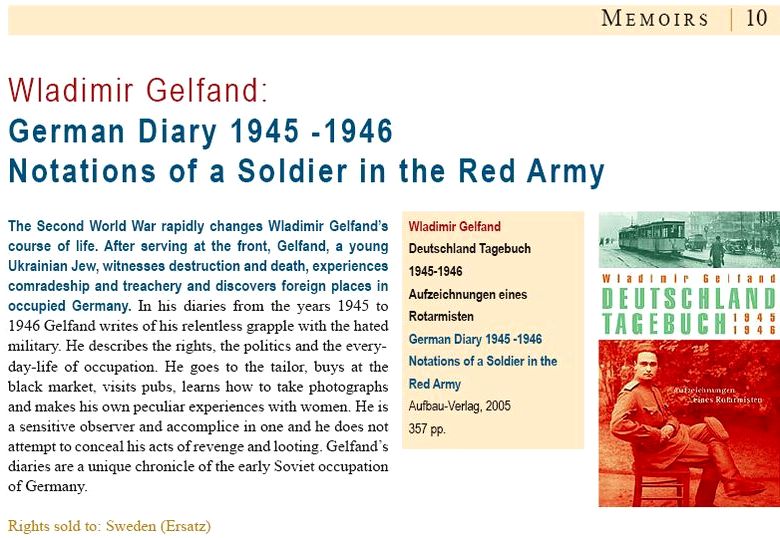
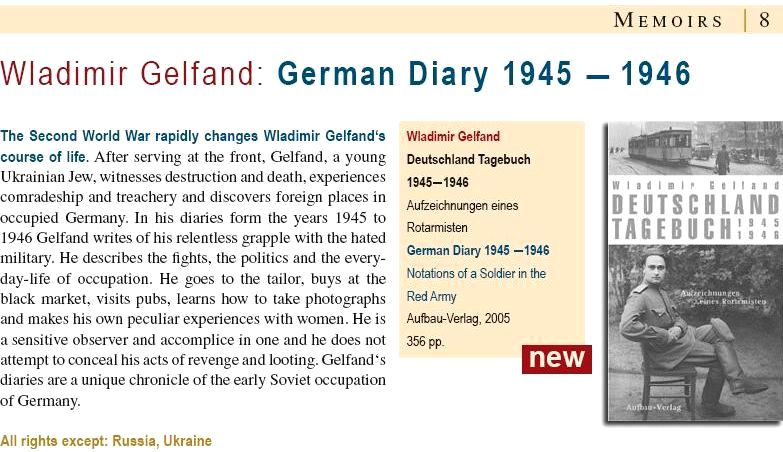
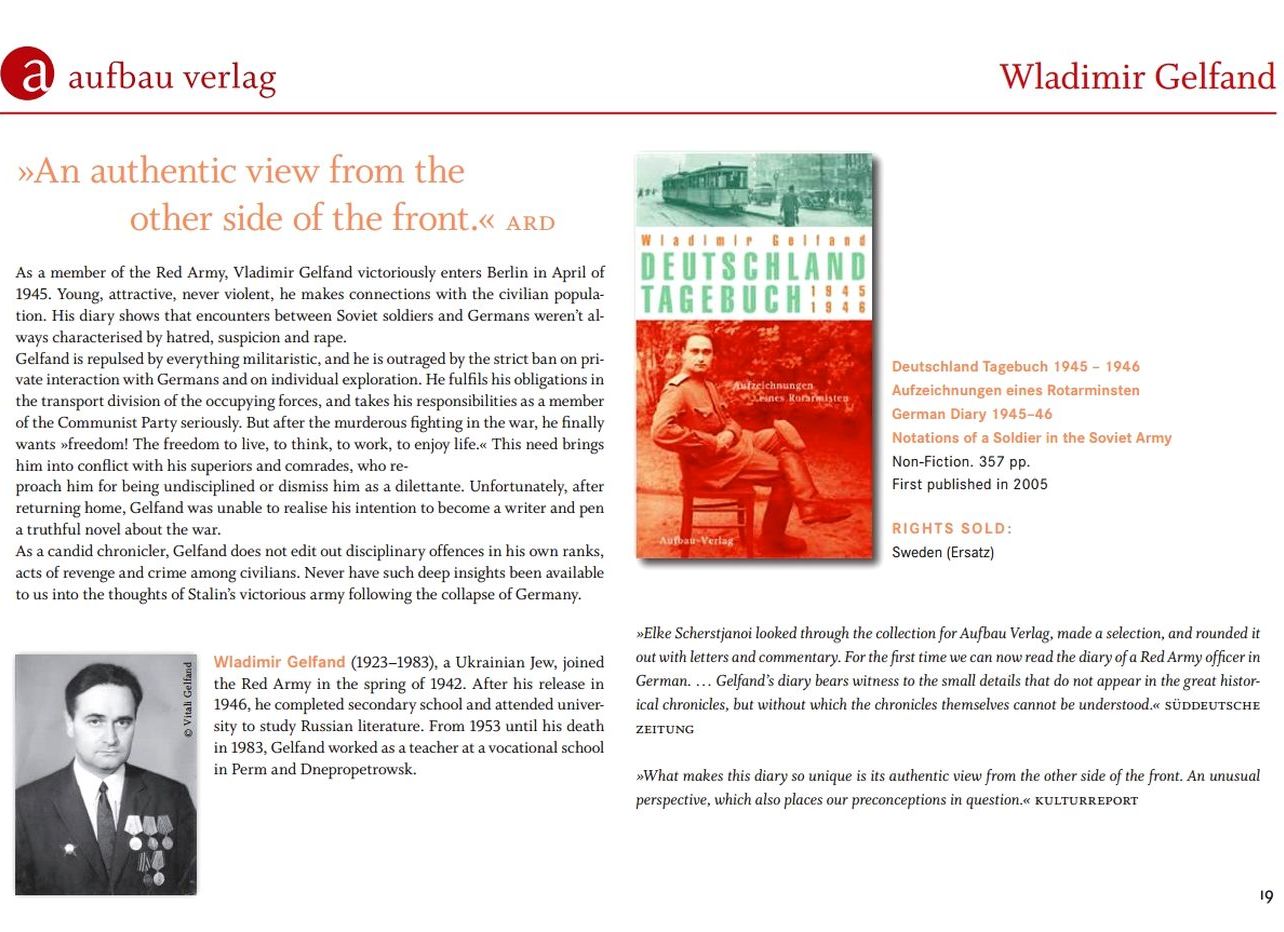
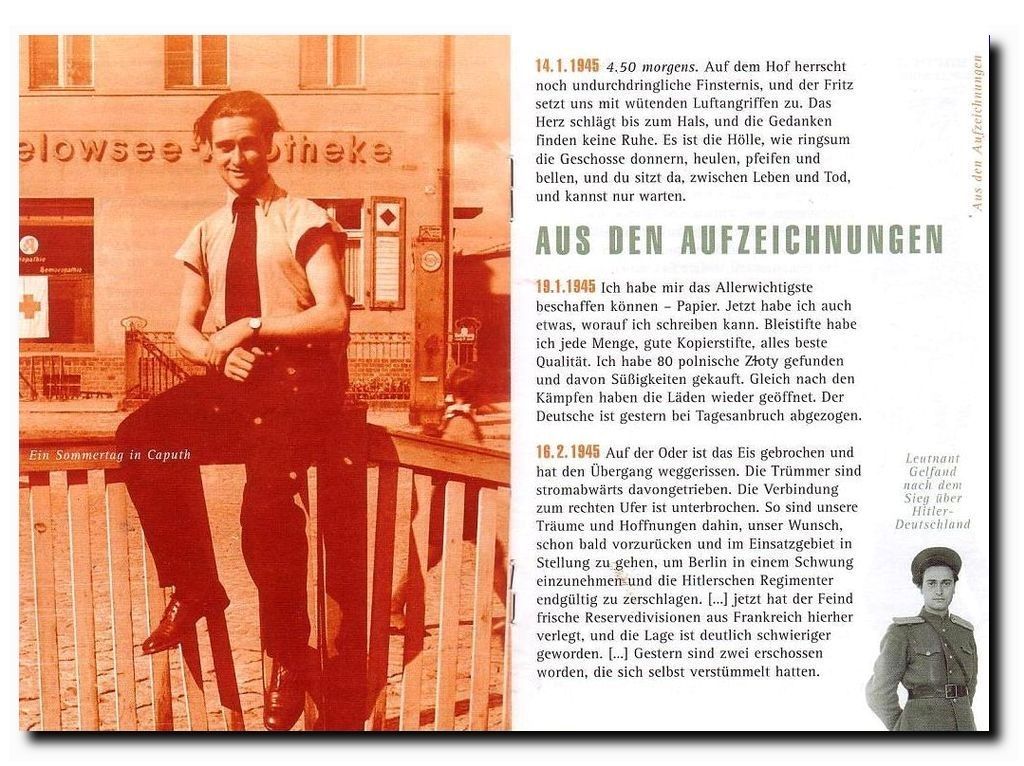
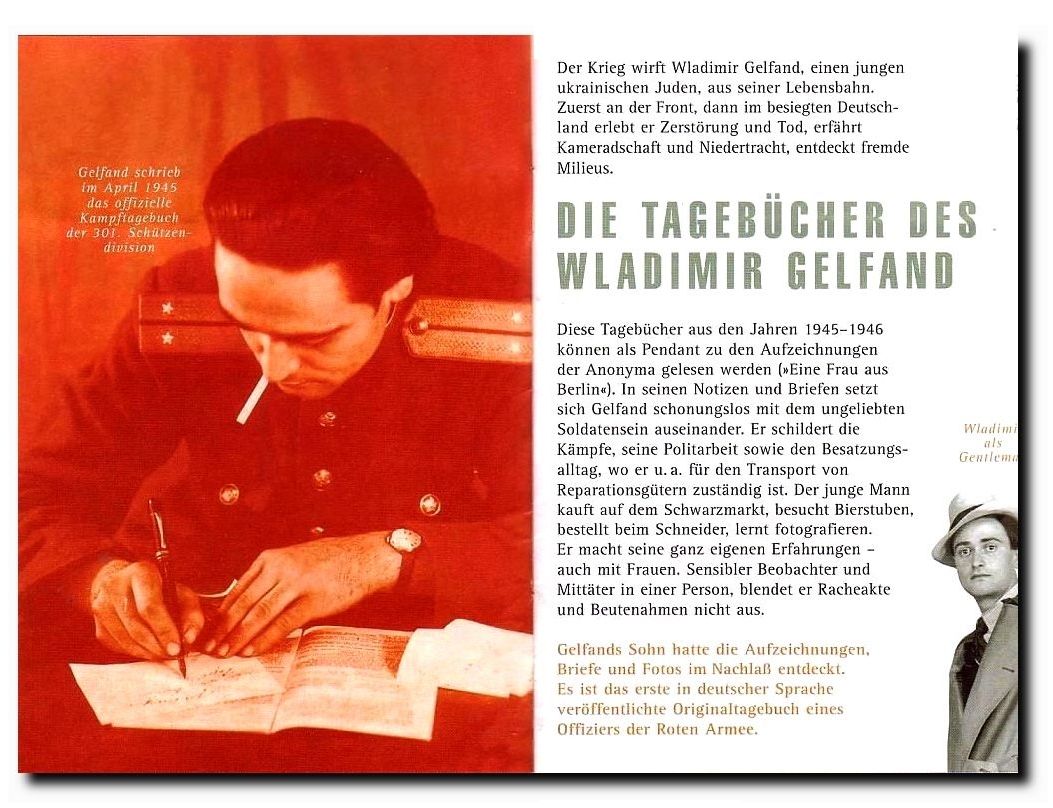
The Second World War rapidly changes Wladimir Gelfand‘s course of life. After serving at the front, Gelfand, a Young Ukrainian Jew, witnesses destruction and death, experiences omradeship and treachery and discovers foreign places in occupied Germany. In his diaries form the years 1945 to 1946 Gelfand writes of his relentless grapple with the hated military. He describes the fights, the politics and the everyday- life of occupation. He goes to the tailor, buys at the black market, visits pubs, learns how to take photographs and makes his own peculiar experiences with women. He is a sensitive observer and accomplice in one and he does not attempt to conceal his acts of revenge and looting. Gelfand’s diaries are a unique chronicle of the early Soviet occupation of Germany |
|
 |
 |
Elke
Scherstjanoi hat die Sammlung [den Nachlaß] für den Aufbau-Verlag
durchgesehen, eine Auswahl getroffen und diese um Briefe ergänzt und
kommentiert. Zum ersten Mal können wir nun auf Deutsch das Tagebuch
eines Offiziers der Roten Armee lesen. [...] Gelfands Tagebuch zeugt
von den Kleinigkeiten, die in den großen Geschichtserzählungen nicht
auftauchen, ohne die diese aber unverständlich sind
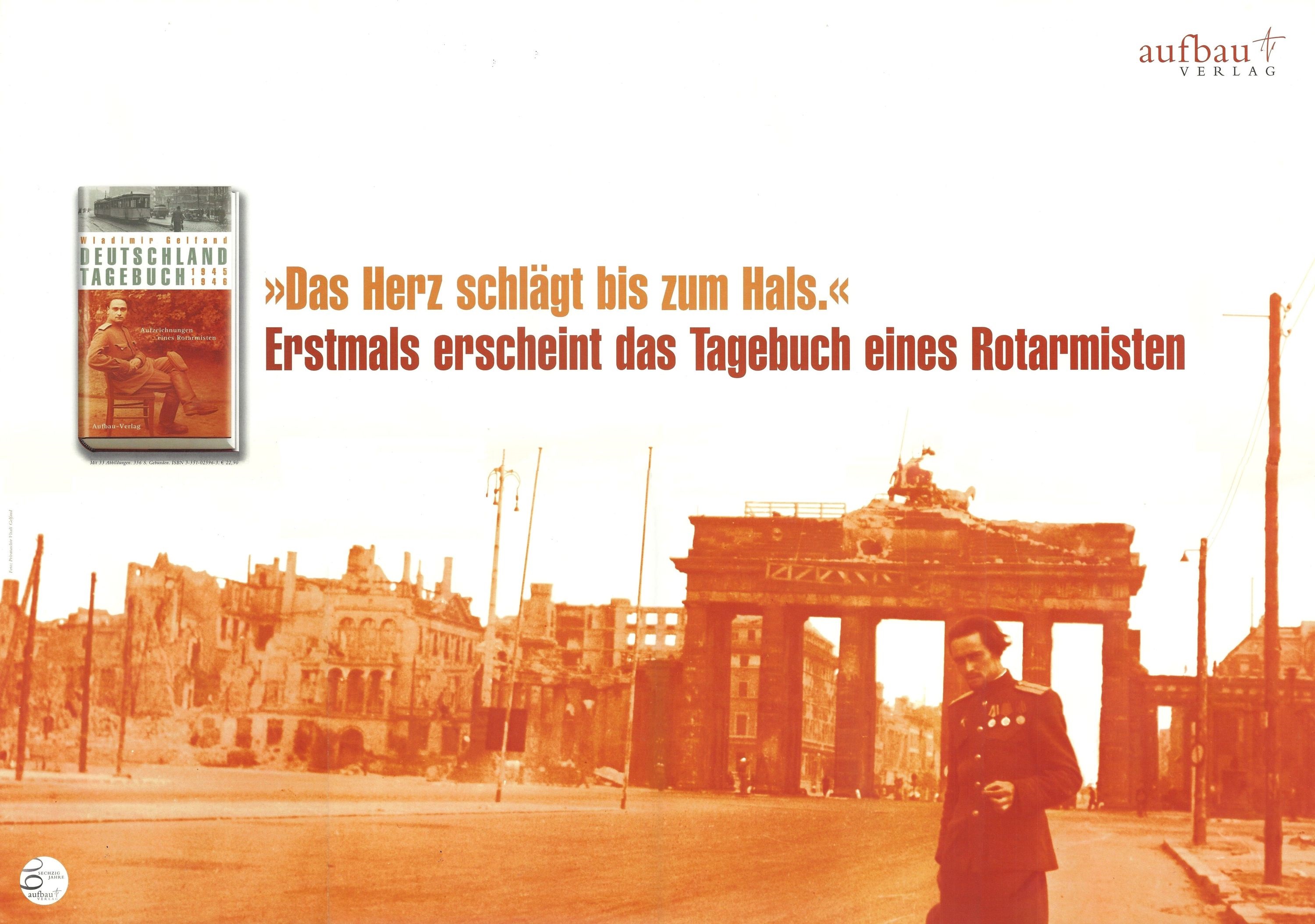
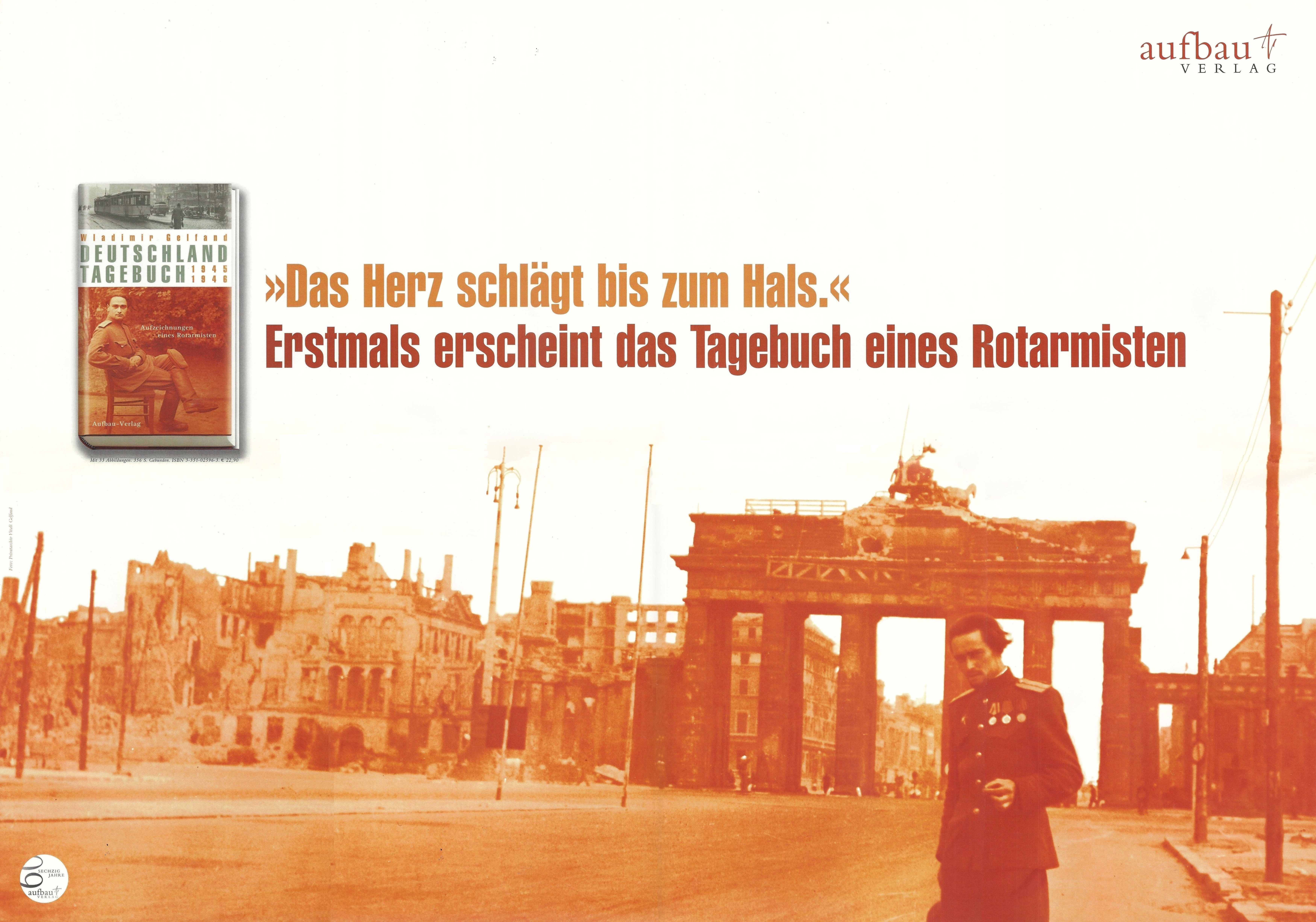
Süddeutsche Zeitung (6.5.2005) Was dieses Tagebuch einmalig macht, ist der unverfälschte Blick von der anderen Seite der Front. Eine ungewohnte Perspektive, die auch Vorurteile in Frage stellt. ARD (Kulturreport, 20.3.2005) |
| Я каждую ночь перебегал в постель к папе, и он рассказывал о прекрасных принцессах, неземной любви и о той войне. – Сколько ты убил немцев, папа? Точного ответа я ни тогда, ни позже не получил, но я понял, что, как оказалось, так тоже бывает: немцы, те, убитые и не убитые им в войну, как и все люди – люди, несмотря на то, что враги. Детским сознанием воспринимается догмой любое родительское слово. Тогда же, мне, восьмилетнему, папа как-то сказал: не ешь арбузные корки, – будешь хрюкать, как поросенок. Это тоже было воспринято догмой. Немецкие папы немецким детям, очень хочу надеяться, рассказывали о таком же. Он, все время болея сердцем, умер от полученной много лет назад в войну контузии. Война сумела-таки убить и его. Но он стал тем, кем хотел. Я надеюсь, он видит теперь нас всех, свою книгу, свое бессмертие и Бога, проведшего его через мясорубку жизни, чтоб сегодняшние мы смогли увидеть и понять его. Все имена, фамилии, даты и события - не изменены. Любое совпадение в описании - не является случайным. Огромная признательность и искреннее уважение за всемерную помощь и поддержку в издании этой книги Dr. Elke Scherstjanoi Mitarbeiterin Institut für Zeitgeschichte. C любовью и благодарностью Olga Glok. Berlin, den 10.10.2004 Vitaly Gelfand |
 |
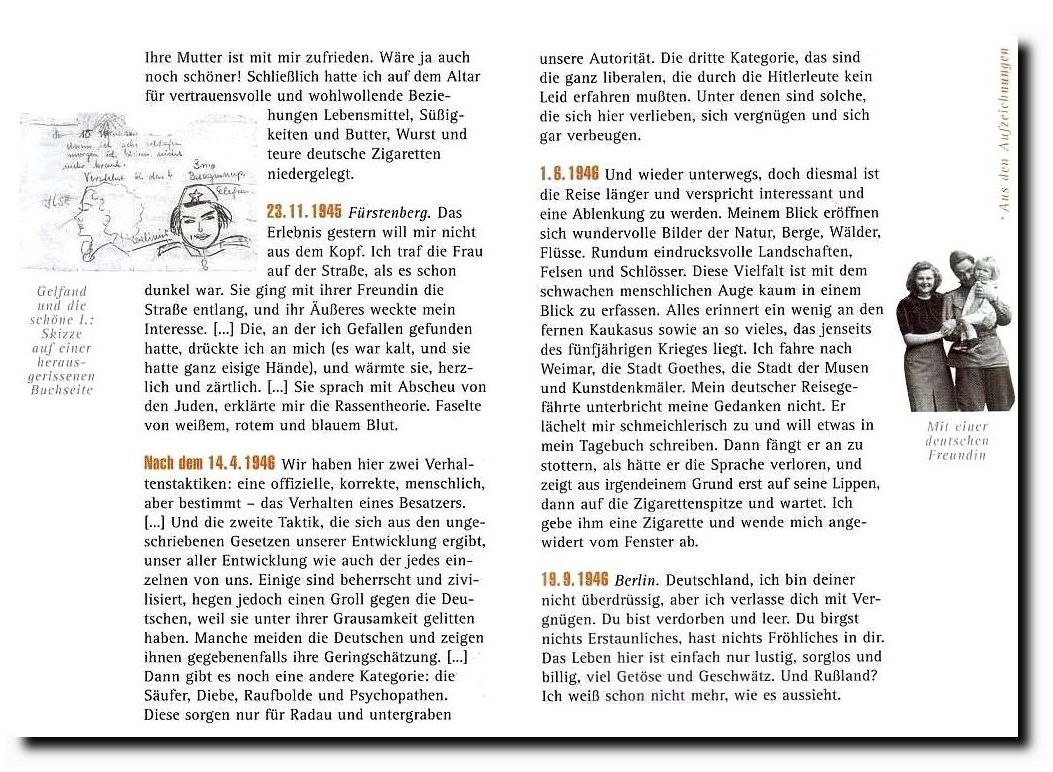
|
Das erste private Tagebuch eines
Offiziers der Roten Armee, das in deutscher Sprache vorliegt.
Geschrieben von Wladimir Gelfand einem jungen ukrainischen Juden, unter
dem unmittelbaren Eindruck der Kämpfe während des
Vormarschs auf Berlin und der Erlebnisse im ersten Jahr der Besatzung.
Als aufrichtiger Chronist blendet Gelfand Disziplinverstöße
in den eigenen Reihen, Racheakte, Beutenahmen und Verbrechen an
Zivilisten nicht aus. Noch nie konnten wir so tiefe Einblicke in die
Gedanken und Gefühle eines Siegers aus Stalins Armee nach dem
Zusammenbruch Deutschlands gewinnen
|
| German Diary 1945 -1946 Notations of a Soldier in the Red Army Aufbau-Verlag, 2005, 356 pp All
rights except: Russia, Ukraine
Rights sold to: Sweden (Ersatz) |
 |
|
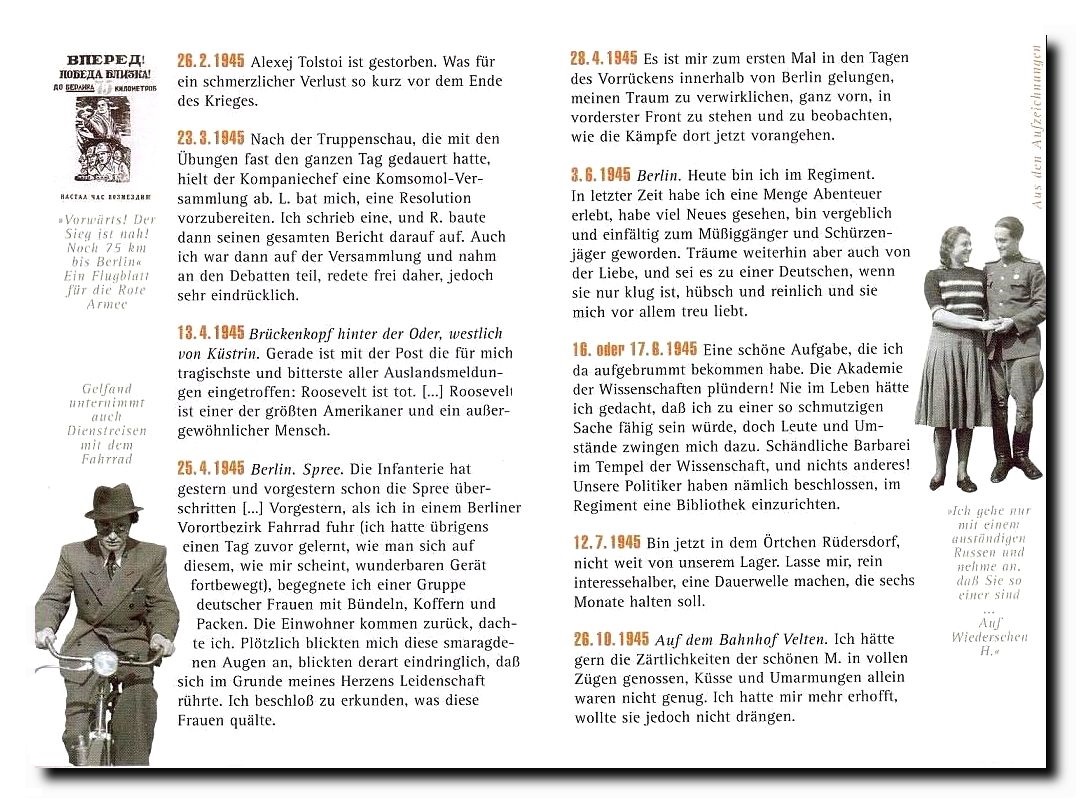
An der Front erlebt Wladimir Gelfand Gewalt, Zerstörung
und Todesdrohung, erfährt Kameradschaft und Niedertracht. Ende
April 1945 zieht er mit der Roten Armee als Sieger in Berlin ein. Zunächst ohne festen Posten,
sucht er nach Gelegenheiten, dem tristen Kasernenleben zu entkommen.
Jung, gutaussehend, nie gewalttätig, schließt er Bekanntschaften mit der Zivilbevölkerung.
Seine freimütigen Notizen belegen, daß die Begegnungen zwischen Deutschen und sowjetischen Soldaten nicht nur von Haß, Mißachtung und Vergewaltigungen geprägt waren. Gelfand ist alles Militärische zuwider, das strikte Verbot privaten Umgangs mit Deutschen und selbständiger Erkundungen empört ihn. Er erfüllt seine Pflicht als Mitarbeiter einer Transportabteilung der Besatzungsmacht und nimmt seine Aufgaben als Parteimitglied ernst. Aber nach dem mörderischen Kampf im Krieg will er endlich "Freiheit! Die Freiheit zu leben, zu denken, zu arbeiten, das Leben zu genießen." Dieser Anspruch bringt ihn mit Vorgesetzten und Kameraden in Konflikt, die ihm Disziplinlosigkeit vorhalten oder ihn als Schöngeist abtun. Sein Vorhaben, Schriftsteller zu werden und einen wahrhaftigen Kriegsroman zu schreiben, kann Gelfand nach der Rückkehr in die Heimat nicht realisieren. Elke Scherstjanoi schildert in ihrem Nachwort Gelfands Lebensstationen und seine langjährige widersprüchliche Auseinandersetzung mit den Kriegserlebnissen |
 |
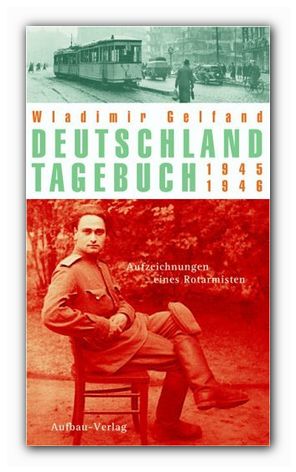 |
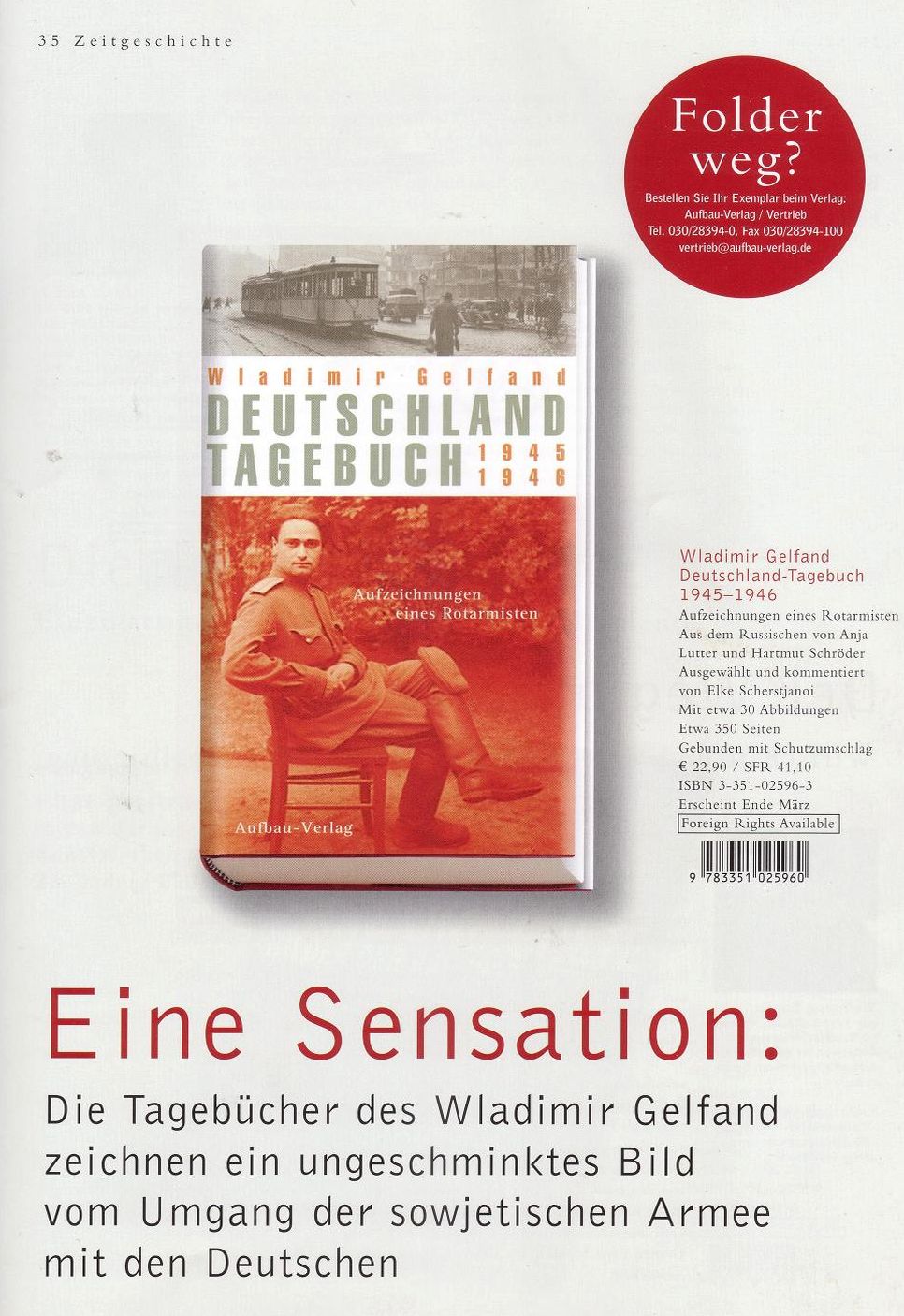
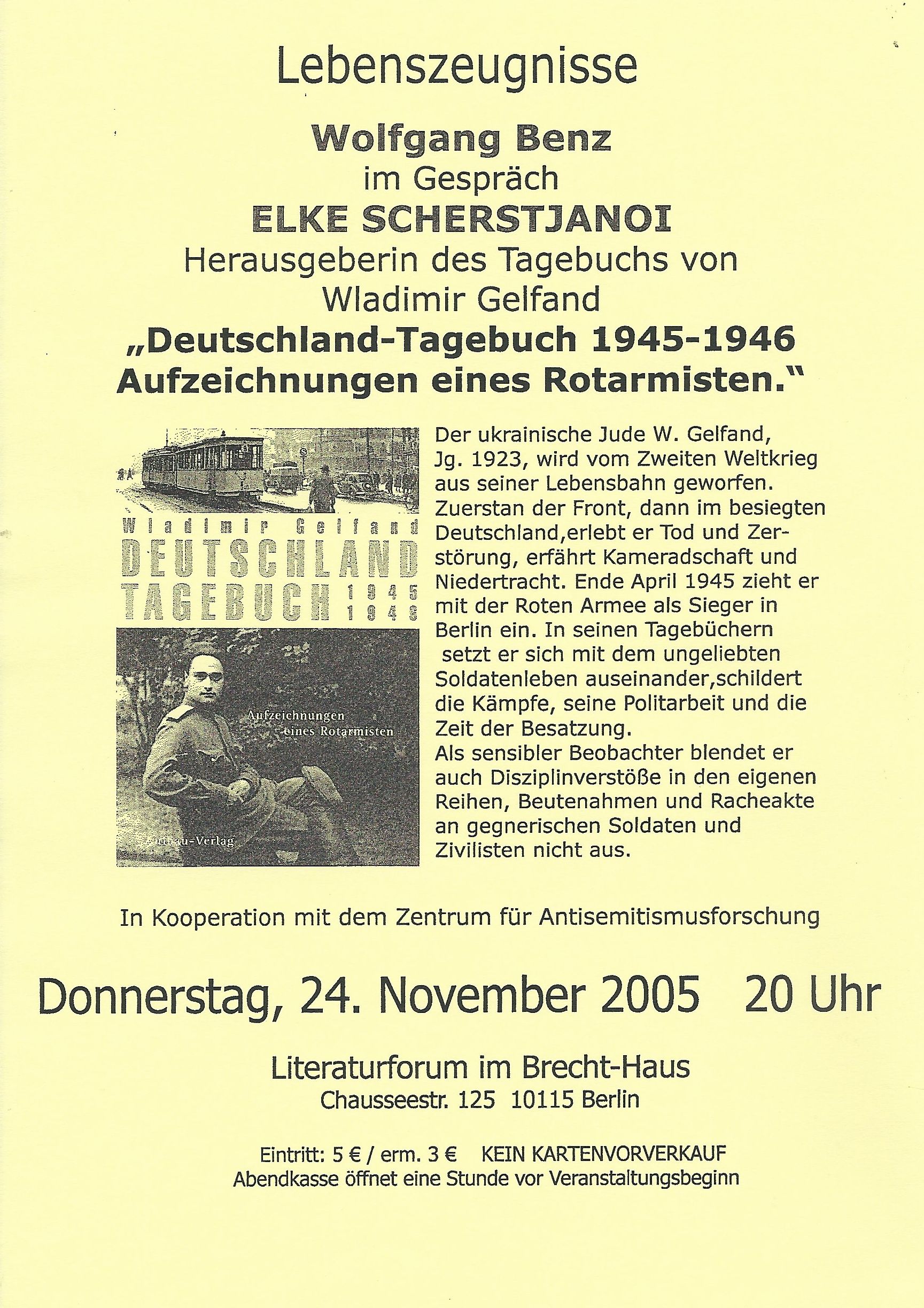
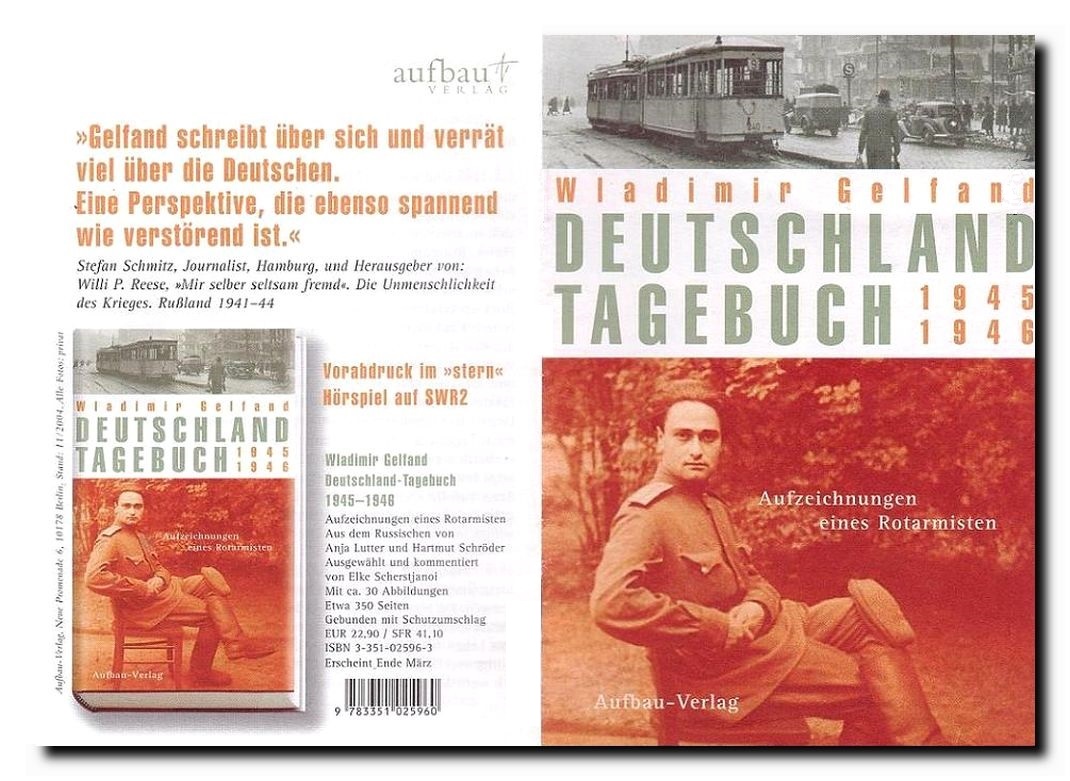
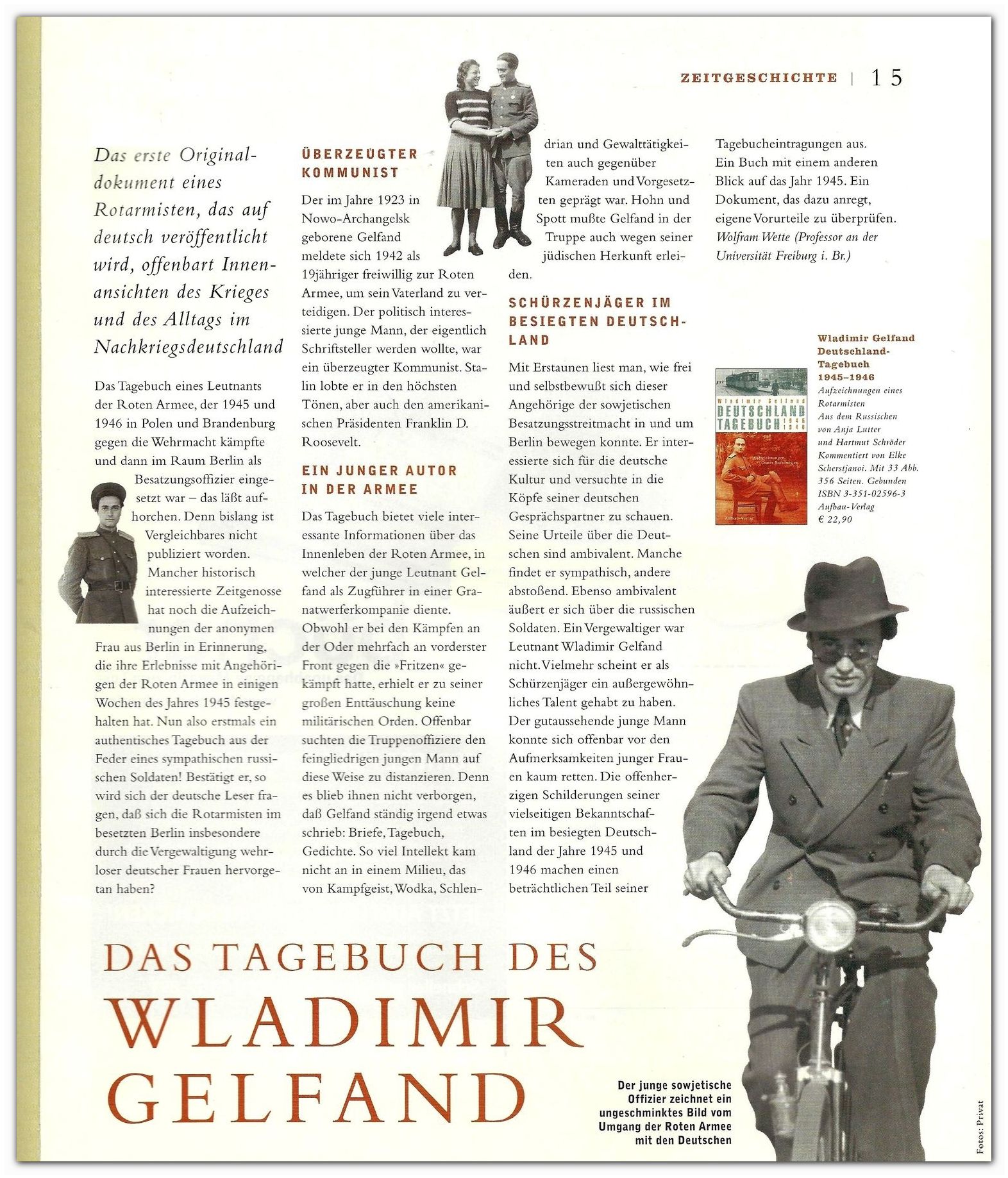
Wladimir Gelfand Deutschland-Tagebuch 1945-1946 Aufzeichnungen eines Rotarmisten Ausgewählt von: Elke Scherstjanoi, Kommentiert von: Elke Scherstjanoi Aus dem Russischen von: Anja Lutter, Hartmut Schröder Gebunden, 357 Seiten Erschienen bei: Aufbau-Verlag 3-351-02596-3 22,90 € *) / 41,10 Sfr  |
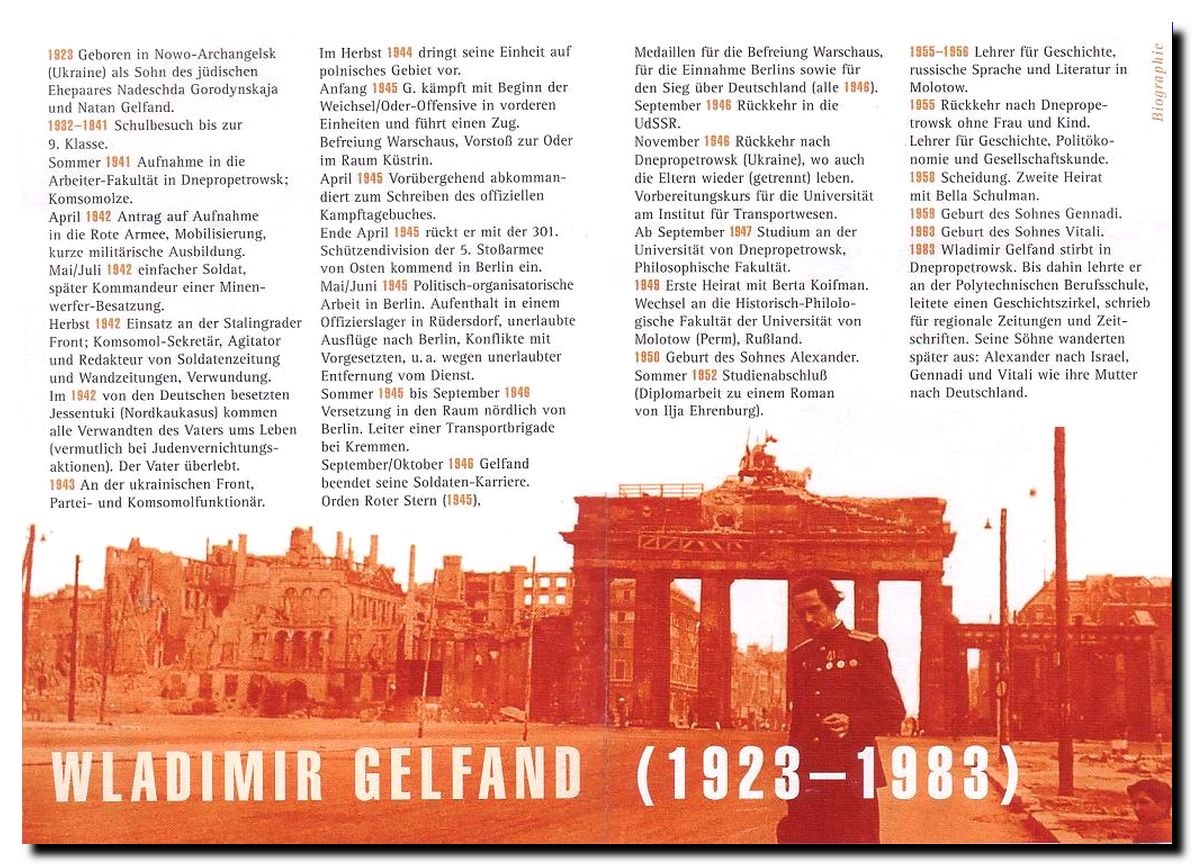
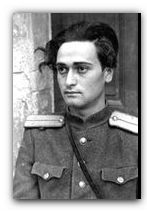 Wladimir Gelfand Wladimir Gelfand, geb. 1923 in Nowo-Archangelsk, Ukraine. Gelfand war ein Jude, meldete sich im Frühjahr 1942 zur Roten Armee, nach der Entlassung im September 1946 Abitur und Studium der russischen Sprache und Literatur. Von 1953 bis zu seinem Tod im Jahr 1983 arbeitete er als Berufsschullehrer in Perm und Dnepropetrowsk |
 German
Germany Diary 1945-1946 - Notes of a Red Army Soldier
The Second World War radically changes the course of Vladimir Gelfand's life. At the front, the young Ukrainian Jew experiences violence, destruction and the threat of death, along with comradeship and betrayal; later he encounters unfamiliar places in occupied Germany. In his diaries from 1945 and 1946 he records his continuing struggle with a military life he had come to hate. He writes about fighting, politics and the everyday realities of occupation. He visits a tailor, buys on the black market, goes to pubs, learns photography and has his own complicated experiences with women. He is both a sensitive observer and a participant, and does not conceal acts of revenge or looting. His diaries form a unique chronicle of the early Soviet occupation of Germany.
Publication rights belong to Aufbau Verlag except for Russia and Ukraine; Swedish rights were sold to Ersatz.
Elke Scherstjanoi examined and organized the surviving papers for publication, selected the material, added letters, and supplied commentary. For the first time German readers could encounter the wartime diary of a Red Army officer. The diary shows how a larger historical narrative emerges from countless details of everyday life.
"What makes this diary unique is the unfiltered view from the other side of the front, a perspective that is unusual and also challenges our preconceptions." - ARD, Kulturreport, 20 March 2005.
This was the first private diary of a Red Army officer to be published in German. Its author, Vladimir Gelfand, a young Ukrainian Jew, wrote under the immediate impact of the fighting for Berlin and his experiences during the first year of occupation. As an unusually candid chronicler he records what generally remained hidden: indiscipline within Soviet ranks, revenge, the taking of trophies and crimes against civilians. Rarely had German readers been given such direct access to the thoughts and feelings of a victor from Stalin's army after Germany's collapse.
"Gelfand writes about himself and reveals a great deal about the Germans. A perspective that is as fascinating as it is disturbing." - Stefan Schmitz, journalist and editor of Willy Peter Reese's memoir.
At the front Gelfand experiences violence, destruction and the constant threat of death, as well as comradeship and betrayal. At the end of April 1945 he enters Berlin with the leading units of the Red Army as a victor. At first without a permanent assignment, he looks for ways to escape the dreariness of barracks life. Young, good-looking and not inclined to violence, he establishes friendly contacts with civilians. His frank notes show that encounters between Germans and Soviet soldiers were shaped not only by hatred, contempt and violence. Gelfand disliked military life and resented the strict ban on private contacts with Germans and on independent excursions.
He fulfills his duties in the transport section of the occupation administration and takes his obligations as a Party member seriously. But after the murderous war he finally wants "Freedom! To live freely, think, work and enjoy life." This desire repeatedly brings him into conflict with superiors and comrades, who accuse him of indiscipline and dismiss him as an aesthete. After returning home he was unable to realize his plan to become a writer and create a major novel about the war.
In her afterword Elke Scherstjanoi traces the stages of Gelfand's life and his long, contradictory struggle to come to terms with his wartime experience.