
|
Война достигает Одера | ||||
| После летнего наступления в 1944 Красная армия останавливалась вдоль Вислы и тогдашней восточной границы немецкой империи на фронте шириной 2.200 км. Положение на востоке существенно не изменялось до середины января 1945. | |||||
| Это ценило немецкое политическое и военное руководство по ошибке как признак для напряжений между союзником и для логистических, а также оперативных трудностей Красной армии. |
| Уже 24 декабря 1944 генерал Гудериан во время оперативного совещания с главнокомандующим вермахта рекомендовал непосредственно предстоящее советское общее наступление. На его объективную оценку Гитлер ответил: "Это самый большой обман с Дшингис хан. Кто и откуда выкопал эту глупость?" | |||||||||||
| Против совета Гудерианс прекращать наступление Арденн и переносить все ненужные силы западной стороны в Вислу, Гитлер воздерживался от усиления фронта Вислы. Он хотел ужасать включенный Красной армией Будапешт при всех обстоятельствах и защищать венгерские нефтяные месторождения. | |||||||||||
| У вермахта были еще примерно 10 млн. мужчин под оружием в начале 1945. Только более незначительная часть личного состава, а именно 1,84 млн. солдат, стояла на восточном фронте. | |||||||||||
| С лета 1944 советский генеральный штаб работал над планированием операций на немецкой территории. Стратегическое планирование предусматривало на зиму и весну 1945 заключительное наступление в 2 фазах. Цели принимали участие: | |||||||||||
|
|||||||||||
| Превосходство в Восточной Пруссии и Польше утомительным советским фронтам (1., 2. и 3. Белорусские, 1. Балтийские и 1-й Украинский фронт) были однозначны. Они постановляли более в целом 55 армий пехоты, 6 бронированных армий, а также 35 самостоятельных танков и механизируемые корпусы с в целом примерно 6 млн. солдат. Стоящий в центре 1. Белорусский фронт и 1-й Украинский фронт получали решающую роль, так как они могли достигать быстрее всего центра Третьего Рейха. | |||||||||||
| |
|||||||||||
|
|||||||||||
Группа армий, которая больше не была полностью наполнена в персонале и материале, располагала боевым составом 93.000 мужчин, 1.813 орудий, 793 противотанковых пушек, 318 танков и 616 орудий шторма. Эти силы должны были защищать полосу шириной 700 км. |
|||||||||||
| В советские источники говорят о превосходстве Красной армии при персонале составляло 5,5-кратное, у бронированных транспортных средств 6,2-кратное, у артиллерии 8,8-кратное и при самолетах 4,5-кратное. Это сравнение только количественное, так как вермахт располагал только лишь небольшим количеством горючего и боеприпасов. | |||||||||||
| После тяжелых огневых налетов артиллерии (артиллерийская плотность примерно 200 труб за фронтовой километр) 1 проламывали. Белорусские и 1-й Украинский фронт в середине января 1945 защиту группы армий A на ширине 500 км. В центре немецкой защиты стояла в Висле также 9-ая армия, которая защищала на немного месяцев позже в Одере. | |||||||||||
|
|||||||||||
| И 17 января 1945: "Положение стало очень серьезным, оно заостряет себя ежечасно дальше к … Там на фронте почти всю артиллерию уничтожило, я имею вчера от, О. B. (главнокомандующие) заказ получают перехватывать расколотый после рюквэртсфлутенен частей артиллерийских союзов и организовывать … можно говорить о частичном роспуске." | |||||||||||
|
|||||||||||
К этой дате у Одера был еще закрытый ледяной покров, который хотел использовать Красную армию для перевода тяжелого оружия. Сильные передовые отряды достигали в конце января и в начале февраля 1945 Одера и образовывали несколько предмостных укреплений. Никакие боевые сильные немецкие войска не были готовы в Одере к этой дате. Оборонительный рубеж образовывался только, когда Красная армия стояла уже сильными силами к западу от Одера. |
|||||||||||
| |
|||||||||||
|
Предмостные
укрепления к югу и на севере от Кюстрина
|
|||||||||||
| Когда
Фораускрэфте
5-й ударной армии превосходили 31 января 1945 Одер и образовывали
предмостное укрепление Киниц,
никакие боеспособные немецкие единицы не имелись в распоряжении в более
близкой окрестности. |
|||||||||||
|
|||||||||||
|
|||||||||||
| Крепость
Kюстрин
|
|||||||||||
|
|||||||||||
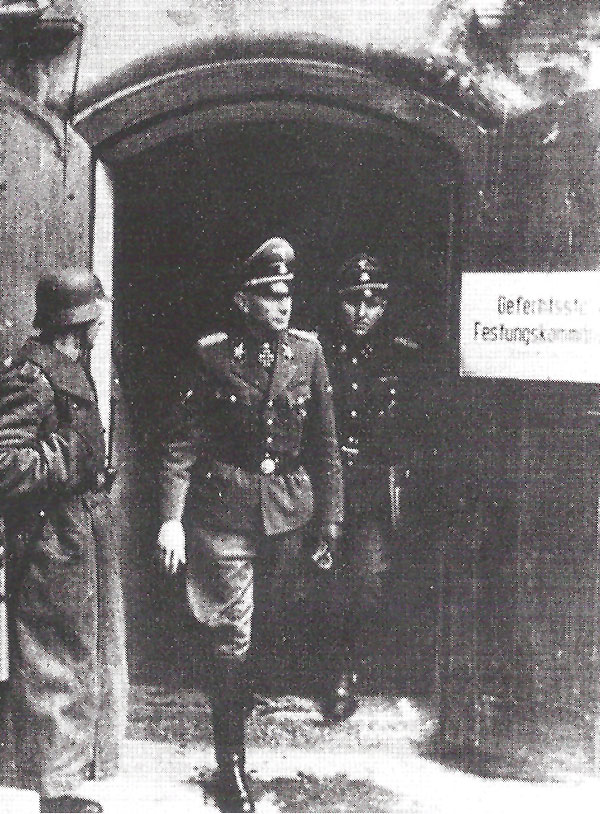
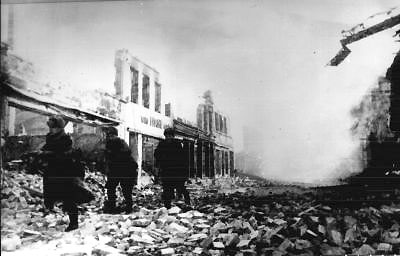
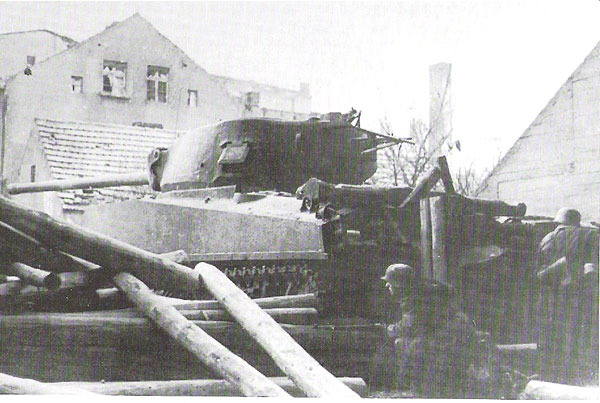
| Фотографии: Комендант
крепости Райнефарт; связанная
с большими потерями уличная борьба в Кюстрине Комендантом крепости был командир отделения SS Райнефарт. В начале февраля город с тысячами солдат и гражданскими лицами включался. Связь шириной 2 км до Кюстрина могла освобождаться 7 февраля нападением частей 21-ого бронированного подразделения. Ею попавший много гражданских лиц и раненых солдат из города. Одновременно войска вермахта могли снабжаться. |
|||||||||||
| 22 марта 1945 войска 5-ой ударной армии и 8-ой армии гвардии вели сконцентрированное наступление в направлении Горгаст – Маншнов с целью объединять южное и северное предмостное укрепление и расширять, а также включать крепость Küstrin полностью. | |||||||||||
|
|||||||||||
|
|||||||||||
| |
|||||||||||
| Итог действий | |||||||||||
|
|||||||||||
| Имперский
руководитель СС Генрих Гиммлер освобождался 20 марта 1945 от
руководства группы армий Вислу. 22
марта 1945 генерал-полковник Гайнрики принимал главное командование. Советские войска достигали до конца марта линии Güstebiese Kienitz Genschmar Gorgast Manschnow конное вино – Лебус. 1 Белорусский фронт готовился к общему наступлению. 9-я армия проводила последние приготовления к обороне. |
 German
THE BATTLE
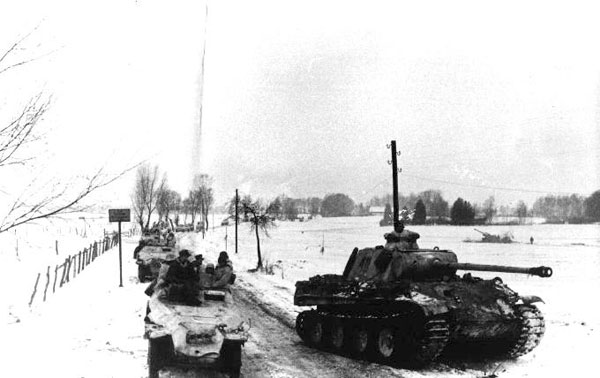
Image: German troops in East Prussia, 15 January 1945
The war reaches the Oder
After its summer offensive of 1944, the Red Army halted along the Vistula and the then eastern border of the German Reich on a front 2,200 kilometers wide. The situation in the East did not change substantially until mid-January 1945.
The German political and military leadership wrongly interpreted this as evidence of tensions among the Allies and of logistical and operational difficulties within the Red Army.
As early as 24 December 1944, General Guderian warned during a situation conference with the commander-in-chief of the Wehrmacht that a major Soviet offensive was imminent. Hitler responded to his factual assessment: “This is the biggest bluff since Genghis Khan. Who dug up this nonsense?”
Against Guderian’s advice to terminate the Ardennes offensive and move every dispensable unit from the Western Front to the Vistula, Hitler failed to reinforce the Vistula front. He was determined at all costs to relieve Budapest, which had been encircled by the Red Army, and to defend the Hungarian oil fields.
At the beginning of 1945 the Wehrmacht still had around ten million men under arms. Only the smaller portion of its personnel—1.84 million soldiers—was deployed on the Eastern Front.
Since the summer of 1944, the Soviet General Staff had been planning operations on German territory. Its strategic planning envisaged a final offensive in two phases during the winter and spring of 1945. The objectives were as follows:
In the first phase, a concentrated advance of 250 to 300 kilometers westward. The German formations were to be decisively weakened and the line of the Vistula lowlands—Bromberg—Posen—Mährisch-Ostrau reached.
After a short pause, the second phase was to begin, with the objective of taking the Reich capital, Berlin.
The superiority of the Soviet fronts attacking in East Prussia and Poland—the 1st, 2nd and 3rd Belorussian, 1st Baltic, and 1st Ukrainian Fronts—was unmistakable. Altogether they possessed 55 infantry armies, six tank armies, and 35 independent tank and mechanized corps, totaling about six million soldiers. The centrally positioned 1st Belorussian and 1st Ukrainian Fronts were assigned the decisive role because they could reach the center of the Third Reich most rapidly.
Vistula–Oder Offensive
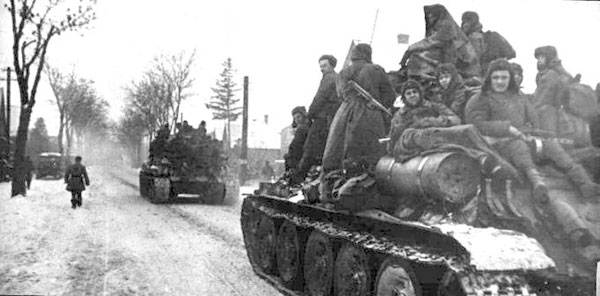
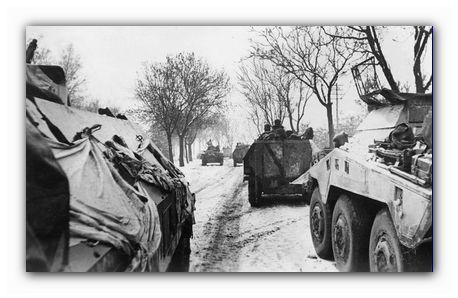
Image: The Red Army east of the Oder, January 1945
The Soviet attack began on 12 January 1945 with the 2nd Belorussian Front. Three days later the two centrally positioned fronts began what was initially called the “Warsaw–Poznań Operation,” later expanded into the “Vistula–Oder Operation.”
The 1st Belorussian and 1st Ukrainian Fronts, with about 2.2 million soldiers, 35,000 guns, mortars and rocket launchers, more than 7,000 tanks and self-propelled guns, and 5,000 combat aircraft, faced Army Group A.
Army Group A, no longer fully replenished in personnel or materiel, had an effective combat strength of 93,000 men, 1,813 guns, 793 antitank guns, 318 tanks, and 616 assault guns. These forces were expected to defend a front 700 kilometers wide.
According to Soviet sources, the Red Army’s numerical superiority was 5.5 to one in personnel, 6.2 to one in armored vehicles, 8.8 to one in artillery, and 4.5 to one in aircraft. This comparison was purely quantitative, since the Wehrmacht also had very little fuel and ammunition left.
After massive artillery barrages, with an artillery density of about 200 barrels per kilometer of front, the 1st Belorussian and 1st Ukrainian Fronts broke through Army Group A’s defenses in mid-January 1945 across a width of 500 kilometers. The 9th Army, which only a few months later would defend the Oder, also stood at the center of the German defense on the Vistula.
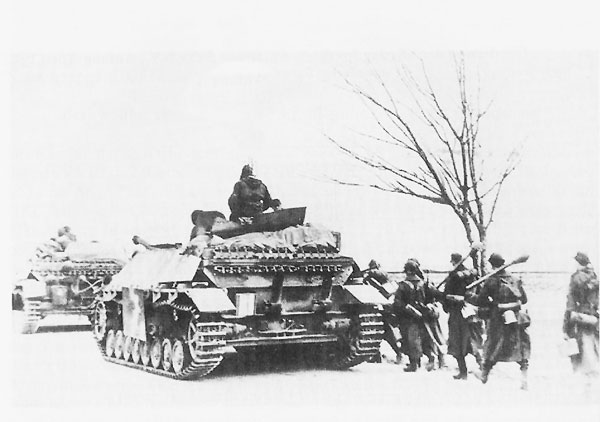
Image: Tank destroyers on the way to the front
“The storm breaks loose! 6:30 a.m., beginning of the enemy barrage in the Puławy bridgehead; 6:35 a.m. in the Magnuszew bridgehead, with unheard-of intensity. At 7:30 I am still able to speak with both army corps commanders. Enemy fire is generally covering the forward line; wire communications with the firing positions have already partly been cut…”
“The situation has become very serious and is worsening by the hour… Since almost the entire artillery at the front has been smashed, yesterday I received orders from the commander-in-chief to collect and organize the fragmented parts of the artillery formations streaming to the rear… One can speak of a partial dissolution.”
Nowhere was it possible to establish another coherent defensive line. On 27 January 1945 the 9th Army still had 52,000 men, including 26,000 Volkssturm members, about 190 tanks and assault guns, and 288 artillery pieces.
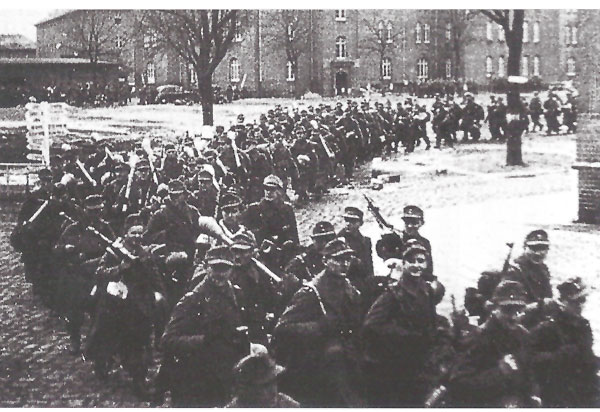
Image: March battalion in eastern Brandenburg (Source: video “Battlefield…” / “Red Sand”)
The Soviet fronts broke through Army Group A’s defenses faster than planned.
According to Marshal Zhukov, an advance through Poznań had not originally been planned. Zhukov decided to continue the offensive all the way to the Oder in order to prevent the enemy from establishing itself in new positions.
At that time the Oder still had an unbroken cover of ice, which the Red Army hoped to use for moving heavy weapons across. Strong advance detachments reached the Oder in late January and early February 1945 and established several bridgeheads. At that moment there were no combat-capable German troops ready on the Oder. A defensive front was formed only after substantial Red Army forces were already west of the river.
The bridgeheads south and north of Küstrin
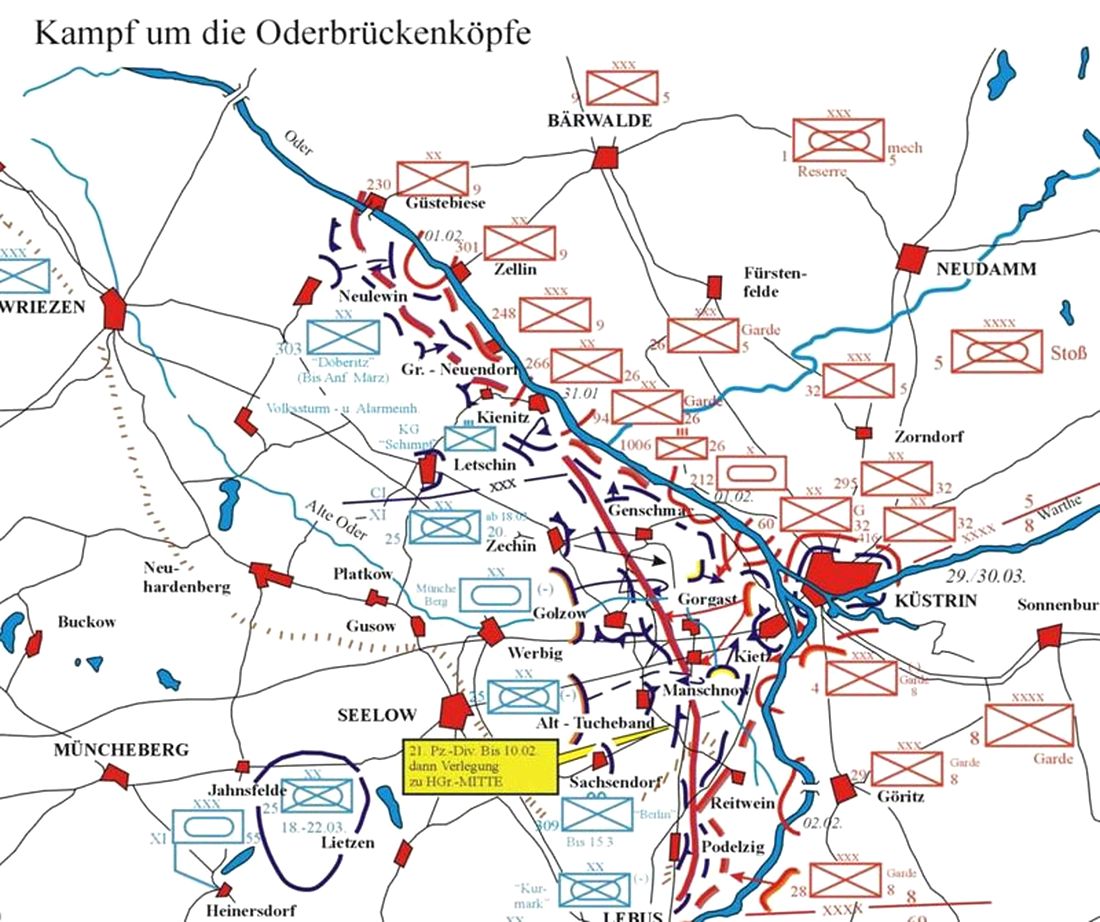
When advance units of the 5th Shock Army crossed the Oder on 31 January 1945 and established the Kienitz bridgehead, there were no combat-capable German units in the immediate area.
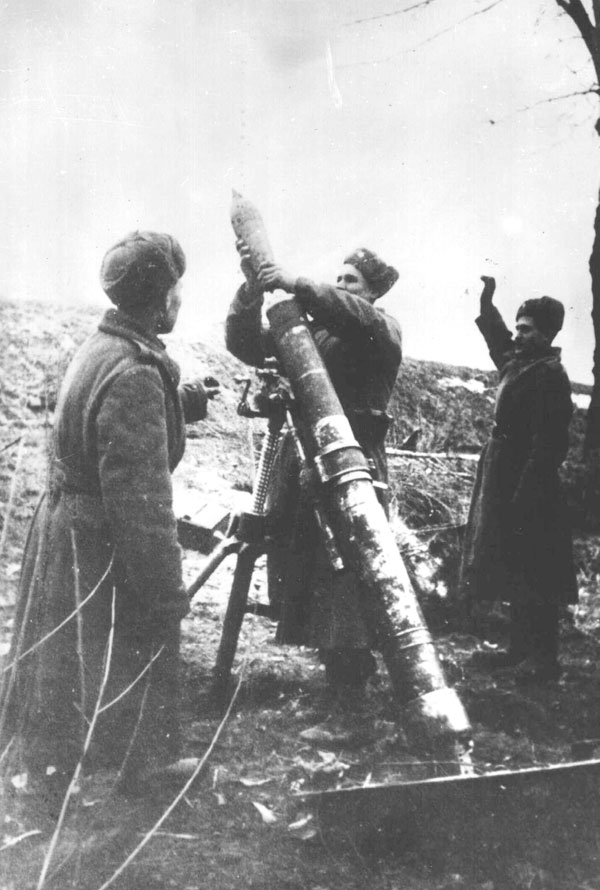
Image: Soviet soldiers at a 120 mm regimental mortar
An attack on 1 February 1945 by two hastily assembled emergency battalions failed. In the following days, costly fighting developed not only there but also around Groß Neuendorf, Güstebiese and Genschmar.
“We are moving toward the river, where very heavy fighting is going on right now. Enemy fighters circle above our heads, and explosive rounds from their heavy machine guns lash down in sometimes long, but more often short, bursts. The enemy has completely worn us down with his resistance. In the rifle companies, half the men are now unfit for combat… I was soaked to the skin and trembling all over. The dugout I had spent half a day digging like a tunnel into the railway embankment collapsed under the incoming shells, and I was lucky that at that moment my head and upper body were sticking out; otherwise I would have suffocated under the ice and earth…”
The situation was similar between 1 and 3 February 1945 during the establishment of additional bridgeheads near Reitwein and Lebus. Initially, only one Reich Labour Service battalion, an SS artillery detachment, one emergency battalion, and two Volkssturm battalions were available there. Particularly prolonged and costly fighting took place around Wuhden, Klessin (link: Stern), and Podelzig.
Image: Soviet soldiers building an improvised bridge Image: German counterattacks in the Oderbruch
The 9th Army, still in the process of being assembled, had insufficient forces for a continuous defense of the river line. In the sector of the Küstrin fortress and the city of Frankfurt (Oder), which had also been declared a fortress, Wehrmacht troops managed to retain several bridgeheads on the eastern bank. The front remained on the Oder for two months.
The fortress of Küstrin
Heavy fighting for Küstrin continued from early February until the end of March.
The city, where many important railway lines and roads converged, had been declared a fortress by Hitler in January 1945 and was to be held “as in the Seven Years’ War.”
Images: Fortress commander Reinefarth; costly street fighting in Küstrin
SS-Gruppenführer Reinefarth became fortress commander. At the beginning of February the city, containing thousands of soldiers and civilians, was encircled. An attack by elements of the 21st Panzer Division on 7 February opened a two-kilometer-wide corridor to Küstrin. Many civilians and wounded soldiers were able to leave the city through it, while Wehrmacht troops could at the same time receive supplies.
On 22 March 1945, troops of the 5th Shock Army and 8th Guards Army launched a concentrated attack toward Gorgast and Manschnow. Their aim was to unite and enlarge the southern and northern bridgeheads and to complete the encirclement of Küstrin fortress.
On 27 March 1945, several German divisions launched a relief attack on Küstrin in an attempt to free the encircled grouping and eliminate the northern part of the Soviet bridgehead. These unsuccessful attacks were extremely costly.
Image: Fighting in Küstrin
The battle for Küstrin ended when the remnants of the garrison broke out on 30 March 1945. Of the approximately 10,000 fortress troops present at the beginning of February, only about 1,000 reached the German lines near Golzow.
Image: Hitler at the front for the last time
By the end of the fighting, Küstrin’s old town had been almost completely destroyed, the new town by 92 percent, and Kietz by 98 percent. Exact figures for personnel losses will probably always remain unknown.
On the German side there were probably around 5,000 dead and 9,000 wounded. About 6,000 German soldiers were taken prisoner. Soviet losses were also around 6,000 dead and 12,000 wounded.
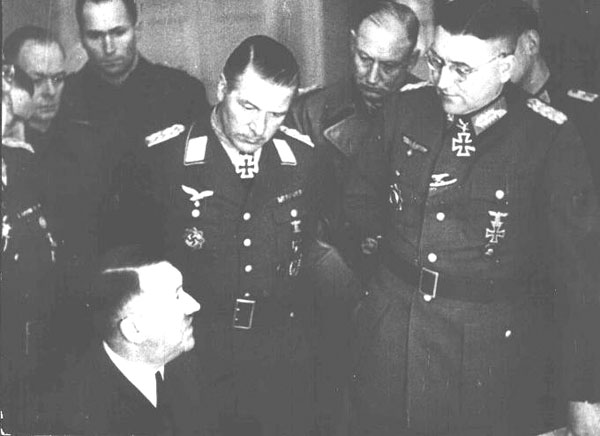
Hitler spent a few hours at the Oder front in March 1945. The photograph shows him at the headquarters of the CI Army Corps in Harnekop Castle. General of Infantry Busse stands to Hitler’s right.
Assessment of the operations
The fighting for the bridgeheads and the fortress of Küstrin essentially developed into costly positional warfare comparable to Verdun in the First World War. Army Group Vistula failed to fulfill its assigned tasks: eliminating the bridgeheads and establishing a continuous front line on the west bank of the Oder.
Image: Map of the bridgehead at the end of March 1945
Losses on both sides were considerable. During the fighting for the Soviet bridgeheads alone, from 1 February to 15 March, the 9th Army lost 35,375 men, including 3,977 killed, 18,848 wounded, and 12,550 missing. These figures do not include the extremely costly fighting of 22 March 1945, when the two Soviet bridgeheads were enlarged and united, or of 27 March 1945, when German forces attacked Küstrin.