
   ·
|
|
|
|
|
|
|
 |
Пресса:
Ханс-Юрген Дёшер задаётся вопросом, что такой подход даёт изучению истории Потсдама. Роланд Тиме подчёркивает, что изучение биографий жителей города на протяжении периода с 1933 по 1989 год необходимо, чтобы понять, как Потсдам и его население пережили две диктатуры. Тиме знал не только чиновников и общественных деятелей города, но и располагал семейными дневниками, благодаря чему мог убедительно показать сложную пограничную область между сопротивлением и приспособлением. Особенно показательны дневники его отца, Ханса Тиме. Они рассказывают о службе в армии, а затем о работе архивистом в Потсдамском государственном архиве. Эти записи важны потому, что Ханс Тиме во многих отношениях сохранял критическую позицию, несмотря на работу при нацистском режиме. Хотя исследование ограничено региональными рамками, оно освещает более широкие вопросы немецкой истории и производит сильное впечатление. Frankfurter Allgemeine ZeitungИсторик описывает жизнь людей в нацистский и СЕПГ (Социалистическая единая партия Германии) период с «широкой опорой на источники». Роланд Тиммес добился того, что «облегчил захват серых зон между адаптацией и сопротивлением». Интенсивные презентации, сопровождающиеся описанием опыта отдельных граждан Потсдама до и после 1945 года, показывают, как изменялись биографии потсдамцев в условиях двух диктатур. Иллюстрированные биографии раскрывают переломные моменты в жизнях этих людей в условиях нацистской и социалистической властей. Die Berliner Literaturkritik |

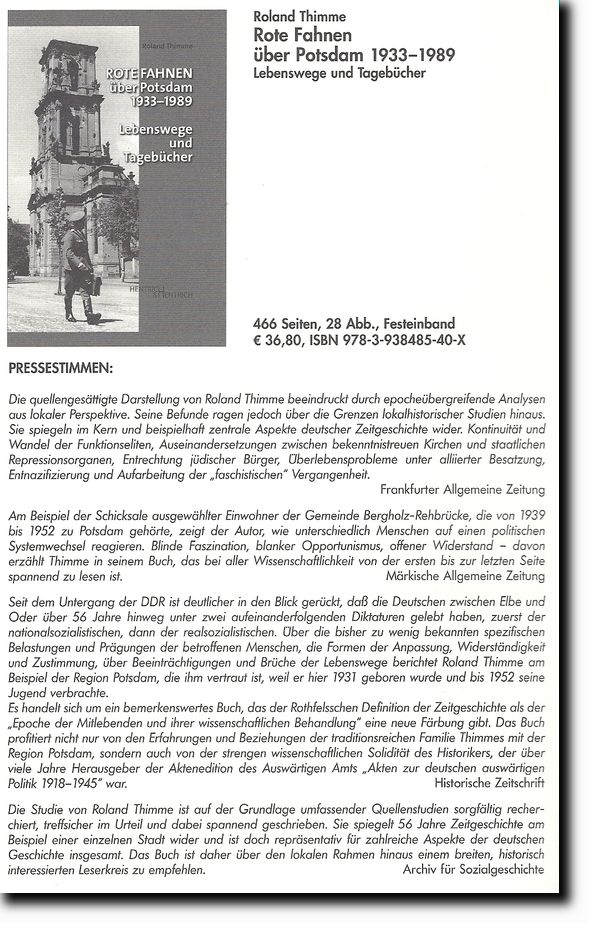
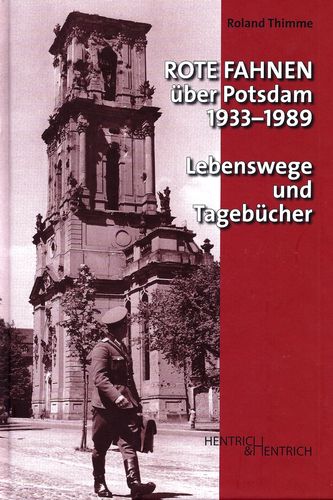
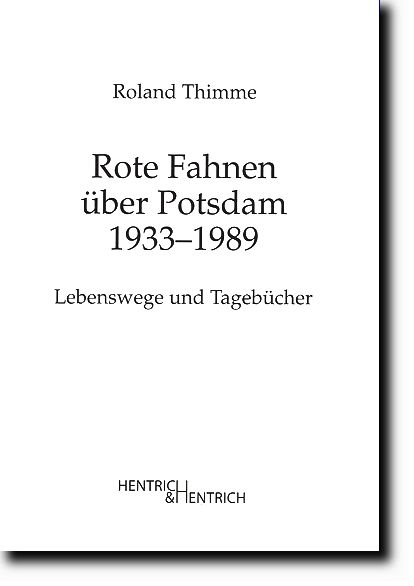
“Red Flags over Potsdam 1933–1989: Lives and Diaries”
Brief description
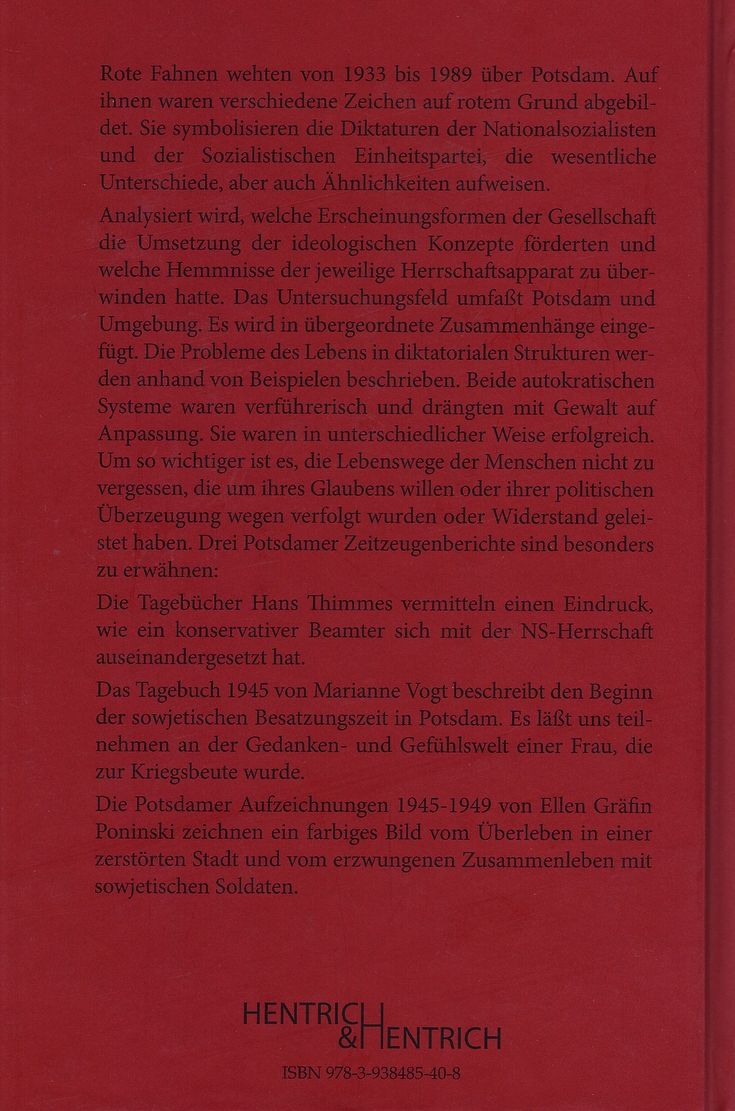
Red flags were part of the political symbolism that marked Potsdam between 1933 and 1989. Although National Socialism and the Socialist Unity Party dictatorship differed fundamentally in ideology and historical context, the book asks how each system attempted to shape society according to its ideological concepts and what obstacles their respective apparatuses encountered.
The study focuses on Potsdam and on the city’s relationship with political power. Problems of everyday life under dictatorship are explored through individual biographies. Both regimes exerted strong pressure on people to adapt, though the forms and success of that pressure differed.
It is particularly important not to lose sight of people who were neither prominent victims of persecution nor active members of the resistance. Three Potsdam testimonies are especially noteworthy: the diaries of Hans Thimme, which record the perspective of a conservative civil servant living under the Nazi regime; Marianne Vogt’s diary of the beginning of the Soviet occupation in Potsdam, which gives insight into the fears and experiences of a woman under occupation; and the notes of Countess Ellen Poninski, which provide a vivid picture of survival in a destroyed city and of encounters with Soviet soldiers.
Press
Hans-Jürgen Döscher asks what this approach contributes to the study of Potsdam’s history. Roland Thimme emphasizes that examining the biographies of Potsdam residents across the period from 1933 to 1989 is essential for understanding how the city and its inhabitants experienced the two dictatorships. Thimme knew not only officials and public figures in Potsdam but also had access to family diaries, enabling him to demonstrate the difficult territory between resistance and adaptation.
The diaries of his father, Hans Thimme, are particularly illuminating. They describe his service in the army and later his work as an archivist in the Potsdam state archive. The records are important because Hans Thimme remained critical in significant respects despite working under Nazi rule. The study, although regional in focus, illuminates broader questions of German history and makes a strong impression. Frankfurter Allgemeine Zeitung
The historian describes people’s lives under National Socialism and the SED regime with a broad documentary basis. Roland Thimme succeeds in making visible the grey zones between adaptation and resistance. The detailed presentation of individual Potsdam biographies before and after 1945 shows how lives were reshaped under two dictatorships. Die Berliner Literaturkritik
About the author
Roland Thimme, born in Potsdam in 1931, is a historian.
© Hentrich & Hentrich