




|
06
мая 2020, 18:04
Цена Победы. Какой была военная экономика«БелПресса» рассказывает, сколько зарабатывали солдаты Красной армии, на что могли потратить деньги и почему война не закончилась гиперинфляцией |
||
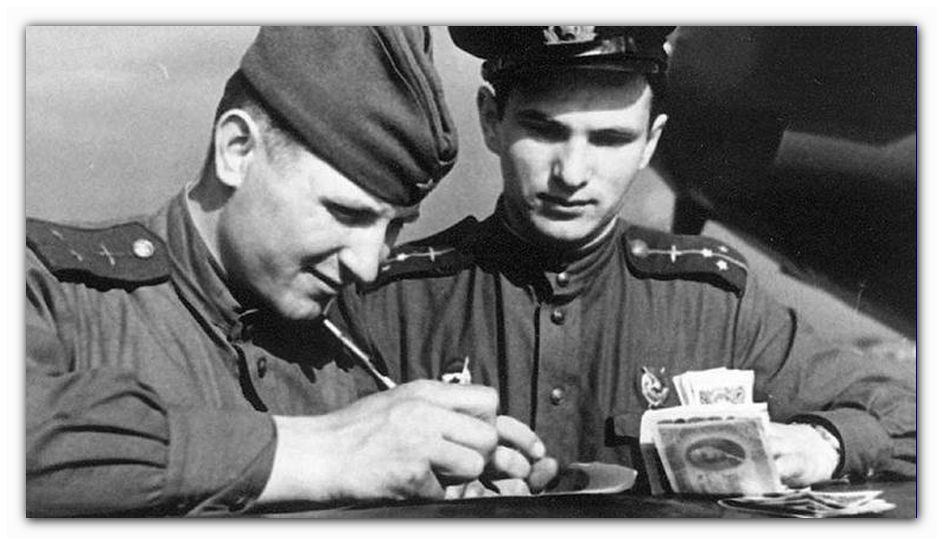 |
||
| Фото: предоставлено ГУ Банка России по ЦФО | ||
|
Никто не сбивал фашистские самолёты, не сбрасывал на Берлин авиабомбы и не взрывал немецкие танки ради денежных премий. Главный на войне стимул был, конечно, нематериальным, и звучал он с агитационных плакатов, отзываясь в душе каждого солдата: «За Родину!»
Про финансовое поощрение говорить вообще было не принято, даже зазорно. Но оно было. Власти страны понимали: бойцы должны чувствовать, что их труд ценят. Рассказываем о некоторых цифрах и фактах военной экономики, начиная с восьмирублёвых зарплат рядовых солдат и заканчивая миллиардами убытков, которые понесла страна. 8 рублей 50 копеек: оклад рядового Красной армииСоветский Союз обеспечивал фронт одеждой, обмундированием, едой, бойцам даже наливали 100 граммов. Но всё же военным – и рядовым солдатам, и командующим войсками – полагалась зарплата. Оклад для простых красноармейцев был скорее символическим. С надбавкой, так называемыми полевыми, сумма доходила до 17 рублей. Но и их солдаты чаще всего не тратили. |
||
| «Денежное
довольствие никто не брал: не нужны деньги
были
на фронте. Всё переводили в Фонд обороны», – вспоминает связист Дмитрий Кириллович Григорьев. |
||
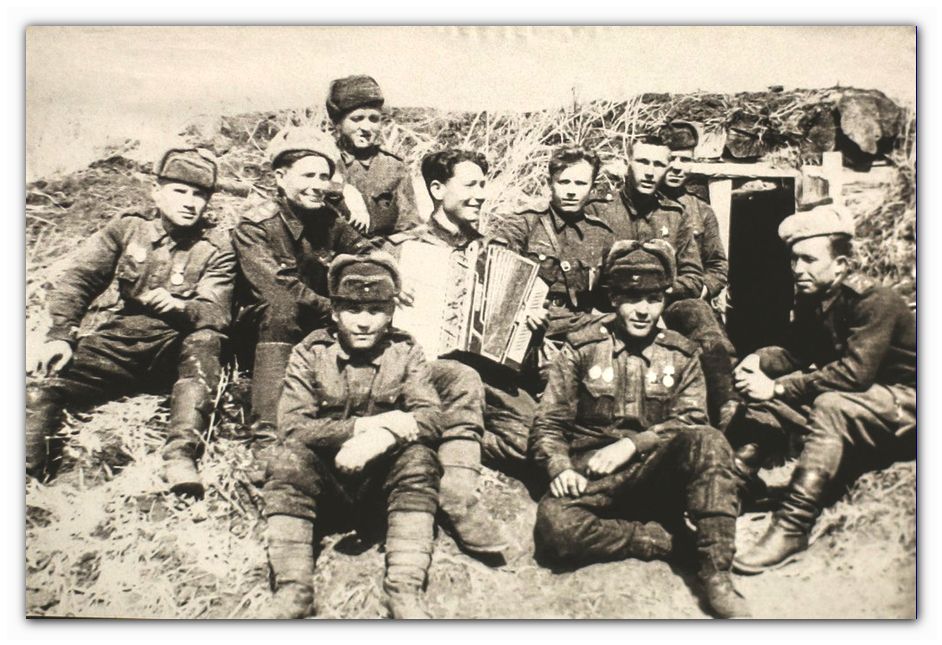 |
||
| Сухпаёк и аккордеон. Каким был фронтовой быт солдат на Курской дуге | ||
|
Если рядовой хорошо проявлял себя на службе, за три года мог дорасти до старшего сержанта – старшины с окладом 150 рублей в месяц и надбавкой 50 %. Впрочем, размер месячного довольствия военнослужащих зависел не только от должности, но и от рода войск, срока службы. Оклад неоднократно повышали. Как рассказывает лётчик Юрий Сергеевич Абрамов, денежное содержание его, курсанта авиашколы, было 75 рублей. В звании младшего лейтенанта он получал 600–700 рублей. Когда пришёл на фронт в 51-й полк, стал зарабатывать 930. А гвардейцем даже без боевых премий он получал около 2 тыс. рублей: |
||
| «Я
маме посылал. Знал, как она там мучается, брат уже два года лежал
тяжелораненый. А мне деньги не нужны были: кушать,
курить
и даже вечером выпить – всё это для меня было бесплатно». |
||
| Для многих первая зарплата была неожиданностью. Думали: война, какие уж тут деньги? | ||
| «Помню, старшина принёс мне пачку папирос, я ему: «Посмеяться надо мною решили!» А он: «Нет… офицерам папиросы положены, а солдатам – махорка», – рассказывает лейтенант медслужбы Махтута Гиздатовна Хайруллина. – Потом зовёт меня: «Идите получать зарплату». Думаю, опять что ли шутит. Пошла – и правда, выдали 130 рублей». | ||
 |
||
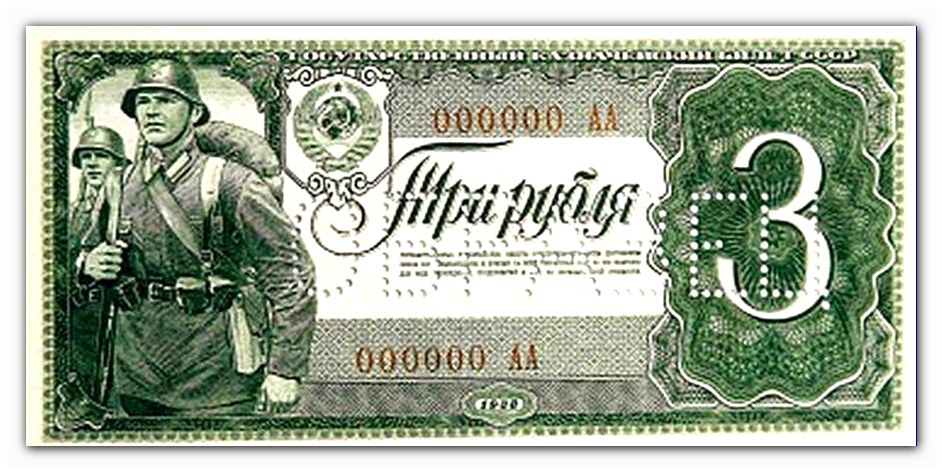
| 3 рубля. Купюра образца 1938 года / Фото: предоставлено ГУ Банка России по ЦФ | ||
50 рублей: цена 1 л молока на колхозном рынкеДенежное довольствие военнослужащим выдавала финансовая служба Народного комиссариата обороны СССР, которую обеспечивал наличными Госбанк. Куда
солдаты тратили свой заработок: На руках оставалось немного, на мелочовку. Пехотинец Николай Иванович Иванов говорит, что приезжала военторговская машина, становилась около кухни и торговала. По дороге на завтрак можно было купить, например, носовой платок или одеколон. |
||
 |
||
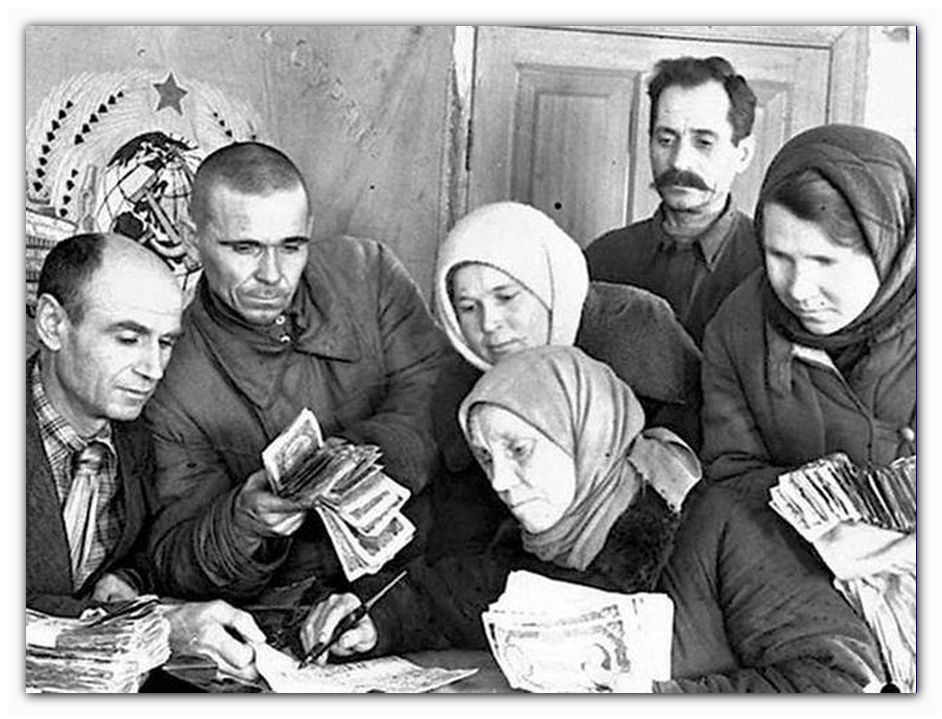
| В колхозе собирают наличные для Фонда обороны, 1943 год / Фото: предоставлено ГУ Банка России по ЦФО | ||
|
Цены на продукты были нормированными и рыночными. Первые – «твёрдые госцены» – устанавливали на товары первой необходимости, которые выдавали по карточкам. Карточная система позволила обеспечить людей минимумом продуктов и непродовольственных товаров. Но стоит ли говорить, что в воюющей стране был тотальный дефицит всего и вся. То, чего не хватало, приходилось покупать на рынке и в магазинах «Особторга» по более высоким ценам. В записях артиллериста и писателя Владимира Гельфанда есть рассказ о том, как происходило ценообразование: |
||
| «Базар представляет собой двух-трёх тёток с молоком (50 рублей/литр) в окружении многих покупателей-красноармейцев. Один, не желая стоять, предложил 60 рублей за литр, другой 70. Так бойцы сами создают цены». | ||
| При этом нормированная цена молока в то время составляла 2 рубля за 1 литр. | ||
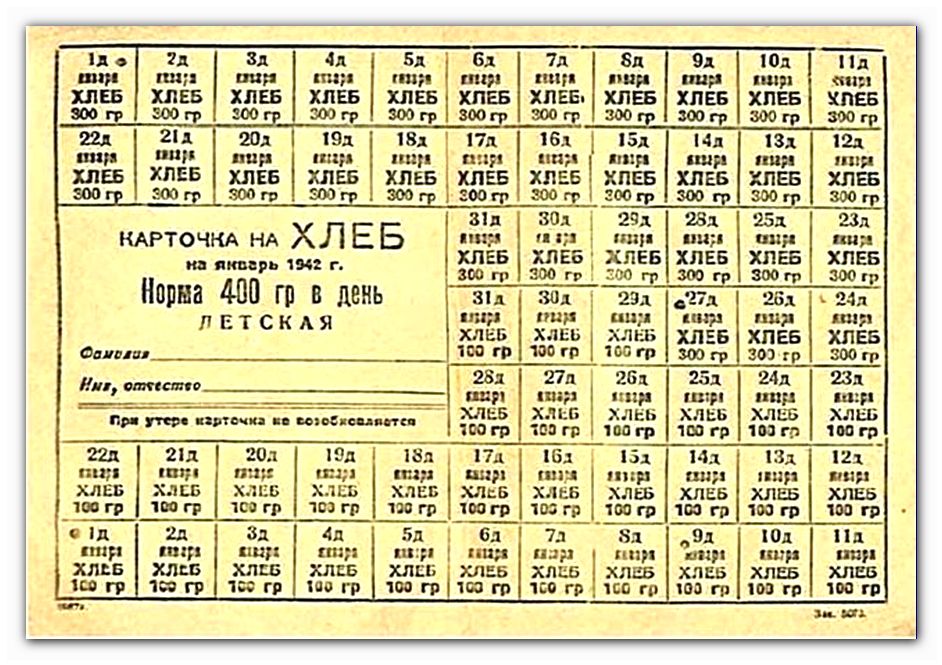 |
||
| Детская карточка на хлеб, январь 1942 года / Фото: предоставлено ГУ Банка России по ЦФО | ||
100 рублей, или 10 червонцев: самая крупная банкнотаЗа годы войны цены на продукты и товары по карточкам практически не изменились, а вот рыночные выросли многократно. К началу 1942-го они превышали довоенный уровень почти в 3,5 раза, к середине 1942 года – уже в 6 раз, а максимально – в 18 раз – выросли в 1943-м. Рыночная цена на хлеб поднялась в 34 раза, картофеля – в 20 раз, молочных продуктов – в 19,7 раза. Потом стоимость товаров стала постепенно снижаться. |
||
| «Я сегодня купил 2 кг хлеба и уплатил 500 рублей, – пишет в дневнике блокадник Николай Александрович Филиппов. – Хлеб разделили, это большая поддержка, так как получается по 200 г лишних хлеба. Население кормить нечем. Люди и лошади мрут на ходу. Возникает невольно мысль об ограблении булочной, с тем чтобы взять там 3 буханки хлеба и накормить ораву в 10 человек…» |
 |
||
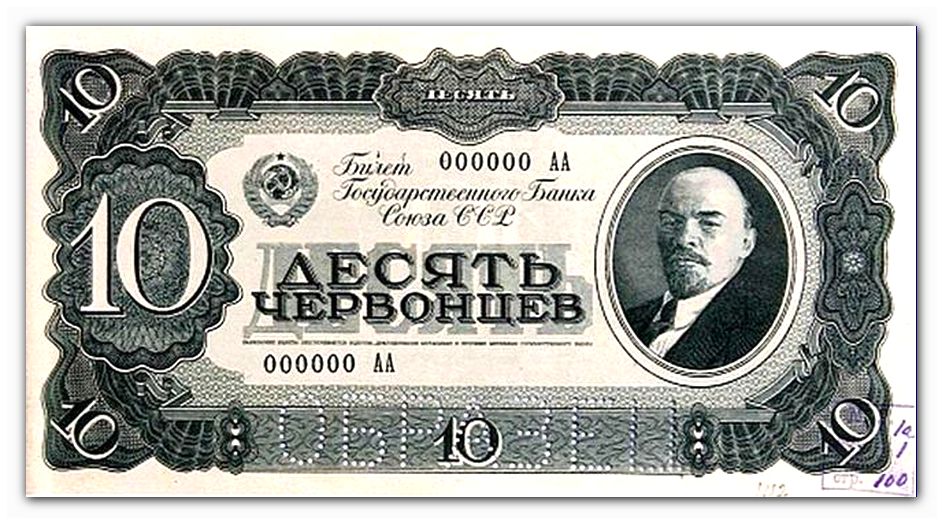
| 10 червонцев. Купюра образца 1937 года / Фото: предоставлено ГУ Банка России по ЦФО | ||
|
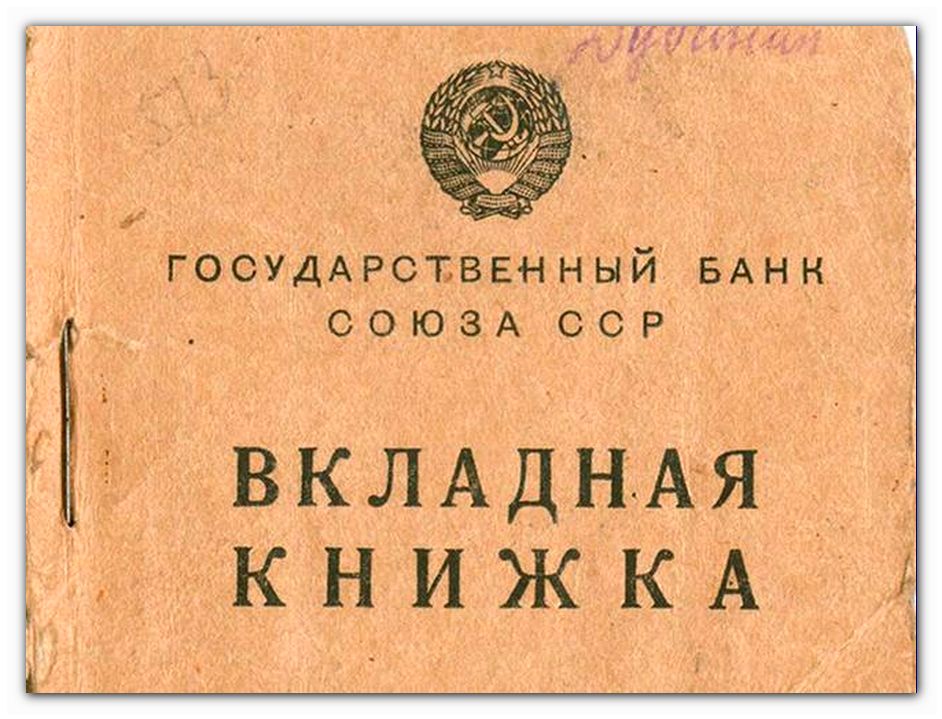
Почти 80 % денежной массы составляли купюры крупного номинала – в те времена их называли червонцами. В обращении были банкноты образца 1937 года номиналом 1, 3, 5 и 10 червонцев. На них в честь 20-летия революции поместили портрет Ленина, который задержался на купюрах до конца советского периода. На мелких банкнотах номиналом 1, 3 и 5 рублей появились изображения главных героев страны: на рублёвой – рабочий, на 3-рублёвой – солдат, на 5-рублёвой – лётчик. Чтобы наличные, которые на фронте было некуда тратить, не лежали в карманах военных мёртвым грузом, государство предлагало фронтовикам открывать военные вклады. Деньги направляли на развитие экономики страны. После ничем не подкреплённого выпуска денег во время Первой мировой войны, породившего беспрецедентную в истории России гиперинфляцию, теперь в стране чётко контролировали эмиссию. Уже в 1944 году советский рубль укрепился, инфляция замедлилась. На 1 января 1945 года сумма военных вкладов составила почти 4 млрд рублей, а количество вкладчиков выросло до 4 млн человек. |
||
 |
||
| Фото: предоставлено ГУ Банка России по ЦФО | ||
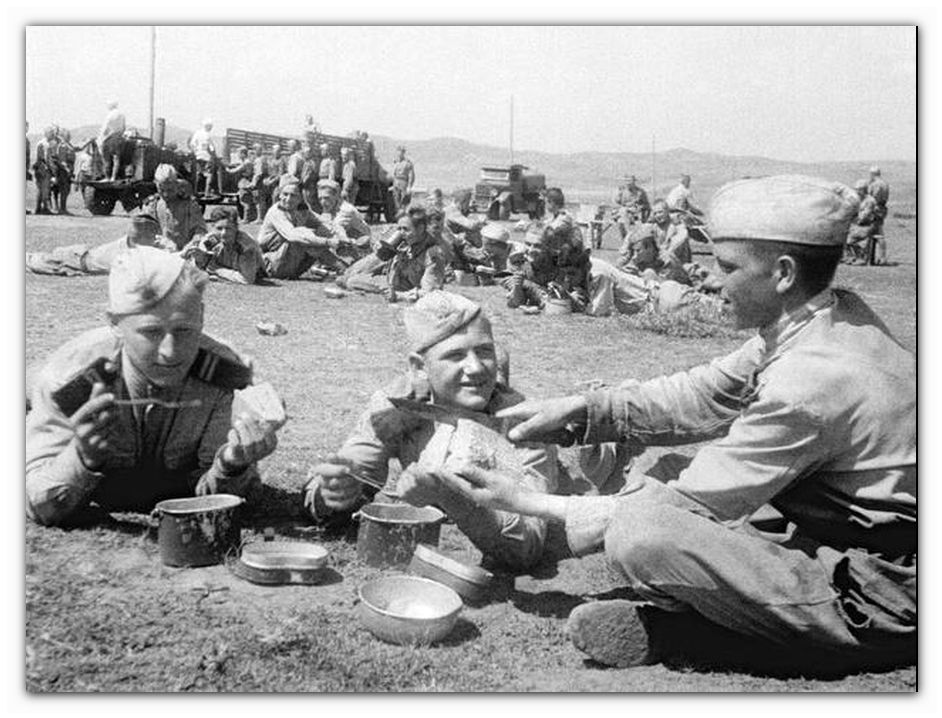
500 рублей: премия за уничтоженный танк противникаВ августе 1941-го лётчики Балтийского флота в ответ на авиационные атаки немцев над Москвой сбросили первые бомбы на Берлин. Советская операция застала немцев врасплох, и тогда всех участников решили наградить премией. Каждому – 2 тыс. рублей. С тех пор, чтобы стимулировать боевую активность, помимо оклада, военнослужащим выплачивали дополнительное вознаграждение. |
||
 |
||
| Солдатская краюха. Кто и как пёк хлеб для Курской дуги | ||
|
Премия лётчикам-истребителям за каждый сбитый самолёт противника составляла 1 тыс. рублей. Больше всего можно было получить на флоте. За линейный корабль фашиста командиру корабля полагалось 25 тысяч. Особо отличившихся представляли к награждению орденами и медалями. Орденоносцы получали ежемесячные денежные выплаты: Герой Советского Союза – 50 рублей, кавалер ордена Ленина – 25, Красного Знамени – 20 и Красной Звезды – 15 рублей. На счету лётчика Владимира Осиповича Яковлева значится сбитый немецкий истребитель «Фокке-Вульф». |
||
| «Это было под Кёнигсбергом… Вы знаете, что такое Кёнигсберг? Там так охранялось, ой, ой, ой… Мы летели домой с боевого задания. Он стал подходить к нам, и, зараза, заходил снизу. Я Николаю Фёдоровичу, командиру своему, говорю: «Коленька, дай‑ка горку! Он хорошо поднял машину, мне сразу видно немца стало, и я прямо ему в кабину засадил. Он мгновенно свалился. Про меня и в газете было напечатано. Наградили за сбитого орденом Красной Звезды». | ||
| Свою премию – 1 тыс. рублей – лётчик перевёл матери. На службе полагались доплаты и за воинское мастерство, отличное знание техники, успехи в боях, быстрый и качественный ремонт боевой техники и вооружения, рационализаторство, обнаружение торпед и мин, за сбор и сдачу стреляных гильз и металлолома. Правда деньги, как признаются ветераны, ничего для них не значили. | ||
| «Деньгами нас не обижали, – вспоминает начфин Валентин Иванович Арбатский. – Но, по правде сказать, деньги на фронте расходовать было некуда. Объявляю как‑то: давайте, друзья, получать денежное содержание. Кричат с нар: «Зачем оно нам? Зачисляй в Фонд обороны. Пришлось разъяснять, что получить‑то всё равно нужно, а потом можете сдать куда угодно. Порасписывались в ведомости, а денег не взяли». | ||
| Другое дело, если к премии причитался отпуск – вот это была радость: повидаться с родными. | ||
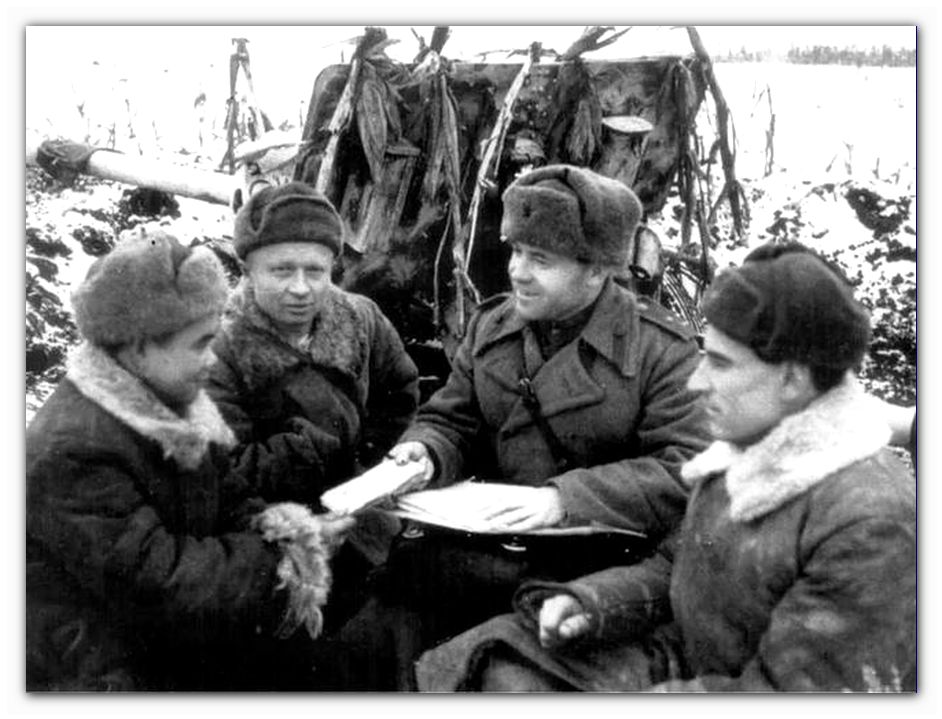 |
||
| Бойцам выдают денежное вознаграждение за подбитые танки / Фото: предоставлено ГУ Банка России по ЦФО | ||
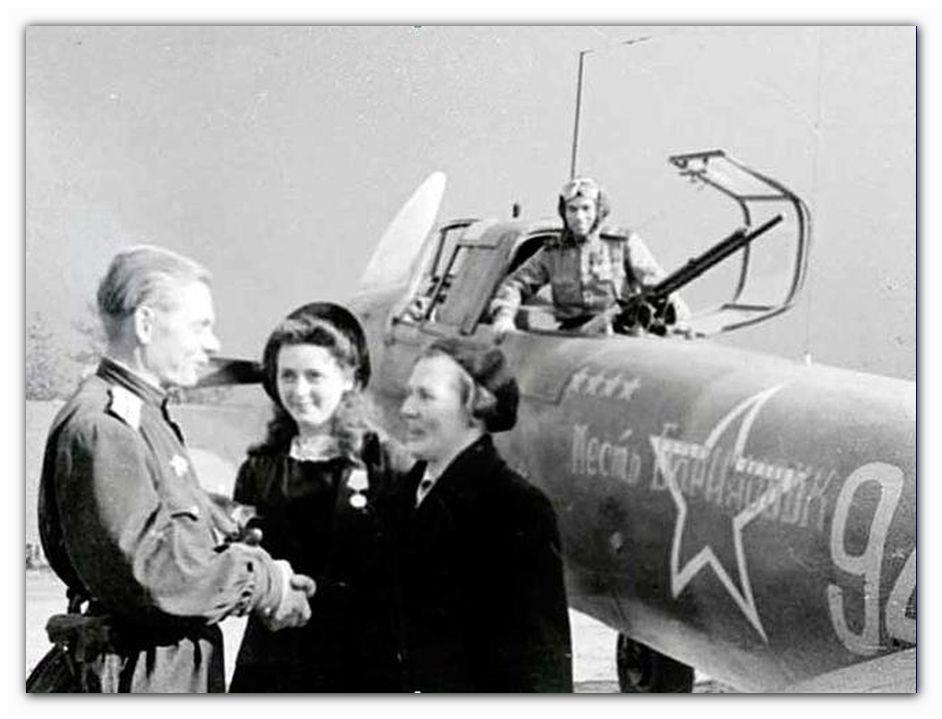
16 млрд рублей: вклад советского народа в поддержку армииЗимой 1944-го две жительницы освобождённого Ленинграда внесли в Фонд обороны все свои сбережения – 100 рублей золотом, унаследованные от дедушки. Квитанцию из Госбанка о принятом вкладе они отправили в Кремль с просьбой на эти деньги построить самолёт и назвать «Месть Бариновых». |
||
| «Этим мы выражаем неограниченную ненависть проклятым фашистам, за нарушение нашей счастливой жизни, за всё пережитое во время блокады, за потерю самых близких нам людей – любимого сына, который с первых дней войны ушёл добровольцем на фронт и в 1941 году в сентябре месяце пропал без вести. Мужа, неустанно работавшего на оборонном заводе, по нескольку дней не выходя с завода, умершего преждевременно в 1942 г. …И ещё мстим за наш родной Ленинград и всех ленинградцев…» | ||
| Уже в июне того же 1944-го новый самолёт-штурмовик Ил-2 в присутствии Бариновых торжественно передали лучшему лётчику 943-го штурмового авиаполка 13-й воздушной армии Ленинградского фронта капитану Георгию Михайловичу Паршину. На левой стороне фюзеляжа была надпись «Месть Бариновых», на правой – «За Ленинград». Вскоре Паршин стал дважды Героем Советского Союза. | ||
 |
||
| Лётчик Паршин благодарит Бариновых за самолёт / Фото: предоставлено ГУ Банка России по ЦФО | ||
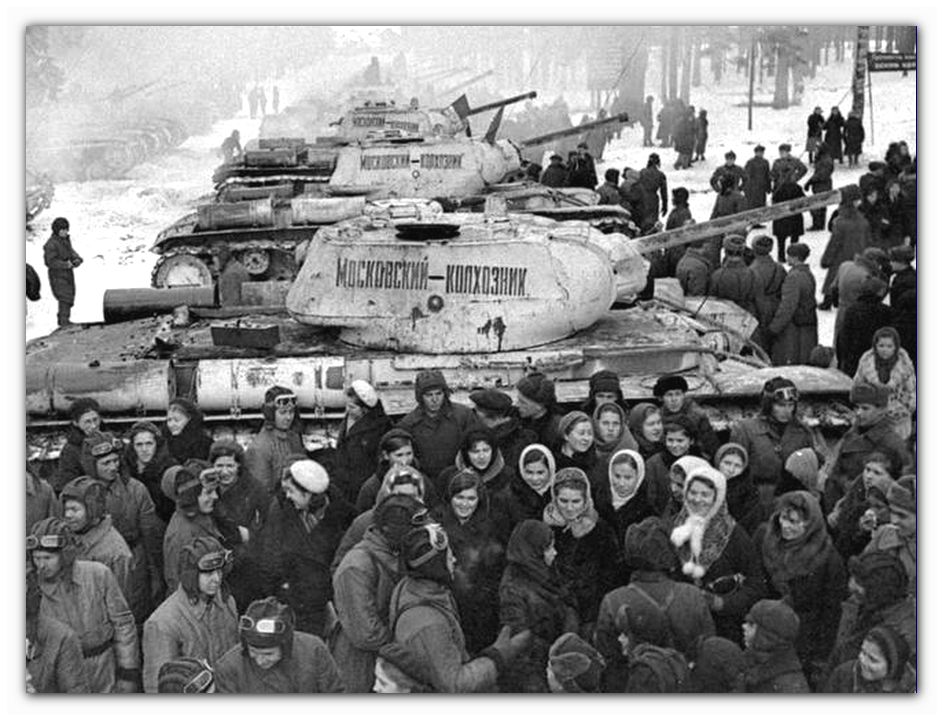
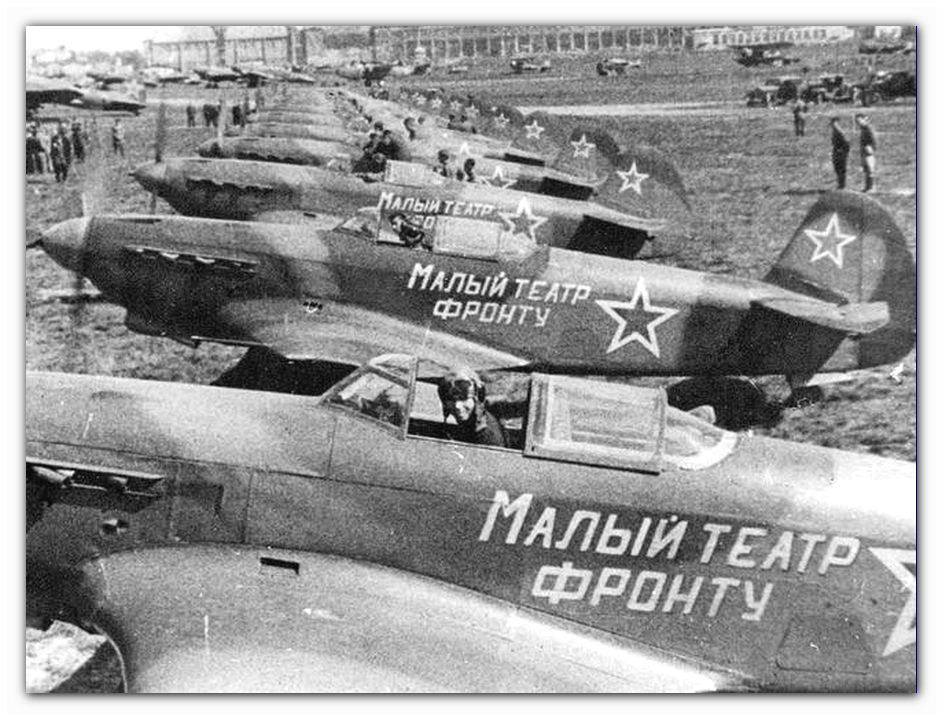
| Не все добровольные пожертвования, подобно этому, вошли в историю. Но жители страны вносили свой посильный финансовый вклад в Победу. Помимо переводов в Фонд обороны, люди отправляли в военную казну и обязательные взносы: платили военный налог и налог на холостую жизнь, участвовали в товарно-денежных лотереях, покупали гособлигации, не думая о выгоде. По стране прокатилась волна сбора средств на строительство боевой техники: самолётов, танков, артиллерии. | ||
| «Колхозники вносят до 200 тысяч рублей – ведь это всё из личных сбережений, это и ценно, да! На это только способен наш народ, а что делается в армиях? Там в один день собирают сотни миллионов рублей, – пишет в своём дневнике артиллерист Дмитрий Жигунов. – Немец, конечно, не мог думать своей пустой головой о таком подъёме народа за свою Родину, а наш народ отдаёт для Родины всё, что он имеет с гордостью и радостью. Я внёс 2 000 рублей на строительство танков «Ленинградец». | ||
 |
||
| Передача танков, построенных на деньги колхозников, 1942 год / Фото: предоставлено ГУ Банка России по ЦФО | ||
 |
||
| Самолёты эскадрильи, построенные на деньги сотрудников Малого театра СССР / Фото: предоставлено ГУ Банка России по ЦФО | ||
192 млрд рублей: прямой ущерб народу СССР за годы войныКонечно, говоря о войне, мы в первую очередь вспоминаем о человеческих жертвах. Но война – это ещё и материальные потери. Предприятия и учреждения страны потеряли за войну имущество на 287 млрд рублей, колхозы – на 181 млрд, кооперативы, профсоюзы и другие общественные организации – ещё на 19 млрд. Всего же потери Советского Союза только от прямого уничтожения неприятелем исчисляются 679 млрд рублей, это имущество на 128 млрд долларов в довоенных ценах. Плюс – 582 млрд бюджетных денег, более половины всех расходов бюджета, потраченных на оборону. Немецко-фашистские захватчики полностью или частично разрушили и сожгли 1 710 городов и посёлков, более 70 тыс. сёл и деревень, уничтожили свыше 6 млн зданий и почти 32 тыс. промышленных предприятий, лишили крова около 25 млн человек. Вот такая она – цена Победы.
Татьяна
Жулькина |
||
© БелПресса ©Белгородские известия
 Russian
BelPressa explains how much Red Army soldiers earned, what they
could spend their money on, and why the war did not end in
hyperinflation.
Photo: provided by the Main Directorate of the Bank of Russia for the Central Federal District.
No one shot down Nazi aircraft, dropped bombs on Berlin, or destroyed German tanks for the sake of cash bonuses. The main incentive in wartime was, of course, not material. It was expressed on propaganda posters and echoed in every soldier’s heart: “For the Motherland!”
Financial rewards were generally not discussed; it was even considered improper to talk about them. But they did exist. The authorities understood that soldiers had to feel that their work was valued. Here are some figures and facts about the wartime economy, from the eight-ruble salaries of ordinary soldiers to the billions in losses suffered by the country.
The Soviet Union supplied the front with clothing, uniforms and food; soldiers were even issued the famous 100 grams of vodka. Nevertheless, all servicemen — ordinary soldiers and army commanders alike — were entitled to pay.
For ordinary Red Army soldiers the basic salary was largely symbolic. With an allowance known as field pay, income could reach 17 rubles. Even that money was often not spent.
“Almost no one took the cash allowance: money was unnecessary at the front. Everyone transferred it to the Defense Fund,” recalls signals soldier Dmitry Kirillovich Grigoryev.
If a private distinguished himself in service, in three years he could rise to senior sergeant or starshina, with a monthly salary of 150 rubles and a 50-percent allowance. The amount of a serviceman’s monthly pay depended not only on rank, but also on branch of service and length of service. Pay rates were increased more than once.
Pilot Yuri Sergeyevich Abramov recalls that as an aviation-school cadet he received 75 rubles. As a junior lieutenant he received 600–700 rubles. When he reached the front and joined the 51st Regiment, his pay rose to 930. As a Guards serviceman, even without combat bonuses, he received about 2,000 rubles:
“I sent money to my mother. I knew how she was suffering there; my brother had already been lying badly wounded for two years. I did not need money: food, cigarettes, and even an evening drink were all free for me.”
For many, their first salary came as a surprise. They thought: there is a war on — what use is money now?
“I remember the starshina brought me a packet of cigarettes. I said, ‘Have you decided to make fun of me?’ He replied, ‘No… officers are entitled to cigarettes, soldiers get makhorka tobacco,’” recalls medical-service lieutenant Makhtuta Gizdatovna Khairullina. “Then he called me: ‘Come and collect your salary.’ I thought he was joking again. I went — and they really gave me 130 rubles.”
3 rubles. A 1938 banknote. Photo: provided by the Main Directorate of the Bank of Russia for the Central Federal District.
Servicemen’s cash allowances were paid by the financial service of the USSR People’s Commissariat of Defense, which received cash from the State Bank.
Soldiers used their earnings in several ways:
— for personal needs, buying toothpaste, soap, razors and some food;
— sending money home through military commissariats;
— transferring it to the Defense Fund or the Red Army Fund;
— after the introduction of monetary certificates, sending their pay to their families;
— placing deposits with field branches of the State Bank.
Only a small amount was kept on hand for minor purchases. Infantryman Nikolai Ivanovich Ivanov recalled that a military-trade vehicle would arrive and park near the kitchen. On the way to breakfast, a soldier could buy a handkerchief or cologne, for example.
Cash being collected at a collective farm for the Defense Fund, 1943. Photo: provided by the Main Directorate of the Bank of Russia for the Central Federal District.
Food prices were divided into rationed and market prices. The former were fixed state prices for essential goods distributed through ration cards.
The ration-card system made it possible to guarantee people a minimum supply of food and non-food goods. But in a country at war there was, naturally, an acute shortage of almost everything. What could not be obtained through rationing had to be bought at the market or in special “Osobtorg” shops at much higher prices.
“The market consists of two or three women with milk (50 rubles per liter), surrounded by many Red Army customers. One man, unwilling to stand in line, offered 60 rubles per liter, another 70. In this way the soldiers themselves create the prices.”
At the same time, the official rationed price of milk was 2 rubles per liter.
A child’s bread ration card, January 1942. Photo: provided by the Main Directorate of the Bank of Russia for the Central Federal District.
During the war, prices for rationed food and goods changed very little, while market prices rose many times over. By the beginning of 1942 they were almost 3.5 times the prewar level; by the middle of 1942, six times higher; and they reached their maximum in 1943, at eighteen times the prewar level. The market price of bread rose 34-fold, potatoes 20-fold and dairy products 19.7-fold. Prices then gradually began to fall.
“Today I bought 2 kg of bread and paid 500 rubles,” wrote siege survivor Nikolai Alexandrovich Filippov in his diary. “We divided the bread; it is a great help because it gives us an extra 200 grams of bread each. There is nothing with which to feed the population. People and horses are dying as they walk. The thought involuntarily arises of robbing a bakery in order to take three loaves and feed a crowd of ten people…”
Ten chervontsy. A 1937 banknote. Photo: provided by the Main Directorate of the Bank of Russia for the Central Federal District.
Almost 80 percent of the money supply consisted of high-denomination notes, then called chervontsy. Banknotes of the 1937 issue circulated in denominations of 1, 3, 5 and 10 chervontsy. To mark the twentieth anniversary of the Revolution, they bore a portrait of Lenin, who remained on Soviet banknotes until the end of the Soviet era.
Small notes of 1, 3 and 5 rubles depicted the country’s principal heroes: a worker on the one-ruble note, a soldier on the three-ruble note, and a pilot on the five-ruble note.
Because there was nowhere to spend cash at the front, the state encouraged soldiers to open military deposits rather than carry unused money in their pockets. The deposits supplied funds for the development of the national economy. After the unsupported issue of money during the First World War had produced unprecedented hyperinflation in Russia, the state now kept tight control over the money supply.
By 1944 the Soviet ruble had strengthened and inflation had slowed. As of 1 January 1945, military deposits totaled almost 4 billion rubles, and the number of depositors had grown to 4 million.
Photo: provided by the Main Directorate of the Bank of Russia for the Central Federal District.
In August 1941, in response to German air raids on Moscow, Baltic Fleet pilots dropped the first Soviet bombs on Berlin. The Soviet operation caught the Germans by surprise, and all participants were awarded bonuses of 2,000 rubles each. From then on, in order to stimulate combat activity, servicemen received additional rewards on top of their basic pay.
Fighter pilots received a 1,000-ruble bonus for every enemy aircraft shot down. The largest bonuses were available in the Navy. For destroying an enemy battleship, a ship commander was entitled to 25,000 rubles.
Those who particularly distinguished themselves were nominated for orders and medals. Decorated servicemen also received monthly cash payments: a Hero of the Soviet Union received 50 rubles, a holder of the Order of Lenin 25, the Order of the Red Banner 20, and the Order of the Red Star 15 rubles.
Pilot Vladimir Osipovich Yakovlev was credited with shooting down a German Focke-Wulf fighter.
“It happened near Königsberg… Do you know what Königsberg was like? The defenses there were unbelievable… We were flying home from a combat mission. He began closing in on us — the bastard came in from below. I said to Nikolai Fyodorovich, my commander, ‘Kolya, give me a climb!’ He pulled the plane up well; at once I could see the German, and I fired straight into his cockpit. He went down immediately. It was even printed about me in the newspaper. I was awarded the Order of the Red Star for the aircraft I shot down.”
The pilot sent his 1,000-ruble bonus to his mother.
Additional pay was also awarded for military skill, excellent knowledge of equipment, success in battle, fast and high-quality repair of military equipment and weapons, technical improvements, finding torpedoes and mines, and collecting and handing in spent cartridge cases and scrap metal. Veterans admit, however, that money meant little to them.
“They did not stint on money for us,” recalls finance chief Valentin Ivanovich Arbatsky. “But to tell the truth, there was nowhere to spend money at the front. Once I announced: come on, friends, collect your cash allowance. They shouted from their bunks, ‘What do we need it for? Put it into the Defense Fund.’ I had to explain that they still had to receive it first, and then they could give it wherever they wished. They signed the payroll sheet but did not take the cash.”
It was another matter when a bonus came with leave — that was a real joy: a chance to see one’s family.
Soldiers being paid cash rewards for destroyed tanks. Photo: provided by the Main Directorate of the Bank of Russia for the Central Federal District.
In the winter of 1944, two women from liberated Leningrad donated all their savings to the Defense Fund — 100 rubles in gold inherited from their grandfather. They sent the State Bank receipt for the contribution to the Kremlin and asked that the money be used to build an aircraft and name it “The Barinovs’ Revenge.”
“In this way we express our boundless hatred for the accursed fascists, for the destruction of our happy life, for everything we suffered during the blockade, for the loss of the people closest to us — our beloved son, who volunteered for the front in the first days of the war and went missing in September 1941; and my husband, who worked tirelessly at a defense plant, sometimes remaining at the factory for several days at a time, and died prematurely in 1942… And we also take revenge for our native Leningrad and for all Leningraders…”
By June 1944, a new Il-2 ground-attack aircraft was ceremonially handed over in the women’s presence to the best pilot of the 943rd Assault Aviation Regiment of the 13th Air Army of the Leningrad Front, Captain Georgy Mikhailovich Parshin. The left side of the fuselage bore the words “The Barinovs’ Revenge,” and the right side “For Leningrad.” Parshin soon became a twice Hero of the Soviet Union.
Pilot Parshin thanks the Barinov women for the aircraft. Photo: provided by the Main Directorate of the Bank of Russia for the Central Federal District.
Not all voluntary donations like this one entered history, but the people of the country made whatever financial contribution they could to victory. In addition to transfers to the Defense Fund, they also paid compulsory contributions into the wartime treasury: a military tax and a tax on unmarried citizens, participated in commodity-and-cash lotteries, and bought government bonds without thinking about profit. Across the country there was a wave of fundraising to build military equipment — aircraft, tanks and artillery.
“Collective farmers contribute as much as 200,000 rubles — and that all comes from personal savings; that is what makes it valuable! Only our people are capable of this. And what is happening in the army? Hundreds of millions of rubles are collected there in a single day,” artilleryman Dmitry Zhigunov wrote in his diary. “Of course the German, with his empty head, could not imagine such a rising of the people for their Motherland, while our people give everything they have for the Motherland with pride and joy. I contributed 2,000 rubles toward building the ‘Leningradets’ tanks.”
The handover of tanks built with money donated by collective farmers, 1942. Photo: provided by the Main Directorate of the Bank of Russia for the Central Federal District.
Aircraft of a squadron built with money donated by employees of the USSR Maly Theatre. Photo: provided by the Main Directorate of the Bank of Russia for the Central Federal District.
When speaking about war, we naturally think first of human losses. But war also means material destruction. During the war, Soviet enterprises and institutions lost property worth 287 billion rubles, collective farms 181 billion, and cooperatives, trade unions and other public organizations another 19 billion.
The Soviet Union’s losses from direct enemy destruction alone were estimated at 679 billion rubles — property worth 128 billion dollars at prewar prices. In addition, 582 billion rubles in budget funds, more than half of all budget expenditure, were spent on defense.
The Nazi invaders completely or partially destroyed and burned 1,710 towns and settlements and more than 70,000 villages, destroyed more than 6 million buildings and almost 32,000 industrial enterprises, and left around 25 million people without homes.
That was the price of Victory.
Tatiana Zhulkina
The publication uses materials from the Main Directorate of the Bank of
Russia for the Central Federal District (Moscow) and the “I
Remember” website.
© BelPressa / Belgorodskie Izvestia
On the bread ration card: “Bread card for January 1942. Daily allowance: 400 grams. Children’s. Surname. First name, patronymic. If the card is lost, it will not be renewed.” The detachable coupons are dated by day of the month and repeatedly state “BREAD,” with the ration amount printed on each coupon: 300 grams on the larger coupons and 100 grams on the smaller coupons.
On the savings-book cover: “State Bank of the Union of Soviet Socialist Republics. Savings Book.”
