
|
|
|
|
|
|
|
|
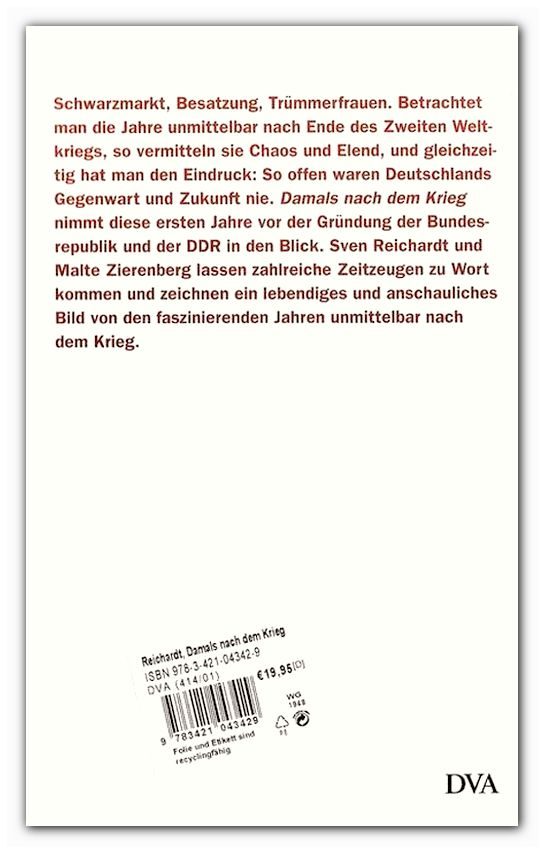
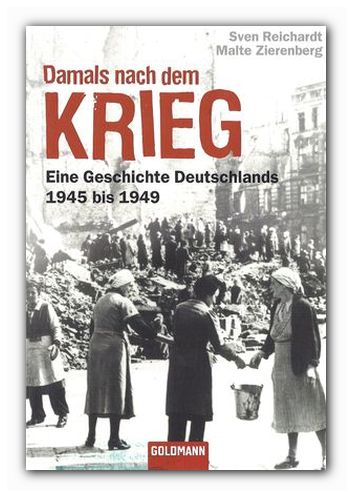
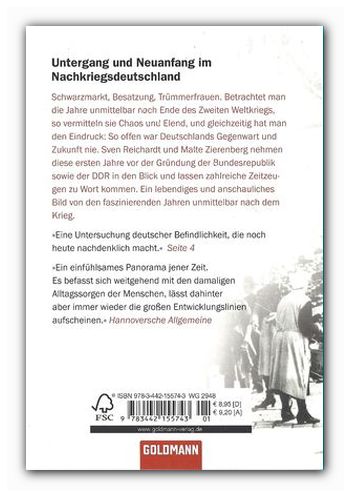
Чёрный рынок, оккупационные зоны, женщины, разбирающие руины: взгляд на первые годы после окончания Второй мировой войны открывает хаос и страдания, но вместе с тем показывает время, когда настоящее и будущее Германии казались необычайно открытыми. В книге «Тогда, после войны» Свен Райхардт и Мальте Циренберг рассказывают о первых послевоенных годах, заложивших основы как Федеративной Республики Германии, так и ГДР. Многочисленные свидетели получают здесь слово и создают яркую, конкретную картину этого необычного времени сразу после войны.
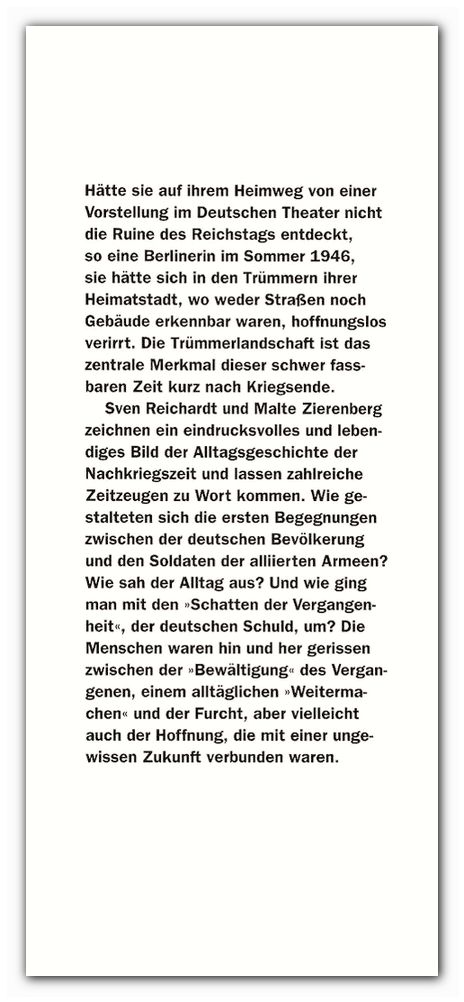
Берлинец, возвращавшийся домой после спектакля в Немецком театре летом 1946 года, мог безнадёжно заблудиться в руинах родного города, если бы не ориентировался по остаткам Рейхстага: улицы и здания почти невозможно было узнать. Пейзаж руин стал одной из главных примет трудного послевоенного времени. Свен Райхардт и Мальте Циренберг дают впечатляющую и живую картину повседневности, предоставляя слово многочисленным очевидцам. Как проходили первые встречи немецкого населения с солдатами союзных армий? Как выглядела повседневная жизнь? Как люди справлялись с «тенями прошлого», с немецкой виной? Они разрывались между необходимостью осмыслить прошлое, просто продолжать жить, страхом и, возможно, надеждой на неопределённое будущее.
 |
 |
 |
Об авторах:
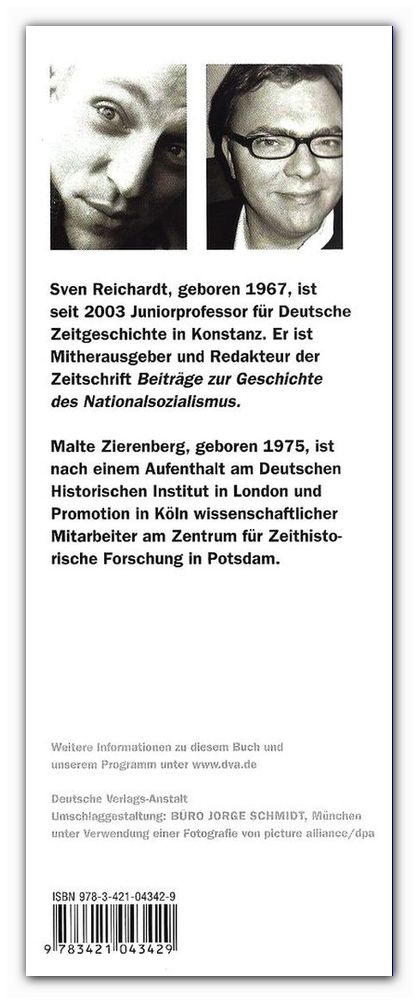
Malte Zierenberg, 1975 года рождения, после работы в Немецком историческом институте в Лондоне и защиты докторской диссертации в Кёльне — научный сотрудник Центра исследования современной истории в Потсдаме.
Sven Reichardt, родился в 1967 году, с 2003 года — младший профессор немецкой современной истории в Констанце. Он является со-редактором и редактором журнала "Beiträge zur Geschichte des Nationalsozialismus". В настоящее время он работает профессором в Rutgers UniversitySven Reichardt and Malte Zierenberg:
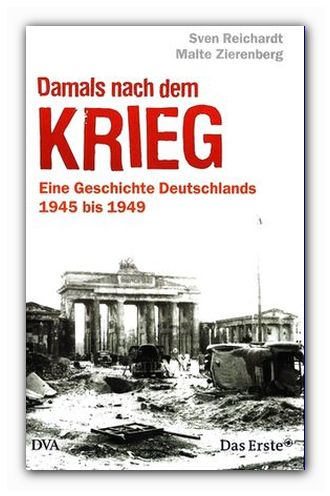
Then, After the War: A History of Germany, 1945–1949
Summary: Black markets, occupation zones, women clearing rubble: looking back at the first years immediately after the end of the Second World War reveals chaos and suffering, but also a moment when Germany’s present and future seemed unusually open. In Then, After the War, Sven Reichardt and Malte Zierenberg portray the first postwar years that laid the foundations of both the Federal Republic of Germany and the GDR. Numerous contemporary witnesses speak, creating a vivid and precise picture of this extraordinary period directly after the war.
A Berliner returning home from a performance at the Deutsches Theater in the summer of 1946 might have become hopelessly lost in the ruins of his native city had he not been able to orient himself by the remains of the Reichstag. Streets and buildings were scarcely recognizable. The landscape of rubble became one of the defining features of this difficult period immediately after the war. Reichardt and Zierenberg offer an impressive and lively view of everyday postwar life by giving voice to numerous eyewitnesses. How did the first encounters between the German population and soldiers of the Allied armies unfold? What did daily life look like? And how did people deal with the “shadows of the past,” with German guilt? People were torn between coming to terms with the past, simply carrying on from day to day, fear, and perhaps hope for an uncertain future.
Press: “Reichardt and Zierenberg’s history offers an excellent, informative and profound insight into German society in the first postwar years — a combination of professional history and individual stories that can only be recommended.” (Literaturkritik.de, No. 3 / 10 March)
“One of the book’s strengths is the large number of eyewitness accounts gathered in connection with the television project. The book accompanies the ARD series and makes the presentation come alive. Using oral-history methods, it creates sources for the history of everyday life.” (Damals)
“It is important from time to time not to forget this period. Reichardt and Zierenberg do so unobtrusively, vividly and with welcome clarity, which alone makes their book worth reading.” (Die Welt)
About the authors: Malte Zierenberg, born in 1975, worked at the German Historical Institute in London and, after completing his doctorate in Cologne, became a research fellow at the Centre for Contemporary History in Potsdam.
Sven Reichardt, born in 1967, has taught modern German history at the University of Konstanz. He is a co-editor of Beiträge zur Geschichte des Nationalsozialismus.
© Deutsche Verlags-Anstalt © Goldmann Verlag