
|
|
| |
|
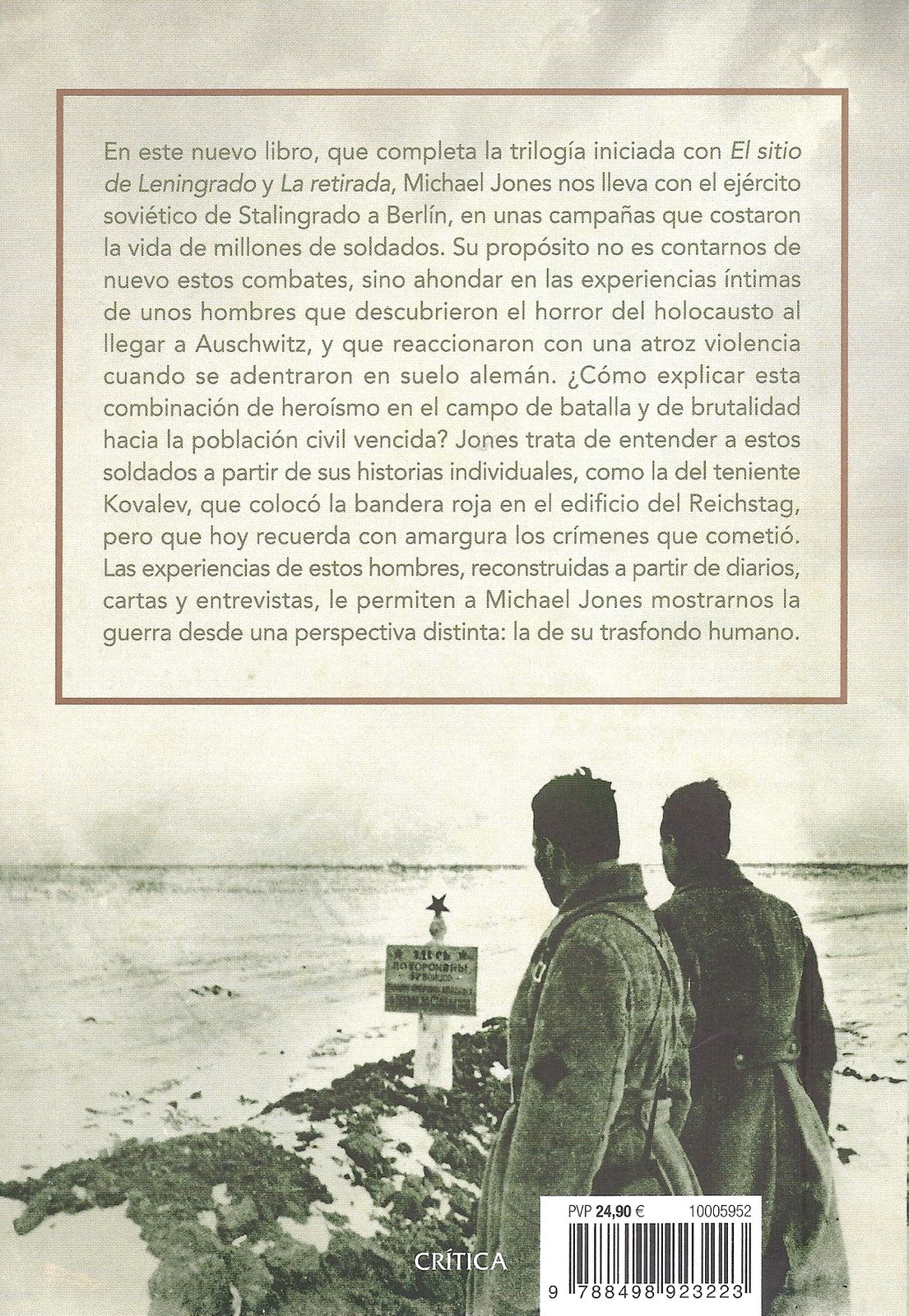
Краткое описание:Майкл Джонс ведёт читателя по пути, который прошла Советская армия от Сталинграда до Берлина, — кампании, стоившей жизни миллионам солдат. Его цель не просто вновь рассказать о сражениях, а заглянуть во внутренний мир людей, которые столкнулись с ужасами Холокоста, дошли до Освенцима, а затем, вступив на немецкую землю, сами оказались вовлечены в страшное насилие. Как совместить героизм на поле боя с жестокостью по отношению к мирному населению? Джонс пытается понять этих солдат через отдельные судьбы — например, Владимира Антокольского, погибшего под Сталинградом, и лейтенанта Алексея Ковалёва, водрузившего красный флаг над Рейхстагом и позднее с горечью вспоминавшего преступления, свидетелем и участником которых он был. Их опыт, восстановленный по дневникам, письмам и интервью, позволяет увидеть войну с другой стороны — как человеческую трагедию. |
  |
Пресса:
Испанское название книги — «Человеческий фон войны» — заметно отличается от оригинального английского названия Total War: From Stalingrad to Berlin. Британский историк Майкл Джонс продолжает исследование войны между Советским Союзом и Германией на Восточном фронте. Книга реконструирует ход боевых действий, уделяя особое внимание эмоциям и восприятию самих солдат. Опираясь на свидетельства участников обеих армий — отчёты, письма, личную переписку и позднейшие интервью, — автор показывает не только нацистские преступления и героизм Красной Армии, но и насилие со стороны советских военнослужащих. Неприкрашенные свидетельства раскрывают разрушительную реальность войны и позволяют увидеть её с человеческой точки зрения, даже когда тяжесть фактов не допускает простых объяснений. Книга адресована читателям, интересующимся историей XX века, Второй мировой войной, военной стратегией и повседневной жизнью на фронте. |
|
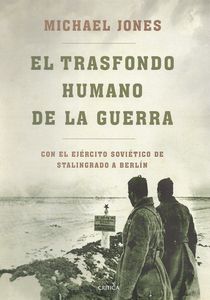
“The Human Background of War: With the Soviet Army from Stalingrad to Berlin”
Brief description
Michael Jones follows the road taken by the Soviet Army from Stalingrad to Berlin, a campaign that cost millions of soldiers their lives. His purpose is not simply to retell the battles, but to enter the inner world of the men who, after confronting the horrors of the Holocaust and reaching Auschwitz, then became involved in terrible violence when they entered German territory. How can battlefield heroism be reconciled with brutality toward civilians? Jones approaches the soldiers through individual stories: among them Vladimir Antokolsky, who died at Stalingrad, and Lieutenant Alexei Kovalev, who raised the Red flag over the Reichstag and later remembered with bitterness the crimes he had witnessed and committed. Their experiences, reconstructed from diaries, letters and interviews, offer a view of the war through the prism of human tragedy.
Press
The Spanish title emphasizes the “human background of war,” and differs noticeably from the original title, Total War: From Stalingrad to Berlin. British historian Michael Jones completes his study of the conflict between the Soviet Union and Germany on the Eastern Front between 22 June 1941 and May 1945. The book reconstructs the campaigns while giving particular attention to the emotions and perceptions of the soldiers themselves. Drawing constantly on testimony from members of both armies — reports, letters, private correspondence and later interviews — it describes not only Nazi atrocities and Red Army heroism but also violence committed by Soviet troops. The unvarnished testimony exposes the destructive reality of war and makes it possible to see events from a human perspective, even when the facts are so overwhelming that they resist any easy interpretation. The work is recommended to readers interested in twentieth-century history, the Second World War, military strategy and everyday life at the front. Dolors Martinez
About the author
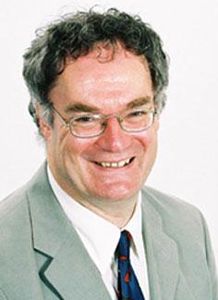
Michael Jones received his doctorate in history from the University of Bristol and taught at the University of Glasgow and Winchester College. He is a Fellow of the Royal Historical Society and the author of a study of the Siege of Leningrad, 1941–1944.
The Spanish edition in context
El trasfondo humano de la guerra is the third part of a series that began with The Siege of Leningrad and The Retreat, covering campaigns on the Soviet front during the Second World War. The original title of this third volume is Total War: From Stalingrad to Berlin. The change in the Spanish title is understandable, because less space is devoted to the technical description of military maneuvers than to the observations of the soldiers who took part in them. Jones, a historian and university teacher, allows dozens of direct witnesses to speak through letters and interview transcripts so that they can describe what they saw and felt in their own words. There is scarcely a page without direct testimony from Germans or Soviets.
The narrative begins in 1942, when Nazi Germany was still at the height of its military power, and follows the struggle through to the final collapse of Adolf Hitler’s regime three years later. It recounts not only acts of Soviet courage but also violent atrocities committed by Soviet soldiers, often understood by the participants as retaliation for the devastation caused by the German invasion.
A heartbreaking account, filled with first-hand testimony, of the end of the Second World War
After a succession of encirclements and battles across Russian, Belarusian, Ukrainian, Estonian, Latvian, Lithuanian and Polish territory, the German armies were driven steadily westward until the Red Army entered Berlin itself. As the tide of war turned and Soviet troops advanced through territory recovered from the Germans, they encountered evidence of the brutal crimes committed by the Nazis: theft, rape, destruction of towns, burned crops and food stores, and even deliberate attempts to leave typhus-infected prisoners behind in the hope that Soviet liberators would become infected while helping them.
This reached its most horrifying point with the liberation of Majdanek and, above all, Auschwitz. Had the Red Army arrived a week later, the book argues, much of the evidence might have disappeared. The crimes are well known, but several details convey their scale. General Vasily Petrenko recalled that in the ruined crematorium chimneys soldiers found a thick layer of human fat adhering to the walls. Inventories of stored clothing counted hundreds of thousands of men’s and women’s garments. There were so many shoes that they were not counted individually, and packages of human hair together weighed several tons.
These discoveries, together with the deaths suffered by the soldiers’ own families, caused some Red Army men to want to return suffering for suffering when victory finally came. Their anger was sometimes intensified when they entered Germany and encountered one of the world’s most industrialized and prosperous societies, with comfortable homes even among ordinary people. Soldiers from impoverished regions of the Soviet Union, some of whom had never seen domestic plumbing, could not understand why a country enjoying such living standards had invaded a land already burdened by poverty, harsh climate and political oppression.
There were examples of admirable restraint by Soviet soldiers, but also many examples of violent revenge accumulated over years. Some revealing episodes are not the most spectacular ones: a soldier killed a German cow because German troops had killed his family’s only cow three years earlier; another destroyed usable German tanks because they were “German beasts.” A German communist who had preserved his party membership card at great personal risk throughout the Nazi years reportedly came out joyfully to greet the Soviet “liberators,” only to be struck down, beaten and killed before he could explain who he was.
The most disturbing story may be the one with which Jones closes the epilogue: that of Alexei Kovalev, one of the men involved in raising the Soviet flag over the Reichstag in May 1945. His role was long obscured in public accounts. When Jones interviewed him, hoping to reconstruct what had really happened, Kovalev spoke about the price he had paid for serving at the forefront of the Soviet advance during the final years of the war, including reconnaissance duty. His testimony is a powerful and painful conclusion to the book.
© Crítica