



| About Yandex.Zen
Yandex
Zen is
a personal recommendation service. Zen helps internet postings find
their audience. Postings can either get posted automatically in
recommendation feeds from the author's site, or an author can create
content directly in Yandex Zen. Any companies, internet publications,
or independent authors can create their own channels in Yandex Zen. Learn
more about adding your
website to Yandex Zen. The content creator platform is available only in Russian.
Владимир Гельфанд Красноармеец, участвует в освбождении Польши и боевых действиях в Германии. Блог Владимира Гельфанда — часть проекта «Настоящий 1945» студии «История будущего», созданного при поддержке Издательства Яндекса. |
| 31 июля 2022 |
||
"Праздник Победы отчасти горек для меня..." Зарубежные впечатления офицера Красной армии Гельфанда |
||
|
Ещё несколько записей из дневника лейтенанта Владимира Гельфанда. Свой дневник он вёл почти ежедневно с 1942 года и до самого конца войны. В 45-м Гельфанду было 22 года, он писал стихи, его внимание активно привлекали девушки, и это нашло отражение в дневнике. 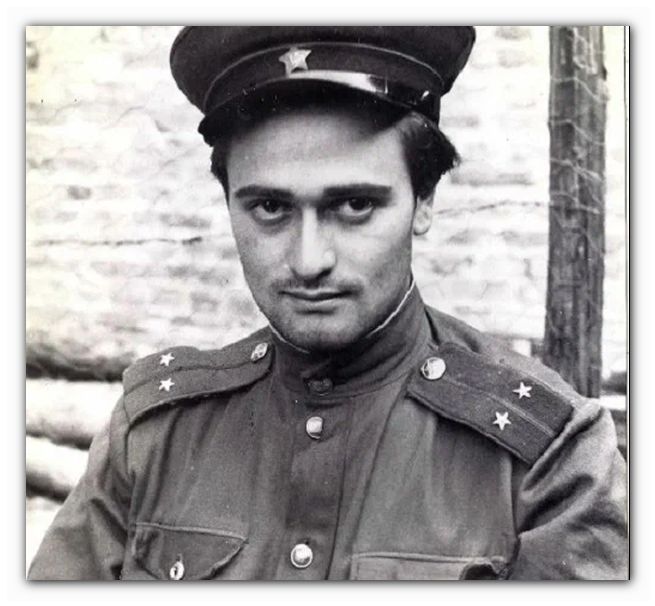 Румынский поворот27.08.1944
. Вчера
Румыния вышла из войны. Сегодня она уже воюет со своей бывшей
«союзницей» - Германией и даже посылает делегацию в
Москву
с заверением о предоставлении нам своей территории, транспорта и отдаче
всех пленных... Словом, полный поворот политики на 180°. "Здравствуй, земляк!"28.08.1944.
Румыния. Только
что провели колонну пленных: шли изнурённые, жалкие, пугливые. Фрицы -
это еще терпимо, но... русские! Трудно выдержать, чтобы не закричать:
свои люди - предатели, это же вопиющее явление! Ключ к Берлину - Кюстрин12.04.1945.
Германия.
Наконец-то мы в Кюстрине. Большой, но разрушенный до основания город.
Огромные бетонированные подвалы ограждены колючей проволокой, у входа -
мощные пулемётные доты с круговым сектором обстрела. Всё это не спасло
разбойников. Я видел массу трупов немцев, нашедших себе смерть под
обломками зданий. Вечная память Рузвельту13.04.1945.
Плацдарм за Одером, западнее Кюстрина. Только
что почтальон принёс самую горькую для меня из всех заграничных
сообщений весть: умер Рузвельт. Ночь во дворце18.04.1945. Дорога
забита, нельзя проехать. Мы вынуждены остаться ночевать во дворце
немецкого вельможи. Невыносимое счастье24.05.1945. За
эти дни, что я не писал, в жизни моей произошли важные, интересные
события. Много они мне принесли радости, разочарований, неудач и
переживаний. О японцах и маршале Жукове06.08.1945.
Рюдерсдорф под Берлином.
Сегодня день больших, выдающихся событий. Самое значительное - это
сообщение о новой войне, c Японией. И радостно, и тревожно на душе.
Война долгой не будет - это сейчас ясно как никогда. Япония слабей
Германии, а союзники сейчас значительно могущественней, чем прежде.
Ставили предположения о длительности войны - три месяца. Берлинские вылазки24.08.1945. Я
проболтался командиру роты, что ездил в Берлин. А позавчера решил
вторично навестить город, о котором я написал на вершине Рейхстага: Поцелуи и объятия26.10.1945.
Хеннигсдорф. Встал
поздно. Хотелось вдоволь насладиться ласками хорошенькой Маргот - одних
поцелуев и объятий было недостаточно. Ожидал большего, но не смел
настаивать. Мать девушки осталась довольна мною. Ещё бы! На алтарь
расположения со стороны родных мною были принесены продукты, конфеты и
масло, колбаса, дорогие немецкие сигареты... Коварная Нина31.10.1945.
Креммен. Ночью
захотелось увидеть Нину, позвать её на концерт, что в городском театре,
прижаться к ней, понежиться. Добрые дядюшки06.11.1945.
Хейликензее.
В 7 утра выехал в Потсдам. Всё на попутных машинах. По дороге длинной
вереницей тянулись красные автобусы, до отказа гружённые детьми. Я
насчитал машин пятьдесят. |
||
| Источник:
Гельфанд В.Н. Дневники 1941-1946 // Журнал
«Самиздат», 2004. Проект «Настоящий 1945» создан студией «История Будущего» при поддержке Издательства Яндекса в рамках программы, направленной на развитие культурных и образовательных инициатив в области истории, литературы, искусства и философии. Читайте записи Владимира Гельфанда в его личном блоге, а также подписывайтесь на проект в Яндекс.Эфире и Яндекс.Коллекциях |
 |
 |
 |
 |
|
 |
 |
 |
 |
|
 |
 |
 |
 |
|
 |
 |
 |
 |
|
| |
 Russian
31 July 2022
Vladimir Gelfand. A Red Army soldier who took part in the liberation of Poland and combat operations in Germany. Vladimir Gelfand's blog is part of the “Real 1945” project of the “History of the Future” studio, created with the support of Yandex Publishing.
Here are several more entries from the diary of Lieutenant Vladimir Gelfand. He kept his diary almost every day from 1942 until the very end of the war. In 1945 Gelfand was twenty-two years old; he wrote poetry, was strongly attracted to girls, and this was reflected in the diary.
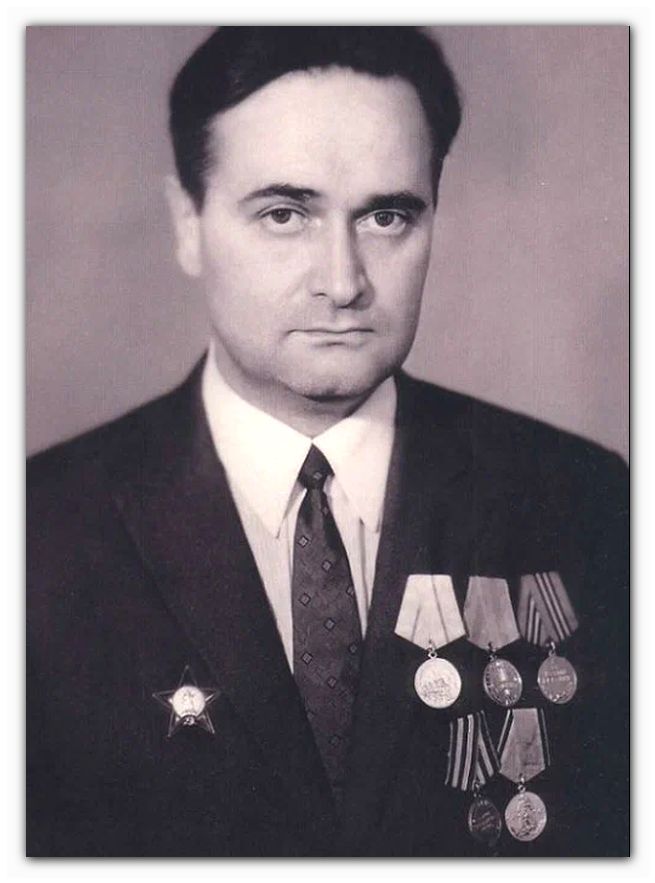
Vladimir Gelfand (1923–1983)
27 August 1944. Yesterday Romania left the war. Today it is already fighting its former “ally,” Germany, and is even sending a delegation to Moscow with assurances that it will provide us with its territory and transport and hand over all prisoners... In short, a complete 180-degree turn in policy.
And our troops are moving farther and farther west, destroying and capturing ever more enemy divisions and regiments.
The Romanians are surrendering by entire divisions without a fight.
28 August 1944. Romania.
A column of prisoners has just been led past us: exhausted, miserable, frightened. Fritz — that is still tolerable, but... Russians! It is hard to bear without shouting: our own people — traitors! It is an outrageous sight.
“Is there anyone here from Yaroslavl?” asked a senior sergeant among the spectators. “I'm from Yaroslavl,” said one of the prisoners. “Come here,” the senior sergeant called.
When the prisoner stepped out of line, the sergeant said, “Well, hello, fellow countryman!” and struck the scoundrel in the face with all his strength. Blood spurted, and the traitor hurried to hide in the middle of the column.
Then the soldiers began beating the whole tail of the column one after another. They found a fat-faced Kalmyk, pulled him out and started beating him. He fell; his shirt became stained with blood. It was astonishing that he managed to get away on his feet — he returned to the formation and hid behind a German prisoner.
12 April 1945. Germany.
At last we are in Küstrin. A large city, but destroyed to its foundations. Huge concrete basements are fenced with barbed wire; at the entrances are powerful machine-gun bunkers with a circular field of fire. None of this saved the bandits. I saw masses of German corpses that had met their death under the ruins of buildings.
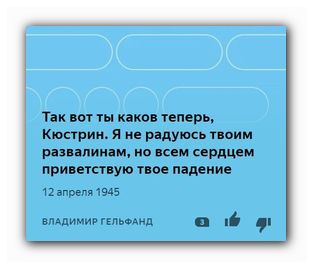
So this is what you are like now, Küstrin! I do not rejoice at your ruins, but with all my heart I smile at your fall. You deserved it, home of vile bandits! You deserved it, fortress of suffering, horror and violence against people, fortress of blood and tears!
13 April 1945. Bridgehead beyond the Oder, west of Küstrin.
The postman has just brought the most bitter foreign news I have ever received: Roosevelt has died.
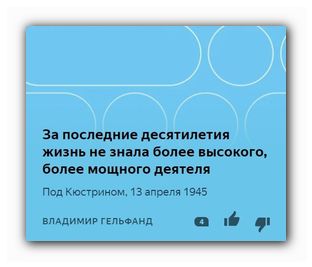
He alone managed to turn American policy sharply and fundamentally against fascism. He is an all-American, a universal man; in this lies his enormous strength and greatness. In recent decades life has known no greater, more powerful statesman. Roosevelt is the triumph of American democracy. There is no equal to him abroad, and the Englishman Churchill is not the equal of the brilliant Roosevelt.
Eternal memory to Roosevelt — my favorite foreign statesman.
18 April 1945.
The road is jammed; we cannot get through. We are forced to spend the night in the palace of a German nobleman.
Luxury and splendor! A mirror-like pond surrounds the palace on all sides. The rooms are enormous, beautifully furnished, with chandeliers, cupboards, shelves, books and paintings. It is hard even to imagine how one person could live here and possess such wealth.
From now on, however, all this is ours, all Soviet, and today it is so joyful to feel the greatness of our victory.
24 May 1945.
During the days when I did not write, important and interesting events occurred in my life. They brought me much joy, disappointment, failure and emotion.
The first and most unbearable happiness is that the war is over and I remained as I came to battle — without decorations, the editor notes — although many rear-area men or worthless cowards have chests full of medals.
Awards are handed out for servility, currying favor and hypocrisy. An honest man can receive one only when everyone sees him in battle and all begin talking at once, when his name thunders in the ears of the majority.
Enough of that, however. Certainly, the Victory celebration is partly bitter for me.
6 August 1945. Rüdersdorf near Berlin.
Today is a day of major, outstanding events. The most important is the news of a new war, with Japan. My heart is both joyful and anxious.
The war will not be long — that is clearer now than ever. Japan is weaker than Germany, and the Allies are now much more powerful than before. We made guesses about the duration of the war: three months.
Now we will show the Japanese. I was not afraid, although I decided not to be a fool anymore and not to volunteer for the front myself; and if I did go, it would be as a political officer, so as to be useful and to be noticed not only by my comrades-in-arms but also by the superiors who make evaluations. It is time to receive awards now.
The second event is a new order from Marshal Zhukov. I do not like some points in it.
We were forbidden to talk to Germans, spend the night in their homes, or buy things. Now we are forbidden the last thing as well: to appear in a German city, walk its streets, look at its ruins. Not only enlisted men — officers too. But this is impossible! We are human beings; we cannot sit behind bars.
What do I want? Freedom! Freedom to live, think, work, freedom to enjoy life. Now I have been deprived of everything. Access to Berlin is closed. One cannot leave the company without permission. Drills again, inspections again. Everything begins all over again, as in wartime.
24 August 1945.
I let slip to the company commander that I had gone to Berlin. The day before yesterday I decided to visit for a second time the city about which I had written atop the Reichstag:
“On the balcony of a Berlin building
I stand with my fellow fighters,
And I look and spit on Germany,
On defeated Berlin I spit!”
I returned safely. I obtained boots; I bought a watch in exchange for food from the delicatessen, which costs me dearly but is cheaper than on the Berlin market.
26 October 1945. Hennigsdorf.
I got up late. I wanted to enjoy enough of pretty Margot's caresses — kisses and embraces alone were not enough. I expected more, but did not dare insist. The girl's mother was pleased with me. Of course she was! To win the family's favor I had laid food, sweets and butter, sausage and expensive German cigarettes on the altar.
And in Kremmen, pretty but promiscuous Nina is waiting for me. She is four years older than the German girl and not nearly as fresh and innocent. She swears obscenely; one lover today, another tomorrow. She does not spare my means and even tries to make me lay out more money.
She has been abandoned by the head of the administrative-economic unit and at the moment is not yet occupied by anyone — a very rare condition among Russian girls.
31 October 1945. Kremmen.
At night I wanted to see Nina, invite her to the concert at the city theater, press close to her and be affectionate.
I quietly climbed to the third floor and took hold of the door handle to open it, when suddenly I heard a soft male voice and tender whispering with a woman. I looked through the crack and recoiled: my Nina was sitting on some man's knees, looking enchanted into his eyes and happy.
I no longer know her.
6 November 1945. Heiligensee.
At seven in the morning I set out for Potsdam, hitching rides all the way. Along the road stretched a long line of red buses packed full of children. I counted fifty vehicles.
I was curious where and why the children were traveling in English vehicles. When there was a traffic jam at a bridge, I went over and asked.
It turned out that the kind British gentlemen-uncles had begun creating resorts and sanatoria for poor, innocent Germans. More than 50,000 children had already been sent away to recover, and there would be more departures.
Vladimir Gelfand in the early 1970s.
Source: Gelfand V. N., Diaries 1941–1946 // Samizdat magazine, 2004.
The “Real 1945” project was created by the “History of the Future” studio with the support of Yandex Publishing as part of a program aimed at developing cultural and educational initiatives in history, literature, art and philosophy.
Read Vladimir Gelfand's entries in his personal blog and follow the project on Yandex.Efir and Yandex.Collections.
© Yandex Publishing + History of the Future
© Zen