


 |
 |
| 30 октября 2022 (источник от 21 апреля 2022) | ||
| история | ||
| Самосуд над полицаями в Одессе в 1944 году: что это было | ||
 |
||
| На последних этапах
Великой
Отечественной войны, а также после её завершения на бывших
оккупированных территориях судили немцев и полицаев. Правосудие над
военными преступниками совершилось в том числе и на Украине. Суды и
публичные казни оккупантов и предателей проходили в Харькове,
Николаеве, Киеве, Полтаве, Донецке (Сталино). Исключением стала Одесса.
В «жемчужине Чёрного моря» вопрос с оккупантами был
«закрыт» ещё весной 1944 года, когда город
освободили части
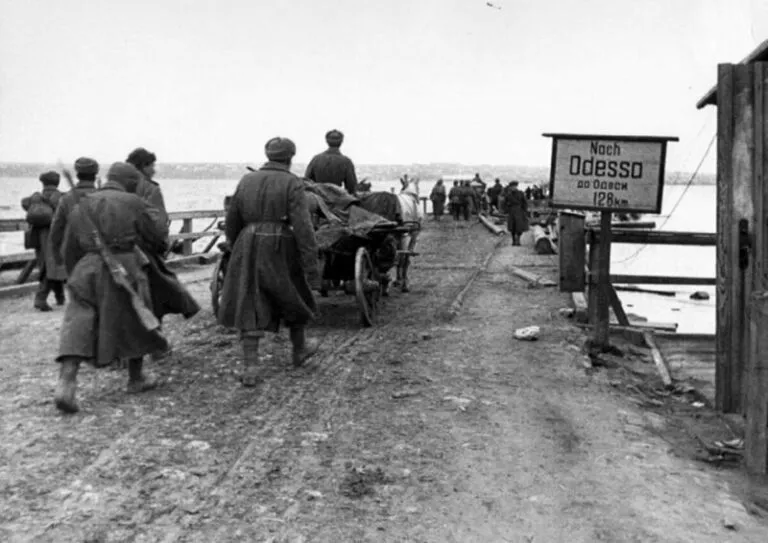
войска генерала Малиновского. Возвращение Одессы Одесса почти три года провела под властью фашистской Румынии. В начале 1944 года, когда к городу приблизилась линия фронта, контроль над Одессой полностью взяли немцы. 9 апреля 1944 года войска 3-го Украинского фронта начали штурм «южной Пальмиры», и в итоге 304-я пехотная дивизия вермахта предпочла отступить за Днестр. В ночь на 10 апреля оккупанты в спешке покидали Одессу. Вместе с немцами и румынами эвакуировалось немало их пособников. Однако уехать, разумеется, смогли не все. Когда в Одессу вошла Красная Армия, город на целые сутки был перекрыт, чтобы никто не смог покинуть его. Пока в Одессу не вошли части НКВД, одесситы сами вершили суд над оккупантами и предателями. Распространённая версия этих событий изложена в книге писателя Геннадия Веретельникова «Летят лебеди»: «Оказалось, за время, пока доступ в Одессу был перекрыт, горожане самостоятельно переловили всех предателей родины и устроили самосуд». Поводов для мести было немало. Одесса понесла страшные материальные потери – уходя, немцы и румыны разграбили Археологический музей, уничтожили промышленные предприятия, вывезли библиотеки, оборудование больниц и клиник. В порту были взорваны постройки, а одесскую бухту оккупанты захламили затопленными кораблями. Но главная причина самосуда заключалась в другом. Несмотря на более «свободные» порядки по сравнению с территориями, оккупированными немцами, в Одессе царил разгул террора. Особенно пострадало еврейское население, не успевшее эвакуироваться в 1941 году. Одно из самых страшных событий Холокоста произошло в лагере при совхозе Богдановка, где было расстреляно 54 тысячи человек. Не «дремала» и сигуранца – «румынское гестапо». За годы оккупации она уничтожила 10 тысяч человек, заподозренных в связях с партизанами и коммунистами. Согласно воспоминаниям маршала Родиона Малиновского, буквально за день до бегства, 9 апреля, немцы устроили массовую казнь одесситов в глиняном карьере. Под пулями врага падали старики, женщины и дети. В этой бойне погибли 400 человек, в том числе 30 детей. Виселицы для оккупантов О том, как именно происходила расправа над оккупантами и предателями, сведений немного. Оно и понятно – с правовой точки зрения самосуд на освобождённых территориях попадал в «серую зону». Возможно, что советские правоохранители намеренно допустили подобный период, чтобы облегчить себе работу. Согласно распространённой версии, на главной площади Одессы были установлены сотни виселиц. Пособников врага, предположительно, «вздёрнули» на скорую руку, после чего орудия казни убрали. Однако документальных подтверждений этому нет. Любопытное свидетельство о правосудии в Одессе оставил советский лейтенант Владимир Гельфанд. В его дневниковой записи от 12 апреля 1944 года ничего не сказано о событиях на главной площади. Зато Гельфанд своими глазами видел машину-виселицу на улице Тираспольской. Одесситы собрались около неё, чтобы поглядеть на казнь «трёх мерзавцев» – двух румын и одного русского, которые бесчинствовали в селе Анатольевка под Одессой. Над ними формально всё же был совершён «суд». «Один из румын был сильно расстроен и еле держался на ногах от предчувствия смерти, – писал Гельфанд. – Два других гада ничем не выдавали своих чувств, и глаза их смотрели безразлично в толпу. Ни страха, ни гнева, ни злости, ни мольбы – ничего не читалось в этих жутких разбойничьих, предательских глазах. Я подошел ближе и выслушал приговор. Потом отъехала машина, они стянулись с борта и повисли в воздухе. Средний, безразличный румын, забился ненадолго в судороге, и всё кончилось. Два других даже не шевельнулись – в агонии они были слабее среднего». Чуть позже на остывшие трупы были наброшены таблички с указанием вины казнённых. Ещё одного повешенного румына Гельфанд видел поблизости от сожжённого одесского вокзала. Как было указано, оккупант понёс кару «за насильничанье и расстрелы мирных граждан». Последующие суды Несмотря на версию о массовой казни предателей, петля в ту пору нашла далеко не всех виновных. В освобождённой Одессе оставалось немало работы и для СМЕРШевцев, о чём свидетельствовал ветеран военной контрразведки генерал-майор Леонид Иванов. Известен Кишинёвский судебный процесс, проходивший с 6 по 13 декабря 1947 года. Подсудимые – трое немцев и семь румын – во время войны зверствовали в Транснистрии, и были причастны к убийствам одесских евреев. Поскольку смертной казни в СССР в тот период не существовало, изверги отделались тюремными сроками. Кроме того, некоторые лица из числа тех, что орудовали в Одессе, были наказаны в социалистической Румынии. Например, в мае 1945 года за преступления в отношении одесских евреев был осуждён командующий артиллерией 2-го армейского корпуса Одессы Константин Трестиоряну. Он пробыл за решёткой до 1956 года. Отдельно расследовалась деятельность «самообороны» этнических немцев-колонистов из приодесских поселений, большинство которых уехали в Германию. За свои преступления некоторые из этих людей были осуждены в 1950-1960-х годах. |
||
| |
 Russian
Below is the smooth, fluent, and accurate English translation of the provided text:
In the final stages of the Great Patriotic War, as well as after its conclusion, Germans and policemen were brought to trial in the former occupied territories. Justice against war criminals was meted out in Ukraine as well. Trials and public executions of occupiers and traitors took place in Kharkiv, Mykolaiv, Kyiv, Poltava, and Donetsk (Stalino). Odessa, however, was an exception. In the “Pearl of the Black Sea,” the issue regarding the occupiers was “settled” as early as the spring of 1944, when the city was liberated by forces under General Malinovsky.
Odessa spent nearly three years under the rule of fascist Romania. In early 1944, as the front line approached the city, the Germans assumed full control of Odessa. On April 9, 1944, troops of the 3rd Ukrainian Front launched an assault on the “Southern Palmyra,” and ultimately the Wehrmacht's 304th Infantry Division chose to retreat across the Dniester River.
On the night of April 10, the occupiers hurriedly fled Odessa. Many of their collaborators evacuated alongside the Germans and Romanians. Naturally, however, not everyone managed to escape. When the Red Army entered Odessa, the city was completely sealed off for a full twenty-four hours to prevent anyone from leaving. Before NKVD units entered the city, local residents administered justice against occupiers and traitors themselves. A widespread version of these events is outlined in the book Swans Are Flying by writer Gennady Veretelnikov: “It turned out that while access to Odessa was blocked, the townspeople independently hunted down all the traitors to the Motherland and carried out vigilante justice.”
There were ample reasons for revenge. Odessa had suffered appalling material losses—upon departing, the Germans and Romanians looted the Archaeological Museum, destroyed industrial enterprises, and carried off libraries as well as hospital and clinic equipment. Buildings in the port were blown up, and the occupiers littered the Odessa Bay with sunken vessels. Yet the primary motive for this vigilante justice lay elsewhere.
Despite a relatively more “permissive” atmosphere compared to territories occupied directly by the Germans, terror reigned in Odessa. The Jewish population that had been unable to evacuate in 1941 suffered especially severely. One of the most horrific events of the Holocaust occurred at the camp near the Bogdanovka state farm, where 54,000 people were shot. The Siguranța—the “Romanian Gestapo”—was equally active. Over the years of occupation, it executed 10,000 people suspected of ties to partisans and Communists.
According to the memoirs of Marshal Rodion Malinovsky, just a day before fleeing, on April 9, the Germans carried out a mass execution of local residents in a clay pit. Elderly people, women, and children fell under enemy gunfire. Four hundred people perished in this massacre, including thirty children.
Information regarding how the reprisals against the occupiers and traitors actually unfolded remains scarce. This is understandable—from a legal standpoint, vigilante justice in liberated territories fell into a “gray zone.” It is possible that Soviet law enforcement intentionally permitted such a period to ease their own subsequent workload.
According to a popular account, hundreds of gallows were set up in Odessa's main square. Enemy collaborators were reportedly hanged in haste, after which the instruments of execution were removed. However, there is no documentary confirmation for this claim. An intriguing eyewitness account of justice in Odessa was recorded by Soviet Lieutenant Vladimir Gelfand. In his diary entry dated April 12, 1944, he makes no mention of events in the main square. Instead, Gelfand personally witnessed a gallows truck on Tiraspolskaya Street. Local residents had gathered around it to watch the execution of “three scoundrels”—two Romanians and one Russian who had committed atrocities in the village of Anatolyevka near Odessa. Formally, a “trial” had indeed been held for them.
“One of the Romanians was deeply distraught and could barely stand from the dread of impending death,” Gelfand wrote. “The other two fiends betrayed no emotion, and their eyes stared indifferently into the crowd. Neither fear, nor anger, nor rage, nor pleading—nothing could be read in those dreadful, treacherous, bandit eyes. I stepped closer and listened to the sentence. Then the truck pulled away, they slipped off the bed and hung suspended in the air. The middle man, the indifferent Romanian, writhed briefly in convulsions, and then it was over. The other two did not even move—in agony, they were weaker than the one in the middle.”
Shortly thereafter, placards detailing the crimes of the executed were hung around their cooling bodies.
Gelfand observed another hanged Romanian near the burned-out Odessa railway station. As indicated by a sign, the occupier was punished “for rape and the execution of peaceful citizens.”
Despite accounts of mass executions of traitors, the noose did not reach every guilty party at that time. In liberated Odessa, a great deal of work remained for SMERSH counterintelligence officers, as confirmed by veteran military counterintelligence officer Major General Leonid Ivanov.
The Chișinău Trial, held from December 6 to 13, 1947, is well documented. The defendants—three Germans and seven Romanians—had committed atrocities in Transnistria during the war and were implicated in the murder of Odessa's Jews. Since capital punishment was temporarily abolished in the USSR at the time, the perpetrators received prison sentences instead.
Additionally, several individuals involved in atrocities in Odessa were brought to justice in socialist Romania. For instance, in May 1945, Constantin Trestioreanu, commander of artillery for the 2nd Army Corps in Odessa, was convicted for crimes against the city's Jewish population. He remained imprisoned until 1956.
Investigations were also conducted separately into the activities of the “self-defense” units formed by ethnic German colonists from settlements surrounding Odessa, most of whom had fled to Germany. Several of these individuals were eventually tried and convicted for their crimes in the 1950s and 1960s.