



 |
 |
|
|
|||||||||||||||||||||||
 |
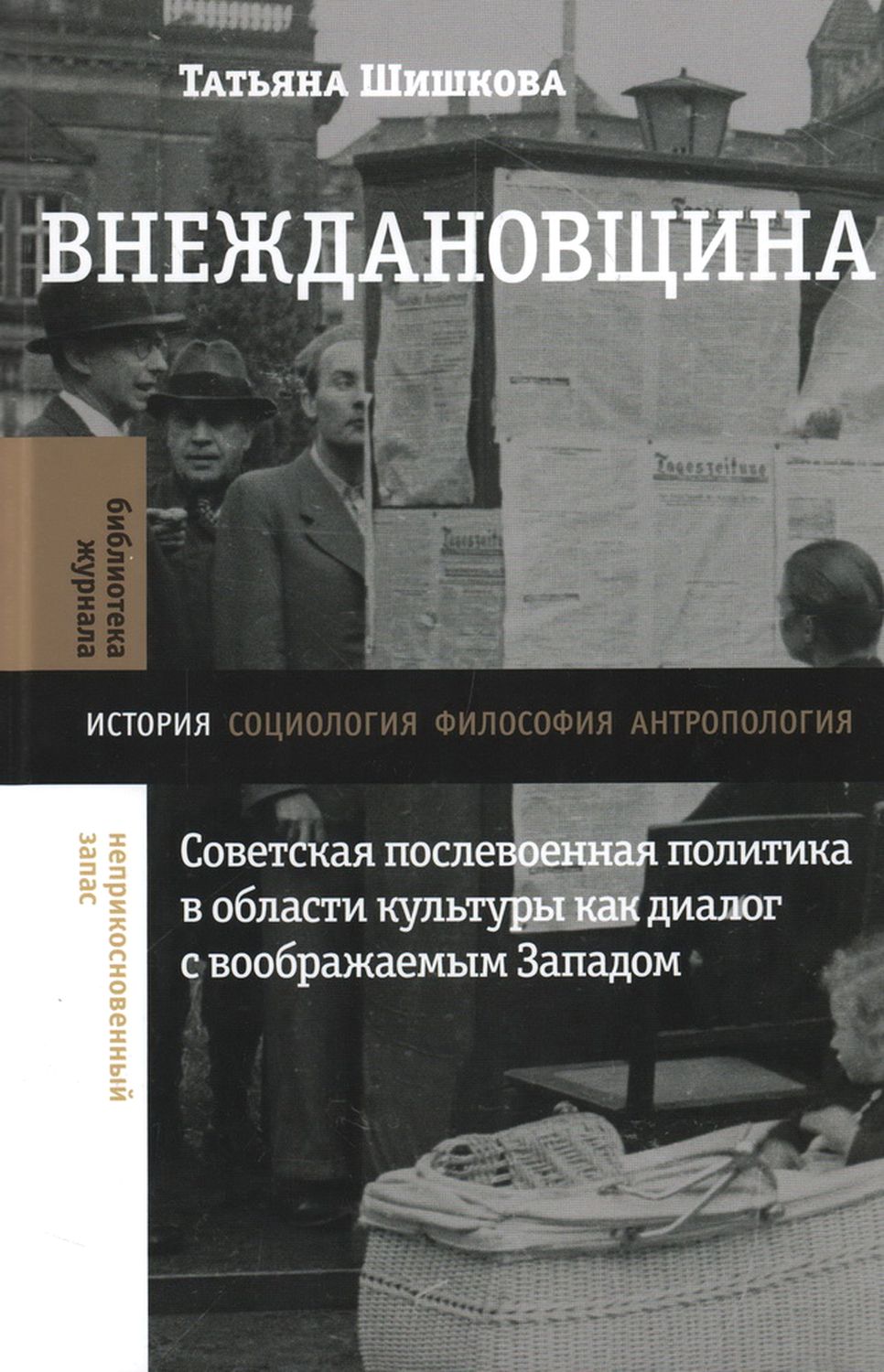
| Послевоенная политика советских властей в области культуры, связанная с именем Андрея Жданова, осталась в памяти как мрачное время застоя и репрессий. В каком контексте создавались идеологические кампании, названные впоследствии «ждановщиной»? После войны, когда мобилизация населения на строительство и защиту социализма перестала быть актуальной задачей, перед государством встала проблема переустройства соцреалистического дискурса. Татьяна Шишкова в своей книге предлагает взглянуть на события тех лет как на попытку подчинить культуру новой экспансионистской задаче — созданию и предъявлению внешнему миру «правильного» образа СССР. Автор анализирует, как критика М. Зощенко, С. Эйзенштейна, Д. Шостаковича и других фигурантов ждановских постановлений была обусловлена началом холодной войны и почему переосмысление отношений с Западом привело к последствиям, губительным для всего советского проекта. | ||
| |
||
КУЛЬТУРНЫЕ
ПОБЕДИТЕЛИ
|
||
| |
||
|
¹ РГАСПИ. Ф. 17. Оп. 125. Д. 321. Л. 40.
² Janik E. «The Golden Hunger Years»: Music and Superpower Rivalry in Occupied Berlin // German History. Vol. 22. № 1. P. 84. ³ Thacker T. Music after Hitler, 1945–1955. London; New York, 2016. P. 15. ⁴ Naimark N. The Russians in Germany. P. 399. ⁵ Thacker T. Music after Hitler. P. 17. ⁶ Тимофеева Н. От осторожного дистанцирования к нарастающему интересу. Пропаганда СВАГ в Восточной Германии 1945–1949 гг. // Россия и Германия в XX веке: В 3 т. Т. 3. С. 424. ⁷ Дымшиц А. Звенья памяти. М., 1975. С. 275. ⁸ Janik E. «The Golden Hunger Years». P. 76. ⁹ Хартман А. Руководство культурой и культура руководства в советской зоне оккупации Германии // Россия и Германия в XX веке: В 3 т. Т. 3. С. 399. ¹⁰ РГАСПИ. Ф. 17. Оп. 125. Д. 391. Л. 46. ¹¹ СВАГ и немецкие органы самоуправления. С. 98. ¹² Козлов В., Козлова М. «Бесчинства» как управленческий концепт. К пониманию военно-бюрократической культуры советского оккупационного режима в Германии (1945–1949 гг.) // Русский сборник: исследования по истории России. XIV. М., 2013. С. 441. См. также отголоски мифа о «трех днях» в сводке о настроениях немцев в Тюрингии: СВАГ и немецкие органы самоуправления. С. 115. ¹³ Деятельность советских военных комендатур по ликвидации последствий войны и организации мирной жизни в советской оккупационной зоне Германии. 1945–1949. С. 95. ¹⁴ Козлов В., Козлова М. «Бесчинства» как управленческий концепт. С. 460. ¹⁵ Гельфанд В. Дневник 1945–1946. М., 2016. С. 465. ¹⁶ Деятельность советских военных комендатур по ликвидации последствий войны и организации мирной жизни в советской оккупационной зоне Германии. 1945–1949. С. 457. ¹⁷ Джилас М. Беседы со Сталиным. С. 109–110. Когда позже ту же проблему пытались донести до советского руководства представители Социалистической единой партии Германии, Сталин был возмущен и заявил, что не позволит валять в грязи репутацию Красной армии (Naimark N. The Russians in Germany. P. 71). ¹⁸ Деятельность советских военных комендатур по ликвидации последствий войны и организации мирной жизни в советской оккупационной зоне Германии. 1945–1949. С. 67. |
© Татьяна Шишкова
© Новое литературное обозрение
 Russian
Vladimir Gelfand. Diary 1941–1946 / Tatiana Shishkova
Author: Tatiana Shishkova
Series: Library of the journal Neprikosnovennyi zapas
Binding: hardcover
Year of publication: 2023
ISBN: 978-5-4448-1949-4
Pages: 384 (offset printing)
Format: 22.2 × 14.5 × 2 cm
Publisher: New Literary Observer
Price: 1,315 rubles
Weight: 486 g
Download: FB2 / TXT / EPUB / iOS.EPUB / RTF / PDF A4 / MOBI
The postwar cultural policy of the Soviet authorities associated with Andrei Zhdanov has remained in memory as a bleak period of stagnation and repression. In what context were the ideological campaigns later called “Zhdanovism” created? After the war, when mobilizing the population to build and defend socialism was no longer an urgent task, the state faced the problem of restructuring the discourse of socialist realism. In her book, Tatiana Shishkova proposes viewing the events of those years as an attempt to subordinate culture to a new expansionist task: creating and presenting to the outside world the “correct” image of the USSR. The author analyzes how criticism of Mikhail Zoshchenko, Sergei Eisenstein, Dmitri Shostakovich, and other targets of the Zhdanov decrees was conditioned by the beginning of the Cold War, and why a reconsideration of relations with the West led to consequences disastrous for the entire Soviet project.
CULTURAL VICTORS
On May 15, 1945, less than a week after Germany signed its surrender, Soviet films were being shown in twenty-one Berlin cinemas. On that day alone they drew 22,000 viewers; on May 16 they were already being screened in twenty-five cinemas, with sixty-two showings that day. Colonel Melnikov, who compiled an information report on activities in the German capital, complained that still more cinemas could have been opened, but electricity had not yet been restored to every district and the number of films available to the Soviet Military Administration in Germany (SMAG) was limited. The local population’s reaction to Soviet films was mixed. During a screening of Chapaev, several Germans left the theater after the scene in which the White Army’s “psychic attack” was shot down. On another occasion, when a film showed German soldiers killing Russian children, almost half the audience walked out.¹ For the most part, however, interest in Soviet films—especially entertainment films such as Volga-Volga, Circus, and Vasilisa the Beautiful—was high, even though at first they were shown without any translation at all.
On May 11, a concert by the Red Army Song and Dance Ensemble took place in Berlin. The Coliseum cinema was packed, and the Soviet troupe’s performance was met with prolonged applause. On May 14, Berlin commandant General Nikolai Berzarin met representatives of German culture to discuss restoring cultural life in the city.² On May 17, repairs were completed in Charlottenburg on a 400-seat drama theater and a 300-seat chamber theater. A few days later a concert hall on Masurenallee was opened, where performances by the Berlin Opera and Ballet orchestra were planned. In Dresden, which had been almost completely destroyed by bombing, a Philharmonic Orchestra concert was held as early as June 6, and on July 1 the famous Kreuzchor, Dresden’s boys’ choir, gave its first postwar performance.³ By the end of 1945, 104 theaters, 1,263 cinemas, and 167 variety theaters were operating in the Soviet occupation zone of Germany. Even the British noted with admiration and envy that the scale of cultural activity in the Soviet zone, and the Soviet people’s devotion to their cultural mission, created general excitement and the sense that something new and interesting was happening there.⁴
Germany was to become a kind of showcase for a new Soviet cultural refinement. While in the American zone the orchestra of the Wagner Festival in Bayreuth was used to play popular tunes and entertain American soldiers, Soviet military personnel laid wreaths at Goethe’s grave, while the Soviet occupation authorities discussed performing Tchaikovsky and Beethoven at the opening of a new concert hall and sent a delegation to the elderly playwright Gerhart Hauptmann to invite him to become the public face of Germany’s cultural renewal.⁵ After visiting Weimar, the political adviser to SMAG recommended that Marshal Zhukov restore Goethe’s house at the expense of the Soviet administration as quickly as possible and hand it over to the city authorities: the Soviet occupation authorities’ attention to the memory of the great German writer was not to go unnoticed by world public opinion.⁶ Alexander Dymschitz, head of SMAG’s Culture Department, wrote in his memoirs that he arrived in postwar Berlin with a list of German cultural figures whom he hoped to find in order “to say kind words of respect and affection to them, and to help them in their work.”⁷ Dymschitz appears as an equally sincere defender of culture in the memoirs of the German journalist Hans Borgelt, who asserted that for everyone hungry for culture, the lean postwar years were in fact “golden.”⁸ Even those who greeted the Soviet occupation with hostility remarked on its fixation with culture. “With all their passion they strive for the renewal of spiritual life. ‘Culture!’ our victors from the East say. ‘We respect culture! Nothing is more important or urgent to us than generous support for culture,’” journalist Ruth Andreas-Friedrich wrote in her diary in February 1946.⁹
“A Soviet general may quote Pushkin from memory to his friends and subordinates; some colonel who has been through fire and water will not consider it weakness to shed a tear during a moving moment in a motion picture or play”—this is how a Short Guide for U.S. Armed Forces Officers, issued in 1945, described Soviet servicemen.¹⁰ A sensitivity to culture occupied an important place in the guide’s characterization of Soviet people: it noted that many officers were widely read in Russian and foreign literature, familiar with musical and theatrical classics, and always happy to discuss these subjects. The guide was intended to help Americans find common ground with their Soviet allies and was sympathetic toward them. Soviet people appeared there precisely as Soviet propaganda wanted them to be seen. A Soviet serviceman in Europe was supposed to represent not only the Red Army but the entire state, its successes and achievements; he was an example of the new person whom the Soviet authorities had worked so hard to cultivate throughout the 1930s. Soviet propaganda devoted substantial resources to ensuring that every European would see in every Red Army soldier a great liberator, a savior of European civilization, and a guide to the future. How could this be reconciled with the constant excesses involving Soviet military personnel? The answer is obvious: badly.
Throughout the summer of 1945, SMAG commander-in-chief Georgy Zhukov worked hard to solve the problem of unacceptable behavior by Soviet servicemen. A directive of June 30 ordered commanding officers to stop encouraging criminal behavior among their subordinates and, within three to five days, restore order and put an end to looting, violence, and arbitrary acts against the local population.¹¹ News of the directive caused panic among Germans: people said that Zhukov had given the Soviet troops three days in which to plunder Germany.¹² Apart from the panic, the order had little effect. No noticeable change occurred during the following month, and on August 3 another order followed. It prohibited Soviet servicemen from being quartered in private homes, severely restricted contacts with Germans, and prescribed strict measures, including prosecution, for breaches of discipline. Zhukov approached the problem of unruly Soviet servicemen as a practitioner—with a certain measure of cynicism. Lawlessness and disorder were to be eradicated not because they were unacceptable in themselves, but because they were disadvantageous under postwar conditions, when the Soviet administration faced the task of winning the Germans’ trust and respect. “You understand yourselves,” Zhukov said at a meeting of SMAG commanders in August 1945, “that during the war this did not stand out so much. People hid from exploding artillery shells in cellars, so it was not as noticeable when our troops cleaned out apartments. But now that the war is over, when people are beginning to forget the war, it is impermissible to come to the Germans and put your hand into their pocket.”¹³ Orders to end unlawful conduct by Soviet troops were accompanied by explanatory work. At Party meetings servicemen were told that the civilian population should see them as “cultured victors setting an example,” and that outrages would be treated as actions undermining the authority of the USSR.¹⁴ Judging from an entry made in August 1945 by Soviet officer Vladimir Gelfand, this tactic had some effect. Although unhappy with Zhukov’s excessively strict restrictions on contacts between Soviet servicemen and Germans, Gelfand nevertheless regarded the measures as justified: “We have many hooligans, provocateurs of various incidents, quarrels and fights; enemies and scoundrels, bastards. They must be fought ruthlessly and the most decisive measures taken against them. There must be no place in our ranks for people who disgrace the Red Army in the eyes of Europe and bring reproach and indignation upon the progressive, cultured Russian people who sent us as their representatives to Germany.”¹⁵
Paradoxically, concern for the Red Army’s image, which spurred the campaign against abuses, also became the principal obstacle to carrying it through. On September 9, Zhukov issued another order further increasing penalties for those “committing outrages,” but on September 20 Stalin personally rescinded it. Stalin wrote that he considered it wrong and harmful because “the entire command staff is punished indiscriminately and unjustly for the looting actions of individual servicemen.” But another consideration was more important: “I do not even mention that, if this order falls into the hands of the leaders of foreign armies, they will not fail to declare the Red Army an army of looters.”¹⁶ For Stalin, a large-scale campaign against abuses amounted to publicly acknowledging the problem, and he saw this as no less a threat to the Soviet Union’s reputation than the abuses themselves. Stalin preferred a tactic of suppressing the problem and demonstratively reducing it to isolated excesses excusable under wartime conditions. When Yugoslav Communists raised the issue of looting and rape in a conversation with Stalin, he accused them of insulting the Red Army and of failing to understand that after marching thousands of kilometers a soldier had the right “to have some fun with a woman or take some trifle.” Milovan Djilas recalled that Stalin, after kissing Djilas’s wife in greeting at one official meeting, joked that he had performed this gesture of affection “at the risk of being accused of rape.”¹⁷
Stalin did not exactly encourage aggression against civilians. In the spring of 1945 he personally demanded a change in the treatment of prisoners of war and German civilians.¹⁸ Cruel treatment, he believed, made them resist more stubbornly and thus prolonged the war—“such a situation is disadvantageous to us.” In the autumn of 1945 cruel treatment remained disadvantageous, but even less advantageous seemed the introduction of harsh measures to suppress such conduct, which both Germans and the rest of the world might interpret as proof that the Soviet leadership was unable to control its troops. In this context, the appearance of publications describing abuses by Soviet troops was regarded as an obviously unfriendly gesture. They violated an unspoken pact of silence and did precisely what Stalin had feared: they transformed the Red Army into an army of looters. There was another circumstance that played an important part in attitudes toward these publications: they revived the image of the USSR with which German propaganda had frightened the population during the war.
¹ RGASPI, f. 17, op. 125, d. 321, l. 40.
² Janik E. “The Golden Hunger Years”: Music and
Superpower Rivalry in Occupied Berlin // German History. Vol. 22, no.
1, p. 84.
³ Thacker T. Music after Hitler, 1945–1955. London; New York, 2016, p. 15.
⁴ Naimark N. The Russians in Germany, p. 399.
⁵ Thacker T. Music after Hitler, p. 17.
⁶ Timofeeva N. From Cautious Distancing to Growing Interest. SMAG
Propaganda in Eastern Germany, 1945–1949 // Russia and Germany in
the Twentieth Century: in 3 vols., vol. 3, p. 424.
⁷ Dymschitz A. Links of Memory. Moscow, 1975, p. 275.
⁸ Janik E. “The Golden Hunger Years,” p. 76.
⁹ Hartmann A. The Direction of Culture and the Culture of Direction in
the Soviet Occupation Zone of Germany // Russia and Germany in the
Twentieth Century: in 3 vols., vol. 3, p. 399.
¹⁰ RGASPI, f. 17, op. 125, d. 391, l. 46.
¹¹ SMAG and German Self-Government Bodies, p. 98.
¹² Kozlov V., Kozlova M. “Outrages” as an
Administrative Concept: Toward an Understanding of the
Military-Bureaucratic Culture of the Soviet Occupation Regime in
Germany (1945–1949) // Russian Collection: Studies in Russian
History, XIV. Moscow, 2013, p. 441. See also echoes of the “three
days” myth in a report on German attitudes in Thuringia: SMAG and
German Self-Government Bodies, p. 115.
¹³ Activities of Soviet Military Commandant’s Offices
in Eliminating the Consequences of War and Organizing Peaceful Life in
the Soviet Occupation Zone of Germany, 1945–1949, p. 95.
¹⁴ Kozlov V., Kozlova M. “Outrages” as an Administrative Concept, p. 460.
¹⁵ Gelfand V. Diary 1945–1946. Moscow, 2016, p. 465.
¹⁶ Activities of Soviet Military Commandant’s Offices…, p. 457.
¹⁷ Djilas M. Conversations with Stalin, pp. 109–110. When
representatives of the Socialist Unity Party of Germany later tried to
bring the same problem to the attention of the Soviet leadership,
Stalin was indignant and declared that he would not allow the Red
Army’s reputation to be dragged through the mud (Naimark N. The
Russians in Germany, p. 71).
¹⁸ Activities of Soviet Military Commandant’s Offices…, p. 67.
© Tatiana Shishkova
© New Literary Observer