Two Million German Women Raped: The Largest Mass Rape in History Was an Allied-Soviet Crime
February 10, 2018 — Andre Marques
History
The sun sets over Treptower Park on the outskirts of Berlin, and I
look at a statue standing sharply against the horizon. Twelve meters
high, it depicts a Soviet soldier holding a sword in one hand and a
German girl in the other, standing on a broken swastika.
The monument marks the burial place of 5,000 of the 80,000 Red Army
soldiers killed in the Battle of Berlin between April 16 and May 2,
1945.
The colossal scale of the monument symbolizes the sacrifice made by
these soldiers. For some people, however, the statue evokes something
very different—a “tomb of the unknown rapist.”
There are numerous accounts alleging that Stalin’s soldiers
committed large numbers of rapes in Germany, especially in the German
capital. For a long time after the war the subject was barely discussed
in Germany itself, while in present-day Russia it remains highly taboo.
The Russian press regularly dismisses discussion of the subject as a
“myth spread by the West.” Previously unpublished
manuscripts, the article says, show how difficult conditions were in
some battalions.1
One of the sources describing specific episodes of sexual violence
during the Second World War is the diary of Soviet soldier Vladimir
Gelfand, who recorded his observations and experiences at the end of
the Battle of Berlin.
The statue of a Red Army soldier in Berlin commemorates Soviet
troops who died during the capture of the German capital at the end of
the Second World War.
In February 1945 Vladimir Gelfand was near the Oder River, preparing
for the advance on Berlin. In his diary he described how men in his
battalion treated captured German women:
“The captured German women said that we were taking revenge
for our husbands who had been killed. They must be destroyed without
mercy. Our soldiers proposed stabbing them with bayonets through their
genitals. I would simply shoot them,” he wrote.
One of the diary’s most striking passages is dated April 25,
the day Gelfand reached Berlin. He was riding a bicycle along the Spree
when he encountered German women carrying suitcases and bundles. In
broken German he asked where they were going and why they had left
their homes.
“With horror on their faces they told me what had happened on the first night after the Red Army arrived,” he wrote.
“They came all night,” a beautiful German girl
explained, lifting her skirt. “They were old; some were covered
with sores, and they all climbed on top of me and shoved... no fewer
than twenty.”
She began to cry.
“They raped my daughter in front of me, and they may come
back and do it again,” said the distraught mother. The thought
terrified them all.
“Stay here,” the girl suddenly threw herself toward
me. “Sleep with me! You can do anything you want with me. Only
you!”
As the Red Army advanced through Germany, propaganda posters calling
for revenge appeared in the streets. One reportedly read:
“Soldier! You are on German soil. The hour of revenge has
come!”2
The diary of the Soviet Jewish soldier Vladimir Gelfand brought controversial revelations about the behavior of Soviet troops.
Mass Rape of Women in Germany
According to an estimate cited from the German magazine Der Spiegel,
Soviet troops raped around two million women on German territory, about
100,000 of them in Berlin alone. The same source is quoted as saying
that the average age of the victims was around seventeen and that each
was raped an average of at least twelve times. Around 12 percent are
said to have died, either by suicide or from injuries inflicted by the
attackers; nearly half of the survivors are described as having
suffered post-traumatic stress.3
“The Soviet Disease”
The article argues that sexual violence against women was
systematic. British soldiers who had previously been held in German
prison camps were quoted after their return:
“Around our camp, in the villages of Schlawe, Lauenburg,
Bütow... during the first weeks after Soviet troops appeared
there, all girls and women between the ages of twelve and sixty were
raped... Parents and husbands who tried to protect them were killed, as
were women who resisted.”4
Historian Norman M. Naimark is also cited as giving a figure of two
million rape victims. In some regions, the article says, violence
reached such a scale that special premises were used for detention,
torture and rape, with women released only after several days of abuse.
One of the most frequently cited first-person sources is Anonyma – Eine Frau in Berlin (A Woman in Berlin), the diary of a Berlin resident who survived sexual violence by Soviet soldiers. A film based on the diary appeared in 2008.5,6
Another diary written during the war, this time by the
fiancée of a German soldier at the front, is presented as
evidence that some women tried to adapt to horrific circumstances in
order to survive.
The anonymous diary begins on April 20, 1945, ten days before
Hitler’s suicide. Like Gelfand’s diary, it is striking for
its uncompromising honesty, sharp observation and, at times, bitter
humor.
Describing herself as a “pale blonde, always in the same
winter coat,” the author writes about the people sharing the
air-raid shelter beneath her apartment building. Among them are
“a young man in gray trousers and horn-rimmed glasses who, on
closer inspection, turns out to be a young woman,” and
“three elderly sisters huddled together like a large
pudding.”
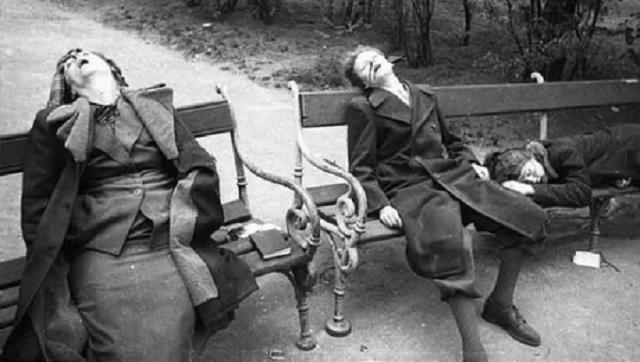
Photograph: a dead family. The article states that both women showed signs of rape.
While waiting for the Red Army, the women joke: “Better a
Russian on top than a Yankee overhead.” Rape appears to them a
lesser evil than carpet bombing. When Soviet soldiers actually appear
in the basement, however, the women beg the diarist, who speaks
Russian, to complain to the Red Army command.
She manages to find an officer amid the chaos of the ruined city.
But despite a Stalin order that, according to the article, strictly
prohibited violence against civilians, he takes no action.
“It will happen anyway,” he replies indifferently.
Caption: Russian soldiers harass a German woman.
When the diarist tries to return to her apartment, she is raped in
the corridor and nearly strangled. The women in the basement do not
open the door while the assault is taking place; they do so only after
it is over.
“The socks are still on my shoes, and I am still holding the
remains of my garter belt. I start shouting: ‘Your balls! I have
been raped here twice and you just let me go like shit!’”
Over time she concludes that, in order to stop a succession of
assaults, she needs to find a “chief wolf” capable of
restraining the “pack.”
The relationship between aggressor and victim becomes less openly
violent and more ambiguous. She begins sharing a bed with a
higher-ranking officer from Leningrad, with whom she discusses
literature and the meaning of life.
“I cannot really say that the major is raping me. I do it
for bacon, butter, sugar, candles, canned meat... Besides, I like him.
And the less he wants me as a woman, the more I like him as a
person,” she wrote.
Many of her neighbors made similar informal arrangements with the victors.
The diary was published in 1959 under the title A Woman in Berlin.
The article says that the book was criticized for allegedly
“dishonoring German women.” In 2008 it was adapted for the
screen as Anonyma, starring the German actress Nina Hoss. The
film had a cathartic effect in German society and encouraged many women
to speak publicly about their own experiences for the first time.1
Caption: Women who committed suicide in a Berlin square (1946–48).
Among the women who later spoke was Ingeborg Bullert, then ninety
years old and living in Hamburg. In 1945 she had been twenty, dreamed
of becoming an actress and lived with her mother in Berlin.
When the Soviet advance began, she hid in the basement of her building, just as the diarist in A Woman in Berlin had done.
“Suddenly tanks appeared on our street, and bodies of
Russian and German soldiers were lying everywhere,” she recalled.
During a brief pause between air raids, Bullert left the basement to
get a piece of wire from the apartment because she wanted to make a
wick for a lamp.
“Suddenly two Soviet soldiers pointed their weapons at me.
One forced me to undress and raped me; then they changed places and the
second raped me too. I thought I would die, that they would kill
me.”
Ingeborg kept silent about the assault for decades.
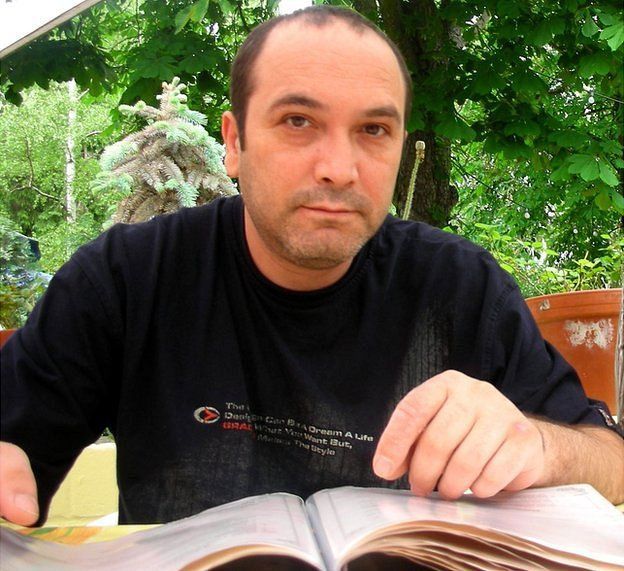
Caption: Ingeborg Bullert, today and at the beginning of the
occupation, when she was twenty. She lives in Hamburg and for decades
did not speak about having been raped by Soviet soldiers.
Rape affected women throughout Berlin. Bullert recalled that women
between fifteen and fifty-five were required to be examined for
venereal diseases.
“You needed a medical certificate to receive food coupons. I
remember that all the doctors issued these certificates, and there were
very many women sitting in the waiting rooms,” she said.
The exact number of women subjected to sexual violence by foreign
soldiers in Germany is unknown. The most frequently quoted estimates
claim around 100,000 rapes in Berlin alone and up to two million across
Germany.
Documents also record large numbers of applications for
abortions—despite the legal ban then in force—on the
grounds of “special circumstances.”
Natalia Gesse, a friend of Andrei Sakharov, is quoted as saying that
“the Russians raped every woman from eight to eighty.”8,9,10
Historian Antony Beevor, while researching his 2002 book Berlin: The Downfall,
found documents in the State Archive of the Russian Federation
describing sexual violence in detail. The Soviet secret police, the
NKVD, sent the documents to its chief, Lavrentiy Beria, at the end of
1944.
“These materials were passed on to Stalin. You can even see
whether they were read. The documents contain information about mass
rapes in East Prussia and about German women trying to kill their
children and themselves in order to avoid rape,” Beevor said.1
Lawyer Ingo von Münch, in his book Frau, komm!
(“Woman, come here!”), argues that mass rape of German
girls and women by Red Army servicemen clearly falls within the
category of war crimes. Never before, he writes, had so many women in
any country been assaulted by foreign soldiers in such a short period
as during the Soviet entry into Germany in 1944 and 1945. Particularly
horrifying, he says, was the brutal treatment of women by perpetrators
in military uniform.7
Caption: Mother and daughter on their knees and beaten. The daughter has just been raped. Berlin under Soviet occupation, 1945.
The German military-intelligence service Fremde Heere Ost recorded the following figures for reported rapes:
- Eastern regions of Germany: 1,400,000;
- the remainder of the Soviet occupation zone, excluding Berlin: 500,000;
- Berlin itself: 100,000.11,12
After the summer of 1945, Soviet soldiers found guilty of sexual
violence were in some cases punished, with penalties ranging from
imprisonment to hanging.
Nevertheless, the article says, rape continued until 1948, when
Germany’s administrative structure had been restored and Soviet
soldiers were moved into guarded posts physically separated from the
civilian population.13,14,15
Modern Russian Unease with Its Own History
The article states that in recent years the Russian parliament
adopted legislation under which people who publicly condemn or
“distort the image of Russia’s history in the Second World
War” may face fines or imprisonment for up to five years.
Young historian Vera Dubina of Moscow Humanities University learned
about rapes committed by Soviet soldiers only after a research trip to
Berlin funded by a scholarship. She wrote an academic paper on the
subject but encountered serious difficulties when she tried to publish
it.
Vitaly Gelfand, son of writer and war veteran Vladimir Gelfand, does
not deny that many Soviet soldiers displayed courage and self-sacrifice
during the war. But, he says, that is “not the whole story.”
Caption: Vitaly Gelfand, Vladimir’s son, has struggled to have his father’s diary published in Russia.
Vitaly Gelfand was recently interviewed on a Russian radio station.
Soon afterward, the article says, a wave of antisemitic trolling
appeared on social media. Many people accused him of falsifying the
diary, called the records a forgery and wrote that Vitaly “should
emigrate to Israel.”
Despite this, Vitaly expressed hope that his father’s diary
would be published in Russia before the end of that year. Parts had
already been translated into German and Swedish.
“If people do not want to know the truth, are mistaken, and
want to talk about how beautiful and noble everything was, that is
foolish—it is self-deception,” he says.
“The whole world understands this. Russia understands it
too. Even those behind the laws about ‘distorting the past’
understand everything. We cannot move into the future until we deal
with the past.”
The precise number of women who were raped will probably never be
known. Soviet military-tribunal records and other potential sources
remain classified.
Even seventy years after the end of the war, research continues to
reveal the scale of sexual violence against German women, not only by
Soviet soldiers but also by Americans, British and French troops.1
Rapes Committed by the Western Allies
Professor Miriam Gebhardt’s book Als die Soldaten kamen (When the Soldiers Came)
includes interviews with victims, accounts of the rape of children, and
the results of eighteen months of research into birth records in West
Germany and Allied-occupied West Berlin.
She estimates that French, British and American soldiers raped
around 860,000 people at the end of the Second World War, including
roughly 190,000 sexual assaults attributed to American soldiers.
“Now, seventy years after the war, one might suspect that
this is about turning Germany into a victim,” Gebhardt, a
lecturer at the University of Konstanz, told The Local. “But this is no longer about trying to relativize German guilt for the Second World War and the Holocaust.”
Gebhardt says she reached her estimates partly by analyzing the
origins of so-called “war children” born to unmarried
German women in the 1950s. According to her figures, around five
percent of these children resulted from rape.
She also calculated that each recorded birth could represent as many as one hundred rapes, including assaults on men and boys.
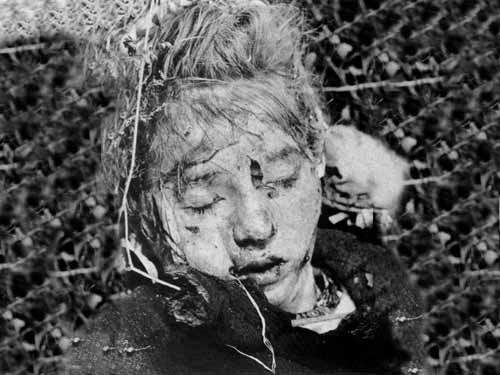
Caption: The corpse of a German child in Nemmersdorf, East Prussia.
Gebhardt’s estimates are far higher than earlier figures. According to Taken by Force,
published in 2003 by American criminology professor J. Robert Lilly,
American soldiers committed around 11,000 rapes in Germany.
While Der Spiegel questioned whether Gebhardt’s
figures accurately reflect the overall number of sexual assaults in
postwar Germany, Lilly told The Local that her estimates were plausible.
“Gebhardt’s estimates are credible, but her work is
not a final report,” Lilly said, explaining that exact figures
are impossible because systematic records do not exist. “It
supports my research and contributes to the continuing discussion of
what happens in war—something we hardly talk about.”
Until now, discussion of sexual crimes in Germany had focused
chiefly on the Red Army in the eastern part of the country, which has
been blamed for between one and two million rapes. Gebhardt stresses
that she considers it important to challenge the idea that the Red Army
alone was responsible for such crimes.
“Goebbels warned what the Red Army would do to Germany when
it arrived: rape women and commit atrocities against civilians... But
people who came under the occupation of the Western Allies rather than
the Soviets experienced the same thing,” she says. “Both
sides looted valuables and trophies, and soldiers from both sides
sometimes participated in gang assaults on women.”
Gebhardt’s research also includes records by Bavarian priests
describing events in the spring of 1945, including the following
passage:
“The saddest event during the advance was three rapes: one
of a married woman, one of a single woman, and one of an innocent girl
of sixteen and a half. All were committed by heavily intoxicated
Americans.”
According to Lilly, Gebhardt’s book presents a much darker
picture than the one usually seen in films and literature, where Allied
soldiers are portrayed solely as liberators of Germany from the Nazi
regime.
“This book will cause controversy. There are American
researchers who will not like it because they may think it diminishes
the seriousness of the war crimes committed by Germans,” Lilly
said.
Gebhardt nevertheless insists that her work has only one purpose: to
show the horrifying nature of violence in war. Rape, she says,
“continued for years, not only at the moment when towns were
captured.”
“It was not simply part of the violence of the final weeks
and days of the war—it continued for many years afterward.”2
“Black Squadrons”
Prominent German historian Götz Aly accused Black soldiers in
Allied armies of systematic rape of German women during the Second
World War. Aly, author of Hitler’s Beneficiaries, expressed this view at a press conference connected with the Berlin exhibition The Third World in the Second World War, which highlighted the role of thousands of Africans and Asians who took part in the defeat of German National Socialism.
Although invited to give a lecture, Aly rejected what he called the
“politically correct version” of the story and argued that
people from colonial territories in fact had a “parallel
interest” with National Socialists in defeating imperial powers
such as Britain and France.
Caption: Battalions of Black American Allied soldiers in Normandy, 1944.
He compared the conduct of Black soldiers in British and French
forces with the notorious mass rapes attributed to the Red Army in
eastern Germany and Berlin.
“Every town in southwestern Germany can tell stories about
rapes by Black soldiers. Their behavior was systematically no different
from that of the Russians,” Götz Aly said.
He also described Black soldiers in the British and French armies as
“unfree liberators,” whose participation in the defeat of
Hitler, in his view, did not deserve celebratory recognition.
Rape was indeed widespread during the collapse of Nazi Germany, but
the article notes that most historians attribute the overwhelming
majority of sexual assaults to the Red Army.
Dennis Goodwin, president of a veterans’ association, a Second
World War veteran who served in Burma and a representative of other
veterans, said Aly’s claims had no basis:
“There is no comparison with the Russians, who openly
boasted about it. There are plenty of historians who will refute that
view. I cannot speak for the French or Americans, but there were no
British Black battalions in Germany,” he said.
In Hitler’s Beneficiaries, Götz Aly argues that
the National Socialists redistributed goods confiscated from Jews and
occupied countries “fairly” among the German population.16
Rape in the U.S. Military — A Problem That Remains Relevant Today
For a woman, military service can sometimes be more dangerous than facing the enemy. The American documentary The Invisible War tells the stories of one hundred women who were raped in U.S. military barracks.
Many were raped by fellow servicemembers or superiors. According to
figures cited in the film, the U.S. Congress had already calculated by
1991 that around 200,000 women had been victims of sexual violence in
the American armed forces.
But that figure, the article says, represents only those able to
file an official complaint. Many victims were threatened with dismissal
or career obstruction if they tried to report what had happened.
Attorney Susan Burke, one of the people featured in the film, says:
“I repeatedly heard: rape is bad. But do you know what is
worse? Taking a professional blow to your career simply because you
were raped.”
Kristina Jones recounts:
“I had all the evidence: a rape kit, a witness who caught
the offender at the scene. And still they did not believe me when I
went to file a report.”
Rape has a destructive effect not only on the psyche but also on the
body. Kori Cioca, who served in the U.S. Coast Guard, was raped by her
superior. During the assault her face was injured so severely that she
continued to suffer serious jaw complications. For years she had to
live on gelatin, purées and whipped foods because she could not
chew solid food.
War is a time when everyone suffers: women, men, children and
animals. But the crime of rape is a particular, unequal and daily war
in which the attacker is often unknown and the assault sudden.
Sources and Notes
- BBC Brasil, “70 years after the end of the
war, the mass rape of Germans is still little known,” May 8,
2015. Retrieved February 10, 2018.
- “Allies raped almost 1m Germans: academic,” The Local, March 5, 2015. Retrieved February 10, 2018.
- Estudo Prático, “Rape crimes in the
Second World War and within the American military.” Retrieved
February 10, 2018.
- U.S. Congressional Record, Senate, Washington, December 4, 1945, p. 11374, cited in Alfred M. de Zayas, Die Anglo-Amerikaner und die Vertreibung der Deutschen, Ullstein, 1988, p. 87.
- Norman M. Naimark, Die Russen in Deutschland, 1997, ISBN 3549055994.
- Anonyma, Eine Frau in Berlin – Tagebuchaufzeichnungen vom 20. April bis zum 22. Juni 1945, Berlin, 2005, ISBN 3-44273-216-6.
- Ingo von Münch, Frau, komm!, pp. 10–15.
- Helke Sander / Barbara Johr, BeFreier und Befreite, Fischer, Frankfurt, 2005.
- Franz Seidler / Alfred M. de Zayas, Kriegsverbrechen in Europa und im Nahen Osten im 20. Jahrhundert, Mittler, Hamburg/Berlin/Bonn, 2002.
- Norman M. Naimark, Die Russen in Deutschland, p. 79.
- Bundesarchiv/Militärarchiv Freiburg, records
of Fremde Heere Ost, collection H3, vols. 483, 657, 665, 667, 690;
Bundesarchiv Koblenz, Ost-Dokumentensammlung Ost-Dok. 2 nos. 8, 13, 14;
Ost-Dok. 2/51, 2/77, 2/96.
- Archiv der Charité and Landesarchiv Berlin.
- Helke Sander / Barbara Johr, BeFreier und Befreite, Fischer, Frankfurt, 2005.
- Franz Seidler / Alfred M. de Zayas, Kriegsverbrechen in Europa und im Nahen Osten im 20. Jahrhundert, Mittler, Hamburg/Berlin/Bonn, 2002.
- Norman M. Naimark, Die Russen in Deutschland, p. 79.
- The Telegraph, “Mahatma Gandhi was
one of the Nazis’ ‘greatest friends,’ German
historian claims,” September 4, 2009. Retrieved February 10, 2018.
Andre Marques — Brazilian, born in Fortaleza
in 1993, pursuing a law degree at the University of Fortaleza. The
biographical note describes him as self-taught in economics, political
science and amateur historical research, with an emphasis on
unconventional subjects and topics neglected by official academia.
After working for many years in business and commercial marketing, he
founded the blog O Sentinela, now a website, where he serves as editor, contributor and columnist.