



| Вторник,
Нояб 24 2015 |
||
В
Москве открылась выставка "Евреи в Великой Отечественной войне"
|
||
 |
||
| |
||
|
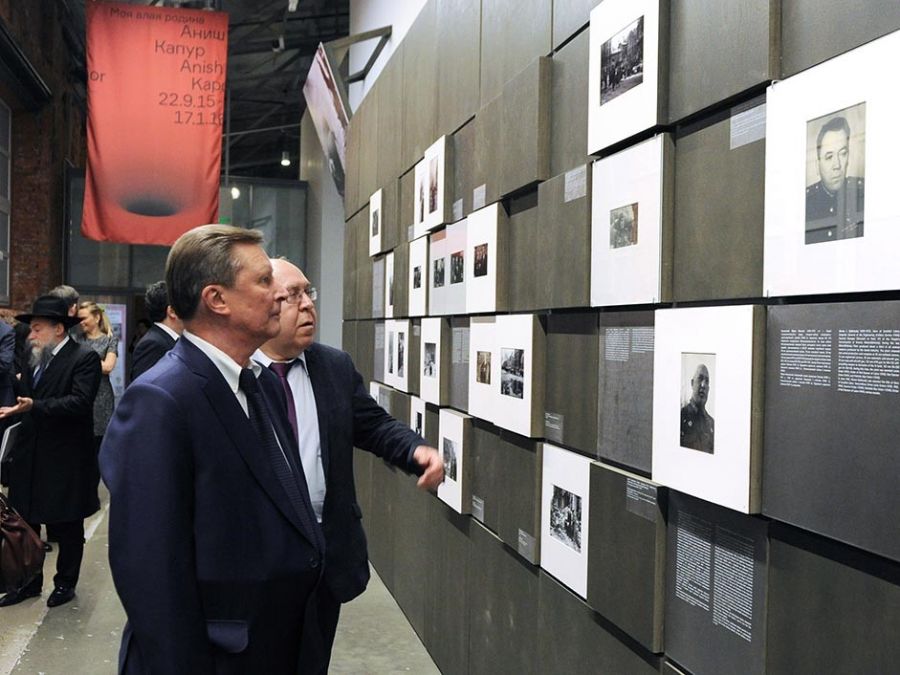
В Еврейском музее и центре толерантности открылась выставка «Евреи в Великой Отечественной войне», приуроченная к 70-летию Великой Победы над гитлеровской Германией. Организаторы особый акцент сделали именно на отдельных судьбах ее участников - евреев, в числе других народов сражавшихся с фашизмом и приближающих Победу. На открытие выставки «Евреи в Великой Отечественной войне» приехал глава администрации президента России Сергей Иванов, который является членом попечительского совета музея. "Такие экспонаты всегда воспринимаются по-особому остро, глубоко, эмоционально. Они дают возможность ощутить саму атмосферу тех лет, переживания очевидцев, вполне осознать, какой дорогой ценой досталась нам эта победа. И, конечно, какая ответственность за сохранение мира лежит сейчас на нас, на нынешних и всех будущих поколениях", — цитирует ТВ Центр руководителя администрации российского президента. На выставке представлены документы из семейных и государственных архивов. Это не только официальные бумаги, но также личные фотографии, дневники и письма участников войны, среди которых фотографии знаменитых фронтовых фотокорреспондентов Эммануила Евзерихина, снимавшего освобожденный от фашистов Сталинград, и Евгения Халдея - автора облетевшего весь мир снимка «Знамя Победы над Рейхстагом». Но по-настоящему уникальной выставку делают личные вещи, письма, фотографии и документы, которые бережно хранятся семьями ветеранов. Например, гимнастерка и юбка, в которых Елена Каган вернулась с войны, или фотографии и бумаги Героя Советского Союза, военной летчицы Полины Гельман, совершившей свой последний 860-й(!) боевой вылет в небе над Берлином. Также среди экспонатов - рукопись одного из самых пронзительных романов о войне «Жизнь и судьба» Василия Гроссмана, другие уникальные документы и материалы. "Я думаю, что такие пособия, такие фотографии наглядно показывают, как народы Советского Союза встали плечо к плечу на защиту своего Отечества безотносительно национальности. Потому что практически все национальности, жившие тогда на территории СССР, воевали с фашизмом", — подчеркнул Сергей Иванов. Фронтовой бинокль, компас, кобура, боевые награды – из всех этих вещей словно из пазлов складывается картина тех страшных лет. Здесь и солдаты, и женщины Красной армии – их было полмиллиона человек. Экспозиция показывает войну через конкретных людей, приближавших победу над фашизмом. Вот письма родным с фронта из семейного архива Леонида Рабиновича. Лейтенант, бывший в мирное время – художником, во время войны разыскал по собственной инициативе спрятанные нацистами сокровища Дрезденской галереи. Рядом – фото Елены Ржевской, которая принимала участие в поисках останков Гитлера. В рамках выставки прошла презентация книги Владимира Гельфанда. На протяжении всей войну ему удалось вести дневник, и теперь, благодаря Исследовательскому центру музея, он наконец опубликован в России. Как рассказал сын автора Виталий Гельфманд, чтобы увидеть, какой была война, книгу нужно прочесть от первого до последнего слова. В советское время публиковать его было невозможно. Гельфанды эмигрировали в Германию, дневник был несколько раз издан там, и только сейчас его опубликовали в России. Это обстоятельство побудило Виталия передать архив отца, два альбома фотографий и личные вещи, которые были с ним на войне, передать в Еврейский музей и центр толерантности. Лейтенант Гельфанд дошел до Берлина, пережил страшное, например, выходил из окружения. Для еврея оказаться в окружении было страшнее, чем для представителя других народов — плен означал смерть без вариантов. Фашисты плененных евреев моментально расстреливали, как политруков, поэтому попавшие в окружение уничтожали документы, срывали погоны. Но и это не помогало.+ "Молодежь узнает для себя что-то новое, те люди, которые знают о войне вообще, здесь увидят эту историю войны в лицах, через живые человеческие истории, в деталях, в лицах самых разных людей. Народ состоит из отдельных людей, это в том числе попытка приблизиться к народной истории войны", – прокомментировал доктор исторических наук, куратор выставки Олег Будницкий. Президент Федерации еврейских общин России Александр Борода напомнил: "Они были евреями по национальности и, может быть, отягощающим обстоятельством было то, что у них не было альтернативного варианта. У них не было варианта плена, варианта отступления, потому что Гитлер не дал им никакого другого варианта – они были бы расстреляны немедленно. Но они не думали о других вариантах. Они были гражданами страны, любили Советский Союз и мужественно воевали". |
||
Медиа |
||
 |
||
 |
||
| © 2015 GORSKIE.ru |
 Russian
The Jewish Museum and Tolerance Center has opened the exhibition Jews in the Great Patriotic War, timed to the seventieth anniversary of the Great Victory over Hitler’s Germany. The organizers placed special emphasis on the individual lives of Jewish participants who, together with other peoples, fought fascism and brought Victory closer.
Sergei Ivanov, head of the Russian Presidential Administration and a member of the museum’s Board of Trustees, attended the opening.
“Such exhibits are always perceived in an especially acute, profound and emotional way. They allow us to feel the atmosphere of those years and the experiences of eyewitnesses, and to understand fully the enormous price of victory. And, of course, they remind us of the responsibility for preserving peace that now rests upon us, upon the present generation and all future generations,” TV Center quoted Ivanov as saying.
The exhibition includes documents from family and state archives. These are not only official papers, but also personal photographs, diaries and letters of war participants, including photographs by famous front-line photojournalists Emmanuil Yevzerikhin, who photographed Stalingrad after its liberation from the Nazis, and Yevgeny Khaldei, author of the photograph Raising the Victory Banner over the Reichstag, which became famous throughout the world.
But what makes the exhibition truly unique are personal belongings, letters, photographs and documents carefully preserved by veterans’ families. Among them are the tunic and skirt in which Yelena Kagan returned from the war, and photographs and papers of Hero of the Soviet Union Polina Gelman, a military pilot who flew her final — 860th — combat sortie over Berlin. The exhibition also contains the manuscript of one of the most piercing novels about the war, Vasily Grossman’s Life and Fate, together with other unique documents and materials.
“I think such materials and photographs clearly show how the peoples of the Soviet Union stood shoulder to shoulder to defend their homeland regardless of nationality, because practically all the nationalities then living in the USSR fought fascism,” Ivanov stressed.
A field glass, compass, holster and military decorations — all these objects fit together like pieces of a puzzle to form a picture of those terrible years. There are soldiers here and women of the Red Army — half a million women served. The exhibition shows the war through individual people who brought victory over fascism closer.
Here are letters sent to relatives from the front from the family archive of Leonid Rabinovich. A lieutenant who had been an artist in civilian life, during the war he independently found treasures of the Dresden Gallery hidden by the Nazis. Nearby is a photograph of Yelena Rzhevskaya, who took part in the search for Hitler’s remains.
The exhibition also hosted a presentation of Vladimir Gelfand’s book. He managed to keep a diary throughout the war, and now, thanks to the museum’s Research Center, it has finally been published in Russia. According to the author’s son Vitaly Gelfand, anyone who wants to understand what the war was like must read the book from the first word to the last.
It was impossible to publish the diary in the Soviet period. The Gelfand family emigrated to Germany, where the diary was published several times, and only now has it appeared in Russia. This prompted Vitaly to donate his father’s archive, two photograph albums and personal items that had accompanied him through the war to the Jewish Museum and Tolerance Center.
Lieutenant Gelfand reached Berlin and survived terrible experiences, including escaping encirclement. For a Jew, being surrounded was more frightening than for representatives of other peoples because captivity meant certain death. The Nazis immediately shot captured Jews, as they did political officers, so soldiers caught in encirclement destroyed their documents and tore off their insignia. Even that did not always help.
“Young people will discover something new here, while people who already know about the war will see its history in human faces, through living personal stories, in details and in the faces of very different people. A people consists of individuals; this is also an attempt to come closer to a people’s history of the war,” commented Oleg Budnitsky, Doctor of Historical Sciences and curator of the exhibition.
Alexander Boroda, president of the Federation of Jewish Communities of Russia, added: “They were Jews by nationality, and perhaps an aggravating circumstance was that they had no alternative. There was no option of captivity, no option of retreat, because Hitler gave them no other option — they would have been shot immediately. But they did not think about alternatives. They were citizens of their country, loved the Soviet Union and fought courageously.”
