

 |
 |
|||
| 23.08.2024 |
По следам дневников Гельфанда |
||
|
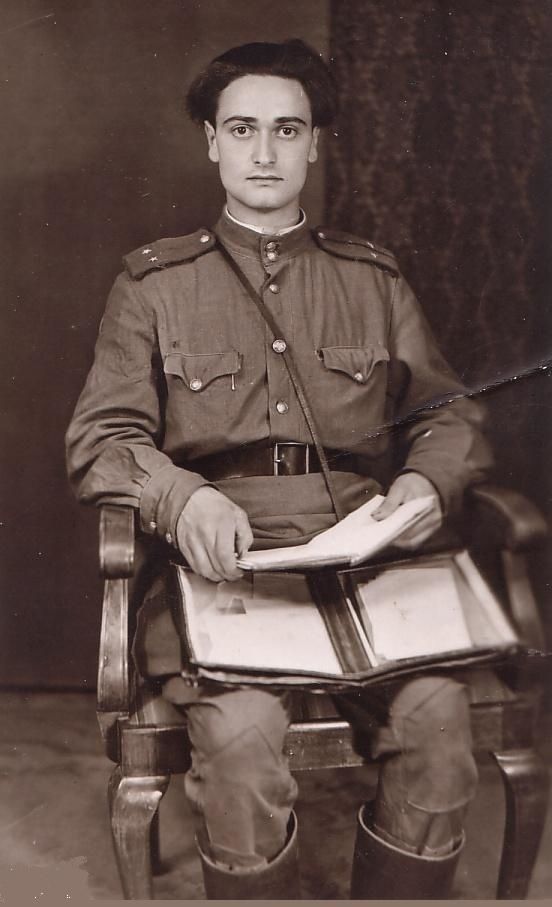
В собрании музея находятся дневники, военные письма, а также предметы и фотографии, сделанные во время службы в Германии Владимиром Натановичем Гельфандом, участником Великой Отечественной войны. Владимир Гельфанд окончил 8 классов средней школы и 3-й курс Днепропетровского индустриального рабфака. В самом начале войны вместе с комсомольской организацией рабфака выехал в Апостоловский район Днепропетровской области на уборку урожая. А 18 августа 1941 г., за неделю до захвата города немцами, эвакуировался из Днепропетровска в Ессентуки. А оттуда был направлен в ремонтно-восстановительную колонну связи линейным рабочим и проработал там до призыва в армию 6 мая 1942 г. |
||
 |
||
 |
||
|
Владимир
Гельфанд в период службы в Германии.
|
||
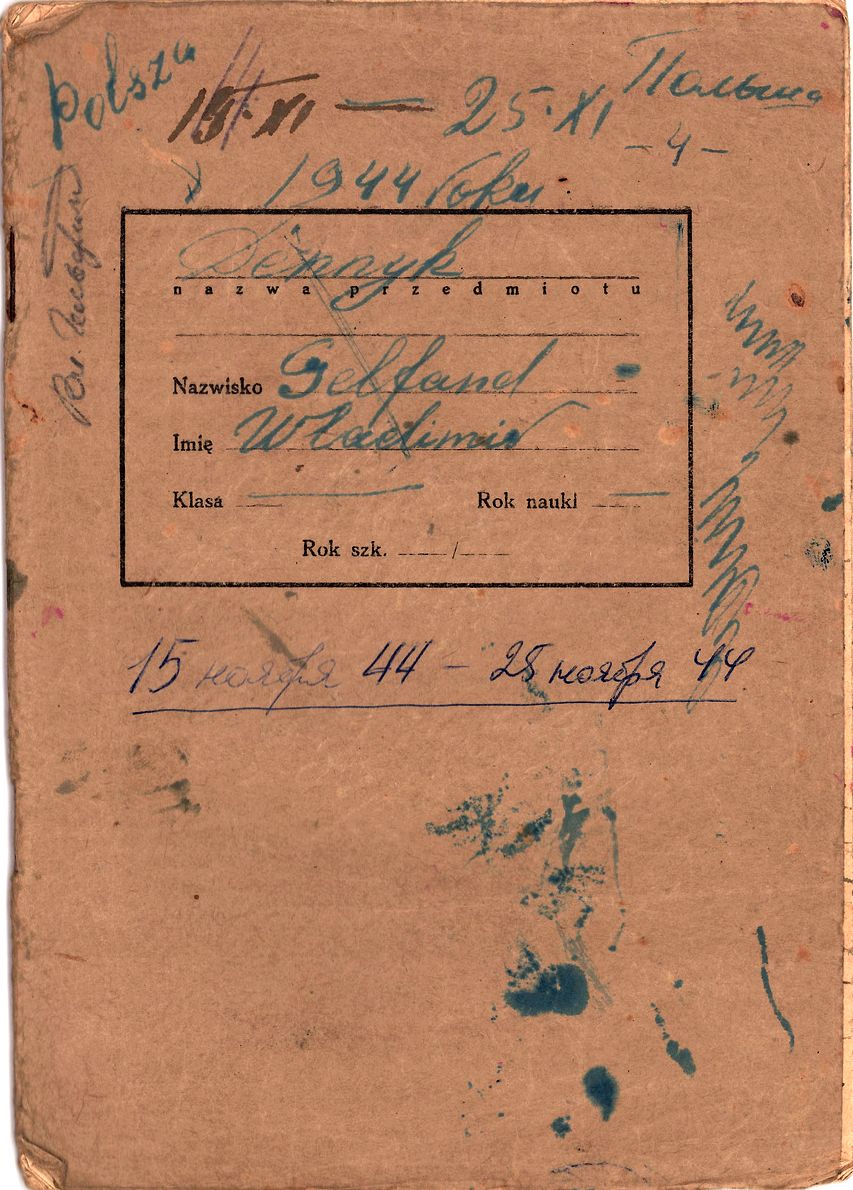
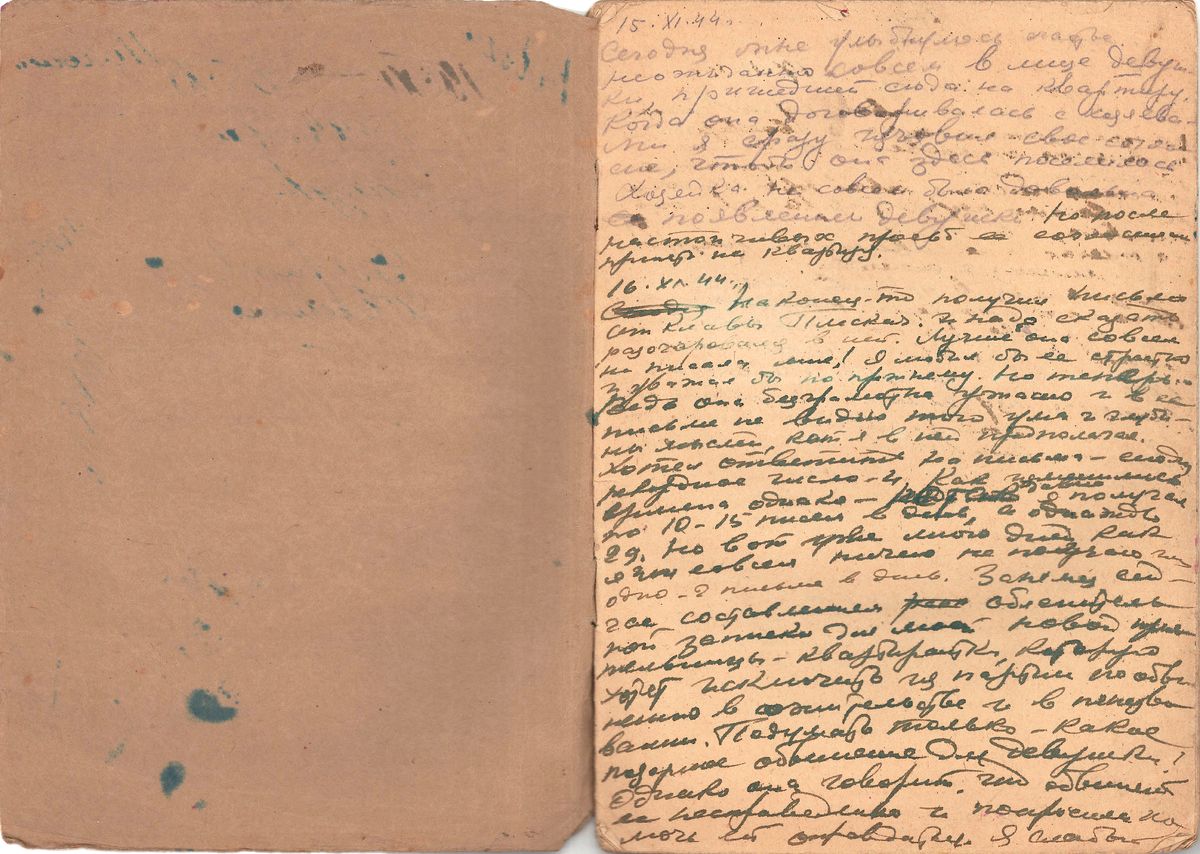
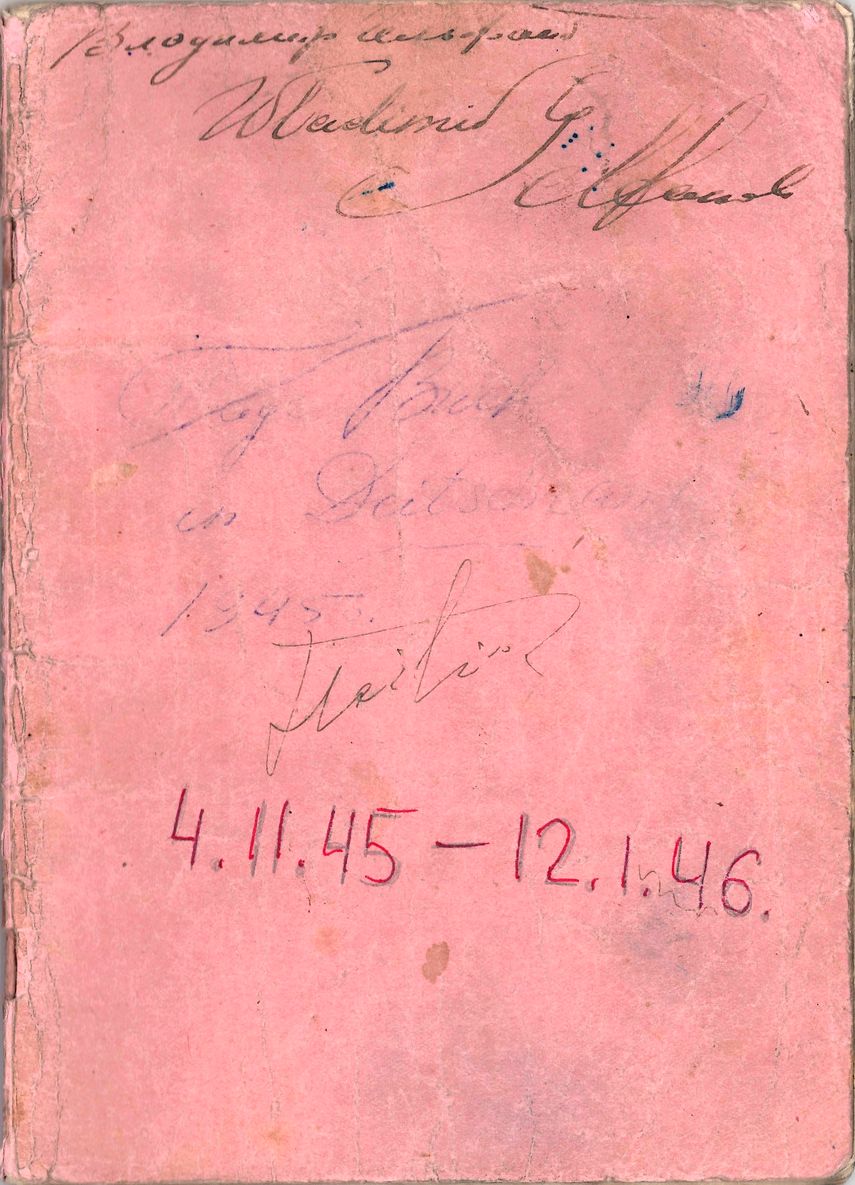
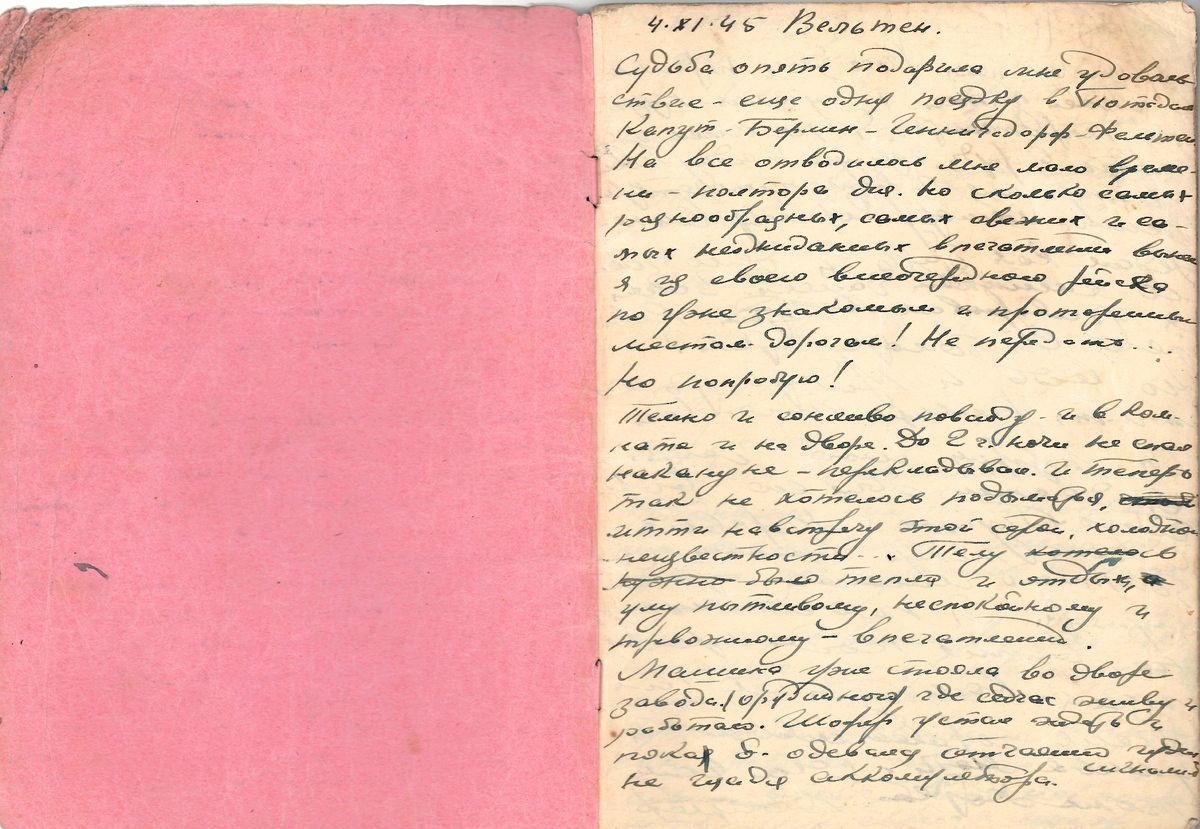
| Владимир Гельфанд вел дневник, где подробно описывал свою повседневную жизнь во время службы в артиллерийских войсках. Он начинается с последних предвоенных месяцев 1941 г. и завершается возвращением из Германии, где он служил в оккупационных войсках, осенью 1946 г. Владимир Гельфанд и после войны продолжал вести дневник, но это было уже не регулярно и описываемые события отражали жизнь советского человека второй половины 1940-х — начала 1980-х гг. | ||
 |
||
 |
||
 |
||
 |
||
| Фотографии
дневников Владимира Гельфанда |
||
|
Гельфанд обращается к дневнику «Друг». И действительно, сержант, а потом лейтенант Гельфанд плохо сходился с людьми и за время службы не обзавелся ни одним верным товарищем. Поэтому можно сказать, что дневник был единственным его другом во время войны. Запись от 03.09.1942: |
||
| «Дневник, приятель дорогой! А я сегодня пил чай из кореньев! Сладкий, как с сахаром! Жалко, тебе не оставил! Но не беда - тебе достаточно понюхать запах корней - вот они, в руках у меня, чтобы ты убедился в правдивости слов моих. А зачем тебе иные сладости кроме моих, ведь ты переживаешь все наравне со мной - и радости, и горести те же» | ||
 |
||
| Из
архива Владимира Гельфанда |
||
|
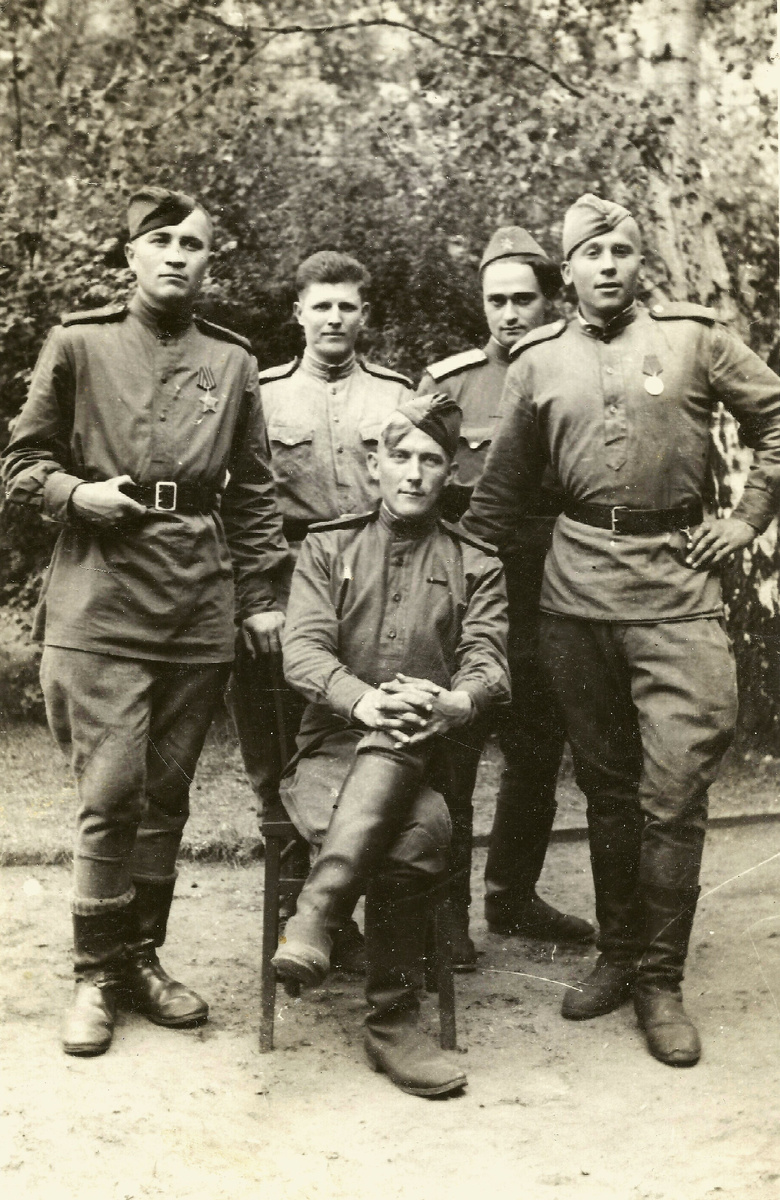
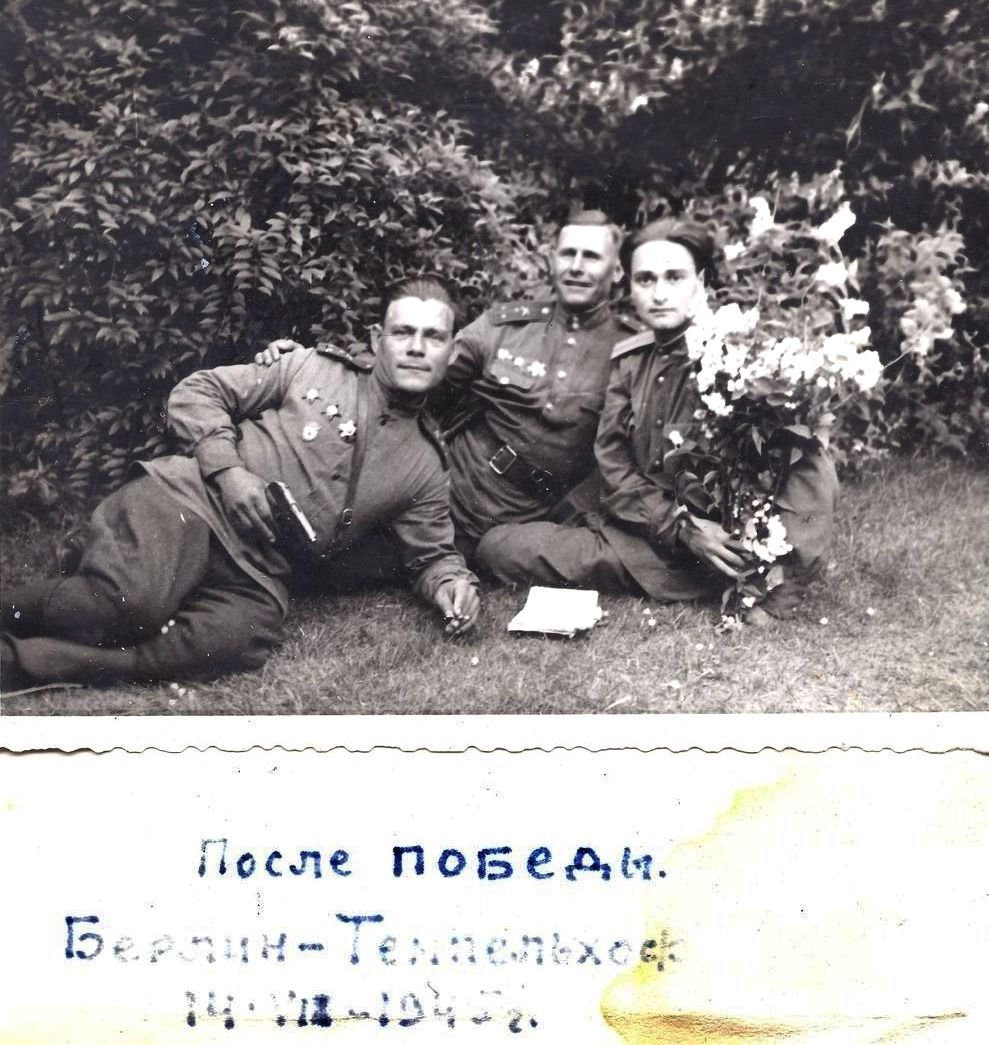
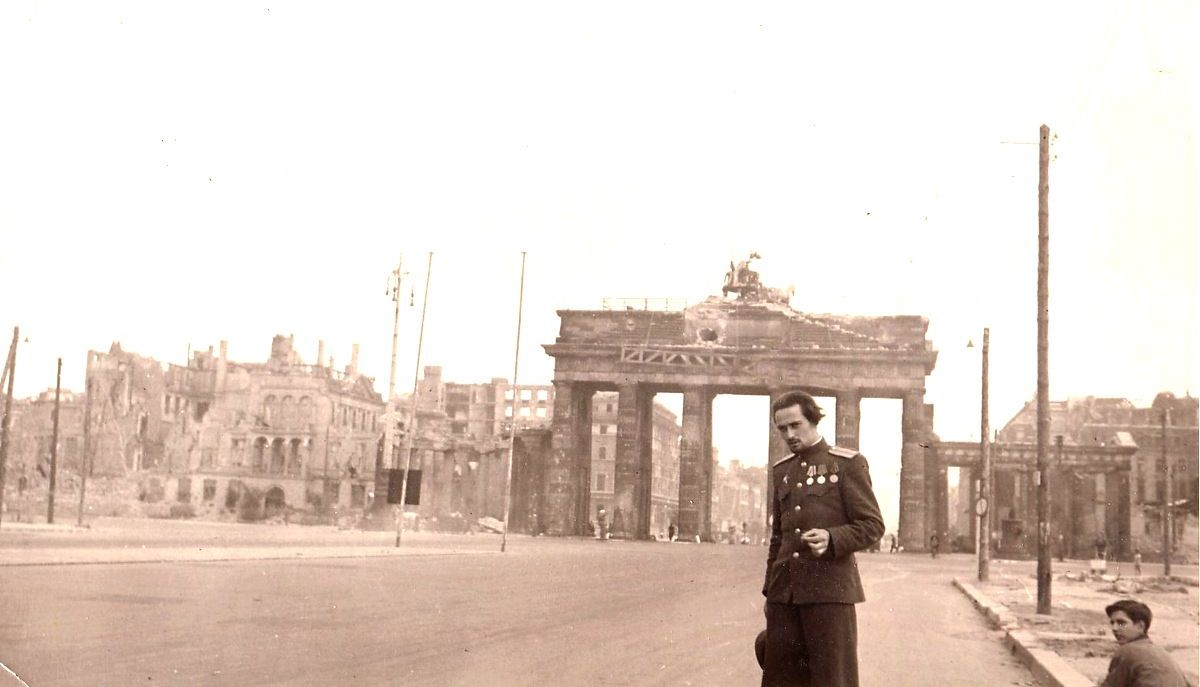
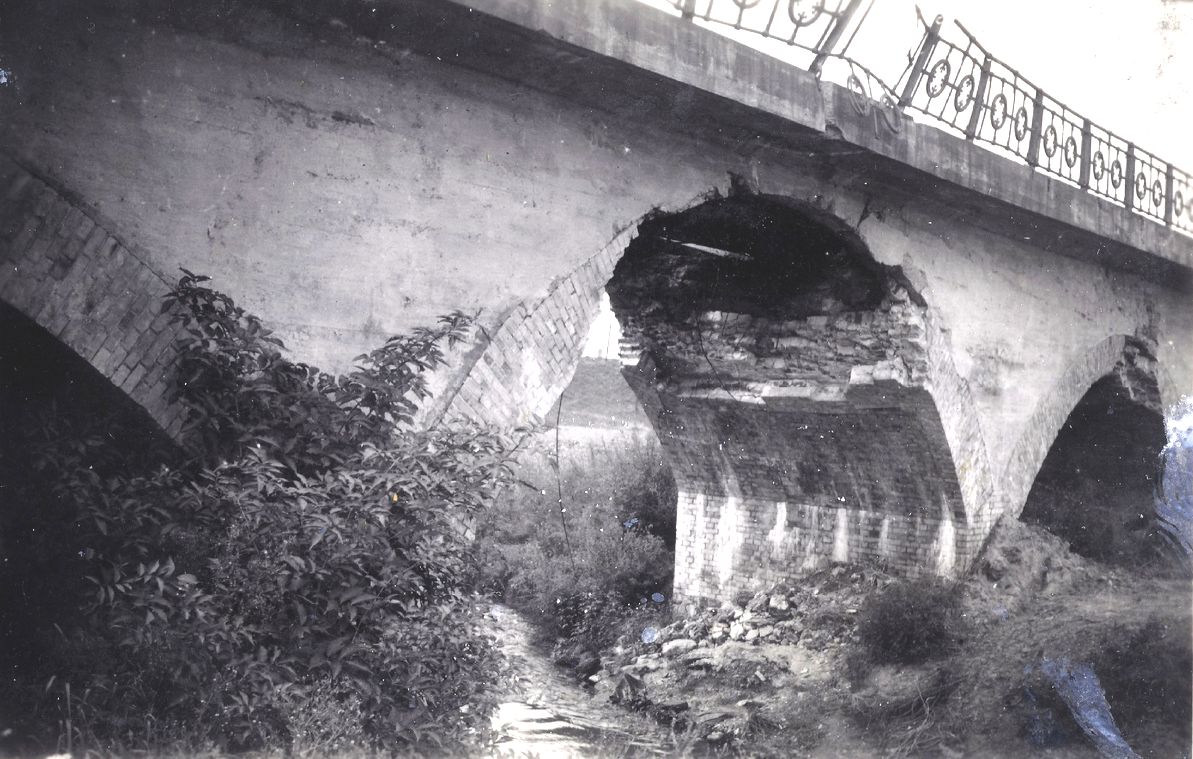
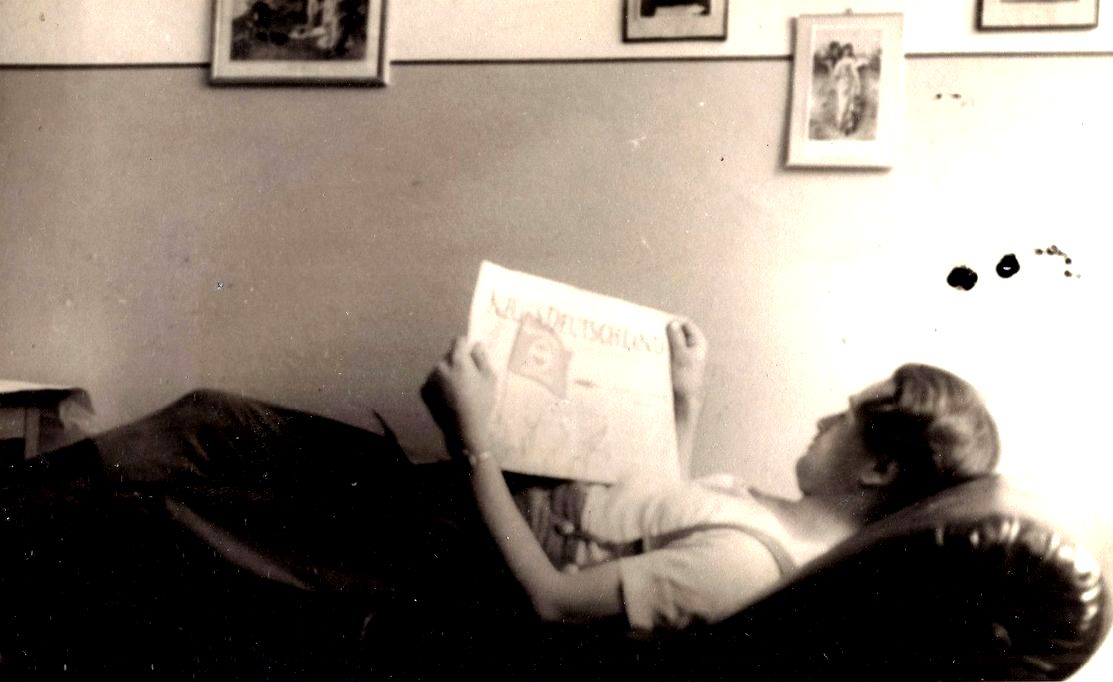
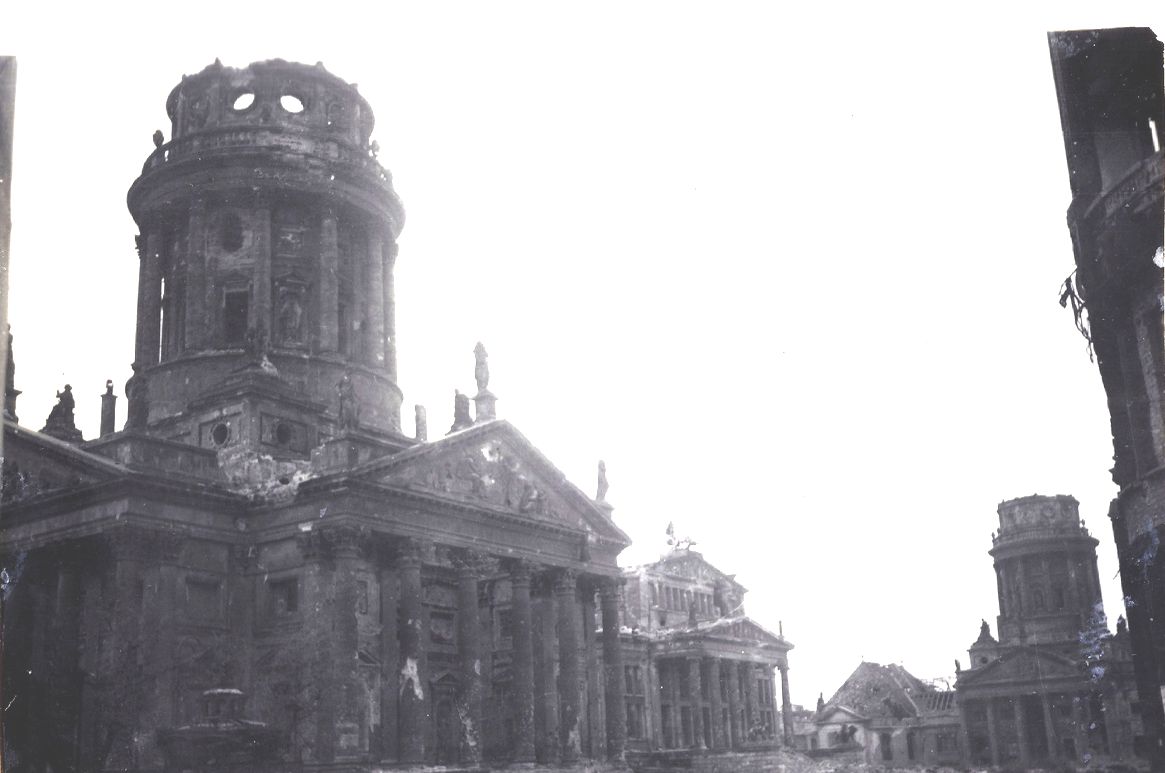
Благодаря дневниковым заметкам удалось восстановить историю некоторых фотографий Гельфанда, которые были сделаны во время службы в Восточной Германии в 1945–1946 годах и собраны в альбом «Германия — я». Запись от 21.04.1946: |
||
«Кстати сказать, познакомился я в Берлине с одной интеллигентной семьей, и с тех пор жизнь моя в городе значительно просветлела. Случилось в немецком магазине обмена. Я отдал фотоаппарат за гармонику. Когда я уже хотел уходить, ко мне подошел старикан с бородкой и в очках и по-русски спросил, имею ли я еще одного — дочь хотела обменять на аккордеон. Я обрадовался — ребята (офицеры) просили достать аккордеон, а у меня было два фотоаппарата. К нам подошла еще девушка, и мы разговорились. Я заметил, что страх не для меня, дочь говорит на ломаном русском языке, а отец совершенно чисто и свободно. Он уклонился от ответа. Пригласили оба приехать к ним. Меня соблазнил аккордеон, и дня через два я постучался в дверь на третьем этаже, где по-русски было выгравировано «Ленский». Мне открыла девушка — совсем не та, с которой виделся в магазине и которая называла старика отцом. На чистейшем русском языке она спросила, к кому мне нужно. Я растерялся и застенчиво объяснил, что мой визит связан с фото и аккордеоном, и что мне указали адрес в магазине обмена. Девушка была хороша и молода. Ее глаза умно и красиво смотрели на меня, надолго пригвоздив к месту, откуда я начал затем и стихи читать, и рассказывать эпизоды из жизни, пока не наступил час ночи. Фотоаппарат оказался слабым и не подходил в сравнении с шикарным аккордеоном, который мне показали, но я не жалел особенно. Хозяин обещал научить меня фотографировать, девчата — танцевать, а я всему рад учиться. И на другой день не преминул явиться к моим новым знакомым в гости. Ленские собирались в кино. Приглашали меня, но деньги вышли, и было неудобно. Тем не менее уговорили. Пошли вчетвером: девушки, мамаша и я.» |
||
 |
||
 |
||
 |
||
 |
||
| Из
архива Владимира Гельфанда |
||
|
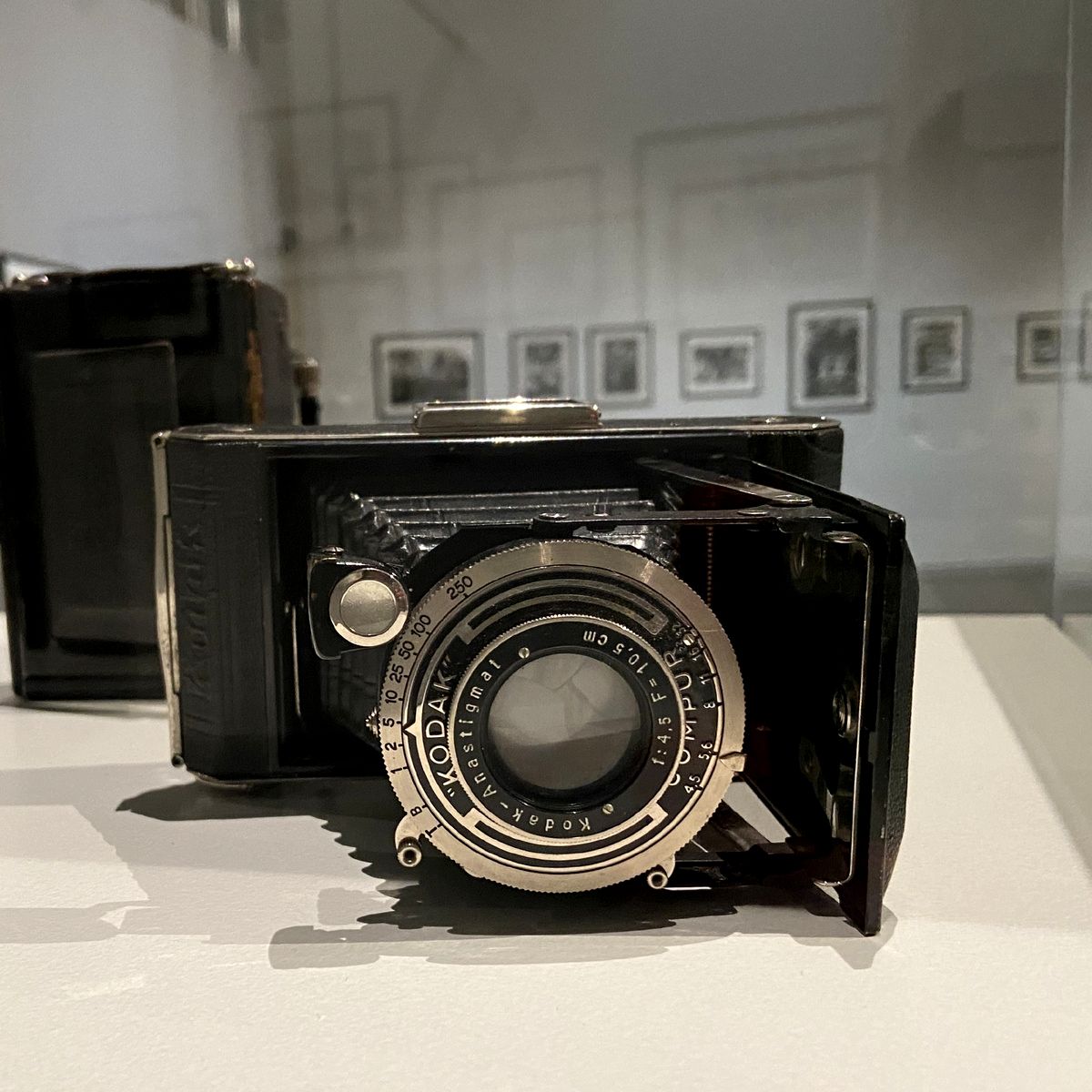
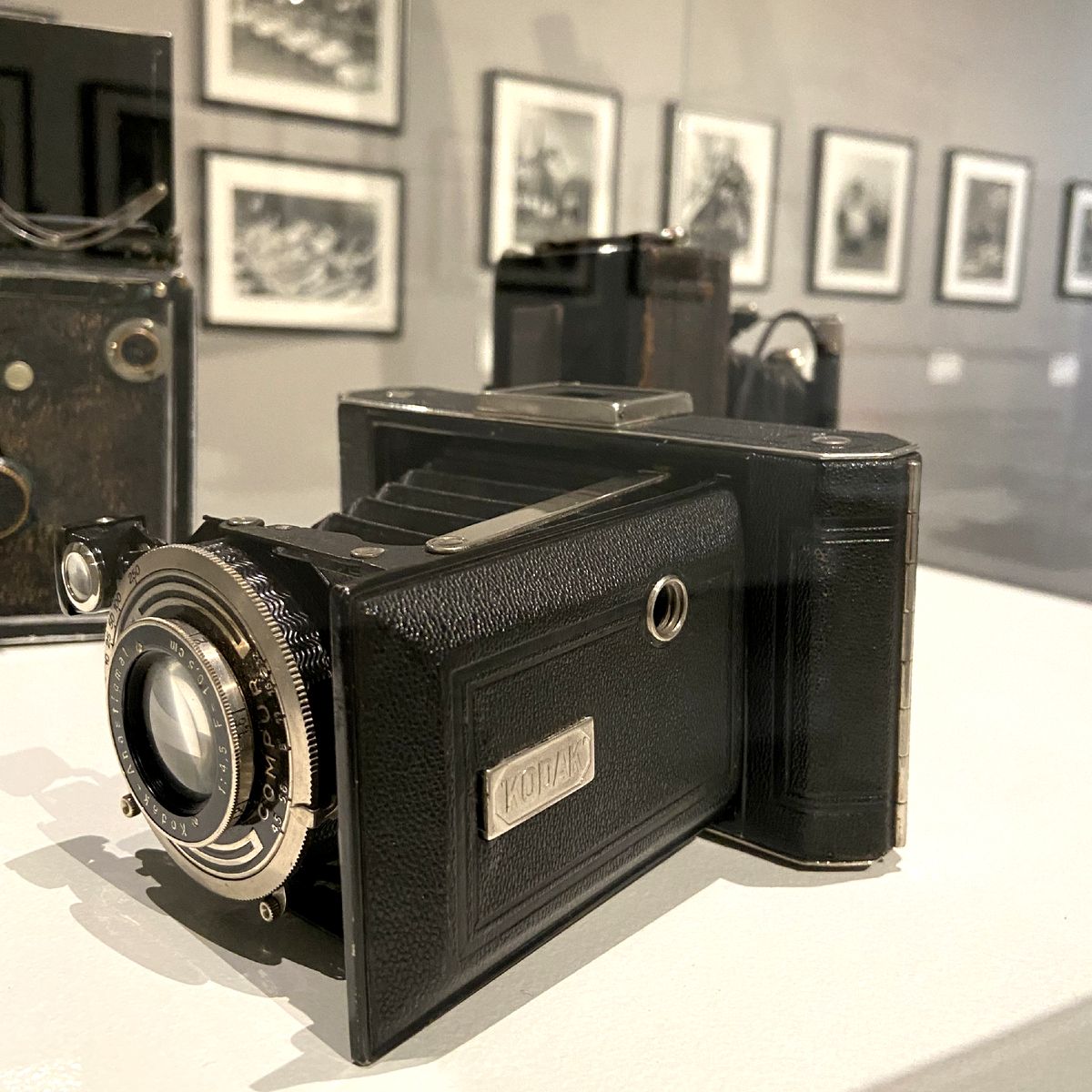
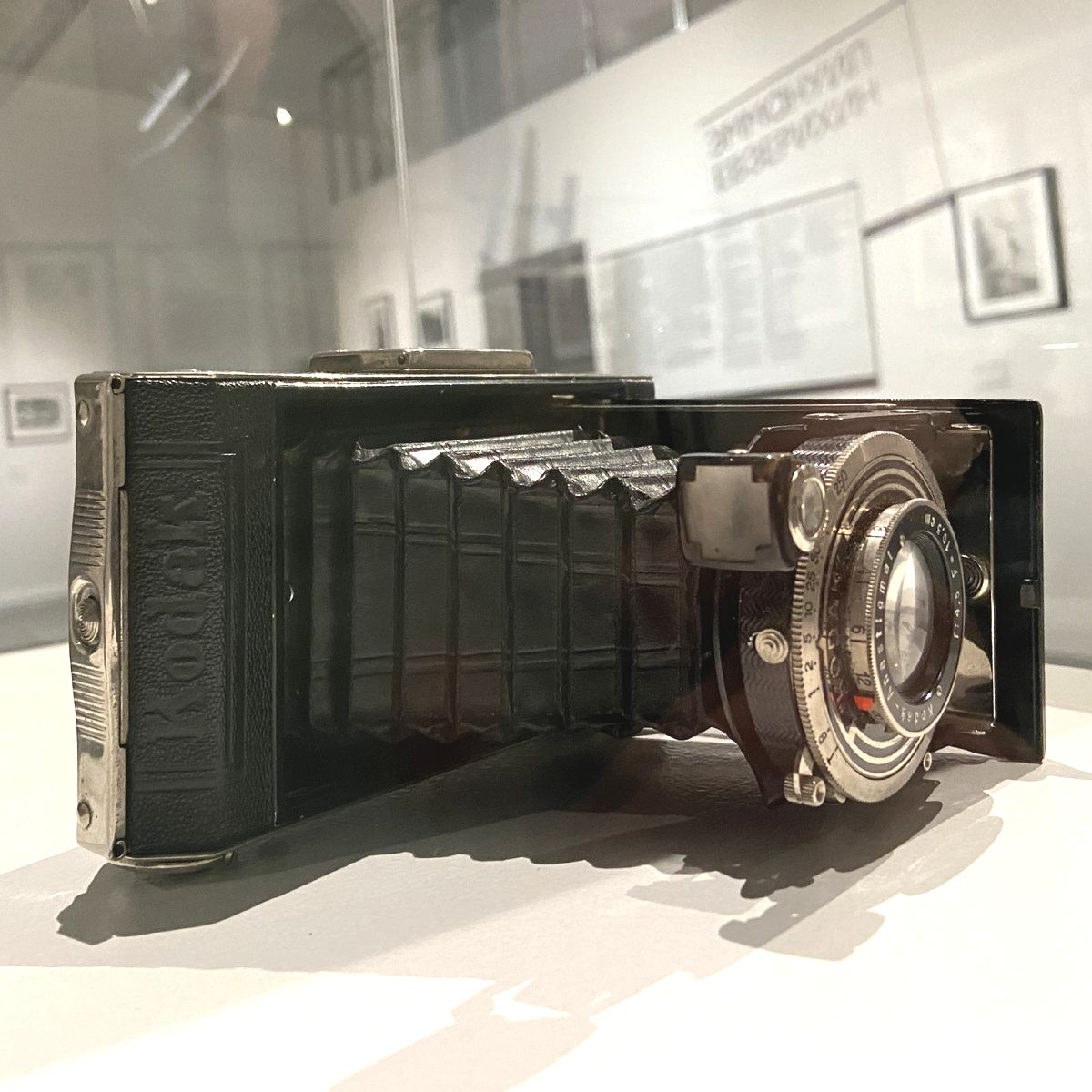
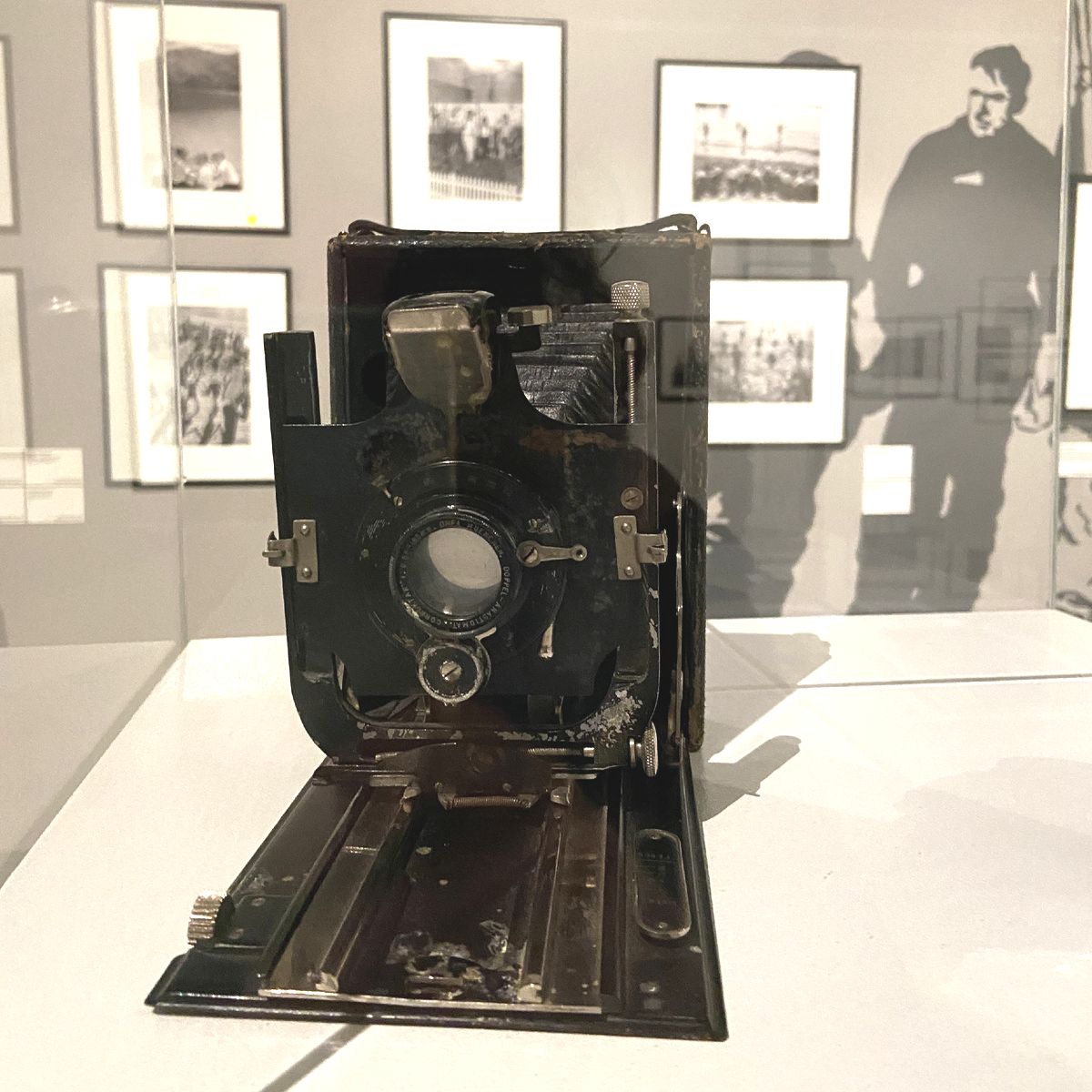
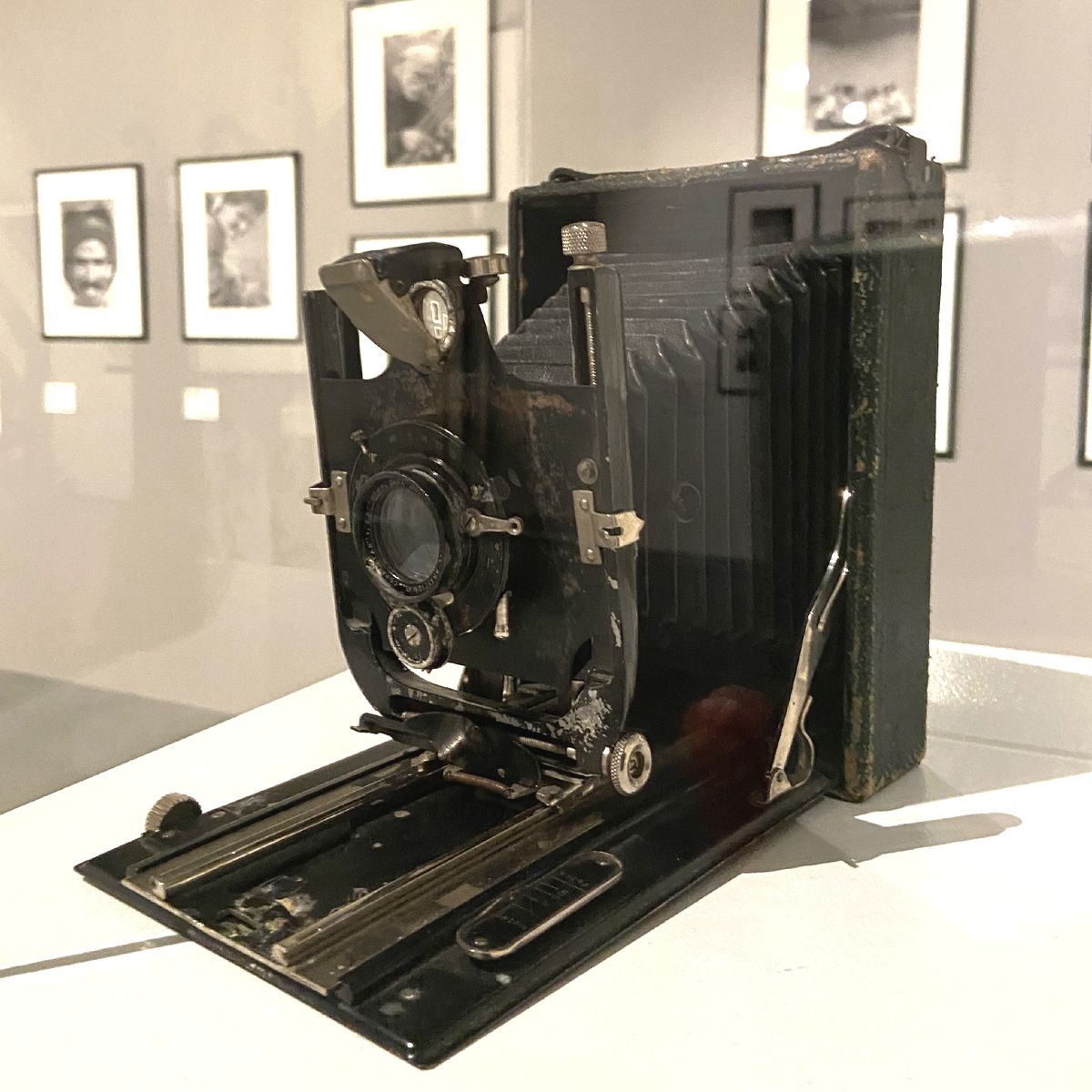
В коллекции музея находятся два принадлежащих Владимиру Гельфанду фотоаппарата: |
||
 |
||
 |
||
 |
||
 |
||
 |
||
| Экспонаты с выставки «Истоки советской фотографии. 1920–1930-е годы» из коллекции Галереи Люмьер | ||
| До 29 сентября можно найти эти фотоаппараты на выставке «Истоки советской фотографии. 1920–1930-е годы» из коллекции Галереи Люмьер | ||
© Еврейский музей и
центр толерантности
© Дзен

Following Gelfand's DiariesThe museum collection contains diaries, wartime letters, as well as objects and photographs made during the period of service in Germany by Vladimir Natanovich Gelfand, a participant in the Great Patriotic War. Vladimir Gelfand completed eight grades of secondary school and the third year of the Dnipropetrovsk industrial workers' preparatory faculty. At the very beginning of the war, together with the Komsomol organization of the faculty, he went to the Apostolove district of the Dnipropetrovsk region for the harvest. On 18 August 1941, a week before the Germans captured the city, he was evacuated from Dnipropetrovsk to Essentuki. From there he was assigned as a line worker to a communications repair-and-restoration column, where he worked until he was drafted into the army on 6 May 1942. Vladimir Gelfand during his service in Germany. Gelfand addresses his diary as "Friend." And indeed, first Sergeant and later Lieutenant Gelfand found it difficult to get along with people and did not acquire a single close and faithful comrade during his service. In that sense, the diary can be called his only friend during the war. Diary entry of 3 September 1942"Diary, my dear companion! Today I drank tea made from roots! Sweet as if it had sugar in it! It is a pity I did not save any for you. But never mind - it is enough for you to smell the roots; here they are, in my hands, so that you can be convinced that my words are true. And why would you need any sweets other than mine, when you experience everything together with me - the same joys and the same sorrows." Photographs of Vladimir Gelfand's diaries. Thanks to the diary notes, researchers were able to reconstruct the story behind some of Gelfand's photographs taken while he served in eastern Germany in 1945-1946 and later assembled in the album Germany - Me. Diary entry of 21 April 1946"Incidentally, in Berlin I became acquainted with an educated family, and since then my life in the city has brightened considerably. It happened in a German exchange shop. I traded a camera for a concertina. Just as I was about to leave, an old man with a little beard and spectacles came up to me and asked in Russian whether I had another one - his daughter wanted to exchange an accordion for it. I was delighted: the fellows (officers) had asked me to find an accordion, and I had two cameras. A girl came up to us as well, and we began talking. I noticed that fear was not an issue for me: the daughter spoke broken Russian, while the father spoke it perfectly and fluently. He evaded an explanation. Both invited me to visit them. The accordion tempted me, and two days later I knocked on the door on the third floor, where the name 'Lensky' was engraved in Russian. A girl opened the door - not the one I had met in the exchange shop, who had called the old man her father. In immaculate Russian she asked whom I wanted. I became confused and shyly explained that my visit concerned the camera and the accordion, and that I had been given the address at the exchange shop. The girl was pretty and young. Her eyes looked at me intelligently and beautifully, pinning me to the spot for a long time; from there I began reciting poetry and telling episodes from my life until one o'clock in the morning. The camera turned out to be poor and no match for the splendid accordion they showed me, but I was not especially sorry. The master of the house promised to teach me photography, the girls promised to teach me dancing, and I was happy to learn anything. And the next day I did not fail to visit my new acquaintances again. The Lenskys were going to the cinema. They invited me, but I had run out of money and felt awkward. Nevertheless, they persuaded me. The four of us went: the girls, their mother and me." Gelfand's cameras in the museum collectionThe museum owns two cameras that belonged to Vladimir Gelfand. The first is a folding AGFA camera with a Doppel-Anastigmat Corrector 180 mm f/6.8 lens made by Omfa Munich. He acquired it in January 1946 at Berlin's Alexanderplatz, where the city's largest black market had developed in the postwar period. Gelfand wanted to learn photography with it, so he chose a rather old and partly defective camera. The second is a KODAK Volenda 620, manufactured in Germany in the 1930s. Unfortunately, almost nothing is known about how it came into his possession. One of Vladimir Gelfand's cameras in the museum collection. Exhibits from the exhibition Origins of Soviet Photography: the 1920s-1930s, from the Lumiere Gallery collection. The cameras could be seen at the exhibition through 29 September. © Jewish Museum and Tolerance Center · © Zen |