



| 2 березня 2026 | ||
|
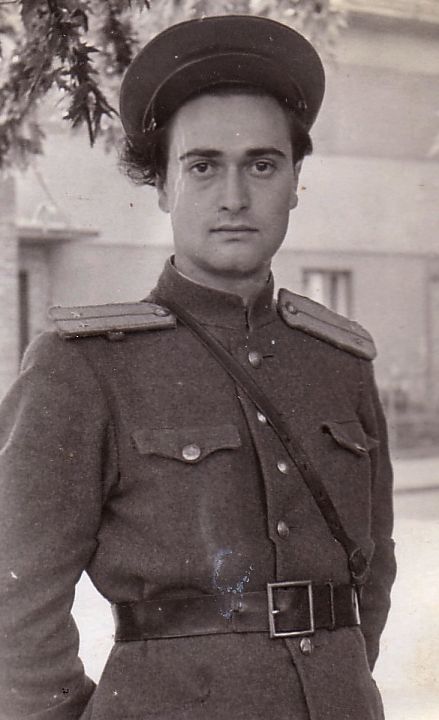
ВОЛОДИМИР
НАТАНОВИЧ ГЕЛЬФАНД
Серед
відомих особистостей, які народилися в Новоархангельську, Володимир
Натанович Гельфанд – письменник-мемуарист, учасник Другої
світової війни, автор надрукованих щоденників про роки служби в
Червоній армії в 1942-1946 роках. Його спогади є першим і єдиним
особистим щоденником офіцера Червоної армії, доступним на українській,
російській та німецькій мовах.
Володимир
Гельфанд народився 1 березня 1923 року в Новоархангельську. У 1933 році
батьки переїхали до Дніпропетровська. Після восьмого класу Володимир
вступив до місцевого індустріального робфаку, де провчився три курси. 6
травня 1942 року був призваний до лав Червоної армії. Проходив навчання
в артилерійській школі, отримав звання сержанта. 3 червня 1942 року
перебував за власними спогадами на «південному фланзі
Харківського фронту», брав участь у бойових діях у районі
Сталінграда.
У
1943 році після навчання на курсах отримав звання молодшого лейтенанта.
Наприкінці серпня 1943 року його направили до 248-ї стрілецької
дивізії, де він очолив мінометний взвод. Дана дивізія була двічі
повністю знищена і сформована заново. Вона комплектувалась переважно
випускниками шкіл молодших командирів та військовослужбовцями з
фронтових шпиталів. Підрозділ Гельфанда було направлено на південь від
Мелітополя. Восени 1943 року дивізія увійшла до складу 3-го
Українського фронту. У січні 1944 року отримав звання лейтенанта.
Протягом
всього часу – на фронті, у військовому шпиталі та у школі
молодших офіцерів – він вів щоденник. У перервах між атаками
і
бомбардуванням противника, на маршах та під час фортифікаційних робіт і
підготовки до наступу, він шукав духовне заняття. Писав вірші і
надсилав їх до центральних видань, випускав стінгазети і складав бойові
листки.
Приймав
участь у бойових діях на Дніпрі, його підрозділ форсував Дністер. Новий
наступ у південному секторі фронту привів Гельфанда до Бессарабії,
восени 1944 року знаходився на сході від Варшави. Наприкінці квітня
1945 року з боями увійшов до Берліну. Його місцем подальшої служби була
технічна база постачання при Креммені. Був прикріплений до 2-ї окремої
трофейної бригади, де служив до своєї демобілізації.
Лейтенант
Володимир Гельфанд організовував постачання товарів і матеріалів до
радянських частин, супроводжував ці вантажі, відповідав за
транспортування та демонтаж реституційного майна. На початку 1946 року
його тимчасово призначили керівником виробництва на Кремменському
лісопильному заводі. 10 вересня 1946 року Гельфанд залишив Німеччину.
Повернувшись
до Дніпропетровська, розпочав навчання в університеті. У 1949 році
одружився з Бертою Давидівною Койфман, з якою листувався під час війни.
Її батьки мешкали в Молотові (Перм). У квітні 1950 року в подружжя
народився син Олександр. У 1952 році Володимир закінчив Молотовський
університет, працював вчителем історії та російської мови і літератури
у технікумі залізничного транспорту.
У
1954 році залишив дружину і сина та повернувся до Дніпропетровська, де
влаштувався викладачем у міському технікумі. У 1958 році одружився з
Беллою Юхимівною Шульман. У цьому шлюбі у них народилося двоє синів.
Подружжя багато працювало, але обидва не змогли отримати посаду
викладачів у середній школі. «Доки я тут очолюю районний
відділ
освіти, - сказав один чиновник, - жоден єврей не працюватиме в середній
школі». В результаті Белла працювала у дитячому садку, а
Володимир усе життя викладав суспільствознавство, історію та
політекономію в професійно-технічних училищах.
Гельфанд
багато читав і постійно писав у місцевій пресі не лише про шкільне
життя, а й спогади про своє перебування на фронті. Його
здоров’я
погіршувалося. У 1974 році помер його батько, у 1982 – мати,
а у
1983 році Володимир Натанович Гельфанд помер.
|
||
 |
||

Vladimir Natanovich GelfandAmong the well-known people born in Novoarkhanhelsk was Vladimir Natanovich Gelfand, a memoirist and participant in the Second World War, whose published diaries describe his service in the Red Army from 1942 to 1946. His memoirs are the first and only personal diary by a Red Army officer available in Ukrainian, Russian and German. Vladimir Gelfand was born on 1 March 1923 in Novoarkhanhelsk. In 1933 his parents moved to Dnipropetrovsk. After the eighth grade Vladimir entered the local industrial workers' preparatory faculty, where he studied for three years. On 6 May 1942 he was drafted into the Red Army. He trained at an artillery school and received the rank of sergeant. According to his own recollections, on 3 June 1942 he was on the "southern flank of the Kharkov Front" and later took part in fighting in the Stalingrad area. In 1943, after completing courses, he received the rank of junior lieutenant. At the end of August 1943 he was assigned to the 248th Rifle Division, where he commanded a mortar platoon. The division had twice been completely destroyed and re-formed. It was staffed mainly with graduates of junior-command schools and servicemen released from frontline hospitals. Gelfand's unit was sent south of Melitopol. In the autumn of 1943 the division became part of the 3rd Ukrainian Front. In January 1944 he was promoted to lieutenant. Throughout this period - at the front, in a military hospital and at a junior-officer school - he kept a diary. Between enemy attacks and bombardments, on marches, during fortification work and preparations for offensives, he looked for intellectual work. He wrote poems and sent them to central publications, produced wall newspapers and prepared soldiers' bulletins. He took part in combat on the Dnieper, and his unit crossed the Dniester. A new offensive in the southern sector brought Gelfand to Bessarabia; in the autumn of 1944 he was east of Warsaw. At the end of April 1945 he entered Berlin in combat. His subsequent place of service was a technical supply base near Kremmen. He was attached to the 2nd Separate Trophy Brigade, where he served until demobilization. Lieutenant Vladimir Gelfand organized the supply of goods and materials to Soviet units, escorted the shipments and was responsible for the transport and dismantling of restitution property. At the beginning of 1946 he was temporarily appointed production manager at the Kremmen sawmill. On 10 September 1946 Gelfand left Germany. After returning to Dnipropetrovsk, he began university studies. In 1949 he married Berta Davidovna Koifman, with whom he had corresponded during the war. Her parents lived in Molotov (Perm). In April 1950 the couple had a son, Alexander. In 1952 Vladimir graduated from Molotov University and worked as a teacher of history and Russian language and literature at a railway technical college. In 1954 he left his wife and son and returned to Dnipropetrovsk, where he found work as an instructor at a city technical college. In 1958 he married Bella Yefimovna Shulman. They had two sons. The couple worked hard, but neither was able to obtain a teaching position in a secondary school. "As long as I head the district education department," one official said, "no Jew will work in a secondary school." As a result, Bella worked in a kindergarten, while Vladimir spent his life teaching social studies, history and political economy in vocational schools. Gelfand read extensively and wrote constantly for the local press, not only about school life but also about his memories of the front. His health deteriorated. His father died in 1974, his mother in 1982, and Vladimir Natanovich Gelfand died in 1983.
© Novoarkhanhelsk Museum of Local History |