



Per non dimenticare: orrori contro i bambini |
||
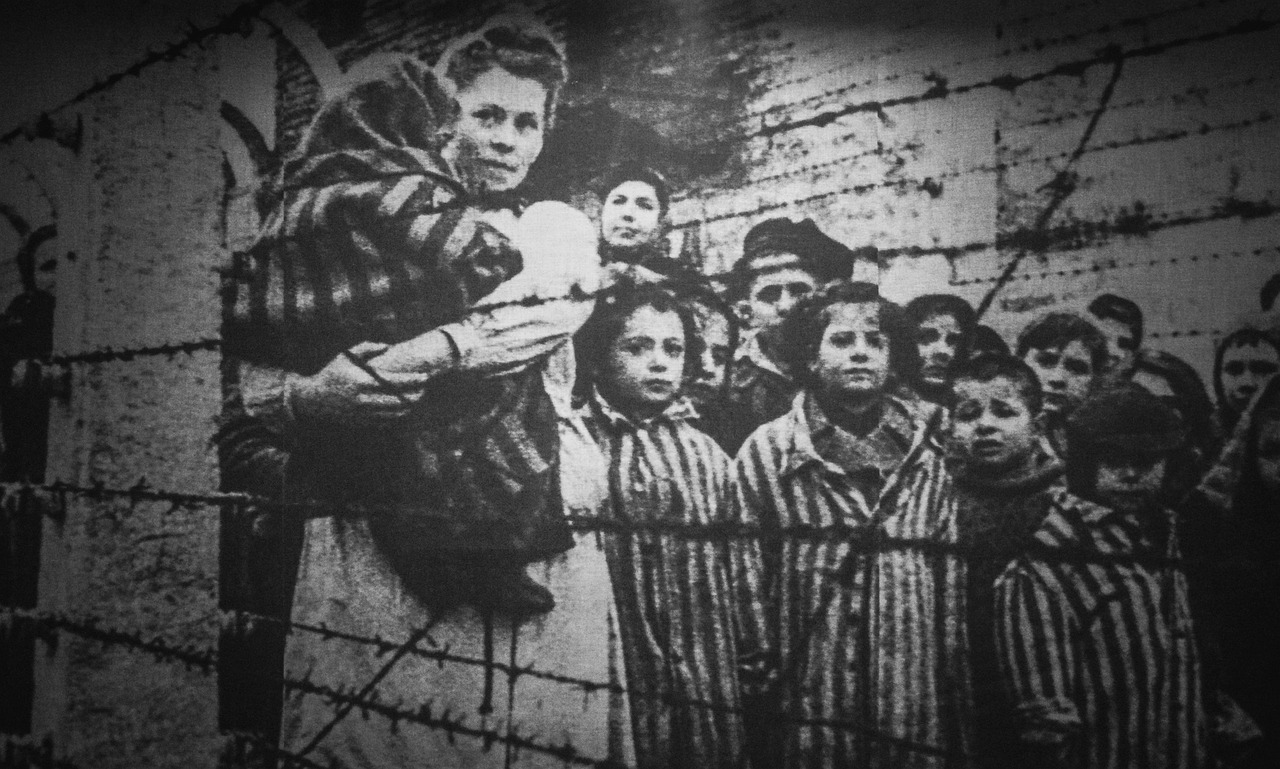 |
||
|
A pochi giorni dalla celebrazione del “giorno della memoria” per non dimenticare quella che è stata la Shoà, ci vengono alla mente due storie che coinvolgono bambini, la prima di violenza diretta contro povere creature colpevoli di essere nate durante quel regime, la seconda di violenza indiretta perpetrata da bambini, adeguatamente manipolati, contro loro familiari. E quando parliamo di ciò non possiamo limitarci alle sole SS naziste, ma anche a tutti quelli che, in nome di un non meglio identificato diritto di supremazia sugli altri, hanno commesso crimini talvolta inenarrabili contro i più deboli o i vinti. Alla periferia est di Berlino, nel parco di Treptower, c’è una statua di 12 metri di un soldato sovietico con una pistola in mano e una ragazza tedesca che calpesta una svastica rotta. La proporzione colossale del monumento riflette l’entità del massacro, ma è inevitabile osservare l’iscrizione sulla statua, sulla quale è scritto che il popolo sovietico ha salvato la civiltà europea dal fascismo. Per molti questo memoriale si chiama “La Tomba dello Stupratore Ignoto”. Vladimir Gelfand era un giovane tenente ebreo della regione centrale dell’Ucraina che dal 1941 scriveva con brutale franchezza tutti i dettagli delle atrocità di guerra. Nel suo diario descrive come i suoi compagni circondavano e annientavano i battaglioni di donne combattenti tedesche. Il tenente scrive che i tedeschi che avevano catturato avevano detto che stavano vendicando i coniugi morti; avrebbero dovuto colpirli senza pietà, c’era chi suggeriva di pugnalarli ai genitali, ma il tenente era dell’avviso di giustiziarli soltanto. Lo storico Antony Beevor disse che, mentre faceva le sue ricerche per realizzare il libro The Fall, un libro che ha ispirato anche serie televisive, aveva trovato documenti di violenza sessuale negli archivi della Federazione Russa. Tali documenti erano stati raccolti dalla polizia segreta sovietica e inviati al loro capo, Lavrentiy Beria, alla fine del 1944. Ci sono notizie di stupri di massa nella Prussia orientale, e di come le donne tedesche avessero preferito uccidere le loro figlie e se stesse per evitare quel destino, ha scritto Beevor. Nel libro di Svetlana Aleksievich “La guerra non ha un volto di donna”, che raccoglie i ricordi e le esperienze dei veterani sovietici in Germania, un ex ufficiale russo ricorda: “Eravamo giovani, forti e senza donne da quattro anni. Abbiamo provato a pescare donne tedesche e… dieci uomini hanno violentato una ragazza. Non c’erano abbastanza donne, l’intera popolazione stava fuggendo dall’Armata Rossa. Quindi prendevamo ragazze di dodici o tredici anni. Se piangevano, le mettevamo qualcosa in bocca. Abbiamo pensato che fosse divertente. Ora non riesco a capire come siamo riusciti a farlo. Un ragazzo di buona famiglia… ma quello ero io”. Ma quel mausoleo rappresenta un falso storico perché è sormontato dall’enorme statua di un soldato che salva una bambina e poggia la propria spada su una svastica distrutta. La statua è opera dello scultore sovietico Evgenij Vučetič, il prototipo per il soldato era l’Eroe dell’Unione Sovietica Nikolai Ivanovič Masalov il quale, durante gli ultimi combattimenti nel centro di Berlino, rischiò la vita sotto un pesante fuoco di mitragliatrici naziste per salvare una bambina tedesca di tre anni, la cui madre era apparentemente scomparsa. Dicevamo che è un falso in quanto, se pure è vera la storia del soldato che salvò la bambina, tanti altri non si fecero scrupolo di usare violenze di gruppo su donne e bambine. E ora dobbiamo raccontare una storia opposta, con il coinvolgimento diretto di SS e bambini tedeschi definiti, per per le loro caratteristiche fisiche, di razza ariana, quindi da preservare e istruire affinché diventassero fedeli seguaci di Hitler. Nell’estate del 1943, a Melgorzata Twardecki, a madre single che viveva nella Polonia occupata dai nazisti, fu ordinato di portare suo figlio Aloizy di 5 anni nella sala consiliare del suo comune. Il bambino aveva capelli biondi e occhi azzurri. Quando sua madre si rifiutò di obbedire agli ordini, le SS presero il bambino con la forza, lo caricarono su un treno e lo portarono via. Anni dopo, quando il ragazzo tornò a casa grazie a uno speciale programma di ricongiungimento, la madre scoprirà con orrore ciò che era stato fatto a suo figlio: il lavaggio del cervello era stato tale che, quando Alojzy vide suo padre rimuovere dal muro la foto dell’ormai defunto e sconfitto Hitler, lo definì un traditore. Come lei, centinaia di migliaia di madri vissero lo stesso dramma durante l’occupazione nazista. Si stima che soltanto in Polonia furono rapiti circa 200.000 bambini, e altrettanti furono rapiti nel resto d’Europa, per un totale di circa 400.000 bambini. Lo scopo di questo folle piano, incluso nel più ampio “Piano Generale per l’Oriente”, cioè nel piano generale per la pulizia etnica dell’Est Europa, era quello di rapire i bambini dall’aspetto ariano, condurli in speciali centri di rieducazione, e “germanizzarli”. In un discorso tenuto nell’Ottobre 1943, Heinrich Himmler disse “E’ nostro dovere prendere i loro bambini con noi, toglierli dal loro ambiente, se necessario sequestrandoli o rubandoli, e mandarli in Germania”. Nonostante i nazisti pensassero che i polacchi fossero una razza inferiore, la grande percentuale di bambini con capelli biondi e occhi azzurri li sorprese particolarmente. Si convinsero quindi che questi bambini fossero discendenti del sangue tedesco, e che il loro rapimento fosse quindi necessario oltre che giusto per ricondurli nel ruolo a cui appartenevano. Già nell’ottobre 1939 Hitler aveva creato il “Commissariato del Reich per il rafforzamento della germanicità” sotto il comando indiretto di Heinrich Himmler, capo delle SS. Il Commissariato aveva identificato 62 parametri fisici per poter classificare “la germanicità” dei bambini e inserirli in 11 categorie, dalla più pura alla meno pura. Questi parametri includevano colore dei capelli e occhi, lunghezza del naso, spessore delle labbra, postura, dimensioni della scatola cranica, forma della testa, e persino le dimensioni della zona pelvica delle ragazze. I bambini tra i 2 e i 6 anni ritenuti ariani, venivano inviati nei “Lebensborn”, orfanotrofi dove restavano in attesa per l’adozione, soprattutto da parte di alti funzionari del partito o ufficiali delle SS. Ai bambini venivano dati falsi certificati di nascita attestanti la loro nascita in luoghi tedeschi, e addirittura nuovi nomi che non ne tradissero le origini polacche. Subivano inoltre un intensivo lavaggio del cervello per indurli a credere di essere sempre stati tedeschi. I bambini che invece non superavano il test razziale venivano mandati nei campi di concentramento, dove diventavano spesso cavie per esprimenti medici. I bambini tra i 6 e i 12 anni venivano invece inviati in Germania, in speciali scuole dove veniva loro insegnato a essere buoni ariani e leali nazisti. Veniva loro insegnato il tedesco, e venivano indotti a dimenticare la loro lingua madre, indossare uniformi con la svastica, cantare canzoni militari e in generale pensare come veri nazisti. Anche questi venivano poi messi a disposizione per le adozioni, ma a volte le ragazze di una certa età venivano mandate nelle case di maternità dove venivano stuprate e ingravidate da membri delle SS. I rapimenti avvenivano in molteplici modi. Le SS preferivano l’inganno all’uso della forza, perché velocizzava le operazioni e le rendeva molto meno problematiche. Si organizzavano finti viaggi per le vacanze estive, o i genitori venivano indotti a riunire i figli in qualche luogo per finte cerimonie, o addirittura i bambini venivano prelevati direttamente dalle scuole dalle SS, così che i genitori non fossero presenti e non potessero opporre resistenza. Nel luglio del 1943, Himmler decretò che tutti i bambini razzialmente rilevanti nati dalle donne di zone occupate mandate a lavorare in fabbriche o fattorie, fossero automaticamente di proprietà del Reich: venivano quindi presi appena nati, esaminati, e coloro che non rispondevano ai criteri della razza ariana venivano eliminati immediatamente. Furono istituite anche le “Sorelle Marroni”, infermiere dedite alla causa nazista. Queste si spostavano tra villaggi e città alla ricerca di bambini ariani. Portavano con sé dolci e caramelle per attrarre i bambini, si fingevano loro amiche, parlavano con loro per scoprire se avessero fratelli o sorelle di aspetto simile, e infine segnalavano alle SS i candidati per il rapimento. Dopo la guerra il governo Polacco attuò uno speciale programma per ricongiungere i bambini alle loro famiglie. Le ricerche furono difficilissime, e pare che furono rimpatriati solo 40.000 bambini sugli oltre 200.000 che i nazisti avevano rubato. Di molti, purtroppo, si erano perdute le tracce. Questo dobbiamo far sapere ai bambini di oggi, che ignorano quelle tragedie, per evitare che possano compiere analoghe violenze per ignoranza, della quale noi saremo i responsabili. |
||
 |
|
||
© Ulisse Online
Чтобы мы не забывали: ужасы против детей |
||
|
||
|
За несколько дней до «Дня памяти», чтобы не забыть истинный масштаб Катастрофы, нам напоминают две истории, связанные с детьми. Первая — это прямое насилие над несчастными существами, виновными лишь в том, что родились во времена того режима. Вторая — косвенное насилие, которое оказывается над детьми, используемыми в качестве инструмента манипуляции, над их семьями. Когда мы говорим об этом, речь идёт не только о нацистских эсэсовцах, но и обо всех, кто ради мнимого права на превосходство над другими совершал порой неописуемые преступления против слабейших и побеждённых. На восточной окраине Берлина, в Трептов-парке, стоит 12-метровая статуя советского солдата с автоматом в руках и немецкой девочкой на руках, нога которого стоит на разбитой свастике. Колоссальные размеры памятника отражают масштаб резни, но неизбежно обращаешь внимание на надпись: «Советский народ спас европейскую цивилизацию от фашизма». Для многих немцев этот мемориал получил ироничное прозвище — «Могила неизвестного насильника». Владимир Гельфанд был молодым еврейским лейтенантом из центральной Украины, который с 1941 года и до конца войны вел дневник с редкой откровенностью, описывая военные злодеяния. В своём дневнике он рассказывает, как его товарищи окружили и уничтожили батальон немецких женщин-бойцов. Лейтенант пишет, что захваченные женщины утверждали, что мстят за погибших мужей, и что советские солдаты должны были безжалостно их уничтожить. Некоторые предлагали заколоть их ножом через гениталии, но он считал, что достаточно казнить их. Историк Энтони Бивор, работая над книгой «Падение», нашёл в архивах Российской Федерации документы о сексуальном насилии, собранные советской тайной полицией и направленные Лаврентию Берии в конце 1944 года. В документах говорится о массовых изнасилованиях в Восточной Пруссии и о том, как немецкие женщины пытались покончить с собой или убить своих детей, чтобы избежать этой участи. В книге Светланы Алексиевич «У войны не женское лицо», собравшей воспоминания советских ветеранов, бывший русский офицер вспоминает: «Мы были молодыми, сильными, и без женщин четыре года. Мы ловили немецких женщин, и десять мужчин насиловали одну девушку. Женщин не хватало, всё население бежало от Красной Армии. Поэтому брали девочек двенадцати-тринадцати лет. Если они плакали, мы затыкали им рот. Мы думали, что это смешно. Сейчас я не могу понять, как нам это удалось. Я был из хорошей семьи... но это был я». Однако этот мавзолей — историческая фальсификация, потому что он венчается огромной статуей солдата, спасающего маленькую девочку и опирающегося мечом на разбитую свастику. Эта статуя — работа советского скульптора Евгения Вучетича. Прототипом для солдата стал Герой Советского Союза Николай Иванович Масалов, который во время последних боёв в центре Берлина, рискуя жизнью под пулемётным огнём нацистов, спас трёхлетнюю немецкую девочку, чья мать пропала без вести. Мы называем это фальшивкой, потому что, несмотря на правдивость истории спасения девочки, многие советские солдаты без колебаний применяли бандитское насилие над женщинами и девочками. Теперь пора рассказать противоположную историю — с непосредственным участием эсэсовцев и немецких детей, которых по их внешности считали представителями «арийской расы», подлежащими сохранению и воспитанию как верных последователей Гитлера. Летом 1943 года Мелгожата Твардецки, мать-одиночка из оккупированной нацистами Польши, получила приказ привести своего пятилетнего сына Алоизия в здание муниципалитета. Ребёнок имел светлые волосы и голубые глаза. Когда мать отказалась подчиниться, эсэсовцы силой забрали мальчика, посадили в поезд и увезли. Спустя годы, когда мальчик вернулся домой благодаря специальной программе воссоединения семей, мать с ужасом обнаружила, что с её сыном сделали: промывание мозгов было настолько сильным, что, увидев фотографию Гитлера, он назвал своего отца предателем. Подобная трагедия произошла с сотнями тысяч матерей в годы нацистской оккупации. По оценкам, в Польше было похищено около 200 000 детей, а в остальной Европе — столько же, всего около 400 000. Целью этого безумного плана — части более широкого «Генерального плана Восток», то есть плана этнической чистки Восточной Европы — было похищение детей арийской внешности, их доставка в центры перевоспитания и германизация. В своей речи в октябре 1943 года Генрих Гиммлер заявил: «Наш долг — забрать их детей, изъять их из их среды, если потребуется — похитить или украсть, и отправить в Германию». Хотя нацисты считали поляков неполноценной расой, значительный процент детей со светлыми волосами и голубыми глазами особенно их удивил. Поэтому они были уверены, что эти дети — потомки немецкой крови, и считали похищение справедливым и необходимым шагом для возвращения их к роли, которая им предназначалась. Уже в октябре 1939 года Гитлер учредил «Рейхскомиссариат по укреплению немецкости» под косвенным руководством Генриха Гиммлера, главы СС. Комиссариат разработал 62 физических параметра для классификации «немецкости» детей и разделил их на 11 категорий — от самой чистой до наименее чистой. В число параметров входили цвет волос и глаз, длина носа, толщина губ, осанка, размер черепа, форма головы и даже размер тазовой области у девочек. Дети в возрасте от 2 до 6 лет, признанные арийцами, отправлялись в детские дома «Lebensborn», где ожидали усыновления, в основном высокопоставленными партийными чиновниками или офицерами СС. Им выдавали поддельные свидетельства о рождении, подтверждающие немецкое происхождение, а также давали новые имена, скрывающие их польское происхождение. Детей подвергали интенсивному промыванию мозгов, чтобы внушить им убеждение, что они всегда были немцами. Тех, кто не проходил расовый отбор, отправляли в концентрационные лагеря, где они часто становились объектами медицинских экспериментов. Детей в возрасте от 6 до 12 лет отправляли в Германию, в специальные школы, где их учили быть образцовыми арийцами и верными нацистами. Там их обучали немецкому языку, заставляли забыть родной язык, носить форму со свастикой, петь военные песни и мыслить как настоящие нацисты. После этого их также отдавали на усыновление, однако девочек определённого возраста иногда направляли в родильные дома, где их насиловали и оплодотворяли члены СС. Похищения происходили разными способами. Эсэсовцы предпочитали обман силе, поскольку это ускоряло операции и снижало сопротивление. Организовывались фиктивные поездки на летние каникулы, родителей убеждали собрать детей на подставные церемонии, а иногда детей просто забирали прямо из школ, чтобы родители не могли вмешаться. В июле 1943 года Гиммлер издал указ, согласно которому все расово подходящие дети, рожденные женщинами из оккупированных территорий, направленными на работу на заводах или фермах, автоматически становились собственностью Рейха. Их забирали сразу после рождения, осматривали, а тех, кто не соответствовал арийским критериям, уничтожали. Были созданы так называемые «Сестры Браун» — медсестры, посвятившие себя делу нацизма. Они путешествовали по деревням и городам в поисках арийских детей. Сладости и конфеты привлекали детей, медсестры становились их друзьями, выясняли наличие похожих братьев или сестёр и сообщали эсэсовцам о подходящих кандидатах на похищение. После войны польское правительство организовало специальную программу по воссоединению детей с семьями. Поиски оказались чрезвычайно сложными, и, по данным, из более чем 200 000 похищенных нацистами детей домой вернулись лишь около 40 000. О многих, к сожалению, до сих пор нет никаких известий. Именно эту правду мы должны донести до нынешнего поколения детей, которые не знают о тех трагедиях, чтобы предотвратить повторение подобного насилия из-за незнания, за которое мы все несем ответственность. |
||
|
|||
 Italian
Written by Nino Maiorino
January 31, 2022
A few days after the commemoration of Holocaust Remembrance Day, and so that we do not forget the true scale of that catastrophe, two stories involving children come to mind. The first concerns direct violence against helpless beings whose only “fault” was to have been born under that regime. The second concerns indirect violence against children who were manipulated and used as instruments against their own families.
When we speak about such things, we cannot limit the discussion to the Nazi SS. We must also include everyone who, in the name of some supposed right to dominate others, committed sometimes indescribable crimes against the weak and the defeated.
On the eastern outskirts of Berlin, in Treptower Park, stands a 12-meter statue of a Soviet soldier with a weapon in his hand and a German girl in his arms, his foot resting on a shattered swastika. The colossal scale of the monument reflects the scale of the slaughter, yet one cannot avoid noticing the inscription stating that the Soviet people saved European civilization from fascism.
For many Germans this memorial acquired the ironic nickname “The Tomb of the Unknown Rapist.”
Vladimir Gelfand was a young Jewish lieutenant from central Ukraine who, from 1941 until the end of the war, kept a diary with unusual frankness, describing wartime atrocities.
In his diary he recounts how his comrades surrounded and destroyed a battalion of German women combatants.
The lieutenant writes that the captured women said they were avenging husbands killed at the front and that the Soviet soldiers felt they should be destroyed without mercy. Some suggested stabbing them through the genitals, but he believed simply executing them was sufficient.
Historian Antony Beevor, while working on his book The Downfall, found documents on sexual violence in the archives of the Russian Federation. The records had been collected by the Soviet secret police and sent to Lavrentiy Beria at the end of 1944.
The documents describe mass rapes in East Prussia and cases in which German women tried to kill themselves or their children in order to escape that fate.
In Svetlana Alexievich's book The Unwomanly Face of War, which brings together the memories of Soviet veterans, a former Russian officer recalls: “We were young, strong, and had been without women for four years. We caught German women, and ten men raped one girl. There were not enough women; the whole population was fleeing from the Red Army. So we took girls of twelve or thirteen. If they cried, we covered their mouths. We thought it was funny. Now I cannot understand how we could do it. I came from a good family... but that was me.”
Yet the mausoleum itself falsifies history because it is crowned by the enormous statue of a soldier rescuing a little girl while resting his sword on a broken swastika.
The statue was created by Soviet sculptor Yevgeny Vuchetich. The soldier was modeled on Hero of the Soviet Union Nikolai Ivanovich Masalov, who during the final fighting in central Berlin risked his life under Nazi machine-gun fire to rescue a three-year-old German girl whose mother had disappeared.
We call the image misleading because, although the story of the rescued girl is true, many Soviet soldiers did not hesitate to use brutal violence against women and girls.
It is now time to tell the opposite story—one involving SS men and German children who, because of their appearance, were considered representatives of the “Aryan race,” to be preserved and educated as faithful followers of Hitler.
In the summer of 1943, Małgorzata Twardecki, a single mother living in Nazi-occupied Poland, was ordered to bring her five-year-old son Alojzy to the municipal hall.
The boy had blond hair and blue eyes. When his mother refused to obey, SS men seized him by force, put him on a train, and took him away.
Years later, when the boy returned home through a special family-reunification program, his mother discovered with horror what had been done to him. The brainwashing had been so intense that when he saw his father remove a portrait of the now-dead and defeated Hitler from the wall, he called his father a traitor.
Hundreds of thousands of mothers experienced a similar tragedy during the Nazi occupation. It is estimated that around 200,000 children were abducted in Poland and roughly the same number elsewhere in Europe, for a total of about 400,000 children.
The purpose of this insane plan, part of the broader Generalplan Ost for the ethnic cleansing of Eastern Europe, was to abduct children who looked Aryan, take them to special reeducation centers, and Germanize them.
In a speech in October 1943 Heinrich Himmler declared: “It is our duty to take their children with us, to remove them from their environment, if necessary by kidnapping or stealing them, and to send them to Germany.”
Although the Nazis regarded Poles as an inferior race, they were particularly struck by the large proportion of children with blond hair and blue eyes. They therefore convinced themselves that these children were descendants of German blood and that abducting them was both necessary and just in order to return them to the role supposedly intended for them.
As early as October 1939 Hitler established the Reich Commissariat for the Strengthening of Germandom under the indirect control of Heinrich Himmler, head of the SS.
The commissariat identified 62 physical criteria for classifying children's “Germanness” and divided them into eleven categories, from the purest to the least pure. The criteria included hair and eye color, nose length, lip thickness, posture, skull size, head shape, and even the dimensions of the pelvic area in girls.
Children between the ages of two and six who were deemed Aryan were sent to Lebensborn children's homes, where they waited to be adopted, mainly by senior party officials or SS officers.
They were given false birth certificates asserting German origins and new names that concealed their Polish background.
The children were subjected to intensive brainwashing intended to convince them that they had always been German. Those who failed the racial selection were sent to concentration camps, where they often became subjects of medical experiments.
Children from six to twelve were sent to Germany and placed in special schools where they were trained to become exemplary Aryans and loyal Nazis. They were taught German, forced to forget their native language, made to wear uniforms bearing the swastika, sing military songs, and think like committed Nazis. They too were later placed for adoption, although girls of certain ages were sometimes sent to maternity homes where SS members raped and impregnated them.
The abductions were carried out in various ways. The SS preferred deception to force because it sped up operations and reduced resistance. Fake summer-holiday trips were organized; parents were persuaded to gather their children for sham ceremonies; and sometimes children were simply taken directly from schools so that parents could not intervene.
In July 1943 Himmler issued a decree stating that all racially suitable children born to women from occupied territories who had been sent to work in factories or on farms automatically became the property of the Reich. They were taken immediately after birth and examined; those who failed to meet Aryan criteria were killed.
So-called “Brown Sisters” were created—nurses who dedicated themselves to the Nazi cause. They traveled through villages and towns looking for Aryan children. Sweets and candy were used to attract the children; the nurses befriended them, learned whether they had similar-looking brothers or sisters, and reported suitable candidates for abduction to the SS.
After the war the Polish government created a special program to reunite abducted children with their families. The search was extraordinarily difficult, and according to available figures only about 40,000 of the more than 200,000 children taken by the Nazis returned home. Sadly, nothing is known even today about the fate of many others.
This is the truth that must be conveyed to today's generation of children, who do not know about those tragedies, so that such violence is not repeated because of ignorance for which all of us bear responsibility.
