



|
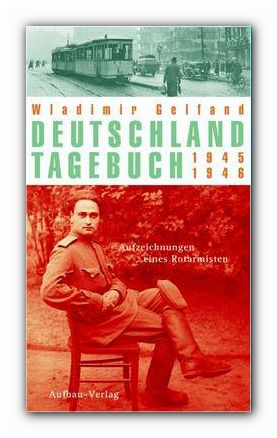
Ein erstaunliches Tagebuch
geführt von Januar 1945 bis September 1946 berichtet von den
Erlebnissen des jungen Leutnants der Roten Armee Wladimir Gelfand
im befreiten Berlin. |
||||||
|

Дневник, который Владимир Гельфанд вёл с января 1945 по сентябрь 1946 года, рассказывает о переживаниях молодого лейтенанта Красной армии в освобождённом Берлине.
«Я плюю на Германию», — выцарапывает в августе 1945 года на руинах берлинского рейхстага 22-летний лейтенант Красной армии Владимир Гельфанд. Он пережил войну, в которой погибли миллионы его боевых товарищей. Теперь он принадлежал к победителям. Лейтенант Гельфанд был молод, жаден до жизни и чувствовал себя уверенным оккупантом. Он раздобыл велосипед и научился на нём ездить. Осматривал пустые остовы берлинских домов, ходил на чёрный рынок и купил фотоаппарат. У него было множество немецких подруг; он обменивал хлеб и жир на нежность и искал любви. И вёл дневник. В нём он описывал также огрубевшие отношения между солдатами, пьянки, изнасилования и голодающее немецкое гражданское население.
Необычная находка
Этот удивительный дневник, охватывающий период с января 1945 по сентябрь 1946 года, после смерти Гельфанда обнаружил среди его бумаг сын. Записи красноармейца примечательны ещё и потому, что по военным соображениям вести дневник в Красной армии было запрещено. «Немецкий дневник» Владимира Гельфанда показывает 1945 год вне перспективы генеральских мемуаров и вне непрерывного внимания к атмосфере последних дней фюрербункера. Он непосредственно показывает, как красноармеец воспринимал побеждённых немцев. («Немецкий дневник 1945–1946» выходит в издательстве Aufbau.)
 немецкий