 |
|||
| Dieser Eintrag stammt von Renate Seifert (*1938) aus Lübeck Ren5313.Seiwag@t-online.de Wiesbaden, August 2008 |
|||
 Kapitulation Erinnerungen
|
|||
| |
|||
Bildnachweise: Renate Seifert; Vitaly Gelfand (Fotografien, Privatbesitz)
Zur Person:
Renate Seifert wird 1938 in Königsberg in Ostpreußen geboren. Nach der Flucht nach Schleswig-Holstein 1945 besucht sie die Volksschule in Lunden, ehe sie nach Tuttlingen umsiedelt. Dort absolviert sie 1955 die mittlere Reife und macht eine Lehre bei der Sparkasse. 1962 legt sie die Kaufmannsgehilfenprüfung ab und heiratet im selben Jahr. 1963 und 1965 kommen ihre Kinder auf die Welt, 1967 lässt sie sich scheiden und arbeitet ab 1968 als Bankangestellte. 1973 wechselt sie zu einer anderen Bank nach Lahr (Schwarzwald) und wird dort 1979 Abteilungsleiterin. Von 1990 bis 1993 wird sie in die neuen Bundesländer in Gera (Thüringen) abgeordnet, bleibt aber weiterhin in Lahr im Schwarzwald wohnhaft, ehe sie nach Konstanz an den Bodensee zieht. 1998 geht sie mit 60 Jahren in Pension und beginnt ein Studium an der Fernuni. Im selben Jahr absolviert sie das Fachabitur im Bankfach. 2001 beginnt sie ein Studium der Soziologie, Literatur und Psychologie an der Fernuni Hagen und an der Universität Konstanz. 2006 zieht sie nach Lübeck, 2008 legt sie die Magister-Zwischenprüfung ab. 2009 folgt ein Umzug nach Wiesbaden. Renate Seifert widmet sich dem Schreiben und erforscht das Schicksal ihrer Cousine Dora.
 |
 |
 |
|
После нашего побега из Кенигсберга в 1945 году я долгое время ничего не слышала от Доры. Теперь я вспоминаю визит, который мы с мамой сделали в 1957 году в семью сестры моего отца в Рангсдорфе под Берлином. Все члены семьи пережили войну: дядя Карл, тетя Лизе, две ее дочери. Только Дора не нашла своих родителей, они пропали на войне. Тетя Лотте, вторая сестра моего отца, и дядя Пол договорились с Дорой в Кенигсберге, что все они хотели попасть в Берлин к тётям, если бы они потеряли друг друга на войне. Только Доре удалось добраться до Берлина и найти своих тёток. Мы ждали Дору после обеда в саду, чтобы вместе выпить кофе и повидаться с ней — моей маме и мне. Тётя Лизе вполголоса сказала моей матери — мне, девятнадцатилетней, видимо, не полагалось этого слышать, — что Дору изнасиловали русские и что одна из её тёток тоже была изнасилована. Моя мама спросила, точно ли это известно; тётя Лизе пожала плечами. "Да, и как Дора ведет себя сейчас?" «Она хотела покончить с собой», и "Она не говорит об этом". "А тетя?" «С ней теперь почти невозможно общаться, большую часть времени она лежит в постели». Тревога моей матери была ощутимой. А потом пришла Дора. Мы впервые встретились после войны. Речь шла обо всем возможном, только не о том, что случилось с ней тогда в Берлине.
Дора с двумя тетями,
1959
фотография частная
собственность
© Ренате Зайферт, Любек © Дом истории Федеративной Республики Германия В 1987 году, когда ей исполнилось 60 лет, Дора пригласила меня в Восточный Берлин. Мы проезжали мимо дома, должно быть, на Шёнхаузер-аллее, и она вспомнила, что когда-то гостиница была «Веселым Купером» и жила она на чердаке под крышей. Она также рассказала мне, что носила красное пальто. Я была удивлена, что этот факт показался ей настолько важным, чтобы рассказать мне после такого долгого времени. Там, казалось, была какая-то меланхолия, когда она говорила об этом. К сожалению, дом выглядел так, как будто он почти не заселен, вывески больше не существовали, ставни на дверях ресторана были закрыты, и они были такими же серыми, как почти все во времена ГДР.
© Дом истории Федеративной Республики Германия
Мы с Дорой никогда не видели друг друга с момента нашего визита в Рангсдорф в 1957 году, пока она не пригласила меня на свое 60-летие. У нас обоих была работа, которая занимала столько времени, что мы даже не писали друг другу писем. Возможно, Доре также было запрещено разговаривать с людьми с Запада. С моей другой кузиной мы, моя мама и я, имели больше контактов, потому что она жила одна и скорее однажды написала сама. Позже мы с Дорой часто разговаривали по телефону. Дора умерла в 1995 году; когда я хотел позвонить ей в тот же день, что и каждое воскресенье, но она не ответила на звонок.
Ренате Зайферт с Дорой
на Боденском озере, 1987
фотография частная собственность © Ренате Зайферт, Любек © Дом истории Федеративной Республики Германия
Но через десять лет после ее смерти она снова встречает меня в двух книгах. Совершенно случайно поздним вечером я подключилась к литературному шоу перед телевизором. Ханс Магнус Энценсбергер появился на экране в интервью. Он сказал, что он не будет называть имя «Anonyma» любой ценой, и он был разочарован тем, как издатель и СМИ обращались со своей «Другой библиотекой». Мое любопытство к этой анонимности пробудилось, но, к сожалению, как это случается слишком часто, я не смогла разобраться с этой темой, потому, что другие вещи были для меня важнее. Программа с Enzensberger, но была сохранена в моей памяти. Спустя месяцы, в апреле 2005 года, я вижу в книжном магазине книгу в мягкой обложке для новых публикаций : «Анонима, женщина из Берлина, записи в журналах с 20 апреля по 22 июня 1945 года», время, когда русские во Второй мировой войне вступили в последний бой за Берлин и вторглись туда. Заинтересовавшись, я покупаю книгу, начинаю с любопытством читать и уже не могу остановиться. На первых страницах Anonyma описывает окружающих ее людей, в том числе мою двоюродную сестру. Иначе быть не может, это она. Описанные обстоятельства настолько точно совпадают с историей Доры, что совпадение едва ли могло бы быть полнее. Я читаю и читаю, у меня перехватывает дыхание, у меня мурашки по коже. «Anonyma» пишет в пятницу, 20 апреля 1945 года, в 16 часов о «Kellervolk» трех пожилых сестер, которые были швеями, и девушке-беженке из Кенигсберга / Восточной Пруссии.
Дора
в детстве
© Дом истории Федеративной Республики Германия
Девочкой-беженкой из Кенигсберга могла быть Дора, моя двоюродная сестра - так мне пришло в голову. В то время ей было 19 лет. Три пожилые сестры были бы их тетями. «Анонима», вероятно, не могла знать в тот момент, что портнихи были настоящими тётями девушки-беженки. Для меня Дора немыслима без ее теток. Они переехали из Кенигсберга в Берлин до войны, потому что им обещали большую клиентуру для их пошива в Берлине. Дора сумела сбежать из Восточной Пруссии. В других разделах книги я обнаружила, что мое предположение подтвердилось: описывается изнасилование «девушки-беженки из Кенигсберга» (27 апреля 1945 года), упомянутой во время визита наших родственников в Рангсдорф в 1957 году, а также ее тети (4 мая 1945 года). Почему «Анонима» описала в своих заметках теток? Слышала ли она, что моя двоюродная сестра называла портниху «Тетя Лена» или «Тетя Труда» или «Тетя Эльзе»? Другие люди в ее заметках называют «Anonyma» по имени или статусу, только швеи называют ее «тетями» - странно. Я не могу себе представить, что в Берлине было так много портних, которые являются тремя незамужними сестрами, которые живут вместе и вместе занимаются пошивом одежды. Так должно быть - я имею в виду - но тетей Доры. Конечно, после прочтения дневниковых записей «Анонимы» я захотела точно знать, действительно ли там была моя двоюродная сестра. Я начала расследовать. Сначала я попыталась выяснить имена ее теток. Я помнила только тетю Труду и тетю Лену, имя третьей, которую я забыла после стольких лет - возможно, ее звали «Эльзе». Она умерла относительно скоро после изнасилования, и ее имя не было упомянуто после этого. Вовсе нет, потому что контакт с Дорой был разрушен в эпоху ГДР на долгие годы, потому что мы с мамой бежали после перелета из Кенигсберга в Западную Германию или Вюртемберг. Даже после воссоединения Дора молчала о своих переживаниях. Изнасилованная тетя Доры сначала умерла от персонажей, описанных здесь, но только после нашего визита в Берлин в 1957 году - возможно, в конце пятидесятых, потому что на фотографии 1959 года Дору можно увидеть только с двумя тетями. Две других жили хорошо в семидесятых. Дора умерла в 1995 году, «Анонима» больше не существует с 2001 года. Это было раскрыто Йенсом Биски в его статье «Когда мальчики играют мировую историю, девочки разоблачают безмолвные роли» в Süddeutsche Zeitung от 24 сентября 2003 года. Между тем я нашла, по крайней мере, данные о рождении и смерти двух теток и некоторые их адреса в Берлине. Может быть, один даже тот, в котором произошло событие. С Рождества 2005 года рядом со мной лежала недавно вышедшая в свет книга Владимира Гельфанда "Немецкий дневник 1945 - 1946 гг. Записи солдата Красной армии" . Я купила его вместе с некоторыми другими книгами о Второй мировой войне и о Кенигсберге. Эта книга была мне интересна русским солдатом, потому что я прочитала аналог дневниковых записей «Анонимы» и потому что я хотела узнать это время также с точки зрения русского человека. Я прочитала это в середине апреля 2006 года. Теперь, когда я на пенсии, у меня наконец-то есть время изучить свое прошлое и прочитать по одной книге за раз о моем родном городе Кенигсберге, о войне, о судьбах людей с Востока, о детях войны. Как всегда, я сначала смотрю на страницы с картинками, затем на предисловие или эпилог и библиографию, чтобы получить представление о содержании для лучшего понимания. На факсимильных фотографиях в середине книги Гельфанда напечатано письмо лейтенанту Герхарду под заголовком «Приглашение на свидание». На второй странице слово «до свидания» бросается в глаза. Похоже, моя кузина Дора написала это. Я наэлектризована. Не может быть, чтобы моя двоюродная сестра после ее смерти теперь тоже попала в другую книгу. Я едва знала ее до последних лет ее жизни, едва ли встречала за последние восемь лет до ее смерти. Похоже, она хочет, чтобы я имела с ней дело посмертно.
©
Дом истории Федеративной Республики Германия
Гельфанд пишет 28 марта 1946 года на станции Науэн о немке по имени Нора, которой только что исполнился 21 год, и она живет в Берлине на Шенхаузер Аллее. И все бы произошло, как и должно было произойти, так думал Гельфанд, если бы не было неожиданности в интимной детали: в последний момент она вдруг завоняла. Это оттолкнуло его, и все его волнение исчезло. Моя кузина Дора рассказывала мне эту историю. Она не хотела так быстро сблизиться с солдатом и защищалась таким образом. Она сказала, что порядочная девушка не отдает себя так быстро мужчине. Я придумала эту идею? Позже я хотела спросить ее подробности, но тогда я больше не думала об этом. В этом контексте она также рассказала мне о письме, которое она написала солдату впоследствии, рассказывая стихотворение. Она нашла его милым, и впоследствии ей стало жалко ее поведение. Она подписала письмо с «Хельгой» и сделала себя немного старше, потому что ей тогда было всего 19 лет, и в то время один достиг совершеннолетия только в возрасте 21 года. Когда Дора рассказала мне об этом, я подумала - не зная, что когда-нибудь увижу письмо и узнаю, что она пишет, - что это письмо нельзя было приписать ей из-за неправильного имени и возраста. В свою очередь, у нее сложился роман с Владимиром Гельфандом, который он, вероятно, расценил как целенаправленный союз, как я теперь знаю после того, как прочитала его заметки. В конце Дора с сожалением сказала мне, что он должен был вернуться в Россию. Это то, что она рассказала мне в 1987 году или в начале 1990-х годов спустя более 40 лет. Владимир Гельфанд, должно быть, был ее большой любовью, потому что она рассказала мне эту историю после стольких лет. Эльке Шерстяной, которая сделала подборку текстов в издании «Дневника Гельфанда» и прокомментировала текст, любезно организовала встречу сына Владимира Гельфанда со мной. Он скопировал письмо от моей двоюродной сестры, на своем компьютере он открыл русский текст, и я увидела там имя «Дора», написанное на русском языке. Так как я только начала изучать русский язык, я сразу узнала имя Доры по русской букве. Как я уже отмечала, для Владимира Гельфанда Дора, по-видимому, оказалась не тем человеком, которым ей самой хотелось бы быть для него. Также необходимо пояснить, что в фотоальбомах, которые показал мне его сын, не нашлось ни одной фотографии моей двоюродной сестры. Такова судьба детей-беженцев: разыскивая сведения о своих предках, понимать, что слишком многие свидетели уже умерли и что при их жизни мы слишком мало их расспрашивали. Только теперь, когда я состарилась, я осознала, как много я хотела бы узнать больше о моих родителях, бабушках и дедушках и родственниках, и что проверка воспоминаний чрезвычайно трудна. К сожалению, из деликатности я слишком мало расспрашивала близких; часто мне не хотелось слишком глубоко вторгаться в душевный мир человека, ведь о страшных событиях бегства и о том, что произошло после него, тогда почти не говорили. Теперь я должна понять, что много информации просто не может быть.
©
Дом истории Федеративной Республики Германия
Регистрации прихода с восточных территорий, касающиеся моих родственников, больше не найти. Поиски прошлого Доры, моей двоюродной сестры, почти безнадежны, тем более что она жила в бывшей ГДР, пока я росла в Федеративной Республике. Ей также было запрещено обмениваться перепиской с родственниками с Запада. Когда в начале 2005 года я связалась с Бундесархивом в Берлине, чтобы получить доступ к их досье ГДР, его не было, и мое письмо с первым запросом пропало, хотя меня подтвердил сотрудник входа. Дора и я похожи. У нас обоих светлые волосы и темные глаза. Она очень маленькая, я высокая. Ее мать и отец были братьями и сестрами. Я унаследовала рост нашей бабушки, матери моего отца, она была высокой и худой. Наш дедушка выглядел довольно маленьким. Мать Доры, моя тетя Лотта, тоже была довольно маленькой и унаследовала этот рост от своей дочери. Будучи 16-летней девочкой, Дора была 1943 г. в Кенигсберге на трудовой службе. Она должна была помогать семье с несколькими детьми в этом качестве и принесла мне свой рождественский магазин в 1944 году. Мне тогда было шесть лет, ей было семнадцать. Это был первый раз, когда я сознательно заметила мою кузину Дору. Она говорила со мной. Она мне сразу понравилась. Ее тепло и доброта сразу же приняли ее за нее, и она мне внешне понравилась. Мне было грустно видеть, как она уходит так быстро, потому что ей пришлось попрощаться. Магазин был красив, сделан из дерева и выкрашен в зеленый лайм, с маленькими ящиками, весами и кассовым аппаратом. Только у меня не было особого подарка. В январе 1945 года нам пришлось бежать из Кенигсберга с глаз русских и оставить все дома. События зимы 1944/45 года отменили. У Доры не было возможности покинуть семью, в которой она работала, и вернуться к своим родителям в Кенигсберг. Какое-то время она оставалась с рабочей службой и, вероятно, поехала с ней, все еще в бегах из Восточной Пруссии, но затем уехала одна. В бегах, как настаивала Дора со многими другими людьми в вагоне для перевозки скота, она была зажата, поспешно толкая дверь вагона пальцем. Кончик ее пальца был поврежден, и ей пришлось терпеть рану и боль. Кончик пальца отсутствовал, и гвоздем был изуродован, вечное напоминание о ее побеге из Восточной Пруссии. В свои 17 лет она, безусловно, разработала несколько стратегий выживания за это время. Эта девушка, которая была изнасилована немногим более года назад русскими в возрасте 18 лет и собиралась совершить самоубийство, влюбляется в русского. К сожалению, я не могу спросить Дору потом. Она осталась для меня загадкой. История Доры не отпускает меня. Как фанат истины, я действительно хочу знать, действительно ли книга «Анонима» - моя кузина. В Гельфанде я абсолютно уверена, что графолог наверняка сможет подтвердить соответствие между письмом в печатном письме и ее последними письмами мне. |
|
К личности:
Ренате Зайферт родилась в 1938 году в Кенигсберге в Восточной Пруссии. После бегства в Шлезвиг-Гольштейн в 1945 году она посещает начальную школу в Лундене, прежде чем переехать в Туттлинген. Там она получила в 1955 году среднее образование и обучается в сберегательном банке. В 1962 году она сдает экзамен на продавца и выходит замуж в том же году. В 1963 и 1965 годах у нее родились дети, а в 1967 году она развелась и начала работать банковским служащим в 1968 году. В 1973 году она переезжает в другой банк в Лар (Шварцвальд), где она становится главой департамента в 1979 году. С 1990 по 1993 год она прикомандирована к новым федеральным землям в Гере (Тюрингия), но продолжает жить в Ларе в Шварцвальде, прежде чем переехать в Констанц на Боденское озеро. В 1998 году она выходит на пенсию в возрасте 60 лет и начинает учиться в Fernuni. В том же году она заканчивает Fachabitur в области банковского дела. В 2001 году она начала изучать социологию, литературу и психологию в Fernuni Hagen и в университете Констанца. В 2006 году она переезжает в Любек, в 2008 году она сдает промежуточный экзамен магистра. 2009 год следует за переездом в Висбаден. Ренате Зайферт посвятила себя написанию и изучению судьбы своей кузины Доры.
 German
MEMORIES OF MY COUSIN DORA FROM KÖNIGSBERG
My entire family comes from East Prussia. My mother’s parents last lived in Markthausen, formerly Popelken in the Labiau district, which in 1938, like so many other places in East Prussia, was renamed at the instigation of the Hitler government. My father’s parents lived in Königsberg in Prussia, on Haberberg.
My father had two married sisters. One had two daughters; the other had one daughter, Dora, my cousin, who was eleven years older than I was.
After our flight from Königsberg in 1945, I heard nothing about Dora for a long time.
I now remember again the visit my mother and I made in 1957 to the family of my father’s sister in Rangsdorf near Berlin. All the family members had survived the war: Uncle Karl, Aunt Liese, and their two daughters. Only Dora had not found her parents; they were missing as a result of the war. Aunt Lotte, my father’s other sister, and Uncle Paul had agreed with Dora in Königsberg that, if they lost one another in the turmoil of war, they would all try to make their way to the aunts in Berlin. Only Dora had managed to do so, and she had found her aunts.
We expected Dora in the garden that afternoon for coffee so that she could see us, my mother and me. Aunt Liese told my mother in a whisper—because, at nineteen, I was apparently not supposed to hear—that Dora had been raped by the Russians and that one of the aunts had been raped as well. My mother asked whether this was certain. Aunt Liese shrugged. “And how is Dora now?” “She wanted to take her own life,” and, “She doesn’t talk about it.” “And the aunt?” “There isn’t much one can do with her anymore; she spends most of her time in bed.” My mother’s distress was palpable.
Then Dora arrived. We saw each other for the first time since the war. We talked about all sorts of things, but not about what was supposed to have happened to her in Berlin.
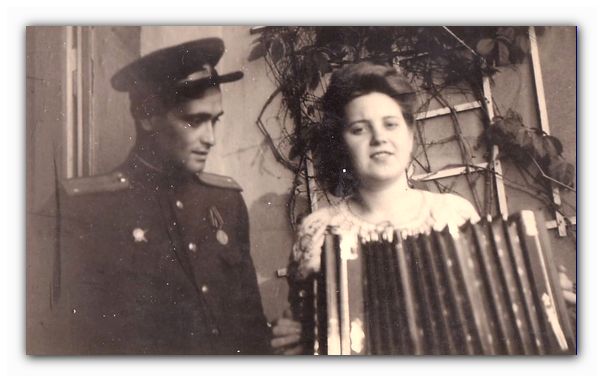
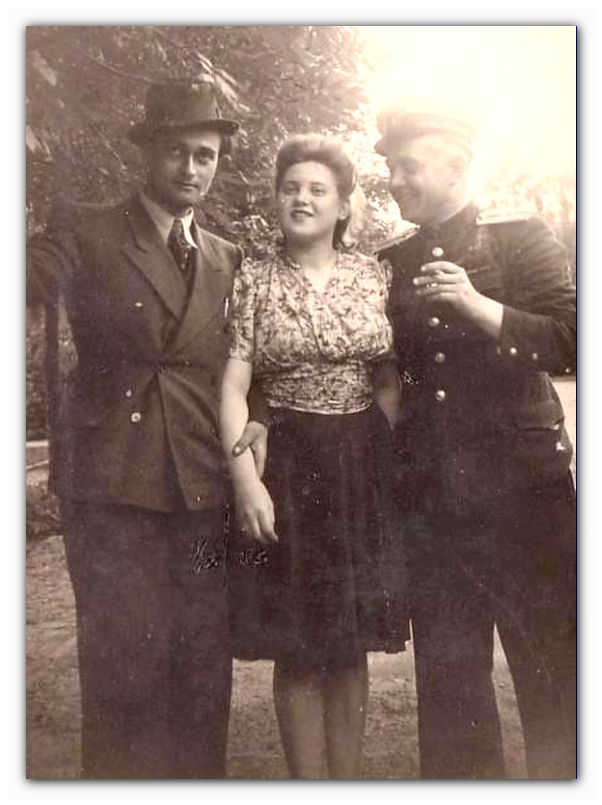
Dora with two aunts, 1959 Photograph Private collection © Renate Seifert, Lübeck © Stiftung Haus der Geschichte der Bundesrepublik Deutschland
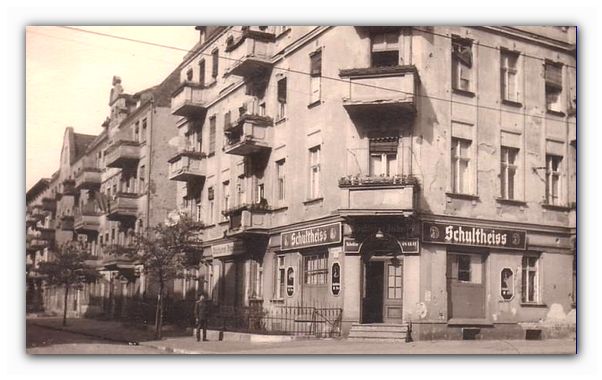
For her sixtieth birthday in 1987, Dora invited me to East Berlin. We passed a building—it must have been on Schönhauser Allee—and she remembered that the “Fröhlicher Zecher” restaurant had once been there and that she had lived in an attic room under the roof. She also told me that she had owned a red coat. I wondered why that fact seemed so important to her that she would tell me about it after so many years. There seemed to be a note of melancholy when she spoke about it. Unfortunately, the building looked barely inhabited. The signs were gone, the shutter over the restaurant door was closed, and it was as gray as almost everything in the GDR in those days.
© Stiftung Haus der Geschichte der Bundesrepublik Deutschland
Dora and I had not seen each other since the 1957 visit in Rangsdorf until she invited me to her sixtieth birthday. We both had demanding jobs that took up much of our time, so we did not even write letters to one another. It is also possible that Dora was forbidden to maintain contacts with people in the West. My mother and I had more contact with my other cousin because she lived alone and was more likely to write of her own accord. Later, however, Dora and I spoke on the telephone more often.
Dora died in 1995. When I tried to call her that day, as I did every Sunday, she no longer answered the telephone.
Renate Seifert with Dora at Lake Constance, 1987 Photograph Private collection © Renate Seifert, Lübeck © Stiftung Haus der Geschichte der Bundesrepublik Deutschland
Yet ten years after her death I encountered her again in two books.
Quite by chance, late one evening, I happened to switch to a television literary program. Hans Magnus Enzensberger appeared on screen in an interview. He said that under no circumstances would he reveal the name of “Anonyma,” and that he was disappointed by the way the publisher and the media were treating his “Other Library.” My curiosity about this Anonyma was awakened. Unfortunately, as so often happens, I did not pursue the subject because other things seemed more important. But the program with Enzensberger remained stored in my memory.
Months later, in April 2005, I saw a paperback among the new releases in a bookshop: Anonyma. A Woman in Berlin. Diary Notes from 20 April to 22 June 1945—the period when the Russians fought the final battle for Berlin in the Second World War and entered the city.
Interested, I bought it, began reading out of curiosity, and could not stop.
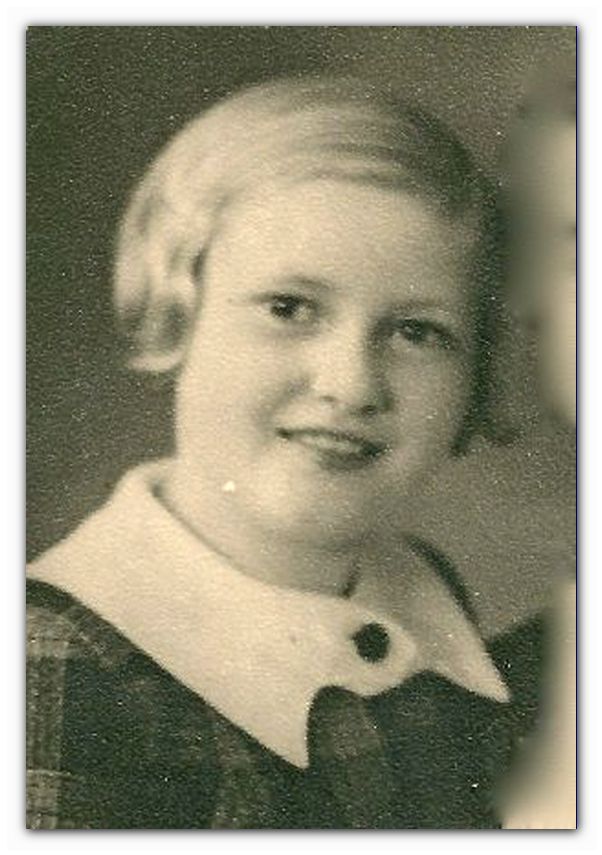
On the first pages Anonyma describes the people around her, among them my cousin. It simply could not be anyone else. The circumstances described fit Dora so precisely that they could hardly fit anyone better. I read and read; my breath catches and I get goosebumps. On Friday, 20 April 1945, at 4 p.m., “Anonyma” writes about the “cellar people”: three elderly sisters who were seamstresses and a refugee girl from Königsberg in East Prussia.
Dora as a child © Stiftung Haus der Geschichte der Bundesrepublik Deutschland
The refugee girl from Königsberg could be Dora, my cousin—the thought shot through my mind. She was nineteen at the time. The three elderly sisters would be her aunts. At that moment “Anonyma” probably could not have known that the seamstresses were the refugee girl’s actual aunts. I cannot imagine Dora without her aunts. They had moved from Königsberg to Berlin before the war because they expected to find a larger clientele there for their dressmaking business. Dora had made her way to them during her flight from East Prussia.
In later sections of the book I found my suspicion confirmed. The rape of the “refugee girl from Königsberg,” mentioned during our family visit to Rangsdorf in 1957, is described for 27 April 1945, as is the rape of the aunt on 4 May 1945.
Why did “Anonyma” write about “aunts” in her notes? Had she heard my cousin call the seamstresses “Aunt Lena,” “Aunt Trude,” or “Aunt Else”?
“Anonyma” refers to the other people in her notes by name or status; only the seamstresses are called “aunts”—strange. I cannot imagine that there were many sets of seamstresses in Berlin consisting of three unmarried sisters who lived together and ran a dressmaking business together. So, I believe, they must have been Dora’s aunts.
After reading “Anonyma’s” diary notes, I naturally wanted to know for certain whether the woman described really was my cousin. I began to investigate.
First I tried to determine the names of her aunts. I remembered only Aunt Trude and Aunt Lena; after so many years I had forgotten the third one’s name—it may have been Else. She died relatively soon after the rape, and after that her name was no longer mentioned. Certainly not during the years when contact with Dora was broken off while she lived in the GDR, because after our flight from Königsberg my mother and I ended up in West Germany, in Württemberg.
Even after German reunification, Dora remained silent about what she had experienced. Of the people described here, Dora’s raped Aunt Else died first, though only after our 1957 visit to Berlin—possibly toward the end of the 1950s, because a photograph from 1959 shows Dora with only two aunts. The other two lived well into the 1970s. Dora died in 1995, and “Anonyma” died in 2001. Jens Bisky revealed her identity in his article “When Boys Play at World History, Girls Have Silent Roles,” published in the Süddeutsche Zeitung on 24 September 2003.
By now I have at least found the dates of birth and death of two of the aunts and some of their Berlin addresses—possibly even the address where the events took place.
Since Christmas 2005 I had had the newly published book by Vladimir Gelfand, Germany Diary 1945-1946: Notes of a Red Army Soldier, lying around at home. I bought it along with several other books about the Second World War and about Königsberg. The book by a Russian soldier interested me because I wanted to read a counterpart to “Anonyma’s” diary and to learn about that period from a Russian point of view. I read it in mid-April 2006.
Now that I am retired, I finally have time to deal with my past, and I read one book after another about my hometown of Königsberg, about the war, about the fates of people from the East, and about children of the war.
As always, I first look at the pages with photographs, then at the foreword or afterword and the bibliography, so that I can get an idea of the book’s contents and understand it better. Among the facsimile photographs in the middle of Gelfand’s book, under the heading “Invitation to a Rendezvous,” a letter to Lieutenant Gerhard is reproduced. On the second page the word “Wiedersehen” catches my eye. It looks as though my cousin Dora had written it. I am electrified.
It cannot be that after her death my cousin is now meeting me again in yet another book. I scarcely knew her before the last years of her life and hardly got to know her even during the final eight years before her death. It seems almost as if she wanted me, posthumously, to concern myself with her.
© Stiftung Haus der Geschichte der Bundesrepublik Deutschland
On 28 March 1946 at Nauen railway station, Gelfand writes about a German woman named Nora who had recently turned twenty-one and lived on Schönhauser Allee in Berlin. Everything would have happened as it had to happen, Gelfand writes, had an intimate detail not unexpectedly appeared: at the last moment, suddenly there was a bad smell. It repelled him, and all his excitement disappeared.
My cousin Dora told me this story. She did not want to become intimate with the soldier so quickly and defended herself in this way. She said that a respectable girl does not give herself to a man so quickly. Would I ever have thought of such an idea?
Later I wanted to ask her for more details, but then I forgot about it. In this connection she also told me about the letter she wrote to the soldier afterward and recited the poem in it. She liked him, and later regretted the way she had behaved. She had signed the letter “Helga” and had also made herself a little older, because she was only nineteen at the time and in those days legal adulthood did not begin until twenty-one. When Dora told me about it, I thought—not imagining that I would ever see the letter and recognize her handwriting—that because of the false name and false age the letter could never be attributed to her.
On her side, a love relationship then developed with Vladimir Gelfand, which he seems to have regarded more as a relationship of convenience, as I now know after reading his notes. When she spoke of its end, Dora told me regretfully that he had had to return to Russia. She told me this in 1987 or in the early 1990s, more than forty years later. Vladimir Gelfand must have been a great love of hers if she was still telling me the story after so many years.
Elke Scherstjanoi, who selected the texts for the edition of Gelfand’s diary and provided the commentary, kindly arranged a meeting between Vladimir Gelfand’s son and me. He made a copy for me of my cousin’s letter. On his computer he opened the Russian text, and I saw the name “Dora” written there in Russian. Because I had just begun learning a little Russian at the time, I immediately recognized Dora’s name from the Cyrillic letters. As I had already concluded, Dora was probably not to Vladimir Gelfand what she certainly wished she had been. This also explains why there was no photograph of my cousin in the photo albums his son showed me.
It is the fate of refugee children to search for their ancestors and discover that far too many of the people involved have already died and that, while they were still alive, we asked far too few questions. Only now, when I am old, do I realize how much I would like to know more about my parents, grandparents, and relatives, and how extremely difficult it is to verify memories. Unfortunately, out of consideration for the person I was speaking to, I asked far too little. I often did not want to intrude too deeply into another person’s emotional life, because people did not speak about the horrors of flight and what came afterward. Now I have to accept that much information simply can no longer be obtained.
© Stiftung Haus der Geschichte der Bundesrepublik Deutschland
The church registers from the former eastern territories relating to my relatives can no longer be found. The search for the past of Dora, my cousin, is almost hopeless, especially because she lived in the former GDR while I grew up in the Federal Republic. She was probably also forbidden to correspond with relatives in the West. When I contacted the Federal Archives in Berlin in writing at the beginning of 2005 to request access to her GDR file, there was no file, and my first letter of inquiry had disappeared even though an employee had confirmed that it had been received.
Dora and I look alike. We both have blond hair and dark eyes. She was very small; I am tall. Her mother and my father were siblings. I inherited the build of our grandmother, my father’s mother, who was tall and thin. Our grandfather seemed rather small. Dora’s mother, my Aunt Lotte, was also rather small and passed this build on to her daughter.
In 1943, when she was sixteen, Dora had to perform labor service in Königsberg. In that role she was supposed to help a family with several children, and at Christmas 1944 she brought me her toy shop. I was six years old then and she was seventeen. During that visit I consciously noticed my cousin Dora for the first time. She spoke to me. I liked her immediately. Her warmth and kindness won me over at once, and I liked the way she looked.
I was sad to see her leave again so quickly because she had to say goodbye. The toy shop was beautiful, made of wood and painted lime green, with little drawers, scales, and a cash register. Unfortunately, I did not get to enjoy this wonderful gift for long. In January 1945 we had to flee Königsberg ahead of the Russians and leave everything at home.
Events moved rapidly in the winter of 1944/45. Dora had no opportunity to leave the family for whom she was doing labor service and return to her parents in Königsberg. For a time she stayed with the labor-service family and probably fled East Prussia with them, but later she continued on her own.
During the flight, when Dora was squeezed together with many other people in a railway cattle car, her finger was caught as the wagon door was hurriedly pushed shut. The tip of her finger was injured, and she had to endure the wound and the pain as well. The fingertip was missing and the nail was mutilated—an enduring reminder of her flight from East Prussia.
At seventeen, left entirely to her own devices, she must have developed more than one survival strategy during that period. This girl, who a little more than a year earlier, at eighteen, had been raped by Russians and had wanted to take her own life, fell in love with a Russian. Unfortunately, I can no longer ask Dora about it. She has remained a mystery to me.
Dora’s story will not let me go. As someone obsessed with the truth, I absolutely want to know whether the woman in “Anonyma’s” book really is my cousin. In the case of Gelfand I am absolutely certain. A graphologist could surely confirm the match between the handwriting in the reproduced letter and her final letters to me.
Photo credits: Renate Seifert; Vitaly Gelfand (photographs, private collection)
ABOUT THE AUTHOR Renate Seifert was born in Königsberg, East Prussia, in 1938. After fleeing to Schleswig-Holstein in 1945, she attended primary school in Lunden before moving to Tuttlingen. There she completed intermediate secondary school in 1955 and trained at a savings bank. In 1962 she passed the commercial assistant examination and married in the same year. Her children were born in 1963 and 1965. She divorced in 1967 and worked as a bank employee from 1968. In 1973 she moved to another bank in Lahr in the Black Forest, where she became a department head in 1979. From 1990 to 1993 she was seconded to Gera in the new federal states of Thuringia, while continuing to live in Lahr in the Black Forest, before moving to Konstanz on Lake Constance. In 1998 she retired at the age of sixty and began distance studies. In the same year she completed the advanced technical college entrance qualification in banking. In 2001 she began studying sociology, literature, and psychology at the FernUniversität Hagen and the University of Konstanz. In 2006 she moved to Lübeck; in 2008 she passed the intermediate examination for her master’s degree. In 2009 she moved to Wiesbaden. Renate Seifert devotes herself to writing and to researching the fate of her cousin Dora.
This entry was written by Renate Seifert (*1938) in Wiesbaden in August 2008.
© Stiftung Haus der Geschichte der Bundesrepublik Deutschland
![[Dora mit zwei Tanten, 1959]](index.jpg)
![[Renate Seifert mit Dora am Bodensee, 1987]](indexy.jpg)