 |
 |
 |
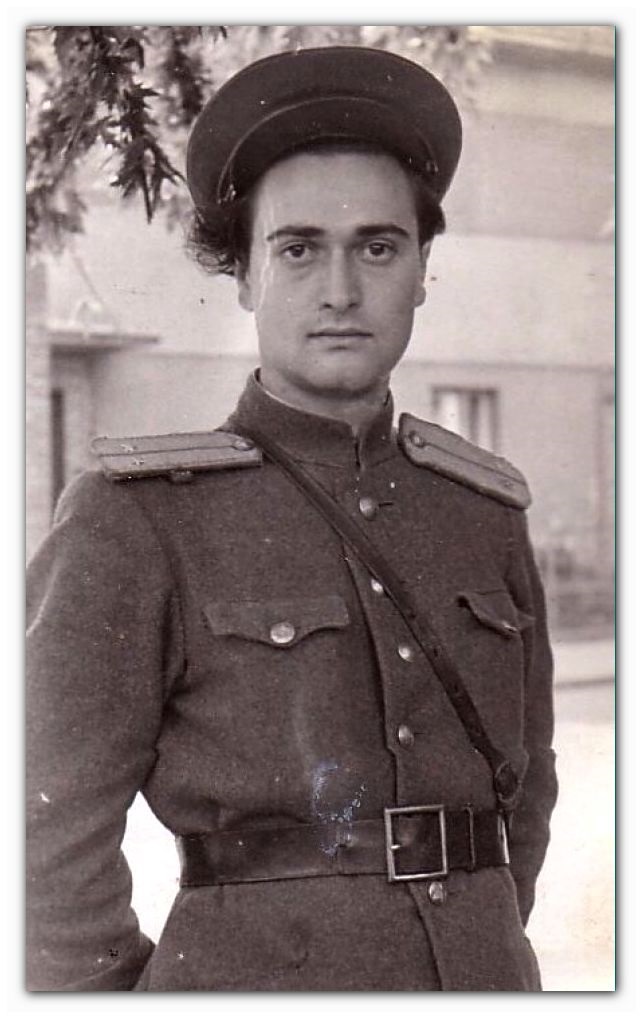
Цена победы. Военный дневник лейтенанта Владимира Гельфанда
Военные
дневники — явление уникальное. Дневник сержанта, затем
лейтенанта
Владимира Гельфанда уникален вдвойне — по хронологии,
географии,
объему и откровенности. Первые записи относятся к маю 1941 года,
последние — к октябрю 1946 года, когда автор вернулся из
Германии
домой.
Владимир Гельфанд родился 1 марта 1923 года в поселке Новоархангельск Кировоградской области. В 1933 году его семья переехала в Днепропетровск. Когда Владимир учился в школе, его родители разошлись. Тем не менее на учебе сына это не отразилось: он не только получал хорошие отметки, но и активно участвовал в общественной жизни школы. После 8 класса Владимир поступил на Днепропетровский индустриальный рабфак, успев до начала войны проучиться там три курса. Нападение Германии на Советский Союз прервало его образование. 6 мая 1942 года Владимир стал военнослужащим Красной армии. Он прошел обучение в артиллерийской школе и получил звание сержанта. На фронт Гельфанд попал в дни тяжелых поражений Красной армии летом 1942 года и панического отступления после «харьковской катастрофы». Он участвовал в Сталинградской битве, освобождал Украину и Польшу, закончил войну в Германии. Рядовой минометчик, затем командир минометного взвода, Владимир Гельфанд старался писать каждый день, при любых условиях, даже в окопе под обстрелом. Причем он делал не только дневниковые записи, но и писал письма родственникам, школьным подругам, отвечал на письма за своих товарищей, многие из которых не умели писать. Дневник Гельфанда поистине уникален, необыкновенно откровенен. Автор пишет то, что видит. Он записывает вообще все. Например, как подвергается унижениям в армии, как чувствует себя, когда идет в атаку. Несмотря на ряд проблем с сослуживцами, Гельфанд абсолютно был лишен страха смерти. Это удивительно. Он был уверен, что с ним все будет в порядке. Владимир Гельфанд был настоящим идейно убежденным человеком. В партию он вступил на фронте. Владимир мечтал стать политработником, хотел перевоспитать людей, объяснить им, как нужно себя вести. Когда Гельфанд попадает в самое (если не считать 1941 год) тяжелое время, когда после «харьковской катастрофы» вовсю процветают бегство и дезертирство, он пишет (запись от 20 июля 1942 года): «Одиночки, мелкие группы и крупные подразделения. Все имеют изнуренный и измученный вид. Многие попереодевались в штатское, большинство побросало оружие, некоторые командиры посрывали с себя знаки отличия. Какой позор! Какое неожиданное и печальное несоответствие с газетными данными. Горе мне бойцу, командиру, комсомольцу, патриоту своей страны. Сердце сжимается от стыда и бессилия в этом постыдном бегстве. С каждым днем я не перестаю убеждаться, что мы сильны, что мы победим неизменно, но, с огорчением вынужден сознаться себе, что мы неорганизованны, у нас нет должной дисциплины, и от этого война затягивается, поэтому терпим неудачи. Дело дошло до того, что немецкие самолеты позволяют себе летать над самой землей, над нами, как у себя дома, не давая нам головы вольно поднять на всем пути отхода. Все переправы и мосты разрушены, имущество и скот, разбитые и изуродованные, валяются на дороге. Процветает мародерство, властвует трусость. Военная присяга и приказы попираются на каждом шагу». Почему так написано? Потому что Гельфанд — искренний патриот. Он просто не может этого переносить. Описание Сталинградской битвы — одна из самых интересных частей дневника Владимира Гельфанда. Автор дает информацию с места событий. Это не мемуары, написанные после войны, это — живая история. Таких деталей просто не найдешь ни в официальных отчетах, ни в рапортах. Запись от 1 апреля 1943 года, Зеленоград: «Жители — все рабочие совхозов. В их рассказах уже не услышишь «русские» по отношению к советским войскам, как повсеместно я слышал от жителей всех предыдущих городов и деревень, начиная с Котельниково и кончая Мечеткой, а «наши», «немцы». В этих выражениях не видно резкого отделения себя, тоже русских, от своего народа, общества, армии». Любопытно,
но в Германии дневник Владимира Гельфанда за 1945 — 1946 годы
вышел намного раньше, чем в России. Это была настоящая сенсация. Владимир Натанович, хоть и не был большим писателем, но тем не менее писал непрерывно. И вот, летом 1945 года, добравшись до Рейхстага, он написал такие строки: На
балконе берлинского здания
Источник: Шахар |
© Isralike.org
 Russian
Isralike.org — Memory Archive
Posted February 27, 2019 in the Memory Archive.
Wartime diaries are a unique phenomenon. The diary of Sergeant, and later Lieutenant, Vladimir Gelfand is doubly unique — in its chronology, geography, scope, and candor. The first entries date from May 1941, and the last from October 1946, when the author returned home from Germany.
Vladimir Gelfand was born on March 1, 1923, in the settlement of Novoarkhangelsk in the Kirovohrad region. In 1933 his family moved to Dnipropetrovsk. While Vladimir was at school, his parents separated. Nevertheless, this did not affect their son's studies: he not only earned good marks but also took an active part in school social life. After the eighth grade, Vladimir entered the Dnipropetrovsk Industrial Workers' Faculty and managed to complete three courses there before the war began.
Germany's attack on the Soviet Union interrupted his education. On May 6, 1942, Vladimir became a serviceman in the Red Army. He trained at an artillery school and received the rank of sergeant.
Gelfand reached the front during the Red Army's severe defeats in the summer of 1942 and the panicked retreat after the “Kharkov catastrophe.” He took part in the Battle of Stalingrad, helped liberate Ukraine and Poland, and ended the war in Germany.
First an ordinary mortar man and later a mortar-platoon commander, Vladimir Gelfand tried to write every day under any conditions, even in a trench under fire. He did not limit himself to diary entries: he also wrote letters to relatives and school friends and answered letters for comrades, many of whom could not write.
Gelfand's diary is truly unique and extraordinarily candid. The author writes what he sees. He records virtually everything — for example, how he is humiliated in the army and how he feels when going into an attack. Despite a number of problems with fellow soldiers, Gelfand was completely free of fear of death. It is remarkable. He was certain that everything would turn out all right for him.
Vladimir Gelfand was a genuinely convinced idealist. He joined the Party at the front. Vladimir dreamed of becoming a political officer; he wanted to re-educate people and explain to them how they ought to behave.
When Gelfand found himself in the most difficult period of the war — apart from 1941 — when flight and desertion were flourishing after the “Kharkov catastrophe,” he wrote in an entry dated July 20, 1942:
“Individuals, small groups, and large units. Everyone looks exhausted and tormented. Many have changed into civilian clothes, most have thrown away their weapons, and some commanders have torn off their insignia. What a disgrace! What an unexpected and painful contradiction with the newspaper reports. Woe to me, a fighter, commander, Komsomol member, and patriot of my country. My heart contracts with shame and helplessness at this disgraceful flight. Every day I become ever more convinced that we are strong, that we will certainly win, but with regret I have to admit to myself that we are disorganized, that we lack proper discipline, and because of this the war is dragging on and we suffer setbacks. Things have reached the point where German aircraft allow themselves to fly just above the ground, over us, as if at home, not allowing us to raise our heads freely along the entire route of retreat.
All crossings and bridges have been destroyed; property and livestock, smashed and mutilated, lie along the road. Looting flourishes and cowardice reigns. The military oath and orders are trampled at every step.”
Why did he write this way? Because Gelfand was a sincere patriot. He simply could not bear what he was seeing.
The description of the Battle of Stalingrad is one of the most interesting parts of Vladimir Gelfand's diary. The author gives information from the scene. These are not memoirs written after the war; this is living history. Details like these simply cannot be found in official reports or dispatches.
Entry of April 1, 1943, Zelenograd:
“The inhabitants are all workers from state farms. In their stories one no longer hears ‘the Russians’ when they refer to the Soviet troops, as I heard everywhere from residents of all the previous towns and villages, from Kotelnikovo to Mechetka; instead one hears ‘ours’ and ‘the Germans.’ In these expressions there is no sharp separation of themselves, also Russians, from their own people, society, and army.”
Curiously, Vladimir Gelfand's diary for 1945–1946 was published in Germany much earlier than in Russia. It became a real sensation. In Germany, Gelfand acquired a camera and began taking photographs. His archive contains about five hundred photographs. This is yet another unique aspect of his diary.
Vladimir Natanovich was not a great literary writer, but he nevertheless wrote constantly. In the summer of 1945, after reaching the Reichstag, he wrote these lines:
On the balcony of a Berlin building
I stand with my fellow soldiers,
And I look, and I spit on Germany,
I spit on defeated fascism.
Source: Shakhar.
© Isralike.org
© facebook.Isralike.org
© ✡ SHAKHAR ✡ שחר ✡ | VKontakte