


Relié |
Broché |
Livre numérique |
|
|
|
|
|
|

|
 |
 |
 |
 |
||||||||
| «Barbarossa, 1941. La
guerre absolue» analyse l’opération
«Barbarossa» comme un phénomène unique dans
l’histoire militaire, dans lequel se combinent une ampleur des
opérations sans précédent, une confrontation
idéologique et une violence de masse. Les auteurs soulignent que
la guerre entre l’Allemagne nazie et l’Union
soviétique n’avait pas seulement un caractère
militaire, mais aussi un caractère idéologique et
visionnaire, touchant le destin de millions de personnes. Une attention
particulière est accordée au rôle de
l’idéologie dans les actions des deux camps. Les
dirigeants allemands considéraient la campagne comme une guerre
d’anéantissement et de colonisation, tandis que le
système soviétique combinait la lutte contre
l’ennemi extérieur avec un contrôle interne strict
et une politique répressive. Les auteurs notent que la
tragédie de 1941 se déployait simultanément sur le
front, à l’arrière et dans les territoires
occupés. Sur l’immense espace de l’Europe orientale, les plus grandes forces armées de leur époque se sont affrontées, ce qui a entraîné des encerclements, des offensives et des pertes d’une ampleur sans précédent. Les deux camps ont toutefois commis de graves erreurs dans leur évaluation de l’adversaire et de leurs propres capacités. Les auteurs considèrent les conséquences de l’échec de l’offensive allemande comme l’un des tournants majeurs de la Seconde Guerre mondiale. Selon eux, les événements de 1941 ont exercé une influence décisive sur la suite du conflit, le destin du régime nazi, le développement de l’Union soviétique et l’ordre européen d’après-guerre. L’étude repose sur un large corpus de documents, de journaux intimes, de mémoires et de fonds d’archives réunis tant dans les pays de l’ex-URSS qu’en Allemagne. Les journaux intimes utilisés dans l’ouvrage constituent une source précieuse, notamment pour comprendre les perceptions de l’opinion publique et un phénomène caractéristique de la société soviétique, celui des rumeurs. Les auteurs utilisent comme fils conducteurs les écrits personnels de Vladimir Vernadski, de Lioubov Chaporina, de Lydia Ossipova, de Mikhaïl Prichvine, d’Anna Ostroumova-Lebedeva, de Gueorgui Efron, de Vladimir Gelfand et de Semion Poutiakov. La tenue de journaux intimes dans l’Armée rouge était officiellement interdite. La violation de cette règle pouvait entraîner de lourdes sanctions, allant jusqu’à la peine de mort, ce qui, selon certaines sources, aurait été le cas de Semion Poutiakov. Outre les journaux de civils et de soldats ordinaires, les auteurs utilisent également des écrits récemment publiés de proches collaborateurs de Staline, tels que Viatcheslav Malyshev, ministre de l’industrie des chars, ainsi que de hauts responsables militaires, par exemple Stepan Kalinine, commandant de la 24e armée. Avec les précautions nécessaires liées à la fiabilité variable des sources, l’ouvrage inclut également des mémoires de contemporains. |
 |
p.: 4, 461, 462, 558, 810, 811, 818, 841, 878
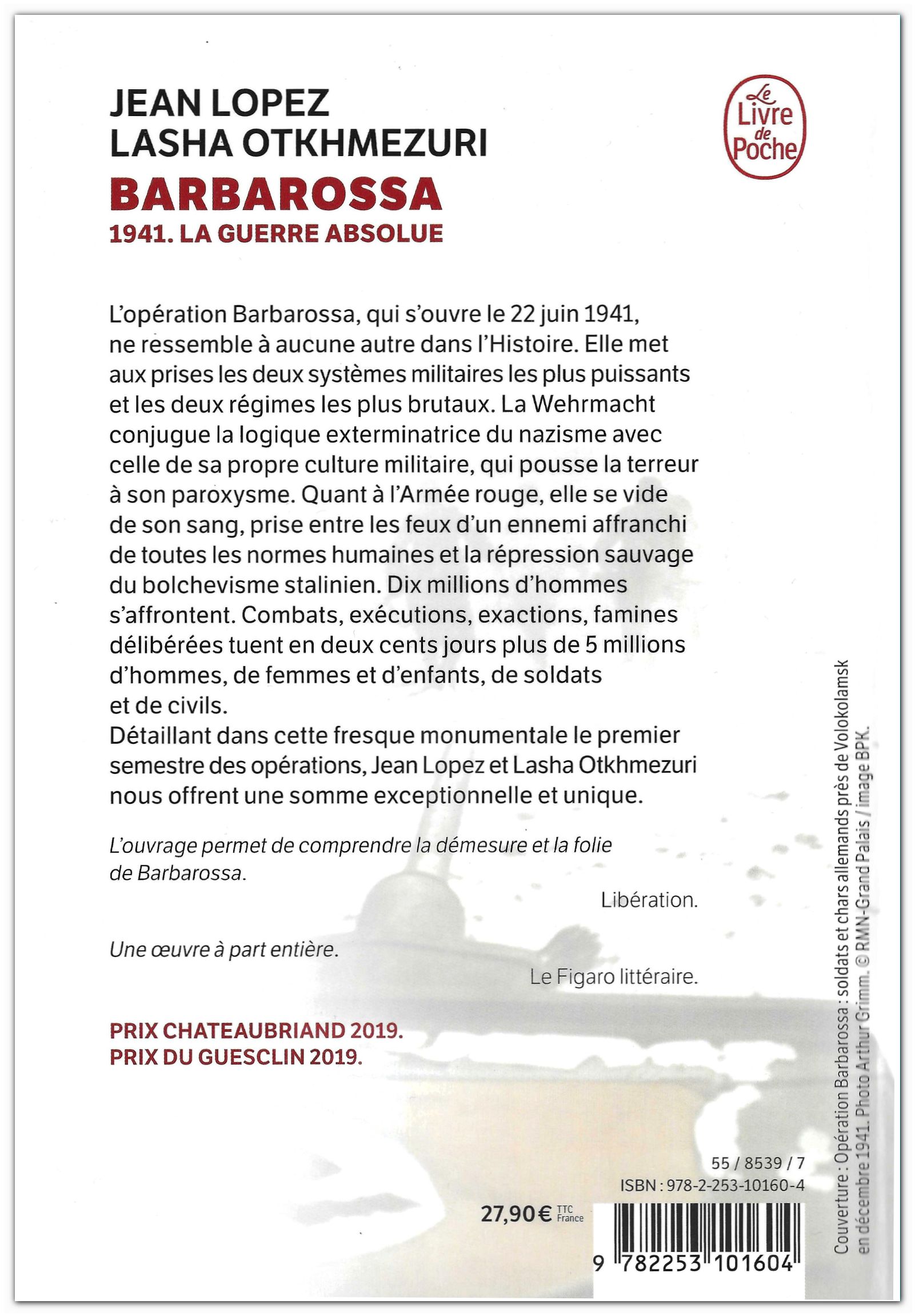
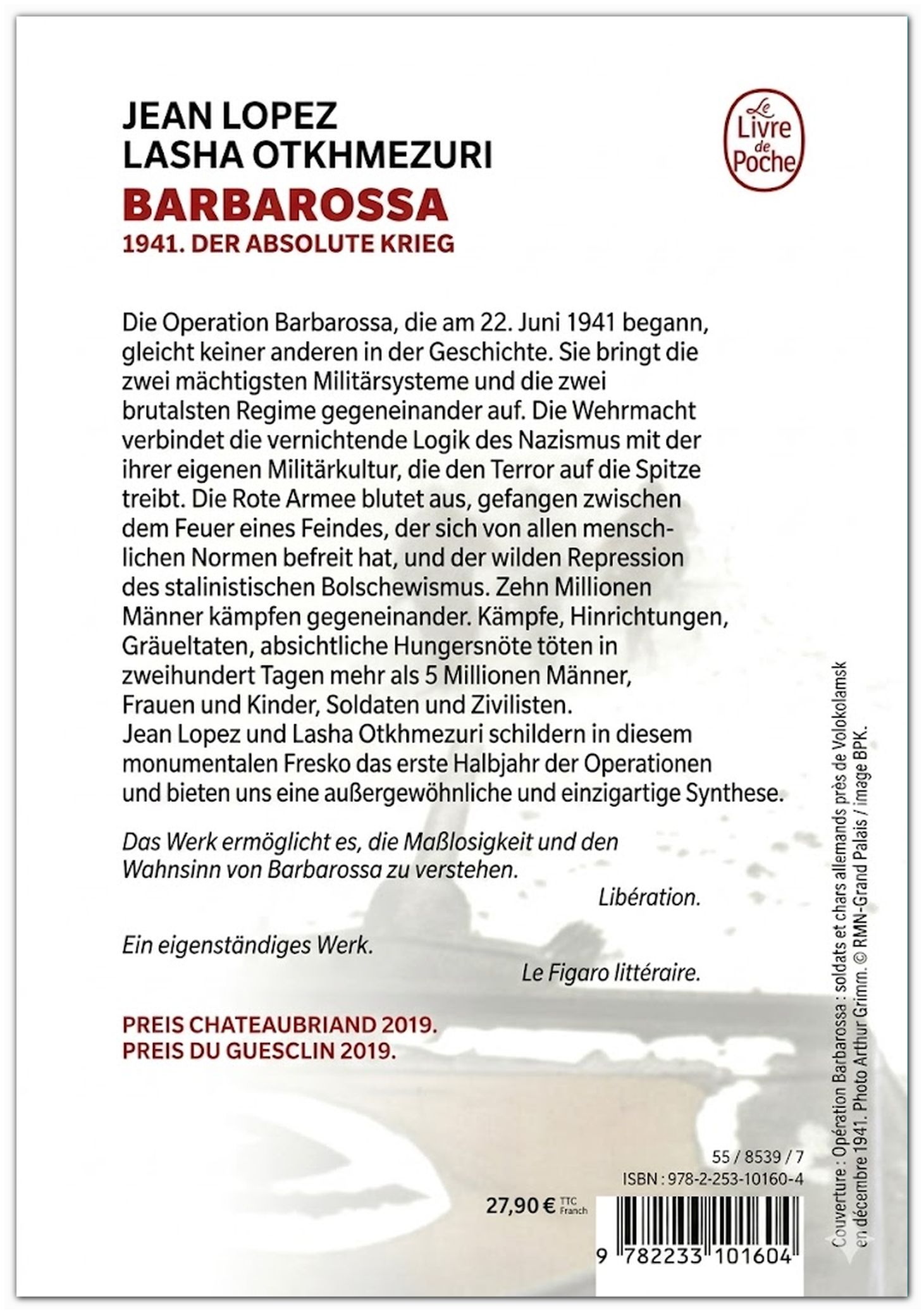
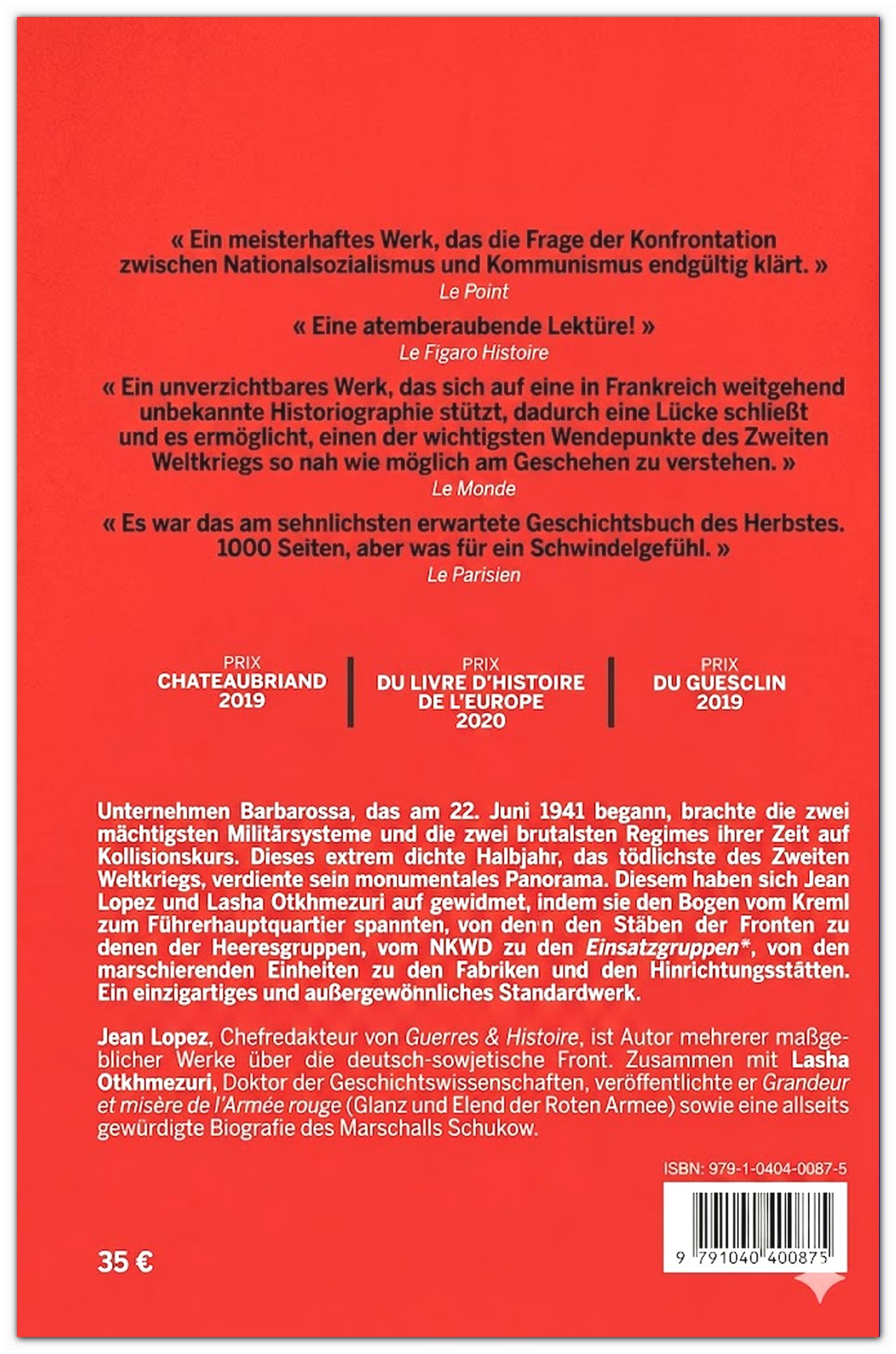
 L’opération Barbarossa, qui s’ouvre le 22 juin 1941, ne ressemble à aucune autre dans l’Histoire. Elle met aux prises les deux systèmes militaires les plus puissants et les deux régimes les plus brutaux. Les plans sont ineptes, les armées bien en dessous de leurs missions. Dans le combat comme dans l’occupation, la Wehrmacht conjugue la logique exterminatrice du nazisme avec celle de sa propre culture militaire, qui pousse la terreur à son paroxysme. L’Armée rouge se vide de son sang, prise entre les feux d’un ennemi affranchi de toutes les normes humaines et la répression sauvage du bolchevisme stalinien. Dix millions d’hommes s’affrontent lors de batailles aux proportions monstrueuses : les plus gros encerclements, les percées les plus spectaculaires, les retournements les plus improbables aussi. Le résultat de cette moisson de superlatifs est la création d’un brasier de proportions inouïes. Combats, exécutions, exactions, famines délibérées tuent en 200 jours plus de 5 millions d’hommes, de femmes et d’enfants, de soldats et de civils. Ce semestre d’une densité extrême, le plus létal de la Seconde Guerre mondiale, méritait sa fresque. C’est à la brosser que se sont attachés Jean Lopez et Lasha Otkhmezuri, passant du Kremlin au QG du Führer, des états-majors des Fronts à ceux des groupes d’armées, du NKVD aux Einsatzgruppen, des unités en marche aux usines et aux fosses d’exécution. Une somme unique et exceptionnelle. Prix du Guesclin 2019 |

 French
Hardcover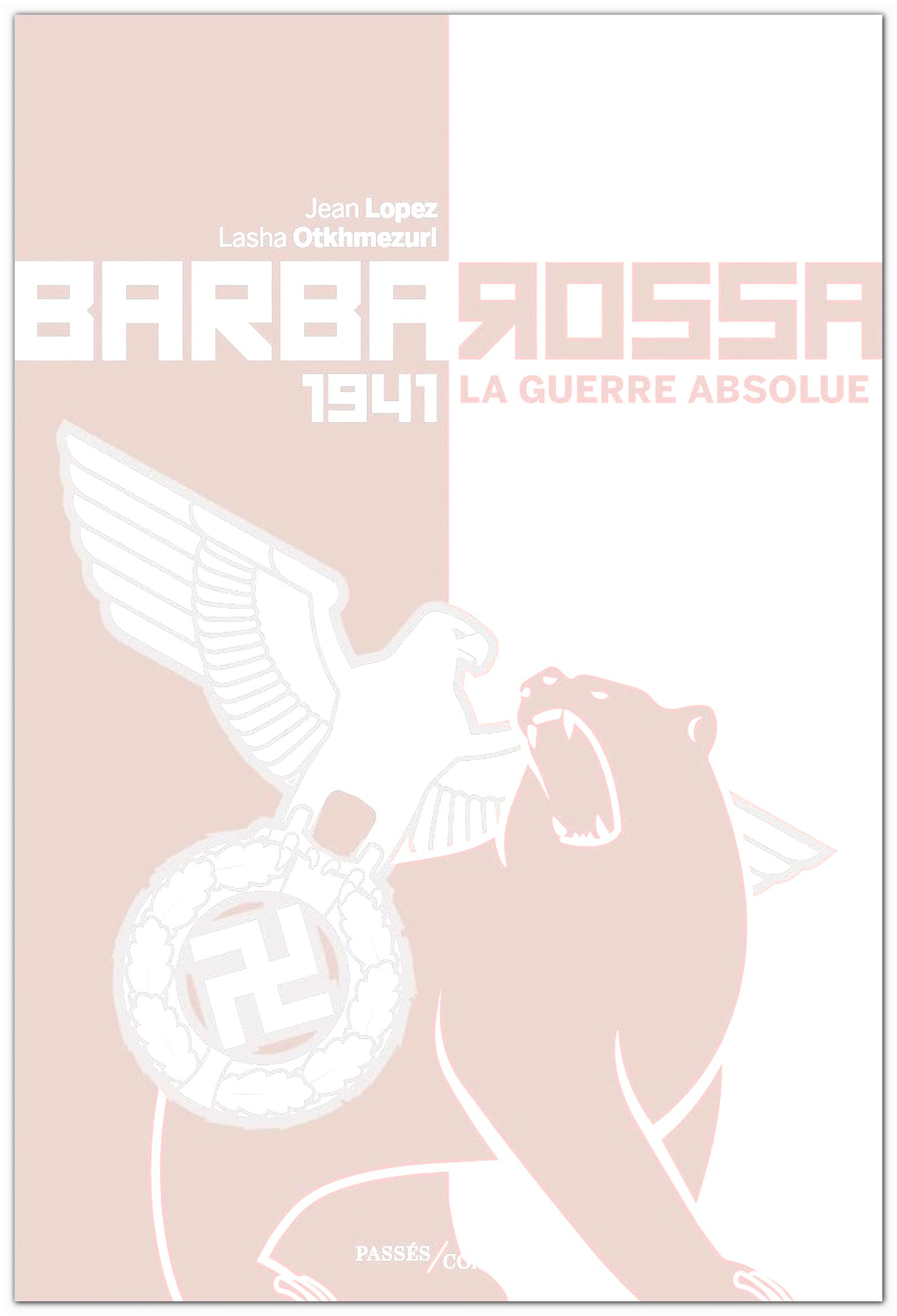 |
Paperback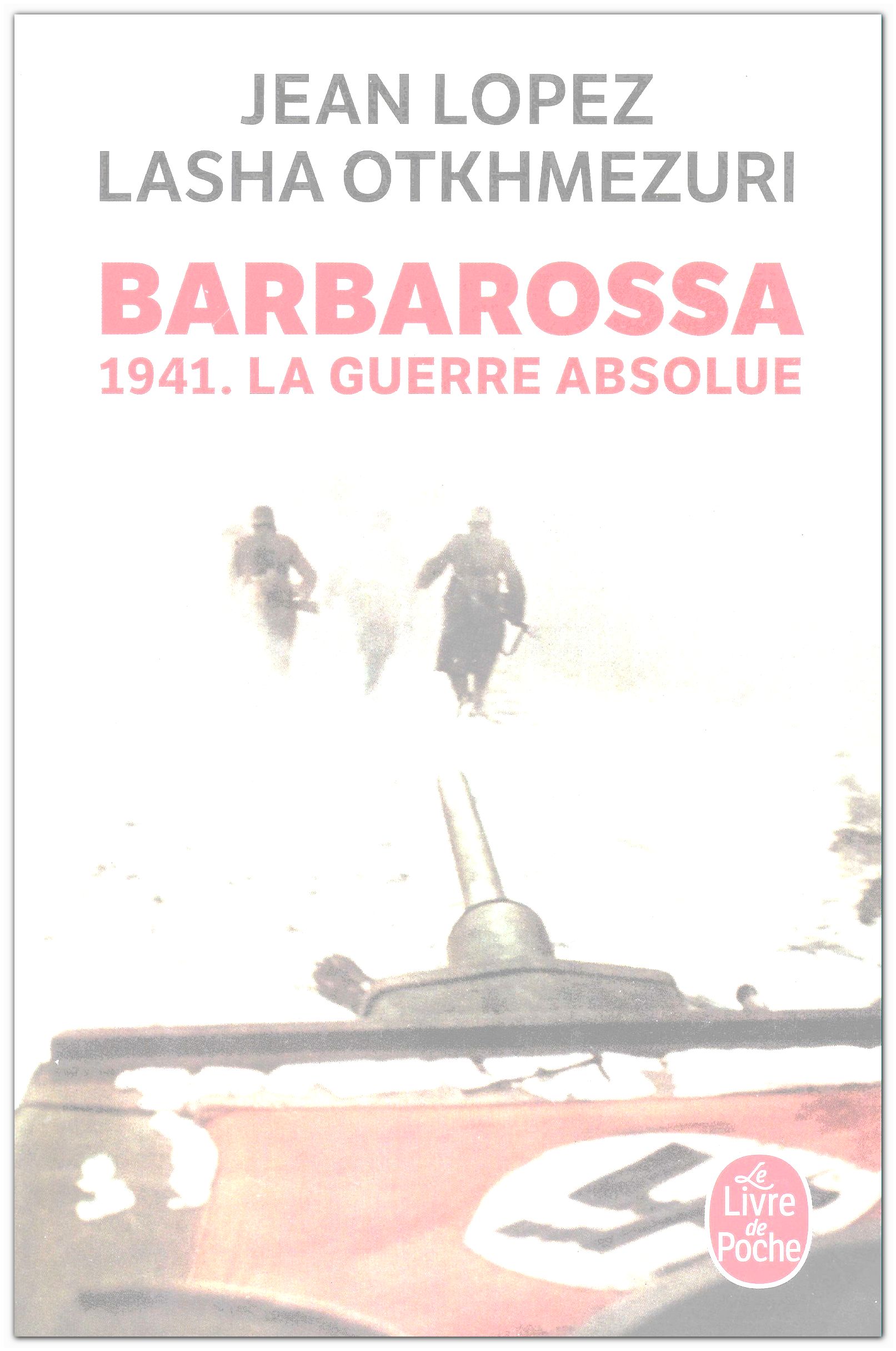 |
E-book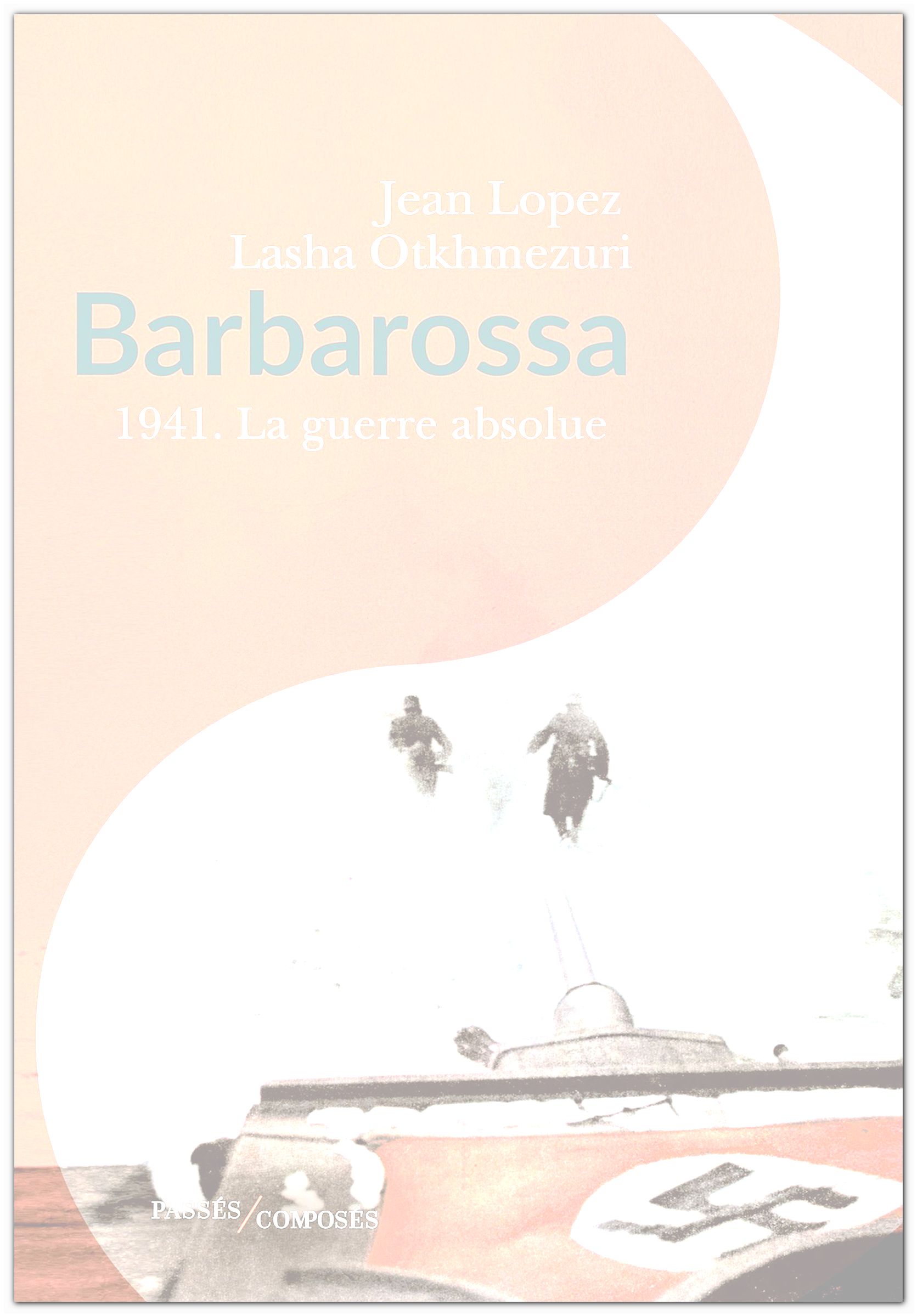 |
|
|
|
|
|
|
|
|
Guderian crosses the Dvina As the Germans approach, the population on the right bank begins to be evacuated. Vladimir Gelfand, an eighteen-year-old Jewish man, watches the evacuation in his home city of Dnepropetrovsk. “That is it: the families of members of the city soviet and the militia have begun evacuating. Vehicle horns can be heard; thousands of men and women are leaving the city day and night. And rumors have started to spread. Those who stayed watched the departures indignantly and began saying that only Jews were fleeing, that they had thousands of rubles put aside and knew how to use them.” A few days later he himself is evacuated to Yessentuki, far from the front, in the North Caucasus: “In the streets, in parks, in bakeries, in queues for kerosene, everywhere you hear whispers: low, terrible, hateful whispers. Everyone is talking about Jews. They still speak timidly, looking around. Jews are thieves; a Jewish woman has stolen this or that. Jews are very rich. One Jewish woman has 50,000 rubles, yet complains of poverty and of having nothing to eat or wear. […] Jews do not like to work. Jews do not want to serve in the Red Army. Jews live in cities without having the right to do so. Jews live at our expense. In short, Jews are the source of all our misfortunes. Because of my appearance, nobody suspects that I am Jewish, and it is often to me that they say all this.” The day after Vladimir Gelfand’s departure, the battle for Dnepropetrovsk begins. It never appears in historical accounts, yet deserves attention. It exemplifies a type of fighting that emerged with Operation Barbarossa and would remain, to a greater or lesser extent, a feature of the German-Soviet confrontation: urban warfare. At the beginning of autumn, morale in the Soviet Union is sinking. Gelfand, evacuated to Yessentuki, makes no secret of his doubts: “The day before yesterday the Germans took Bryansk, yesterday Vyazma and today (oh horror!) Mariupol. How long can this go on? […] Now Moscow and the Donbas are in danger, but so are Rostov, Crimea and the Caucasus. […] Where are the British and the Americans, one wonders? Or are they powerless against Hitler too? […] I remember how, not long ago, the fall of Kyiv and Odesa, or the occupation of my dear Dnepropetrovsk, so far from the frontier, seemed unimaginable to me. […] I compare us with France, Belgium, Holland and Poland — compared with them, our troops are fighting heroically. But compared with poorly armed China, heroic Spain, or unarmed Abyssinia and Albania, it all becomes rather strange, and I am ashamed of my country. To have lost such an enormous territory in so little time!” […] |
|||
 |
|
 |
|
||||||||
“Barbarossa, 1941: La guerre absolue” examines Operation Barbarossa as a unique phenomenon in military history, combining an unprecedented scale of operations, ideological confrontation and mass violence. The authors stress that the war between Nazi Germany and the Soviet Union was not merely military: it was also ideological and driven by a vision, affecting the fate of millions of people. Particular attention is paid to the role of ideology in the actions of both sides. German leaders viewed the campaign as a war of annihilation and colonization, while the Soviet system combined the struggle against an external enemy with strict internal control and repressive policies. The authors note that the tragedy of 1941 unfolded simultaneously at the front, behind the lines and in occupied territories. Across the vast expanses of Eastern Europe, the largest armed forces of their time clashed, producing encirclements, offensives and losses on an unprecedented scale. Yet both sides made serious mistakes in assessing their opponent and their own capabilities. The authors regard the consequences of the failed German offensive as one of the major turning points of the Second World War. In their view, the events of 1941 decisively shaped the rest of the conflict, the fate of the Nazi regime, the development of the Soviet Union and the post-war European order. The study draws on a large body of documents, diaries, memoirs and archival collections assembled both in Germany and in the countries of the former Soviet Union. The diaries are particularly valuable for understanding public perceptions and one characteristic feature of Soviet society: rumors. The personal writings of Vladimir Vernadsky, Lyubov Shaporina, Lydia Osipova, Mikhail Prishvin, Anna Ostroumova-Lebedeva, Georgy Efron, Vladimir Gelfand and Semyon Putyakov form recurring threads throughout the book. Keeping a personal diary was officially forbidden in the Red Army. Breaking this rule could bring severe punishment, even the death penalty, a fate that, according to some sources, may have befallen Semyon Putyakov. Alongside the diaries of civilians and ordinary soldiers, the authors use recently published writings by people close to Stalin, including Vyacheslav Malyshev, the people’s commissar for the tank industry, as well as senior military officers such as Stepan Kalinin, commander of the 24th Army. The book also draws, with due caution about their varying reliability, on the memoirs of contemporaries. |
 |
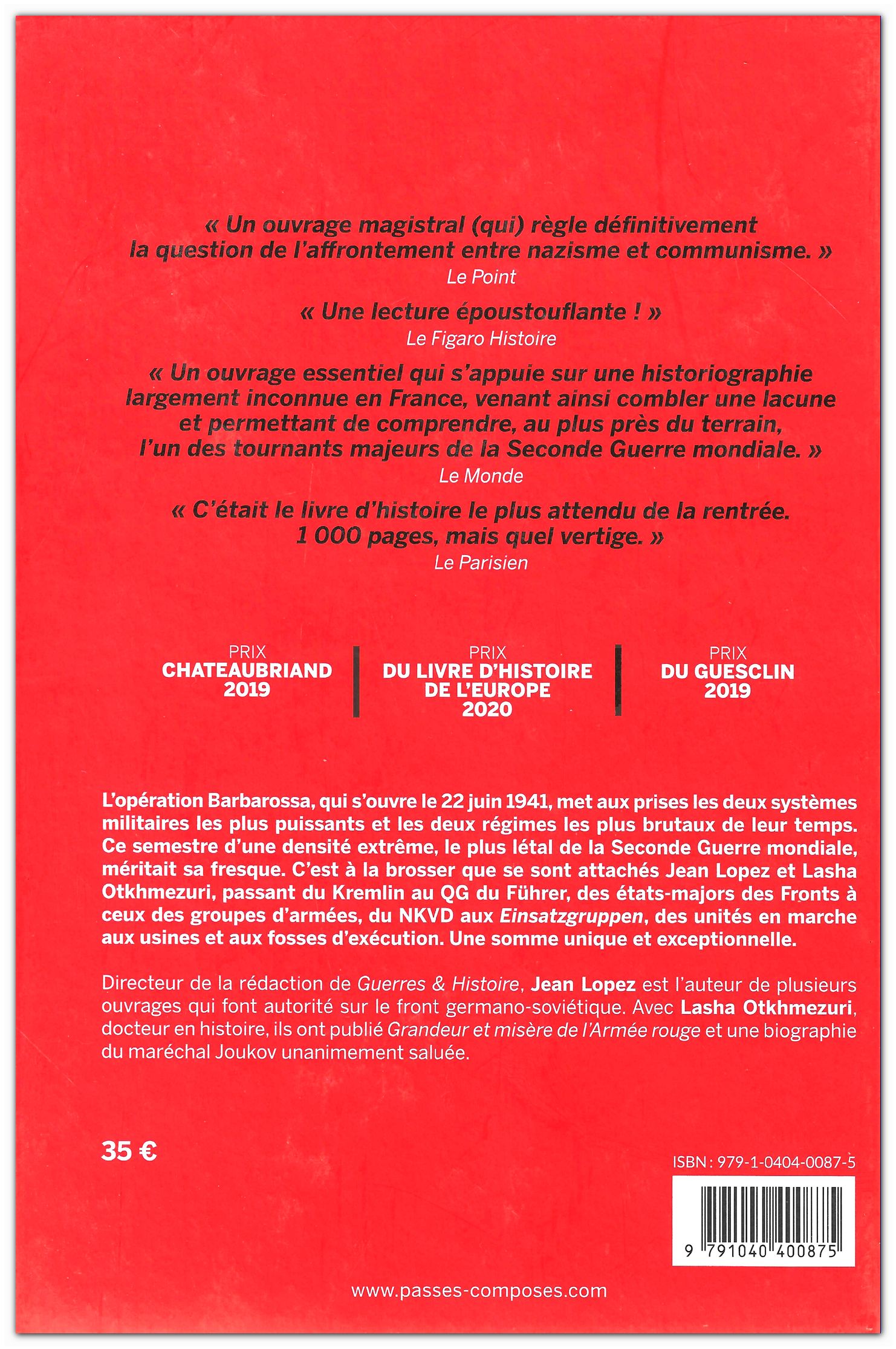
Operation Barbarossa, which began on 22 June 1941, was unlike anything else in history. It pitted the two most powerful military systems and the two most brutal regimes against each other. The plans were inept and the armies far from equal to their missions. Both in combat and under occupation, the Wehrmacht combined the exterminatory logic of Nazism with that of its own military culture, pushing terror to the extreme. The Red Army bled out, caught between an enemy freed from all human norms and the savage repression of Stalinist Bolshevism. Ten million people confronted one another in battles of monstrous proportions: the largest encirclements, the most spectacular breakthroughs and some of the most improbable reversals. The result was a conflagration on an unimaginable scale. In 200 days, fighting, executions, atrocities and deliberate famines killed more than five million men, women and children, soldiers and civilians. These six extraordinarily intense months, the deadliest period of the Second World War, deserved a sweeping historical account. Jean Lopez and Lasha Otkhmezuri set out to provide one, moving from the Kremlin to Hitler’s headquarters, from the staffs of Soviet fronts to those of German army groups, from the NKVD to the Einsatzgruppen, and from marching units to factories and execution pits. The result is a unique and exceptional work. Prix du Guesclin, 2019. Barbarossa — 1941: Absolute WarOperation Barbarossa, which began on 22 June 1941, was unlike anything else in history. It pitted the two most powerful military systems and the two most brutal regimes against each other. The Wehrmacht combined the exterminatory logic of Nazism with that of its own military culture, pushing terror to the extreme. The Red Army bled out, caught between an enemy freed from all human norms and the savage repression of Stalinist Bolshevism. Ten million people confronted one another. Fighting, executions, atrocities and deliberate famines killed more than five million men, women and children, soldiers and civilians, in two hundred days. Detailing the first six months of operations in this monumental panorama, Jean Lopez and Lasha Otkhmezuri offer us an exceptional and unique synthesis. “The book makes it possible to understand the excess and madness of Barbarossa.” “A work in its own right.” Prix Chateaubriand 2019. Prix du Guesclin 2019. “A masterful work [that] definitively settles the question of the confrontation between Nazism and communism.” “A breathtaking read!” “An essential work drawing on historiography largely unknown in France, thereby filling a gap and allowing an understanding, as close to events on the ground as possible, of one of the major turning points of the Second World War.” “It was the most eagerly awaited history book of the autumn publishing season. One thousand pages, but what a dizzying experience.” Prix Chateaubriand 2019. European History Book Prize 2020. Prix du Guesclin 2019. Operation Barbarossa, which began on 22 June 1941, pitted the two most powerful military systems and the two most brutal regimes of their time against each other. These six extraordinarily intense months, the deadliest period of the Second World War, deserved a sweeping historical account. Jean Lopez and Lasha Otkhmezuri set out to provide one, moving from the Kremlin to Hitler’s headquarters, from the staffs of Soviet fronts to those of German army groups, from the NKVD to the Einsatzgruppen, from marching units to factories and execution pits. A unique and exceptional synthesis. Editor-in-chief of Guerres & Histoire, Jean Lopez is the author of several authoritative works on the German-Soviet front. With Lasha Otkhmezuri, who holds a doctorate in history, he published Grandeur et misère de l’Armée rouge and a unanimously acclaimed biography of Marshal Zhukov. €35. ISBN: 979-1-0404-0087-5. www.passes-composes.com. ISBN: 978-2-3793-3188-6. The Intellectual Property Code permits only “copies or reproductions strictly reserved for the copier’s private use and not intended for collective use” (Article L 122-5); it also permits short quotations made for purposes of example or illustration. However, “any representation or reproduction, in whole or in part, without the consent of the author or the author’s successors in title or assigns, is unlawful” (Article L 122-4). Law 95-4 of 3 January 1994 entrusted the CFC (Centre français de l’exploitation du droit de copie, 20, rue des Grands-Augustins, 75006 Paris) with exclusive management of reprographic reproduction rights. Any photocopying of protected works carried out without its prior consent constitutes an infringement punishable under Articles 425 et seq. of the Penal Code. This digital document was produced by Nord Compo. |