



|
 |
 |
|
|
|
|
Journal of European Studies
 |

|
 |
 |
 |
 |
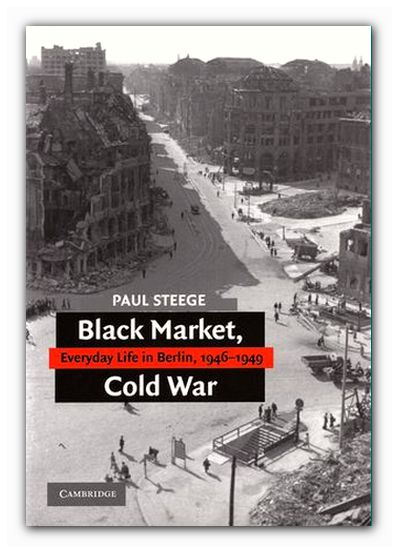
Black Market, Cold War: Everyday Life in Berlin, 1946–1949
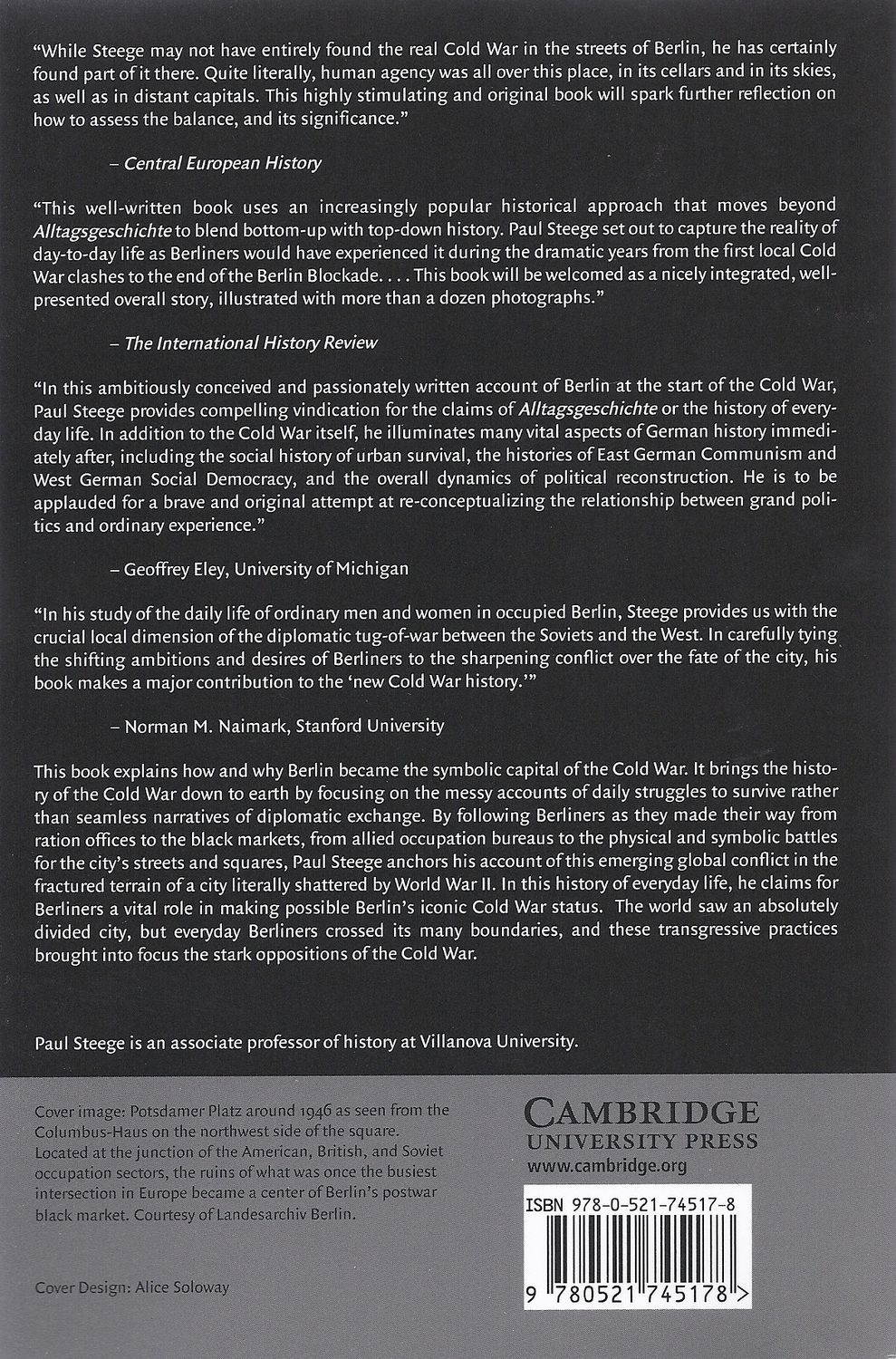
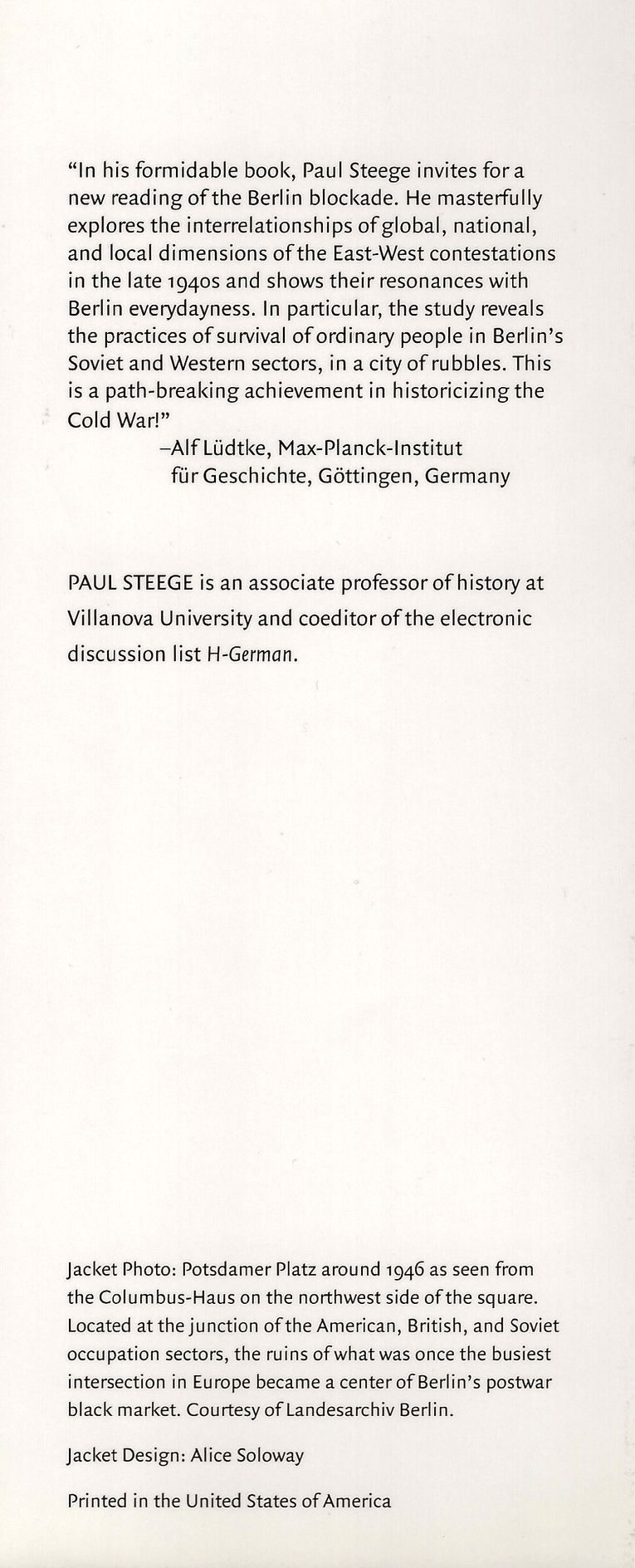
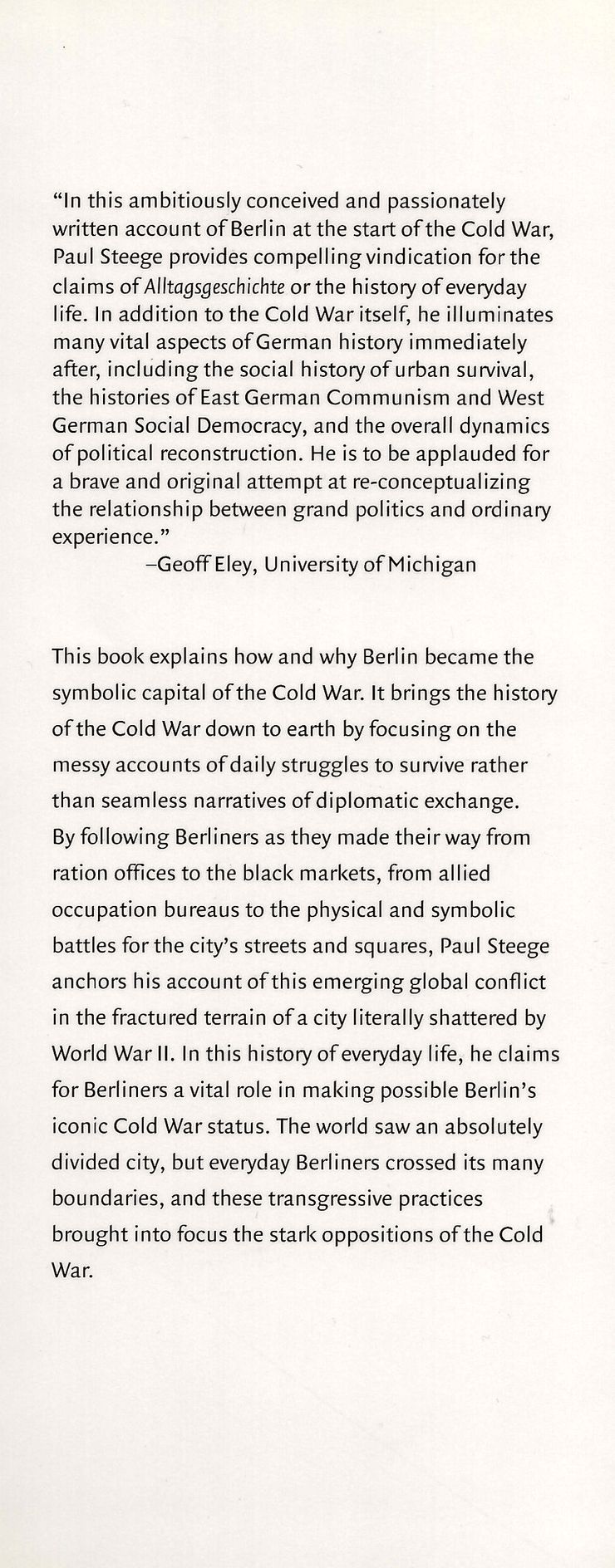
Summary: This book explains how and why Berlin became the symbolic capital of the Cold War. It brings Cold War history down to the level of everyday life, focusing on concrete accounts of the struggle for survival rather than on diplomatic exchanges. Following Berliners as they moved from food shops to black markets, from Allied occupation offices to physical and symbolic battles over the city’s streets and squares, Paul Steege anchors the story of a global conflict in a devastated city literally scarred by the Second World War. In this history of everyday life, he argues that Berliners themselves played a vital role in shaping the city’s status as a symbol of the Cold War. The world saw a divided city, yet ordinary Berliners crossed its many boundaries, and those transgressive acts exposed the sharp contradictions of the Cold War.© Paul Steege 200 7