



Фото: adm-essentuki.ru
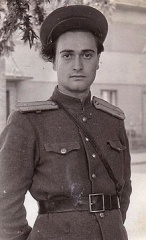 |
Мы продолжаем тему 70-летия освобождения Ессентуков от немецкой оккупации. Изучая эти, пока довольно темные страницы нашей истории, я столкнулась с творчеством Владимира Натановича Гельфанда – писателя-мемуариста, участника Великой Отечественной войны. Он прожил сложную жизнь, часть которой провел в Ессентуках. Гельфанд родился в бедной семье в Восточной Украине. В 1926 году Владимир Натанович с родителями обосновался в Ессентуках, где жили родители отца, но уже в 1928 году они вернулись на Украину. После окончания средней школы поступил на Днепропетровский индустриальный рабфак, успев до начала войны проучиться три курса. Когда в августе 1941-го предприятия и общественные учреждения города эвакуировались, он переезжает в Ессентуки, поселяется у тети и трудится ремонтным рабочим. В апреле 1942-го обращается в военкомат и 6 мая 1942-го становится военнослужащим РККА. В середине июля 1942-го его воинская часть была окружена и уничтожена. Начинаются суровые военные испытания: выход из окружения, ранение руки, направление в стрелковую школу офицеров. Летом 1943-го Владимир Гельфанд восстанавливает почтовую связь с матерью, которая нашлась в Средней Азии. От неё узнал, что почти все его родственники по отцовской линии в занятых немцами Ессентуках убиты. Войну закончил в Германии, а в сентябре 1946-го возвратился в Днепропетровск к матери, начал учёбу в университете. С августа 1952-го работал преподавателем истории, русского языка и литературы в техникуме железнодорожников № 2 в Молотове. При этом непрерывно писал... Писал в течение всей жизни, и на войне – в передышках между атаками и бомбардировками противника, на маршах и подготовке наступлений. Он писал и посылал статьи и стихи в центральные газеты, выпускал стенгазеты и составлял боевые листки. Мы предлагаем вашему вниманию фрагменты его дневника, связанные с нашим городом. «17 августа мой город, город парков, город-красавец Днепропетровск подвергся бомбардировке, первой с начала войны… Наша семья засуетилась… Мы уехали в Ессентуки». «Только что приехала тетя Поля. Она рассказывала об ужасах бомбежки Минвод и Невинки. Недаром даже здесь, в Ессентуках, начали объявлять тревоги. Я очень рад, что тетя вернулась благополучно. Я ужасно переволновался». «Позавчера взялся на учет в горкоме ВЛКСМ. По моей просьбе прикрепили к первичной организации школы им. Кирова. В горкоме комсомола мне предложили работу, с чем я радостно и согласился. На сегодняшний день я работник ремонтно-восстановительной колонны связи 4-го линейного участка». «Октябрьская площадь, 39. Здесь мое помещение. Только что вернулся сюда из города после двухчасового отпуска на обед. Да, мой друг (давно я так тебя не называл), да, мой дневник! Кончилась праздная жизнь. Теперь я рабочий, настоящий рабочий и нахожусь на казарменном положении». «Сегодня произошло решающее событие в моей жизни – меня призвали в армию. Кадровым красноармейцем. Я был совершенно не подготовлен, а призвали внезапно, в 9 часов утра: на 10 явиться с вещами в военкомат. Пришел в 11, но это оказалось тоже слишком рано. Целый день длилась канитель с призывом. Я за это время успел сняться с учета в горкоме ВЛКСМ и выписаться из библиотек, городской и курортной. Расстался со всеми очень тепло. Папа больше всех огорчился моим призывом. Все зеленеет, все цветет на широких просторах земли советской. Хочется жить, работать и наслаждаться природой, и потому еще сильнее проникаешься ненавистью к гитлеровской шайке разбойников. Месть, священную месть везу я в своем сердце». «Как там Ессентуки? Не сданы ли немцам? Это всего сейчас вероятней, но мне хочется думать, что Ессентуки еще в наших руках. Хоть бы скорей газетку прочесть». «Эти рассказы о массовых казнях ни в чем не повинных евреев заставляют меня с еще большей тревогой думать о дорогих родных моих из Ессентуков, об их судьбе. Как бы мне съездить туда, узнать хоть что-либо. Попрошу коменданта на пересыльном пункте разрешения съездить в Ессентуки, хотя вряд ли мне что-либо удастся. Насчет немцев я навсегда решил – нет врагов для меня злее и смертельнее их. До гроба, до последнего дыхания, в тылу и на фронте я буду служить своей Родине, своему правительству, обеспечившему мне равноправие как еврею». «… я узнал, что освобождены дорогие и милые мои Ессентуки, которые, по всей вероятности, так и остались мне родными. Теперь меня не покидает мысль, что они свободны». Вот такие искренние, эмоциональные строки, позволяющие нам острее, свежее и ярче понять то далекое время, которое стало испытанием и для нашего города, и для его жителей.
Татьяна Чихун
© 2014 Ессентуки
© 2008-2014 BezFormata.Ru

“If Only I Could Read a Newspaper Soon”
27 December 2012
We continue our series marking the 70th anniversary of the liberation of Essentuki from German occupation. While studying these still rather obscure pages of our history, I encountered the work of Vladimir Natanovich Gelfand — a memoirist and participant in the Great Patriotic War. He lived a difficult life, part of which was spent in Essentuki.
Gelfand was born into a poor family in eastern Ukraine. In 1926 Vladimir Natanovich and his parents settled in Essentuki, where his father's parents lived, but in 1928 they returned to Ukraine. After secondary school he entered the Dnipropetrovsk industrial workers' preparatory faculty and completed three years before the war. When the city's enterprises and public institutions were evacuated in August 1941, he moved to Essentuki, stayed with his aunt, and worked as a repair laborer. In April 1942 he reported to the military enlistment office, and on 6 May 1942 he became a serviceman of the Red Army. In mid-July 1942 his unit was surrounded and destroyed. Harsh wartime trials followed: breaking out of encirclement, a wound to the arm, and assignment to an officer infantry school.
In the summer of 1943 Vladimir Gelfand restored postal contact with his mother, who had been found in Central Asia. From her he learned that almost all of his relatives on his father's side who had remained in German-occupied Essentuki had been killed. He ended the war in Germany, and in September 1946 returned to his mother in Dnipropetrovsk and began university studies. From August 1952 he worked as a teacher of history, Russian language, and literature at Railway Technical School No. 2 in Molotov.
At the same time he never stopped writing. He wrote throughout his life, including during the war — in pauses between attacks and enemy bombings, on marches, and while preparing offensives. He wrote and sent articles and poems to central newspapers, produced wall newspapers, and compiled combat bulletins. We offer readers excerpts from his diary connected with our city.
“On 17 August my city, the city of parks, the beautiful city of Dnipropetrovsk, was bombed for the first time since the beginning of the war... Our family began rushing about... We left for Essentuki.”
“Aunt Polya has just arrived. She told us about the horrors of the bombing of Mineralnye Vody and Nevinnomyssk. It is no wonder that even here, in Essentuki, air-raid alarms have begun to be announced. I am very glad that Aunt returned safely. I was terribly worried.”
“The day before yesterday I registered with the city committee of the Komsomol. At my request I was attached to the primary organization of the Kirov School. At the city Komsomol committee I was offered a job, which I gladly accepted. As of today I am a worker in the repair-and-restoration communications column of the 4th line section.”
“October Square, 39. This is where I am quartered. I have just returned here from town after a two-hour lunch leave. Yes, my friend (it has been a long time since I called you that), yes, my diary! The idle life is over. Now I am a worker, a real worker, and I am living under barracks conditions.”
“Today a decisive event occurred in my life — I was drafted into the army, as a regular Red Army soldier. I was completely unprepared, and the call-up came suddenly, at nine in the morning: report to the military enlistment office at ten with my things. I arrived at eleven, but that too turned out to be far too early. The whole day was taken up with the drawn-out enlistment procedure. During that time I managed to deregister with the city Komsomol committee and return my books to both the city and resort libraries. I said farewell to everyone very warmly. Papa was more upset by my call-up than anyone else. Everything is turning green, everything is blooming across the broad expanses of Soviet land. One wants to live, work, and enjoy nature, and therefore one becomes even more deeply filled with hatred for Hitler's gang of bandits. Revenge, sacred revenge, I carry in my heart.”
“What is happening in Essentuki? Has it been surrendered to the Germans? That seems most likely now, but I want to think that Essentuki is still in our hands. If only I could read a newspaper soon.”
“These stories of mass executions of entirely innocent Jews make me think with still greater anxiety about my dear relatives in Essentuki and about their fate. If only I could go there and learn at least something. I will ask the commandant at the transit point for permission to travel to Essentuki, though I am unlikely to succeed. As for the Germans, I have decided forever — there are no enemies more vicious or deadly for me than they are. Until the grave, until my last breath, in the rear and at the front, I will serve my Motherland and my government, which has guaranteed me equal rights as a Jew.”
“...I learned that my dear and beloved Essentuki had been liberated — the city that, in all likelihood, has remained dear to me as a home. Now I cannot get rid of the thought that it is free.”
These are sincere, emotional lines that allow us to understand more sharply, freshly, and vividly that distant time which became an ordeal both for our city and for its residents.
Tatyana Chikhun
© 2014 Essentuki
© 2008–2014 BezFormata