


 |
 |
 |
 |
 |
 |
 |
 |
70年前苏军强奸了十万柏林妇女?很多人 仍在寻找真相
澎 湃新闻记者 邢春燕
2015-05-05 18:23
© 2014 The
Paper 上海东方报业有限公司
沪ICP备14003370号 | 互联网新闻信息服务许可证:3112014002
© 2003-2015 Cang.com ,版权所有 华夏收藏网
© 2005-2012 80sd.org 80视点网© 北京众邦裕民科贸有限责任公司 3399j.cn
© 中国日报 ent.chinadaily.com.cn
 Chinese
Were 100,000 Berlin women raped by Soviet troops 70 years ago? Many people are still searching for the truth
On 2 May 1945 the Soviet Red Army captured Berlin. Investigations by German historians concluded that 100,000 Berlin women were raped by Soviet soldiers. On 2 May the BBC broadcast the documentary The Rape of Berlin, exposing a humanitarian catastrophe that for a long time had been treated ambiguously.
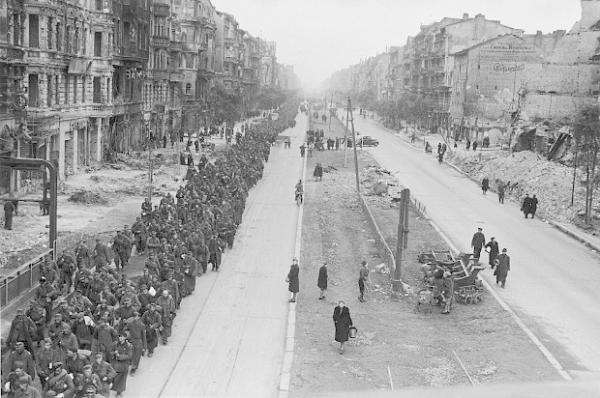
After Soviet troops captured Berlin, German prisoners of war were marched through the city’s streets. For Berlin’s women, however, the Red Army’s capture of the city became a nightmare.
Seventy years ago, after the Second World War ended amid ruins, the collective and individual crimes committed by the Axis powers during the war were gradually investigated and punished; justice was pursued and wounds began to heal. Yet large-scale harm inflicted on civilians by the Allies, intentionally or unintentionally, was often concealed. Examples include the bombing of Dresden and Tokyo and mass sexual violence by Allied troops, especially the Soviet Red Army, after entering Germany.
On 2 May 1945 the Nazi forces defending Berlin surrendered and the Red Army took the city. The war had ended, but for Berlin’s civilians — especially its women — the nightmare was only beginning. A study by historians at Göttingen University stated that as many as one third of Berlin’s women were raped. German historians Sander and Johr produced a more cautious estimate: 100,000 women in Berlin were raped by Soviet soldiers, and 40 percent of them were raped repeatedly. Russian attitudes toward this subject, however, often treat any mention of wartime rape as an insult or affront.
On 2 May the BBC broadcast a special documentary, The Rape of Berlin, presenting to the world this humanitarian disaster, which for a long time had been handled ambiguously.
One third of Berlin’s women were raped during the Soviet capture of the city
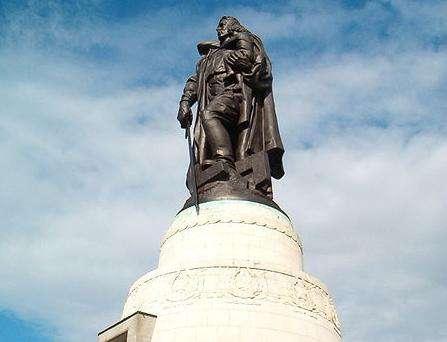
In Treptower Park on the outskirts of Berlin stands a Soviet war memorial designed by Soviet architects. It is the final resting place of 5,000 of the 80,000 Soviet soldiers who died in the Battle of Berlin during the Second World War. Completed in 1949, it is one of three major Soviet war memorials in Berlin.
The memorial includes a twelve-meter statue of a Soviet soldier standing on a pedestal. His expression is solemn; in his left arm he holds a little German girl, in his right hand a sword, and beneath his foot lies a shattered Nazi swastika. According to the story associated with the monument, during the war a three-year-old German girl was in danger and a Soviet soldier rescued her under German fire, inspiring the sculpture. An inscription on the memorial says that the Soviet people rescued European civilization from fascism.
Some people nevertheless say that unknown rapists may also be buried beneath the memorial. At the end of the war Soviet forces fought their way westward toward the Third Reich, but countless women also became victims of their advance.
The Chinese scholar Zhu Weiyi, in his work on German soldiers of the Second World War, cites research by Göttingen University. According to many witnesses, between 24 April 1945, when the Red Army entered central Berlin, and 5 May, when German resistance ceased throughout the city, as many as one third of Berlin’s women were raped. German historians Sander and Johr, drawing on various investigations, reached a more cautious figure: 100,000 Berlin women were raped, and 40 percent of them were assaulted more than once.
American historian William Hitchcock has stated that some women were raped sixty or seventy times. The rapidly rising abortion rate in the months after the events and contemporary hospital reports suggest that nearly 10,000 women died as a result of rape.
Many Russians, however, regard any mention of rape during the Second World War as offensive and disrespectful. Rape is often ignored by Russian media as though it were a Western myth. Soviet soldiers were certainly not the only perpetrators of sexual violence, and the Berlin rapes cannot be viewed in isolation. Before this, Nazi forces had invaded the Soviet Union in what Hitler described as a “war of annihilation,” inflicting devastating losses on the Soviet population.
The diary of a Jewish lieutenant reveals what happened to German women
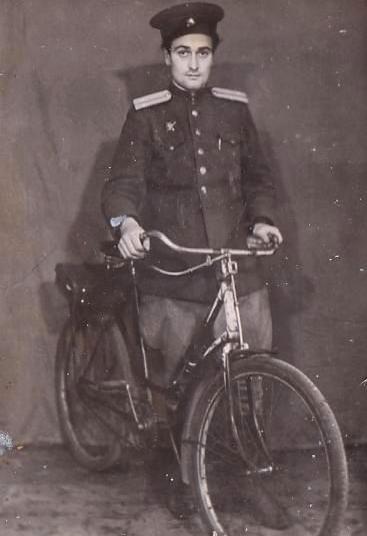
Although historical documentation of Soviet rapes is limited, surviving personal writings preserve fragments of what happened. Two diaries written during and after the spring of 1945 can help explain the events. The first was written by Vladimir Gelfand, a Jewish lieutenant from Ukraine. After Gelfand’s death his son Vitaly discovered the diary among his father’s papers.
When the Red Army entered the “lair of the fascist beast,” Soviet propaganda officers hung banners urging revenge: “Soldier! You are now on German soil. The time for revenge has come!”
Gelfand’s diary contains a disturbing passage describing a group of German women trying to flee the outskirts of Berlin.
“Their faces were full of fear,” he wrote. “They told me what happened on the first night after the Red Army arrived. One German girl lifted her skirt and said, ‘They did it to me here — no fewer than twenty men.’ She burst into tears. Another girl suddenly tried to seduce me and said: ‘I’ll go with you. You can do anything you want with me, but only you!’”
The author of A Woman in Berlin was criticized by German women
Gelfand described a severely traumatized young woman who, in a desperate attempt to avoid another gang rape, tried to choose a partner herself in order to escape something worse. A similar experience appears in another diary, written by a German woman journalist whose identity remained unknown for many years. She was thirty at the time. Her diary was later published as A Woman in Berlin (Eine Frau in Berlin) and eventually became a bestseller, although for decades the public did not know who had written it. The entries begin on 20 April 1945, ten days before Hitler’s suicide, and were written in a basement shelter where she hid from artillery fire.
While she and her neighbors sheltered in the basement, they made grim jokes: “Better a Russian on top than a Yankee overhead,” meaning that rape seemed a lesser evil than bombing. When Soviet soldiers came into the basement and tried to drag the women out, she used her limited Russian to try to persuade them to stop. Within minutes she herself was violently raped.
Eventually the author concluded that the only way to survive was to find a “protector,” an officer who could shield her from repeated gang rape. She entered into a relationship with a senior officer from Leningrad and talked with him about literature and the meaning of life.
“Never say that this sergeant-major is raping me,” she wrote. “Am I doing this for bacon, butter, sugar, candles or canned meat? To some extent, yes. But beyond that… I love him as a human being. The less he demands from me, the more I respect him as a person.”
When the diary was first published in 1959, public opinion in Germany reacted strongly. The author’s decision to survive at any cost was condemned, and she was accused of having “dishonored herself and the nation.”
Today more testimony continues to emerge about mass rape by Allied troops — primarily Soviet, but also American, British and French. Yet this humanitarian catastrophe remains a taboo subject in official discourse: it is rarely reported, and even fewer people are willing to listen.
In addition to social stigma, criticism of the Soviet Union was regarded as sacrilegious in East Germany, where the USSR was portrayed as the heroic victor over fascism. In West Germany, meanwhile, guilt over Nazi crimes made Germans reluctant to criticize the victors.
The film A Woman in Berlin encouraged victims to speak openly
In 2008 the film adaptation A Woman in Berlin (Anonyma – Eine Frau in Berlin) was released and had a strong impact in Germany. Many women who had suffered similar experiences were encouraged to speak publicly for the first time. One of them was Ingeborg Bullert.
Now ninety years old, Ingeborg lives in Hamburg. When Soviet troops began occupying Berlin, she, like the diary’s author, hid in a cellar. One day she went upstairs to find cord for a candle wick and was stopped at gunpoint by two Soviet soldiers. They raped her.
Ingeborg recalls that countless women were raped in Berlin at the time. All women between the ages of fifteen and fifty-five were ordered to undergo tests for sexually transmitted diseases. “You needed a medical certificate in order to receive food coupons,” she says. “I remember that the hospital waiting room was packed with women.”
The true scale of the sexual violence committed during the Second World War may never be known. Records of Soviet military tribunals and other sources remain classified. The Russian State Duma recently passed a law under which “anyone who discredits Russia’s record during the Second World War” can face a fine and up to five years in prison.
Vitaly Gelfand, the son of Lieutenant Vladimir Gelfand, says that he does not deny the courage and sacrifice shown by many Soviet soldiers during the war. But he hopes that his father’s diary can help restore a fuller picture of what happened.
“If people do not want to know the truth, they are only deceiving themselves,” he says. “The whole world understands it, Russia understands it, and the people who passed the new law understand it too. Looking back at the past is how we can look toward the future.”
Related items listed with the article: photographs of Soviet soldiers raping women during the Second World War; violence by Soviet troops against German women; claims that two million German women were raped by Soviet troops; mistreatment of German women in the streets; accounts of violence against German women; Soviet troops and Japanese women; 100,000 women in Berlin subjected to retaliation; mass rape after the capture of Berlin; the wave of rape in Berlin; photographs of Soviet violence in Berlin; German losses during the Soviet capture of Berlin.
