


 |
 |
 |
 |
 |
 |
 |
||
| |
||
Anonyma (i. e. Marta Hillers) »Eine Frau in Berlin« und Wladimir N. Gelfand »Deutschland-Tagebuch 1945–1946«. Doppelporträts und exemplarische Texte |
||
| |
||
Das sagt der/die Veranstalter:in:Dass es sich bei der zunächst anonymen Autorin der zuerst 1954 veröffentlichten, vom 20. April bis zum 22. Juni 1945 reichenden Tagebuchaufzeichnungen um die junge Journalistin Marta Hillers handelte, wurde erst 2003 eindeutig belegt. Die in Krefeld geborene Hillers lebte zeitweilig in Düsseldorf und schloss sich der kommunistischen Partei an. Infolge von Auslandsaufenthalten sprach sie gut Russisch und fließend Französisch. Seit 1934 lebte sie in Berlin und arbeitete als freie Journalistin. 1945 wurde sie Zeugin der Eroberung Berlins durch die Rote Armee. Der aus ärmlichen jüdischen Familienverhältnissen in der heutigen Ukraine stammende Wladimir Gelfand wurde im Mai 1942 zur Roten Armee einberufen und nahm an verschiedenen großen Schlachten teil. Im November 1943 wurde er in die kommunistische Partei der Sowjetunion aufgenommen, einige Monate später zum Leutnant befördert. Im Frühjahr 1945 war seine Einheit am Vorstoß auf Berlin und der Eroberung der Stadt beteiligt. Bis zum Herbst 1946 blieb er in verschiedenen Verwendungen in Berlin beziehungsweise dessen Umgebung, bevor er in die Sowjetunion zurückkehrte. Entgegen eines strikten Verbotes für Angehörige der Roten Armee machte Gelfand durchgängig Notizen oder längere Tagebuchaufzeichnungen, die er vielen Schwierigkeiten zum Trotz auch aufbewahren und erhalten konnte. An eine umfassende Veröffentlichung war freilich in der Sowjetunion nicht zu denken. Erst lange nach seinem Tod und dem Zusammenbruch der UdSSR ermöglichte Gelfands Sohn eine Publikation. Es handelt sich um ein äußerst seltenes Zeugnis eines Rotarmisten, der nicht zuletzt den Kontakt mit der deutschen Zivilbevölkerung beschrieben hat. Im Rahmen der Veranstaltungsreihe »80 Jahre Kriegsende in Europa«UNGLEICHE WORTE. Sieger und Besiegte, Befreier und Befreite in Deutschland 1945 – Doppelporträts und exemplarische Texte Mit Dr. Katja Schlenker und Prof. Dr. Winfrid Halder Als in den ersten Monaten des Jahres 1945 die Streitkräfte der Anti-Hitler-Koalition, angeführt von den Vereinigten Staaten von Amerika, Großbritannien und der Sowjetunion, das Gebiet des damaligen Deutschen Reiches vollständig eroberten, die deutsche Wehrmacht endgültig besiegten und das verbrecherische NS-Regime zerschlugen, trafen ihre Soldaten und Kriegskorrespondenten auf Angehörige einer Nation auf dem politischen und moralischen Tiefpunkt ihrer gesamten Geschichte. Umgekehrt sahen sich die Deutschen mit den Siegern und Befreiern konfrontiert, die ihnen nach zwölf Jahren Diktatur und weitgehender Isolation zumeist fremd erschienen. Von beiden Seiten wurden erste Eindrücke festgehalten, deren ungefilterte Direktheit bis heute eindrucksvoll ist. Sie zeigen zudem, dass der folgende Weg der »Westintegration« immerhin eines Teils Deutschlands, der mit maßgeblicher Hilfe der USA eingeschlagen wurde und der den Weg zu Demokratie und Selbstbestimmung eröffnete, weder selbstverständlich noch einfach war. Die Reihe stellt jeweils zwei Personen vor, die sich mittelbar, seltener unmittelbar begegneten und die Erfahrungen der vermeintlichen »Stunde Null« festhielten. |
 |
||
 |
||
 |
||
| Termine Anonyma (i. e. Marta Hillers) »Eine Frau in Berlin« und Wladimir N. Gelfand »Deutschland-Tagebuch 1945–1946«.Doppelporträts und exemplarische Texte Dienstag 25. Februar 2025, 19:00 - 20:30 Uhr Barrierearmut Barriere-Informationen zum Angebot Unser Haus verfügt über einen ebenerdigen Eingang. Eine Rampe führt in den Ausstellungsraum und zu unserem Aufzug. Vor dem Gebäude befindet sich ein ausgewiesener Behindertenparkplatz. Blindenhunde sind bei uns herzlich willkommen. Organisatorische Hinweise Die Teilnahme ist kostenlos. Altersempfehlung: 14 - 99 Jahre Angebot für Einzelperson, Gruppen 14-18 Jahre, 18-25 Jahre, Ü25 Jahre, Generationsübergreifend, Senior*innen, Jugendliche, Erwachsene Kartenansicht Leaflet | Map data © OpenStreetMap contributors, CC-BY-SA, Imagery © Mapbox MUSENKUSS ist ein interkommunales Kooperationsprojekt, das von der Landeshauptstadt Düsseldorf initiiert wurde. MUSENKUSS - Kulturelle Bildung für Düsseldorf Ort Stiftung Gerhart-Hauptmann-Haus Bismarckstr. 90 40210 Düsseldorf Ansprechpartner*in Ilona Gonsior Öffentlichkeitsarbeit 0211 - 16 99 134 gonsior@g-h-h.de http://www.g-h-h.de |
||
| Stiftung Gerhart-Hauptmann-Haus / Deutsch-osteuropäisches Forum |

© Regioactive
© Rausgegangen
© Stiftung Gerhart-Hauptmann-Haus |
Deutsch-osteuropäisches Forum
© Kulturgehtweite
© Landeshauptstadt Düsseldorf Mahn- und
Gedenkstätte
© Musenkuss

Event notices from Regioactive, Rausgegangen, the Gerhart-Hauptmann-Haus Foundation, the City of Düsseldorf Memorial and Remembrance Site, Kulturgehtweiter, and Musenkuss.
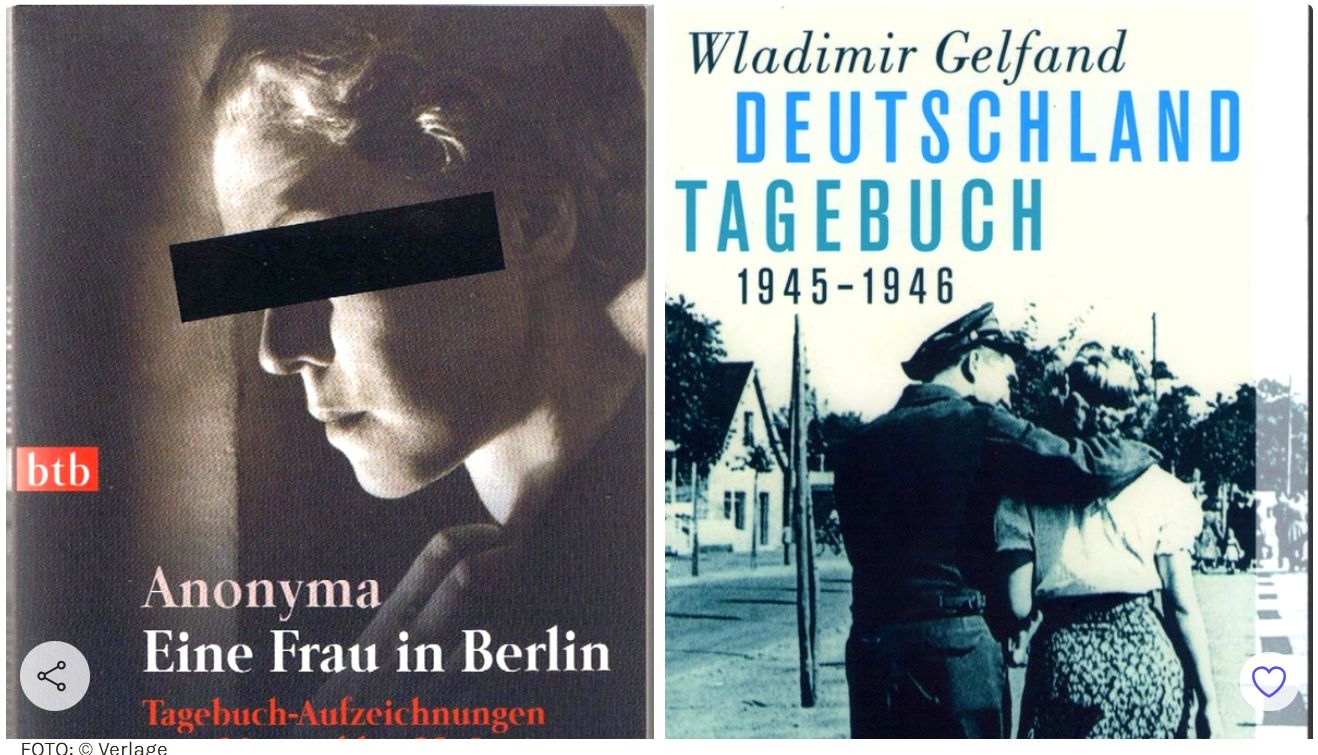
Book covers: Anonyma (Marta Hillers), A Woman in Berlin: Diary Notes; Wladimir Gelfand, German Diary 1945–1946. Photo: © publishers.
Tuesday, February 25, 2025, 7:00 p.m.
Gerhart-Hauptmann-Haus, Bismarckstr. 90, 40210 Düsseldorf.
It was not conclusively established until 2003 that the initially anonymous author of the diary notes first published in 1954, covering the period from April 20 to June 22, 1945, was the young journalist Marta Hillers. Born in Krefeld, Hillers lived for a time in Düsseldorf and joined the Communist Party. As a result of periods spent abroad, she spoke good Russian and fluent French. From 1934 she lived in Berlin and worked as a freelance journalist. In 1945 she witnessed the Red Army’s conquest of Berlin.
Wladimir Gelfand, who came from a poor Jewish family in what is now Ukraine, was drafted into the Red Army in May 1942 and took part in several major battles. In November 1943 he was admitted to the Communist Party of the Soviet Union; a few months later he was promoted to lieutenant. In the spring of 1945 his unit participated in the advance on Berlin and the capture of the city. Until autumn 1946 he remained in Berlin or its surroundings in various assignments before returning to the Soviet Union.
Despite a strict prohibition applying to Red Army servicemen, Gelfand continuously made notes and longer diary entries, which he managed to preserve despite many difficulties. Comprehensive publication was, of course, unthinkable in the Soviet Union. Only long after his death and the collapse of the USSR did Gelfand’s son make publication possible. The diary is an extremely rare testimony by a Red Army soldier who, among other things, described his contacts with the German civilian population.
UNEQUAL WORDS. Victors and Defeated, Liberators and Liberated in Germany in 1945 — Double Portraits and Exemplary Texts
With Dr. Katja Schlenker and Prof. Dr. Winfrid Halder.
When, during the first months of 1945, the armed forces of the anti-Hitler coalition led by the United States, Great Britain, and the Soviet Union completely conquered the territory of the German Reich of that time, finally defeated the German Wehrmacht, and destroyed the criminal Nazi regime, their soldiers and war correspondents encountered members of a nation at the political and moral low point of its entire history. Conversely, Germans were confronted with victors and liberators who, after twelve years of dictatorship and extensive isolation, generally seemed foreign to them.
Both sides recorded their first impressions, whose unfiltered directness remains striking today. They also show that the subsequent path toward the “Western integration” of at least part of Germany — undertaken with decisive assistance from the United States and opening the way to democracy and self-determination — was neither self-evident nor easy.
The series presents two people at a time who encountered one another indirectly, and more rarely directly, and who recorded their experiences of the supposed “zero hour.”
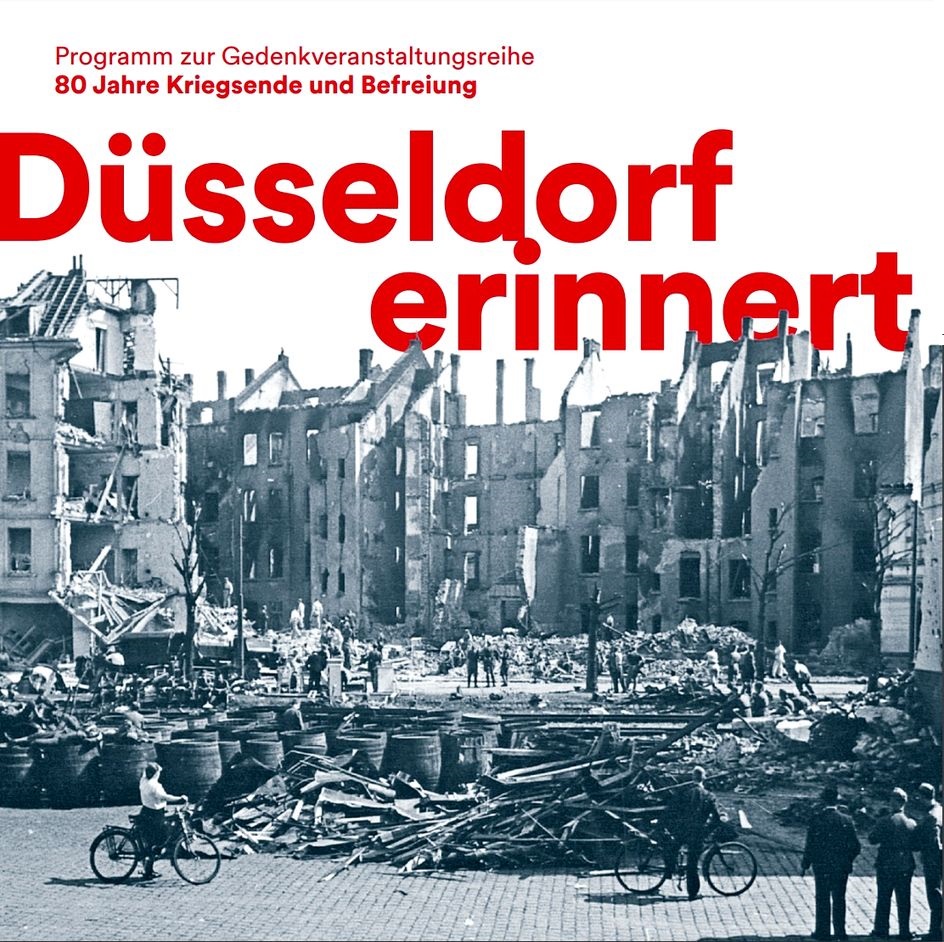
“Düsseldorf Remembers.” Program for the commemorative event series marking 80 years since the end of the war and liberation.
Thursday, 25 February, 7 p.m.
Anonyma, A Woman in Berlin, and Wladimir N. Gelfand, German Diary 1945–1946
Double Portraits and Exemplary Texts
The diary entries A Woman in Berlin, written by the journalist Marta Hillers (1911–2001) between 20 April and 22 June 1945, could not be conclusively attributed to her until 2003. Born in Krefeld, Hillers was a member of the Communist Party and lived in Berlin from 1934, working as a freelance journalist. In 1945 she witnessed the Red Army’s conquest of Berlin.
Wladimir N. Gelfand (1923–1983), a Jewish-Ukrainian lieutenant of the Red Army, took part in the conquest of Berlin and remained in the region until autumn 1946. Despite prohibitions against doing so, he recorded his experiences in extensive diary entries. His notes, published as German Diary 1945–1946 only after the collapse of the Soviet Union, are a rare testimony that also describes contacts with the German civilian population.
Venue: Johannes-Rau-Haus, Kavalleriestr. 12, 40213 Düsseldorf.
Organizer: SPD Düsseldorf, Working Group Against the Far Right (AK gegen Rechts).
Information and contact: www.spd-duesseldorf.de
Admission free; registration not required.
Access with reduced barriers.
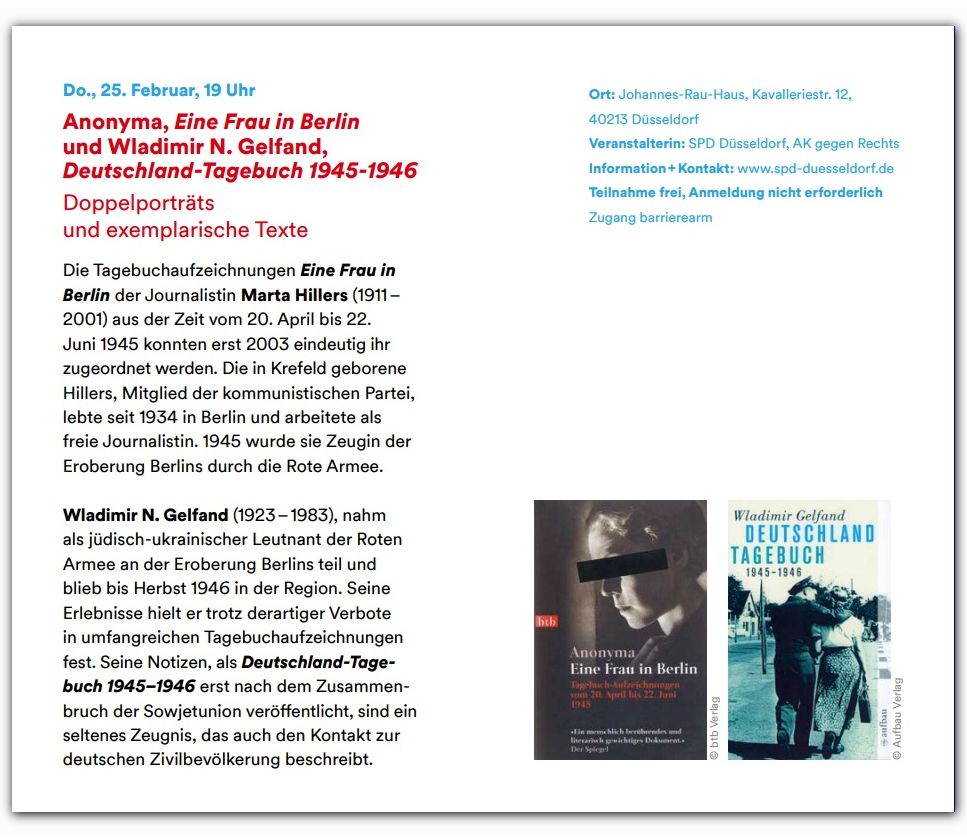
Book cover images: © btb Verlag; © Aufbau Verlag.
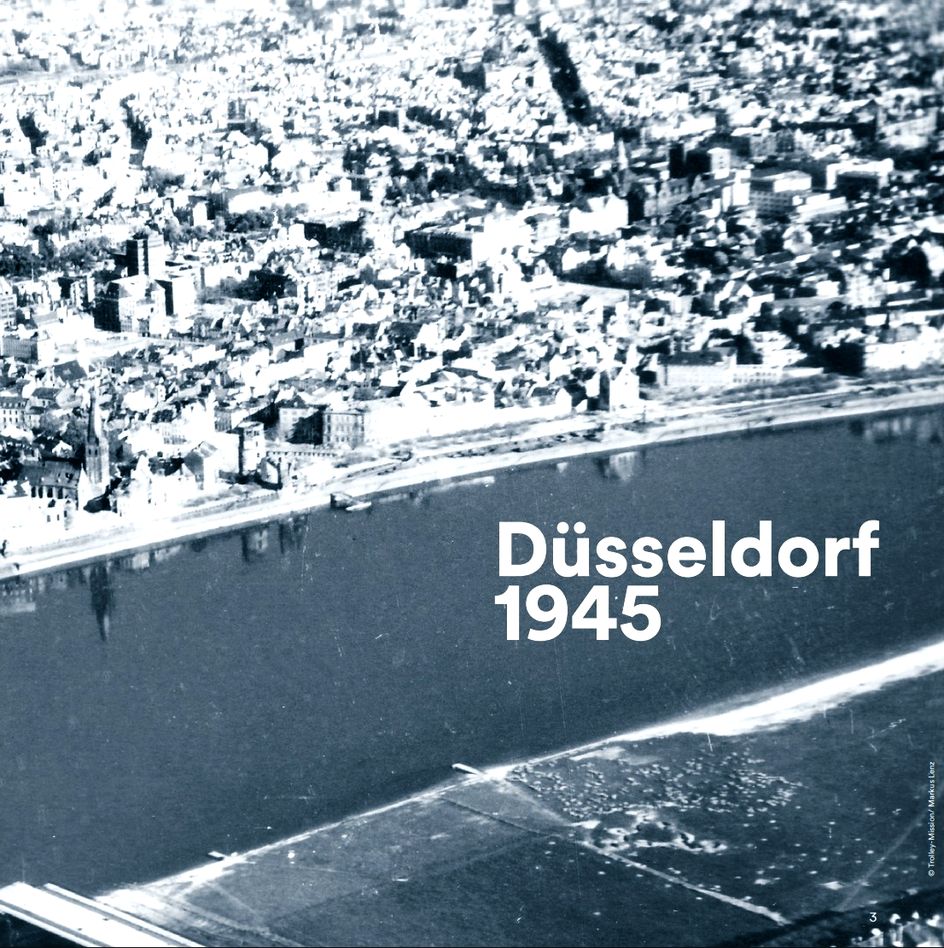
Düsseldorf, 1945.
Anonyma (i.e. Marta Hillers), A Woman in Berlin, and Wladimir N. Gelfand, German Diary 1945–1946. Double Portraits and Exemplary Texts
Tuesday, February 25, 2025, 7:00–8:30 p.m.
The building has a step-free entrance. A ramp leads into the exhibition room and to the elevator. A designated disabled parking space is located in front of the building. Guide dogs for blind visitors are warmly welcome.
Participation is free of charge. Recommended age: 14–99.
For: individuals; groups aged 14–18; ages 18–25; ages 25+; intergenerational groups; senior citizens; young people; adults.
Gerhart-Hauptmann-Haus Foundation
Bismarckstr. 90
40210 Düsseldorf
Contact: Ilona Gonsior, Public Relations
0211-16 99 134
gonsior@g-h-h.de
www.g-h-h.de
The Gerhart-Hauptmann-Haus Foundation / German–Eastern European Forum.
© Regioactive
© Rausgegangen
© Stiftung Gerhart-Hauptmann-Haus | Deutsch-osteuropäisches Forum
© Kulturgehtweiter
© City of Düsseldorf Memorial and Remembrance Site
© Musenkuss