|
Of Loss and Loot
Stalin-Era Culture, Foreign Aid, and Trophy Goods in
the Soviet Union during the 1940s
Nathalie Moine
In an essay entitled “Spoils of War,”1 Joseph
Brodsky, writing in
exile
in
America, described
the impact of foreign objects introduced by the war on his
childhood in
Leningrad. His account
mixes trophies seized from the enemy—German or
Japanese—with American aid
goods, including canned foods, radios, and above all films. These
various objects
of diverse origins were invaluable in shaping his individuality and that of his generation, as they created a foreign musical, cinemato-
graphic, vestimentary, and cultural presence within the otherwise
hermetic
Soviet environment, offering citizens the opportunity
to constitute themselves as autono- mous
individuals with respect to their political and social surroundings. It
could
be argued that the culture that Brodsky described, the outcome of indirect contact with other countries made possible by the war, contributed to uniting individuals
within a socially
circumscribed generation. It is also true that, taken as a whole, these
objects
represented unique challenges for the Soviet political system, a
challenge
perpetuated, as Brodsky aptly noted, by the steady stream of Western
products
arriving through illegal or legal means. Until the closing days of the
Soviet regime, these foreign objects were the focus of deep infatuation among the Soviet population for reasons that were
materialistic but that also involved evocations of a more or less
mythologized
culture.2
Objects played an important role in constructing an imaginary that influenced the development of Brodsky’s sense of
identity
during his youth amid the ruins
of Leningrad.3 It is also noteworthy that the origins of these objects became blurred in his recollections—some were donations from the Allies and others were spoils of war. The purpose of this article is to reconstruct this pattern, but in the opposite
direction, by exploring the circumstances that led these objects to be
present
in the martyred city of Leningrad and indeed throughout Soviet territory. The study
explores the role of a wide range of actors and political events both
during
and after the war in this massive influx of foreign goods, while also seeking to explain the
sort of
indifference or amnesia among Brodsky’s former compatriots
with regard to their
origins. Although the image of Soviet existence as uniformly gray, rigid, and above all, closed—the war bringing with it fragments of Western civiliza- tion
for the first time—needs to be taken seriously because it
emanates
from contemporary accounts, it should also be questioned. In fact, the
war
provided every level of Soviet society with an opportunity to display
their
prewar posses- sions,
either
stolen
or
destroyed
by
the
enemy,
in
inventories
that
reconstitute
far more
varied
and
sophisticated
tastes
and
imaginaries
than
one
might
expect.
This is true in part because they reflect
changes in official prescriptions concerning matters of taste, which, beginning in the 1930s, had rehabilitated a style inherited
from the European middle class
of the nineteenth century. Brodsky’s “Spoils of
War” thus calls the entire
material civilization to which the revolution gave birth into question,
i.e.
not only all of the objects that constituted it, but also the social
relationships that were tied to these objects and the relationship with abundance, luxury, and tastes that
were of Western origin. This interrogation cannot therefore be
limited to the end of the war, but instead calls for the examination
of several earlier periods in order to understand how the war and the objects associated with it
influenced Soviet civilization.
The wider effects of
the war on the status of objects were not limited to the USSR in the 1940s. In fact, over the past two decades, scholarship covering the period of World War II has gradually constructed the idea that the material world of
civilian populations had become an essential feature of
“total
war” for every combatant nation. The goal of Nazi Germany’s systematic pillaging was not merely to acquire wealth, but to humiliate the peoples of defeated countries. This was
followed by a vast attempt to inventory the losses
experienced by the victims, part of a reparations policy that resulted
in the
organized transfer of assets
of
every
kind
as
well
as
financial
compensation,4 in addition to an unprece-
dented influx of privately and publicly funded
humanitarian aid.5 This
three-fold
phenomenon—pillaging, inventories, and
reparations—required the creation of specific administrative agencies in the different countries concerned. The character and contents of the archives that they left behind provide evidence of commonali- ties across individual experiences, and allow scholarly efforts to retrace the history of the objects, including the donations that were collected by American immigrant
communities and sent to the
USSR, the loot gathered by Soviet dignitaries in the conquered
territories, and
the inventories created by Soviet citizens to declare their private losses.
While the fate of
art works and technologically
sophisticated industrial
objects
made
the
deepest
impression,6 it was above all ordinary objects that became central topics in political discussions and high-level conflicts,7 while also remaining the principal preoccupation of
a
large number of individuals for whom the war could be either a
catastrophe or a
blessing.
The case of the Soviet Union is thus part of the wider role played by objects, and the process of investing them with meanings, during wartime. Despite similari- ties with other combatant societies, however, the Stalin-era USSR—combining an economy
defined by scarcity and the deep politicization of
even the most minute details of individuals’ material
possessions with the
authorities’ desire to com- pletely control distribution8—had already endowed objects with a particular status that the war further altered. In reality, Brodsky’s “Spoils of War” concerned every layer
of Soviet society, even if their deepest significance was
ultimately defined by changing relationships with material comfort as well as Western culture and the shifting
political loyalties of the Soviet elites.
Abundance from Abroad
After
the
immense
destruction
wrought
by
the
war,
Soviet
territory
experienced an influx of foreign goods
that, although totally inadequate to meet the needs of a population still impoverished by the war, was greeted with profound desire. Foreign objects were enormously varied, ranging from used clothing collected by American charitable
organizations to the solid
gold dishes of 1940s Nazi dignitaries. These consumer
goods reflect two
very distinct lines of supply. The first, which began approximately mid-war, was foreign aid sent by the Allies or neutral coun- tries
via different methods to the
Soviet population. The second was the fruit of intense pillaging by the Soviets following the occupation of former enemy territory.
Jewish organizations played a major role in that humble part of Western
aid, care packages containing critical basic commodities. The Stalin administration was sensitive to the susbtantial population of émigrés from the former Russian Empire who, formed into groups of every stripe, constituted natural donors. It took pains to help
to mobilize these groups to
assist the Soviet population. Relations were never simple, however, as
they
replayed old conflicts around humanitarian aid, which had been suspected of facilitating propaganda and conflicts since the early days of Soviet Russia, when the Bolsheviks simultaneously attempted to encourage and channel aid to the hungry and to Jewish populations that had been the victims
of pogroms during the civil war. Jewish donors frequently expressed
doubts and
dissatisfaction about who actually received the aid, a climate of
suspicion
that lasted throughout the war in Jewish anti-Communist circles. In order to counter such criticisms, these groups felt that it was important to verify what was happening on the ground in the liberated Soviet territories. Beginning in late 1943-early 1944, the
Russian
War
Relief,
the
principal
organization
funneling
American
humanitar- ian aid, most of it Jewish,9 had
a permanent resident
representative in Moscow, Leo Gruliev.10 Despite
these efforts, access to the provinces that were previously inhabited
by strong
Jewish minorities remained closed to him11 and,
when his superior, Edward Carter, a pro-Soviet American intellectual, visited in August 1945, the
Stalin administration chose to show him the heroic cities of Leningrad
and
Stalingrad,12 the
high point of his visit being
the mining region of Donbass.13 The
itinerary of Carter’s visits thus defines a geography of the
victims of the war
that emphasized sites symbolizing the heroic resistance of the Soviet
people,
Russian heritage, and one of the jewels in the Stalin-era industrial crown, but that remained silent
where the massacre of the Jews was concerned.
This tension surrounding aid distribution was relayed to authorities numer- ous
times by the Jewish
Anti-Fascist Committee, which had been created at the outset of the war by the Kremlin in order to mobilize Western Jewish opinion.14
The work of the Soviet Red Cross in liberated
zones crystallized their criticisms. Foreign organizations had agreed that the aid was to be distributed “without dis-
tinction of nationality,”15 but
they had also
obtained an agreement in principle
that priority would be allocated to districts with the highest concentrations of Jews. However,
in the context of the increasingly open anti-Semitism of the population
and
local authorities, the Jewish Anti-Fascist Committee received abundant
mail
from individuals complaining that they were excluded from distribution precisely
because they were Jewish, quite the opposite of special compensation. One ghetto
survivor who returned to his home in Odessa denounced
the immoderate desire
of his
fellow citizens for Jewish property,
relatively rare in a city
that had
already suffered a “furniture catastrophe,” when Jews’ apartments were plundered during the Romanian occupation three years earlier. The term “catastrophe,” used at the time to refer to the genocide of the Jews, was not a random choice of words
for the author since, in his view, the two events were
“genealogically”
connected. The Soviet authorities’ indifference to the stripping of Jewish survivors’ assets,
including by the Extraordinary State Commission—responsible for determining crimes perpetrated by the
occupiers and
assessing damages—ultimately served to deny the
fate of a community that
the Fascists had virtually destroyed already.16
The
political
importance
attributed
to
such
matters
merits
close
attention: the
investigations overseen by Viacheslav Molotov following mail that he received
from Solomon Mikhoels implicated
the top levels of the government, while also concluding that there was
a total
absence of discrimination.17 Although
it cannot yet be seen as a systematic policy, state-sponsored anti-Semitism had been growing from
the beginning of the war, before becoming fully fledged in the late
1940s when the Anti-Fascist Committee began to be persecuted and was
eventually
disbanded.18 It is also conceivable that Molotov was sincere in his desire to ensure that the Jewish population of liberated regions received material assistance. Other high-level figures primarily voiced mistrust and even animosity towards the Jews,
however, using arguments that had
previously proven effective, including the idea that humanitarian aid was a Trojan horse for the capitalist powers. Such argu- ments had in fact been brandished since the regime’s earliest days, when aid was destined
for famine victims as well as
Jewish victims of the pogroms during the civil war. It was also argued that special treatment of Jews could awaken popular
anti-Semitism, an argument voiced since early in the war by the
advocates of silence about the fate of Soviet Jews under Nazi
occupation. These
arguments would soon be joined by warnings about the “Zionist menace.”19 For foreign-based
Jewish organizations, the opacity of Soviet methods
appeared particularly sus- pect because they were fully aware that
other
nationalities—such as Poles and Armenians—had
succeeded in establishing their
own aid networks, managed by their own representatives.20 This
reasoning neglects the complicated question of the
citizenship of aid recipients. It may nevertheless have encouraged
Mikhoels to advocate for the creation of an organization to oversee the distribution of material aid for survivors; in 1943, he had already proposed the creation of an agency devoted to the search for Jews reported missing in Soviet territory who were being sought by their relatives both in Russia and abroad.21 It is worth observing that neither of these
proposals was ever acted upon.
From the perspective of foreign donors in the early 1920s, aid
distribution and
the search for pogrom victims were closely linked due to the opacity of
the
information released by the Soviet authorities.22 The
Committee nevertheless paid a heavy price for this project. Its
connections to foreign Jewish charitable organizations, particularly the American Jewish Joint Distribution Committee, were
an
important element in the official accusations that led to
the execution
of most Committee members in the early 1950s.23
The redeveloping Jewish communities of the western regions of the USSR,24 which were focused both on religious renewal and material solidarity with impover- ished
fellow Jews, did ultimately succeed in tapping a portion of the
foreign aid that was intended for them.25 As
a consequence, they were often suspected by Soviet authorities of providing a smokescreen for commercial activities involving
gifts from foreign Jews. One reader of a report from
the region of Zhytomir used red
pencil
to
underline
the
claim
that
nearly
every
Jewish
community
had
contact with
religious American Jews, who sent them valuable packages.26
The missions of the United Nations Relief and Rehabilitation Administration
(UNRRA) created in Minsk and Kiev in the spring
of 1945 managed to maintain an
effective
working
relationship
with
Soviet
authorities,
but
their
small
size
and
the limits on their movement prevented them from verifying how the
agencies created by Soviet authorities in the Republics were actually managing aid distribu- tion
in the field.27 The
volume of the
aid provided by the UNRRA to Ukraine and Byelorussia was considerably less than the aid offered to other liberated European countries, but it nevertheless proved to be critical for the population, particularly
food donations.28 According
to reports filed by local
UNRRA missions, the food sent
by
the
United
Nations,
with
the
exception
of
bread,
represented
the
majority of what was sold in the stores responsible for distributing rationed goods.29 In early 1947, the prospect that this aid source might end led the missions to fear the worst, as they saw food supplies and health conditions
in the region declining before their eyes.30
Tushenka (corned beef) was unquestionably the most archetypal item among foreign food donations, which primarily consisted of US Army rations, and Brodsky was
not
alone
in
expressing
indelible
memories
of
this
common
foreign
food
item. Among people for whom every basic necessity was in cruelly short supply, donated clothing
was also the focus of particular greed and desire. Like corned
beef, but more enduringly, clothing was valued because it enabled survival, but also because
it provided a small sample of simple Western pleasures. For that reason, references to
clothing aid in official public discourse became less frequent as its
importance among recipients grew.31 Typically referred to as zagranichnye podarki (presents
from abroad), or amerikanskie
podarki (American presents), the exact origin of donated
clothing was
rarely evident, although it does raise the question of the prestige and recognition that the West, especially the United States, derived from its
largesse.
Still, the primary concern for ordinary Soviets was not where these
donated
goods came from, but simply how to access them. The use of the term
“presents”
(podarki) referred less to the way in which these foreign items came to be on
Soviet soil and more to a
category of goods combining relative quality and abundance, in stark contrast
with the scarcity and poor quality
of Soviet products. In fact, these same objects were sometimes also labeled amerikanskie
veshchi
(American
“things”). They were perceived
as the very least that
could be provided by a culture
that
was
so
materially
superior,
even
where
used
clothes
were
concerned, even if it
lacked Soviet endurance. These basic donations, as appealing as they may have been, were far from sufficient to alleviate the deep physical suffering of the
Russian
people. Indeed, this very imbalance was a source of controversy: for some, it was the insultingly
low price that
Westerners were willing to pay to conceal their cowardice, while for others, it was the Soviet regime that was humiliating its own
people, who were reduced to
rejoicing in donated items of little value in the West. In one
propaganda
letter, a young girl marveled at a green dress with two pockets while telling her story as a child war victim and daughter of a veteran who fought
on
the
front.32 Varlam Shalamov referred to American clothing with similar
tenderness,33 before
continuing to describe the
happiness of “starvers” gobbling whole barrels of
American solidol, an industrial
lubricant delivered at the same time as the
lend-lease machines that were used to move mountains of frozen cadavers
from
the Gulags.
The means by which
these objects were appropriated by Soviet citizens also subverted their original destinations. A pyramidal system of committees was supposed
to ensure their distribution, a task taken over,
as we have seen, by the Soviet administration. In reality, however, aid
sometimes accumulated in ware- houses where local notables were given first choice, as in the case of railway admin- istrators in the Siberia-Ural region who arrived, accompanied by their spouses, maids, and
chauffeurs, and made off with the best part of what was in storage.
Little remained afterwards other
than clothing in poor condition, mismatched stockings,
and useless or inappropriate apparel whose theoretical recipients remained a mys- tery.
The American gifts that eventually did arrive were thus greeted not
only with
desire but also with anger, and many of the “deserving
poor” expressed
indignation and even refused gifts considered doubly insulting in view
of their
needs and what they felt they deserved, but also with respect to the
officials
and their families who had been given first pick. News of the
scandalous condition
of donated clothing became widespread and was repeated across the USSR as far as
Magadan.34 Local and regional civil servants were not alone in helping themselves
to the bounty that was stored in warehouses, accompanied by
their households. The first secretary of the Party in Byelorussia,
himself a
member of the Central Committee, Panteleimon Ponomarenko, was accused of similar behavior. This cele- brated chief of the partisans during the war apparently did not hesitate to offer the best of what was carelessly stored on the grounds of the central base of Belglavsnab in
Minsk to the leaders of the Republic or to keep it for himself.
In reality, the wives
of the top-level administrators in Byelorussia looked forward to the arrival of treasures from Germany labeled “trophies” or “reparations”
far
more
eagerly
than
clothing
and
shoes
from
the
UNRRA.35 The objects contained in the crates of these two distinct origins—foreign donations and “trophies”—were generally stored in the same locations but were distinguishable in two significant
ways: how they had been
collected and their value. In fact, arrivals of “trophy
goods” are etched far
more vividly in Soviet memories than aid that represented Allied
solidarity.
This bounty is inextricably linked to the extreme violence that
accompanied the
Red Army’s occupation of defeated countries. The behavior of
Soviet troops
towards the
civilian population,
particularly the systematic
rape of women, has remained largely unacknowledged in the East, however,36 although
it was
extremely common over a vast territory. One of the first and most
spectacular manifestations of these violent rampages by the occupying Soviets that culminated in
Germany was the sacking of Budapest.37 Although
they have received little attention in Russia, the veritable pogrom
conducted
in Eastern Prussia and the terrorizing of Berlin by the Soviets upon their arrival are widely known in the West, while local memories echo the archives in reporting a dangerous environment for occupied
civilians that lasted for years, involving
sporadic rape and depredation by isolated soldiers and bands of
deserters, who
requisitioned women, livestock, and every kind of food reserves at will
from
terrified villagers. While the Soviet narrative
concerning atrocities committed by the occupiers in the 1940s had
always included
a close connection between assaults on property and physical violence,
in this
instance they became dissociated in Soviet memory and discourse. This dissociation was facilitated by the fact that the physical violence committed against defeated populations differed in scale and nature. In truth, the violence resembled
material damages, not only because they occurred together but also because of the treatment of enemy women’s bodies, as the call to simply kill every representative
of the German nation
vanished from Soviet propaganda. The prevailing idea was that appropriating defeated civilians’ property and assets was justified because of the
pillaging suffered by the Soviet population during the war, an
idea of justice reinforced by the well-known shock Soviets experienced
upon
crossing the bor- der
into
defeated
countries,
which
even
in
ruins
were
so
obviously
more
prosper-
ous than their own country. The Soviets also saw—or believed they saw—among
their defeated enemies, from Romanian cities to Prussian farms, the direct outcome of plundering at the hands of the Germans on Soviet soil, from livestock38 to tramways, including the objects of value that
were found in former occupants’ apartments.39
This point of view
meant that serving oneself was entirely fair and was not mere blind revenge, a justification that also extended to destroying enemy property.40 Although destructive acts, like physical violence against the population, particularly women,
were not addressed in public discourse in the USSR and continue
to this day to be met with silence, this was not the case concerning
the
confiscation of property—including personal
property—belonging to the residents
of defeated territories. At the time, much as would be true today, the
appropriation of war trophies was seen as both legitimate and harmless.41 For
a Soviet ranking officer, the wristwatch was a typical example of such loot, and witness accounts commonly reflect
that it was not unusual for a soldier to wear several watches on
his arm. Tolerance of such obvious evidence of theft from the enemy
reveals the
meaning attributed to it at the time: not only were watches extremely rare in the USSR and buyers
easily found when a soldier
returned home, but a certain compulsiveness with regard to enemy
property was
also perceived as acceptable.42 Frequently
wearing several watches, even if they did not work, and sometimes on both arms, also
mirrors the treatment of
German women, whose age, physical condition, and other personal characteristics seemed to be unimportant to the soldiers who raped
them.
The popularity of
bicycles, which were still rare at the time in the USSR, provides an
excellent
illustration of the uncomplicatedness with which trophies were acquired
and
displayed. Even Soviets from privileged backgrounds had no idea how to
ride a
bicycle, but they were completely unashamed to reveal their clumsiness. Everyone knew that their acquisition may very well have been associ-
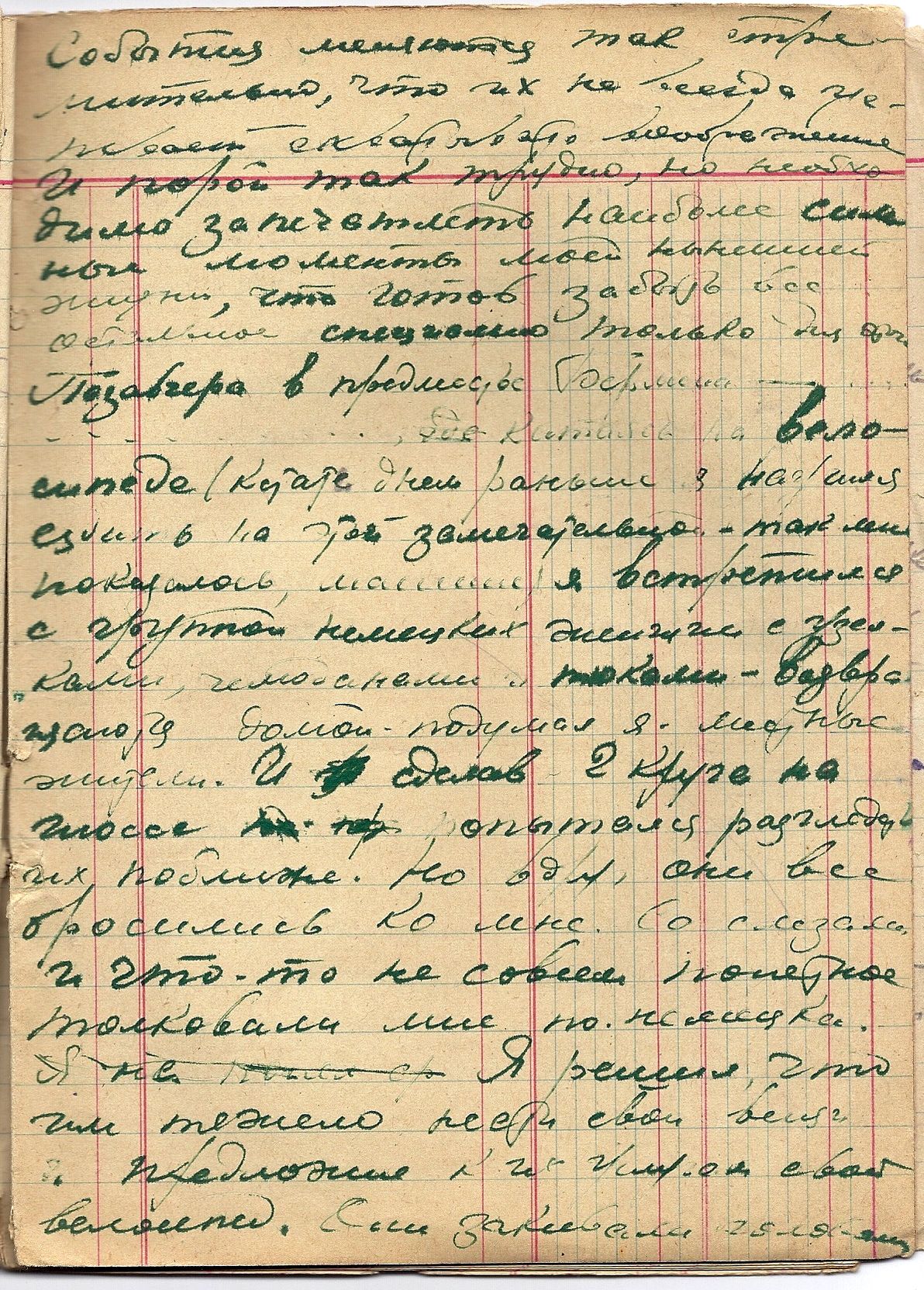
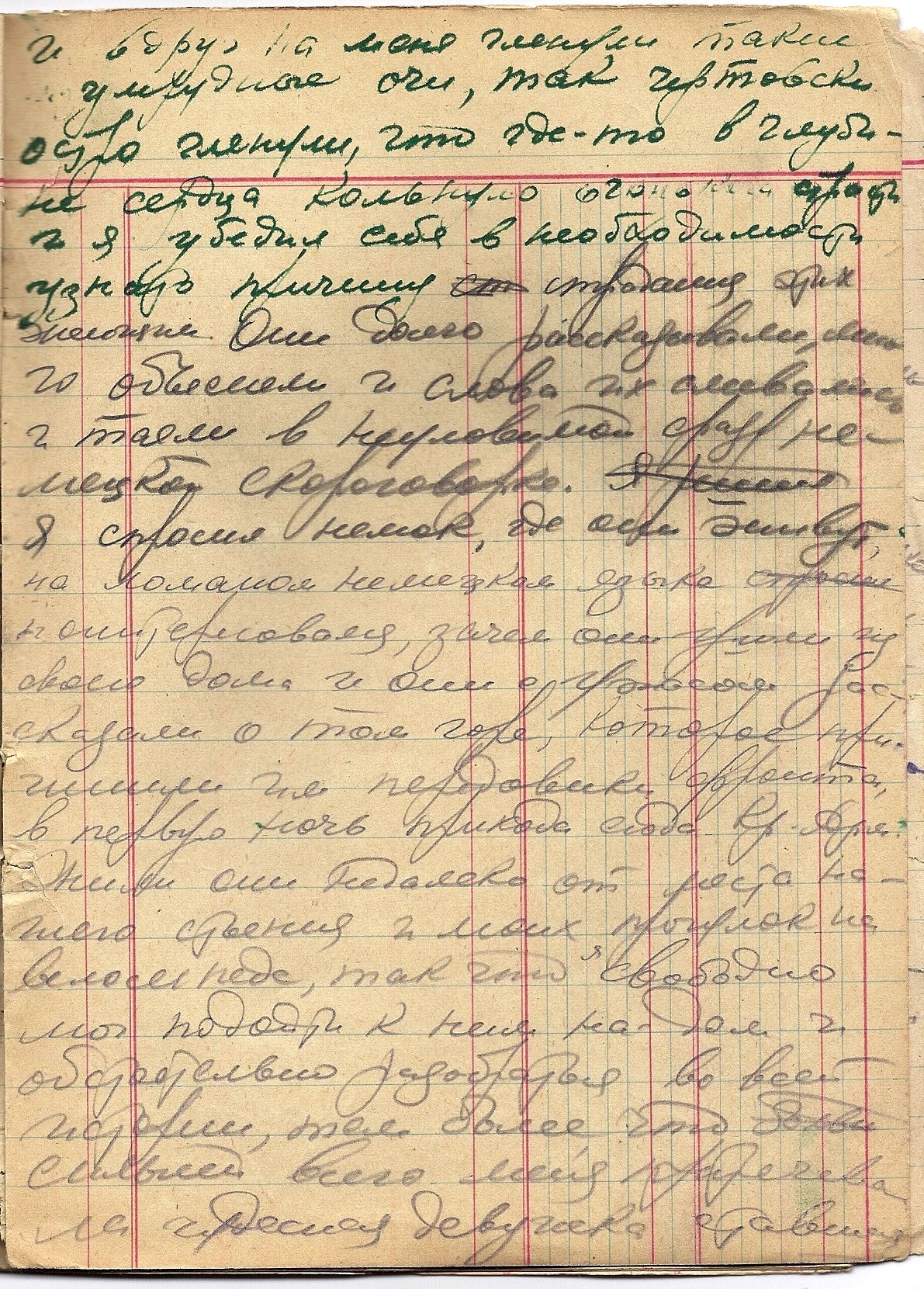
ated with a rape or a murder, and the sight of Soviets learning to ride bicycles with childish delight mirrors an image often reported by defeated peoples of barbarians whose utterly naïve behavior stands in dramatic contrast to the savage acts perpe- trated by the very same soldiers.43 One Soviet diarist, however, named Vladimir Gelfand,
turned this disjunction to his
advantage, and the day after learning to ride a bicycle he felt
sufficiently at
ease to call on a German woman and her daughter, who had been raped; the woman asked him to protect them against his compatriots, an offer that he
politely declined.* 44 Somewhat
later, dressed in an
elegant civilian suit that was probably tailored for him in Germany, he had himself photographed
riding his bicycle, an action shot that was unusual among his contem- poraries.
The snapshot attests to his dexterity, but above all it allowed his
quest for
objects to be reframed and placed on a different level.
In
fact,
although
they
were
celebrated
in
Soviet
propaganda
beginning
in
the 1920s, cameras were in reality very
scarce, and they were an even more popular trophy item than bicycles or watches, which were seen as purely practical.45 Cameras propelled
their owners into an entirely new cultural practice and were a
source of great satisfaction among members of the intelligentsia with the good fortune of acquiring
them.46 The
young Gelfand obtained his own camera in January 1946, perhaps on Berlin’s Alexanderplatz, where all sorts of goods exchanged hands more or less discreetly.47 During his extended stay in Germany, he used cameras as trade
objects, but he
ultimately learned to use them and attempted to accumulate the
equipment needed
to develop his own photographs.48 He
then began making portraits
of
his
feminine
conquests,
the
great
project
of
his
experience
of
the occupation, as well as of the people he met and the cities and landscapes through which
he traveled.49 This
new passion even tended to
replace his diary.50
The radio receiver, the
phonograph, and the typewriter were also sought after by Soviets who
essentially shared the cultural universe of the West, a sense of common
values that
helped Soviets to feel
less concerned by the
exact circum- stances surrounding the
acquisition of such objects.51 Trophy
goods, in addition to functioning as a kind of compensation, thus
offered
access to a world that had developed
a
modern culture to
which
Soviets—both leaders and ordinary citizens— all
aspired.
As a consequence, the
tension between the political model represented by Stalin’s USSR and these material aspirations created complications that inevitably
led to restrictions on who should be allowed to have access to items
seized
from the enemy. Derived from the troops’ thirst for revenge
and a common method
of compensating a population still impoverished by the pillaging of the
occupying forces and the deprivations of war, trophy goods also presented the risk of foment- ing
mass insubordination and a dangerous fascination with Western
civilization. Still, at least at first, Soviet leaders appear to have encouraged and, in a certain way, helped
to organize this opening to Western material culture, while
nevertheless
attempting to ensure that access remained stratified.
On December 26, 1944, as the Red Army was approaching German territory,
a decree was issued authorizing soldiers to mail monthly packages back from the front.
Packages’ weight varied
according to rank: five kilos for rank-and-file sol- diers, ten kilos for officers, and fifteen kilos for generals.52 The decree drew atten- tion
both because it was considered
an open invitation to soldiers to seize what they could, and because it was also interpreted at the time as imitating the German policy allowing Wehrmacht soldiers and other German citizens in occupied territo- ries to mail postal
packages.
Although he expressed moral disapproval of the decree, one Soviet officer nevertheless justified it in his journal, noting that “every month, the
German soldier was allowed to
send home a package of sixteen kilograms from the territories they had seized.”53 The explosion in the number of packages that followed this decree inevitably outstripped the capacity of the postal service. In Kursk, for example, employees were specially assigned to handle packages sent from
the front.54 The
number of monthly authorized
packages was later reduced, but it never matched demand, compelling
soldiers to
resort to different forms of subterfuge. Regular packages mailed to family members through the postal service or
other channels came to be seen as a veritable duty for soldiers with
the good fortune of being posted abroad. Gelfand’s mother
even placed orders
for adults’ and
children’s clothing and other valuable items, adding, however, that he should be discreet, even if a considerable portion of their correspondence related to simi- lar
requests.55
This liberal
policy concerning the
individual transfer of property belonging to
defeated peoples to Soviet homes did not change
when the first great waves
of
returnees to the USSR repatriated former Soviet detainees and
demobilized
soldiers, soldiers, and civilians with permission, all of whom were exempted from customs procedures in the summer of 1945. The bags of returning soldiers in special trains
indeed seem to have reached epic proportions. One account of a
military veterinarian returning home to Uzbekistan in September 1945
from
Vienna with nearly a ton of baggage, almost certain (like many others) to be fleeced on arrival by
the local authorities,
provides a singular example of this pattern.56
Acquiring goods in occupied zones through the black market or in a variety of
different shops was made still easier by the permeability of the
borders. In
Gelfand’s journal, Berlin seems to be the epicenter of his
desire because of
the Alexanderplatz black market and an additional concentration of
trade near
the former Reichstag. In reality, however, the Berlin black market extended to virtually every street, house, and corridor, and every café in the city, which was filled with
beggars and rife with opportunities to exchange objects and food for
money and
other barterable items.57 Even when Soviet authorities attempted to eradicate this trade,
at least in such an emblematic location as the
Alexanderplatz, their efforts apparently proved to be in vain. In
November
1945, Gelfand, under the pretense of having his boots cleaned,
attracted a
flood of vendors concealing their wares under their clothes. In the
time it
took for a shoe-shine man to wax his shoes, he acquired a shirt, a leather jacket, several pairs of socks and gloves, under the nose of
Soviet patrols monitoring even
officers’ activities.58
The institutionalized transfer of loot seized from the enemy, which was soon
to be transformed into an official reparations policy,59 also offered an opportunity for individual Soviets, or for some at least, because the authorities responsible for
systematically collecting trophy assets also regulated their acquisition by ranking
officers: beginning in June 1945, Red Army generals were granted a car at no cost, while
rank-and-file officers could
obtain either a bicycle or motorcycle. Generals were also authorized to acquire an upright or a grand piano, a radio, a hunting rifle, and a wristwatch, pocket watch, or a pendulum clock. Generals and officers could also receive, for a fee, carpets, tapestries, furs, tea services, cameras, and other valuable goods.60 The
possibility of purchasing a
trophy asset from the Soviet occupation constituted an obvious
privilege that
enabled Gelfand to acquire a radio receiver for four hundred marks that would have cost ten times that price on the open market in
Berlin.61
The occupation of
defeated countries made it possible to gain authorized access to a level of luxury that was actually organized by the government, with the effect of
reinforcing social
hierarchies within Soviet society. Serving in foreign territory as either a civilian or soldier was in itself an advantage, regardless of rank, but for the elite, who made no efforts to conceal their good fortune, the authorities
reserved the finest items. The dissident Larisa Bogoraz relates that in the immedi-
ate postwar period, the daughters of generals serving in Germany wore
dresses
that were dramatically different from everyone else’s because
of the fabrics
and patterns that their fathers sent from Berlin. She concluded: “That was the postwar
taste—new dresses cut out of
luxurious Western fabrics.” The privilege was all the more
visible in that it
involved not only the fabric but also the cut of the dress, which made
them
look like “young German girls,” a resemblance
clearly considered highly respectable and even enviable.62 Bogoraz also recorded the fact
that her uncle, a general serving in Germany, brought her back pieces
of
fabric.
The open appropriation
of the fashion and culture of the conquered was a widespread phenomenon
in the
postwar USSR, which the projection of trophy films suggests even tended to be encouraged by the Kremlin. The cultural opening
offered by the war was in fact highly eclectic, enabling aspects of American culture to
rub shoulders with those of old
Central Europe.63 The
most remarkable aspect of this
phenomenon was that it became generalized across every layer of Soviet society, particularly among the younger generations, despite the deformations and reappropriations
inherent in the vast geographical, social, and cultural distances that separated the ordinary Soviet citizen from the urban locations in which most of the clothing, fashions, and music
imported from the
West were concentrated.64
The tolerance of the Soviet authorities towards the theft of enemy property, or
the clearly legal
possibility for individuals of a variety of ranks to import vast
quantities of
foreign goods, constituted only one aspect of this massive material
transfer from defeated countries, particularly Germany, towards the Soviet Union. The sheer scale could only compromise the social and political order that the Stalin
administration
had managed to reestablish in liberated territories, and it inevitably
created
problems of misappropriation, the black market, and other forms of uncon- trolled
circulation throughout the Soviet Union.
This trade fueled the
rise of networks that were typical of how the under- ground Soviet economy operated. Some individuals did not settle for bringing back their war-related prizes for
themselves or their friends
and families, extending their activity into illegal trade. In late 1946, Tambov’s militia confiscated 4,622
furs from one veteran and former officer, who had stolen them from a store in Berlin at the end of
the war, and was
preparing to sell them in Moscow. Another veteran, who returned from Germany by car in October 1946 with a trunkful of trophies that he
later sold to his brother-in-law, was arrested in the spring of 1947.65
Although
it had already reached unprecedented proportions, this circulation of appropriated loot attained an entirely new
level at the end of the war with the beginning of deliveries that were
part of
the Soviet reparations policy. Arriving by land or sea, shipments were
subsequently
loaded onto entire trains destined for every corner of Soviet
territory.
Cargoes of loot were inadequately guarded, and record-keeping regarding
contents was not systematic. Indeed, theft from trains and warehouses
became
such a serious problem that, in January 1947, the Ministry of the Interior proposed creating an inter-ministerial commission to take necessary counter-measures.66 Thefts on Soviet soil were committed by individuals and
by armed bands, but also by networks of officials responsible for
transport- ing and storing the spoils. These networks were also
involved in the
resale of goods, for example in the case of a documented network trafficking trophy goods at the
depot in Novosibirsk that was
dismantled in early 1947. The incident revealed that a number of grand pianos, dressers, and pendulum clocks were deco- rating
the homes of a small circle of local administrators who had acquired
them at bargain prices, although they were originally intended as compensation for meri- torious
civil servants.67
Socialist property theft was a matter of constant concern among Soviet author- ities,
and
in
June
1947,
ukases (decrees) stiffened sentences for these crimes. The Kremlin was keenly aware of the mass theft of individual and public property, even as the nation remained deeply impoverished by the war and at risk of outbreaks of famine. The way it viewed this was no doubt greatly influenced by the misappropri- ation of massive deliveries of great value from foreign destinations, considered to be state property and therefore representing substantial loss of revenue. Further more or less related factors complicated these economic considerations, including the growth of networks at every level, the consolidation of patronage, and the lack of
centralized management of how the
loot was distributed. The Stalin adminis- tration found ways to take advantage of this rampant corruption, however, using
periodic official anti-corruption campaigns to unseat officials seen as problematic. One probable example of such an opportunistic purge occurred in Byelorussia, where the Party first secretary, Nikolai Gusarov,68 discovered a scandal involving twenty- seven thousand trophy cows
that had been delivered to the Republic in 1945. Byelo- russia had suffered more than any other Republic during the war, and the confiscation of
these cows by two thousand relatively high-ranking officials was
perceived as particularly
blatant given that
more than 150,000 impoverished kolkhozian families possessed none. Indifferent to the misery of those whom they were responsible for
governing,
these officials had completely lost sight of the collective livestock culture of the
region and focused exclusively on developing their personal
connections and networks of patronage to serve their own
“middle-class”
preoccupations.69
Misappropriating
cows, a critical necessity for the
survival of millions of Soviet families, was both very common and very revealing of these officials’ lack of consid- eration for
the suffering of their fellow citizens. Although the logic behind their
indifference can be understood as stemming from the profit motive and a
desire
to maintain their political base of support, it is also interesting to
consider
their actions as a form of protest, in some cases at least, against the
reasoning behind the
priorities
set
by
the
central
authorities.
Such
defiance
of
the
official
hierarchy on
the
part
of
heroes
and
victims
of
the
war
was
sometimes
reinforced
at
the
most
local level by the profound, intimate acquaintance that flows from sharing such an
experience as the war. The case of a certain Gryn illustrates this
hypothesis.
The president of a sel’sovet in
the
Ukrainian region of Nikolaev, Gryn had reclaimed a trophy cow from a
family to
whom it had been awarded specifically because two family members were
serving
on the front. The pretext was that the Germans had confiscated
his own cow during the occupation. He also confiscated
from demobilized soldiers—whom he accused of being former police collaborators—the decorations
and documents that gave them access to certain privileges.70
An entirely different
kind of criticism arose from particular cases in which the immorality
of
misappropriated loot did not stem from injustice towards war victims
but rather
from an excessive appetite for luxury. Such accusations reveal a fantasized vision of what could be perceived as limitless possibilities for accumu- lating
wealth belonging to the defeated enemy. The case of two highly
placed officials in the administration of occupied Germany is
illustrative of
this zeal for luxury. The men were removed from their posts after
confessions
extracted by Viktor Abakumov, former counter-espionage chief and head
of state
security, who was eager to discredit his rivals with Stalin.71 One
remarkable aspect of the case
is that the information collected through the operation appeared valid
to
Abakumov, or to Stalin himself. The quantity of objects of German origin “discov-
ered” when the apartments of the two accused men were raided
is
even more astounding,
however.
Just
as
a
single
example,
one
of
these
civil
servants’ Moscow apartments was found to contain over 3,000 meters of fabric, 8 tea services and other sets of household dishware amounting to approximately 1,470 pieces, 315 valuable antique objects such as statuettes and vases, 90 silver items, 41 carpets (including long hall carpets), 15
paintings, 359 pieces of feminine lingerie, more
than 150 pairs of shoes and other leather goods, nearly 60 dresses, 17 suits, 22 overcoats and furs, 323
pairs of stockings, 6 radios and phonograph-radios, and 4 accordions.
Such
mind-boggling, never-ending lists give the distinct impression of a
warehouse rather than a luxuriously furnished apartment, but the ultimate destination of these goods
was never fully explained. The idea of a resale operation is scarcely
men-
tioned, and only in an ironic tone, in the documents. A central element
of the
accusations, once again, was the exchange value of the stolen property,
but
this does not fully explain the sheer volume of the loot, even if it does showcase certain
highly suspect practices. Ivan
Serov allegedly offered a radio-phonograph to his superior, Marshal
Zhukov,
gold watches to the wife of a highly placed American general in Berlin, and two tea services and a hunting rifle to his subordinate Sidnev, but
this represented only a tiny fraction of the misappropriated loot.
The logistics required to transport this volume of bounty to the Soviet Union were
equally spectacular. The aircraft chartered by Zhukov for
this sole purpose are widely recalled, as are other similar scams, although they were never proven or avowed. Serov allegedly organized for his own benefit a veritable merry-go-round
of trains and automobiles, as well as an airplane that apparently shuttled back and forth
between Berlin
and Moscow loaded with furs, carpets, paintings, and other valuable
items.72
With a few notable exceptions, the descriptions of the objects remain largely
laconic and repetitive concerning the time wasted, instead of serving the country, in the futile personal use of the very items that represented Germany’s diabolical
superiority, such as the radio-phonographs that Serov allegedly had custom-made by a renowned German artisan using cabinetry from Hitler’s personal office in the
Chancellery. Little is consequently
known about Soviet thieves’ specific tastes, in particular which paintings
high-ranking Soviets chose to steal from
1940s German magnates, competing with the specialized brigades that crisscrossed the defeated
countries.73
Nor
do
we
know
for
what
ultimate
purpose
the
thefts
were
conducted,
whether for personal use or resale of art works on the black market on Soviet soil. The answers to these
questions
remain completely unexplored to this day. Similarly, it is not known what style was being referenced specifically in a report denouncing the
widespread habit among Soviet generals and officers in the occupied
zone of ordering “stylish furniture” from German
luxury firms to decorate their
Moscow apartments or dachas, although this practice does enable us to
understand that the relationship maintained by the top administrators with the material
world of the enemy was not limited to predation but also offered freedom from the asceticism
and lack of esthetic choices or personalization imposed by the Soviet
value
sys- tem.74 The
lifestyle for which they were
criticized is scarcely legible to us now, except for the elegant private receptions and hunting parties, which we know were
not strictly forbidden because of the authorization granted to high-ranking officers to
use tea services and hunting weapons. These habits, while not
prohibited out- right,
could
risk
leading
officers
into
dangerous
territory.
Those
accused
allegedly adopted what was described as a
“seignorial” lifestyle in occupied Germany that was
in blatant contradiction to
Soviet morality. The exact origins of the goods is frequently not
indicated
because they had helped themselves in warehouses, which were veritable Ali Baba’s caves and were distributed throughout Berlin and the
Soviet zone. When former owners
were referred to, they did not inspire pity because they were the former “big shots” (bogachi) of the Nazi regime. The sin of those
Soviets who were accused was
precisely that of having slipped into the lifestyle of the previous owners by occupying their requisitioned villas, and not of having
absconded with with their contents. The accusations are also mute
regarding the
individuals to whom appropriated luxury goods were officially destined.
One of the interrogators even exclaimed, referring to tapestries by Flemish and French
masters of the seventeenth and eighteenth centuries that had belonged to wealthy
Germans and that Sidnev had appropriated for his Leningrad apartment: “but the only place for these tapestries is a museum.” The boundaries of acceptable luxury, even in the Soviet interior of a member of the elite, had apparently been crossed.
Serov, although directly incriminated in depositions by his collaborators, was not
the subject of
investigation and continued to occupy his high position. At least two of his collaborators, however, were arrested in late 1947 and early 1948 and sentenced to ten years in a labor camp in October 1951.75 Rapidly rehabilitated after Stalin’s death, they revealed a different truth. In explaining how the invento-
ries came to be falsified, they
clearly conveyed between the lines the inferiority of national
products. During raids, Abakumov’s men included
objects actually of Soviet fabrication, objects made of nickel and
alloy or
platinum instead of gold and
silver
(materials
that
were
simultaneously seen as noble and contemptible) in the inventory of goods allegedly misappropriated from Germany. The rehabilitated men
did not deny possessing numerous unused items, however, confessing
to frenzied buying sprees while posted in Germany. More specifically,
it was
their wives (and by extension a niece or daughter) who scoured various locations in the occupied
zone, where for modest prices
vast quantities of goods that were not particularly valuable (although clearly impossible to find or hugely expensive in the USSR) were for sale, including stockings, linens and lingerie (for men and women), inexpensive decorative
objects,
and
“bric-a-brac.” There were ample opportunities to
find fully legal
bargains, from the “Voentorg” stores (where
valuable objects and
second-hand furniture were exchanged), which
were reserved for high-ranking Soviets, to the direct
sale to German and
Soviet individuals of the possessions of the former Nazis.
One of the two men also blamed his wife for illegally transporting goods from occupied
villas in Germany to Moscow. Appropriating the
resources of occupied Germany
was
regularly
blamed
on
the
wives
and
female
relatives
of
high-ranking
officers, who clearly lacked the Soviet morality represented by their
husbands,
who were too busy with work to remind them of it. Both men expressed
similar
disgust at this frenzied accumulation, mentioning the quagmire into
which they
had been dragged by their wives, who were not educated enough to resist
the “deleterious bourgeois environment” of defeated Germany.76 There was very prob- ably
a grain of truth to these assertions, which were made easier by the
fact that
Soviet discourse—and prevailing values—had always claimed that the “survival”
of
prerevolutionary
values,
among
them
an
attraction
to
superfluous
material
wealth, was
the fault of women. Nevertheless, these men were
apparently more than capable of using their power to appropriate particular items or to place direct orders with
prestigious German manufacturers, even if the items were intended
for the most
part for women, whether spouses or mistresses—another
recurrent association with this hunger for objects that contravened Socialist moral values. The fact that, despite repeated appeals, they were not able to rejoin the Party although they were
rehabilitated, can
be explained—beyond the twists and turns of de-Stalinization—by the renewed strictness of the Khrushchev
period concerning personal enrich- ment and philistine behaviors.
It is worth recalling
that these “moochers” were vydvizhentsy,
high-ranking officers
who
had
enrolled
in
the
Party
long
ago
and
had
been
mobilized
to
defend
the nation and the revolution, including in occupied Germany. They
claimed that
they had been corrupted by money, a reference to the fact that they
received
exceptionally large pay supplements befitting distinguished servants of the Soviet
government during their service in
the Soviet zone. The combination of sudden wealth (which, although
common
practice, was not mentioned in the Stalin-era accusations) and easy
access to
Western goods had thus resulted in a true shock to the values and
practices of
this layer of Soviet society. This had translated into a small
internal revolution, although
the difficulty of untangling truth from falsehood in the texts of
accusations
makes it difficult to determine with any certainty their precise nature
and
implications in the moral terms of the period.
Hidden Prewar Soviet Treasures
The primitive character of the accusations
filed against Soviet civil servants who displayed compulsive behavior concerning the products of capitalism, whether it can be
understood with reference to an imaginary shaped by the
Party’s ascetic morality or by the realities of an
impoverished society,
ultimately stems from the
very
dichotomy proposed by Brodsky. On one side was the uniformly grey
Soviet Union,
and on the other, foreign objects—from the most basic to the
most sophisticated—that opened a previously unknown world to Soviet postwar society, whether that world was associated with a liberating culture, abundance, or guilty luxury.
The problem with this
narrative is that it obscures the existence of the
“unknown” world of the
prewar USSR and the complex matter of the objects that it incarnated.
They were
available to a restricted circle of privileged members of society at the end of the tsarist period. Their prominence was renewed due to the uneven
production of Soviet
manufactured goods or foreign imports, and they circulated prolifically
at
different levels of urbanized Soviet society. The Soviet authorities had naturally played a key role in this circulation by expropriating and
redistributing the property of the former elite, before public authorities siphoned off on a massive scale anything seen as valuable that was possessed by individual
Soviet citizens. The central authorities were particularly avid for gold, then silver and
gemstones,
and eventually any valuable object that could be converted into foreign
currency that would provide access to the Western materials that were
useful to Soviet efforts to rapidly industrialize. Elena Osokina’s study of the found-
ing of the Torgsin, stores created on the eve of the great famine of
1933 in
order to acquire
foreign currency,
demonstrates the extent to which the quest for valuable goods
outstripped the fire sales of imperial collections and church
possessions
abroad that had begun in the 1920s. Old coins dating from the tsarist
period or
Kerenskii’s
government
hoarded
by
the
peasants,
and the silver teaspoons and family jewels of the middle classes, were
exchanged for bread as hurriedly as possible over the counters of the
Torgsin
stores, a process made easier by the fact that they could be melted
down into
ingots or disassembled for sale abroad. Destroying material patrimony, independently of any question of class-based social justice, was seen as unimportant, and the sole value attached to these objects from the past
was whatever foreign buyers were willing to pay for the
finest items.77 The
vast operation of pillaging
Soviet wealth engaged in by the occupying forces, from museum collections to
individuals’ domestic possessions, was thus
denounced by
the
very
same
forces
that
had
conducted
a
similar
operation
less
than
ten
years earlier.
The quest for items in
individuals’ homes, that would always be perceived as suspect
in the Soviet
context, and its corollary, the rabid hunger for objects developed by a population denuded of material possessions and brutally affected by shortages, can be seen in the magic shows of the magician Woland on the stage of a
Moscow theater in the 1930s, as imagined by Mikhail
Bulgakov in his novel The Master and Margarita. His incarnation of the Devil of foreign origin (his German identity
is alluded to) literally laid bare a public who had “scarcely
changed,” despite
the appearance of buses, telephones, and other indications of technical
progress that made it difficult to recognize the capital. His assistant Fahoth, creat- ing a
lady’s fashion boutique on stage, announces that the old
dresses and out- moded
shoes
worn
by
the
women
in
the
audience
would
be
graciously
exchanged for
the
latest
Parisian
creations,
triggering
a
tidal
wave
of
women
rushing
onto
the
stage, with no pretense of restraint, for these miraculous luxury
products to
take advantage of this unexpected, fleeting godsend.78 Somewhat
later in the story, a character
dreams
of
an
equally
nightmarish
spectacle
during
which
an
artist
in a tuxedo invites him to move into the glare of the stage-lights to reveal, under hoots from the audience, the presence of dollars concealed in his honorable Soviet citizen’s apartment.
They then attack a different spectator, a certain Sergei
Gerardovich Dunchil, for “stubbornly refusing to turn over
currency [he] still
[has], while the country is in need of it, and [he has] no use for it
whatsoever.” His mistress, Ida Kherkulanovna Wors—the repetition of these names, forenames, and patronymics with foreign resonances was not random—appears in turn on the stage bearing a bundle of eighteen thousand dollars and a diamond necklace worth forty thousand gold
rubles on a golden platter that the unfaithful husband had hidden
in her apartment in Kharkov. The spectators are invited in an
increasingly
threatening tone to surrender their foreign currency, which they should not have possessed in the first place, as an army of cooks bring in a vast cauldron of soup and a platter loaded with black bread.79 When the novel was finally published in the Soviet Union in 1966, well after Stalin’s death, these two passages were censored, perhaps
because
of their commentary on Soviet humanity beyond the vagaries of Stalinism, a humanity rendered grotesque by fear of their masters—obsessed with finding hidden treasure in
provincial apartments—and
by an undying attraction to every- thing foreign and
therefore
inherently, diabolically desirable. The Soviets of the 1930s depicted by Bulgakov were not ignorant of Western culture, quite the con- trary, but they were incorrigibly driven by material desires that were ultimately
labeled as a sin by the regime and thereby ineluctably transformed into torments.
Analyzing the inventories that
Soviets in occupied territories, whether they remained at home or were evacuated,80 were invited to submit from the end of
1943 in order to assess the losses caused by the enemy, confirms that
on the
eve of the war and after twenty years of Soviet government, the
material
universe of some
citizens was distinctly tainted
with the philistine tastes
described
by Bulgakov. It also indicates that they had not awaited the flood of foreign goods borne by the war to subscribe to Western cultural practices. Most surprising is the fact that they offered such detailed descriptions in the first place. In an apparent paradox, the destruction and theft of the property of millions of Soviet households by the enemy
accentuated
the rehabilitation of material comfort and, in the process, of individual property, that Stalin initiated during the 1930s. The Soviet government, within the framework of a broad investigation of crimes by the occupying forces in the 1940s and the material losses for which they were responsible, invited the inhabit- ants of occupied regions to declare the entirety of their possessions that had been stolen or destroyed.81 The normative discourse concerning objects that had pre-
vailed before the war was sufficiently weakened in this new context for
some of those declaring their losses to reveal, despite the immense poverty of the vast major- ity of their fellow citizens, ownership of property and possessions such as furniture,
clothing,
and musical instruments that revealed tastes diverging considerably from official ethics, however fluctuating they had proven during the interwar
period.
However, for the most part, it is the sobriety of the lists that is ultimately—and perhaps predictably—their most
striking
feature. In this regard, rural and urban inventories must be differentiated. In the case of rural declarations, the most signif- icant value was attached to buildings (a house, and sometimes adjoining buildings
like barns or warehouses), livestock, and above all
full individual ownership of a cow, as well as food stores. On the
other hand,
nothing, or almost nothing, was declared in
terms of furniture, dishware, or clothing, although there are
occasional references
to a chest or bolts of fabric. This absence of common consumer goods
can be
explained in several ways, but in most cases it should probably be
inter-
preted as revealing the extreme material poverty of rural Soviet citizens. This has been suggested in several reports without ever having been the focus of systematic study,
and it relates to behaviors in the context of the war whose exact
meaning is at the heart of major historiographical debates. The
extremely
rudimentary nature of rural interiors was reported, for example, by the dissident Bogoraz, who
recalled how as a young but very poor Muscovite she had left the city
to teach
in the Kaluga region in the early 1950s. Bogoraz recorded that she had
frequently excused her young nanny for stealing spoons or cups because
for her,
as for the other village residents, an aluminum spoon or a glass represented a truly foreign
luxury.82 While
her account reveals the nature of postwar Stalin-era life,
it could also be readily applied to earlier decades. In the late 1920s, humorously invoking the
Soviet mania for inventorying
the slightest consumer object, the satirists Ilya Ilf and Evgeni Petrov
remarked that the number of chairs in the Soviet Union was missing from the statistics. They crudely calculated this figure by taking
the total population and subtracting the peasants who in fact made up
its
major- ity, thereby expressing a truth that was no doubt well-known at
the
time: the vast
material and
cultural gap between
peasantry and urban
civilization.83 Refer-
enced in a comic way, the coexistence of these two distinct worlds would have a
dramatic effect ten years later,
when rural poverty would express itself in the war-era hunger for
objects. In
particular, the relatively active participation of the local
populations in the massacre of the Jews under the
occupation could be seen
as
stemming
from
a
desire
to
appropriate
their
possessions,
from
clothing
to furnishings.
Urban residents also participated in redistributing the meager possessions of the Jews, to the point that it became a
literary trope that can be seen in the letter written by Victor Strum’s mother. Strum was the central character in Life and Fate,
and the letter was written to her son, just before she was assassinated. It recounted the behavior of her neighbors from Berdichev during the early days of the occupa-
tion, when
they chased her
from the room
that she occupied and
stole her settee, predicting that her time was soon to come.84 In fact, while Strum’s mother, a doctor, possessed this element of relative comfort, many city-dwellers only declared own- ing a
table or a few chairs, one or
several beds, and sometimes an armoire. Anna Fedorovna Chudova, an
evacuee
employed in a candy factory in Kuibyshev (the present-day
city of Samara) who had worked washing dishes at the Mogilev hospital before
the war for the modest monthly salary of one hundred rubles,85 declared
an armoire, an “English
bed,” five chairs, and a table. Her clothing included an
overcoat, three
dresses, a pair of high-heeled shoes, and lingerie that she did not
trouble to
describe in detail. Valued at fifteen thousand rubles, her overcoat was
by far the most valuable item in her possession, while the armoire itself was only estimated to be worth one thousand rubles. Possessing a bicycle, which was valued at
the same price as an overcoat, was apparently a luxury that as a single
person
she was able to afford.86
Still, as the value of lost national heritage grew, descriptions became increas- ingly precise and began to include the
materials
of which items were made and
to
display a wider range of furniture, domestic items, clothing, linens,
and items
connected to cultural practices. It is possible to perceive in this tendency a reflec- tion of kul’turnost’, a commonplace in Stalin-era discourse relating to the lifestyle
of the 1930s. This untranslatable term designated anything related to
German Kultur, in other words, to different fields of knowledge and lifestyles, whose acqui- sition was necessary in
order to leave the
state of backwardness typically associated with peasants. Kul’turnost’ often expressed itself through clothing and the rehabili-
tation
of bourgeois manners, and it was also reflected in interiors resembling those of
the European middle classes in the nineteenth century.87 Gaining
access to a lifestyle consistent with kul’turnost’ could be measured by the possession of objects
that denoted both the modern spirit and the cultural appetite of their owners, such as
a bicycle, a camera, a radio or a gramophone. This was true in both
visual representations
for the wider public and for the
very sober statisticians who investi- gated Soviet
households’ budgets.
Other, more classical items were also reintroduced into the material horizon of the Soviets in a positive way, such as the piano. The origins of such items came
up in the case of older objects, however, because of the problematic question of inheritance
in Stalin-era society, where
bourgeois origins remained an impedi- ment, and very rapid social promotion was widespread among the new elites and a
fundamental value of the regime. Within the inventories, by
limiting the scope to these markers designated as indicators of an individual’s level of kul’turnost’, one paradoxically
encounters social spheres that are absent from the official description
of
Soviet society. Far from the Stakhanovites in factories who were in
principle
the intended audience of this kind of production, one can imagine
professional
strata characterized by specialization but also, more hypothetically because of the nature
of available
sources, by family heritage, both in terms of practices and material
transmission.88
Although it is
difficult to fully reconstruct the specific social characteristics of
their
owners, the inventories do allow these “cultural
items” to be seen within the context of other components of their owners’ material existences, providing
enough information to
imagine their actual lives separately
from the
representa- tions in propaganda on which historians have
been obliged to rely until recently. The possibility of an ideological filter regarding what was recorded in the invento-
ries should nonetheless be kept in mind. The normative
framework surrounding those
composing
the
inventories
was
far
from
uniform,
however,
and
it
is
not possible
to
confirm
whether
this
stems
from
the
sincerity
of
the
authors
or
from overlapping normative models, of which Stalin-era kul’turnost’ was only one aspect.
First, while the owners of cultural objects unquestionably belonged to
more cerebral
professions, the boundary
between urban and rural lifestyles can at times be blurred. This is the reflection of a provincial climate that authorized its inhabit- ants, including those of diverse backgrounds, to circumvent the Socialist rigors of
the Soviet economy by keeping a few head of livestock, a vegetable
garden or an
orchard. For example, before being evacuated to the Kuibyshev region, a
certain Iakov Pavlovich Kozlov, a resident of Kalinin (the present-day city of Tver) scrupu- lously recorded his significant losses from not being able to sell the products of his cherry
orchard, vegetable garden, and beehives during the
occupation. These resources were probably situated close to the house that he owned outright, perhaps on the city outskirts. Included in the list of lost property, this “gardener” owned a piano whose brand was recorded as
“Vol’fram Grosman” as well as a three-hundred- volume
library, which included an encyclopedia, a number of classics,
and works devoted to the Russian language and mathematics. The fact that the witness to
his inventory was a secondary school teacher from the same city suggests that this
“gardener”
was
primarily
a professor who cared very much about his mirrored walnut and mahogany
furnishings, his
table with
its samovar,
his silver
cutlery, twenty-four
piece tea service, and porcelain
dishes, and his clothing, which included an overcoat with an
astrakhan collar and another fur-collared wool coat,
while his wife
deplored
the
loss
of
two
crêpe de chine dresses, possibly sewn at home on
their “Zinger” sewing machine.89
On the other hand, the
profession of Efim Savelievich Savin is unstated, although we do know
that he
was evacuated from a new industrial suburb of Leningrad, Slantsevye
rudniki. He
spent his free time keeping a few head of live- stock, including a cow,
two
sheep, two goats, fifteen laying hens, and seven bee- hives, and he also owned assets more typical of a modern urban lifestyle, including a
bicycle, two sewing machines,
and a gramophone with a few albums, while his house, of which he was
full
owner, contained a clock and two mirrors.90
The search for
“cultural” items in Soviet citizens’
inventories, whether they dated
from
prerevolutionary culture—including pianos and other musical instru-
ments—or from the more pioneering practices of the interwar period—cameras,
radios, or gramophones—primarily reveals the comforts of interiors that could be called “Socialist bourgeois.” They can be distinguished from those of high-ranking civil servants, whose
comforts were entirely
provided by the government (and were therefore easily reversible at the whim of purges and official disfavor) and corre-
sponded to an austere esthetic.
This was all the more true in that such officials were required to
devote
themselves entirely to the cause of Socialism and in principle had no free time or leisure activities. In fact, they represented professions
whose higher incomes provided access to a material environment distinguished by multiple
styles, noble materials, and, especially, a level of refinement of
which a between-the-lines reading of their inventories provides some understanding. Their
possessions
reveal the complex contours of the social environment of spetsy, highly qualified
specialists, who were alternately vilified by the regime for
being “refer- ences
for
byvshie” (survivors of prerevolutionary elites) and wooed as members of the class of recruits trained in new Soviet institutions but perpetually at the mercy of
ideological shifts.
The detailed inventory
of Evdokia Samoilovna Iantovskaia, a prewar resi- dent of the city of Dniepropetrovsk, offers a good illustration of such a shift in its
unvarnished display of her (prior)
wealth. She admitted to having earned a comfortable
monthly income of two thousand rubles as a salaried German professor in a foreign language institute before the war, supplemented by teaching at other
institutes around the city. Her husband, a workshop supervisor in the Koksokhim
Combine at the time, apparently
also earned a good living, although she did not specify his income. Her mother also contributed to the household income by teach- ing embroidery. As a result,
this
industrious household had the means, in her words, to
“live well and in
a civilized manner” (she used the term in fashion at the
time, kul’turno, although the extensive list of her possessions “pillaged by the Germans”
later diverges from Stalin-era norms in a number of ways). Music appears to have
played an important role in her household in the form of a high-end
piano made
in Dresden that was probably not entirely decorative, since a set of
Japanese
bamboo shelves held the scores of operas such as Carmen,
Faust, Eugene Onegin, and Rusalka, waltzes and mazurkas by Chopin, rhapsodies by Franz Liszt, sonatas by Ludwig van Beethoven, and albums of songs by contemporary composers, along with
Gypsy romances and songs from other
repertoires. The family owned only eight albums, some foreign, for their gramophone, which was English-made. They were
also a family of readers, with a library that held the
complete works of Alexander Pushkin,91 Mikhail
Lermontov, Nikolai Gogol, Nikolay Nekrasov, Feodor Dostoyevsky,
Alexander
Kuprin, Leo Tolstoy, Heinrich Heine, Johann Goethe, Friedrich von
Schiller, and
Guy de Maupassant,92 as
well as textbooks and technical literature. There were no paintings by great masters, but there was a
reproduction of a celebrated
painting by Ivan Shishkin that is indicative of rather unadventurous tastes.93 The list of furniture was as long as the items were
impressive in size, an indication of
a relatively spacious apartment. There was a carved and mirrored armoire of walnut, and another of oak, as well as two bookcases, a luxurious leather-covered oak sofa with a mirrored back, and an additional sofa
upholstered in plush fabric. The
living room table was of carved mahogany, and the oak dining room table was surrounded by twelve oak and ebony chairs covered in
imitation leather.
Iantovskaia’s mention of her twelve chairs involuntarily echoes Ilf and Petrov’s satirical novel of 1929 and, through it, the cultural significance of Gambs furniture
(Gambsova mebel’). This
nineteenth-century Russian firm, whose founder was of German origin,
had become
well-known for manufacturing furnishings for the imperial family and other wealthy groups; despite the variety of its designs, it was
identified with a generic style resembling that of Biedermeier, and was especially favoured among the bourgeois elite who valued robust comfort over stylistic audacity. In
the novel, the twelve matching chairs became separated after the
revolution, providing a hint of the high-society interiors of an earlier century while also resituating it within the Russian context.94 A
table service and a porcelain tea
service for twenty-four people—again, a seemingly minor but
in fact significant
detail95—
invoke scenes of numerous guests dining on crystal plates and using silver cutlery. The
walls and floors were
embellished by no fewer than seven carpets, one of which was French,
while the
most handsome were described as Ukrainian and Greek. A French clock
constitutes
a further element of these furnishings clearly not all of Soviet manufacture and very probably dating from before the revolution and revealing an unorthodox social milieu, along with a small, carved walnut card- table
covered in green baize.96
Inventories that recorded such abundant furnishings indicate lodgings that were worlds apart from the exceedingly precarious living conditions of most Soviet citizens, even those with the highest incomes. It is practically impossible to form an idea of the precise spatial organization of these interiors, however. The declara- tion
of
Samuil
Moiseevich
Ekmekchi,
an
attorney
and
consultant
on
legal
matters, provides a notable exception.
Prior to the war, he and his wife, the director of an agency that
offered
protective social and legal services for women and children, lived with
their
two children in an apartment in the city of Nikolaev. The apart- ment
included
a living room that also functioned as an office, a bedroom, a chil-
dren’s
bedroom, a bathroom, and a kitchen. This couple of attorneys had a more
modern cultural outlook than the previous case, as illustrated by their Milbach piano and
an oak bookcase containing five hundred literary books and legal
treatises.
Their living room contained not one but two Soviet-manufactured radio receivers
(“Pioner”
and
“SI 235”), a gramophone and eighty records, and an office equipped with
an “Undervud” typewriter. The apartment was linked
to the outside world via a
telephone line. They also owned a FED camera that allowed them to
photo- graph their children in less artifical poses and settings than the professional studio portraits of the time, which remained the sole—and much sought after—source of Soviet family albums. A pair of binoculars also featured, suggesting evening outings to enjoy shows in the city. The rest of the list indicates a carefully arranged, rather heavy decor, including a sofa, two armchairs, and six upholstered occasional chairs; it also lists a round mahogany table, a bronze chandelier, a bronze lamp with a silk lampshade and a malachite base, and a Persian carpet. Five paintings and a tapestry
adorned
the walls. The apartment’s doors were covered in plush fabric, the curtains
were tulle, and the vases were made of crystal. A small mahogany piece of furniture described
as being inlaid with bronze and crystal is labeled a “museum
piece,” attesting
to
its
probable
purchase
in
an
antique
shop.
The
dining
room
must
have been spacious, because in addition to
a table and the twelve leather-covered oak chairs, it contained an oak buffet inlaid with crystal, a sofa with a leather-upholstered back,
and an old clock with musical chimes. From the dining room ceiling
hung an additional bronze chandelier, and the walls were embellished with decorative
porcelain plates. The samovar was decorated in crystal, the tea service was porce- lain,
and the
curtains were again of tulle fabric. The bedroom furnishings were
radically different from most Soviet interiors, largely because it was atypical at the time to
possess a room dedicated only
to sleeping: at night, most Soviet citizens at best transformed a sofa into a sleeping couch. In this case, the bedroom furniture, besides the bed itself, included a vanity, a birch-wood, mirrored armoire, a couch, two armchairs, and four ottomans covered in matching velvet. Yet another couch was
upholstered with a Turkmen
carpet. The apartment’s third chandelier was suspended from the bedroom ceiling, and two recent paintings hung on the walls. The children’s room was another obvious rarity, although nothing suggests that its furnishings were specifically designed for children.97 The mere fact of having a bathroom with a shower and an enamel bathtub
completed the impression of luxury, which was naturally also reflected
in the
family’s clothing. In fact, the family’s clothes
were even more elegant because
they were custom-tailored, an impression supported by several meters of
different rich fabrics that naturally included silk, as well as a
fur-lined
coat, a kimono, and a man’s silk pajamas.98
The Ekmekchi’s
interior, described in intimate detail, calls to mind the set of a Western bourgeois vaudeville more than it does a Soviet-era interior, even of members
of the elite. The fact that
Samuil Moiseevich, like others in his class, thought it was reasonable
to
flaunt their prewar lifestyle to the authorities could appear surprising, because a
certain amount of discretion was probably
advisable at this
level
of
society
in
the
1930s.
Soviet
functioning,
with
its
stratified
commercial networks, allowed this kind of lifestyle—one of the primary lessons of these inven- tories—but
there was no question of justifying it, because each item had been
acquired at
great cost, sometimes through relationships that enabled individuals to
benefit
from bargains, but also through inheritance from the prerevolutionary
bourgeoisie. This new feeling of impunity was an outgrowth of the fact
that the
war made it acceptable to display one’s wealth, since what was being reported had already been stolen by the enemy and would only add to the latter’s guilt and final
reparations bill. In the preceding cases, this legitimation seemed to suffice and no
particular effort was made in the inventories of lost property to call
attention to any sense that the owners subscribed to the regime.
By contrast, other inventory authors went to great lengths to offer evidence of their real or imagined allegiance. Petr Stepanovich Davidenko, evacuated from Sumi
and employed in a factory in Chirchik, seems to have led a prewar
lifestyle
well above that of a factory worker. He owned a superb pair of boots, a
leather
coat, an expensive Cheviot-wool suit, a silk muffler, and an “Omega” pocket watch. He
exhibited an
athletic profile, particularly in owning an
“Ukraina” bicycle, and also a taste for modern technology, declaring that he owned both a “gramofon” and a “patefon” along with the disks required by each machine. This did not prevent him from austere reading habits, however, because he declared approximately one hun- dred books, of which over one quarter were authored by Lenin.99 The list of books
reported lost by Salomon Mikhailovich Moshkovich, an
evacuee from Rostov-on- Don,
were
apparently equally edifying, mixing nineteenth-century Russian classics with
the books of both major figures of the
revolution. His list included two vol- umes by Lermontov, twelve by
Pushkin, and
the complete works of Lenin and Stalin (these three collections were estimated at the same value). More sober than the
previous case and an employee of
Rostsel’mash, the crown jewel of Soviet industry evacuated to
Tashkent, his
interior was that of a white-collar worker in whose home a framed
portrait of
Lenin hung alongside a portrait of Stalin. An engineer from Voronezh,
who did
not fail to mention his wife’s silk dresses and outfits, a few pieces of gold jewelry, a silver pocket watch, crystal vases, and a large
tea service, he also paid particular attention to the prevailing ideological discourse, listing,
along with a variety of journals, a prominent collection of 143
political works, closely followed by books relating to his profession,
a
handful of literary works
(he
mentions
Maxim
Gorky
and
Tolstoy),
and
several
medical
texts
among the 368 books in
his library.100 This
reflects Stalin-era precepts
that authorized engineers and technicians to distinguish themselves
from
workers by a lifestyle inherited from the bourgeoisie while also
encouraging
them to devote their free time to reading texts that would make them
good
guides, both in technical and ideological terms, for the workers under
their
orders.
Considered
as a whole, the inventories are not particularly rich in information about the artistic tastes of the
collections’
former owners beyond the occasional reference to nineteenth-century Russian painting, which was perfectly consistent
with officially approved
culture. The same is true of literary references. Maria Markovna German, who was evacuated from Moscow to Syzran in the summer of
1941, was almost certainly an official in one of the government agencies that were
preemptively moved to Kuibyshev and
the surrounding region. She claimed that she had left behind three
reproductions of paintings by Ivan Aivazovskii and Arkhip Kuindzhi, as
well as
the complete works of Pushkin and Tolstoy.101 Conversely,
the significance of the fact that the names of the artists who painted
missing pictures were rarely mentioned is unclear. Was this “detail” really seen as unimportant by the inventories’ authors? Were they painted by an obscure artist? Or,
alternatively, did the authors of these lists fear that
their tastes might not be well-received by the officials who read them?
And,
finally, did fear cause them to underplay the value of the artworks in their possession?102 In any event, despite apparent luxury, the feeling that there were limitations on what could be displayed must also have been internalized, as evidenced
by the total lack of references to religious items—whether
icons or other
ritual objects—in the inventories.103
A further question raised by a close reading of these inventories in terms of
“cultural objects” relates to the position of foreign-made objects. A number of such
items have been cited earlier, including pianos and more modern possessions. The inventory
drawn up by Zinovii Efimovich and Tatiana Lvovna Feiman, a couple from
Odessa
evacuated to Tashkent, illustrates the incursion of these recently-
manufactured foreign technical objects into an old-fashioned Soviet
home. They
reported the loss of a “Steer” racing bicycle estimated to be far more valuable than earlier examples, two typewriters—an “Undervud” and a “Remingt”—an electro-
phone of unspecified brand but whose name suggests
Soviet manufacture, along with fifty record albums and a range of
what must have been professional equip- ment—an arithmometer (mechanical calculator) and a chest of measuring instru- ments.
The inventory also included a T/b/I radio of Soviet origin and its
accessories. Nevertheless, the cultural environment
reflected by this inventory is
that of the cultivated Russian bourgeoisie since the turn of the
century. The
bookcase con- tained three hundred volumes that included the celebrated
Brockhaus and Efron encyclopedia, translated from German and published in the Russian Empire between 1890
and 1906, as well as other books edited by the Soviet Academy of
Sciences, and Russian classics. The artists who painted the five
paintings and
watercolors are not mentioned, nor are the musicians responsible for
the
musical scores that accompanied a violin “of high
quality.” The couple also
reported the furnishings of a dacha that they owned in their inventory.
Additional elements confirm their attentiveness to detail and to the
distinctive decor of their home, including an expensive
“English” suit and an
“American” glass bookcase, although it is not
possible to be certain whether
these adjectives designate a style or the origin of the items. A wooden Japanese armoire, a small antique table labeled as a museum piece,
a sculpted ebony medicine chest inlaid with ivory,
and a custom-made oak ice chest provide further indications of the
couple’s
careful circumvention of the standardized Soviet stylistic environment.104
These inventories,
produced during wartime, thus reveal a lost world in which the
prerevolutionary
past was combined with the assimilation of modern practices supported by foreign objects, as well as a taste for the nineteenth century, preferably
Russian, and sometimes matched with references that, although
not directly linked to the revolution, were derived from it. Some of
these
items had only been recently reincorporated into the officially approved tastes: they cannot therefore be considered as limited to either official prescriptions or socio-economic level.
They
also
raise
numerous
questions
to
which
archival
sources
unfortunately cannot provide answers. What were the origins of these objects, and by what precise means, and when, did the owner-victims acquire them? What could possibly have made them decide that their lists of possessions would not bring them more prob-
lems than benefits? While they were scrupulously preparing their
inventories,
it is unthinkable that they did not have in mind the lists of
possessions
seized from fallen aristocrats in the aftermath of the revolution and so admirably staged by Ilf and Petrov in The Twelve Chairs, which was extraordinarily popular during the late 1920s.105 The
inventories of the Soviet
Investigation Committee unarguably echo the files imagined by these two satirists, themselves a reflection of very real ledg-
ers,106 recording
at the same time the
seized assets and the institutions to whom they were assigned, and
occasionally
the rare individuals who received small amounts of them as
bribes—the
revolution did not officially allow the pure and simple reconstitution
of the
heritage of the former elites in the homes of its new guardians,
regardless of
how deserving they were.
Reading the Commission’s inventories does not tell us whether objects’ own- ers
were
members
of
the
former
aristocracy
who
had
escaped
the
initial
waves
of Bolshevik retribution or their fortunate beneficiaries, or perhaps both. The circula- tion
of these seized assets could in fact be highly complex, passing
from hand to hand by decree, informal exchanges, humiliating sales on a flea market,107 through
a “reseller” middle-man in defiance of the law,108 or an auction house like that in the
Petrovka
Passage,
a
former
hub
of
Muscovite
elegance.
In
was
in
this
location
that Ilf and Petrov situated the auctioning of their famous twelve
chairs by a
bureaucratic agency, the Directorate of Scientific Affairs, which was attempting to empty the
cellar of the Moscow Furniture Museum where they
had been placed following the revolution. Sold separately, they were a boon to a range of purchasers who
included a lower-class female engineer wanting to elevate the style
of her interior, a penniless satirist,109 a
theater company—meaning the chairs retained the vague status of public property
decreed by the revolution110—and
above all a
railway workers’ union that, unknowingly acquiring a chair whose upholstery was stuffed with diamonds, resold them and converted the wealth of the former nobility into a clubhouse fitted out with the very latest cultural equipment for the people, a fitting moral to the story that no educated 1930s Soviet citizen would have failed to comprehend.111 Stalin-era tastes had slightly altered the situation, and in reading
these inventories, which probably reflected somewhat exaggerated luxury because they
entailed an expectation of compensation, we can see both a
reflection of new
tolerance
concerning real fortunes—born of the relegitimation of
material comfort inherited from the prerevolutionary period or inspired by 1930s bourgeois society—and the simultaneously precise and variable representation of the kinds
of wealth seen as acceptable for a good Soviet citizen.
Stalin-era morality had not altered fundamental societal values, however, and these
inventories,
in
their
departures
from
the
norm,
also
reflect
real
strategies
of preservation and acquisition engaged
with discretion in the privacy of prewar families and homes. The circumstances surrounding the war subsequently brought these
strategies to light, in the same way that the archivist
responsible for the assets of the fallen aristocracy in Stargorod, the
quintessential Russian province imagined by Ilf and Petrov, marveled
that his
files contained “the whole town” and “the
mirror of life,” in other words, an
entire universe that had not vanished but had merely been transformed by the revolution.112 Similarly, the
ambivalence of
the
sentiments
elicited
by
the
inventories
of
Stargorod
high
society,
whether
it was
the
emotion
of
memories
of
a
destroyed
past,
which
in
fact
was
faked
by
one
of its—false—scions, or the jubilation of the
Soviet archivist at the thought
of a crushed social
order, without even
considering the envy of most of the protagonists, certainly played out differently in the 1940s. The openly avowed pain of declaring the loss of personal possessions revealed the many facets of a now-destroyed prewar life,
pride in a heritage that provided evidence of one’s culture
and
merit, but perhaps
also, for some, secret
spite at having lost in the war what they had managed to
save from the
furor surrounding the revolution and the vicissitudes of daily Soviet
life.
Finally, for those of Jewish origin, the anti-Semitic climate that
devel- oped in evacuation zones and in their original home cities and regions might have encouraged them to have Soviet authorities record the lists of possessions that they must have suspected would be
particularly
difficult to have appraised once they had returned to
their hypothetical
homes.
Writing forty years after the war, Brodsky was attempting to reconstruct the impres- sions
of
his
early
encounters
with
foreign
objects,
but
he
was
also
echoing
distinc- tive private memories shared by many Soviets and constructed over time, in which the exact circumstances that brought these objects into their world had been effaced, if
indeed they were ever known. The touching reference to a young
boy—in
fact of Jewish origin—discovering the smell of corned beef in
the martyred city
of Leningrad after the siege was lifted masks the survivors of the
Shoah who
were forever deprived of the aid made possible by American generosity. The infatuation
displayed by the poet with Sarah Leander, star of the Nazi cinematographic indus- try, which he
discovered when
trophy
films were projected on Soviet
screens during the 1940s, says little about the fate of
German women
when the victorious Red Army arrived. As for the records from Shanghai
that
opened the world of famous operas to the Brodsky family, along with the
fox-trot and the tango, it is worth wondering to what extent that repertoire resembled what the evacuees of Odessa or
other Soviet
cities listened to on their own gramophones before the war.
The striking
ressemblence between the lists of objects in the inventories authored by Soviet victims of pillaging and in the registers of objects from abroad,
from the humblest to the most valuable, illustrates a shared cultural
space.
The difference, of course, is in abundance and quality, even if the archival sources only allow
this to be partially surmised. Equally striking is the fact
that this overview of the objects of the war brings so many figures of
Soviet
Judaism to the fore: the destitute
survivors
of the Shoah, and in their wake the more than two million Jewish victims pitilessly stripped of their belongings and property, even the humblest, by the occupiers but also by their own neighbors before they were assassinated. There were also representatives of a more
comfortable
class
of Jews
who
had the
privilege, itself not devoid of challenges, of being evacuated, and finally a younger generation that
did not view their Jewishness as a central
aspect of their identity and whose frantic search for foreign goods was less out of vengeance than as a vector for their
personal pleasure or satisfaction. The predominance of these Jewish figures can be explained in several ways: a side effect of the archival sources (they were overrepresented among the educated population that resorted to writing, and they were
perhaps better acquainted with the logic of foreign compensation) but
it is also possible
that they simply possessed a
different culture. Whatever the case, such figures also express a wartime experience that affected the whole of Soviet society. The obsession with objects that the war made available and their intense
circulation created problems for Stalin’s administration. On one hand, the state sought
to cultivate appreciation of individuals’ heritage and
encouraged their desire for compensation, showing considerable complacency in terms of how they appro- priated foreign products and goods. On the other hand, the state never entirely
distanced itself from a strict moral code whose consequences could be brought to bear on
individual Soviet citizens at any moment. Depending on the
context, the same luxury objects could become indicators of the merit and talent of a Soviet specialist, the compensation of the army elite, or a sign of corruption that expressed the profound ambivalence about abundance and comfort that remained an inherent feature of the Soviet system until it fell.
In the Soviet context,
the war of objects clearly blurred the lines between what was acceptable and what was unacceptable in terms of personal appropriation, access
to comfort, the
quality of materials or the
choice
of esthetic registers. Still, the strictness of the Bolshevik enterprise meant that while these lines could shift, they
could not be abolished. Lastingly inscribed in the mentality
of the period, Soviet material culture—which could designate
both the objects
themselves, including
imported
objects,
and
the
relationships
maintained
between
individuals and objects through the particularities
of seeking or
consuming them, as well as the
state’s
desire to control distribution—appears to have remained
relatively static for
several decades, only to disappear with the fall of Communism.113
Nathalie Moine CNRS-CERCEC
|
|
|
References
¹ Brodsky, Joseph, “Spoils of
War,” in On Grief and Reason: Essays (New York: Farrar, Straus
and Giroux, 1995), 3–21.
² Regarding the presence of Western goods in post-Stalin-era
Soviet society, see Zakharova, Larissa, S’habiller à la
Soviétique. La mode et le Dégel en URSS (Paris: CNRS
Éditions, 2011); Alexei Yurchak, Everything Was Forever, Until
It Was No More: The Last Soviet Generation (Princeton: Princeton
University Press, 2006); Zhuk, Sergei I., Rock and Roll in the Rocket
City: The West, Identity, and Ideology in Soviet Dniepropetrovsk,
1960-1985, (Washington: Woodrow Wilson Center Press, 2010).
³ Regarding objects that came from abroad “thanks to”
the war, see Dunham, Vera S., In Stalin’s Time: Middleclass
Values in Soviet Fiction (Cambridge: Cambridge University Press, 1976).
⁴ Among many studies of the spoliation of Jewish property and the forms
of restitution and compensation, see in particular Dean, Martin,
Robbing the Jews: The Confiscation of Jewish Property in the Holocaust,
1933-1945 (Cambridge: Cambridge University Press, 2008); Constantin
Goschler and Philipp Ther, eds., Raub und Restitution.
“Arisierung” und Rückerstattung des jüdischen
Eigentums in Europa (Frankfurt: Fischer Taschenbuch Verlag, 2003);
“Spoliations en Europe,” special issue, Revue
d’histoire de la Shoah 186 (2007).
⁵ Jessica Reinisch, “Internationalism in Relief: The Birth (and
Death) of UNRRA,” in “Postwar Reconstruction in Europe:
International Perspectives, 1945-1949,” ed. Mark Mazower, Jessica
Reinisch, and David Feldman, Past and Present Special Supplement 6
(2011): 258-89; Laura Hobson Faure, “Un ‘plan Marshall
juif’: la présence juive américaine en France
après la Shoah, 1944-1954.” (PhD diss., EHESS, 2009).
⁶ Sophie Cœuré, La mémoire spoliée. Les
archives des Français, butin de guerre nazi puis
soviétique, de 1940 à nos jours (Paris: Payot, 2007); see
also Sumpf, Alexandre and Laniol, Vincent, eds., Saisies, spoliations
et restitutions. Archives et bibliothèques au XXe siècle
(Rennes: PUR, 2012).
⁷ Dreyfus, Jean Marc and Gensburger, Sarah, Des camps dans Paris.
Austerlitz, Lévitan, Bassano, juillet 1943-août 1944
(Paris: Fayard, 2003); Annette Wievorka, Le pillage des appartements et
son indemnisation (Paris: La Documentation française, 2000).
⁸ Hessler, Julie, A Social History of Soviet Trade: Trade Policy,
Retail Practices, and Consumption, 1917-1953 (Princeton: Princeton
University Press, 2004); Lewis H. Siegelbaum, Borders of Socialism:
Private Spheres of Soviet Russia (New York: Palgrave Macmillan, 2006);
Marina Balina and Evgeny Dobrenko, eds., Petrified Utopia: Happiness
Soviet Style (London: Anthem Press, 2009); Crowely, David and Reid,
Susan E., eds., Pleasures in Socialism: Leisure and Luxury in the
Eastern Bloc (Evanston: Northwestern University Press, 2010).
⁹ 60 percent in 1943 according to Edward C. Carter, State Archives of
the Russian Federation, Moscow (Gosudarstvennyi Arkhiv Rossiiskoi
Federatsii, hereafter “GARF”), collection (fond, hereafter
“f.”) 8581, inventory (opis’, hereafter
“op.”) 2, file (delo, hereafter “d.”) 59, page
(list, hereafter “l.”) 75.
¹⁰ GARF, f. 5283, op. 2a, d. 21, l. 81, 86, 95 and d. 44, l. 127v.
Gruliev’s family origins, part Russian and part Jewish, support
the assumption that he had linguistic knowledge that allowed him to at
least minimally navigate Soviet realities and was particularly
sensitive to the fate of Jews in Soviet territory.
¹¹ GARF, f. 5283, op. 2a, d. 21, l. 79-79v, 86 and 92-93.
Jewish evacuees were also the subject of Gruliev’s demands
inquiring about their situation in the region of Saratov, where Russian
War Relief (RWR) prepared an aid program. GARF, f. 5283, op. 2a, d. 21,
l. 79-79v (July 1944).
¹² In a proposal in August 1945, Vladimir Kemenov, president
of the Pan-Soviet Society for Cultural Rapprochement between the USSR
and Foreign Countries (VOKS), suggested to the Commissariat of Foreign
Affairs that, as well as the local RWR warehouses and orphanages that
benefited from its aid, Carter be taken to visit the emblematic sites
that officially represented the martyrdom of the city at the time: the
urban reconstruction plan, accompanied by the lead architect, the
“Defense of Leningrad” exhibition and the devastated
imperial palaces in the area. An additional sign of the importance
attributed to the American guest and the role of this official visit in
the Soviet staging of the fate of Leningrad, he also planned for a
meeting with the Party First Secretary, Petr Popkov, who led the city
during the siege, GARF, f. 5283, op. 2a, d. 44, l. 126. Regarding the
Stalin-era construction of official memory of the siege of Leningrad,
see Kirschenbaum, Lisa A., The Legacy of the Siege of Leningrad,
1941-1995: Myth, Memories, and Monuments (New York: Cambridge
University Press, 2006).
¹³ GARF, f. 5283, op. 2a, d. 44, l. 148-52.
¹⁴ Shimon Redlich, Propaganda and Nationalism in Wartime Russia:
The Jewish Antifascist Committee in the USSR, 1941-1948 (Boulder: East
European Quarterly, 1982); Berkhoff, Karel C., Motherland in Danger:
Soviet Propaganda During World War II (Cambridge: Harvard University
Press, 2012).
¹⁵ In other words, ethnic belonging, in terms of Soviet vocabulary and categories.
¹⁶ Mordekhai Altshuler, Itsak Arad and Shmuel Krakovskii,
Sovetskie evrei pishut Il’e Erenburgu 1943-1966 (Jerusalem: Yad
Vashem, 1993), 140-42 and 222, letter dated July 22, 1944.
¹⁷ Kostyrchenko, Gennadii Vasilievich, Gosudarstvennyi
antisemitizm v SSSR ot nachala do kul’minatsii, 1938-1953
(Moscow: Mezhdunarodnyi fond “Demokratiia”/Materik, 2005),
June 1944, 52-57.
¹⁸ Regarding the renewal of this ancient (and still hotly debated)
question due to the opening of the archives, see Kostyrchenko, Gennadii
Vasilievich, Tainaia politika Stalina. Vlast’ i antisemitizm
(Moscow: Mezhdunaronye otnosheniia, 2003), and David Brandenberger,
“Stalin’s Last Crime? Recent Scholarship on Postwar Soviet
Anti-Semitism and the Doctors’ Plot,” Kritika: Explorations
in Russian and Eurasian History 6, no. 1 (2005): 187-204.
¹⁹ Georgi Fedorovich Aleksandrov, chief of the propaganda sector
of the Central Committee, October 1945, in Redlikh, Evreiskii
antifashistskii komitet, 130.
²⁰ Redlikh, Evreiskii antifashistskii komitet, 120.
²¹ Redlikh, Evreiskii antifashistskii komitet, 115-16.
²² Regarding the attempts of the Jewish Anti-Fascist
Committee to respond to the expectations of foreign correspondents, see
GARF, f. 8114, op. 1, d. 973.
²³ This explains the presence of numerous documents
concerning this question of aid in the archives of the Central
Committee preserved at the GARF, whose files were carefully selected by
the Ministry of Governmental Security (Ministerstvo Gosudarstvennoi
Bezopasnosti), and numerous recopied and/or translated documents
(particularly from Yiddish). These were described at length by Abakumov
in a note dated December 4, 1950.
²⁴ A renaissance facilitated by new legislation and a greater
tolerance from which religious denominations represented on Soviet soil
generally benefited. Yaacov Ro’i, ed., Jews and Jewish Life in
Russia and the Soviet Union (Ilford: F. Cass, 1995).
²⁵ Ro’i, Yaacov, “The Reconstruction of Jewish
Communities in the USSR, 1944-1947,” in The Jews Are Coming Back:
The Return of the Jews to their Countries of Origin after WWII, ed.
Bankier, David (Jerusalem: Yad Vashem, 2005), 186–205.
²⁶ GARF, f. 6991, op. 3, d. 28, l. 227.
²⁷ Veniamin Fedorovich Zima, Golod v SSSR 1946-1947 godov.
Proiskhozhdenie i posledstviia (Lewiston: The Edwin Mellen Press,
1999), 146.
²⁸ Reinisch, “Internationalism in Relief.” Food aid
for the Republics of Byelorussia and Ukraine represented respectively
49 percent and 53 percent of the aid sent by UNRRA in the equivalent of
US dollars.
²⁹ UNRRA, Economic Rehabilitation in the Ukraine, Operational
Analysis Papers, 39 (1947), 68 and 72; UNRRA, Economic Rehabilitation
in Byelorussia, Operational Analysis Papers, 48 (1947), 42 and 49, n. 2.
³⁰ UNRRA, Economic Rehabilitation in the Ukraine, 77-78; UNRRA, Economic Rehabilitation in Byelorussia, 53-54.
³¹ Johnston, Timothy, Being Soviet: Identity, Rumour, and
Everyday Life under Stalin, 1939-1953 (Oxford: Oxford University Press,
2011), 95–97.
³² GARF, f. 9501, op. 5, d. 315, l. 2-2v.
³³ Varlam Chalamov, “Prêt-bail,” Récits de la Kolyma (Lagrasse: Verdier, 2003), 506.
³⁴ Zubkova, Elena Yu. et al. eds., Sovetskaia zhizn’, 1945-1953 (Moscow: ROSSPEN, 2003), 83–88.
³⁵ Russian State Archives of Social and Political History, Moscow (RGASPI), f. 17, op. 122, d. 139, l. 83-92.
³⁶ Budnitskii, Oleg, “The Intelligentsia Meets the Enemy:
Educated Soviet Officers in Defeated Germany, 1945,” Kritika:
Explorations in Russian and Eurasian History 10, no. 3 (2009):
629–82.
³⁷ Naimark, Norman M., The Russians in Germany: A History of the
Soviet Zone of Occupation, 1945-1949 (Cambridge: Harvard University
Press, 1995); Krisztián Ungváry, The Siege of Budapest:
100 Days in World War II (New Haven: Yale University Press, 2005).
³⁸ Merridale, Catherine, Ivan’s War: Life and Death in the Red Army, 1939-1945 (London: Faber and Faber, 2005), 260.
³⁹ RGVA, f. 32900, op. 1, d. 458, l. 42-42v, 94-5, 98 and 112-16.
⁴⁰ Budnitskii, “The Intelligentsia Meets the Enemy,” 633.
⁴¹ Merridale, Ivan’s War, 279.
⁴² The retouching of the famous photograph by Evgenii Khaldei
showing a Red Army soldier who had climbed to the top of the Reichstag,
his arm holding the Soviet flag initially decorated by several
wristwatches, does not contradict this idea of tolerance, but
demonstrates instead the widespread nature of this practice.
⁴³ Une femme à Berlin. Journal, 20 avril-22 juin 1945 trans. Françoise Wullmart (Paris: Gallimard, 2006).
⁴⁴ Gelfand, Wladimir, Deutschland-Tagebuch, 1945-1946. Aufzeichnungen
eines Rotarmisten (Berlin: Aufbau-Verlag, 2005), 78–82.
* "One
Soviet diarist, however, named Vladimir Gelfand, turned this
disjunction to his advantage, and the day after learning to ride a
bicycle he felt sufficiently at ease to call on a German woman and her
daughter, who had been raped; the woman asked him to protect
them against his compatriots, an offer that he politely
declined" - Nathalie Moine
Original text from the diary of Vladimir Gelfand. Entry from 25.04.1945:
Berlin. Spree.
The infantry yesterday and the
night before yesterday forced the Spree and fought at the railroad
tracks. And we - the headquarters of the division, settled until now on
one of the coastal streets of Berlin suburbs in large dilapidated
multi-storey buildings.
Now we have left and are waiting at the bank of the Spree - we will force it.
Events are changing so rapidly
that they do not always have time to capture the imagination and
sometimes it is so difficult, but necessary, to capture the strongest
moments in my life that I am ready to forget everything else specially
for this purpose.
The day before yesterday, in the
suburbs of Berlin riding a bicycle (by the way, the day before I
learned to ride this wonderful, so it seemed to me, machine), I met a
group of German women with knots, suitcases and bales - they are
returning home, - I thought locals and, having made 2 circles on the
highway, tried to see them closer.
But suddenly they all rushed to me in tears and said something in
German that was not quite clear. I decided that it was hard for them to
carry their belongings and offered them my bicycle. They nodded their
heads, and suddenly they looked at me with such emerald eyes, so
damnably sharp that somewhere in the depths of my heart a fire of
passion flickered, and I convinced myself of the necessity of finding
out the cause of these women's suffering. They talked for a long time,
explained a lot, and their words merged and melted in an elusive German
shorthand. I asked the Germans where they lived in broken German and
inquired why they had left their home, and they told me with horror of
the grief which the front-line soldiers had caused them on the first
night of the Red Army's arrival here.
They lived not far from where we
were standing and my bike rides, so I was free to go to their house and
thoroughly understand the whole story, especially since I was most
attracted to the wonderful girl who had become so accidentally and so
unexpectedly for herself and her parents the perpetrator of so many
experiences. I went with them.
I will interrupt for a moment.
Dozens of toothy Bostons are rumbling through the air, accompanied, it
seems, by our fighters. They are flying to the center of Berlin, and so
harmoniously combines all this melody of victory (the menacing singing
of "Katyusha", the hum of planes, the bellowing of our guns) with my
mental mood.
But I will continue my story.
They lived well. A huge
two-storied house with luxurious furnishings, magnificent interior
decoration and painting of walls and ceiling. The family was numerous.
When our soldiers came, they forced everyone into the basement. And the
youngest of all the adults and the most beautiful, perhaps, was taken
away with them and mocked.
- They poked here," the beautiful
German explained, pulling up her skirt, "all night long, and there were
so many of them. I was a girl," she sighed and cried. They spoiled my
youth. There were old, pimply ones among them, and they were all pawing
at me, all poking me. There were at least twenty of them, yes, yes,"
and she burst into tears.
- They raped my daughter in front
of me," put in the poor mother, "they may come and rape my girl again.
- At this again everyone was horrified, and bitter sobs ran from corner
to corner of the cellar where my hosts had brought me.
- Stay here," the girl suddenly
rushed to me, "you will sleep with me. You can do whatever you want
with me, but you're the only one! I'm ready to fic-fic with you, I
agree to anything you want, but save me from the masses of people with
these kind of dick....!
She showed and talked about
everything, and not because she was vulgar. Her grief and suffering
exceeded shame and conscience, and now she was ready to strip naked in
public, only not to be touched by her tortured body, not to touch what
for years could still remain untouched, and which so suddenly and
rudely had been [...]
Her mother begged me along with her.
- Don't you want to sleep with my
daughter?! The Russian comrades who were here, they all wanted to! They
may come, or new twenty will appear in their place, and then my grief
is undivided!
The girl began to embrace me,
begging me, smiling broadly through her tears. It was difficult for her
to persuade me, but she tried to use everything that is in the art of a
woman, and played her part well. I, inclined to everything beautiful,
was easily attracted by shining eyes, but military duty is above all
and I decided first of all to take advantage of the position, and
secondly to help people.
diary entry sheets: 1,
2,
3,
4,
5,
6,
7,
8,
9
⁴⁵ The first Soviet cameras were as rare as they
were mythical, because they were produced in the model orphan camp
(besprizorniki) called Felix Dzerzhinsky. The FED 1 came out in 1934,
and one was produced for every five hundred inhabitants in 1937.
Photography development material was just as scarce and expensive,
meaning that amateur photography remained quite limited before the
1950s. See Narskii, Ivan, Fotokartochka na pamiat’: semeinye
istorii, fotograficheskie poslaniia i sovetskoe detstvo
(avtobio-istoriograficheskii roman) (Cheliabinsk:
Èntsiklopediia, 2008), 317–18.Google Scholar
⁴⁶ A revealing fact concerning the perspective of contemporary Russian
society, including the intelligentsia, on this aspect of the war is
that the first group photograph of the three child-heroes of a recent
novel was taken by an old, patriotic military doctor who had a
“superb trophy camera,” revealing interesting
prerevolutionary manners in private scenes. Ulitskaia, Liudmila,
Zelenyi shater (Moscow: Èksmo, 2011), 22–25.Google Scholar
⁴⁷ Gelfand, Deutschland-Tagebuch, 205, January 14, 1946.
⁴⁸ Ibid., 267, May 22, 1946, and 302, August 27, 1946. He most likely
learned these skills in May 1946, when he was in frequent contact with
a cultivated Polish family who came from regions annexed by the USSR.
Ibid., 308, September 11, 1946.
⁴⁹ Ibid., 306, September 6, 1946, and 308, September 7, 1946. These
photographs of the occupation echo the better-known and certainly more
widespread practice of German soldiers in occupied territory
photographing both young women and scenes of atrocity. Still,
Gelfand’s journal does not seem to indicate that his goal was to
photograph traces of the war.
⁵⁰ Ibid., 269, letter to his mother dated May 27, 1946. Gelfand was
certainly predisposed towards photography: he regularly had his
portrait taken by professional photographers and mailed numerous
snapshots to his mother and his other women correspondents. He also
papered the walls of his room in Germany with purchased and found
photographs.
⁵¹ In addition to utilitarian clothing, Gelfand’s mother
ordered a radio receiver through him, ibid., 181, letter dated November
15, 1945.
⁵² Knyshevskii, Pavel, Moskaus Beute. Wie Vermögen,
Kulturgüter und Intelligenz nach 1945 aus Deutschland geraubt
wurden (Munich: Olzog Verlag, 1995)Google Scholar.
⁵³ Budnitskii, “The Intelligentsia Meets the Enemy,”
657. Regarding the frenzied mailing of packages by the Germans during
occupation, including from the USSR and particularly from the Ukraine,
see Aly, Götz, Hitler’s Beneficiaries: Plunder, Racial War,
and the Nazi Welfare State, trans. Chase, Jefferson (New York:
Metropolitan Books, 2007)Google Scholar.
⁵⁴ Merridale, Ivan’s War, 281.
⁵⁵ Gelfand, Deutschland-Tagebuch, 180, letter to Gelfand from his
mother dated November 15, 1945, in which she asked him not to write her
any longer at her work address, and particularly to send no packages.
⁵⁶ Edele, Mark, Soviet Veterans of the Second World War: A Popular
Movement in an Authoritarian Society, 1941-1991 (Oxford: Oxford
University Press, 2008), 30.CrossRefGoogle Scholar Gelfand left Germany
in more modest circumstances, with two “small but heavy”
suitcases and two bags. Gelfand, Deutschland-Tagebuch, 312, September
26, 1946.
⁵⁷ Ibid., 204-5, January 14, 1946, and 211, January 21, 1946.
⁵⁸ Ibid., 176-77, November 6, 1945.
⁵⁹ Knyshevskii, Moskaus Beute.
⁶⁰ Knyshevskii, Pavel N., Dobycha: Tainy germanskikh reparatsii (Moscow: Soratnik, 1994), 120–21.Google Scholar
⁶¹ Gelfand, Deutschland-Tagebuch, 218, letter to his mother,
January 26, 1946: purchase of a “good” receiver with five
lamps for four thousand marks; 280, June 23, 1946: a radio valued at
two thousand marks that he traded for two suits; 300, testimony of
August 28, 1946.
⁶² Vaissié, Cécile, Russie: une femme en dissidence. Larissa Bogoraz (Paris: Plon, 2000), 39.Google Scholar
⁶³ Valérie Pozner, “Le sort des films trophées
saisis par les Soviétiques au cours de la Seconde Guerre
mondiale,” in Sumpf and Laniol, Saisies, spoliations et
restitutions, 147-64.
⁶⁴ See Fürst, Juliane, Stalin’s Last Generation: Soviet
Post-War Youth and the Emergence of Mature Socialism (Oxford: Oxford
University Press, 2010)CrossRefGoogle Scholar, especially 200-49.
⁶⁵ Edele, Soviet Veterans, 91.
⁶⁶ GARF, f. 5446, op. 49a, d. 467, l. 12-18. Regarding reparations
policies, see Fisch, Jörg, Reparationen nach dem Zweiten Weltkrieg
(Munich: C. H. Beck, 1992)Google Scholar.
⁶⁷ GARF, f. 5446, op. 49a, d. 2848, l. 1-3, I am grateful to Juliette
Cadiot for bringing the existence of this file to my attention.
Regarding the participation of the commercial authorities of the
government in the black market as an invariable feature of the
operation of the Soviet economy, see Tamara Kondratieva, “Les
personnes matériellement responsables sous le régime de
propriété socialiste,” in Les Soviétiques.
Un pouvoir, des régimes, ed. Tamara Kondratieva (Paris: Les
Belles Lettres, 2011), 113-30.
⁶⁸ Regarding Stalin’s personal involvement in reducing
Ponomarenko’s power at the helm of Byelorussia by appointing
Gusarov a year earlier on February 27, 1947, see Khlevniuk, Oleg V. et
al., Politbiuro TsK VKP(b) i Sovet ministrov SSSR, 1945-1953 (Moscow:
ROSSPEN, 2002)Google Scholar, 47n1.
⁶⁹ The Byelorussian leadership was also denounced for embezzling public
resources in order to build private homes, demonstrating similar
disinterest in the misfortunes of the citizens whom they served, many
of whom were forced to live in earthen huts, and the same profit
motive, as some rented out the houses that they built with public
funds, or resold them at “speculative” prices.
⁷⁰ GARF, f. 8131, op. 37, d. 3187, l. 17, report by the
prosecutor’s office of the Nikolaev (present-day Mykolaiv)
region, April 1946.
⁷¹ Regarding this “war of the services,” see Petrov,
Nikita, Pervyi predsedatel’ KGB Ivan Serov (Moscow: Materik,
2005)Google Scholar. Except when otherwise stated, this book is the
source of information concerning this affair.
⁷² In his own defense, Serov in turn accused Abakumov of arranging
to have twenty carloads of loot delivered to Moscow despite the fact
that the war was at its peak, and of having loaded an airplane bound
for recently liberated Crimea with trophy goods. Although he was not as
highly placed, Sidnev admitting to using SVAG aircraft or Serov’s
planes to transport large amounts of seized goods to furnish his
Leningrad apartment. See also the repeated use of regular Byelorussian
flights and Ponomarenko’s personal airplane to transport several
tons of carpets and other highly valuable items back to Minsk, RGASPI,
f. 17, op. 122, d. 308, l. 92.
⁷³ Akinsha, Konstantin and Kozlov, Grigorii, Beautiful Loot: The
Soviet Plunder of Europe’s Art Treasures (New York: Random House,
1995)Google Scholar; Knyshevskii, Moskaus Beute; Margarita S. Zinich,
Pokhishchennye sokrovishcha: vyvoz natsistami rossiiskikh
kul’turnykh tsennostei (Moscow: In-t rossiiskoi istorii RAN,
2003).
⁷⁴ GARF, f. 5446, op. 49a, d. 243, l. 38-39 and 51.
⁷⁵ However, three individuals arrested in the same case received
suspended sentences during their trial in October 1951, after more than
three and a half years of detention that had driven one of them to the
prison psychiatric ward.
⁷⁶ The fact that both men used the same arguments can be explained by
their proximity, but the theme of a “philistine swamp”
(obyvatel’skoe boloto) is a moralistic trope in Bolshevik
discourse.
⁷⁷ Osokina, Elena, Zoloto dlia industrializatsii:
“TORGSIN,” (Moscow: ROSSPÈN, 2009)Google Scholar,
especially 83-102 and 118-46.
⁷⁸ “Exactly a minute later a pistol shot rang out, the mirrors
disappeared, the display windows and stools dropped away, the carpet
melted into air, as did the curtain. Last to disappear was the high
mountain of old dresses and shoes, and the stage was again severe,
empty and bare,” Mikhail Bulgakov, The Master and Margarita,
trans. Richard Pevear and Larissa Volokhonsky (London: Penguin, 1997),
130.
⁷⁹ Ibid., 163-70.
⁸⁰ Many of the inventories analyzed for this study were written by
individuals evacuated early in the war to the Urals and to Central
Asia. The particular relationship between these individuals and their
assets is due to several factors. Having left most of their assets and
property behind them, they could only imagine the worst, in other
words, their total disappearance, and not only at the hands of the
enemy. The question of the inventory and the preservation of property
left behind by evacuees had, since the beginning of the war, given rise
to a series of decrees intended to protect them from indelicate
neighbors’ appropriations. GARF, f. 5446, op. 43a, d. 6328. In
reality, the situation was far more confused. Many of the evacuees
belonged to the Soviet elite and included some individuals of Jewish
origin who may have been doubly concerned about their property.
Regarding the social profile of evacuees and their experience of the
war, see Manley, Rebecca, To the Tashkent Station: Evacuation and
Survival in the Soviet Union at War (Ithaca: Cornell University Press,
2009)Google Scholar.
⁸¹ Moine, Nathalie, “La commission d’enquête
Soviet sur les crimes de guerre nazis: entre reconquête du
territoire, écriture du récit de la guerre et usages
justiciers,” Le Mouvement social 222, no. 1 (2008):
81–109.CrossRefGoogle Scholar
⁸² Vaissié, Russie: une femme en dissidence, 61-62.
⁸³ “If we leave aside ninety million peasants who prefer to
sit on wooden benches, boards or earthen seats, and in the east of the
country, shabby carpets and rugs, we still have fifty million people
for whom chairs are objects of prime necessity in their everyday
lives,” Ilf and Petrov, The Twelve Chairs, trans. John Richardson
(London: Frederick Muller, 1965), 118.
⁸⁴ Grossman, Vassily, Life and Fate, trans. Chandler, Raymond (London: Harvill Press, 1995), 81.Google Scholar
⁸⁵ The average worker’s salary in the 1930s was three hundred rubles.
⁸⁶ GARF, f. 7021, op. 28, d. 68, act 133. Obviously, evaluating market
prices at the time of the creation of the act by the commissions
distorts matters considerably: the coat was probably purchased for a
far lower price, depending on when, and especially how, it was bought.
See Moine, Nathalie, “Évaluer les pertes
matérielles de la population pendant la Seconde Guerre mondiale
en URSS: vers la légitimation de la propriété
privée?” Histoire et Mesure 28, no. 1 (2013):
187–216.CrossRefGoogle Scholar
⁸⁷ Among a large number of studies of this question, see Kelly,
Catriona and Volkov, Vadim, “Directed Desires:
Kul’turnost’ and Consumption,” in Constructing
Russian Culture in the Age of Revolution, 1881-1940, ed. Kelly,
Catriona and Shepherd, David (Oxford: Oxford University Press, 1998),
291–313.Google Scholar
⁸⁸ Note that the acts only rarely indicate victims’ professions.
⁸⁹ GARF, f. 7021, op. 28, d. 68, act 121.
⁹⁰ GARF, f. 7021, op. 28, d. 31, l. 142.
⁹¹ Regarding the official cult devoted to Pushkin, particularly
during his jubilee year in 1937, see Platt, Kevin M. F. and
Brandenberger, David, eds., Epic Revisionism: Russian History and
Literature as Stalinist Propaganda (Madison: University of Wisconsin
Press, 2005)Google Scholar.
⁹² This author was found among the small travel kit that
Strum’s mother took with her when she entered the Berdichev
ghetto. It was essentially comprised of her most precious books, along
with photographs, letters, and the basic necessities for sleeping,
eating, and continuing to practice medicine. Her description serves to
connect Anna Semenovna to an intelligentsia of Russian culture that was
intimately familiar with nineteenth-century Russian-language authors
and also possessed some acquaintance with certain French literary texts
(she continued to give French lessons in the ghetto), whereas Ukrainian
plebeians reminded her of “what [she]’d forgotten during
the years of Soviet regime—that [she] was a Jew,” Grossman,
Life and Fate, 81. It can easily be imagined that the same kind of
self-representation operated in these somewhat dry lists of literary
works. As opposed to Semenovna, however, who represented the
intelligentsia which holds material possessions in contempt, victims of
pillaging registered such cultural references as a sort of material
comfort that was certainly equally meaningful to them, outside of the
question of possible financial compensation.
⁹³ The painting in question is “A Morning in a Pine
Forest” by the painter Ivan Ivanovich Shishkin (1832-1898),
exhibited in the Tretiakov Gallery in Moscow and in mass reproduction
even to the present day, particularly on boxes of chocolate
manufactured by the well-known “Krasnyi Oktiabr’”
factory.
⁹⁴ In Ilf and Petrov’s novel, the twelve chairs belonged to a
certain Vorobianinov, marshal of the nobility converted into a
government employee after the revolution. Learning that one of them
contained an inestimable treasure, a discovery that launches the
novel’s plot, he recalls the vanished salon of his former
provincial home: “He clearly remembered the drawing room in his
house, and its symmetrically arranged walnut furniture with curved
legs, the polished parquet floor, the old brown grand piano, and the
oval black-framed daguerreotypes of high-ranking relatives on the
walls,” Ilf and Petrov, The Twelve Chairs, 15. Corny memories for
the two satirists, this nostalgia probably did not seem quite as
ridiculous to some readers.
⁹⁵ The ambitious reconceptualization of 1920s lifestyles, which has
remained highly theoretical but for which each detail was significant,
went so far as to denounce, for example, the production of tea services
for a determined number of guests (six or twelve depending on
convention), which tended to preserve a mode of sociability oriented
towards the domestic living space instead of promoting spending all of
one’s time in the collective living space of the canteen. V. S.,
“Oformlenie byta. Proizvodstvennye organizatsii ne
raskachalis’,” Iskusstvo v massy 4 (1930): 22-23, cited in
Karen Kettering, “‘Ever More Cosy and Comfortable’:
Stalinism and the Soviet Domestic Interior, 1928-1938,” Journal
of Design History 10, no. 2 (1997): 119-35, here 126. The fact that
Evdokia Samoilovna lists a tea service that is both made of expensive
material and designed for a large number of guests, shows the extent to
which prescriptions had limited influence, but also how the context of
the war often permitted an inversion of values in terms of material
possessions.
⁹⁶ GARF, f. 7021, op. 100, d. 71, act 184. When she wrote her
declaration, Iantovskaia was living in a house in Chirchik, a new city
in Uzbekistan thirty kilometers from Tashkent. She was separated from
her husband, who had disappeared in the Urals during the early stages
of the evacuation. Like so many other evacuees, her standard of living
had declined, although she claimed to be receiving a monthly income of
one thousand two hundred rubles. Her letter is marked by virulent
“anti-Kraut” Soviet patriotism, but her primary motivation
was certainly related to her fierce desire to be reimbursed, leading
her to include, amid dishes and pots and pans, six gold teeth and six
dental crowns in the inventory. The anachronism suggested by this
latter point, particularly given by a Jewish evacuee should not be
surprising. The mercant
ile value of gold teeth was not first discovered by those who pilfered
them from cadavers. When they needed to, individuals could conceive of
having their teeth extracted and reselling them or trading them for
bread and other staples. See “Svershilos’. Prishli
nemtsy!” Ideinyi kollaboratsionizm v SSSR v period Velikoi
Otechestvennoi voiny (Moscow: ROSSPEN, 2012), 98 (respectively November
26 and December 2, 1941).
⁹⁷ References to children’s furniture are extremely rare in
inventories. One evacuee from Kharkov, Iakov Moiseevich Gurevich,
mentions a children’s sofa, a small table, and three chairs for
his two daughters. He belonged to a comfortable class with a modernist
orientation in a number of domains: an expensive piano, a collection of
two hundred record albums, and electric domestic items including an
oven, kitchen elements, and an iron, GARF, f. 7021, op. 100, d. 53, act
171. Toys are also almost never referred to in inventories. Dmitrii
Nikolaevich Golovastikov, an engineer at a factory that manufactured
machines in Voronezh, had a similar profile: 250 records, a radio,
highly serious reading material—technical, political, a bit of
literature—as well as two porcelain dolls with eyes that closed,
two “Ded moroz,” and even a string of electric Christmas
lights, which is revealing in that such items were only re-authorized
in 1936, GARF, f. 7021, op. 100, d. 71, act 194. References to
children’s bicycles are encountered more frequently, however.
Regarding the scarcity of toys in the Stalin-era Soviet Union, see
Kelly, Catriona, Children’s World: Growing up in Russia,
1890-1991 (New Haven: Yale University Press, 2007)Google Scholar.
⁹⁸ GARF, f. 7021, op. 100, d. 53, act 158.
⁹⁹ GARF, f. 7021, op. 100, d. 71, act 166.
¹⁰⁰ GARF, f. 7021, op. 100, d. 71, act 194.
¹⁰¹ GARF, f. 7021, op. 28, d. 31, l. 20. Ivan Konstantinovich
Aivazovskii (1817-1900), a great lover of the navy and Romantic Russian
painter who was popular both before the revolution and in the 1930s. In
an article published at the end of the 1930s, Aivazovskii was cited
among the painters whose works would best decorate Soviet
interiors—provided the art afficionados acquired quality
reproductions like those published by Izogiz. This article was typical
of the lessons on rigidly defined official definitions of good taste
published in the journal and aimed at Soviet middle-class women.
Kravchenko, K., “O kartinakh i reproduktsiiakh,”
Obshchestvennitsa 15 (1937): 17–19;Google Scholar Arkhip
Ivanovich Kuindzhi, Russian landscape artist, 1842-1910.
¹⁰² The Soviet government never seemed to have envisioned
including in the list of art works taken by the enemy and potentially
subject to being returned or compensation, anything other than works
taken from museums and other public institutions. See Akinsha,
Konstantin, “Stalin’s Decrees and Soviet Trophy Brigades:
Compensation, Restitution in Kind, or ‘Trophies’ of
War?,” International Journal of Cultural Property 17, no. 2
(2010): 195–216.Google Scholar
¹⁰³ It was still probably too early for ordinary Soviets to
evaluate the changes put in place by the Kremlin regarding religion.
See Chumachenko, Tatiana A., Church and State in Soviet Russia: Russian
Orthodoxy from World War II to the Khrushchev Years, trans. and ed.
Roslof, Edward E. (Armonk: M. E. Sharp, 2002)Google Scholar.
¹⁰⁴ GARF, f. 7021, op. 100, d. 53, act 243.
¹⁰⁵ “Whose furniture do you want to know about? Angelov,
first-guild merchant? Certainly. ... Taken from Angelov on December 18,
1918: Baecker grand piano, one, no. 97012; piano stools, one soft;
bureaux, two; wardrobes, four (two mahogany); bookcases, one... and so
on. ... The letter V it is. ... In one moment. Vm, Vn, Vorotsky, no.
48238, Vorobyaninov, Ippolit Matveyevich, your father, God rest his
soul, was a man with a big heart... A Baecker piano, no. 54809. Chinese
vases, marked, four, from Sèvres in France; Aubusson carpets,
eight, different sizes; a tapestry, ‘The Shepherd’s
Boy’; a tapestry, ‘The Shepherd’s Girl’; Tekke
carpets, two; Khorassan carpets, one; stuffed bears with dish, one; a
bedroom suite to seat twelve; a dining room suite to seat sixteen; a
drawing room suite to seat twelve, walnut, made by Hambs,” Ilf
and Petrov, The Twelve Chairs, 77-78.
¹⁰⁶ Regarding the practice of seizing furniture immediately
following the revolution, see the admirable reconstitution of a luxury
apartment building in Petrograd by Zakharova, Larissa, “Le 26-28
Kamennoostrovski. Les tribulations d’un immeuble en
révolution,” in Saint-Pétersbourg. Histoire,
promenades, anthologie et dictionnaire, ed. Meaux, Lorraine de (Paris:
R. Laffont, 2003), 473–505.Google Scholar
¹⁰⁷ The famous photographs featuring representatives of the former
elites add to the stories and testimonies. In the pictures, the figures
are standing on a sidewalk awaiting a client, obliged to sell their
last possessions during the Civil War to be able to purchase basic
necessities.
¹⁰⁸ The director of the asylum for the elderly to whom one of the
twelve chairs had been attributed resold it to one of the characters in
the novel, who pretended to be a perekoupchtchik, i.e., from the
perspective of Soviet law, an intermediary illegally purchasing an
item, whether or not it was government property, in order to resell it
to a client and pocket the difference, Ilf and Petrov, The Twelve
Chairs, 54-55.
¹⁰⁹ The novel introduces us to the fate of another set of Gambs
chairs, sought after in error by a greedy pope: seized from the home of
the wife of a Stargorod general, they were given to “Engineer
Bruns,” who left the city in 1923 for Kharkov, taking with him
all of his furnishings, “and was looking after it very
carefully.” He then traveled to Rostov, where he worked for a
large cement manufacturer before being invited to work at the Baku
refineries, where the furniture henceforth decorated his comfortable
dacha, amidst the luxuriant vegetation of a hill overlooking Batumi,
making Bruns into an avatar of the colonial elites, ibid., 55, 150, 211
and 287-92.
¹¹⁰ Which did not prevent the technician of the theater from
clandestinely reselling the assets assigned to his theater to
individuals, in this case to the heroes desperately seeking to acquire
such bounty, ibid., 137-38, 164-68 and 280.
¹¹¹ The Russian version of the article by Larissa
Zakharova, “Le 26-28 Kamennoostrovski,” is also entitled
“The Twelve Chairs,” an indication of the extent to which
the novel, and its moral, were inextricably linked in the Soviet and
post-Soviet consciousness, from its publication to the present day,
with the fate of the assets of the former tsarist elites.
¹¹² “‘It’s all here,’ he said,
‘the whole of Stargorod. All the furniture. Who it was taken from
and who it was given to. And here’s the alphabetical
index—the mirror of life! ... It’s all here. The whole
town. Pianos, settees, pier glasses, chairs, divans, pouffes,
chandeliers... even dinner services,’” Ilf and Petrov, The
Twelve Chairs, 77.
¹¹³ This disappearance is clearly of variable rapidity
depending on social level, age, etc. The nostalgia that developed for
the Soviet material domain did not interrupt this process, given the
extent to which it was itself a part of a Western mode of
commercialization.
|
|