

| NDR "Bücher
Journal" |
||
| Hessischer Rundfunk hr2-Mikado | ||
 |
||
 |
||
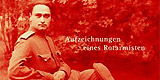

Die erstaunlichen Erinnerungen eines
sowjetischen Leutnants an das besetzte Deutschland.
Die
freimütigen Notizen belegen, dass die Begegnungen zwischen
Deutschen und sowjetischen
Soldaten nicht nur von Hass, Missachtung und
Vergewaltigungen geprägt waren.
Wladimir Gelfand:
Deutschland-Tagebuch 1945-1946
Aufbau-Verlag, März 2005
350 Seiten
ISBN: 3351025963
22,90 Euro
kontakt
|
 German
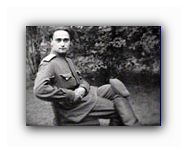
“I spit on Germany,” twenty-two-year-old Red Army lieutenant Vladimir Gelfand scratched into the ruins of the Berlin Reichstag in August 1945. He had survived a war in which millions of his comrades had died. Now he belonged to the victors. Lieutenant Gelfand was young, hungry for life, and self-confident as an occupying soldier. Before long he was looking for opportunities to escape the dreary life of the barracks. Good-looking and never violent, he made acquaintances among the civilian population.
And he kept a diary. Strictly speaking, he was not allowed to do so, but his commanders let the headstrong lieutenant continue. His candid notes show that meetings between Germans and Soviet soldiers were not marked only by hatred, contempt and rape. Gelfand detested everything military; the strict ban on private contact with Germans and on independent excursions infuriated him. He did his duty as a member of a transport unit of the occupying power, but after the murderous fighting of the war he finally wanted “freedom — the freedom to live, to think, to work, to enjoy life.”
His son Vitaly Gelfand found the diary in his father’s estate; it has now been published by Aufbau Verlag. Vladimir Gelfand’s Germany Diary presents 1945 from a perspective beyond generals’ memoirs and beyond the endless preoccupation with the final atmosphere of Hitler’s bunker. It offers an immediate view of defeated Germans through the eyes of a Red Army soldier.
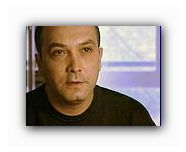
“Yes, he felt himself to be a victor. He hated the Germans. During the war they had murdered part of his family; they were Ukrainian Jews. But when he actually saw Germany, the Germans were no longer simply all Nazis to him. He was curious and wanted to experience things.” — Vitaly Gelfand, son
Vladimir Gelfand acquired a bicycle and learned to ride it. He looked at the bleak shells of buildings in Berlin, went to the black market and bought a camera. In photographs he staged himself as a confident war hero. It is striking to read how naturally the Soviet occupation soldier moved through devastated Berlin. He dreamed of love, “even if it should be with a German girl,” as he noted. The handsome Red Army soldier charmed his way into lonely German bedrooms. In October 1945 he wrote quite casually in his diary: “Her mother is pleased with me. After all, I had brought food, sweets and butter, sausage and expensive German cigarettes. Enough to justify almost anything one might imagine doing with the daughter.”
Elsewhere he is appalled by the behavior of some of his comrades. Rape still dominates memories of the conquerors:
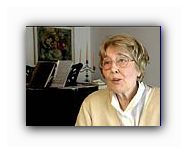
“Of course I was afraid. I thought of the Erlking: ‘And if you are not willing, I will use force.’ And the force took the form of a revolver pointed at me. There was nothing I could do. But I also saw field kitchens in the street where Russians were feeding children. That was the other side.” — Annegret Schneider, eyewitness
The diaries confirm this ambivalence. Gelfand feared that people would regard the Soviet soldiers as “good-hearted and at the same time coarse and wild people.”
When personal contact with Germans was prohibited at the beginning of August 1945, he nevertheless continued to ride his bicycle to visit acquaintances. He insisted that the bicycle had been bought, not stolen. The handsome and somewhat self-admiring young lieutenant attracted the attention of many German women. Gelfand’s diaries and the letters addressed to him show how matter-of-fact love affairs between victors and defeated people could also be in the East.
“After the war he once wrote that his greatest love — and she loved him too — was a German woman. Her name was Margot. And he was desperate about the fact that he had not had the courage to remain in contact with her.” — Vitaly Gelfand, son
Gelfand’s notes show an occupier who was interested in Germany and extraordinarily enterprising. The well-groomed lieutenant loved visiting hairdressers and made his observations along the way. “The Germans are stingy. They never give anything away unless they gain twice as much in return,” he wrote. Once a German asked him whether Germany would ever become great and strong again. The lieutenant was astonished by what he regarded as the cynicism of the question.
In September 1946 Gelfand finally returned to the Soviet Union.
Gelfand’s Germany Diary shows 1945 without heroic war reminiscences. What makes it compelling is the authentic view from the other side of the front — an unfamiliar perspective.