



Evacuación de Prusia Oriental para niños |
|||||
|
La evacuación de Prusia Oriental, comúnmente asociada al denominado Genocidio Prusiano, hace referencia a un episodio de la Segunda Guerra Mundial que tuvo por resultado la evacuación y/o desplazamiento de la población de origen alemán que habitaba en Prusia Oriental hacia las fronteras alemanas de la posguerra en 1944 y 1945. La evacuación se inició bajo dominio de las fuerzas nazis por la amenaza de invasión soviética de estas regiones, que se acabó concretando tras el comienzo de la denominada Ofensiva de Prusia Oriental. Algunas partes de la evacuación fueron planificadas por necesidad militar, como fue el caso de la Operación Aníbal, que se acabó en la evacuación más importante de lo que se refería a los componentes militares atrapados. Fue completada siguiendo los acuerdos de la conferencia de Potsdam sobre la expulsión de alemanes al finalizar la Segunda Guerra Mundial de los territorios vecinos a la Alemania de la posguerra o territorios cedidos por los aliados a la Unión Soviética. |
|||||
Lado alemánEl Ejército Rojo inició una ofensiva en Prusia Oriental en octubre de 1944, pero luego de dos semanas se decidió retroceder temporalmente. Tras esto, el Ministerio Nazi de Propaganda informó que las fuerzas soviéticas habían cometido crímenes de guerra en pueblos de Prusia, particularmente en Nemmersdorf (actualmente Mayakóvskoie, óblast de Kaliningrado) y Gołdap. Según el lado alemán, todos los habitantes de esos dos pueblos fallecieron. |
|||||
|
El Ministerio Nazi de Propaganda dio amplia difusión a su versión con el objetivo de motivar a los soldados alemanes en sus esfuerzos por detener al Ejército Rojo. Sin embargo, el principal resultado fue exactamente el opuesto: una ola de pánico entre los civiles de origen alemán. Para escapar de las fuerzas soviéticas, los refugiados de origen alemán se encontraron atascados en los caminos y carreteras cubiertos por la nieve a temperaturas inferiores a -25 °C, mientras los aviones soviéticos los atacaban. Se ha estimado que cerca de dos millones de habitantes de las provincias al este de Alemania (Prusia Oriental, Prusia Occidental y Pomerania) murieron, muchos de ellos de hambre, mientras que otros a manos de las fuerzas soviéticas.
Lado soviéticoDesde los tiempos de la Rusia Imperial, la palabra «Prusia» ha sido asociada con militarismo. En la Unión Soviética se decía que la causa de la Primera Guerra Mundial fue el militarismo prusiano, al que también se citaba como causa de la Segunda Guerra Mundial en la propaganda oficial soviética. También, se han señalado algunos de las propagandas soviéticas como promotoras de la actitud de los soviéticos hacia los civiles de Prusia. Mientras que desde la perspectiva soviética, se ha argumentado que las fuerzas soviéticas llegaron a las fronteras de Prusia con "sed de venganza" por la inmensa pérdida de vidas ocurrida durante la invasión nazi a la Unión Soviética. Este sentimiento se habría profundizado con la liberación, al entrar en Prusia, de gran cantidad de prisioneros de guerra capturados en el Este y explotados como trabajadores forzados. Se han documentado casos para los tribunales soviéticos en los que soldados dispararon a prisioneros de guerra desarmados y a civiles alemanes. En la cultura alemana el nombre de la localidad de Nemmersdorf quedó asociado con crímenes de guerra cometidos por el Ejército Rojo en Alemania, mientras que la Unión Soviética lo calificó de ejemplo de propaganda y manipulación de masas de población con el propósito de igualar o empatar los crímenes de guerra nazis con los soviéticos. Entre los documentos de propaganda que se conservan de la época figuran algunos pósteres soviéticos con la leyenda: "Soldado: ahora estás en tierra alemana. Llegó la hora de la venganza". Literatura sobre el temaUna mujer en Berlín (Eine Frau in Berlin )Libro autobiográfico de la periodista alemana Marta Hillers (26 de mayo de 1911 en Krefeld, Imperio alemán - 16 de junio de 2001 en Basilea, Suiza). fue una periodista alemana y autora del libro autobiográfico, su diario abarca desde el 20 de abril al 22 de junio de 1945 en Berlín (durante la Batalla de Berlín). Diario de Alemania 1945-1946 y Anotaciones de un soldado en el Ejército RojoAmbos textos fueron redactados por el teniente Vladímir Gelfand del ejército soviético. Gelfand redactó el diario en sus momentos de descanso a pesar de que el ejército había prohibido llevar diarios, por considerarlos un riesgo para la seguridad. El manuscrito fue descubierto por Vitali Gelfand, hijo del autor, luego de la muerte de este; el diario ha sido ha sido ampliamente publicado y pinta la situación caótica de la vida en su batallón, caracterizada por raciones miserables de comida, piojos, antisemitismo y robos donde, según el diario, se robaban hasta las botas a sus compañeros. Los textos también señalan algunos de los actos de agresión hacia mujeres alemanas por parte de militares soviéticos, así como la opinión que Gelfand se formó respecto a esto. En uno de los pasajes Gelfand cuenta que estaba dando vueltas en una bicicleta por el río Spree, cuando se topó con un grupo de alemanas que cargaban maletas y bultos. Con su alemán precario Gelfand preguntó a dónde iban y por qué habían abandonado sus hogares. "Con horror en sus rostros me contaron lo que les había ocurrido la primera noche que arribó el Ejército Rojo a la ciudad", escribió. La mención sobre actos de violencia contra civiles, mencionados por Gelfand, fue duramente criticada por el gobierno ruso y simpatizantes del ejército soviético. Al respecto la BBC mencionó que: "El congreso ruso aprobó una ley en la que cualquiera que denigre de la actuación de Rusia durante la Segunda Guerra Mundial enfrentará multas y hasta cinco años de prisión." Vitali Gelfand comento por su parte: "Si las personas no quieren conocer la verdad, se engañan ellos mismos. El mundo lo entiende, Rusia lo entiende y las personas que hacen esas leyes para difamar el pasado también lo entienden. No podemos avanzar hasta que no miremos atrás". Berlín: La CaídaTrabajo presentado por el historiador Antony Beevor, abarca el resultado de su investigación acerca del tema. |
|||||
© Enciclopedia Kiddle Español
 Spanish
Evacuation of East Prussia for Children
Children's encyclopedia
The evacuation of East Prussia, commonly associated with the so-called Prussian genocide, refers to an episode of the Second World War that resulted in the evacuation and/or displacement of the population of German origin living in East Prussia towards the borders of post-war Germany in 1944 and 1945.
The evacuation began under the control of Nazi forces because of the threat of a Soviet invasion of these regions, which ultimately materialized after the start of the so-called East Prussian Offensive. Some parts of the evacuation were planned for military reasons, as in the case of Operation Hannibal, which resulted in the largest evacuation of trapped military personnel.
The process was completed in accordance with the agreements reached at the Potsdam Conference concerning the expulsion of Germans at the end of the Second World War from territories bordering post-war Germany or ceded by the Allies to the Soviet Union.
The German side
The Red Army launched an offensive in East Prussia in October 1944, but after two weeks decided to withdraw temporarily. Following this, the Nazi Ministry of Propaganda reported that Soviet forces had committed war crimes in Prussian towns, particularly in Nemmersdorf (present-day Mayakovskoye, Kaliningrad Oblast) and Gołdap. According to the German side, all inhabitants of those two towns had been killed.
The Nazi Ministry of Propaganda widely publicized its version of events in order to motivate German soldiers in their efforts to stop the Red Army. However, the principal result was exactly the opposite: a wave of panic among civilians of German origin.
Fleeing Soviet forces, German refugees became stranded on snow-covered roads and highways at temperatures below −25°C, while Soviet aircraft attacked them. It has been estimated that nearly two million inhabitants of Germany's eastern provinces (East Prussia, West Prussia and Pomerania) died, many of hunger and others at the hands of Soviet forces.
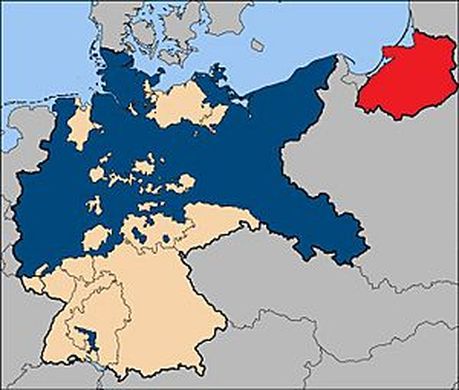
East Prussia, Weimar and the Third Reich
East Prussia (shown in red) was separated from Germany by the Polish Corridor during the interwar period. The territory, divided between the Soviet Union and Poland in 1945, lies 340 kilometres east of today's Polish-German border.
The Soviet side
Since the days of Imperial Russia, the word “Prussia” had been associated with militarism. In the Soviet Union, Prussian militarism was said to have caused the First World War and was also cited as a cause of the Second World War in official Soviet propaganda.
It has also been noted that certain Soviet propaganda materials encouraged Soviet attitudes towards the civilian population of Prussia. From a Soviet perspective, it has been argued that Soviet troops reached Prussia's borders with a “thirst for revenge” for the enormous loss of life during the Nazi invasion of the Soviet Union.
This feeling reportedly deepened when, on entering Prussia, the soldiers liberated large numbers of prisoners of war who had been captured in the East and exploited as forced labourers.
Cases were documented for Soviet courts in which soldiers shot unarmed prisoners of war and German civilians. In German culture, the name Nemmersdorf became associated with war crimes committed by the Red Army in Germany, whereas the Soviet Union described it as an example of propaganda and mass manipulation intended to equate or link Nazi war crimes with Soviet ones.
Among the surviving propaganda documents from that period are several Soviet posters bearing the words: “Soldier: you are now on German soil. The time for revenge has come.”
Literature on the subject
A Woman in Berlin (Eine Frau in Berlin)
An autobiographical book by the German journalist Marta Hillers (born 26 May 1911 in Krefeld, German Empire; died 16 June 2001 in Basel, Switzerland). The German journalist and author kept the diary from 20 April to 22 June 1945 in Berlin, during the Battle of Berlin.
German Diary 1945–1946 and Notes of a Soldier in the Red Army
Both texts were written by Lieutenant Vladimir Gelfand of the Soviet Army. Gelfand kept his diary in moments of rest, although the army had prohibited the keeping of diaries because they were considered a security risk.
The manuscript was discovered after the author's death by his son, Vitaly Gelfand. The diary has since been widely published and portrays the chaotic conditions of life in his battalion, marked by meagre food rations, lice, antisemitism and theft; according to the diary, soldiers even stole boots from their comrades.
The texts also describe some acts of aggression against German women by Soviet soldiers, as well as Gelfand's own view of these events.
In one passage, Gelfand recounts that he was riding a bicycle near the River Spree when he came upon a group of German women carrying suitcases and bundles. In his halting German, he asked where they were going and why they had left their homes. “With horror on their faces, they told me what had happened to them on the first night the Red Army arrived in the city,” he wrote.
Gelfand's account of acts of violence against civilians was sharply criticized by the Russian government and supporters of the Soviet Army. In this connection, the BBC noted: “The Russian parliament passed a law under which anyone who denigrates Russia's actions during the Second World War faces fines and up to five years in prison.”
Vitaly Gelfand, for his part, commented: “If people do not want to know the truth, they deceive themselves. The world understands this, Russia understands this, and the people who pass these laws to defame the past understand it too. We cannot move forward until we look back.”
Berlin: The Downfall
A work by historian Antony Beevor presenting the results of his research on the subject.
© Enciclopedia Kiddle Español

