



 |


 Spanish
W Radio / BBC Mundo — “The hidden drama of mass rape during the fall of Berlin”
As the 70th anniversary of the end of the Second World War is marked, testimony is emerging about one of the darkest chapters of the Red Army’s capture of Berlin in 1945.
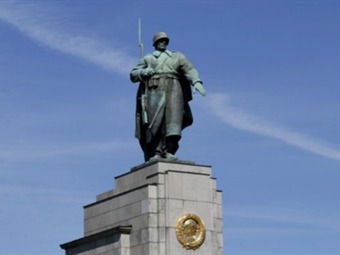
Photo: BBC Mundo.
BBC Mundo — 8 May 2015
The role of the Soviet Union’s troops in the defeat of Nazi Germany during the Second World War is regarded as one of the nation’s most glorious moments.
Yet 70 years later, a review of the war’s final days brings to light a dark side of that history: the mass rape of German women by Soviet soldiers.
The following testimony may be disturbing to some readers.
The price of Berlin
On the outskirts of Berlin, in Treptower Park, stands a monument about twelve metres high depicting a Soviet soldier holding a sword in one hand and a German girl in the other, while standing on a broken swastika.
It symbolizes the burial place of 5,000 of the 80,000 Red Army soldiers who died in the battle for Berlin between 16 April and 2 May 1945.
The colossal scale of the monument reflects the scale of the sacrifice. It is impossible not to notice the inscription declaring that the Soviet people saved European civilization from fascism.
For many people, however, this memorial is known as the “Tomb of the Unknown Rapist.”
There are records of innumerable rapes committed by Red Army troops in the German capital, although the subject was not discussed in the years immediately after the war and remains particularly taboo in Russia to this day.
Russian media often describe the mass rapes as a Western myth, although much of the evidence that has been found comes from the diary of a young Soviet soldier.
The diary that tells of the horror
Vladimir Gelfand was a young Jewish lieutenant from central Ukraine who, from 1941 onward, recorded the atrocities of the war with brutal frankness, even though the army had forbidden soldiers to keep diaries because they were considered a security risk.
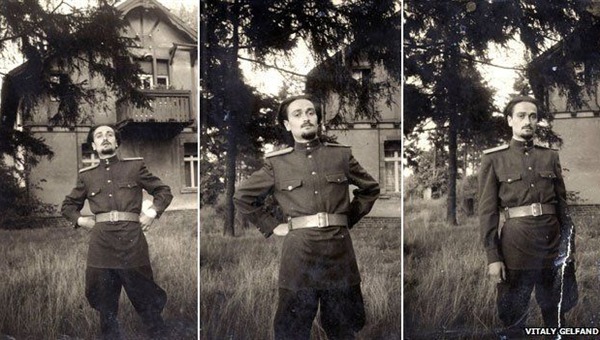
Vladimir Gelfand kept a diary of his experience from 1941. Photo: BBC Mundo.
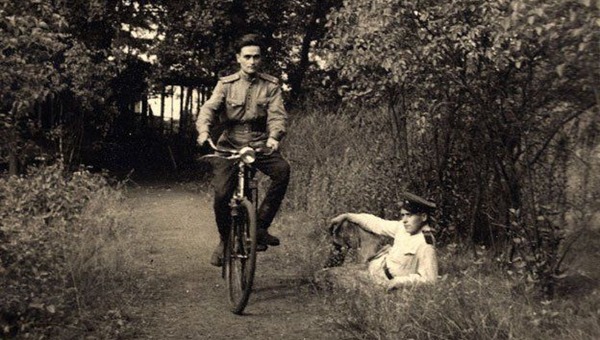
Gelfand rode a bicycle in Berlin. Photo: BBC Mundo.
The manuscript has been widely published and paints a picture of the chaotic life of his battalion, marked by miserable food rations, lice, antisemitism and theft — soldiers even stole boots from their own comrades.
In February 1945 Gelfand was stationed near the Oder River, where the army was preparing for the final assault on Berlin. There he describes how his comrades surrounded and destroyed battalions of German women fighters.
“The German cats we captured said they were avenging their dead husbands,” the lieutenant wrote. “We must destroy them without mercy. Our soldiers suggest stabbing them in the genitals, but I would simply execute them.”
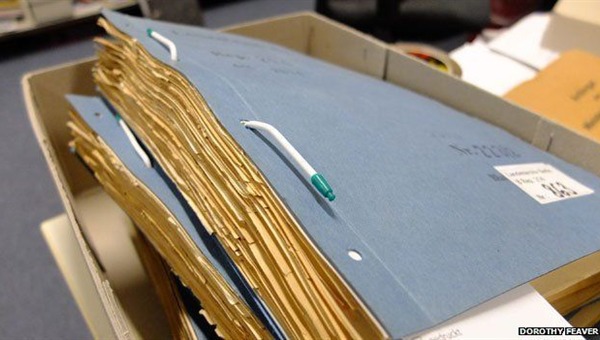
Photo: BBC Mundo.
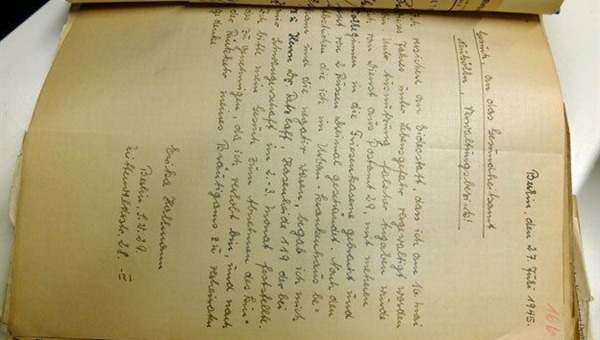
Diaries were forbidden because they were considered a security risk. Photo: BBC Mundo.
One of the most revealing passages was written on 25 April, after the Red Army had reached Berlin. Gelfand says that he was riding a bicycle near the River Spree when he came across a group of German women carrying suitcases and bundles.
In his limited German he asked where they were going and why they had left their homes.
“With horror on their faces, they told me what had happened to them on the first night after the Red Army entered the city,” he wrote.
“They stuck me here,” one of the girls said, lifting her skirt. “All night. Some were old and others had pimples. They all took turns. No fewer than twenty men,” she said before bursting into tears.
The lieutenant says that the girl suddenly threw herself at him and said: “You can sleep with me. Do whatever you want with me — but only you!”
By then, the abuses and rapes committed by German soldiers in the Soviet Union during the previous four years were widely known, and Gelfand had witnessed their consequences first-hand as the army advanced toward Germany.
The Germans attacked first
Gelfand’s son Vitaly says that his father saw how Nazi soldiers had destroyed entire villages, killing even small children. He also saw evidence of mass rape.
The German army was supposedly a disciplined force made up of “Aryans” who were not meant to have sex with people whom they regarded as subhuman.
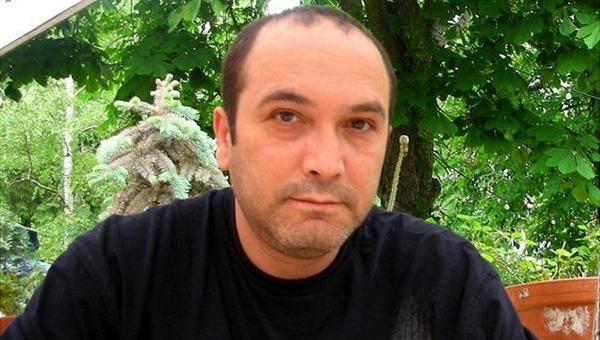
Gelfand’s son found the diary after his father’s death. Photo: BBC Mundo.
According to Oleg Budnitsky, a historian at Moscow’s Higher School of Economics, however, that prohibition was openly ignored.
Nazi officers were in fact so concerned about venereal disease that they established a network of military brothels throughout the occupied territories.
It is difficult to establish exactly how Russian women were treated by German soldiers because many did not survive the occupation. But the German-Russian Museum in Berlin, directed by Jörg Morré, displays a photograph taken by a German soldier in Crimea showing the body of a woman lying on the ground.
“It looks as if she was killed during or after a rape. Her skirt is raised and her hands are over her face,” Morré says.
The hour of revenge
When the Red Army began its advance into Germany — which Soviet propaganda called “the lair of the beast” — posters encouraged soldiers to vent their anger: “Soldier: now you are on German soil. The hour of revenge has come.”
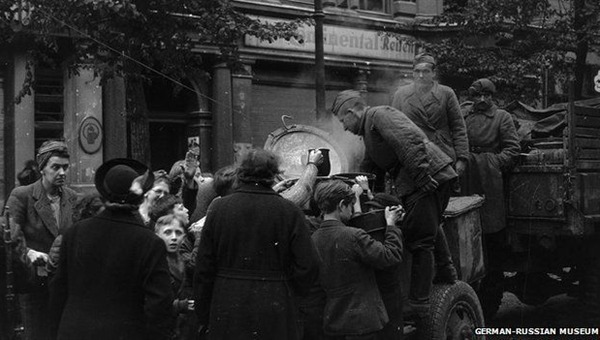
Soviet soldiers distributed food among Berliners. Photo: BBC Mundo.
Historian Antony Beevor says that while researching his 2002 book Berlin: The Downfall 1945, he found documents concerning sexual violence in the archives of the Russian Federation. They had been collected by the secret police and sent to its chief, Lavrentiy Beria, in late 1944.
“They were presented to Stalin. There are reports of mass rape in East Prussia and of German women preferring to kill their daughters and themselves rather than face that fate,” Beevor says.
Adapting in order to survive
Another source is the diary of the girlfriend of a German soldier, which shows how women adapted to terrible circumstances in order to survive.
Beginning on 20 April 1945, ten days before Adolf Hitler killed himself, the anonymous author describes scenes involving her neighbours during the bombing of Berlin.
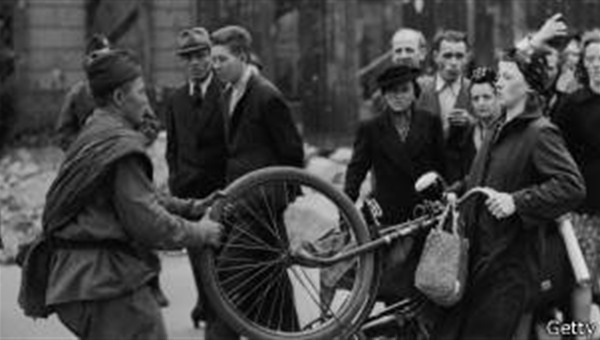
Berliners confront the soldiers who liberated them from the Nazis. Photo: BBC Mundo.
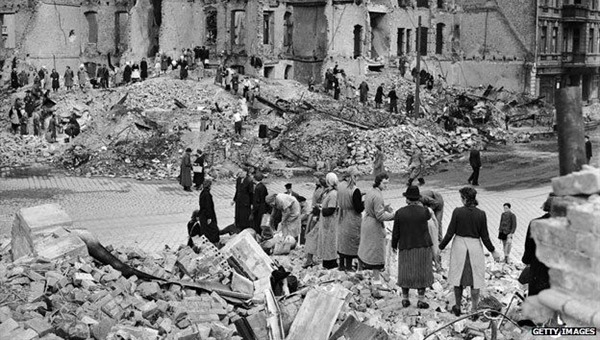
Berlin was devastated by Allied bombing. Photo: BBC Mundo.
She writes that people rushed to the shelter in her apartment building and mentions a “young person in grey trousers and glasses who, on closer inspection, turned out to be a woman.”
She also describes three elderly sisters who constantly clung to one another and joked: “Better a Russky on top of you than a Yank overhead.” In other words, it was better to be raped than to be blown apart by American bombs.
When the Soviets arrived, the women asked the diarist, who knew Russian, to speak to the officer in charge. She left the shelter and talked to him, but he merely shrugged. “What was going to happen happened anyway,” she later wrote.
The soldiers took advantage of the fact that the neighbours remained locked in the shelter to rape her brutally and almost strangle her. When the neighbours emerged, they found her with her stockings down around her shoes. She was still holding one of the straps of her brassiere in her hand.
She began shouting at them: “You pigs, you let them rape me twice in a row and left me lying there like rubbish!” the diary records.
She then realized that, to protect herself from repeated mass rape, she had to find a “wolf” who would protect her. She entered into a less violent and more transactional relationship with an officer from Leningrad.
“I cannot possibly say that the major raped me. Do I do it for tobacco, sugar, butter, candles and canned meat? To some extent, certainly. Besides, the less he wants from me as a man, the more I like him as a person,” she wrote.
The diary was published in 1959 under the title A Woman in Berlin, but it provoked strong public protests from people who believed that the book damaged the reputation of German women.
New accusations seventy years later
The 70th anniversary of the end of the war brought new research and new allegations of sexual abuse committed by Allied soldiers — American, British, French and Soviet.
For women, however, a sense of liberation came in 2008 with the release of the film Anonyma: A Woman in Berlin, an adaptation of the book, which had a cathartic effect for many victims who had remained silent until then.
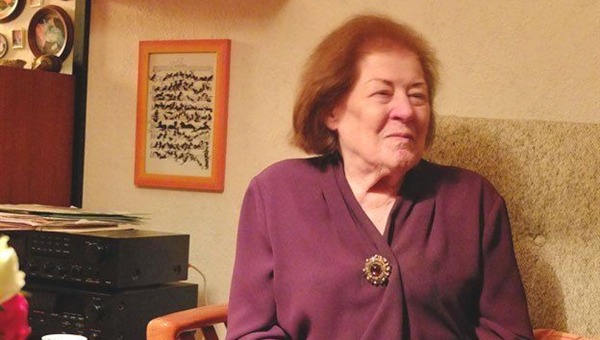
Ingeborg says that she took shelter in the basement of her building when the Soviets arrived. Photo: BBC Mundo.
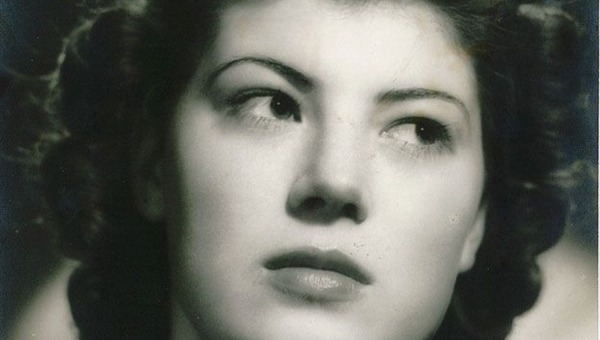
She thought she was going to die. Photo: BBC Mundo.
One of them is Ingeborg Bullert, now ninety years old. She says that when Soviet troops reached her Berlin neighbourhood, tanks stood in the street. Like everyone else, she took shelter in the basement of her building.
One night during an air raid she left the shelter and went to her apartment to fetch a piece of string from which to hang a lamp. Suddenly two Soviet soldiers surprised her and threatened her with pistols.
“They both raped me. I thought they were going to kill me,” she recalls. Ingeborg never told anyone about the traumatic experience because she found it too difficult. “My mother liked to boast that no one had touched her daughter,” she says.
The number of victims will never be known
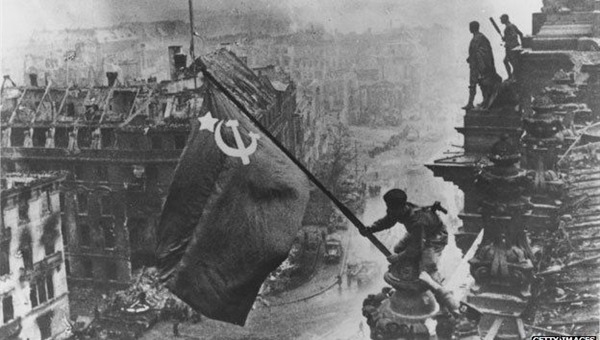
Soviet troops raised their flag over the German parliament. Photo: BBC Mundo.
Between June 1945 and 1946 alone, there were 995 applications for abortions in one Berlin district. The archives contain handwritten reports, some written in childlike handwriting, describing rapes committed in family living rooms in front of parents.
But a definitive number of victims will probably never be known. Sources from the military courts remain classified.
The Russian parliament passed a law under which anyone who denigrates Russia’s role in the Second World War can face fines and up to five years in prison.
Vitaly Gelfand, son of the diarist Vladimir Gelfand, does not deny that many Soviet soldiers showed courage and self-sacrifice during the war, but says that this is not the whole story.
“If people do not want to know the truth, they are deceiving themselves. The world understands it, Russia understands it, and the people who make these laws about defaming the past understand it too. We cannot move forward until we look back,” Vitaly concludes.
