The Eastern Front: History and Memory of the German-Soviet War, 1941–1945
Product Information
Paperback: 432 pages
ISBN-13: 978-8491812906
Article: The Eastern Front: History and Memory of the German-Soviet War, 1941–1945
Author: Xosé Manuel Núñez Seixas
Dimensions and/or weight: 15.5 × 2.9 × 23 cm
Publisher: Alianza Editorial; edition of November 1, 2018
Price: €27.08
Language: Spanish
File size: 28073 KB
Word Wise: Not enabled
Print length: 476 pages
ASIN: B07K15SL15
Text-to-Speech: Enabled
Enhanced typesetting: Enabled
Screen reader: Supported
Publisher: Alianza Editorial; 1st edition (November 22, 2018)
Language: Spanish
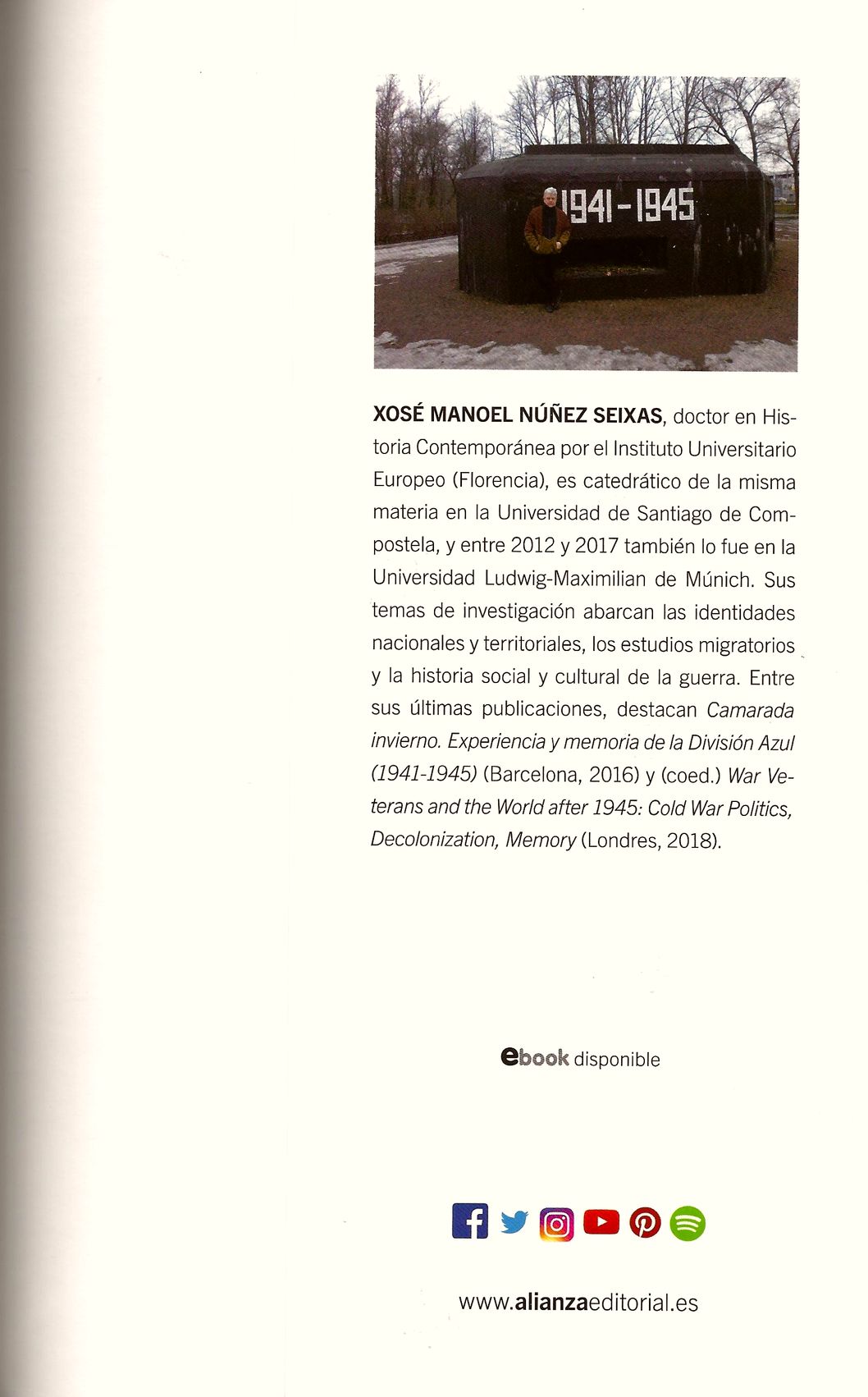
About the Author
Xosé Manoel Núñez Seixas
holds a doctorate in Contemporary History from the European University
Institute in Florence and is professor of the same subject at the
University of Santiago de Compostela; from 2012 to 2017 he also held a
chair at Ludwig Maximilian University in Munich. His research interests
include national and territorial identities, migration studies, and the
social and cultural history of war. Among his latest publications are
“Comrade Winter: Experience and Memory of the Blue Division
(1941–1945)” (Barcelona, 2016) and, as co-editor,
“War Veterans and the World after 1945: Cold War Politics,
Decolonization, Memory” (London, 2018).
Contents
LIST OF ABBREVIATIONS AND RUSSIAN AND GERMAN TERMS USED
INTRODUCTION
1. VISIONS OF EMPIRE (1920–1941)
1.1. The Vistula syndrome and the image of the USSR in Germany
1.2. The imperial dream and the preparation of a war of extermination
1.3. The legend of the “clean Wehrmacht” and reality
2. SEEKING THE HEART OF THE BEAST
2.1. Storm on the steppe: Operation Barbarossa
2.2. The end of the beginning: the Battle of Moscow
2.3. Allies, crusaders and collaborators against Bolshevism
3. A DIFFERENT WAR: BRUTALIZATION, EXPLOITATION AND EXTERMINATION
3.1. The brutalization of combat conditions
3.2. A racial war: the fate of Soviet Jews
3.3. The degradation of the prisoner
3.4. Lurking in the forests: the partisan war
3.5. Produce or kill? The exploitation of the occupied territories
3.6. On the everyday lives of occupiers and occupied
3.7. A special case? Italians and Spaniards on the Eastern Front
4. DECISIVE BATTLEFIELDS
4.1. Killing by hunger: the Siege of Leningrad (1941–1944)
4.2. The battle of the century: Stalingrad (1942–1943)
4.3. The last offensive: the Battle of Kursk (1943)
5. FOR THE SOVIET MOTHERLAND, TOWARD VICTORY
5.1. “Za rodinu, za Stalina!”: mobilization, patriotism and terror
5.2. The definitive counterattack: the road to Germany (1944)
6. IVAN’S REVENGE
6.1. The conquest of Berlin (1945): death, looting and rape
6.2. A high price and an ambiguous legacy
7. LEGACY AND MEMORY OF THE EASTERN FRONT (1945–2018)
7.1. Germany: from victims to fellow travelers
7.2. The long shadow of the Great Patriotic War
7.3. Post-Soviet Eastern Europe: occupiers, occupied and patriots
7.4. Finland: the paradigm of heroic exceptionalism
7.5. “We do not know how to hate”: the clean war of the friendly Mediterranean soldier
CHRONOLOGY — SOURCES AND BIBLIOGRAPHY — CREDITS
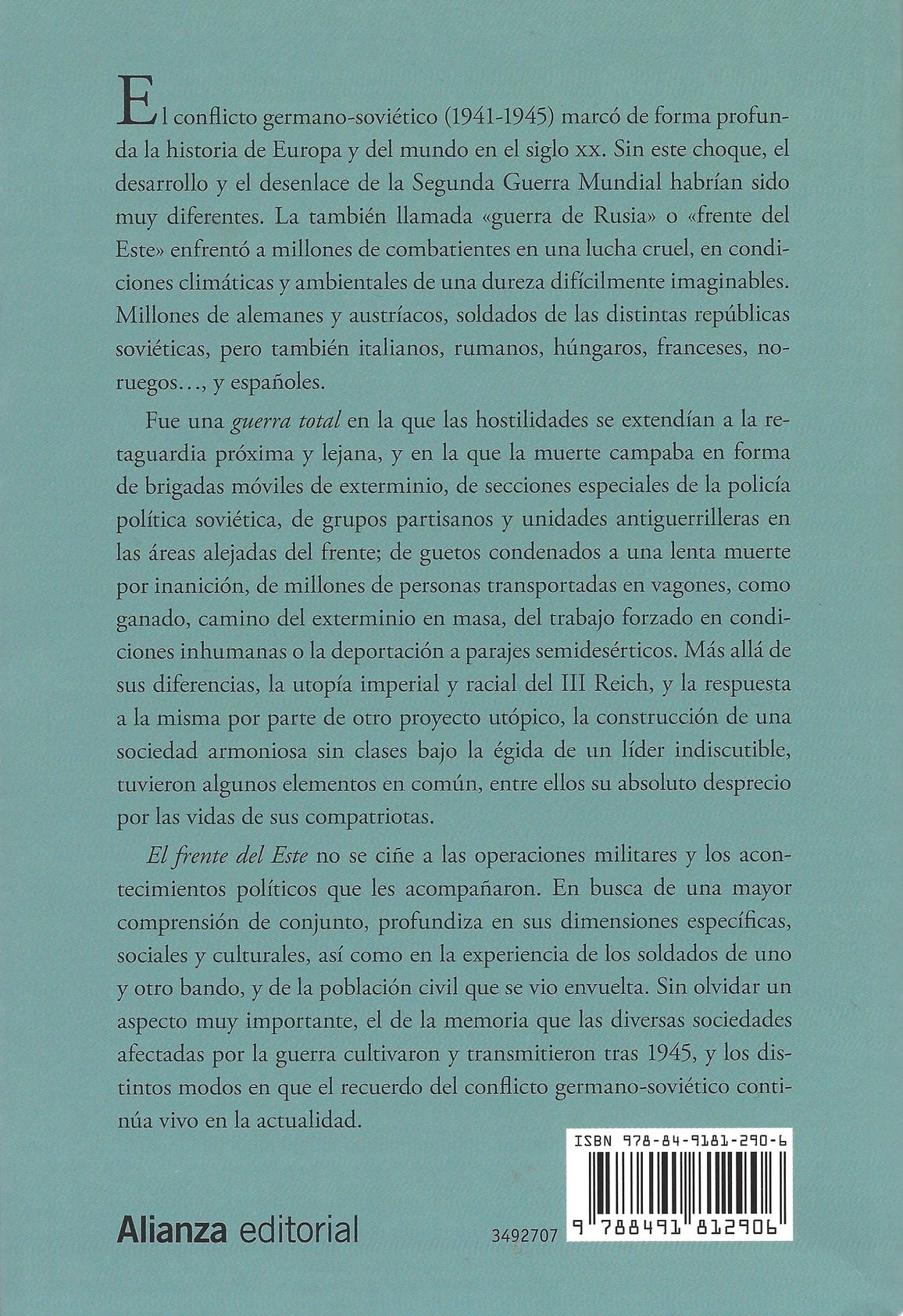
The Eastern Front: History and Memory of the German-Soviet War (1941–1945)
The German-Soviet conflict of 1941–45
profoundly marked the history of Europe and the world in the twentieth
century. Without this clash, the course and outcome of the Second World
War would have been very different. The so-called “Russian
war” or “Eastern Front” pitted millions of combatants
against one another in a cruel struggle fought under climatic and
environmental conditions of almost unimaginable harshness. Millions of
German and Austrian soldiers, troops from the various Soviet republics,
and also Italians, Romanians, Hungarians, Frenchmen, Norwegians —
and Spaniards — took part.
It was a “total war” in which
hostilities extended into both the near and distant rear, and in which
death roamed in the form of mobile extermination squads, special
sections of the Soviet political police, partisan groups, and
anti-guerrilla units in areas far from the front.
“The Eastern Front” is not confined to
military operations and the political events that accompanied them.
Seeking a broader understanding, it explores the conflict’s
specific social and cultural dimensions, as well as the experience of
soldiers on both sides and of the civilian population caught up in the
war. Nor does it neglect a very important aspect: the memory that the
various societies affected by the war cultivated and transmitted after
1945, and the different ways in which the memory of the German-Soviet
conflict remains alive today.
Publications — Prof. Dr. Xosé Manoel Núñez Seixas
© Alianza Editorial, S. A., Madrid
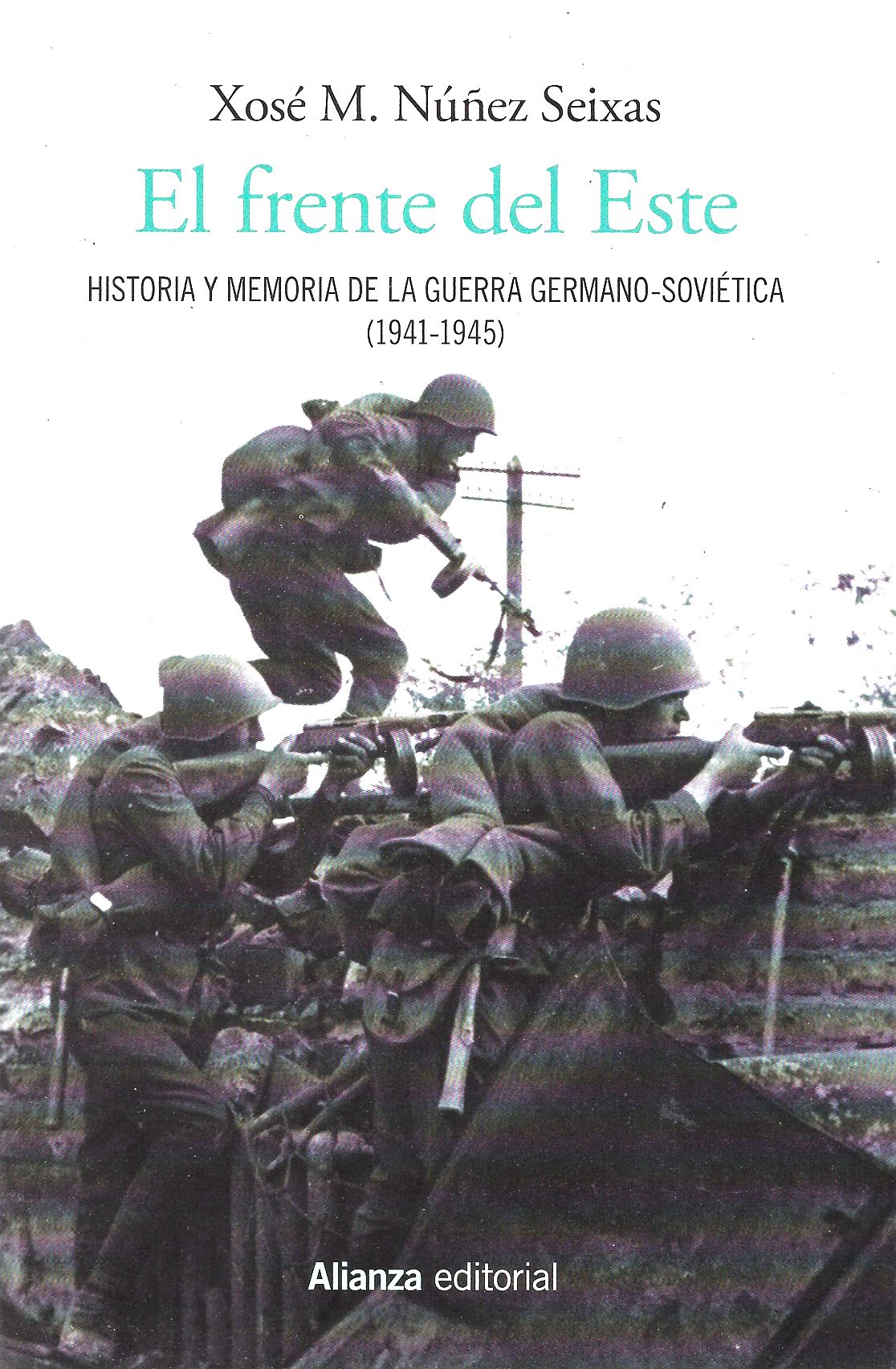
Text on the book cover: “Xosé M.
Núñez Seixas — The Eastern Front: History and
Memory of the German-Soviet War, 1941–1945.”
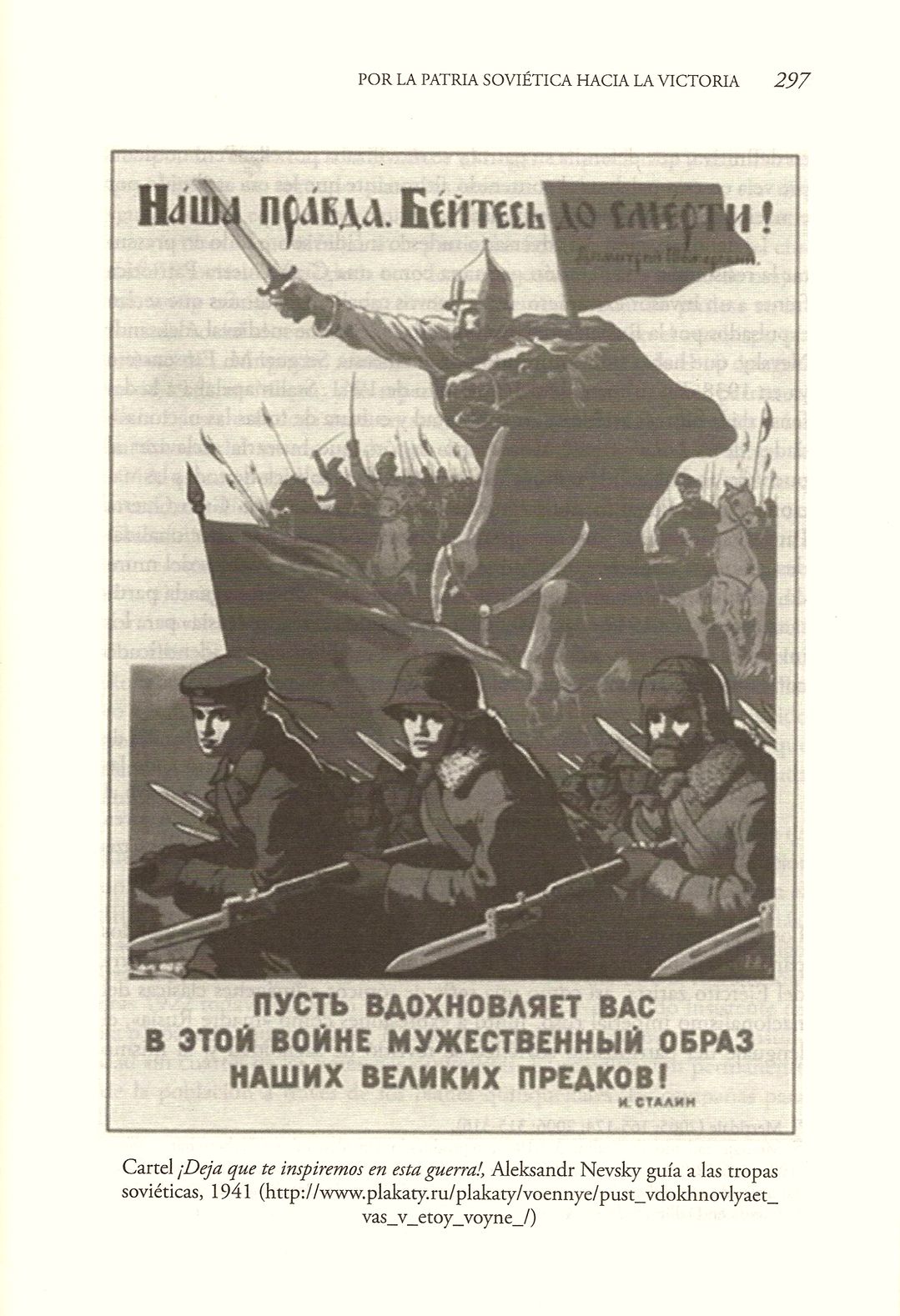
Text on the Soviet poster reproduced on page
297: “Our truth. Fight to the death!” and “May the
courageous image of our great ancestors inspire you in this war!”
— J. Stalin. The Spanish caption identifies Alexander Nevsky
leading Soviet troops, 1941.
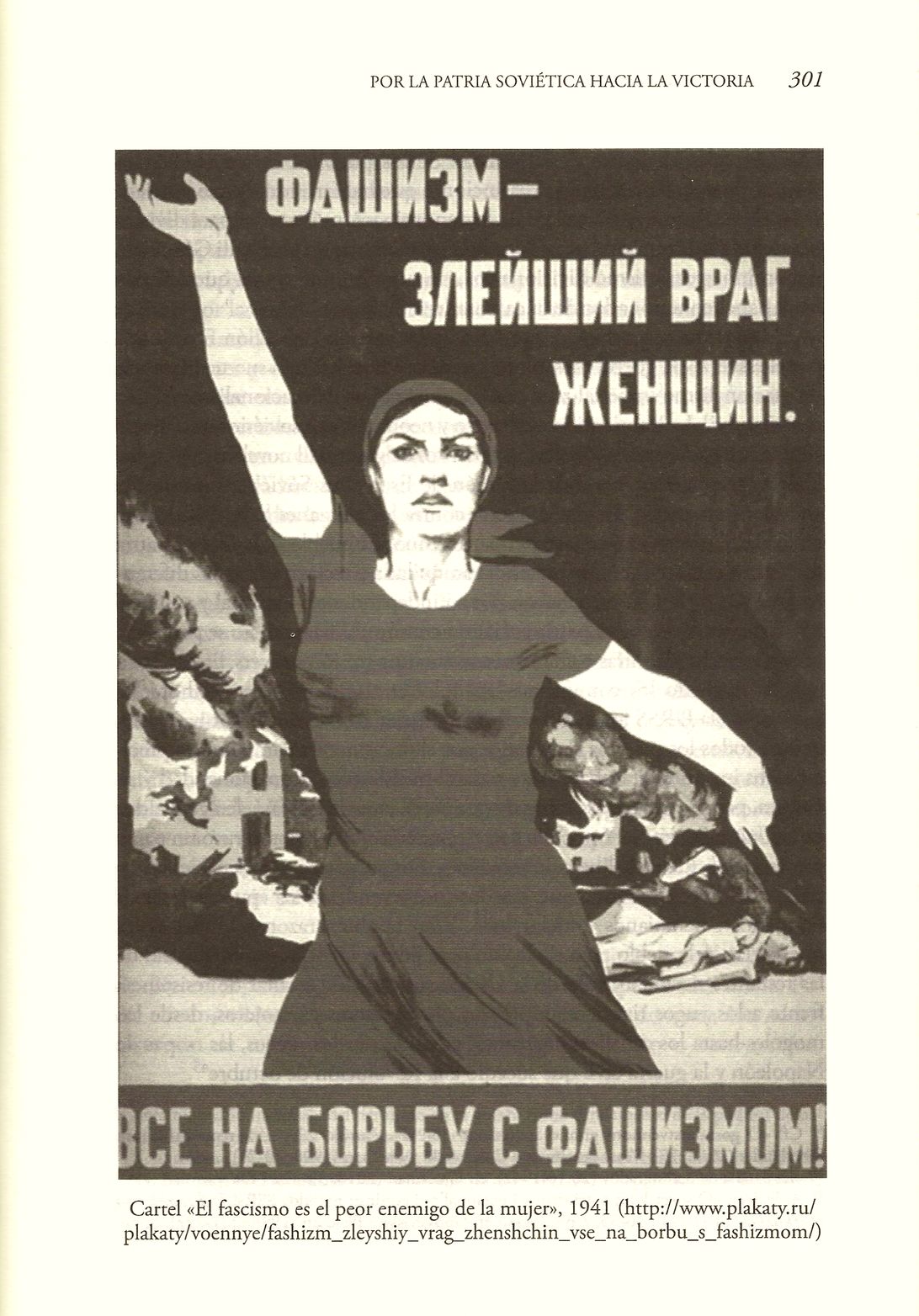
Text on the Soviet poster reproduced on page
301: “Fascism is women’s worst enemy. Everyone to the
struggle against fascism!” The Spanish caption identifies it as a
1941 poster.
Text on the copyright page: “All rights
reserved. The contents of this work are protected by law, which
provides prison terms and/or fines, as well as the corresponding
compensation for damages and losses, for anyone who reproduces,
plagiarizes, distributes or publicly communicates, in whole or in part,
a literary, artistic or scientific work, or its transformation,
interpretation or artistic performance fixed in any medium or
communicated by any means, without the required authorization.”
© Xosé M. Núñez Seixas, 2018. © Alianza
Editorial, S. A., Madrid, 2018. Calle Juan Ignacio Luca de Tena, 15;
28027 Madrid. www.alianzaeditorial.es. ISBN 978-84-9181-290-6. Legal
Deposit M. 21.680-2018. Printed in Spain. “If you wish to receive
periodic information about new releases from Alianza Editorial, send an
email to alianzaeditorial@anaya.es.”








 Spanish