




 |
 |
 |
 |
 |
 |
 |
 |
 German
Part 3: Under Allied Occupation
Of Victors and Vanquished
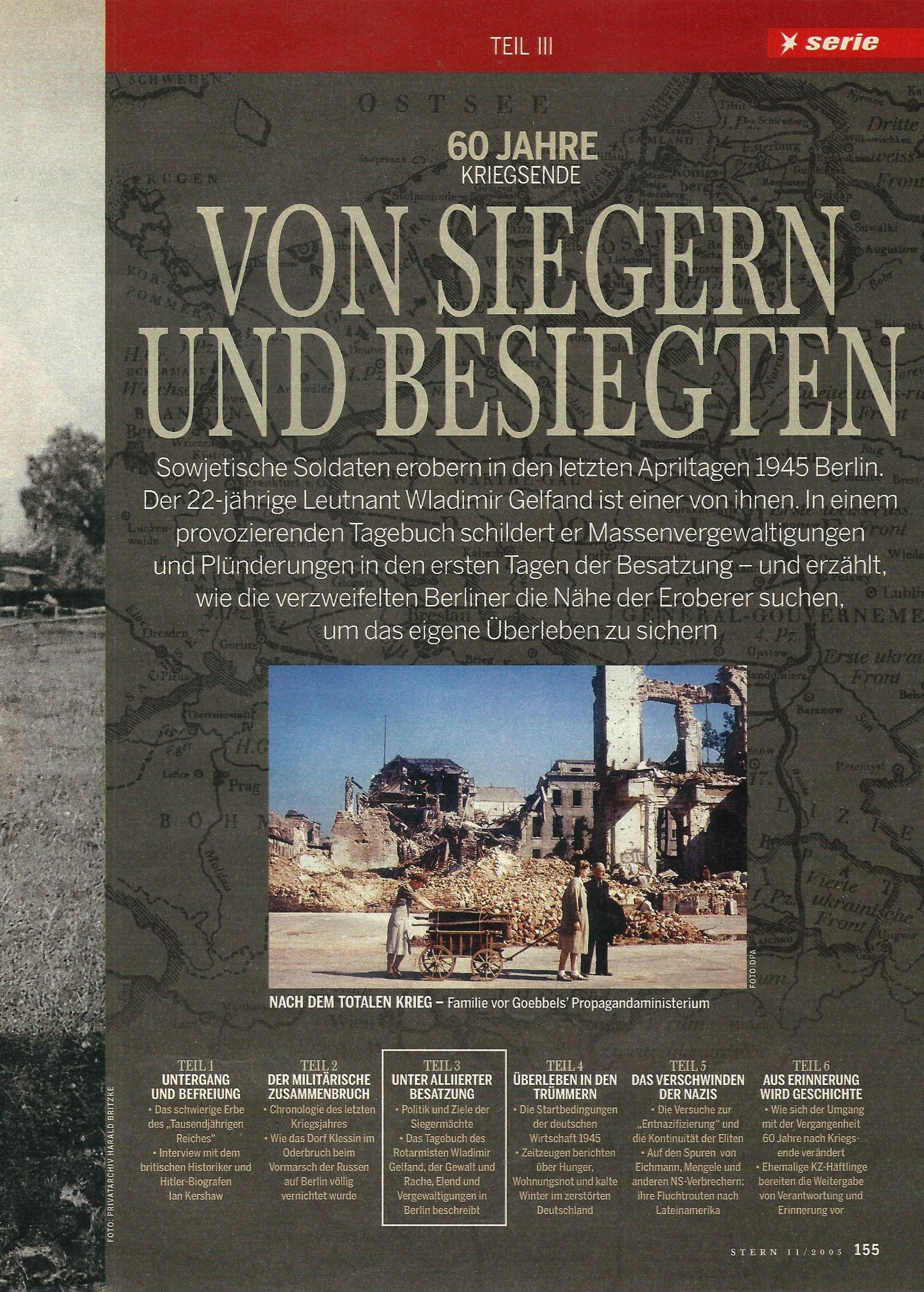
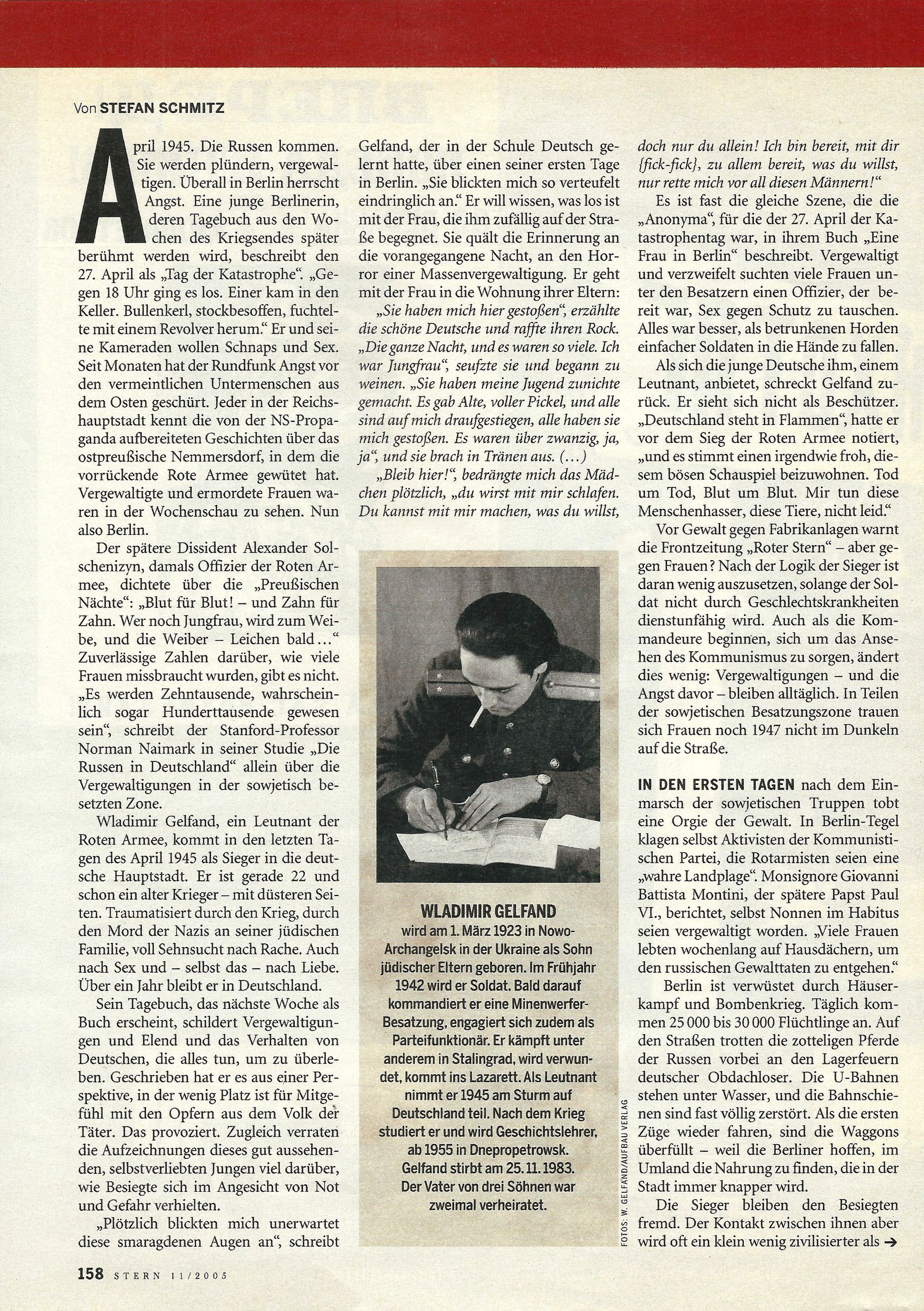
Soviet soldiers conquer Berlin in April 1945. Lieutenant Vladimir Gelfand is one of them. In his diary he describes rape and looting and tells how Berliners sought closeness to the conquerors in order to survive.
April 1945. The Russians are coming. They will loot and rape. Fear is everywhere in Berlin. A young Berlin woman whose wartime diary would later become famous calls April 27 “the day of catastrophe.”
“It began at about 6 p.m. One came down into the cellar, a bulldog of a man, drunk and waving a revolver.” He and his comrades want alcohol and sex.
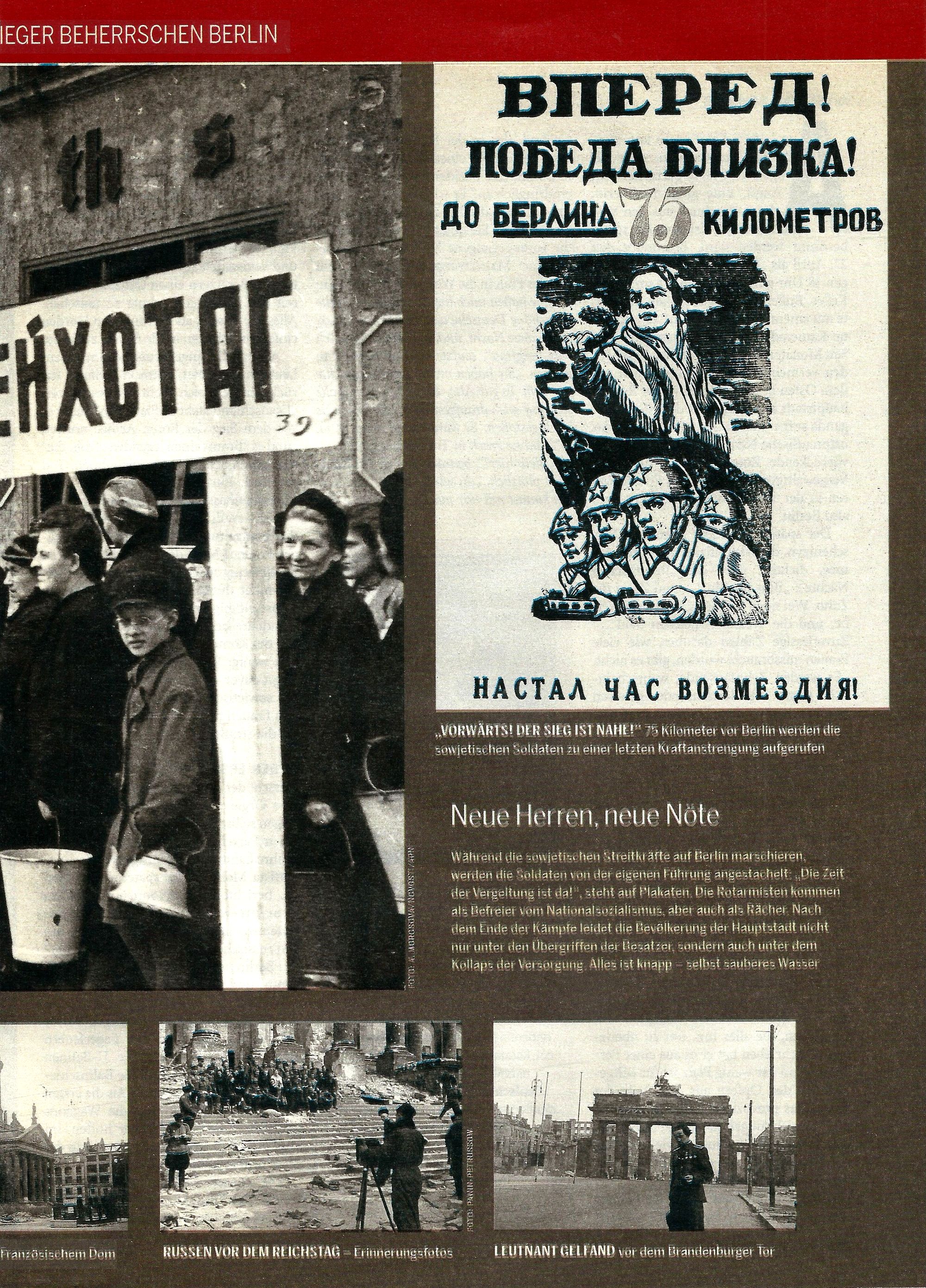
For months, broadcasts had fueled fear of the supposed subhumans from the East. Everyone in the Reich capital knew the Nazi propaganda stories about the East Prussian town of Nemmersdorf, where the advancing Red Army had allegedly run amok. Newsreels had shown raped and murdered women. And now it was Berlin.
The later dissident Alexander Solzhenitsyn, then an officer in the Red Army, wrote in “Prussian Nights”: “Blood for blood!” and “A tooth for a tooth.” There are no reliable figures for how many women were subjected to sexual violence. “Tens of thousands, perhaps hundreds of thousands,” Stanford University professor Norman Naimark writes in his study “The Russians in Germany,” referring to rape in the Soviet occupation zone alone.
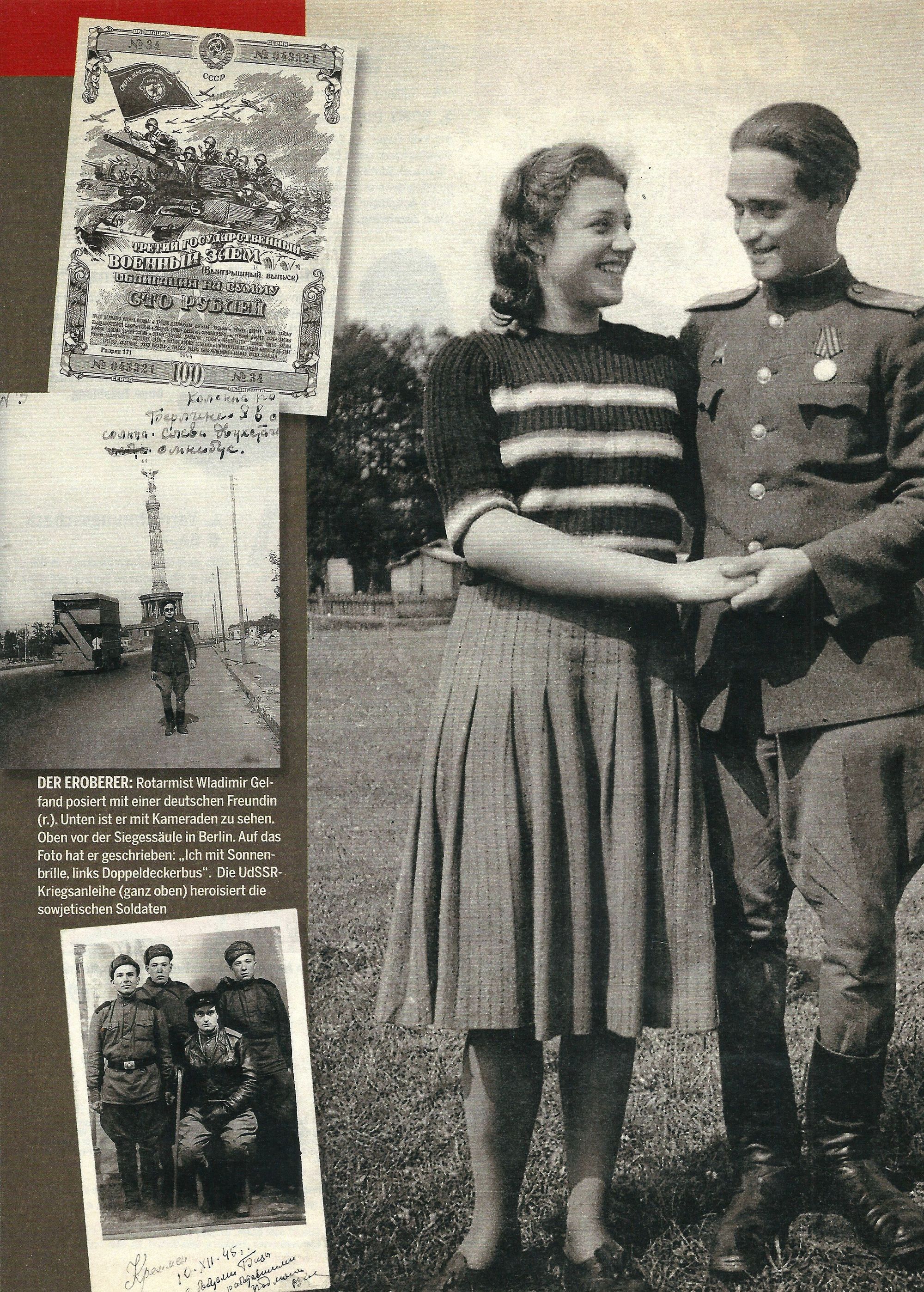
Vladimir Gelfand, a lieutenant in the Red Army, arrives in the German capital as a victor in the final days of April 1945. He is only twenty-two and already an old soldier, with a dark side: traumatized by war, by the Nazis’ murder of members of his Jewish family, and hungry for revenge. He also longs for sex—and even for love.
He remains in Germany for more than a year. His diary, which is to appear as a book the following week, describes rape and suffering as well as the behavior of Germans who do whatever they can to survive. He writes from a perspective that leaves little room for sympathy with the victims of crimes. That is provocative. At the same time, the notes of this handsome, self-loving young man reveal much about how the defeated behaved in the face of deprivation and danger.
“Suddenly those emerald eyes looked at me unexpectedly,” Gelfand, who had learned German at school, writes about one of his first days in Berlin. “They looked at me so invitingly and insistently.” He wants to know what is wrong with the woman he has happened to meet in the street. She is tormented by the memory of the previous night and the horror of a mass rape.
He goes with the woman to her parents’ apartment. “They stuck it into me here,” the beautiful German woman said, lifting her skirt. “All night long, and there were so many of them. I was a virgin,” she sighed and began to cry. “They ruined my youth. There were old men covered in pimples, and they all climbed on me. They all raped me. There were more than twenty of them, yes, yes,” and she burst into tears.
“Stay here!” the girl suddenly urged him. “You will sleep with me. You can do whatever you want with me, but only you. I am ready—with you I am ready to do anything you want—just not in front of all those men!”
It is almost the same scene described by the anonymous author for whom April 27 was the day of catastrophe in her book “A Woman in Berlin.” Raped and desperate, many women sought out an officer among the occupiers who was willing to exchange protection for sex. Anything seemed better than falling into the hands of drunken groups of ordinary soldiers.
When the young German woman makes the offer, Lieutenant Gelfand recoils. He does not see himself as a protector. “Germany is burning,” he had written before the Red Army’s victory, “and I am glad to be present at this evil spectacle. Death for death, blood for blood. I feel no pity for these haters of mankind, these beasts.”
The front page of the army newspaper “Roter Stern” warns against violence toward factories—but toward women? In the logic of the victors, little is said about that as long as a soldier is not put out of action by venereal disease. Even when commanders begin to worry about the reputation of communism, little changes: rape, and fear of rape, remain part of everyday life. In some parts of the Soviet occupation zone, women still do not dare to go out after dark in 1947.
In the first days after the Soviet troops enter, an orgy of violence rages. Even a Communist Party activist in Berlin-Tegel complains that Red Army soldiers are “a real plague.” Monsignor Giovanni Battista Montini, later Pope Paul VI, reports that even nuns in religious habits were raped. “Many women lived on rooftops for weeks in order to escape Russian violence.”
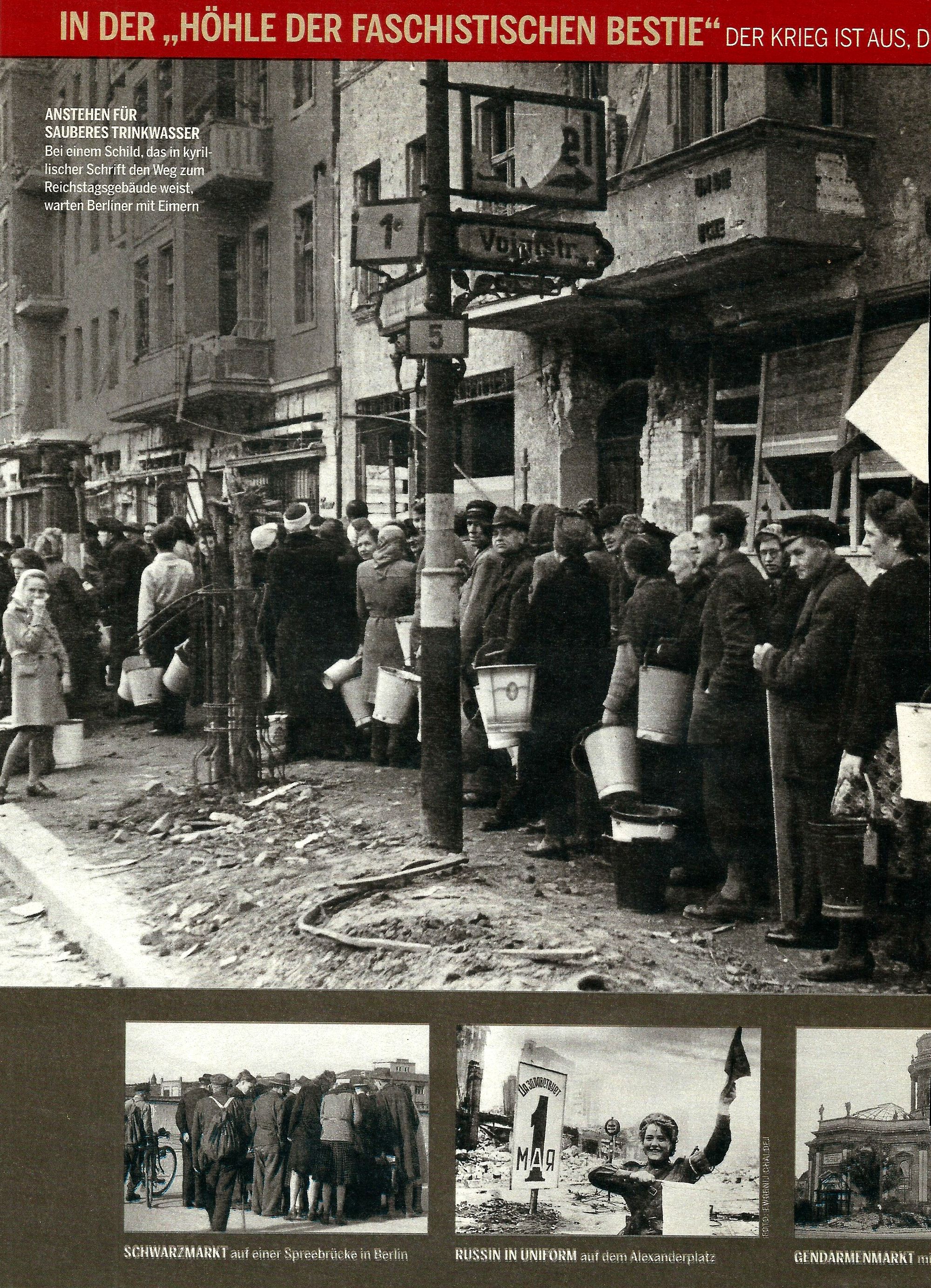
Berlin has been devastated by street fighting and bombing. Every day 25,000 to 30,000 refugees arrive. In the streets, the Russians’ shaggy horses move past the fires of homeless Germans. The subway is flooded and the railway lines are almost completely destroyed. When the first trains begin running again, the carriages are overcrowded because Berliners hope to find food in the surrounding countryside as supplies in the city grow scarcer.
“But this is boring!”
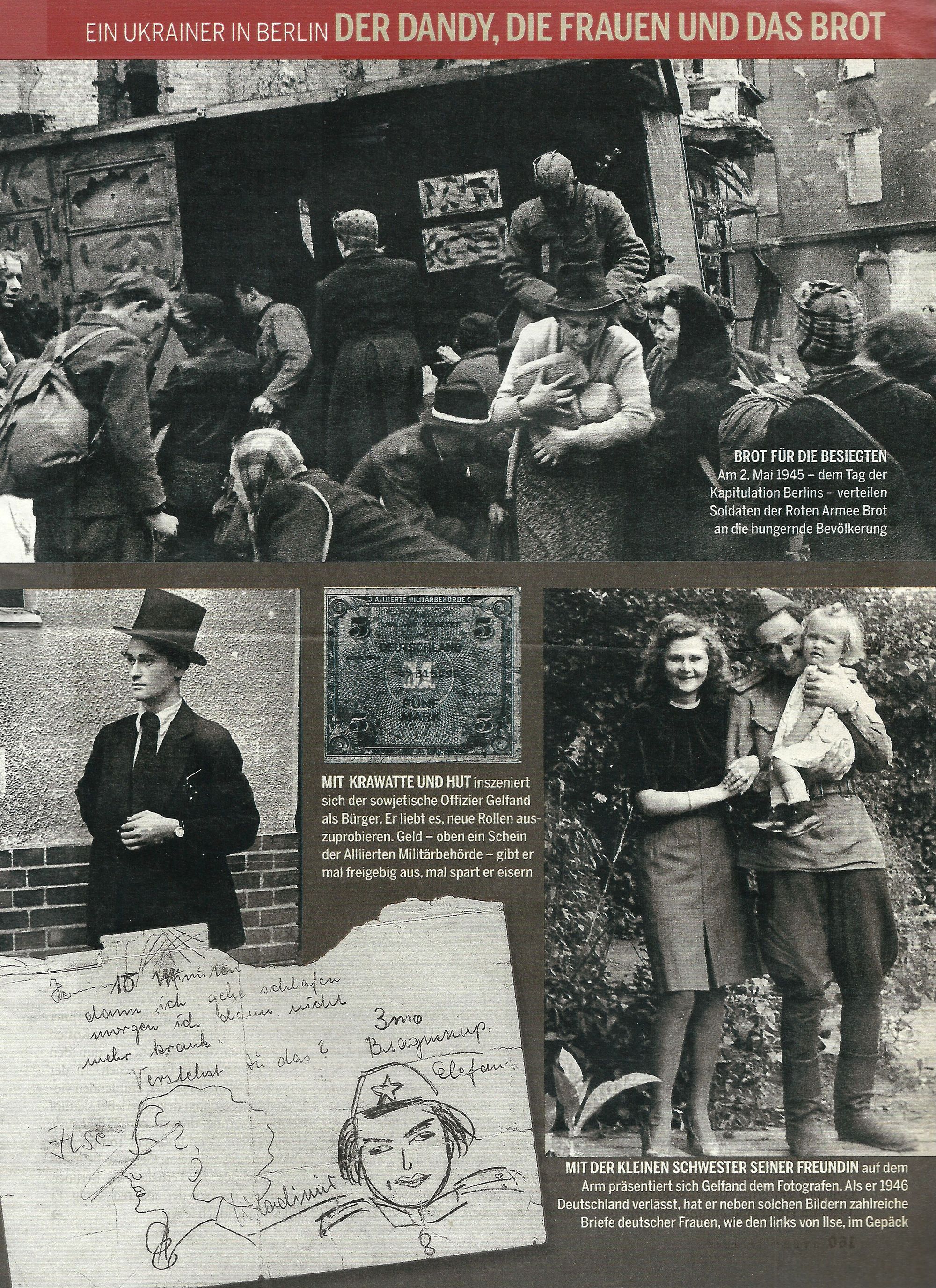
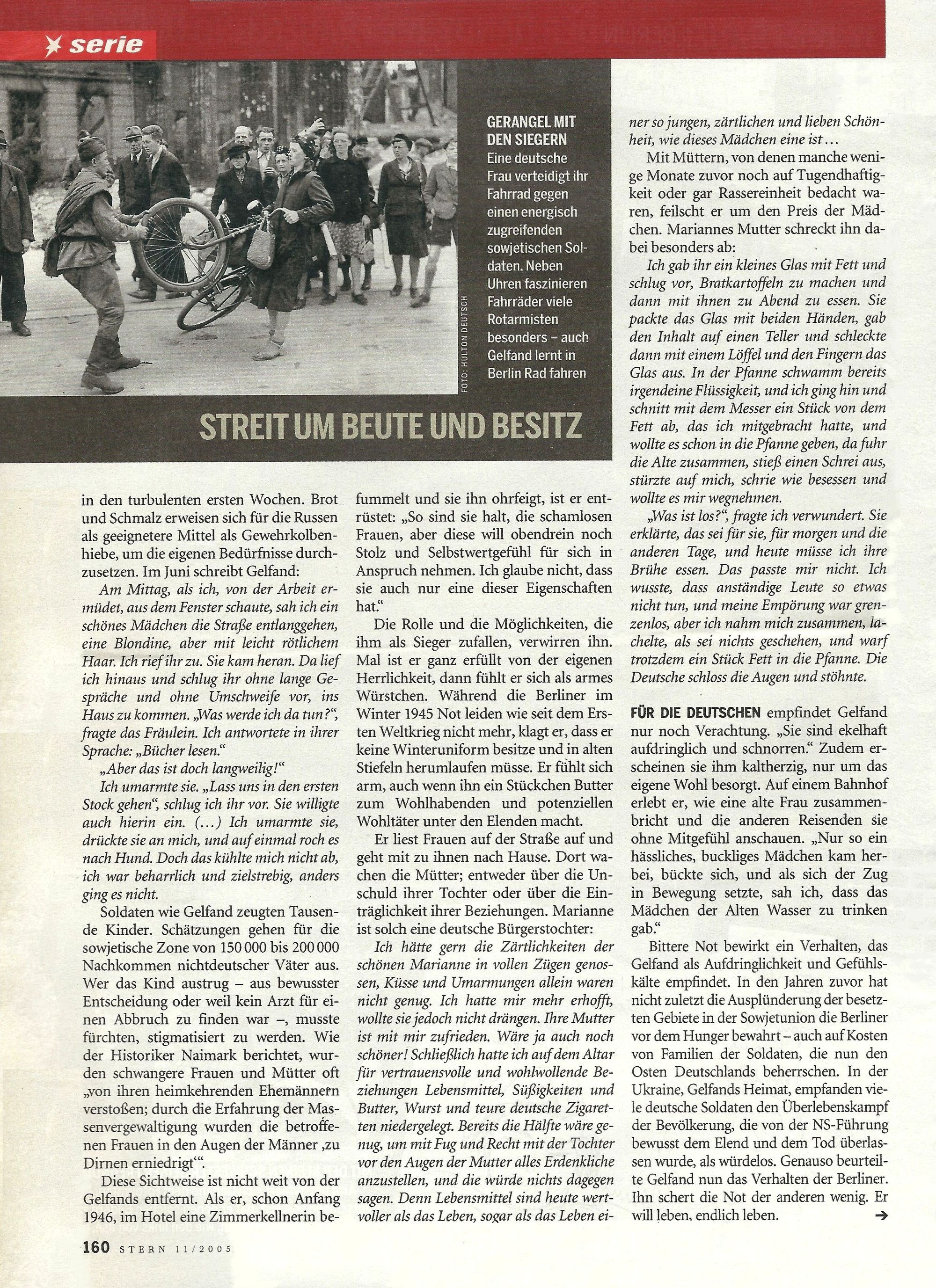
The victors remain strangers to the defeated. Yet contact between them is often more civilized than during the first turbulent weeks. Bread and lard prove more effective than rifle butts for satisfying the Russians’ own needs.
In June, Gelfand writes: “At noon, when I was tired from work, I looked out of the window and saw a beautiful girl walking along the street, a blonde with slightly reddish hair. I called to her. She came over. Then I ran downstairs and, without much discussion or fuss, suggested that she come into the house.
“‘What am I supposed to do there?’ the lady asked. I answered in her language: ‘Read books.’ I put my arm around her. ‘Let’s go up to the first floor,’ I suggested. She agreed to that too. (...) I held her and embraced her, and suddenly there was a smell of dog. But that did not cool me down. I was persistent and purposeful; it could hardly have been otherwise.”
Thousands of children were born to soldiers like Gelfand. Soviet estimates put the number of children with non-German fathers at between 150,000 and 200,000. Women who carried a child to term—whether by deliberate choice or because no doctor could be found to perform an abortion—had to fear social stigma. As historian Naimark reports, pregnant women and mothers were often “rejected by returning husbands,” and as a result of mass rape, the women who had suffered it were regarded by men as prostitutes.
Gelfand’s own view is not far removed from that attitude. When he caresses a waitress in a hotel in early 1946 and she slaps him, he is indignant: “That is what they are like, these shameless women, and yet they also want to lay claim to pride and self-respect. I do not think she possesses either of those qualities.”
The role and the possibilities that come to him as a victor confuse him. At times he is full of his own glory; at other times he feels like a poor wretch. While Berliners suffer through the winter of 1945 as they have not suffered since the First World War, he complains that he has no winter uniform and must walk around in old boots. He feels poor, even though a little butter can make him rich and a potential benefactor among the destitute.
He picks up women in the street and goes home with them. There, their mothers watch, thinking either about their daughters’ innocence or about the potential benefits of a relationship with him.
Marianne is the daughter of one such German family. Gelfand writes: “I would have liked to enjoy the tenderness of beautiful Marianne to the full. Kisses and embraces alone were not enough. I hoped for more but did not want to pressure her. Her mother was pleased with me. What could be better! After all, on the altar of trusting and friendly relations I had deposited food, sweets and butter, sausage and expensive German cigarettes. Even half of these provisions would have been enough to justify, in the mother’s eyes, doing almost anything imaginable with her daughter, and she would not have objected. Food today is more valuable than life, even than the life of such a young, tender and loving beauty as this girl...”
With mothers, some of whom only months earlier had still been thinking in terms of virtue or even race, he bargains over the value of their daughters. Marianne’s mother genuinely frightens him:
“I gave her a small jar of fat and suggested that she fry potatoes and then have supper with us. She grabbed the jar with both hands, emptied it onto a plate, and then scraped the jar clean with a spoon and her fingers. There was already liquid in the frying pan. I went over and cut off another piece of the fat I had brought with my knife and was about to put it into the pan. Then the old woman jumped up, cried out, and rushed at me screaming as though possessed, trying to snatch it away.
“‘What is the matter?’ I asked in amazement. She explained that this was for tomorrow and for other days, while today I was supposed to eat her broth. That did not suit me. I knew decent people did not behave like that, and my indignation knew no bounds, but I pulled myself together, smiled as though nothing had happened, and nevertheless threw the piece of fat into the pan. The German woman closed her eyes and groaned.”
Gelfand feels only contempt for the Germans. “They are disgustingly intrusive and persistent.” They also strike him as cold-hearted, concerned only with their own advantage. At a railway station he watches an old woman dying while the other passengers look on without compassion. “Only one ugly, hunchbacked girl went over, bent down, and as the train began to move I saw that the girl was giving the old woman water to drink.”
Bitter distress produces behavior that Gelfand experiences as grasping and cold. In the preceding years, the looting of the occupied territories of the Soviet Union had helped save Berliners from hunger—not least at the expense of the families of soldiers who now ruled the eastern part of Germany. In Ukraine, Gelfand’s homeland, many German soldiers had regarded the population’s struggle for survival—deliberately abandoned by the Nazi leadership to poverty and death—as beneath consideration. Gelfand now judges Berliners in much the same way.
He cares little about the needs of others. He wants to live—finally to live. He has suffered greatly in the preceding years.
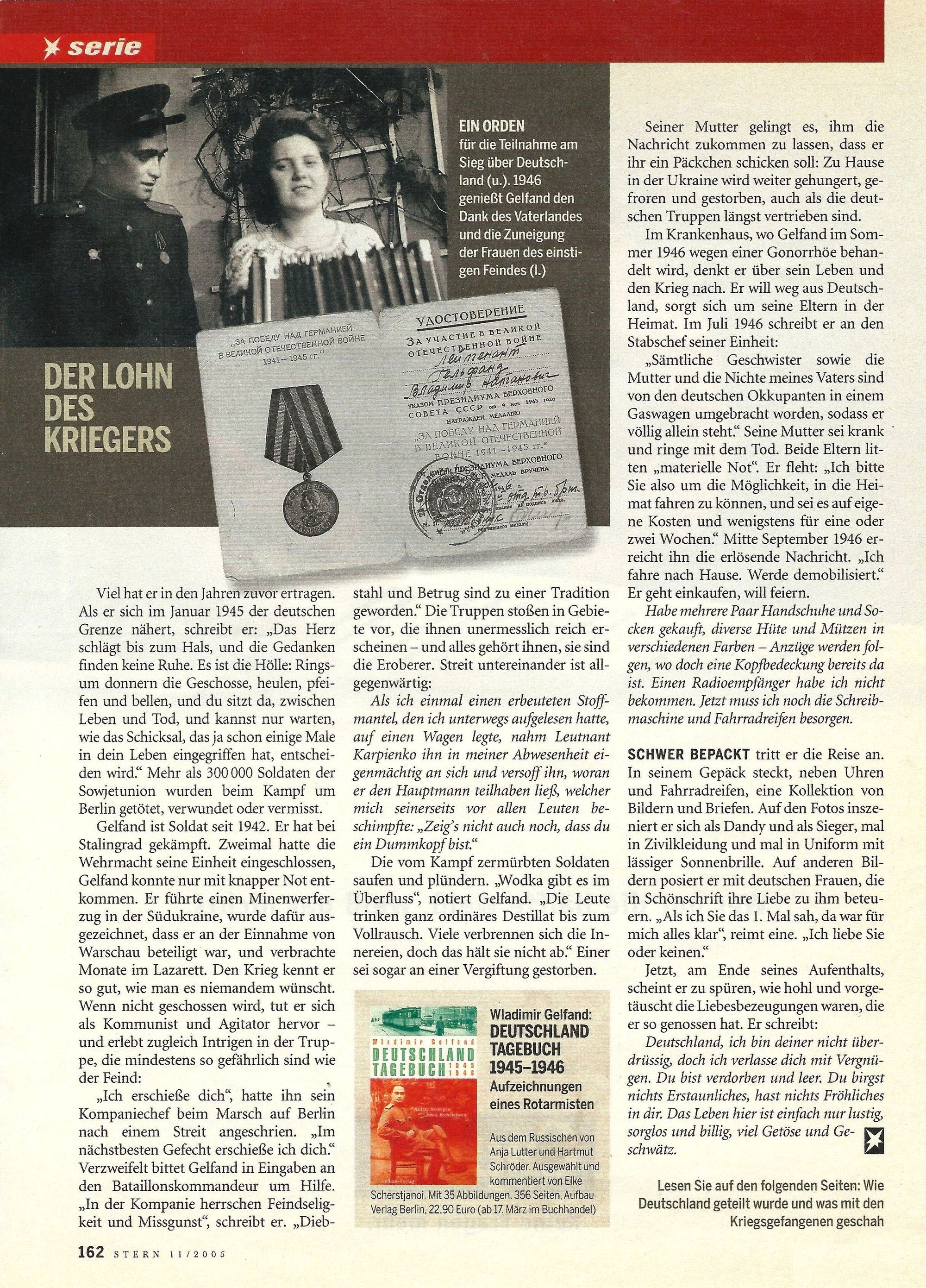
As he approaches the German border in January 1945, he writes: “My heart pounds in my head and my thoughts cannot find rest. It is hell: everything around you thunders, howls, whistles and barks, and you sit there between life and death and can only wait to see what fate decides, the fate that has already intervened in your life several times.”
More than 300,000 Soviet soldiers were killed, wounded or went missing in the Battle of Berlin. Gelfand had been a soldier since 1942. He fought at Stalingrad. Twice the Wehrmacht surrounded his unit, and Gelfand escaped by a narrow margin. He commanded a mine-clearing train in southern Ukraine, was honored for taking part in the capture of Warsaw, and spent months in military hospitals. He knows war as intimately as no one would wish to know it.
If he is not being shot at, he is a communist and an agitator; at the same time, he experiences intrigues within the troops that can be at least as dangerous as the enemy.
“I’ll shoot you.”
His company commander shouts this at him during the advance on Berlin after a battle: “In the next fight I’ll shoot you.” In despair, Gelfand asks the battalion commander for help. “The company is hostile and embittered,” he writes. “Theft and fraud have become a tradition.”
The troops advance into areas that seem immeasurably rich to them—and everything appears to belong to them because they are the conquerors. Conflict among them is everywhere. Gelfand writes that when he put a captured fur coat he had picked up on the road onto a cart, Lieutenant Karpienko took it in his absence and hid it, involving a captain who then insulted Gelfand in front of everyone: “Don’t even show what a fool you are.”
Soldiers consumed by battle drink and loot. “Vodka is plentiful,” Gelfand notes. “People drink ordinary spirits until they are completely drunk. Many burn out their insides, but even that does not stop them.” One man even dies of poisoning.
His mother manages to send him a message asking him to send her a parcel: back home in Ukraine, people continue to starve, freeze and die even after the German troops have long since been driven out.
In a hospital, where Gelfand is being treated for gonorrhea in the summer of 1946, he reflects on his life and the war. He wants to leave Germany and worries about his parents at home.
In July 1946 he writes to the chief of staff of his unit: “All my father’s brothers and sisters, as well as my father’s mother and niece, were murdered by the German occupiers in a gas van, leaving me completely alone.” His mother is ill and close to death. Both parents have endured “material hardship.” He pleads: “Therefore I ask you to give me the opportunity to go home at my own expense, at least for a week or two.”
In mid-September 1946, the long-awaited news reaches him: “I am going home, demobilized.” He goes shopping and wants to enjoy himself.
“I bought several pairs of gloves and socks, hats and caps in different colors—suits will follow, since I already have the headgear. I did not get a radio. Now I need to obtain a typewriter and bicycle tires.”
He begins the journey home heavily laden. Alongside watches and bicycle tires, his luggage contains a collection of photographs and letters. In the pictures he presents himself as a dandy and a victor, sometimes in civilian clothes, sometimes in uniform and wearing the customary sunglasses. In other photographs he poses with German women who declare their love for him in neat handwriting.
“When I first saw you, everything became clear to me,” one of them rhymes. “Whether I love you or not.”
Now, at the end of his stay, he seems to sense how empty and false some of the declarations of love he had so enjoyed could be. He writes:
“Germany, I am not tired of you, but I leave you gladly. You are spoiled and empty. There is nothing astonishing in you, nothing happy in you. Life here is simply ridiculous, carefree and cheap, full of noise and chatter.”
Stefan Schmitz