



|
||
 |
||
| |
||
|
||
| |
 |

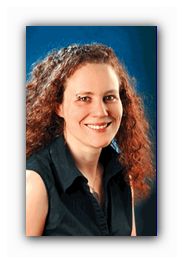 |
Kerstin
Bischl, Dr. phil., Historikerin, lehrt als wissenschaftliche
Assistentin am Lehrstuhl für Neuere Geschichte Osteuropas der
Georg-August-Universität Göttingen.
Sie
hat Neuere und Neueste Geschichte, Philosophie und Politikwissenschaft
an der Humboldt-Universität zu Berlin, der Freien
Universität
Berlin sowie an der Staatlichen Universität Voronezh studiert;
nach Forschungsaufenthalten in Moskau, Warschau und Freiburg Promotion
am Lehrstuhl für Osteuropäische Geschichte der
Humboldt-Universität zu Berlin. Sie arbeitete als DaF-Lehrerin
in
verschiedenen Berliner Einrichtungen für Geflüchtete,
leitete
von 2009 – 2011 die jährliche Internationalen
Sommerschule
der Historischen Fakultät an der Staatlichen
Universität
Voronezh und war von 2007 – 2015 freie politische
(Jugend-)Bildnerin für verschiedene Träger in Berlin.
Sie
forscht und veröffentlicht zur sowjetischen Geschichte,
Geschlechtergeschichte, und Gewaltgeschichte.
Ausgewählte
Veröffentlichungen: »Female Red Army Soldiers in
World War
II and Beyond«, in: Catherine Baker (Hg.), Gender in
20th-Century
Eastern Europe and the Soviet Union, London 2017, S. 113-126;
»Und dann war ich nicht mehr da. Überlebende
erinnern
sexuelle Gewalt bei der Befreiung«, in: Alina Bothe/Christina
Brüning (Hg.), Geschlecht und Erinnerung im digitalen
Zeitalter
– neue Perspektiven auf ZeitzeugInnenarchive, Berlin 2014, S.
135-156.
|
 |
|
|
 |
 |
|
© 2019 Hamburger Edition HIS
 German
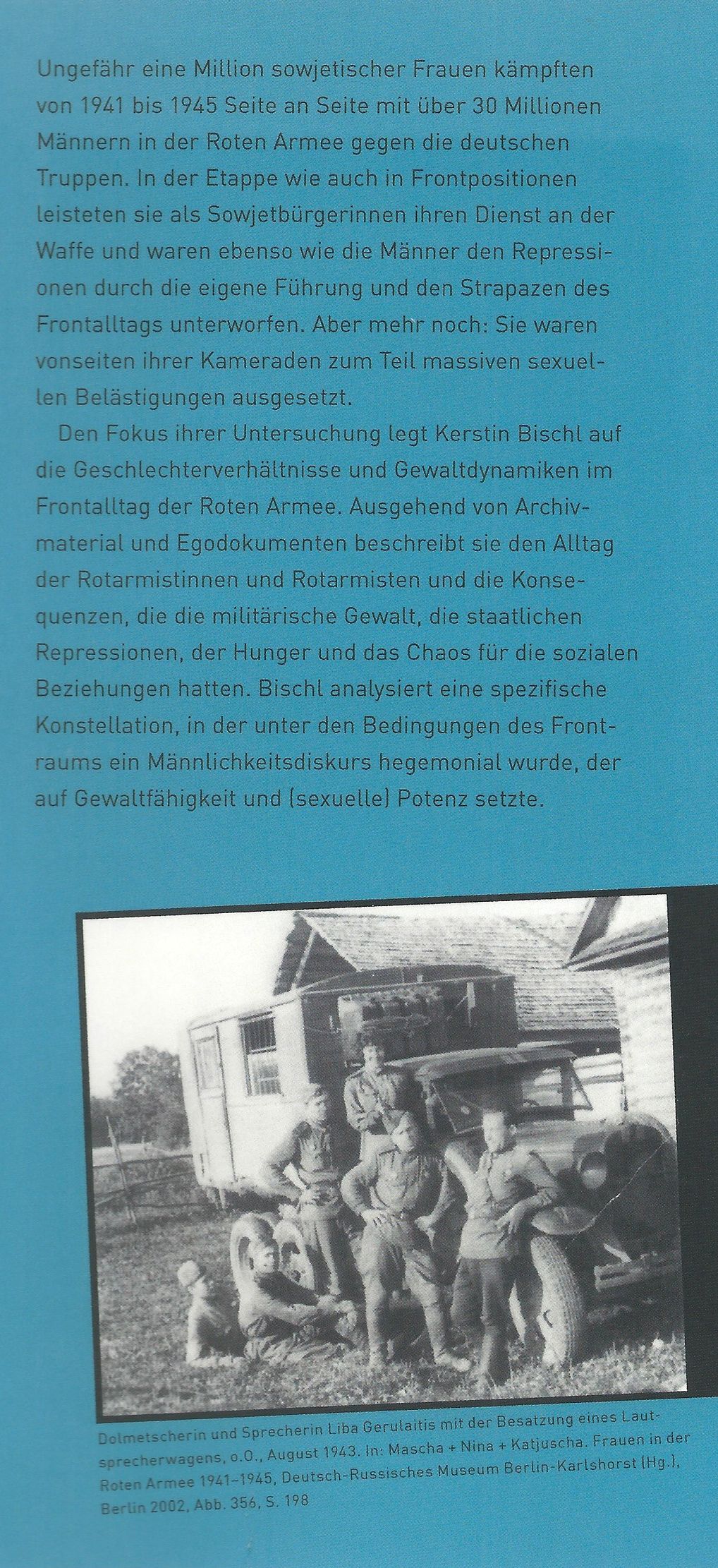
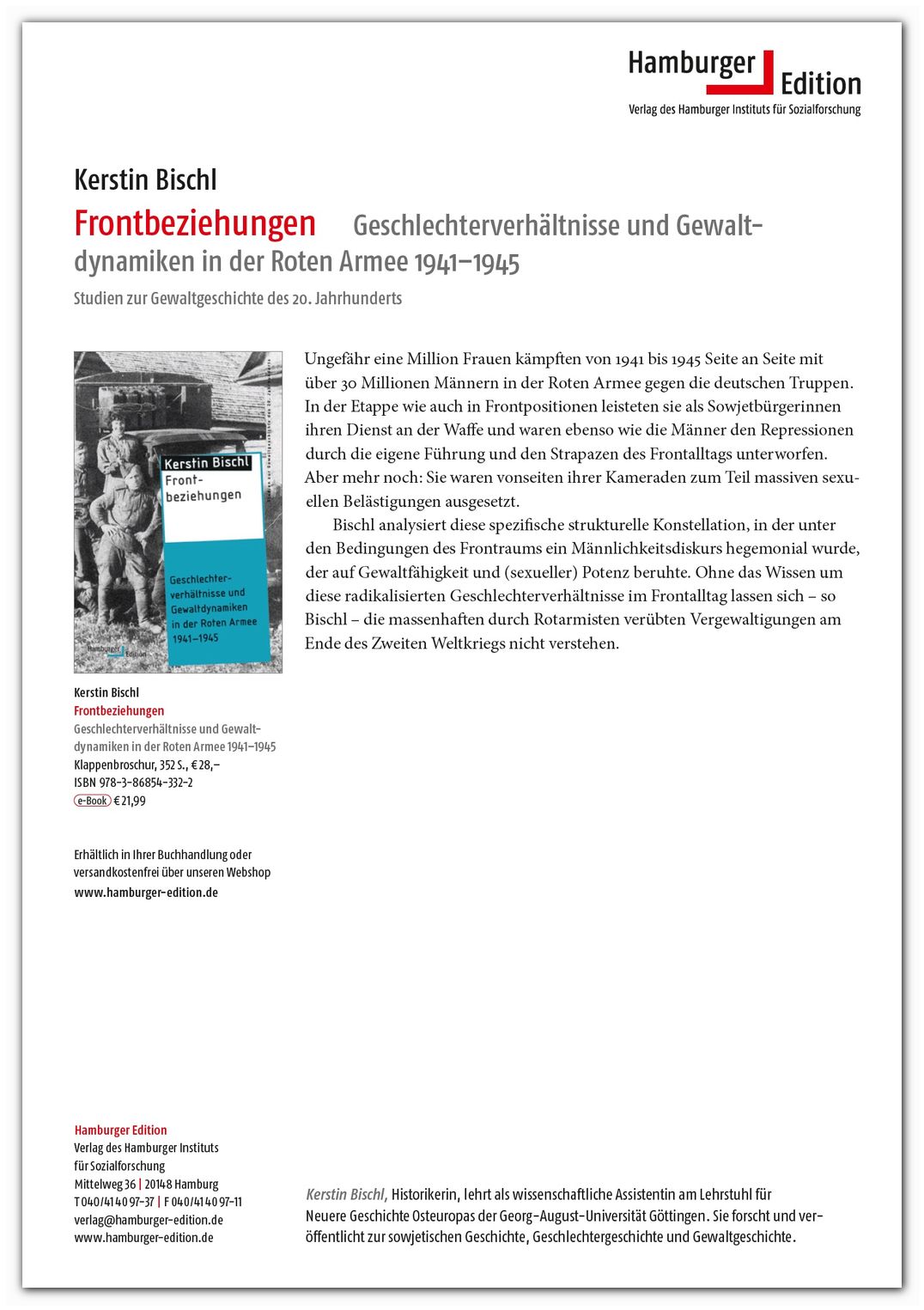
Between 1941 and 1945, around one million women served alongside more than thirty million men in the Red Army in the war against Germany. They served both behind the lines and at the front and, like male soldiers, were exposed to repression by their own leadership and to the everyday hardships of war. In addition, women were subjected by their comrades to sexual harassment that ranged from individual incidents to widespread abuse.
Bischl analyses the particular structural constellation of the front, in which hegemonic ideas of masculinity were tied to violence and sexual potency. She argues that the mass rapes committed by Red Army soldiers at the end of the Second World War cannot be understood without examining these extreme gender dynamics in the army’s everyday life.
Kerstin Bischl, PhD, is a historian and research associate in the Department of Modern and East European History at Georg-August University Göttingen.
She studied modern and contemporary history, philosophy and political science at Humboldt University in Berlin, the Free University of Berlin and Voronezh State University. After research stays in Moscow, Warsaw and Freiburg, she completed her doctorate in East European history at Humboldt University.
She has worked as a teacher of German as a foreign language in various Berlin institutions for refugees, directed the annual International Summer School of the History Faculty at Voronezh State University from 2009 to 2011, and worked in political and youth education at several Berlin institutions from 2007 to 2015.
Her research and publications focus on Soviet history, gender history and the history of violence.
Selected publications include “Women Soldiers of the Red Army in the Second World War and Beyond,” in Catherine Baker (ed.), Gender in Twentieth-Century Eastern Europe and the Soviet Union, London, 2017, pp. 113–126; and “And Then I Was No Longer There: Survivors Remember Sexual Violence during Liberation,” in Alina Bothe and Christina Brüning (eds.), Gender and Memory in the Digital Age: New Perspectives on Oral-History Archives, Berlin, 2014, pp. 135–156. Information current as of November 2018.