


|
 |
 |
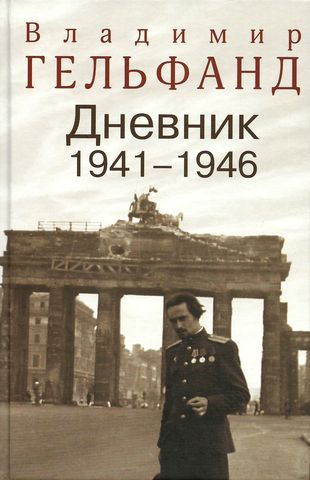  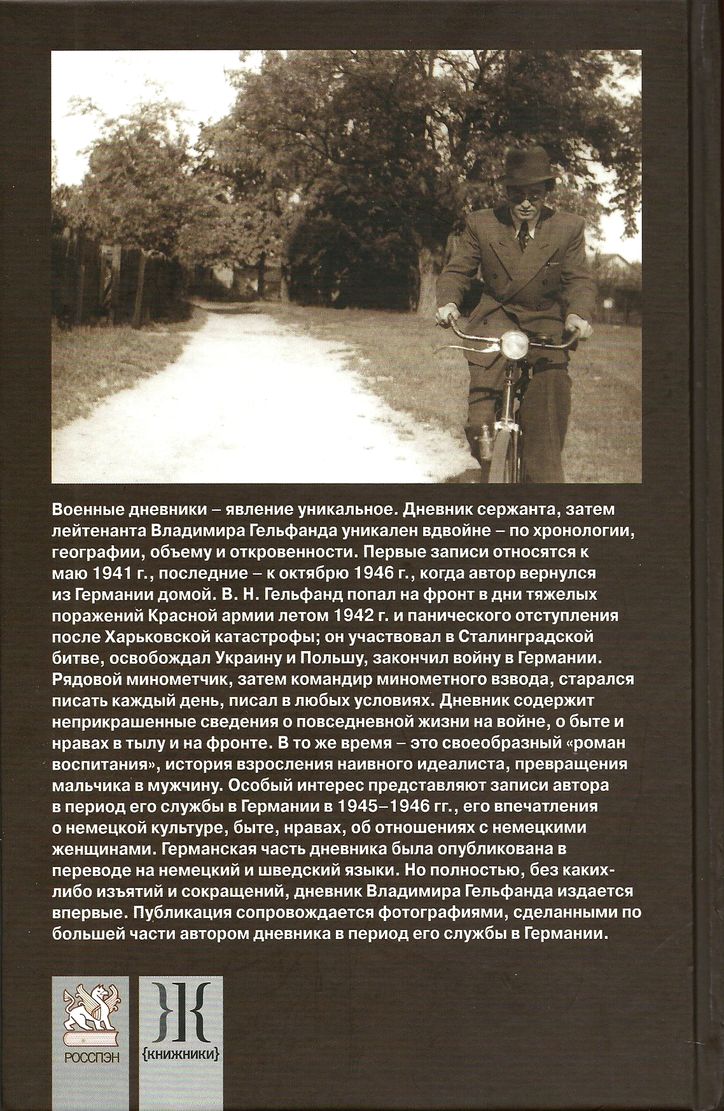
|
|
|
|
|
 |
|
 Воронина Татьяна Львовна ведущий аналитик Международного центра истории и социологии Второй мировой войны и ее последствий НИУ ВШЭ |
 |
|
 Махалова Ирина Андреевна стажер-исследователь Международного центра истории и социологии Второй мировой войны и ее последствий НИУ ВШЭ, магистрант Университета им. братьев Гумбольдт (Берлин) |
 |
|
Олег Будницкий
«ДНЕВНИК, ПРИЯТЕЛЬ ДОРОГОЙ!»
ВОЕННЫЙ ДНЕВНИК ВЛАДИМИРА ГЕЛЬФАНДА
Писать историю советского общества, опираясь только на официальные документы, даже не предназначенные для публики и хранившиеся «за семью печатями» в архивах, значит вводить читателя в заблуждение. Точнее, опора на тексты и иные материалы, произведенные властью и ее агентами, приводит к искажению исторической перспективы. Власть смотрела и смотрит на историю, как правило, с точки зрения ее «полезности». Она рассматривается как средство воспитания, доказательства исторических прав, в общем, является частью политики. Государственная власть пытается проводить определенную «политику памяти», управлять памятью о тех или иных событиях. Это иногда удается, иногда нет.
Война (а когда мы говорим или пишем «война», не уточняя, какая, в нашей стране все понимают, что речь идет о Второй мировой, именуемой у нас Великой Отечественной) не является исключением. Это часть советской истории, хотя и в памяти людей, и в исторических исследованиях она как будто выпадает из ее общего хода.
Частная память вытесняется «на обочину», делегитимизируется. Казалось бы, войны это касается в наименьшей степени, ведь в советское время было издано огромное количество военных мемуаров. Однако значительная, если не большая, часть воспоминаний была выпущена военачальниками различных рангов, в частности в знаменитой серии «Военные мемуары». Тексты тщательно редактировались и согласовывались, да и писались, как правило, не самими генералами и маршалами, а «литературными неграми» (в большинстве своем не слишком литературно одаренными). Память о войне тщательно унифицировалась.
«Военные мемуары стали чем-то вроде замогильных записок, сочиняемых генералами-шатобрианами, – писал бывший командир пулеметной роты Зиновий Черниловский, – тогда как солдаты – Некрасов или Быков – сосредоточились на художественном видении войны. Где, мол, тот командир роты, который отважится показать эту величайшую из войн как ее участник. Просто и буднично, то есть не как “человек с ружьем”, а много проще и обыденней, в духе известной французской поговорки: на войне как на войне...»1
Ситуация начала меняться в перестроечные годы, а в постсоветской России произошла настоящая «революция памяти». Число текстов о войне стало возрастать в геометрической прогрессии, степень их откровенности – тоже. Вышли сотни мемуарных книг. Энтузиастами военной истории были записаны тысячи рассказов ветеранов. Оказалось, что некоторые рядовые великой войны писали воспоминания о своем военном опыте, не рассчитывая на публикацию. Писали для детей, внуков, «в стол» – для истории. Иногда побудительным мотивом написания текстов была официальная ложь о войне и соучастие в этой лжи «назначенных» ветеранов.
«Ни в одной стране нет таких замечательных ветеранов, как в нашем родном и любимом СССР», – писал Василь Быков. Они «не только не способствуют выявлению правды и справедливости войны, но наоборот – больше всех озабочены ныне, как бы спрятать правду, заменить ее пропагандистским мифологизированием, где они герои и ничего другого. Они вжились в этот надутый образ и не дадут его разрушить»2.
Характерно, что письмо Быкова Н. Н. Никулину, автору «Воспоминаний о войне», написанных в середине 1970-х гг., опубликованных в 2008 г., датировано 1996 г. Для Быкова СССР – если говорить об отношении к войне – продолжал существовать. Никулина, начавшего войну под Ленинградом, а закончившего в Германии, побудили написать воспоминания официальные празднества по случаю 30-летия Победы. Его предисловие к рукописи, не предназначавшейся для публикации, датировано 1975 г. «Это лишь попытка, – писал Никулин, – освободиться от прошлого: подобно тому, как в западных странах люди идут к психоаналитику, выкладывают ему свои беспокойства, свои заботы, свои тайны в надежде исцелиться и обрести покой, я обратился к бумаге, чтобы выскрести из закоулков памяти глубоко засевшую там мерзость, муть и свинство, чтобы освободиться от угнетавших меня воспоминаний». В послесловии, написанном в 2007 г., Никулин заметил по поводу своей еще не опубликованной и более чем жесткой рукописи, что был поражен «мягкостью изображения [в ней] военных событий»: «Ужасы войны в ней сглажены, наиболее чудовищные эпизоды просто не упомянуты»3.
Конечно, к воспоминаниям, написанным спустя 40, а то и 50 лет после описываемых событий, как и к устной истории (интервью), надо относиться с большой осторожностью. Дело не только в слабости человеческой памяти. Пишут и рассказывают уже другие люди, совсем не такие, какими они были во время войны. Жизненный опыт, окружающая обстановка, прочитанные книги и увиденные фильмы, десятилетия пропаганды – все это не может не отразиться на содержании написанных или наговоренных текстов. Иногда ветераны, сами того не замечая, вставляют в свои рассказы какие-то сюжеты из просмотренных фильмов, иногда полемизируют с прочитанным или увиденным. Не вдаваясь в детали источниковедческого анализа, заметим, что использовать эти «новые мемуары» можно, но верить всему «на слово» не приходится.
Где же взять достоверные сведения о войне (не будем употреблять всуе высокое слово «правда»), не только о героях и подвигах (чему посвящена львиная доля военной литературы), а о повседневной жизни солдат и офицеров? Ведь на войне не только убивают и умирают. На войне играют в карты, пьют, поют, завидуют, любят, воруют. В общем, живут. При всей огромной литературе о войне об этом – о жизни на войне, в особенности о жизни «рядового Ивана» (или Абрама) – написано менее всего.
Ответ как будто ясен: следует обратиться к источникам личного происхождения времен войны – дневникам и письмам. Здесь-то и начинается проблема. Письма цензуровались, причем об этом было хорошо известно военнослужащим. Следовательно, письма проходили «двойную цензуру» – внутреннюю и внешнюю. Война не самое лучшее время для ведения дневников, к тому же, по распространенному мнению, вести их запрещалось.
Комиссар роты, которой командовал Зиновий Черниловский, увидев у него записную книжку, отобрал ее и бросил в печурку: «Помни, комроты, товарищ Сталин приказал: всех, кто будет вести дневники, – расстреливать». «Не знаю, был ли такой приказ, – писал Черниловский более полувека спустя, – но дневников я больше не вел. Как и все»4.
Как оказалось – не все. Да и специального приказа, запрещающего вести дневники, пока что не обнаружено. Очевидно, запрещали вести дневники исходя из общих соображений секретности. Кто-то вел дневник, несмотря ни на какие запреты, кто-то просто не знал о существовании такого запрета, как, к примеру, сержант Борис Комский5.
К тому же нет таких приказов, которые бы в СССР – в данном случае, к счастью для историков, – не нарушались. Инженер, рядовой Марк Шумелишский вел записи на отдельных листках, иногда не проставляя даты. Он понимал, что записывать свои впечатления, а в особенности мнения, опасно. «Очень многое из того, что хотелось бы записать и осмыслить потом на конкретных примерах, нельзя <…> все записывать нельзя. Запись, попавшая гадине, может причинить зло». Дело не в том, что Шумелишский опасался доноса. Он боялся, что враг может использовать его критические записи в своих целях. Критика, считал он, для будущего. «Это как бы потенциальная критика»6.
С Ириной Дунаевской проводили профилактические беседы сотрудники СМЕРШ, но, не обнаружив в ее записях ничего секретного (номера частей, имена), вести дневник не запретили.
Некоторые авторы дневников вели их еще в довоенное время и не оставили эту привычку и на фронте; для других именно война послужила побудительным мотивом вести записи о величайшем событии в их жизни, в котором им довелось участвовать. Фронтовые дневники, считавшиеся до последнего времени явлением уникальным, могут быть переведены в другую категорию – явления весьма редкого7. Особенностью источников этого рода является то, что они редко сдавались в государственные архивы. «Частная память» и хранилась, как правило, частным образом – среди семейных бумаг. Иногда, впрочем, дневники обнаруживаются и в государственных архивохранилищах, в том числе в архивах учреждения, с которым подавляющее большинство советских людей предпочитало дела не иметь. Обнаруживаются в качестве вещественных доказательств по делам8.
Почему красноармейцы вели дневники? Большинство «писателей» были не без литературных претензий и, возможно, намеревались использовать дневники при подготовке будущих книг: выпускник средней школы сержант Борис Комский сочинял стихи и мечтал о литературной карьере. Рядовой Давид Кауфман был студентом московского Института философии, литературы и истории (ИФЛИ), готовился стать профессиональным литератором и уже опубликовал первое стихотворение в «толстом» журнале. Впоследствии Кауфман напишет одно из самых известных стихотворений о войне: «Сороковые, роковые…» Думаю, литературный псевдоним автора этих строк напоминать не надо.
Инженер Марк Шумелишский «снова и снова» задавал себе вопрос: «“На кой черт я все время пытаюсь вести какие-то записи?” Все время преследует идея собрать материал и со временем написать хорошую правдивую книгу, которая отобразила бы истинные настроения определенных групп людей в тылу в это великое время. Книгу, конечно, можно будет написать много лет спустя, когда все будет пережито, передумано и оценено. Но сейчас необходимо записывать много мелочей»9.
Сержант Павел Элькинсон начал вести дневник по совершенно конкретной причине. 28 августа 1944 г. он записал:
«Наконец долгожданный день полного изгнания немцев с нашей земли на нашем участке фронта настал. Вот он Прут, вот она граница. Всего 6 дней прошло с того времени, как мы наступаем, а как много сделано. Полностью очищена Бессарабия. Заключен мир с Румынией. Завтра перейдем границу. Разве думал я когда-нибудь, что придется побывать за границей. Оказывается, пришлось. Как хочется запомнить все увиденное и коротко записать. Ведь такое в жизни случается всего один раз…»10
Элькинсону, служившему разведчиком в артиллерии, довелось изрядно «попутешествовать» по Европе: с августа 1944 по май 1945 г. он побывал в Румынии, Болгарии, Югославии, Венгрии и Австрии.
* * *
Дневник Владимира Гельфанда как будто вписывается в ряд других дневников военного времени. Однако как раз этот текст, в чемто сходный с некоторыми другими по мотивам, которыми руководствовался при его написании автор («Литературную работу-учебу не прекращу ни при каких обстоятельствах, это моя жизнь», – записал Гельфанд 6 июня 1942 г.), и по некоторым затрагиваемым сюжетам, из общего ряда выбивается.
Дневник уникален по нескольким обстоятельствам. Во-первых, по хронологическому охвату и объему записей: он начинается с последних предвоенных месяцев 1941 г., завершается возвращением из Германии, где автор служил в оккупационных войсках, осенью 1946 г. Собственно, Владимир Гельфанд и после войны продолжал вести дневник, но вел его уже не столь систематически, да и события, в нем описанные, интересны скорее для истории повседневной жизни советского человека второй половины 1940-х – начала 1980-х гг. Это уже совсем другая история. Оговоримся сразу, что дневники столь же широкого временного охвата все же встречаются, хотя и нечасто. Назову дневники Николая Иноземцева и Бориса Суриса11, из неопубликованных – дневник Василия Цымбала12. Однако Николай Иноземцев служил в артиллерии большой мощности, которую задействовали преимущественно при наступательных операциях, и располагавшейся достаточно далеко от передовой. Вследствие чего автор большую часть войны провел в тылу, в ожидании наступления. Борис Сурис был военным переводчиком при штабе дивизии и по роду службы бывал на передовой нечасто. Гельфанд же – и это вторая черта, позволяющая счесть его дневник уникальным – был минометчиком, в период боевых действий находился практически на самом «передке»; впереди была только пехота. Служба в артиллерии большой мощности предполагала наличие определенного образовательного уровня, не говоря уже о штабной работе; поэтому окружение Гельфанда существенно отличается от окружения Иноземцева или Суриса. Это самый что ни на есть «простой народ»; среди сослуживцев Гельфанда немало весьма малограмотных, а то и просто неграмотных, за которых он иногда пишет письма. В-третьих, и это, возможно, самое важное: дневник беспрецедентен по откровенности. При чтении дневников нередко можно заметить некий внутренний ограничитель: их авторы как бы предполагают постороннего читателя, иногда сознательно пишут с учетом этого «внешнего» читателя. Случай Гельфанда принципиально иной: временами текст дневника тяжело читать: автор описывает собственные унижения, иногда – неблаговидные поступки. С не имеющей аналогов откровенностью он пишет о своих сексуальных проблемах и «победах», вплоть до физиологических подробностей.
Уникален дневник и еще в одном отношении: это, пожалуй, единственный известный в настоящий момент текст, подробно описывающий «труды и дни» офицера Красной армии в оккупированной Германии в 1945–1946 гг., его взаимоотношения с немцами (в особенности – с немками), описывающий без каких-либо умолчаний и оглядок.
Автор дневника, несомненно, относится к категории графоманов. Не писать он не может, пишет постоянно, при любых условиях. Пишет письма родным и подругам (в основном школьным; впрочем, если он где-то случайно познакомился с девушкой, то и она попадает в список его корреспондентов), пишет стихи, статьи в газеты (настоящие и стенные). Пишет письма для сослуживцев, которые не в ладах с грамотой или же хотят, чтобы им написали «красиво»:
«Несколько дней подряд пишу письма другим лицам. Вот Петру Соколову, нашему командиру роты, написал два письма для его девушки Нины. Потом Калинин попросил ответить его дочурке маленькой, которая просит прислать статью в местную стенгазету, а он не знает, как лучше ответить, чтобы не обидеть ее чувств. Раньше Рудневой девчурке написал. Глянцева жене – два письма, Чипаку – письмо домой и т. д.» (15.01.1944).
Но главное – Гельфанд ведет дневник, который называет своим «другом» (07.11.1941). Год с лишним спустя он пишет, обращаясь к дневнику: «Дневник, приятель дорогой! А я сегодня пил чай из кореньев! Сладкий, как с сахаром! Жалко, тебе не оставил! Но не беда – тебе достаточно понюхать запах корней – вот они, в руках у меня, чтобы ты убедился в правдивости слов моих. А зачем тебе иные сладости кроме моих, ведь ты переживаешь все наравне со мной – и радости, и горести те же» (03.09.1942).
Пожалуй, дневник был на самом деле единственным другом рядового, сержанта, затем лейтенанта Гельфанда. Ибо с людьми он сходился крайне трудно и за годы войны друзей не обрел. Иногда из графоманов вырабатываются писатели – о чем мечтал и на что надеялся Владимир Гельфанд. В подавляющем большинстве – нет. Гельфанд принадлежал к этому подавляющему большинству. Однако книга, им написанная, хотя и не полностью, все же вышла в свет. Это случилось, увы, после смерти автора (об этом подробнее поговорим ниже). Этой книгой стал дневник, который, вероятно, рассматривался Гельфандом разве что в качестве литературной «заготовки». Прежде чем поговорить о содержании дневника, несколько слов о его авторе. Владимир Натанович Гельфанд родился 1 марта 1923 г. в поселке Ново-Архангельск Кировоградской области в семье рабочего-стекольщика. Отец – Натан Соломонович Гельфанд (1896 г. р.) – в разные годы работал бригадиром на цементном заводе, завхозом средней школы, кладовщиком слесарно-производственной артели в Днепродзержинске и Днепропетровске. Мать – Надежда Владимировна Городынская (1902 г. р.), до революции давала частные уроки русского языка в семьях богатых односельчан в с. Покотилово. Во время Гражданской войны служила некоторое время в Красной армии, где вступила в партию большевиков. По ее рассказам, благодаря этому обстоятельству, а также умению печатать на машинке ее взяли на работу машинисткой в Кремль. Однако впоследствии она вернулась на Украину, вышла замуж, родила сына; общественной деятельностью, судя по всему, не занималась и была исключена из партии «за пассивность». Работала воспитателем в детском доме, в различных детских садах, затем вплоть до начала войны – секретарем отдела кадров завода им. В. И. Ленина в Днепропетровске. В поисках лучшей доли семья сменила несколько мест жительства, пока не обосновалась в 1933 г. в Днепропетровске, который Владимир Гельфанд считал своим родным городом. Родители Владимира развелись за три года до начала войны. Во время войны Натан Гельфанд был призван в Красную армию, но вскоре по состоянию здоровья направлен на «трудовой фронт», после чего – в г. Шахты на угольные рудники, где работал вахтером. Мать Владимира Гельфанда эвакуировалась в Среднюю Азию, работала в колхозе.
Владимир Гельфанд окончил 8 классов средней школы и 3-й курс Днепропетровского индустриального рабфака, то есть приблизительно 9 классов. В начале войны вместе с комсомольской организацией рабфака выехал в Апостоловский район Днепропетровской области на уборку урожая. 18 августа 1941 г., как вскоре выяснилось, за неделю до захвата города немцами, эвакуировался из Днепропетровска в Ессентуки. В Ессентуках комсомольской организацией был направлен в ремонтно-восстановительную колонну связи и проработал там в качестве линейного рабочего вплоть до самого своего призыва в армию. В армию Гельфанда призвали 6 мая 1942 г. После трехнедельной подготовки, получив специальность минометчика, он был направлен в действующую армию.
В армии попал в 52-й укрепрайон в 427-й отдельный артиллерийско-пулеметный батальон, как раз в период отступления после Харьковской катастрофы. Гельфанду было присвоено звание сержанта, и он был назначен командиром минометного расчета. Первые полтора месяца на фронте вобрали многое: часть, в которой служил Гельфанд, попала в окружение и была разбита. С остатками части он вышел из окружения в районе Сталинграда; после недолгого пребывания на пересыльном пункте был направлен в 15-ю гвардейскую стрелковую дивизию в 50-й гвардейский стрелковый полк, где служил командиром минометного расчета, а также исполнял обязанности замполита и заместителя командира роты по политической части.
13 декабря 1942 г. был ранен в палец и попал в госпиталь легкораненых № 4519, где находился на излечении с декабря 1942 по март 1943 г. На первый взгляд не слишком страшная рана могла привести к весьма серьезным последствиям: ранение вызвало панариций – острое гнойное воспаление, чреватое гангреной. Согласно современной медицинской литературе, лечение больного панарицием должен проводить высококвалифицированный врач-хирург в условиях хирургического отделения. Учитывая, что антибиотиков в то время в медицинских учреждениях Красной армии не было, процесс излечения проходил медленно и мучительно. После выписки из госпиталя 28 февраля 1943 г. Гельфанд был направлен на пересыльный пункт, а оттуда в 197-й запасной стрелковый полк, откуда, в свою очередь, 30 апреля 1943 г. – на армейские курсы младших лейтенантов 28-й армии.
По окончании курсов, 28 августа 1943 г. Гельфанд, теперь уже младший лейтенант, был направлен в армейский резерв в Крюково. 7 сентября он попал в 248-ю дивизию, на следующий день был определен в резерв 899-го стрелкового полка. 23 сентября из резерва полка Гельфанд был переведен во 2-й батальон, 1 октября – назначен на должность командира минометного взвода 3-й минометной роты 3-го батальона. 27 января 1944 г. Гельфанду было присвоено звание лейтенанта. В конце 1944 г. он был направлен в 301-ю стрелковую дивизию на 1-й Белорусский фронт; служил в той же должности командира минометного взвода; с конца марта 1945 г. – при штабе дивизии, вел журнал боевых действий.
Принимал участие в боях за освобождение Украины, затем в боевых действиях на территории Польши и Германии. После окончания войны служил на различных должностях в оккупированной Германии, в Берлине и его окрестностях. Большую часть времени – в должности помощника начальника транспортного отдела во 2-й танковой армии. Демобилизовался в сентябре 1946 г. Был награжден орденом «Красной Звезды», медалями «За освобождение Варшавы», «За взятие Берлина», «За победу над Германией» (медаль «За оборону Сталинграда» «догнала» его в 1966 г.)13.
И все это время Владимир Гельфанд вел дневник. Дневник писался постоянно, невзирая на время и обстоятельства. К примеру, под обстрелом или бомбежкой. 22 июня 1942 г. Гельфанд записывает:
«Сегодня год войны между нашей страной и немецко-фашистскими гадами. Эта знаменательная дата совпала сегодня с первым ожесточенным налетом (за мое здесь пребывание) на эти места. Пишу в землянке-окопе. Налеты продолжаются и сейчас. Хаустов, мой боец, окончательно растерялся и даже от испуга заболел. У него была рвота. Руки у него трясутся, и лицо перекошено. Он сначала пытался скрыть свою боязнь перед бомбежками врагов, но теперь уже не скрывает, открыто признается мне, что нервы у него не выдерживают. Так ведет себя вчерашний герой, который минувшей ночью матюгался на меня и говорил, что я “сирун” и при первом же бое наделаю в штаны, а его оставлю самого погибать» (22.06.1942).
«Снаряды неистовствуют – ранило Гореленко, Иващенко, минометчиков Соловьева, старшину и других. Землянка никудышная. Холодно. Условия безобразные. Грустно. Но не писать не могу, хотя темно и пишу ощупью. Руднев, Засыпко со мной. А снаряды ложатся по бокам, и я мысленно прошу рваться их подальше» (04.02.1944).
Дневник сержант, затем лейтенант Владимир Гельфанд вел совершенно открыто и читал иногда фрагменты из него своим товарищам. Его непосредственный начальник даже советовал ему использовать простой карандаш для записей, нежели химический – для лучшей сохранности (запись от 28.06.1942). В другой раз Гельфанд получил инструкции от политрука:
«Политрук рассказал мне, как вести дневник. После того случая, когда он обнаружил случайно увиденные в дневнике разные глупости, я пишу теперь так, как подсказал мне политрук. Он говорит, что в дневнике надо писать только о работе роты, о ходе боев, об умелом руководстве ротной команды, о беседах с воинами, проводимых политруком, о выступлениях по поводу его бесед красноармейцев и т. д. Так именно я и буду писать впредь» (10.09.1942).
Через два дня в дневнике появляется еще более удивительная запись:
«Ночью спал у меня политрук. Сегодня днем тоже. Я теперь выбрался на площадку для миномета из своего окопа. Это, пожалуй, даже удобней для меня. Я в восторге! Ведь если бы не политрук, кто бы руководил моими действиями?» (12.09.1942).
Можно было бы подумать, что у Гельфанда что-то случилось с головой, однако причину резкого изменения содержания и тональности дневника проясняет запись, сделанная им две недели спустя:
«Впервые здесь я открыто записал, ибо избавился от политрука, когда-то указавшего мне, как писать дневник и что писать в нем!» (27.09.1942).
Надо ли говорить, что Гельфанд вновь стал записывать «глупости» (иногда – без кавычек), которые и составляют на самом деле главную ценность этого обширного текста.
Дневник – это своеобразный «роман воспитания». Начинает его вести почти подросток, юноша практически с детской психологией и представлениями о мире. И о войне. Одна из первых записей военного времени: «Война изменила все мои планы относительно проведения летних каникул» (02.07.1941). Всего-то! Поступив рабочим на службу, которая давала освобождение от мобилизации в армию, Гельфанд досадует: «Испугался слез матери, поддался ее просьбам и решил уйти от воинской службы. Что броня? Не лучше ли веселая окопная жизнь на благо Родине моей? Жаркая воинская служба, сопряженная с опасностью, наполненная кровавыми боевыми эпизодами» (07.11.1941). Ему еще предстояло узнать, что такое «веселая окопная жизнь».
Войну заканчивает в чем-то совершенно другой, в чем-то тот же человек: он гораздо более опытен, понаторел в практических вопросах, преодолел робость перед женщинами и более чем преуспел на ниве «сердечных побед» в Германии (для последнего, впрочем, достаточно было располагать некоторым количеством еды). В то же время он так же одинок, столь же трудно сходится с людьми, умудряется нередко попадать впросак «на ровном месте». И так же мечтает стать писателем, хотя в этом отношении его все в большей степени начинают одолевать сомнения.
Гельфанд принадлежал к поколению людей, родившихся и выросших при советской власти, искренне ей преданных и всерьез воспринимавших партийно-советскую риторику. Не просто воспринимавших – мысливших и говоривших стереотипами и словами, почерпнутыми из газетных передовиц и речей партийных лидеров:
«Собираюсь подать заявление в партию. Хочу идти в бой коммунистом. Буду проводить политическую работу, с которой до некоторой степени знаком и которая мне близка. В бою даю себе клятву быть передовым и добиться звания лейтенанта, которого мне волей случая не довелось получить в училище. Многое еще мне незнакомо, многое непонятно, но буду учиться, чтобы больше знать. Литературную работу-учебу не прекращу ни при каких обстоятельствах, ибо это мой хлеб, моя пища, жизнь моя дорогая. Я не умирать еду, а жить и одерживать победу, бить врагов Родины своей! Буду бить их из миномета, из винтовки, а также литературой и политикой – таковы мои мысли и чаяния в данный момент. О смерти не думаю, ибо верю в судьбу свою, которая да сбережет меня от вражеских пуль. Опираясь на эту веру, буду бесстрашен в бою, буду в первых рядах защитников Родины» (06.06.1942).
«Мне необходимо выдвинуться. Мой лозунг – отвага или смерть. Смерть, нежели плен. Жизнь за мной должна быть сохранена судьбой. Она обо мне заботится, мое дело завоевать себе бессмертие. Я теряю сознание от пореза пальца, при появлении сколько-нибудь значительной струйки крови. Мертвых вид был всегда мне неприятен. В драках я всегда был побеждаем. И теперь я мечтаю о подвиге – жду и даже, больше того – стремлюсь к нему!.. Я, который... До сих пор меня не страшили ни разрывы снарядов, ни бомбежки – может быть, потому, что это было далеко в стороне от меня, не знаю. Но думаю, надеюсь не подкачать, выдвинуться, отличиться, стать комиссаром и вести военную корреспонденцию с фронта в газеты. Я добьюсь своего, пусть даже ценой жизни, иначе я не человек, а трус и хвастун. Клянусь же тебе, мой дневник, не быть сереньким, заурядным воином, не выделяющимся из общей массы красноармейцев, а быть знаменитым, прославленным или хотя бы известным героем Отеч[ественной] войны» (28.06.1942).
Разительное отличие жизненных реалий, с которыми с первых же дней в действующей армии сталкивается Гельфанд: трусость командиров, способных бросить своих подчиненных в трудный момент, мародерство, воровство, антисемитизм, явное недовольство некоторой части сельских обитателей советской властью, – мало влияют на его отношение к этой власти и ее лидерам. Так же как на восприятие слов, ими использовавшихся. Гельфанд как само собой разумеющееся воспринимает противоречие между жизнью и словами, которыми эта жизнь описывается на страницах газет. Точнее, он не считает это противоречием, не видит его, для него это норма, само собой разумеющиеся «правила игры». Ему присуще двойное сознание, свойственное людям сталинской эпохи, да и советской эпохи в целом. Текст дневника и тексты статей, которые он пишет для армейской печати, являются наглядным образцом использования разного языка для описания одних и тех же событий. Гельфанд знает, что можно, а что нельзя писать «для всех», считает это нормой и не задумывается над этим противоречием.
Пожалуй, только раз, в дни панического отступления к Сталинграду после Харьковской катастрофы, он пишет о несоответствии жизни и ее отражении на страницах газет:
«Хутор Беленский. Так называется это селение. Сегодня мы уже здесь второй день. Войска все идут и идут. Одиночки, мелкие группы и крупные подразделения. Все имеют изнуренный и измученный вид. Многие попереодевались в штатское, большинство побросало оружие, некоторые командиры посрывали с себя знаки отличия. Какой позор! Какое неожиданное и печальное несоответствие с газетными данными. Горе мне – бойцу, командиру, комсомольцу, патриоту своей страны. Сердце сжимается от стыда и бессилия помочь ликвидации этого постыдного бегства. С каждым днем я все более убеждаюсь, что мы сильны, что мы победим неизменно, но с огорчением вынужден сознаться себе, что мы неорганизованны, что у нас нет должной дисциплины и что от этого война затягивается, поэтому мы временно терпим неудачи. Высшее командование разбежалось на машинах, предало массы красноармейские, несмотря на удаленность отсюда фронта. Дело дошло до того, что немецкие самолеты позволяют себе летать над самой землей, как у себя дома, не давая нам головы вольно поднять на всем пути отхода. Все переправы и мосты разрушены, имущество и скот, разбитые и изуродованные, валяются на дороге. Кругом процветает мародерство, властвует трусость. Военная присяга и приказ Сталина попираются на каждом шагу» (20.07.1942).
Не удивительно, что Гельфанд с восторгом встречает приказ Сталина № 227 от 28 июля 1942 года («Ни шагу назад!»). Он записывает в начале августа 1942 г.:
«Мне вспоминаются мысли мои во время странствования утомительного и позорного армий наших. О, если б знал т. Сталин обо всем этом! Он бы принял меры – думал я. Мне казалось, что он не осведомлен обо всем, что творится, или же неправильно информирован командованием отходящих армий. Какова же моя радость теперь, когда я услышал приказ вождя нашего. Сталин все знает. Он как бы присутствовал рядом с бойцами, мысли мои сходны с его гениальными мыслями. Как отрадно сознавать это» (02.08.1942).
Сталин – его кумир. «Безумно люблю, когда товарищ Сталин выступает. Все события в ходе войны становятся настолько ясными и обоснованными логически», – записывает он в начале ноября 1943 г.
Три года спустя Гельфанд остается столь же восторженным поклонником вождя:
«Еще раз перечитываю речь т. Сталина накануне выборов кандидатов в депутаты Верховного Совета и поражаюсь, в который раз, ясности ума и простоте изложения сталинской мысли. Еще не было ни одного высказывания т. Сталина, в котором не вырисовывалась бы мудрость, правда и убедительность преподносимых слушателям фактов и цифр. Вот и на сей раз. Кто смеет оспорить или выразить сомнение в правдивости гениального рассказа вождя нашей партии и нашего народа о причинах и условиях нашей победы, о корнях возникновения империалистических войн, о существенном отличии только что минувшей войны от всех других, предшествовавших ей прежде, ввиду участия в ней Советского Союза» (14.02.1946).
В этой речи Сталин, среди прочего, говорил о том, что коллективизация «помогла развитию сельского хозяйства, позволила покончить с вековой отсталостью».
«Ваше дело – судить, насколько правильно работала и работает партия (аплодисменты), и могла ли она работать лучше (смех, аплодисменты)», – конспектирует Гельфанд, – «обращается под конец к избирателям т. Сталин. И все награждают его такими горячими аплодисментами и любовью, что просто трогательно становится со стороны. Да, он заслужил ее, мой Сталин, бессмертный и простой, скромный и великий, мой вождь, мой учитель, моя слава, гений, солнце мое большое» (14.02.1946).
Ни собственный опыт общения с крестьянами, ни личное знакомство с результатами коллективизации не заронили и тени сомнения в верности слов вождя. Впрочем, Гельфанд по малолетству не мог сопоставить советскую деревню до и после коллективизации. Однако же невольное знакомство с уровнем развития сельского хозяйства Германии, да и в целом с уровнем жизни побежденных также не навели его на какие-либо размышления.
А. Я. Вышинский, прокурор на показательных процессах эпохи «большого террора», переквалифицировавшийся в дипломаты, вызывал у Гельфанда восторг:
«Вышинский умница. Читал все его выступления на Международной ассамблее и не мог не проникнуться к нему неуемной симпатией. Понятен его успех и прежде, и сейчас. Не помню Литвинова, но Вышинский теперь мне кажется сильнее как дипломат и умнее как теоретик. Какой он родной, какой он красивый, какой он, черт возьми, правильный человек! Нет, он похлеще Литвинова!» (21.02.1946)
Тем же числом, что и запись в дневнике, датируется письмо Гельфанда к матери, в котором он пишет о Вышинском:
«Вышинского за его ум и смелость люблю, как родного, и даже крепче, ведь только подумай, что он там делает, в Генеральной Ассамблее, как он виртуозно сильно ворочает умами – какими умами! – и доводы его остаются неоспоримыми! Нет, он похлеще Литвинова!» (Письмо Вл. Гельфанда матери от 21 февраля 1946 г.)
В общем, Владимир Гельфанд и начал, и закончил войну абсолютно советским человеком. Он вступил в партию на фронте по убеждению, хотел быть политработником, выпускал в училище стенную газету, причем сам писал в ней все статьи, подписываясь именами разных курсантов. Искренне пытался донести до своих товарищей по службе информацию из газет и партийные установки, вызывая разве что их раздражение своей настойчивостью.
Красная армия в дневниковых записях Гельфанда нередко предстает плохо организованной и дисциплинированной; случаи мародерства совсем не редки на своей территории; в Германии оно становится тотальным, причем автор дневника принимает в поисках «трофеев» самое активное участие. Отнюдь не однозначно и отношение советского населения к красноармейцам: иногда их принимают радушно и делятся последним, иногда – прохладно, а то и вовсе враждебно. Собственно, к «советскому» население можно во многих случаях отнести лишь по формальному признаку проживания на территории СССР; отнюдь не все считают советскую власть своей. Люди погружены в свои собственные заботы, они выживают, и не слишком заметно, что их волнует судьба страны.
1 апреля 1943 г. Гельфанд записывает в Зернограде:
«Жители – все рабочие совхозов. В их рассказах уже не услышишь “русские”, [слово нрзб] по отношению к советским и фашистско-немецким войскам, как повсеместно я слышал от жителей всех предыдущих городов и деревень, начиная с Котельниково и кончая Мечеткой, а “наши”, “немцы”. В этих выражениях не видно резкого отделения себя, тоже русских, от своего народа, общества, армии».
Регион между Котельниково и станицей Мечетинской был не единственным, где жители как бы отделяли себя от советской власти и Красной армии. Человек совершенно другого сорта, нежели Гельфанд, капитан (будущий генерал) Илларион Толконюк, выбираясь в октябре 1941 г. из вяземского «котла», был неприятно удивлен тем, что крестьяне «бойцов Красной Армии… называли “ваши”, а немцев – “они”». Да и вообще сельское население Смоленщины и Подмосковья оказалось неприветливым и совсем не напоминало «гостеприимных советских людей»14.
Гельфанда многое возмущает, но жизнь научила наивного идеалиста во многих случаях скрывать свои мысли и чувства. Правда, удается это ему не всегда, и если не удается, то почти с гарантией приводит к неприятностям.
Одной из сквозных тем дневника является антисемитизм, с проявлениями которого и в обществе, и в армии постоянно сталкивается и от которого страдает Гельфанд. Точнее было бы говорить не о проявлениях антисемитизма, а о его массовом характере. Гельфанд записывает 23 октября 1941 г. в Ессентуках, куда он эвакуировался из Днепропетровска:
«По улицам и в парке, в хлебной лавке и в очереди за керосином – всюду слышится шепот, тихий, ужасный, веселый, но ненавистный. Говорят о евреях. Говорят пока еще робко, оглядываясь по сторонам. Евреи – воры. Одна еврейка украла то-то и то-то. Евреи имеют деньги. У одной оказалось 50 тысяч, но она жаловалась на судьбу и говорила, что она гола и боса. У одного еврея еще больше денег, но он считает себя несчастным. Евреи не любят работать. Евреи не хотят служить в Красной армии. Евреи живут без прописки. Евреи сели им на голову. Словом, евреи – причина всех бедствий. Все это мне не раз приходится слышать – внешность и речь не выдают во мне еврея».
Записи Гельфанда – так же как дневники и воспоминания других современников, евреев и неевреев – свидетельствуют, что антисемитизм в стране интернационалистов отнюдь не был изжит. Советская власть упорно боролась с антисемитизмом, особенно в конце 1920-х – начале 1930-х гг. В годы войны об этом нечего было и думать: в открытую бороться с антисемитизмом означало бы, по сути, подтверждать один из основных тезисов нацистской пропаганды о советской власти как власти еврейской. Власть в условиях достаточно широкого распространения антисемитских настроений вряд ли могла это себе позволить. Даже если бы хотела15.
Уже будучи в армии, в июне 1942 г. Гельфанд нашел две немецкие листовки, призывающие красноармейцев сдаваться:
«Какие глупые и безграмотные авторы работали над их составлением! Какие недалекие мысли выражены в этих “листовках”, с позволения сказать. Просто не верится, что эти листовки составлялись с целью пропаганды перехода наших людей на сторону немецких прохвостов. Кто поверит их неубедительным доводам и доверится им? Единственный правильно вставленный аргумент – это вопрос о евреях. Антисемитизм здесь сильно развит, и слова, что “мы боремся только против жидов, севших на вашу шею и являющихся виновниками войны”, могут подействовать кой на кого» (12.06.1942).
Гельфанд, в тех случаях, когда оказывается среди не знающих его людей, проявляя то ли малодушие, то ли здравый смысл, скрывает свое еврейство. Однажды, к примеру, он представляется «русскогрузином»: «Отец, дескать, русский, мать – грузинка» (28.07.1942).
Совсем туго пришлось Гельфанду в госпитале, в котором раненые содержались в ужасных условиях: завтрак подавали в шесть или семь часов вечера, «зато» обед в пять часов утра; до ужина дело не доходило. Качество еды (вода с манкой, ложка картошки, 600 грамм хлеба в день и т. п.) состязалось с ее регулярностью:
«Много других ужасающих неполадков существует у нас, но люди (не все, правда) во всем обвиняют евреев, открыто называют всех нас жидами. Мне больше всех достается, хотя я, безусловно, ни в чем тут не виноват. На мне вымещают они свою злобу и обидно кричат мне “жид”, ругаются и никогда не дают мне слова вымолвить или сделать кому-либо замечание, когда они сорят и гадят у меня на постели» (29.12.1942).
«Зачем я еврей? – записывает однажды в отчаянии Гельфанд. – Зачем вообще существуют нации на свете? Принадлежность к еврейской нации является неизменным моим бичом, постоянным мучением, от которого нельзя сыскать спасения. За что не любят евреев? Почему мне, как и многим другим, приходится иногда скрывать свое происхождение?» (09.04.1943)
Весной 1943 г. Гельфанд постоянно слышит рассказы жителей освобождаемых районов об уничтожении нацистами евреев. Он тревожится о судьбе родственников, не успевших выехать из Ессентуков и оказавшихся в оккупации. Тревога оказалась не напрасной: все его родственники в Ессентуках были убиты нацистами.
«Насчет немцев я навсегда решил, – записывает он в дневнике, – нет врагов для меня злее немцев и смертельнее их. До гроба, до последнего дыхания в тылу и на фронте я буду служить своей Родине, своему правительству, обеспечившему мне равноправие как еврею. Никогда я не уподоблюсь тем украинцам, которые изменили Родине, перейдя в стан врага и находясь теперь у него в услужении. Чистят сапоги, служат им, а те их лупят по иудиным собачьим харям» (13.03.1943).
Говорят, что характер – это судьба. Несомненно, что на формирование характера подростка, а мы застаем автора как раз в момент перехода от подросткового к юношескому возрасту, оказала воздействие его деспотичная и не терпевшая возражений мать. Надежда Городынская, судя по записям Владимира Гельфанда, была вполне любящей матерью, однако не останавливавшейся перед самыми жесткими мерами «воспитания» своего единственного сына. Вроде битья его головой о стену.
Родители Владимира Гельфанда развелись за три года до начала войны, когда он находился в весьма ранимом подростковом возрасте. Он их пытался как-то примирить, надеялся, что родители, может быть, сойдутся вновь: об этом он время от времени упоминает в письмах военного времени.
Гельфанд расстался с матерью в сентябре 1941 г. во время эвакуации из Днепропетровска, потеряв ее во время бомбежки16. Через два месяца мать приехала в Ессентуки, где у родственников жил Владимир. Приехала неожиданно, и всего на один день. Подходя к квартире тети, Гельфанд «услышал чей-то знакомый, родной и привычный голос. Кто бы это мог быть? – мелькнула у меня догадка. Неужели “она”? …Я прижал ее, бедную маму, к своему сердцу и долго утешал, пока она не перестала плакать. Это были слезы радости, слезы горя, слезы тоски о прошлом и отчаяния перед будущим. Но вот миновали первые минуты этой незабвенной встречи с мамой, и наш разговор [принял] обыденную форму. К маме вновь вернулось прежнее состояние, в котором она пребывала до моего появления…» (31.10.1941)
Далее последовал разговор, полный упреков (возможно, в чем-то справедливых), но попытки сына объясниться привели лишь к тому, что лицо матери «исказилось, приняло зверское выражение. Передо мной была та, прежняя, мать, прежние картины и картинки нашей совместной жизни. И меня бросило в жар при воспоминании об этом. Лицо матери стало чужим и неприятным, каким оно было в минуты наших ссор, когда ею пускались в ход и против меня и стулья, и кочерга, и молоток и все, что попадалось под руки» (31.10.1941).
В семейных ссорах редко бывает «правая» сторона, однако дело не в этом; несомненно, методы воспитания, применявшиеся матерью Владимира, были весьма своеобразными и вряд ли способствовали тому, чтобы ребенок вырос уверенным в себе. Полученные в детстве психологические травмы, по-видимому, так и не были изжиты Владимиром. Почти пять лет спустя после описанной выше тяжелой сцены в Ессентуках, уже после окончания войны, Гельфанд записывает:
«Мама нервная и тяжелая. Редко она могла приласкать меня так, как я любил прежде того, но почти всегда ругалась и была холодна. Сердцем я чувствовал, что она меня любит горячо и нежно, но умом такая любовь не укладывалась с ее таким отношением ко мне. В детстве я тоже балован не был душевной настоящей теплотой, но тогда я не встречал еще холодности жестокой со стороны матери, любовные чувства довлели над остальными, и потому скоро забывались и дикие побои (иногда головой о стенку), и злобные упреки, и бойкот всеми способами» (01.07.1946).
Как бы то ни было, но Владимир Гельфанд не отличался силой характера. Что очень быстро распознавали его сослуживцы и, как и в любом закрытом мужском сообществе, где слабейший нередко становится объектом насмешек и издевательств, «жертвой», это почти всегда случалось и с ним. Бойцы его не слушались, и тогда, когда он, будучи рядовым, назначался старшим, и тогда, когда он, став лейтенантом, командовал ими уже на законных основаниях. Отчасти это объяснялось его юным возрастом и неопытностью: менее грамотные, но старшие по возрасту и пониманию жизни бойцы не желали ему подчиняться, отчасти «странностью» поведения: непрерывно что-то пишущий командир, очевидно, казался им чудаком. Если к этому прибавить идеализм Гельфанда и его борьбу за торжество справедливости, выражавшееся, среди прочего, в писании рапортов начальству, то не удивительно, что он часто оказывался в роли изгоя.
Бойцы, чувствуя слабину, этим пользовались. Так, Гельфанд описывает эпизод, когда сержант-связист из соседней части просто выгнал его из отрытого им же окопа. Сержант мотивировал это, среди прочего, тем, что Гельфанд хоть и командир, но из другой части, и он не обязан ему подчиняться (11.10.1943). Нашлось бы немало офицеров, которые просто пристрелили бы сержанта на месте (и вряд ли бы понесли за это какое-либо наказание), автор же дневника предпочел уйти. Наверняка сержант (как и другие бойцы, позволявшие себе выходить за рамки устава по отношению к командиру) чувствовал, что получить пулю ему не грозит17.
Гельфанд вполне сознавал свои характерологические особенности. Однажды он записал рассказ сослуживца о том, что его семь раз исключали из школы. И прокомментировал:
«Как я теперь жалею, что только раз, да и то на несколько дней, меня исключили из школы. Лучше бы я был в детстве и юности босяком и хулиганом, нежели таким нерешительным в любви и жизни человеком, как теперь» (17.07.1944).
Правдоискательство Гельфанда, его стремление привести жизнь в соответствие с газетными статьями и партийными установками отнюдь не способствуют хорошему к нему отношению. И он это вполне сознает:
«Парторг полка дал мне анкету для вступления в партию. Мне остается написать заявление и автобиографию (анкету я заполнил, а остальное не мое дело). Я кандидат уже около 10 месяцев. Пора переходить в члены. Я хочу поспешить, пока меня еще не знают здесь, а то позже разругаюсь или поспорю с кем-либо из начальства, и партии не видать мне тогда, как ушей своих без зеркала» (11.10.1943).
Незадолго до конца войны он констатирует:
«Да, судьба не обидела меня, наделив внешностью и умом. Но характер мой портит впечатления первого взгляда и отвращает от меня окружающих. Вот почему мне так нелегко живется на свете, вот почему я нередко бываю обижен своими товарищами зря и несправедливо» (22.03.1945).
Похоже, что Гельфанд чувствовал себя относительно комфортно (в моральном отношении), если оказывался в силу обстоятельств в одиночестве, скажем, по пути из госпиталя в часть. Или же на передовой, особенно в период боевых действий. Последнее утверждение кажется по меньшей мере странным, но именно к такому выводу приходишь, читая его записи о боях, нередко сделанные под обстрелом или во время недолгих перерывов в сражениях. Вот одна из таких записей:
«Вчера весь день стрелял. Выпустил мин 700, чтоб не соврать. Сколько постреляли “огурцов”, как их по телефону именуют здесь, никто нас не спрашивал, но сколько осталось мин – спрашивали ежеминутно… На меня же пала и хозяйственная (подвоз мин, водки, продуктов), и боевая (подготовка мин, протирка их, чистка минометов, отрывка щелей, расстановка людей и порядок на батарее, и сам процесс стрельбы), и политическая (раздача и читка газет) работа. Я с удовольствием командовал во весь голос (ветер относил мои команды, и надо было громко кричать), ощущая на себе взгляды проходящих мимо нас бойцов и начальников, восхищавшихся одновременностью выстрелов и красотой стрельбы» (11.10.1943).
Гельфанд, похоже, был лишен страха смерти и был уверен, что с ним ничего не случится. «Немец забил из Ванюши (германский реактивный миномет. – О. Б.). Вот оно! Задрожала земля. Кругом разрывы, но сюда еще не попадает. Да и ну его! Что суждено, то и будет! Не стану же я из-за этого бросать пера, что немцу жить тошно стало и он нервничает, стреляет, совершая то здесь, то там огневые налеты на нас» (18 или 19 ноября 1943).
Смерть нередко была совсем рядом, но это если и вызывало в нем эмоции, то скорее удивление, чем ужас. Вот один из таких случаев, происшедший, видимо, 18 октября 1943 г. Сам Гельфанд, потерявший в ходе непрерывных боев счет дням, обозначает его как «n число»:
«Когда я лег в окоп отдохнуть – начали рваться снаряды. Я взял в окоп с собой кочан от капусты и принялся его чистить. Вдруг разорвался снаряд. Так близко, что оглушил меня. Окоп завалило, меня присыпало землей и, наконец, что-то больно стукнуло меня по руке, по подбородку, по губе, по брови. Я сразу решил, что тяжело ранен, ибо рукой пошевелить не мог, а по лицу побежали три струйки крови. Несколько минут не мог встать. В голове шумело, и впечатление от всего произошедшего не вылетало из головы. Наконец, я решил пойти сделать перевязку. Когда я вышел, все воскликнули: “Жив?!”, и потом: “Ранен!” Я посмотрел на воронку и изумился – снаряд упал как раз на краю окопа у моих ног. Стенку развалило, но ног не зацепил ни один осколочек, а в лицо угодили. Не контузило меня именно благодаря тому, что снаряд упал перелетом, и вся его сила была направлена в сторону от меня. Лицо мое находилось от разрыва на расстоянии моего роста, плюс стенка окопа. Оглянулся я на ящики с минами, что лежали впереди окопа (если считать с нашей стороны, с тыла нашего) – они все были истерзаны осколками. Я чудом – опять чудом – уцелел. А когда я осмотрелся в зеркало, то к радости великой убедился, что только поцарапан небольшим осколочком. Он пролетел, очевидно, один, зацепив лицо в трех местах и, оставшись, кажется, в последнем – в брови. Но он не тревожит меня. А руку только больно ударил плашмя осколок побольше, ибо даже отверстия раны не было, хотя кровь все-таки пошла. Так я отделался и на этот раз».
По меньшей мере дважды вражеские снаряды «достаются» другим: однажды снаряд попадает в его окоп, из которого Гельфанда выгнал в недобрый для себя час сержант-связист, в другой раз Гельфанд в связи с усилившимся обстрелом галантно уступает более глубокий окоп девушке-санинструктору и переходит в соседний:
«Окоп был помельче немного того, в котором была Мария, и находился в одном метре справа от нее. Только перешел в окоп – новый заурчал снаряд, зашипел неистово и с остервенением ударил в землю. Я упал навзничь в окопе и, почувствовав страшный удар вдруг в уши, в голову. На минуту я не мог прийти в себя от всего произошедшего, а когда опомнился, понял, что все это сделал снаряд.
Пилотки у меня на голове не оказалось, с носа брызнула кровь, и до одури заболело в висках. Сбросив с себя землю, засыпавшую меня, я встал и стал звать Марию. Но она не отзывалась. Было уже темно, и я решил, что ее засыпало в окопе. Когда на мой зов пришли санитары, они обнаружили одно месиво на месте Марии и ее окопа. Снаряд, пролетев на поверхности земли метров шесть и сделав в земле длинную канаву, упал и разорвался в окопе Маруси. Понятно, что от нее осталось одно воспоминание… Пилотки я так и не нашел. Лишь наутро я обнаружил ее метрах в трех от спасительного окопа, в котором я находился. Марию наутро раскопали, расковыряли. Нашли одну ногу, почки и больше ничего… Марию зарыли и оставили в земле безо всякого следа и памяти. Я приказал своим бойцам сделать “Т”-образную табличку и, надписав на ней маленький некролог в память Марии, установил его на ее могилке. Так закончила свой жизненный путь Мария Федорова, 1919 года рождения, астраханка, медаленосец и кандидат в ВКП(б), старшина медицинской службы» (запись сделана в середине ноября 1943 г.).
Согласно данным Министерства обороны, 21-летняя Мария Архиповна Федорова, старшина медицинской службы, погибла 26 октября 1943 г. Владимир Гельфанд был последним человеком, разговаривавшим с Марией, и запись в его дневнике является, очевидно, единственным свидетельством очевидца ее гибели. Заметим, что дневниковые записи Гельфанда, как ни относиться к его интерпретации тех или иных событий, отличаются точностью, подробностью и откровенностью. Еще раз повторим: в этом отношении это ценнейший источник по истории повседневной жизни на войне.
Точнее, жизни и смерти.
* * *
Владимир Гельфанд вернулся в родной Днепропетровск в начале октября 1946 г. Здесь уже находились его родители: мать вернулась в Днепропетровск в 1944 г. и поступила на прежнее место работы – завод им. Ленина в качестве секретаря отдела организации труда. Отец работал комендантом профтехшколы. Родители так и не сошлись вновь, но были вынуждены – не слишком редкая ситуация для послевоенных лет, да и для советской жизни в целом – жить в одной квартире. Отец Владимира Гельфанда умер в 1974 г., мать – в 1982 г. Владимир Гельфанд поступил на подготовительное отделение Транспортного института в Днепропетровске, по окончании которого получил аттестат зрелости. В 1947 г. был принят на филологический факультет Днепропетровского государственного университета. В 1949 г. Владимир женился на школьной подруге Берте Койфман, той самой Бебе, с упоминания о которой начинается его дневник. Молодожены переехали в Молотов (Пермь), где жили родители Берты. Берта училась в медицинском институте; Владимир перевелся на 2-й курс историко-филологического факультета Молотовского государственного университета, который и окончил в 1952 г. Согласно диплому выпускник университета мог работать научным сотрудником, преподавателем вуза или средней школы.
Семейная жизнь Гельфанда в первом браке сложилась неудачно. В 1955 г. он оставил Берту и их 5-летнего сына Александра и вернулся в Днепропетровск. Развод был оформлен три года спустя, а в 1959 г. Владимир женился на 26-летней Белле Шульман, по образованию преподавателе русского языка и литературы. У них родилось двое сыновей – Геннадий (1959 г. р.) и Виталий (1963 г. р.). Всю свою профессиональную жизнь Владимир Гельфанд преподавал: в Молотове историю, русский язык и литературу в железнодорожном училище, в Днепропетровске обществоведение, историю и политэкономию в профессионально-техническом училище. Его жена преподавала сначала русский язык и литературу в школе, затем работала воспитателем в детском саду.
Это были не слишком престижные и высокооплачиваемые специальности. Жили в целом нелегко: вчетвером в комнате площадью 10 квадратных метров. Только в конце 1960-х гг. Гельфандам удалось получить отдельную квартиру в новостройке, а в начале 1970-х гг. перебраться в 3-комнатную, где с ними жила также мать Владимира.
Владимир Гельфанд был столь же неугомонен, как и раньше: организовал в училище небольшой музей истории Великой Отечественной войны, исторический кружок. Публиковался в местных партийных, комсомольских газетах и отраслевой газете для строителей на русском и украинском языках: это были заметки о жизни училища, воспоминания о войне. В 1976 г. было опубликовано 20, в 1978 – 30 его статей и заметок. Разумеется, тексты о войне не могли выходить за рамки дозволенного. Образчиком самоцензуры является небольшой мемуарный текст, опубликованный в сборнике воспоминаний ветеранов Великой Отечественной войны, составленном на основе писем, пришедших в главную газету компартии Украины – «Правда Украины». По-видимому, это был единственный случай, когда Гельфанду удалось пробиться на страницы республиканской печати. Не ясно, по каким причинам он предпочел рассказать не о том, в чем сам участвовал или что видел, а о слышанном с чужих слов – историю о немецком женском батальоне, захваченном в плен красноармейцами18. История, бесспорно, была вымышлена солдатом, поведавшим ее Гельфанду, ибо никаких женских батальонов в составе вермахта не было. Да и вообще женщины в немецких боевых частях не служили. Любопытно, однако, как работал механизм внутреннего и внешнего ограничения: в дневнике, со слов одного из солдат, якобы участвовавшего в захвате батальона, рассказывается об изнасиловании пленных немок. По справедливому замечанию Эльке Шерстяной, этот рассказ скорее отражает сексуальные фантазии красноармейцев, нежели реальность. Как бы то ни было, в отправленном в газету тексте неприглядные детали исчезли, а после дополнительной работы редакторов этот эпизод превратился в еще одно доказательство гуманизма бойцов Красной армии.
Владимир Гельфанд умер 25 ноября 1983 г. в возрасте 60 лет. Он не дожил совсем немного до того времени, когда «цензурный занавес» над советским прошлым сначала приподнялся, а потом и вовсе был сорван. И, наверное, в самых смелых мечтах он, мечтавший с детства о славе литератора, не мог представить, что его военный дневник (точнее, его немецкая часть) будет переведен на иностранные языки, станет бестселлером в Германии, будет цитироваться в десятках работ по истории Второй мировой войны.
В этом, бесспорно, прежде всего заслуга младшего сына Владимира Гельфанда – Виталия, который с 1995 г., так же как его мать и старший брат, живет в Германии, причем с 1996 г. – в Берлине. Виталий Гельфанд посвятил значительную часть жизни систематизации, публикации и популяризации литературного наследия своего отца. Разрозненные листки были им выстроены в хронологическом порядке (что было совсем не легко, ибо далеко не всегда ясно, к какой именно дате / дневниковой записи относится тот или иной листок), «расшифрованы», переведены в электронный формат. Это же сделано с письмами отца военного времени, различного рода справками, рапортами и другими документами, относящимися к периоду службы В. Н. Гельфанда в Красной армии.
По словам Виталия Гельфанда, он «не открыл закон Бойля – Мариотта и до сих пор не изобрел вечный двигатель. Но сделал много: дневники папы. Их никто не сотрет, никто не забудет и не обойдет. Они уже вышли по-немецки. Теперь выходят полностью на русском: 70 лет спустя после окончания Второй мировой войны и 28 лет спустя после начала работы с ними – с 1987 г. Я так много и так долго бил в одну эту точку...
Дневников, подобных этому, в мире, написанных день в день, событие в событие, – пересчитать по пальцам. История прошедшей войны – другая, не такая, как в фильмах о войне, выпущенных после войны и снимаемых и сегодня; не такая, как в мемуарах маршала Жукова и книгах маршала Брежнева, и не такая, как в воспоминаниях многих других ее участников. Не такая, какой ее привыкли знать: отредактированной, выглаженной и прополосканной за семь десятков лет.
В том, что этот дневник сегодня вы можете читать, заслуга моего отца, писавшего его всю войну, день за днем; отчасти моя, нашедшего его после смерти отца и расшифровавшего... Спасибо за помощь в работе c дневниками моей жене Ольге Гельфанд, куратору немецкого издания Dr. Elke Scherstjanoi»19.
Дневник В. Н. Гельфанда за 1945–1946 гг. вышел в 2005 г. в свет в переводе на немецкий язык и стал подлинной сенсацией. Пожалуй, впервые немецкие читатели получили возможность увидеть разгром Третьего рейха, оккупацию Германии, взаимоотношения советских военнослужащих и немцев (в особенности – немок, возможно, наиболее болезненную и обсуждаемую в Германии в конце ХХ – начале XXI в. тему) – глазами советского офицера. Конечно, уже были написаны и изданы воспоминания Льва Копелева21. Однако они охватывали относительно короткий период времени, были написаны – как и «положено» воспоминаниям – постфактум, то есть тем же, но несколько другим человеком, были до некоторой степени литературным произведением. Дневник же Гельфанда охватывал почти два года, был очень подробен и откровенен. Текст был подготовлен к печати и снабжен комментариями немецким историком Эльке Шерстяной. Книга вышла под названием «Немецкий дневник 1945–1946», выдержала два издания, в переплете и в обложке21. «Немецкий дневник» был издан также в переводе на шведский язык22.
Наше сотрудничество с Виталием Владимировичем началось довольно неожиданным образом. Он позвонил из Берлина на радио «Эхо Москвы» после одной из передач с моим участием, в которой шла речь о солдатских дневниках, в том числе и о дневнике его отца. В ходе телефонных переговоров и личного общения возникла идея полной научной публикации военного дневника В. Н. Гельфанда. Колоссальная работа по подготовке дневника к печати была проделана Татьяной Ворониной: распечатки, подготовленные В. В. Гельфандом, были сверены с оригиналами, выправлены, разобраны некоторые не читавшиеся ранее места, в отдельных случаях установлены или уточнены даты. Текст собственно дневника был отделен от сопутствующих материалов. Наиболее важные из них даются полностью или в извлечениях в примечаниях. Кроме того, в примечаниях даются полностью или в извлечениях письма В. Н. Гельфанда и его корреспондентов, позволяющие прояснить или уточнить некоторые дневниковые записи.
Публикация сопровождается подробными комментариями. Комментарии к дневникам за 1941–1943 гг. подготовлены Татьяной Ворониной, за 1944–1946 гг. – Татьяной Ворониной и Ириной Махаловой.
Дневник печатается полностью, без каких-либо изъятий и сокращений.
__________________________________________________________________________________________________________________________________________________________
1 Черниловский З. М. Записки командира роты. М., 2002. С. 83.
2 Василь Быков – Н. Н. Никулину, 25.03.96 // Никулин Н. Н. Воспоминания о войне. СПб., 2008. С. 236.
3 Никулин Н. Н. Воспоминания о войне. С. 9, 236.
4 Черниловский З. М. Записки командира роты. С. 16.
5 Интервью Б. Г. Комского Леониду Рейнесу 27 июля 2009 г., Львов (Blavatnik Archive, New York).
6 Шумелишский М. Г. Дневник солдата. М., 2000. С. 37.
7 Иноземцев Н. Н. Фронтовой дневник. 2-е изд., доп. и перераб. М.: Наука, 2005 (1-е изд. 1995); Ковалевский А. А. Нынче у нас передышка... (Фронтовой дневник) / публ. Е. Ковалевской и О. Михайловой // Нева. 1995. № 5; Ермоленко В. И. Военный дневник старшего сержанта. Белгород: Отчий край, 2000; Лядский Т. С. Записки из лётного планшета. Военные дневники. Мн.: Асобны дах, 2001; Самойлов Д. Поденные записи. М.: Время, 2002. Т. 1; Тартаковский Б. Г. Из дневников военных лет. М.: АИРО– ХХ, 2005; Сурис Б. Фронтовой дневник. М.: Центрполиграф, 2010; Комский Б. Г. Дневник 1943–1945 гг. / вступ. статья, публ., прим. О. В. Будницкого // Архив еврейской истории. 2011. Т. 6. C. 11–70; Дунаевская И. От Ленинграда до Кёнигсберга: Дневник военной переводчицы (1942–1945). М.: РОССПЭН, 2010; Фиалковский Л. И. Сталинградский апокалипсис. Танковая бригада в аду. М.: Яуза, Эксмо, 2011 (дневник, хотя это и не оговорено ни автором, ни издательством, носит, на мой взгляд, следы позднейшей литературной обработки).
8 См., напр.: Фибих Д. Двужильная Россия: Дневники и воспоминания. М.: Изд-во «Первое сентября», 2010.
9 Шумелишский М. Г. Дневник солдата. С. 19. Запись сделана в марте 1942 г.
10 Элькинсон П. Дневник (копия находится в Blavatnik Archive, New York).
11 См. прим. 7.
12 Подробный дневник В. Цымбала состоит из 12 убористо исписанных блокнотов и охватывает период 1942–1945 гг. Предоставлен нам сыном В. Цымбала – кинорежиссером Евгением Цымбалом.
13 Автобиографии В. Н. Гельфанда от 05.11.1943, 28.08.1948 и 26.11.1952 (личный архив В. В. Гельфанда, Берлин).
14 Цит. по: Смирнов А. Наступление ради наступления. О записках генерала Иллариона Толконюка // Родина. 2008. № 5. С. 31.
15 О «еврейском синдроме» советской пропаганды см.: Костырченко Г. В. Тайная политика Сталина: Власть и антисемитизм. М.: Международные отношения, 2001. С. 222–229; об антисемитизме в СССР в годы войны, в том числе в армии см.: Budnitskii O. Jews at War: Diaries from the Front // Soviet Jews in World War II: Fighting, Witnessing, Remembering / еd. by Harriet Murav and Gennady Estraikh. Boston: Academic Studies Press, 2014. P. 76–79; idem. The Great Patriotic War and Soviet Society: Defeatism, 1941–42 // Kritika: Explorations in Russian and Eurasian History. 2014. Vol. 15. No. 4. P. 782–783.
16 См. его письмо матери от 2 марта 1942 г.: «... мы растерялись при бомбежке нашего эшелона...» (архив В. В. Гельфанда, Берлин).
17 См. также записи от 16.06.1942, 22.06.1942, 04.03.1945 и др.
18 Гельфанд В. Той весной // Нам дороги эти позабыть нельзя: Воспоминания фронтовиков Великой Отечественной. Киев: Политиздат Украины, 1980. С. 365–366.
19 Письмо В. В. Гельфанда автору от 23 июня 2014 г.
20 Копелев Л. Хранить вечно. Ann Arbor, 1975 (книга неоднократно переиздавалась).
21 Gelfand Wladimir. Deutschland-Tagebuch 1945–1946: Aufzeichnungen eines Rotarmisten Gebundene Ausgabe. [Berlin]: Aufbau-Verlag, 2005; Aufbau Taschenbuch, 2008.
22 Gelfand Vladimir. Tysk dagbok 1945–46: en sovjetisk officers anteckningar. [Stockholm]: Erzatz, 2006. В 2012 г. вышла электронная версия шведского издания.


 Russian
Oleg Vitalyevich Budnitsky, Doctor of Historical Sciences, professor at the School of History of the National Research University Higher School of Economics (HSE), director of the HSE International Center for the History and Sociology of World War II and Its Consequences. Author of more than 250 scholarly works, including the monographs Terrorism in the Russian Liberation Movement: Ideology, Ethics, Psychology (2000), Russian Jews Between the Reds and the Whites (1917–1920) (2005), The Money of the Russian Emigration: Kolchak’s Gold, 1918–1957 (2008), and Russian-Jewish Berlin (1920–1941) (2013, co-authored with A. Polyan). Compiler and editor of the books It Has Happened. The Germans Have Come! Ideological Collaborationism in the USSR During the Great Patriotic War (2012), Odessa: Life Under Occupation, 1941–1944 (2013), and The USSR in World War II: Occupation. Holocaust. Stalinism (2014, jointly with L. G. Novikova).
Tatyana Lvovna Voronina, leading analyst at the HSE International Center for the History and Sociology of World War II and Its Consequences.
Irina Andreevna Makhalova, trainee researcher at the HSE International Center for the History and Sociology of World War II and Its Consequences; master’s student at Humboldt University of Berlin.
Oleg Budnitsky
“DIARY, DEAR FRIEND!”
THE WAR DIARY OF VLADIMIR GELFAND
To write the history of Soviet society relying only on official documents—even documents never intended for publication and kept “under seven seals” in archives—is to mislead the reader. More precisely, reliance on texts and other materials produced by the authorities and their agents distorts the historical perspective. The authorities have generally viewed, and continue to view, history in terms of its “usefulness.” History is treated as an instrument of education and as proof of historical rights; in short, it becomes part of politics. State power attempts to conduct a particular “politics of memory,” to manage the memory of certain events. Sometimes this succeeds, sometimes it does not.
The war—and when people in our country say or write “the war” without specifying which one, everyone understands that they mean the Second World War, known here as the Great Patriotic War—is no exception. It is part of Soviet history, although both in popular memory and in historical scholarship it seems somehow to fall outside the general course of that history.
Private memory is pushed “to the margins” and delegitimized. One might think this applied least of all to the war, since an enormous number of military memoirs were published in Soviet times. Yet a significant, if not the greater, part of those recollections were issued by military commanders of various ranks, particularly in the famous “Military Memoirs” series. The texts were carefully edited and coordinated, and as a rule were not even written by the generals and marshals themselves but by ghostwriters, most of them not especially gifted as writers. Memory of the war was carefully standardized.
“Military memoirs became something like notes from beyond the grave, composed by general-Chateaubriands,” wrote Zinovy Chernilovsky, a former machine-gun company commander, “while soldiers—Nekrasov or Bykov—concentrated on an artistic vision of the war. Where, one wonders, is that company commander who will dare to show this greatest of wars as one of its participants? Simply and routinely; that is, not as a ‘man with a gun,’ but much more simply and ordinarily, in the spirit of the well-known French saying: war is war...”¹
The situation began to change during the perestroika years, and in post-Soviet Russia a genuine “revolution of memory” took place. The number of texts about the war grew geometrically, and so did their degree of candor. Hundreds of memoir books appeared. Military-history enthusiasts recorded thousands of veterans’ stories. It turned out that some ordinary participants in the great war had written recollections of their wartime experience without expecting publication. They wrote for their children, their grandchildren, “for the desk”—for history. Sometimes the motive for writing was the official falsehood about the war and the participation in that falsehood of officially designated “veterans.”
“No country has veterans as remarkable as our native and beloved USSR,” wrote Vasil Bykov. They “not only fail to help reveal the truth and justice of the war; on the contrary, more than anyone else they are now concerned with hiding the truth and replacing it with propagandistic myth-making, in which they are heroes and nothing else. They have settled into this inflated image and will not allow it to be destroyed.”²
It is characteristic that Bykov’s letter to N. N. Nikulin, author of Recollections of the War, written in the mid-1970s and published in 2008, dates from 1996. For Bykov, the USSR—as far as attitudes toward the war were concerned—continued to exist. Nikulin, who began the war near Leningrad and finished it in Germany, was prompted to write his recollections by the official celebrations of the thirtieth anniversary of Victory. His preface to the manuscript, which was not intended for publication, is dated 1975. “This is merely an attempt,” Nikulin wrote, “to free myself from the past: just as in Western countries people go to a psychoanalyst and lay out their anxieties, worries and secrets in the hope of being healed and finding peace, I turned to paper in order to scrape out of the corners of memory the filth, murk and swinishness lodged deep inside, in order to free myself from the memories that oppressed me.” In an afterword written in 2007, Nikulin observed of his still unpublished and more than harsh manuscript that he was struck by “the mildness with which [it] depicts wartime events”: “The horrors of war are smoothed over in it; the most monstrous episodes are simply not mentioned.”³
Of course memoirs written forty or even fifty years after the events they describe, like oral-history interviews, must be treated with great caution. The problem is not only the weakness of human memory. Different people are writing or speaking—people quite unlike what they were during the war. Life experience, the surrounding environment, books read and films watched, decades of propaganda: all this inevitably affects the content of written or spoken accounts. Sometimes veterans, without noticing it themselves, insert episodes from films they have seen into their stories; sometimes they argue with things they have read or watched. Without going into the details of source criticism, we can say that these “new memoirs” can be used, but not everything in them can be accepted on trust.
Where, then, can reliable information about the war be found—we will not invoke the lofty word “truth” in vain—not only about heroes and exploits, to which the lion’s share of wartime literature is devoted, but about the everyday lives of soldiers and officers? After all, war is not only killing and dying. At war people play cards, drink, sing, envy, love, steal. In short, they live. Despite the enormous literature on the war, this—life at war, especially the life of the “ordinary Ivan” (or Abram)—has been written about least of all.
The answer seems obvious: we should turn to personal sources from wartime itself—diaries and letters. And that is where the problem begins. Letters were censored, and servicemen knew this very well. Consequently, letters passed through “double censorship”: internal self-censorship and external censorship. War is not the best time for keeping diaries, and moreover, according to a widespread belief, keeping them was forbidden.
The commissar of the company commanded by Zinovy Chernilovsky, seeing his notebook, took it away and threw it into the stove: “Remember, company commander, Comrade Stalin has ordered that anyone who keeps diaries is to be shot.” “I do not know whether such an order existed,” Chernilovsky wrote more than half a century later, “but I kept no more diaries. Like everyone else.”⁴
As it turned out—not everyone. Nor has any specific order prohibiting the keeping of diaries yet been discovered. Evidently diaries were prohibited on general secrecy grounds. Some people kept diaries despite any prohibitions; some simply did not know such a prohibition existed, as in the case of Sergeant Boris Komsky.⁵
Besides, in the USSR there were no orders that people did not violate—in this case, fortunately for historians. Engineer and private Mark Shumelishsky kept notes on separate sheets, sometimes without dates. He understood that recording his impressions, and especially his opinions, was dangerous. “A great deal of what I would like to write down and think through later using specific examples cannot be recorded <…> everything cannot be written down. A note that falls into the hands of some scoundrel may cause harm.” Shumelishsky was not afraid of being denounced. He feared that the enemy might use his critical notes for its own purposes. Criticism, he believed, was for the future. “It is, so to speak, potential criticism.”⁶
Irina Dunaevskaya was subjected to preventive conversations by SMERSH officers, but after finding nothing secret in her notes—unit numbers, names, and so forth—they did not forbid her to keep a diary.
Some diarists had already kept diaries before the war and did not abandon the habit at the front; for others, the war itself became the motive for recording the greatest event of their lives, in which they happened to participate. Frontline diaries, until recently regarded as a unique phenomenon, can therefore be moved into another category: a very rare phenomenon.⁷ A special feature of sources of this kind is that they were seldom deposited in state archives. “Private memory” was generally preserved privately, among family papers. Sometimes, however, diaries are found in state repositories as well, including the archives of an institution with which the overwhelming majority of Soviet people preferred to have no dealings. There they turn up as physical evidence in case files.⁸
Why did Red Army soldiers keep diaries? Most of these “writers” had some literary ambitions and may have intended to use the diaries in preparing future books. Sergeant Boris Komsky, a secondary-school graduate, wrote poetry and dreamed of a literary career. Private David Kaufman was a student at the Moscow Institute of Philosophy, Literature and History (IFLI), preparing to become a professional writer, and had already published his first poem in a major literary journal. Kaufman would later write one of the best-known poems about the war, “The Forties, the Fatal Years…” I do not think I need to remind anyone of the literary pseudonym under which its author became famous.
Engineer Mark Shumelishsky asked himself “again and again”: “‘Why the hell am I constantly trying to keep some kind of notes?’ I am constantly haunted by the idea of gathering material and someday writing a good, truthful book that would reflect the real moods of certain groups of people in the rear during this great time. Of course, the book could only be written many years later, when everything had been lived through, thought over and assessed. But now it is necessary to record many small details.”⁹
Sergeant Pavel Elkinson began keeping a diary for a very specific reason. On 28 August 1944 he wrote:
“At last the long-awaited day of the complete expulsion of the Germans from our land on our sector of the front has arrived. Here is the Prut, here is the border. Only six days have passed since we went over to the offensive, and how much has been accomplished. Bessarabia has been completely cleared. Peace has been concluded with Romania. Tomorrow we will cross the border. Did I ever think I would happen to go abroad? It turns out I have. How I want to remember everything I see and write it down briefly. After all, something like this happens only once in a lifetime…”¹⁰
Elkinson, who served as an artillery reconnaissance man, had the opportunity to “travel” extensively around Europe: from August 1944 to May 1945 he was in Romania, Bulgaria, Yugoslavia, Hungary and Austria.
* * *
Vladimir Gelfand’s diary would seem to fit into the series of other wartime diaries. Yet this particular text, although similar to some others in the motives that guided the author in writing it—“I will not stop my literary work and study under any circumstances; this is my life,” Gelfand wrote on 6 June 1942—and in some of the topics it touches upon, nevertheless stands apart from the rest.
The diary is unique in several respects. First, in its chronological span and the volume of its entries: it begins in the last prewar months of 1941 and ends with the author’s return from Germany in the autumn of 1946, where he had served in the occupation forces. Vladimir Gelfand actually continued keeping a diary after the war, though no longer as systematically; and the events described there are of interest more for the history of the everyday life of a Soviet person from the second half of the 1940s to the early 1980s. That is quite another story. It should be said at once that diaries covering an equally broad period do exist, though not often. I would mention the diaries of Nikolai Inozemtsev and Boris Suris,¹¹ and among unpublished examples, the diary of Vasily Tsymbal.¹² However, Nikolai Inozemtsev served in heavy artillery, used mainly in offensive operations and positioned rather far from the front line. As a result, he spent most of the war in the rear waiting for offensives. Boris Suris was a military interpreter at divisional headquarters and by the nature of his duties rarely visited the front line. Gelfand, by contrast—and this is the second feature that makes his diary unique—was a mortar man. During combat operations he was practically at the very “forward edge”; only the infantry was ahead of him. Service in heavy artillery required a certain level of education, not to mention staff work, so Gelfand’s surroundings differed substantially from those of Inozemtsev or Suris. These were the most ordinary people imaginable. Among Gelfand’s fellow servicemen were many men with very little literacy, and some who were completely illiterate; he sometimes wrote letters for them. Third, and perhaps most importantly, the diary is unprecedented in its candor. When reading diaries one often notices a kind of internal limiter: the authors seem to imagine an outside reader, and sometimes consciously write with that “external” reader in mind. Gelfand’s case is fundamentally different. At times the diary is difficult to read: the author describes his own humiliations and sometimes his unseemly actions. With a frankness that has virtually no parallel, he writes about his sexual problems and “victories,” down to physiological details.
The diary is unique in one more respect: it is perhaps the only text currently known that describes in detail the “works and days” of a Red Army officer in occupied Germany in 1945–1946 and his relations with Germans—especially German women—without omissions or self-censorship.
The author of the diary undoubtedly belongs to the category of compulsive writers. He cannot refrain from writing; he writes constantly, under any conditions. He writes letters to relatives and female friends, mainly school acquaintances—though if he happens to meet a girl somewhere, she too may enter his list of correspondents. He writes poetry and articles for newspapers, both real and wall newspapers. He writes letters for fellow servicemen who are not comfortable with literacy or who want someone to write something “beautifully” for them:
“For several days running I have been writing letters for other people. I wrote two letters for Pyotr Sokolov, our company commander, to his girlfriend Nina. Then Kalinin asked me to answer his little daughter, who is asking him to send an article to the local wall newspaper, and he does not know how best to reply without hurting her feelings. Earlier I wrote for Rudneva’s girl. Two letters to Glyantsev’s wife, a letter home for Chipak, and so on.” (15 January 1944)
But most important of all, Gelfand keeps a diary, which he calls his “friend” (7 November 1941). More than a year later he addresses it directly: “Diary, dear friend! Today I drank tea made from roots! Sweet, as if with sugar! Too bad I did not leave any for you! But never mind—you only need to smell the scent of the roots; here they are in my hands, so you can be convinced that my words are true. And why do you need any sweets other than mine? You experience everything together with me—the same joys and the same sorrows.” (3 September 1942)
The diary may in fact have been the only true friend of Private, then Sergeant, then Lieutenant Gelfand. He found it extremely difficult to become close to people and acquired no real friends during the war years. Sometimes compulsive writers become genuine writers—which Vladimir Gelfand dreamed of and hoped for. In the overwhelming majority of cases they do not. Gelfand belonged to that overwhelming majority. Nevertheless, the book he wrote, though not in its entirety, did eventually appear in print—alas, after the author’s death, as will be discussed below. That book was the diary, which Gelfand probably regarded only as raw literary material. Before discussing the diary’s contents, a few words about its author. Vladimir Natanovich Gelfand was born on 1 March 1923 in the settlement of Novo-Arkhangelsk, Kirovograd Region, into the family of a glassworker. His father, Natan Solomonovich Gelfand (born 1896), worked at various times as a foreman at a cement plant, the supply manager of a secondary school, and a warehouse keeper in a metalworking production cooperative in Dneprodzerzhinsk and Dnepropetrovsk. His mother, Nadezhda Vladimirovna Gorodynskaya (born 1902), before the Revolution gave private Russian-language lessons in the homes of wealthy fellow villagers in Pokotilovo. During the Civil War she served for a time in the Red Army, where she joined the Bolshevik Party. According to her stories, thanks to this circumstance and to her ability to type, she was hired as a typist in the Kremlin. Later, however, she returned to Ukraine, married and gave birth to a son; apparently she took no active part in public life and was expelled from the Party “for passivity.” She worked as an educator in an orphanage and in various kindergartens, and then, until the beginning of the war, as secretary of the personnel department at the V. I. Lenin Plant in Dnepropetrovsk. Searching for a better life, the family changed residence several times before settling in Dnepropetrovsk in 1933, the city Vladimir Gelfand considered his home town. Vladimir’s parents divorced three years before the war. During the war Natan Gelfand was drafted into the Red Army but was soon, for health reasons, sent to the “labor front,” and then to the coal mines in the city of Shakhty, where he worked as a watchman. Vladimir Gelfand’s mother was evacuated to Central Asia and worked on a collective farm.
Vladimir Gelfand completed eight grades of secondary school and the third year of the Dnepropetrovsk industrial workers’ faculty, approximately equivalent to nine years of schooling. At the beginning of the war he went with the Komsomol organization of the workers’ faculty to the Apostolovo District of Dnepropetrovsk Region to help with the harvest. On 18 August 1941, as it soon turned out one week before the Germans captured the city, he was evacuated from Dnepropetrovsk to Essentuki. In Essentuki the Komsomol organization sent him to a repair-and-restoration communications column, where he worked as a line laborer until he was drafted. Gelfand was called into the army on 6 May 1942. After three weeks of training, having qualified as a mortar man, he was sent to the active army.
In the army he was assigned to the 52nd Fortified Area, in the 427th Separate Artillery and Machine-Gun Battalion, just during the retreat after the Kharkov disaster. Gelfand was given the rank of sergeant and appointed commander of a mortar crew. His first month and a half at the front contained a great deal: the unit in which he served was encircled and destroyed. With the remnants of the unit he broke out of the encirclement near Stalingrad. After a short stay at a transit point he was sent to the 15th Guards Rifle Division, 50th Guards Rifle Regiment, where he served as a mortar-crew commander and also performed the duties of political officer and deputy company commander for political affairs.
On 13 December 1942 he was wounded in a finger and admitted to Hospital for the Lightly Wounded No. 4519, where he was treated from December 1942 to March 1943. At first glance the wound was not particularly serious, but it could have led to severe consequences. The injury caused a felon—an acute purulent infection that could lead to gangrene. According to modern medical literature, a patient with such an infection should be treated by a highly qualified surgeon in a surgical department. Given that antibiotics were not then available in Red Army medical institutions, recovery was slow and painful. After discharge from hospital on 28 February 1943, Gelfand was sent to a transit point and from there to the 197th Reserve Rifle Regiment, from which, in turn, he was sent on 30 April 1943 to the 28th Army’s junior-lieutenant courses.
After completing the courses, on 28 August 1943 Gelfand, now a junior lieutenant, was sent to the army reserve at Kryukovo. On 7 September he joined the 248th Division, and the next day was placed in the reserve of the 899th Rifle Regiment. On 23 September Gelfand was transferred from the regiment’s reserve to the 2nd Battalion; on 1 October he was appointed mortar-platoon commander in the 3rd Mortar Company of the 3rd Battalion. On 27 January 1944 Gelfand was promoted to lieutenant. At the end of 1944 he was transferred to the 301st Rifle Division on the 1st Belorussian Front, where he continued serving as a mortar-platoon commander; from the end of March 1945 he worked at divisional headquarters and kept the combat operations journal.
He took part in the battles for the liberation of Ukraine and then in combat operations on the territory of Poland and Germany. After the war ended, he served in various posts in occupied Germany, in Berlin and its surroundings. For most of this time he was assistant head of the transport department in the 2nd Tank Army. He was demobilized in September 1946. He was awarded the Order of the Red Star and the medals “For the Liberation of Warsaw,” “For the Capture of Berlin,” and “For Victory over Germany” (the medal “For the Defense of Stalingrad” finally “caught up” with him in 1966).¹³
Throughout all this time Vladimir Gelfand kept a diary. He wrote in it constantly, regardless of time or circumstances—for example, under shelling or bombing. On 22 June 1942 Gelfand wrote:
“Today marks one year of the war between our country and the German-Fascist vermin. This significant date coincided today with the first fierce air raid on these places since I have been here. I am writing in a dugout-trench. The raids continue even now. Khaustov, one of my men, completely lost his nerve and even became ill from fright. He vomited. His hands are shaking and his face is twisted. At first he tried to hide his fear of enemy bombing, but now he no longer conceals it and openly admits to me that his nerves cannot stand it. This is how yesterday’s hero behaves—the man who last night cursed at me and said that I was a ‘shitter’ who would foul my trousers in the very first battle and leave him alone to die.” (22 June 1942)
“The shells are raging—they wounded Gorelenko, Ivashchenko, the mortar men Solovyov, the sergeant major and others. The dugout is worthless. It is cold. The conditions are disgraceful. I am sad. But I cannot refrain from writing, although it is dark and I am writing by touch. Rudnev and Zasypko are with me. And the shells are landing on either side, and in my thoughts I ask them to burst farther away.” (4 February 1944)
Sergeant, later Lieutenant, Vladimir Gelfand kept his diary quite openly and sometimes read passages from it to his comrades. His immediate superior even advised him to use an ordinary pencil rather than an indelible pencil for his notes, so they would preserve better (entry of 28 June 1942). On another occasion Gelfand received instructions from the political instructor:
“The political instructor told me how to keep a diary. After that occasion when he accidentally saw various stupid things in the diary, I now write the way the political instructor suggested. He says that in a diary one should write only about the company’s work, the course of the fighting, the skillful leadership of the company command, the talks with soldiers conducted by the political instructor, the Red Army men’s comments concerning those talks, and so on. That is exactly how I shall write from now on.” (10 September 1942)
Two days later an even more remarkable entry appears:
“The political instructor slept at my place last night. Today during the day as well. I have now moved from my trench to the mortar platform. That is perhaps even more convenient for me. I am delighted! After all, if it were not for the political instructor, who would direct my actions?” (12 September 1942)
One might think that something had happened to Gelfand’s mind, but an entry he made two weeks later explains the reason for the abrupt change in the diary’s content and tone:
“For the first time here I have written openly, because I have got rid of the political instructor who once instructed me how to keep my diary and what to write in it!” (27 September 1942)
Needless to say, Gelfand once again began recording “stupid things” (sometimes without quotation marks), which in fact constitute the chief value of this extensive text.
The diary is a kind of Bildungsroman. Its author begins it as almost an adolescent, a young man with practically a child’s psychology and ideas about the world—and about war. One of the first wartime entries reads: “The war has changed all my plans for spending the summer holidays.” (2 July 1941) That is all! Having taken a civilian job that exempted him from military mobilization, Gelfand is irritated with himself: “I was frightened by my mother’s tears, yielded to her pleas and decided to avoid military service. What is an exemption? Would not a cheerful life in the trenches for the benefit of my Motherland be better? A hot military service bound up with danger and filled with bloody combat episodes.” (7 November 1941) He still had to learn what a “cheerful life in the trenches” really meant.
He ends the war in some respects a completely different person, in others the same one. He is much more experienced, hardened in practical matters, has overcome his shyness with women and has more than succeeded in the field of “romantic victories” in Germany (for the latter, however, it was enough to possess a certain amount of food). At the same time he is just as lonely, finds it just as difficult to get along with people, and still often manages to get himself into trouble for no apparent reason. He continues to dream of becoming a writer, although doubts on that score increasingly begin to assail him.
Gelfand belonged to the generation born and raised under Soviet rule, sincerely devoted to it and taking Party-Soviet rhetoric seriously. He did not merely accept it; he thought and spoke in stereotypes and phrases drawn from newspaper editorials and speeches by Party leaders:
“I am going to submit an application to join the Party. I want to go into battle as a Communist. I will carry out political work, with which I am somewhat familiar and which is close to me. In battle I swear to be among the foremost and to achieve the rank of lieutenant, which by chance I did not manage to receive at the school. Much is still unfamiliar to me, much is unclear, but I will study so as to know more. I will not abandon literary work and study under any circumstances, for this is my bread, my food, my dear life. I am not going there to die, but to live and achieve victory, to beat the enemies of my Motherland! I will beat them with a mortar, with a rifle, and also with literature and politics—such are my thoughts and aspirations at this moment. I do not think about death, for I believe in my destiny, which will protect me from enemy bullets. Relying on that faith, I shall be fearless in battle and shall be in the first ranks of the defenders of the Motherland.” (6 June 1942)
“I must distinguish myself. My slogan is courage or death. Death rather than captivity. Fate must preserve my life. It takes care of me; my task is to win immortality for myself. I lose consciousness from cutting my finger, from the appearance of any appreciable stream of blood. The sight of the dead has always been unpleasant to me. In fights I was always defeated. And now I dream of a feat—I wait for it and, more than that, I strive for it!.. I, who… Until now neither exploding shells nor bombings have frightened me—perhaps because they were far away from me, I do not know. But I think, I hope I shall not let myself down, that I shall distinguish myself, excel, become a commissar and send military correspondence from the front to newspapers. I will achieve my aim, even at the cost of my life; otherwise I am not a man but a coward and braggart. I swear to you, my diary, not to be a gray, ordinary soldier indistinguishable from the general mass of Red Army men, but to become a famous, celebrated or at least well-known hero of the Patriotic War.” (28 June 1942)
The striking contrast between the realities of life Gelfand encounters from his first days in the active army—cowardly commanders capable of abandoning their subordinates at a difficult moment, looting, theft, antisemitism, the obvious dissatisfaction of some rural inhabitants with Soviet power—has little effect on his attitude toward that power and its leaders. Nor does it affect his perception of the words used by them. Gelfand takes for granted the contradiction between life and the words used to describe that life in newspaper pages. More precisely, he does not regard it as a contradiction; he does not see it. For him it is normal, part of the self-evident “rules of the game.” He possesses the double consciousness characteristic of people of the Stalin era and, more broadly, of the Soviet era as a whole. The text of the diary and the texts of the articles he writes for army newspapers provide a vivid example of different languages being used to describe the same events. Gelfand knows what may and may not be written “for everyone,” considers this normal and does not reflect on the contradiction.
Perhaps only once, during the panicked retreat toward Stalingrad after the Kharkov disaster, does he write directly about the mismatch between life and its representation in the newspapers:
“Belenky Farmstead. That is the name of this settlement. Today is already our second day here. Troops keep coming and coming. Individuals, small groups and large units. All look exhausted and tormented. Many have changed into civilian clothes, most have thrown away their weapons, some commanders have torn off their insignia. What shame! What an unexpected and sorrowful discrepancy with the newspaper reports. Woe to me—a fighter, a commander, a Komsomol member, a patriot of my country. My heart contracts with shame and powerlessness to help end this disgraceful flight. With every day I become more convinced that we are strong and that we shall invariably win, but with grief I am forced to admit to myself that we are disorganized, that we lack proper discipline, and that because of this the war is being prolonged and we are temporarily suffering failures. The higher command fled in cars, betraying the masses of Red Army men, despite the fact that the front is still some distance from here. Things have reached the point that German aircraft allow themselves to fly just above the ground as if at home, not letting us freely raise our heads along the whole route of retreat. All crossings and bridges have been destroyed; property and livestock, smashed and mutilated, lie on the road. Looting flourishes everywhere; cowardice rules. The military oath and Stalin’s order are trampled at every step.” (20 July 1942)
It is therefore unsurprising that Gelfand greeted Stalin’s Order No. 227 of 28 July 1942 (“Not One Step Back!”) with enthusiasm. In early August 1942 he wrote:
“I remember my thoughts during the exhausting and shameful wandering of our armies. Oh, if only Comrade Stalin knew about all this! He would take measures, I thought. It seemed to me that he had not been informed about everything that was happening, or had been wrongly informed by the command of the retreating armies. How great, then, is my joy now that I have heard the order of our leader. Stalin knows everything. It is as though he were present beside the soldiers; my thoughts coincide with his brilliant thoughts. How comforting it is to realize this.” (2 August 1942)
Stalin is his idol. “I love it madly when Comrade Stalin speaks. All the events in the course of the war become so clear and logically grounded,” he writes in early November 1943.
Three years later Gelfand remains just as enthusiastic an admirer of the leader:
“Once again I reread Comrade Stalin’s speech on the eve of the election of candidates for deputies to the Supreme Soviet, and once again I marvel at the clarity of mind and simplicity with which Stalin’s thought is expressed. There has never yet been a single statement by Comrade Stalin in which the wisdom, truth and persuasiveness of the facts and figures presented to the listeners did not stand out clearly. So it is this time. Who dares dispute or express doubt about the truthfulness of the brilliant account by the leader of our Party and our people of the causes and conditions of our victory, the roots of the emergence of imperialist wars, and the essential difference between the war just ended and all those that preceded it, owing to the participation in it of the Soviet Union?” (14 February 1946)
In this speech Stalin said, among other things, that collectivization “helped the development of agriculture and made it possible to put an end to centuries-old backwardness.”
“‘It is your task to judge how correctly the Party worked and works (applause), and whether it could have worked better (laughter, applause),’” Gelfand notes, “Comrade Stalin says in conclusion, addressing the voters. And everyone rewards him with such warm applause and love that from the outside it simply becomes touching. Yes, he has earned it, my Stalin, immortal and simple, modest and great, my leader, my teacher, my glory, my genius, my great sun.” (14 February 1946)
Neither his own experience of communicating with peasants nor his personal acquaintance with the results of collectivization planted even a shadow of doubt about the leader’s words. To be sure, because of his youth Gelfand could not compare the Soviet countryside before and after collectivization. Yet his involuntary acquaintance with the level of German agricultural development, and with the defeated country’s standard of living as a whole, also prompted no particular reflection.
A. Ya. Vyshinsky, prosecutor at the show trials of the Great Terror who had retrained as a diplomat, inspired Gelfand’s admiration:
“Vyshinsky is brilliant. I read all his speeches at the International Assembly and could not help being filled with unrestrained sympathy for him. His success both before and now is understandable. I do not remember Litvinov, but Vyshinsky now seems to me stronger as a diplomat and more intelligent as a theoretician. How close he feels, how handsome he is, what a damned correct man he is! No, he is even more formidable than Litvinov!” (21 February 1946)
A letter Gelfand wrote to his mother is dated the same day as the diary entry. In it he says of Vyshinsky:
“I love Vyshinsky for his intelligence and courage as if he were my own kin, even more strongly. Just think what he is doing there, in the General Assembly, how virtuously and powerfully he turns minds around—what minds!—and his arguments remain unanswerable! No, he is even more formidable than Litvinov!” (V. Gelfand’s letter to his mother, 21 February 1946)
In general, Vladimir Gelfand both began and ended the war as an absolutely Soviet person. He joined the Party at the front out of conviction, wanted to become a political worker, and produced a wall newspaper at military school, writing all the articles himself but signing them with the names of different cadets. He sincerely tried to convey information from newspapers and Party directives to his fellow servicemen, generally provoking only irritation with his persistence.
In Gelfand’s diary the Red Army often appears poorly organized and poorly disciplined. Looting is by no means rare even on Soviet territory; in Germany it becomes total, and the diarist himself takes a most active part in the search for “trophies.” Nor is the Soviet population’s attitude toward Red Army men at all uniform. Sometimes they are welcomed warmly and people share their last food with them; sometimes the reception is cool, or even openly hostile. In many cases the population can be called “Soviet” only on the formal grounds that it lived within the USSR. By no means everyone considered Soviet power their own. People are immersed in their own concerns, trying to survive, and it is not especially evident that the fate of the country concerns them.
On 1 April 1943 Gelfand writes in Zernograd:
“The inhabitants are all workers from state farms. In their stories one no longer hears ‘Russians,’ [illegible word], in reference to Soviet and Fascist-German troops, as I heard everywhere from residents of all the previous towns and villages, from Kotelnikovo through Mechetka, but rather ‘ours’ and ‘the Germans.’ In these expressions one does not see a sharp separation of themselves, Russians too, from their own people, society and army.”
The region between Kotelnikovo and the stanitsa of Mechetinskaya was not the only place where residents seemed to separate themselves from Soviet power and the Red Army. A very different sort of man from Gelfand, Captain (later General) Illarion Tolkonuk, while escaping from the Vyazma “cauldron” in October 1941, was unpleasantly surprised that peasants referred to “Red Army soldiers… as ‘yours,’ and the Germans as ‘they.’” In general, the rural population of the Smolensk and Moscow regions proved unfriendly and bore little resemblance to “hospitable Soviet people.”¹⁴
Many things outrage Gelfand, but life taught the naive idealist in many situations to conceal his thoughts and feelings. True, he does not always succeed, and whenever he fails, trouble follows almost without exception.
One of the recurring themes of the diary is antisemitism, manifestations of which Gelfand constantly encounters in both society and the army and from which he suffers. More precisely, one should speak not of isolated manifestations of antisemitism but of its mass character. On 23 October 1941 in Essentuki, where he had been evacuated from Dnepropetrovsk, Gelfand writes:
“In the streets and in the park, in the bread shop and in the queue for kerosene—everywhere one hears a whisper, quiet, terrible, cheerful, but hateful. They are talking about Jews. For now they speak timidly, glancing around. Jews are thieves. One Jewish woman stole this and that. Jews have money. One woman turned out to have fifty thousand, but she complained about her fate and said she had nothing to wear and no shoes. One Jew has even more money, but he considers himself unfortunate. Jews do not like to work. Jews do not want to serve in the Red Army. Jews live without residence permits. Jews have climbed on top of them. In short, Jews are the cause of every misfortune. I have had to hear all this more than once—my appearance and speech do not betray that I am a Jew.”
Gelfand’s entries, like the diaries and memoirs of other contemporaries, Jews and non-Jews alike, show that antisemitism had by no means been eradicated in the country of internationalists. Soviet power persistently fought antisemitism, especially in the late 1920s and early 1930s. During the war, however, there could hardly be any thought of doing so openly. To wage an open campaign against antisemitism would in effect have confirmed one of the basic theses of Nazi propaganda: that Soviet power was Jewish power. Given the fairly widespread antisemitic attitudes in society, the authorities could scarcely afford that, even if they had wanted to.¹⁵
While already serving in the army, in June 1942 Gelfand found two German leaflets urging Red Army soldiers to surrender:
“What stupid and illiterate authors worked on compiling them! What shallow ideas are expressed in these ‘leaflets,’ if one may call them that. It is simply hard to believe that these leaflets were composed in order to propagandize our people into going over to the side of the German scoundrels. Who will believe their unconvincing arguments and trust them? The only correctly chosen argument is the question of the Jews. Antisemitism is strongly developed here, and the words that ‘we are fighting only against the Yids who have climbed onto your necks and are responsible for the war’ may have an effect on some people.” (12 June 1942)
When Gelfand finds himself among people who do not know him, he sometimes conceals his Jewishness, whether from cowardice or common sense. On one occasion, for example, he presents himself as a “Russian-Georgian”: “My father, I say, is Russian, my mother Georgian.” (28 July 1942)
Gelfand had a particularly hard time in the hospital, where the wounded were kept in dreadful conditions. Breakfast was served at six or seven in the evening, while “on the other hand” lunch came at five in the morning; dinner never came at all. The quality of the food—water with semolina, a spoonful of potatoes, 600 grams of bread a day, and so on—competed with the irregularity with which it was served:
“Many other horrifying disorders exist among us, but people (not all, to be sure) blame the Jews for everything and openly call all of us Yids. I get it worse than anyone, although I am certainly not to blame for any of this. They take out their anger on me, offensively shouting ‘Yid’ at me, swearing, and never letting me utter a word or make a remark to anyone when they litter and foul my bed.” (29 December 1942)
“Why am I a Jew?” Gelfand once writes in despair. “Why do nations exist at all in this world? Belonging to the Jewish nation is my constant scourge, a permanent torment from which there is no escape. Why are Jews disliked? Why do I, like many others, sometimes have to conceal my origins?” (9 April 1943)
In the spring of 1943 Gelfand constantly hears stories from residents of liberated areas about the Nazi extermination of Jews. He worries about the fate of relatives who had failed to leave Essentuki and found themselves under occupation. His fears proved justified: all his relatives in Essentuki were murdered by the Nazis.
“As for the Germans, I have decided once and for all,” he writes in his diary, “there are no enemies more evil or more deadly to me than the Germans. Until the grave, until my last breath, in the rear and at the front, I will serve my Motherland and my government, which has guaranteed me equal rights as a Jew. I will never become like those Ukrainians who betrayed the Motherland by going over to the enemy camp and now serve him. They clean their boots and serve them, while the Germans beat their Judas dog faces.” (13 March 1943)
People say that character is fate. There is no doubt that the character of the adolescent—and we encounter the author precisely at the transition from adolescence to youth—was affected by his despotic mother, who would tolerate no objection. Judging by Vladimir Gelfand’s entries, Nadezhda Gorodynskaya was a genuinely loving mother, but she did not stop short of the harshest “educational” measures toward her only son, such as banging his head against a wall.
Vladimir Gelfand’s parents divorced three years before the war, when he was at a very vulnerable adolescent age. He tried somehow to reconcile them and hoped that perhaps they would come together again; from time to time he mentions this in his wartime letters.
Gelfand became separated from his mother in September 1941 during the evacuation from Dnepropetrovsk, losing her during a bombing raid.¹⁶ Two months later his mother came to Essentuki, where Vladimir was living with relatives. She arrived unexpectedly and stayed for only one day. Approaching his aunt’s apartment, Gelfand “heard someone’s familiar, dear, habitual voice. Who could it be? a thought flashed through my mind. Could it be ‘her’? … I pressed my poor mother to my heart and comforted her for a long time until she stopped crying. They were tears of joy, tears of sorrow, tears of longing for the past and despair in the face of the future. But the first minutes of this unforgettable meeting with Mama passed, and our conversation [took on] an everyday form. Mama returned to the former state in which she had been before my appearance…” (31 October 1941)
What followed was a conversation full of reproaches—perhaps some of them justified—but the son’s attempts to explain himself merely caused his mother’s face to “become distorted, take on a savage expression. Before me was the old mother again, the old scenes and pictures of our life together. And I felt feverish at the memory of it. Mother’s face became alien and unpleasant, as it had been during our quarrels, when she would use against me chairs, the poker, a hammer, and anything else that came to hand.” (31 October 1941)
In family quarrels there is rarely a completely “right” side, but that is not the point. There is no doubt that the educational methods used by Vladimir’s mother were highly peculiar and hardly helped the child grow up self-confident. The psychological traumas received in childhood were apparently never fully overcome. Almost five years after the difficult scene in Essentuki described above, after the war had already ended, Gelfand wrote:
“Mama is nervous and difficult. Rarely could she caress me the way I used to love, but almost always she scolded me and was cold. In my heart I felt that she loved me warmly and tenderly, but in my mind such love did not fit with her treatment of me. In childhood I too was not spoiled by genuine spiritual warmth, but then I had not yet encountered cruel coldness on my mother’s part; loving feelings predominated over the rest, and therefore the savage beatings (sometimes banging my head against the wall), malicious reproaches, and boycotts of every kind were quickly forgotten.” (1 July 1946)
Be that as it may, Vladimir Gelfand was not distinguished by strength of character. His fellow servicemen recognized this very quickly, and as in any closed male community where the weakest member often becomes the object of mockery and bullying—the “victim”—this happened to him almost invariably. His soldiers did not obey him either when, as a private, he was appointed senior over them or when, after becoming a lieutenant, he commanded them on a legitimate basis. This was partly explained by his youth and inexperience: soldiers who were less literate but older and more experienced in life did not want to obey him. It was also partly due to the “strangeness” of his behavior: a commander constantly writing something down obviously seemed eccentric to them. Add Gelfand’s idealism and his struggle for the triumph of justice, which included writing reports to superiors, and it is not surprising that he often found himself an outcast.
Sensing weakness, the soldiers exploited it. Gelfand describes an episode in which a communications sergeant from a neighboring unit simply expelled him from a trench that Gelfand himself had dug. Among other things, the sergeant justified this by saying that although Gelfand was a commander, he belonged to another unit and the sergeant was not obliged to obey him (11 October 1943). Many officers would simply have shot the sergeant on the spot—and probably suffered no punishment for it. The diarist preferred to leave. The sergeant, like other soldiers who allowed themselves to go beyond the regulations in their dealings with a commander, must have sensed that he was in no danger of receiving a bullet.¹⁷
Gelfand was fully aware of the peculiarities of his own character. Once he recorded a fellow serviceman’s story that the man had been expelled from school seven times. Gelfand commented:
“How I now regret that I was expelled from school only once, and even then only for a few days. It would have been better if in childhood and youth I had been a street urchin and hooligan rather than such an indecisive person in love and life as I am now.” (17 July 1944)
Gelfand’s search for justice, his desire to bring real life into conformity with newspaper articles and Party directives, did nothing to improve people’s attitude toward him. He understood this perfectly well:
“The regiment Party organizer gave me a questionnaire for joining the Party. All I have left is to write an application and autobiography (I filled out the questionnaire; the rest is not my business). I have been a candidate for about ten months. It is time to become a full member. I want to hurry while they do not know me here yet; later I will quarrel or argue with some superior and then I will see the Party no more than I can see my own ears without a mirror.” (11 October 1943)
Shortly before the end of the war he states:
“Yes, fate did not wrong me, giving me appearance and intelligence. But my character spoils the impressions of first sight and repels those around me. That is why life in this world is so difficult for me; that is why my comrades so often offend me for no reason and unjustly.” (22 March 1945)
Gelfand seems to have felt relatively comfortable morally when circumstances left him alone—for example, while traveling from a hospital back to his unit—or at the front line, especially during combat operations. The latter statement sounds strange to say the least, but that is precisely the conclusion one reaches when reading his entries about fighting, often written under shellfire or during brief pauses in battle. Here is one such entry:
“Yesterday I fired all day. I sent off about 700 mortar bombs, so as not to exaggerate. No one asked us how many ‘cucumbers,’ as they call them here over the telephone, we had fired, but they asked every minute how many bombs remained… On me fell the logistical work (bringing up bombs, vodka, food), the combat work (preparing the bombs, wiping them, cleaning the mortars, digging slit trenches, placing the men and maintaining order in the battery, and the firing itself), and the political work (distributing and reading newspapers). I commanded at the top of my voice with pleasure—the wind carried away my commands, so I had to shout loudly—feeling the eyes of soldiers and superiors passing by, admiring the simultaneity of the shots and the beauty of the firing.” (11 October 1943)
Gelfand seems to have lacked fear of death and to have been convinced that nothing would happen to him. “The German started pounding away with a Vanyusha [a German rocket launcher—O. B.]. Here it is! The earth shook. Explosions all around, but nothing has landed here yet. To hell with it! What is destined will happen! I am not going to drop my pen just because the German has found life unbearable and is nervous, firing and carrying out bombardments against us first here, then there.” (18 or 19 November 1943)
Death was often very close, but if this aroused emotion in him, it was more often surprise than horror. Here is one such incident, apparently on 18 October 1943. Gelfand himself, who had lost track of dates during continuous fighting, labels it simply “the nth day”:
“When I lay down in the trench to rest, shells began exploding. I had taken a cabbage stalk into the trench and started peeling it. Suddenly a shell exploded. So close that it deafened me. The trench caved in, earth covered me, and finally something painfully struck my arm, chin, lip and eyebrow. I immediately decided that I was badly wounded because I could not move my arm and three streams of blood ran down my face. For several minutes I could not get up. My head was ringing, and the impression of everything that had happened would not leave my mind. At last I decided to go and have a dressing put on. When I came out, everyone exclaimed: ‘Alive?!’ and then, ‘Wounded!’ I looked at the shell crater and was amazed—the shell had fallen exactly on the edge of the trench by my feet. The wall had collapsed, but not a single splinter had touched my legs; fragments had struck my face. I was not concussed precisely because the shell landed beyond me and all its force was directed away from me. My face was at a distance from the explosion equal to my height plus the wall of the trench. I looked back at the boxes of mortar bombs lying in front of the trench—from our side, that is, toward our rear—and they were all torn to pieces by fragments. By a miracle—again by a miracle—I survived. And when I looked at myself in a mirror, to my great joy I found that I had only been scratched by a small fragment. Apparently just one fragment flew by, touching my face in three places and, I think, remaining in the last one—in my eyebrow. But it does not trouble me. A larger fragment merely struck my arm painfully with its flat side, for there was not even a wound opening, although blood nevertheless appeared. So I got off lightly this time as well.”
On at least two occasions enemy shells “got” someone else. Once a shell struck the trench from which a communications sergeant had driven Gelfand at an unfortunate moment for himself. On another occasion, as shelling intensified, Gelfand gallantly gave the deeper trench to a female medical orderly and moved into a neighboring one:
“The trench was a little shallower than the one Maria was in and was one meter to her right. I had only just moved into it when another shell began to growl, hissed furiously and savagely struck the ground. I fell backward in the trench and suddenly felt a terrible blow to my ears, to my head. For a minute I could not come to my senses after everything that had happened, but when I did, I understood that the shell had caused it all.
My field cap was no longer on my head, blood spurted from my nose, and my temples began to ache maddeningly. Shaking off the earth that had covered me, I got up and began calling Maria. But she did not answer. It was already dark, and I decided that she had been buried in the trench. When the orderlies came at my call, they found only a mangled mass where Maria and her trench had been. The shell had traveled about six meters along the surface of the ground, making a long groove, then landed and exploded in Marusya’s trench. Naturally, nothing remained of her but a memory… I never found my field cap then. Only the next morning did I discover it about three meters from the saving trench in which I had been. Maria was dug out in the morning, unearthed piece by piece. They found one leg, the kidneys, and nothing more… Maria was buried and left in the earth without any marker or remembrance. I ordered my men to make a T-shaped sign and, after writing a small obituary on it in memory of Maria, set it on her grave. Thus ended the life of Maria Fedorova, born in 1919, a native of Astrakhan, decorated with medals and a candidate member of the Communist Party, a sergeant major of the medical service.” (Entry made in mid-November 1943)
According to Ministry of Defense records, twenty-one-year-old Maria Arkhipovna Fedorova, sergeant major of the medical service, was killed on 26 October 1943. Vladimir Gelfand was the last person to speak with Maria, and his diary entry is evidently the only eyewitness account of her death. It should be noted that Gelfand’s diary entries, whatever one may think of his interpretation of individual events, are distinguished by accuracy, detail and candor. We repeat once again: in this respect the diary is an exceptionally valuable source on the history of everyday life at war.
More precisely, of life and death.
* * *
Vladimir Gelfand returned to his native Dnepropetrovsk in early October 1946. His parents were already there. His mother had returned to Dnepropetrovsk in 1944 and resumed work at her former place of employment, the Lenin Plant, as secretary in the labor organization department. His father worked as superintendent of a vocational school. His parents never reconciled, but they were forced—a situation by no means rare in the postwar years or in Soviet life generally—to live in the same apartment. Vladimir Gelfand’s father died in 1974; his mother in 1982. Vladimir enrolled in the preparatory department of the Transport Institute in Dnepropetrovsk and, after completing it, received a secondary-school certificate. In 1947 he was admitted to the philological faculty of Dnepropetrovsk State University. In 1949 Vladimir married his school friend Berta Koifman, the same Beba whose mention opens his diary. The newlyweds moved to Molotov (Perm), where Berta’s parents lived. Berta studied at the medical institute; Vladimir transferred into the second year of the history and philology faculty of Molotov State University, graduating in 1952. According to his diploma, a university graduate could work as a research scholar or as a teacher at a university or secondary school.
Gelfand’s family life in his first marriage was unsuccessful. In 1955 he left Berta and their five-year-old son Alexander and returned to Dnepropetrovsk. The divorce was formalized three years later, and in 1959 Vladimir married twenty-six-year-old Bella Shulman, trained as a teacher of Russian language and literature. They had two sons, Gennady (born 1959) and Vitaly (born 1963). Throughout his professional life Vladimir Gelfand taught: in Molotov, history, Russian language and literature at a railway vocational school; in Dnepropetrovsk, social studies, history and political economy at a vocational-technical school. His wife first taught Russian language and literature at school and later worked as a kindergarten educator.
These were not especially prestigious or well-paid occupations. Life was generally difficult: four people lived in a room of ten square meters. Only in the late 1960s did the Gelfands manage to obtain a separate apartment in a newly constructed building, and in the early 1970s they moved into a three-room apartment, where Vladimir’s mother also lived with them.
Vladimir Gelfand remained as restless and energetic as before. He organized a small museum of the history of the Great Patriotic War at the vocational school and a history club. He published in local Party and Komsomol newspapers and in an industry newspaper for construction workers, in Russian and Ukrainian: notes about school life and recollections of the war. Twenty of his articles and short pieces appeared in 1976 and thirty in 1978. Naturally, texts about the war could not go beyond what was permitted. A small memoir piece published in a collection of Great Patriotic War veterans’ recollections, compiled from letters sent to the principal newspaper of the Communist Party of Ukraine, Pravda Ukrainy, is a model of self-censorship. Apparently this was the only time Gelfand managed to reach the pages of the republic-level press. It is unclear why he chose to write not about something in which he had participated or that he had seen himself, but about a story heard from someone else—the story of a German women’s battalion captured by Red Army men.¹⁸ The story was unquestionably invented by the soldier who told it to Gelfand, since no women’s battalions existed in the Wehrmacht; women did not serve in German combat units at all. It is interesting, however, to see how the mechanism of internal and external restriction worked. In the diary, on the words of one soldier who allegedly participated in capturing the battalion, there is an account of the rape of the German women prisoners. As Elke Scherstjanoi rightly observed, this story reflects the sexual fantasies of Red Army men rather than reality. Be that as it may, the unsightly details disappeared from the text sent to the newspaper, and after further editorial work the episode was transformed into yet another proof of the humanity of Red Army soldiers.
Vladimir Gelfand died on 25 November 1983 at the age of sixty. He missed by only a little the period when the “curtain of censorship” over the Soviet past was first lifted and then torn away altogether. Even in his boldest dreams, he—who from childhood had dreamed of literary fame—probably could not have imagined that his war diary, or rather its German section, would be translated into foreign languages, become a bestseller in Germany and be cited in dozens of works on the history of the Second World War.
This was unquestionably due above all to Vladimir Gelfand’s younger son Vitaly, who since 1995, like his mother and older brother, has lived in Germany, and since 1996 in Berlin. Vitaly Gelfand devoted a significant part of his life to organizing, publishing and popularizing his father’s literary legacy. Scattered sheets were put into chronological order—no easy task, since it was far from always clear which date or diary entry a particular sheet belonged to—deciphered and converted into electronic form. The same was done with his father’s wartime letters, various certificates, reports and other documents relating to V. N. Gelfand’s service in the Red Army.
In Vitaly Gelfand’s words, he “did not discover Boyle–Mariotte’s law and still has not invented a perpetual-motion machine. But I did a lot: Papa’s diaries. No one will erase them, no one will forget them, no one will pass them by. They have already appeared in German. Now they are being published in full in Russian: seventy years after the end of the Second World War and twenty-eight years after I began working with them, in 1987. I have struck this one point so much and for so long...”
Diaries like this, written day by day and event by event, can be counted on the fingers of one hand. The history of the past war is different—not the way it appears in war films made after the war and still being made today; not the way it appears in Marshal Zhukov’s memoirs or Marshal Brezhnev’s books, and not the way it appears in the recollections of many other participants. It is not the war people have grown accustomed to knowing, edited, smoothed and rinsed clean over seven decades.
“The fact that you can read this diary today is the achievement of my father, who wrote it throughout the war, day after day; and partly mine, since I found it after my father’s death and deciphered it... I thank my wife Olga Gelfand and the curator of the German edition, Dr. Elke Scherstjanoi, for their help in working with the diaries.”¹⁹
V. N. Gelfand’s diary for 1945–1946 was published in German translation in 2005 and became a genuine sensation. Perhaps for the first time German readers had an opportunity to see the defeat of the Third Reich, the occupation of Germany, and relations between Soviet servicemen and Germans—especially German women, possibly the most painful and widely discussed subject in Germany in the late twentieth and early twenty-first centuries—through the eyes of a Soviet officer. Lev Kopelev’s memoirs had of course already been written and published.²⁰ But they covered a relatively short period and, as memoirs “should,” were written after the fact, by the same person yet in some sense a different one; to a certain extent they were a literary work. Gelfand’s diary covered almost two years, was extremely detailed and candid. The text was prepared for publication and annotated by the German historian Elke Scherstjanoi. The book appeared under the title German Diary 1945–1946 and went through two editions, hardcover and paperback.²¹ The German Diary was also published in Swedish translation.²²
Our collaboration with Vitaly Vladimirovich began in a rather unexpected way. He telephoned the Echo of Moscow radio station from Berlin after one of the broadcasts in which I participated, a program that discussed soldiers’ diaries, including his father’s diary. During telephone conversations and personal meetings, the idea arose of a complete scholarly publication of V. N. Gelfand’s wartime diary. An enormous amount of work preparing the diary for publication was carried out by Tatyana Voronina. The printouts prepared by V. V. Gelfand were checked against the originals, corrected, previously unreadable passages were deciphered, and in some cases dates were established or clarified. The diary text itself was separated from accompanying materials. The most important of those are reproduced in full or in extracts in the notes. The notes also reproduce, in full or in extracts, letters by V. N. Gelfand and his correspondents that help explain or clarify particular diary entries.
The publication is accompanied by detailed commentary. The notes to the diaries for 1941–1943 were prepared by Tatyana Voronina; those for 1944–1946 by Tatyana Voronina and Irina Makhalova.
The diary is printed in full, without any omissions or cuts.
War diaries are a unique phenomenon. The diary of Sergeant, later Lieutenant, Vladimir Gelfand is doubly unique—in its chronology, geography, scope and candor. The first entries date from May 1941; the last from October 1946, when the author returned home from Germany. V. N. Gelfand reached the front during the Red Army’s severe defeats in the summer of 1942 and the panicked retreat after the Kharkov disaster. He participated in the Battle of Stalingrad, helped liberate Ukraine and Poland, and ended the war in Germany. A private mortar man and later commander of a mortar platoon, he tried to write every day under any conditions, even in a trench under fire. The diary contains unvarnished information about everyday life at war, daily routines and customs in the rear and at the front. At the same time it is a kind of Bildungsroman, the story of a naive idealist growing up, of a boy becoming a man. Of particular interest are the author’s entries from his service in Germany in 1945–1946: his impressions of German culture, everyday life and customs, and his relations with German women. The German section of the diary was published in German and Swedish translation. But this is the first time Vladimir Gelfand’s diary is being published in full, without any omissions or cuts. The publication is accompanied by photographs, most of them taken by the diarist himself during his service in Germany.