


Blogga om den här artikeln
Om du kommenterar och länkar
den här artikeln i din blogg,
så kommer det inlägget att länkas till
härifrån.
Pinga
din blogg hos
Twingly för att vi skall kunna hitta den.

 Swedish
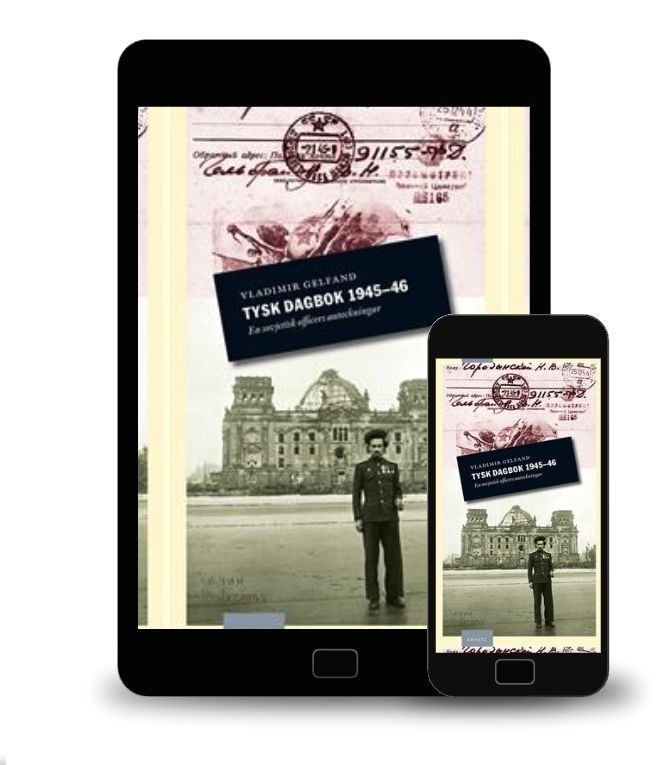
German Diary 1945–46 [e-book]
In January 1945 the Red Army gathers its forces for the final battle against Nazi Germany. Lieutenant Vladimir Gelfand, a twenty-one-year-old Ukrainian Jew, serves in the 5th Shock Army. He experiences the devastation at the front, but also everyday life with personal conflicts, denunciations and lice. At night he takes refuge in his diary, where he reveals his frustration over medals he has not received and his lack of love. At the same time, his account, often without his realizing it, can be cruel. As a true chronicler, Gelfand does not avoid sensitive subjects such as poor discipline, looting, mass rape and other abuses of the German civilian population.
At the end of April 1945 Gelfand enters Berlin as one of the victors. He remains there until September 1946. After the horrors of war he longs for freedom and tries to escape the dreary life of the barracks. He soon becomes caught up in a carousel of casual relationships with German girls, breaches of discipline and moral decline. A human being emerges from these pages, giving a unique insight into the private life of a Red Army soldier during the first year after the collapse of Nazi Germany.
Vladimir Gelfand was born in 1923 in Novo-Arkhangelsk in eastern Ukraine. He was called up to the Red Army in 1942 and soon took command of a mortar platoon. In May 1945 the enemy had been defeated, and the young Ukrainian of Jewish origin longed to return to civilian life, but he had to serve another sixteen months in Germany, most of that time in the transport section of one of the Soviet occupation forces’ trophy brigades. It was not the best period of his life. After demobilization he studied in his homeland and became a teacher. Vladimir Gelfand died in 1983.
PRESS REVIEWS “It is not only the unusual perspective that makes Vladimir Gelfand’s posthumously published diary such compelling reading. The inner struggle as well — moral and political, however one chooses to describe the mixture of bloodlust and compassion experienced by the Red Army soldier Gelfand when he encounters the defeated Germans — falls outside the familiar pattern. The streets are filled with refugees and amputee soldiers, orphans and German women selling their bodies. Gelfand takes what is offered.” Per Landin, Dagens Nyheter
Blog posts about German Diary 1945–46 Twingly blog search Blog about this article. If you comment on and link to this article in your blog, that post will be linked from here. Ping your blog at Twingly so that we can find it.
© Ersatz
