


 |
 |
|
 |
 |
 |
 |
|
 |
تجاوز در برلینمهٔ 2015 - 14 اردیبهشت |
||
 |
||
|
نقش اتحاد جماهیر شوروی در شکست آلمان نازی در جنگ جهانی دوم، از با شکوهترین لحظههای تاریخ شوروی محسوب می شود. اما در ارتباط با آن، داستان دیگری هم وجود دارد؛ تجاوز جمعی به زنان آلمانی توسط سربازان شوروی در آخرین روزهای جنگ. خورشید در پارک ترپتور در حومه برلین آهسته فرود می آید و من به مجسمه ای بزرگ نگاه می کنم که آبی آسمان آن را در بر گرفته است. این مجسمه دوازده متری، یک سرباز شوروی را نشان می دهد که در یک دست خنجر دارد و با دست دیگر یک دختر کوچک آلمانی را در بغل گرفته و چکمه اش را بر صلیب شکسته گذاشته است. اینجا آرامگاه ابدی ۵ هزار سرباز از ۸۰ هزار نیروی اتحاد جماهیر شوروی است که در نبرد برلین بین ۱۶ آوریل ۱۹۴۵ تا ۲ مه جان باخته اند. حجم عظیم این مجسمه نشان دهنده تعداد قربانیان است. پس از طی کردن نرده های طولانی شما می توانید به پایه مجسمه برسید که مثل یک معبد مقدس از همه طرف بر آن نور می تابد. چشمم به کتیبه ای می افتد که می گوید مردم شوروی تمدن اروپا را از دست فاشیسم نجات دادند. اما عده ای این بنای یادبود را آرامگاه 'متجاوز گمنام' می نامند. نیروهای استالین در راه خود به سوی پایتخت آلمان تعداد زیادی از زنان را مورد آزار قرار دادند. هرچند این موضوع در آلمانِ پس از جنگ، چه آلمان غربی و چه آلمان شرقی، به ندرت مورد اشاره قرار گرفته و سخن گفتن از آن حتی در روسیه امروز هم تابو است. رسانه های روسی به طور منظم بحث از تجاوز جنسی را رد می کنند، هر چند یکی از منابعی که داستان آنچه را که اتفاق افتاده بیان می کند، دفترچه خاطرات یک افسر جوان شوروی است.
|
||
 |
||
|
ولادیمیر گلفاند، ستوان جوان یهودی از اوکراین از سال ۱۹۴۱ تا پایان جنگ خاطرات روزانه خود را با وجود ممنوعیت نظامی شوروی که نوشتن آنها را خطر امنیتی می دانست، با صراحتی فوق العاده به رشته تحریر در آورده است. این دستنویس که هنوز به طور کامل منتشر نشده، تصویری از نابسامانی در گردانهای ارتش را ارائه می دهد: خوراک بسیار بد، شپش، یهودی ستیزی و سرقت به طوری که سربازان حتی چکمه های رفقای خود را می دزدند. در فوریه ۱۹۴۵، واحد نظامی که گلفاند در آن خدمت می کرد، برای یورش نهایی به برلین در ساحل رودخانه اودر مستقر شده بود. او می نویسد که چگونه رفقایش یک گردان از زنان سرباز را محاصره و مغلوب کردند. 'وضع در حال بدتر شدن است'یکی از افشاگرترین قسمت ها در دفتر خاطرات گلفاند، ۲۵ ماه آوریل تاریخ گذاری شده، زمانی که او به برلین رسیده است. گلفاند سوار دوچرخه در کنار رودخانه اسپری سرگرم وقت گذرانی بود که از میان گروهی از زنان آلمانی رد شد که چمدان و بقچه در دست داشتند.
|
||
 |
||
| او با زبان آلمانی شکسته از آنها پرسید که کجا می روند و چرا خانه هایشان را ترک کرده اند. او می نویسد: "آن ها که در چهره شان وحشت دیده می شد به من گفتند که در شب اول رسیدن ارتش سرخ چه اتفاقی رخ داده است." "یک دختر زیبای آلمانی در حالی که دامنش را بالا داده بود گفت 'آن ها تمام شب به من تجاوز کردند. پیر بودند، صورت بعضی شان پر از جوش بود، همه آن ها که تعدادشان از بیست نفر کمتر نبود، روی من آمدند و این کار را کردند' اشک از چشمان او سرازیر بود." "مادر بی چاره اش افزود: 'آنها به دخترم جلوی چشمم تجاوز کردند و هنوز هم می توانند باز گردند و به او تجاوز کنند'. این فکر همه را وحشت زده کرده بود." این دختر ناگهان خود را طرف من انداخت و گفت: "اینجا بمان. با من بخواب. هر کاری دلت می خواهد می توانی با من بکنی، اما تنها تو." پیش از آن سربازان آلمانی تقریبا چهار سال در اتحاد جماهیر شوروی مرتکب خشونت جنسی و انواع دیگر خشونت ها شده بودند. ویتالی، پسر گلفاند می گوید: "او روستاهای بسیاری را دیده که نازی ها همه ساکنانش را، حتی بچه های کوچک را کشته بودند. او شاهد این تجاوزها بوده است." |
||
 ویتالی گلفاند دفترچه خاطرات پدرش
را بعد از مرگ او کشف کرد
|
||
| ارتش آلمان نازی قرار بود که یک نیروی منظم آریایی باشد که هرگز رابطه جنسی غیر متعارف نداشته است. اما اولگ بدنیتسکی، مورخ در مدرسه عالی اقتصاد در مسکو می گوید که این ممنوعیت نادیده گرفته می شد. فرماندهان نازی در واقع به اندازه ای از بیماری های مقاربتی نگران بودند که در سراسر سرزمین های اشغالی فاحشه خانه های زنجیره ای نظامی تاسیس کردند. پیدا کردن شواهد مستقیم در مورد نحوه برخورد سربازان آلمانی با زنان روسی سخت است، زیرا بسیاری از قربانیان جان سالم به در نبرده اند. اما یورگ موری، مدیر موزه آلمان و روسیه در برلین عکسی را به من نشان می دهد که در کریمه گرفته شده و از آلبوم شخصی یک سرباز آلمانی در زمان جنگ برداشته شده است. عکس جسد زنی است که بر روی زمین افتاده. او می گوید: "به نظر چنین می رسد که هنگام تجاوز کشته شده است. دامنش بالا داده شده و با دستانش صورتش را پوشانده است." "این یک عکس تکان دهنده است. ما خیلی بحث داشتیم که آیا این عکس ها را باید نشان دهیم یا نه - جنگ است، خشونت جنسی تحت سیاست آلمان در اتحاد جماهیر شوروی است. ما جنگ را نشان می دهیم. در مورد جنگ صحبت نمی کنیم، بلکه آن را نشان می دهیم." زمانی که ارتش سرخ به آنچه مطبوعات شوروی از آن "لانه حیوان فاشیستی" نام می برد، نزدیک می شد پوستر ها نیروها را تشویق می کرد که خشم خود را نشان دهند: "سرباز! تو حالا در خاک آلمان هستی، ساعت انتقام فرارسیده است!" |
||
 |
||
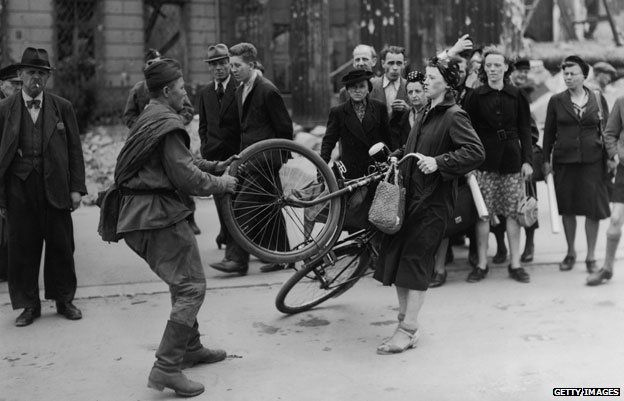
در واقع، بخش سیاسی سپاه نوزدهم ارتش شوروی که برای پیش رفت به سوی آلمان در امتداد ساحل دریای بالتیک می جنگید اعلام کرد که یک سرباز واقعی اتحاد جماهیر شوروی آن قدر نفرت دارد که از رابطه جنسی با آلمانی ها منزجر است، اما بار دیگر سربازان ثابت کردند که ایدئولوگها اشتباه کرده اند. آنتونی بیوور، مورخ در سال ۲۰۰۲ هنگامی که برای نوشتن اثرش موسوم به "سقوط برلین" مشغول تحقیق بود در آرشیو دولتی فدراسیون روسیه اسنادی را در مورد خشونت های جنسی پیدا کرد. این اسناد در اواخر سال ۱۹۴۴ توسط ان کی وی دی (NKVD)، پلیس مخفی وقت شوروی به لاورنتی بریا، رئیس این سازمان فرستاده شده بود. آقای بیوور می گوید: "این اسناد در اختیار استالین قرار داده شد. در این اسناد می توانید نشانه گذاری هایی را ببینید که معلوم می کند که آنها خوانده شده اند یا خیر - این گزارش ها از تجاوز دسته جمعی در شرق پروس و سعی زنان آلمانی برای کشتن فرزندان و خودشان برای جلوگیری از چنین سرنوشتی گزارش می دهند." یک دفتر خاطرات زمان جنگ که توسط نامزد یک سرباز گمنام آلمانی حفظ شده، نشان می دهد که برخی از زنان چطور با شرایط وحشتناک خود را مطابقت داده اند تا زنده بمانند. در این خاطرات که از تاریخ ۲۰ آوریل سال ۱۹۴۵، یعنی ۱۰ روز قبل از خودکشی هیتلر، شروع می شود نویسنده ناشناس مثل ولادیمیر گلفاند، کاملا شفاف همه چجیز را نوشته است. وی که خود را "یک خانم بلوند رنگ پریده" توصیف کرده تصاویر زنده ای را از همسایگان خود در پناهگاهی زیر بلوک آپارتمان خود در برلین ارائه کرده، از جمله درباره "مرد جوانی در شلوار خاکستری و با قاب عینک استخوانی که در صورت مشاهده از نزدیک معلوم می شود یک زن جوان است." و سه خواهر مسن که "هر سه خیاط هستند و آنچنان دور هم جمع شده اند که مثل یک کیک بزرگ سیاه به نظر می آیند." |
||
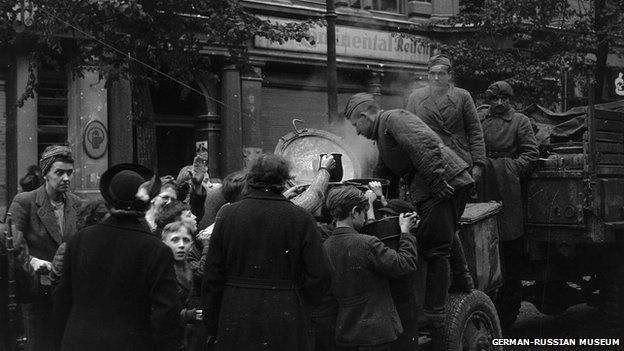 سربازان شوروی در ماه مه 1945 در
برلین مواد غذایی توزیع می کنند. (عکس: تیمفی ملنیک)
|
||
آنها که در انتظار ورود ارتش سرخ هستند شوخی می کنند: "روسها بیان رویت بهتر از این است که که یانکی ها بیایند بالای سرت"، یعنی اینکه مورد تجاوز سربازان روس قرار بگیری بهتر از این است که آمریکایی ها بمبارانت کنند. اما زمانی که سربازان به زیرزمین می رسند و می خواهند زنان را از آن جا بیرون بکشند، این خواهران به نگارنده خاطرات که روسی می داند التماس می کنند که به فرماندهی شوروی شکایت کند. او در حالی که هرج و مرج در خیابان های مملو از آوار حاکم است موفق به پیدا کردن یک افسر ارشد می شود. این افسر شانه درهم می کشد. با وجود دستور استالین درباره جلوگیری از خشونت علیه غیرنظامیان می گوید: "به هر حال چنین اتفاقی می افتد." افسر با او به زیرزمینی باز می گردد و سربازان را سرزنش می کند اما یکی از سربازان با خشم می خروشد. او فریاد می زند "منظور شما چیست؟ آلمانی ها با زنان ما چه کار کردند! آنها خواهر مرا گرفتند و..." افسر این مرد را آرام می کند و سربازان را از زیرزمین خارج می کند." اما زمانی که خاطره نویس دوباره به راهرو باز می گردد تا مطمئن شود که سربازان رفته اند مردانی که در انتظار بودند او را گرفتند. او به طرز وحشیانه مورد تجاوز قرار گرفته و تقریبا خفه شده بود. همسایه ها وحشت زده که وی آنها را "ساکنان غار" می خواند، در زیرزمین را به روی او بسته بودند. او می نویسد: "سرانجام دو لنگه آهنین در باز شد. همه به من خیره شده بودند." "جوراب های بلندم روی کفش هایم افتاده بود، من هنوز آن چه را از بند شلوارم باقی مانده بود در دست داشتم. شروع به فریاد زدن کردم: 'خوک ها! به من تجاوز کردید و مثل آشغال رها کردید." نویسنده خاطرات در نهایت متوجه می شود که نیاز به پیدا کردن یک "گرگ" برای دفع تجاوز گروهی توسط "جانوران مرد" دارد. روابط بین متجاوز و قربانی کمتر خشونت آمیز و بیشتر شبیه داد و ستد و در عین زمان بیشتر مبهم می شود. او یک افسر ارشد از لنینگراد را شریک رختخوابش می کند و با او در باره ادبیات و معنای زندگی بحث می کند. او می نویسد: "به هیچ وجه نمی شود گفت که سرگرد به من تجاوز می کند". "آیا من این کار را برای کره، شکر، شمع و کنسرو گوشت می کنم؟ تا حدودی مطمئن هستم که بلی. علاوه بر آن، من از سرگرد خوشم می آید هر قدر او به عنوان مرد از من کمتر بخواهد به همان اندازه از او به عنوان یک فرد بیشتر خوشم می آید." |
||
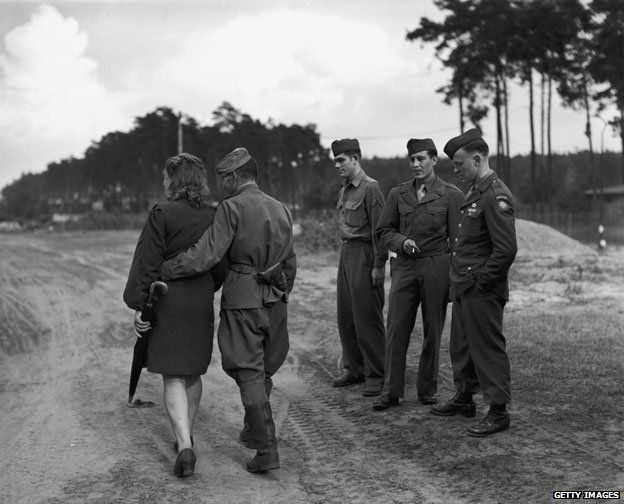 نیروهای
نظامی ایالات متحده یک سرباز روسی را با دوست دخترش در برلین تماشا می
کنند
|
||
بسیاری از همسایگان نویسنده خاطرات با فاتحان در ویرانه های برلین داد و ستدهای مشابهی کرده اند. زمانی که این خاطرات در آلمان در سال ۱۹۵۹ تحت عنوان "زنی در برلین" منتشر شد، داستان بی پرده نویسنده آن در مورد این که برای زنده ماندن چه گزینه هایی را انتخاب کرده به دلیل "لکه دار کردن نام" زنان آلمانی مورد حملات قرار گرفت. جای تعجب نیست، که او تا زمان مرگ اجازه نداد این کتاب دوباره منتشر شود. هفتاد سال پس از پایان جنگ، پژوهش جدیدی در موررد خشونت جنسی توسط نیروهای متفقین - آمریکا، بریتانیا و فرانسه و همچنین شوروی - هنوز هم به پایان نرسیده است. اما سال ها است که اهمیت این موضوع به دلیل قرار گرفتن زیر نظارت رسمی کمرنگ شده است. افراد کمی در باره آن گزارش داده اند و تعداد کمتری هم به چنین گزارش هایی اهمیت می دهند. علاوه بر انگ اجتماعی، در آلمان شرقی انتقاد از قهرمانان شوروی که فاشیسم را شکست داده بودند، توهین به مقدسات دانسته می شد، در حالی که در پشت دیوار برلین، در غرب، آلمانی ها به دلیل احساس گناه از جنایات نازی ها مجبور بودند از ذکر برخی مسایل خودداری کنند. اما در سال ۲۰۰۸، فیلمی بر اساس خاطرات زن برلینی به نام Anonyma با نقش آفرینی نینا هوس، بازیگر شناخته آلمانی اکران شد. این فیلم در آلمان خیلی تاثیرگذار بود و بسیاری از زنان را تشویق کرد از آن دوران سخن بگویند، از جمله اینگبورگ بولرت. |
||
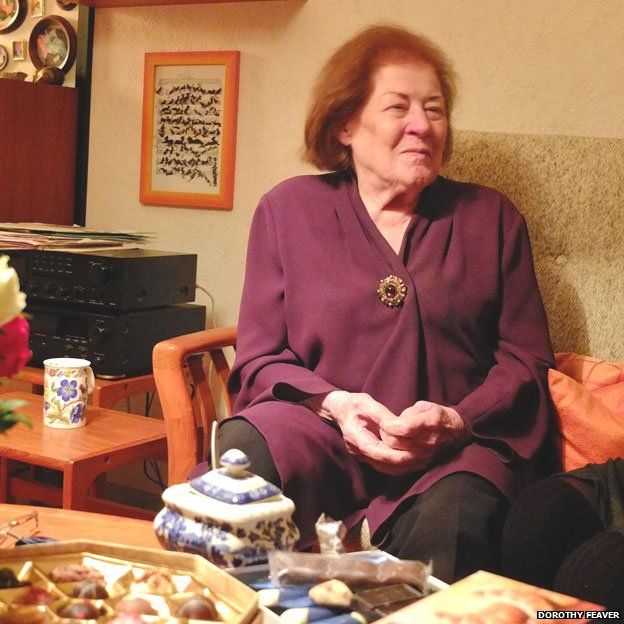 اینگبورگ: مادر من دوست داشت لاف
بزند که کسی به دختر او دست نزده
|
||
اینگبورگ که حالا ۹۰ ساله است در آپارتمانی پر از عکس گربه ها و کتاب هایی درباره تئاتر، در هامبورگ زندگی می کند. او که در سال ۱۹۴۵ بیست ساله بود، آرزو داشت هنرپیشه شود و با مادر خود در خیابانی مجلل در منطقه چارلوتنبرگ برلین زندگی می کرد. وقتی که حمله شوروی به شهر آغاز شد، مانند زن خاطره نویس، او هم به زیرزمین ساختمان خود پناه برد. او به یاد می آورد: "ناگهان تانک ها در خیابان ما پیدا شدند، در همه جا اجساد سربازان روسی و آلمانی افتاده بود. من صدای وحشتناک بمب های روسی را در یاد دارم، ما به آن ها استالینجل (اندام های استالین) می گفتیم." در وقفه حمله هوایی، اینگبورگ از زیرزمین بیرون رفت تا تکه ای پارچه برای فتیله چراغ پیدا کند. او می گوید: "ناگهان دو روس تپانچه های خود را طرف من نشانه گرفتند. یکی از آنها مرا مجبور کرد روی زمین بخوابم و به من تجاوز کرد، و سپس آنها جای همدیگر را عوض کردند و دومی نیز به من تجاوز کرد. من فکر کردم می میرم و آن ها مرا می کشند." |
||
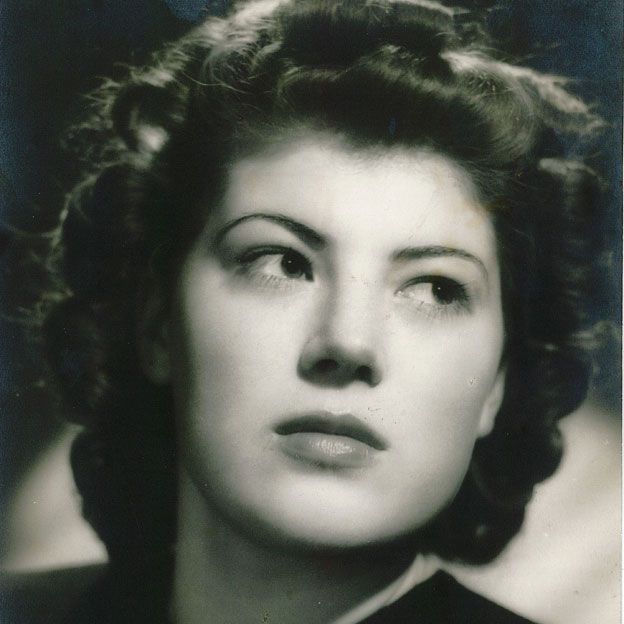 اینگبورگ: "من فکر کردم دارم می
میرم."
|
||
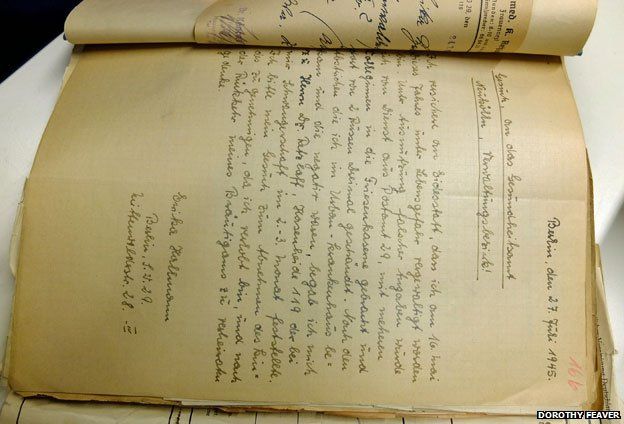
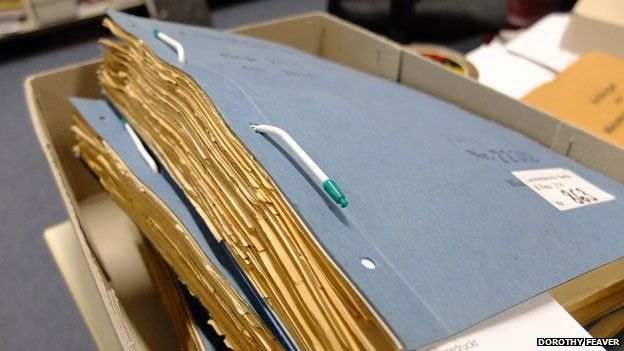
اینگبورگ آن زمان و برای چندین دهه پس از آن هم از مصیبتی که به سرش آمده بود صحبت نمی کرد. او گفت این کار بیش از حد برایش دشوار بود و می افزاید: "مادر من دوست داشت لاف بزند که کسی به دخترش دست نزده است." اما تجاوز سرنوشت زنان در خانواده ها را در سراسر برلین تحت تاثیر قرار داده بود. اینگبورگ به یاد می آورد که به زنان بین سنین ۱۵ و ۵۵ سال دستور داده شد برای تشخیص بیماری های مقاربتی معاینه شوند. "شما نیاز به گواهی پزشکی برای گرفتن مواد غذایی داشتید و من یادم هست که تمام پزشکانی که گواهینامه می دادند اتاق های پر از زنان منتظرشان بود." مقیاس تجاوز جنسی چه قدر بود؟ تعدادی که اغلب نقل می شود در حدود ۱۰۰ هزار زن در برلین و دو میلیون در خاک آلمان است. این رقم که به شدت مورد بحث است، از شمار اندک پرونده های پزشکی که حفظ شده اند به دست آمده است. در یک کارخانه مهمات سازی سابق که حالا ساختمان بایگانی دولتی است، مارتین لاچرهند به من یک بغل از پوشه های مقوایی آبی را نشان می دهد. آن ها شامل سوابق سقط جنین از ژوئیه تا اکتبر سال ۱۹۴۵ در ناحیه نیوکلن، یکی از ۲۴ ناحیه برلین است. این یک معجزه کوچک است که آن ها سالم مانده اند و آسیبی به آنها نرسیده است. سقط جنین در آلمان غیر قانونی بود، اما لاچرهند می گوید "برای آن دسته از زنان به دلیل وضعیت خاص ناشی از تجاوز دسته جمعی در سال ۱۹۴۵ یک پنجره کوچک وجود داشت".
|
||
 |
||
 |
||
در مجموع بین ژوئن ۱۹۴۵ تا ۱۹۴۶ تنها در همین یک ناحیه برلین ۹۹۵ درخواست برای سقط جنین مورد تایید قرار گرفته است. فایل ها حاوی بیش از هزار کاغذ پاره در رنگ ها و اندازه های مختلف هستند. یک دختر با دستخط کودکانه شهادت می دهد که او در اتاق نشیمن خانه خود در مقابل پدر و مادر مورد تجاوز قرار گرفته است. ما احتمالا هرگز مقیاس واقعی تجاوز جنسی را نخواهیم دانست. دادگاه های نظامی اتحاد جماهیر شوروی و منابع دیگر طبقه بندی شده باقی می ماند. پارلمان روسیه اخیرا قانونی را تصویب کرد که می گوید هر کسی که پیشینه روسیه در جنگ جهانی دوم را لکه دار کند می تواند جریمه یا تا پنج سال زندانی شود. ورا دوبینینا، مورخ جوان در دانشگاه علوم انسانی در مسکو می گوید تا زمانی که یک بورس تحصیلی او را به برلین آورد در مورد این که تجاوز جنسی صورت گرفته چیزی نمی دانست. او بعدتر مقاله ای در این باره نوشت اما برای چاپ آن موانع زیاد بود. او می گوید: "واکنش رسانه های روسی بسیار تهاجمی بود، مردم فقط می خواهند در مورد پیروزی شکوهمند ما در جنگ بزرگ میهنی بشنوند و انجام تحقیقات مناسب سخت تر می شود." |
||
 |
||
| این سرنوشت "تاریخ" است که بنا بر مصلحت زمانه بازنویسی شود. به همین لحاظ است که ماخذهای دست اول خیلی با ارزش هستند - چه روایت کسانی که اکنون در بزرگسالی از گذشته می گویند و چه جوان هایی که در همان زمان قلم به دست گرفتند و وقایع را نوشتند. ویتالی گلفاند، فرزند ولادیمیر گلفاند، سرباز ارتش سرخ که خاطراتش را نوشته بود، انکار نمی کند که بسیاری از سربازان شوروی شجاعت و فداکاری بزرگ در جنگ جهانی دوم نشان داده اند، اما او می گوید که این تمام داستان نیست. ویتالی اخیرا مصاحبه ای در رادیو و تلویزیون روسیه کرد که باعث انتشار برخی از اظهارات ضد یهودی در شبکه های اجتماعی شد که می گفتند دفتر خاطرات تقلبی است و ویتالی باید از چشم ها ناپدید و به اسرائیل برود. (او در واقع در ۲۰ سال گذشته در برلین زندگی می کند). با این حال وی امیدوار است که دفتر خاطرات پدرش در سال جاری در روسیه منتشر شود. بخش هایی از آن به زبان های آلمانی و سوئدی ترجمه شده است. او می گوید: "اگر آدم ها نخواهند حقیقت را بدانند، فقط خود را فریب می دهند." "همه می دانند، روسیه و حتی افرادی که پشت سر این قوانین جدید در مورد اهانت به گذشته قرار دارند هم می دانند که تا وقتی به عقب نگاه کنیم، پیش نخواهیم رفت."
نبرد برای برلین (آوریل - مه ۱۹۴۵) |
||
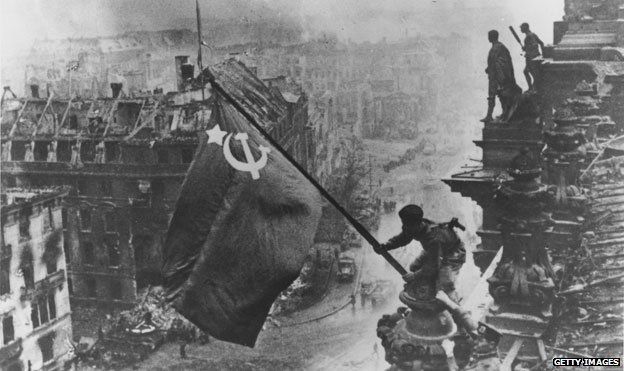 سرباز
ارتش سرخ پرچم اتحاد جماهیر شوروی را بر فراز پارلمان آلمان بلند می کند.
|
||
|
|
جام
جم ایام © 2014 |کلیه حقوق این وب سایت متعلق به
موسسه فرهنگی مطبوعاتی جام جم است.
©
نقل و نشر مطالب با ذکر نام پايگاه خبری تحليلی فرارو بلامانع است
© 2008-2015 1Doost dot com
©
باز آفريني واقعيت ها
|
||
 |
||
|
©
وبنوشت روی وردپرس.کام
© یران سامانه
© پرهام نیوز
|
 Persian
The role of the Soviet Union in defeating Nazi Germany in the Second World War is regarded as one of the most glorious moments in Soviet history. But there is another story connected with it: the mass rape of German women by Soviet soldiers in the final days of the war.
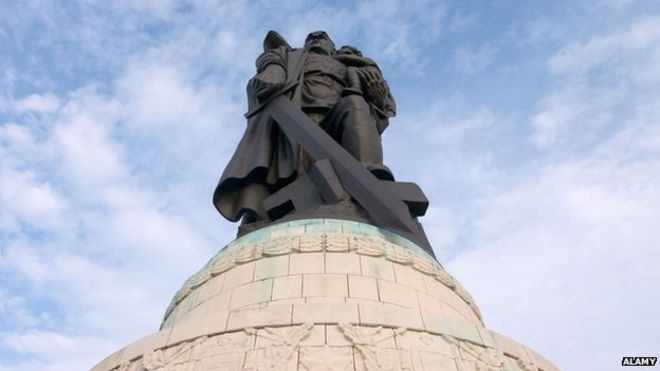
The sun is setting slowly over Treptower Park on the outskirts of Berlin as I look at an enormous statue framed by the blue sky. The twelve-metre monument shows a Soviet soldier with a sword in one hand and a small German girl in the other, his boot planted on a broken swastika.
It is the final resting place of 5,000 of the 80,000 Soviet soldiers who died in the Battle of Berlin between 16 April and 2 May 1945.
The colossal scale of the monument reflects the scale of the sacrifice. After climbing the long steps, you reach the pedestal, lit from all sides like a shrine. An inscription states that the Soviet people saved European civilisation from fascism. Yet some people call this memorial the "Tomb of the Unknown Rapist."
As Stalin's troops moved toward the German capital they assaulted vast numbers of women. The subject was rarely mentioned in either West or East Germany after the war, and even in Russia today it remains taboo.
Russian media regularly dismiss reports of rape, yet one of the sources describing what happened is the diary of a young Soviet officer.
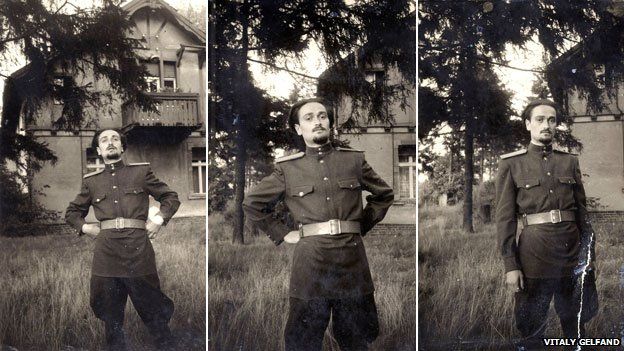
Vladimir Gelfand, a young Jewish lieutenant from Ukraine, wrote his diary with remarkable frankness from 1941 until the end of the war despite a Soviet military ban on keeping such records on security grounds.
The manuscript, still not published in full at the time of the article, depicts disorder in army battalions: very poor food, lice, antisemitism and theft, with soldiers even stealing their comrades' boots.
In February 1945 Gelfand's unit was stationed on the Oder in preparation for the final assault on Berlin. He wrote about his comrades surrounding and defeating a battalion of women soldiers.
"Things are getting worse"
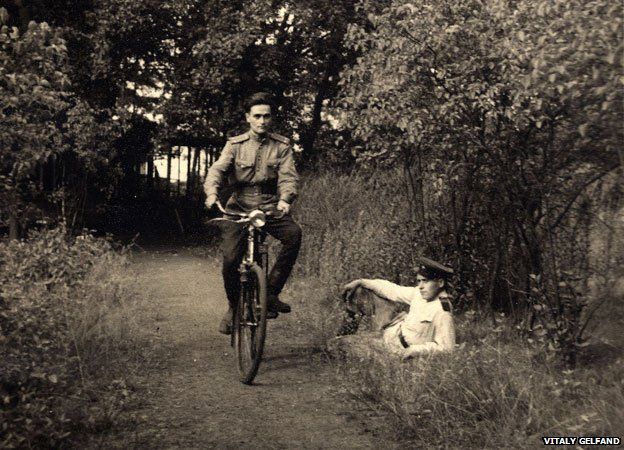
One of the most revealing entries in Gelfand's diary is dated 25 April, after he had reached Berlin. While riding a bicycle beside the Spree, he passed a group of German women carrying suitcases and bundles.
In broken German he asked where they were going and why they had left their homes. He wrote: "With horror on their faces, they told me what had happened on the first night the Red Army arrived."
"A beautiful German girl lifted her skirt and said: 'They raped me all night. Some were old, some had pimples. They all took turns on me - no fewer than twenty men.' Tears were running down her face."
"Her poor mother added: 'They raped my daughter in front of me, and they can still come back and rape her again.' The thought terrified everyone."
The girl suddenly threw herself toward him and said: "Stay here. Sleep with me. You can do anything you want to me, but only you."
Before that, German soldiers had spent almost four years in the Soviet Union committing sexual violence and many other atrocities.
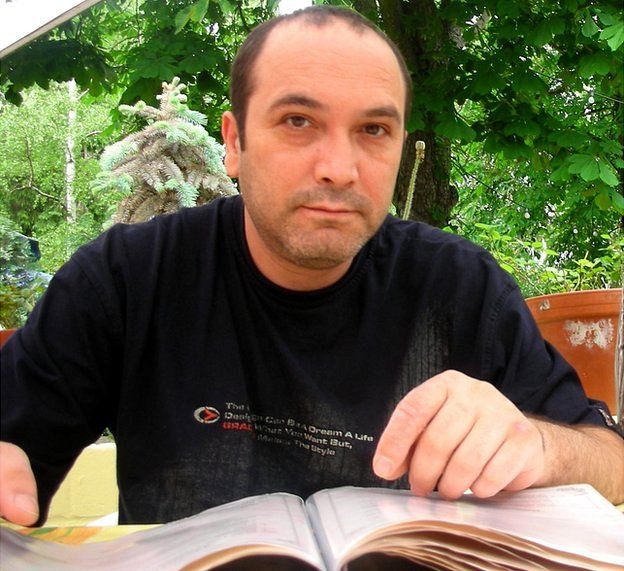
Vitaly, Gelfand's son, says: "He passed through many villages where the Nazis had killed everyone, even small children. He had seen evidence of rape." Vitaly discovered his father's diary after his death.
The Nazi German army was supposed to be a disciplined Aryan force whose men would never engage in forbidden sexual relations. But Oleg Budnitsky, a historian at the Higher School of Economics in Moscow, says the prohibition was ignored. Nazi commanders were so concerned about venereal disease that they established a network of military brothels throughout the occupied territories.
Direct evidence of how German soldiers treated Russian women is difficult to find because many victims did not survive. Jorg Morre, director of the German-Russian Museum in Berlin, showed a photograph from a German soldier's private wartime album, taken in Crimea. It shows a woman's body lying on the ground.
"It looks as though she was killed while being raped. Her skirt is raised and her hands cover her face," he says.
"It is a shocking photograph. We argued a lot about whether such pictures should be shown. But this is war, this is the sexual violence that formed part of German policy in the Soviet Union. We show the war. We do not merely talk about it; we show it."
As the Red Army approached what the Soviet press called "the lair of the fascist beast," posters encouraged troops to express their anger: "Soldier! You are now on German soil. The hour of revenge has come!"
The political department of the Soviet 19th Army, advancing toward Germany along the Baltic coast, proclaimed that a true Soviet soldier should hate Germans so intensely that he would be disgusted by the idea of sex with German women. Once again, however, soldiers proved the ideologues wrong.
While researching his 2002 book on the Battle of Berlin, historian Antony Beevor found documents about sexual violence in the State Archive of the Russian Federation. They had been drawn up by the Soviet secret police, the NKVD, and sent in late 1944 to its chief, Lavrentiy Beria.
Beevor says: "These documents were presented to Stalin. You can see markings showing whether they were read. They contain reports of mass rape in East Prussia and of German women trying to kill their children and themselves to avoid such a fate."
A wartime diary preserved by the fiancee of an unnamed German soldier shows how some women adapted to horrifying circumstances in order to survive.
The diary begins on 20 April 1945, ten days before Hitler's suicide, and its anonymous author, like Vladimir Gelfand, writes with striking frankness.
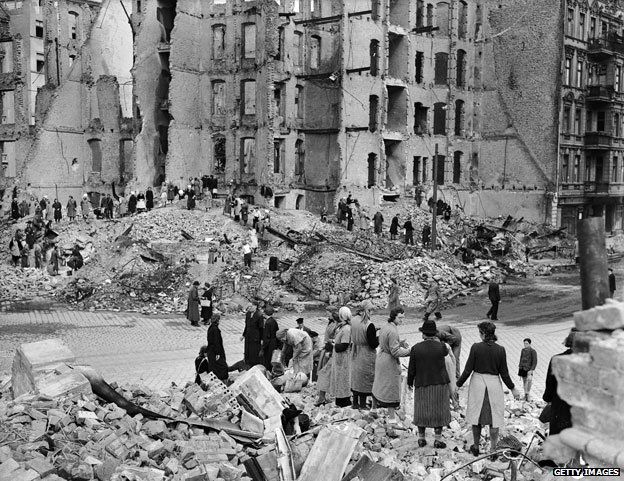
Describing herself as "a pale blonde woman," she paints vivid pictures of neighbours sheltering beneath her Berlin apartment block: among them a person in grey trousers and horn-rimmed glasses who appears to be a young man from a distance but proves to be a young woman, and three elderly sisters, all seamstresses, huddled together "like one great black pudding."
While waiting for the Red Army, the people in the shelter develop black humour. They joke that having Russians "on top of you" is better than having the Americans "over your head" - in other words, rape seems preferable to death by bombing.
But when Soviet soldiers break into the basement and try to drag women out, the other residents beg the diarist, who speaks Russian, to complain to the Soviet command.
She risks the rubble-strewn streets and finds a senior officer. Despite Stalin's order against violence toward civilians, he merely shrugs and replies: "It happens anyway."
She takes the indifferent officer back to the basement, where he rebukes the soldiers. One soldier angrily protests: "What do you mean? What did the Germans do to our Soviet women! They took my sister and..." The officer calms him and removes the soldiers.
But when the diarist returns to the corridor to make sure they have gone, men who were waiting seize her. She is brutally raped and almost strangled. The frightened neighbours - whom she calls the "cave dwellers" - have locked the basement door behind her.
She writes: "At last the two iron leaves of the door opened. Everyone stared at me. My stockings were down over my shoes, and I was still holding what remained of my garter belt. I began shouting: 'You cowardly pigs! I was raped twice and you left me lying there like rubbish!'"
The diarist eventually realises that she needs to find one "wolf" to protect her from gang rape by the "male beasts." The relationship between perpetrator and victim becomes less violent, more transactional and, at the same time, more ambiguous. She takes a senior officer from Leningrad as a bed partner and discusses literature and the meaning of life with him.
She writes: "It cannot really be said that the Major rapes me. Am I doing this for bacon, butter, sugar, candles and canned meat? I cannot deny that, at least in part. And I also like the Major more as a human being the less often he wants me as a man."
Many of her neighbours made similar arrangements with the conquerors ruling the ruins of Berlin.
When the diary appeared in Germany in 1959 under the title A Woman in Berlin, its frank account of the choices made for survival was attacked for "staining the name" of German women. The author then refused to allow the book to be republished during her lifetime.
Seventy years after the end of the war, research into sexual violence by Allied forces - American, British and French as well as Soviet - was still developing. For years, however, the subject received little attention.
Alongside the social stigma, East Germany treated criticism of the Soviet heroes who had defeated fascism as sacrilege, while in West Germany guilt over Nazi crimes also discouraged discussion of some issues.
In 2008 the Berlin woman's diary was adapted as the film Anonyma, starring the well-known German actress Nina Hoss. The film had a strong impact in Germany and encouraged many women to talk about their experiences, including Ingeborg Bullert.
Ingeborg, now ninety, lives in Hamburg in an apartment filled with photographs of cats and books about the theatre. In 1945 she was twenty, a Berlin woman who dreamed of becoming an actress and lived with her mother on an elegant street in Charlottenburg.
When the Soviet attack on the city began, she, like the anonymous diarist, took refuge in the basement of her building. "Suddenly there were Soviet tanks in our street and the bodies of Russian and German soldiers everywhere. I will never forget the terrible sound of the Russian rockets. We called them Stalin's organs."
During a break in the bombardment Ingeborg left the basement to find material for a lamp wick. "Suddenly two Russians pointed pistols at me. One forced me to lie on the floor and raped me, then they changed places and the second raped me. I thought I was dying and that they would kill me."
For decades Ingeborg did not speak about what had happened. It was too difficult. "My mother liked to boast that nobody had touched her daughter," she says.
Rape affected families throughout Berlin. Ingeborg remembers that women between fifteen and fifty-five were ordered to undergo examinations for venereal disease. "You needed a medical certificate to receive food, and I remember the doctors' waiting rooms being packed with women."
How large was the scale of the rape? The figures most often quoted are about 100,000 women in Berlin and two million across Germany. Those highly disputed estimates are based on the small number of surviving medical records.
In a former munitions factory now used as a state archive, Martin Luchterhand showed the reporter an armful of blue cardboard files. They contain abortion records from July to October 1945 in Neukolln, one of Berlin's 24 districts. It is remarkable that they survived.
Abortion was illegal in Germany, but Luchterhand says there was a narrow exception for women in the extraordinary circumstances created by mass rape in 1945.
Between June 1945 and 1946, 995 abortion applications were approved in this one Berlin district alone. The files contain more than a thousand scraps of paper in different colours and sizes. One girl, writing in a childlike hand, testifies that she was raped in her family living room in front of her parents.
We will probably never know the true scale of the sexual violence. Soviet military tribunal records and other sources remain classified. The Russian parliament recently passed a law under which anyone who tarnishes Russia's record in the Second World War can be fined or imprisoned for up to five years.
Vera Dubina, a young historian at the Russian State University for the Humanities in Moscow, says she knew nothing about the rapes until a scholarship brought her to Berlin. She later wrote an article about the subject but found it difficult to publish.
"The reaction of the Russian media was very aggressive. People only want to hear about our glorious victory in the Great Patriotic War, and it becomes harder to do proper research," she says.
History is often rewritten to serve the needs of the present. That is why first-hand sources are so valuable - whether the testimony of elderly people who speak now about the past or the writing of young people who took the risk of recording events at the time.
Vitaly Gelfand, son of the Red Army soldier who kept the diary, does not deny that many Soviet soldiers showed great courage and sacrifice in the Second World War. But, he says, that is not the whole story.
After a recent interview on Russian radio and television, Vitaly was subjected to antisemitic abuse on social media. Some people claimed that the diary was a forgery and that he should disappear to Israel; in fact, he had already been living in Berlin for twenty years.
He nevertheless hoped that his father's diary would be published in Russia that year. Parts had already appeared in German and Swedish.
"If people do not want to know the truth, they are only deceiving themselves. Everyone knows - Russia knows, and even the people behind the new laws about insulting the past know. We will not move forward until we look back."
The Battle for Berlin (April-May 1945)
After the Red Army captured Vienna, Joseph Stalin ordered his forces toward Berlin. He was determined to take the city before the United States.
Two and a half million Red Army troops, 6,000 tanks and more than 40,000 artillery pieces were committed to the operation, supported by thousands of aircraft.
After intense fighting and heavy losses, Red Army soldiers entered the outskirts of Berlin on 21 April.
At a meeting with his advisers Adolf Hitler came close to admitting defeat, but instead decided to continue the fight and command his forces from his underground headquarters.
As Soviet forces occupied the city, it is estimated that about 100,000 women were raped by Red Army soldiers.
Hitler killed himself on 30 April, and the Reichstag fell on 2 May.