



 |
||
The Rape of Berlin |
||
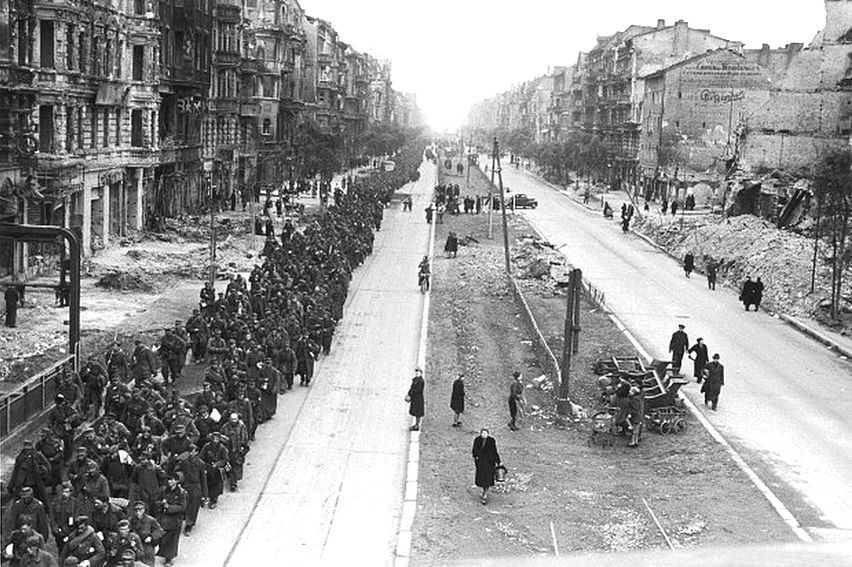
| As Europe was being liberated from Fascism at the end of World War Two, one of the most infamous incidents of mass rape in history was underway. Lucy Ash investigates a story that slipped under the official radar. Winston Churchill spoke for many when he saluted the Soviet army as heroes. Yet the widespread sexual violence – in part, revenge for the devastating Nazi invasion of the USSR – went unacknowledged. Some estimate there were 100,000 rapes in Berlin alone but, although no secret, social stigma, political repression, guilt and fear of revisionism ensured that for decades the subject was untouchable in Germany. Today it is still an explosive topic – virtually taboo in Putin's Russia. Renewed East-West divisions over the conflict in Ukraine are exposing to what extent the 'Great Patriotic War', as Russians call it, is unfinished business. Lucy travels first to Moscow and then to Berlin to meet a veteran and a rape survivor. She discovers letters, abortion records and two remarkably candid diaries from spring 1945: one by a young Red Army officer, and the other by a female German journalist, which caused outrage when it was first published in German in 1959, but rocketed to the bestseller lists in 2003. As well as German rape victims there were also the Soviet, Polish and Jewish women who had just been freed from Nazi camps. Sexual violence was committed in different ways on all sides, by the Wehrmacht, the Red Army and the Western Allies. And, that sexual encounters ranged from the most brutal gang rape to prostitution to romances across enemy lines. Producer: Dorothy Feaver Image Credit: Photo correspondent Timofey Melnik/German-Russian Museum Berlin-Karlshorst |
||
| |
||
  |
||
Broadcasts |
Broadcasts |
Broadcasts |
|
 |
|
|
|
| Sat 2 May 2015 18:05 GMT | Sun 3 May 2015 11:05 GMT | Thu 17 Sep 2015 03:06 GMT | |
|
But
first, we turn our
thoughts to 1945, when the Red Army liberated Eastern Europe before
marching on
the German capital. But behind that victory, 70 years ago, there's
another
story that has long been repressed. Lucy Ash investigates in The Rape
of
Berlin. So,
it's nearly dusk and
I've come to Treptower Park in East Berlin to see the massive monument
to the
Soviet war dead. I can see a man and he's holding a child. I'm Lucy
Ash,
looking up at a 12-metre statue depicting a Soviet soldier grasping a
sword in
one hand, a small German girl in the other, and stamping on a broken
swastika. This
is the final
resting place for 5,000 of the 80,000 Soviet troops who fell in the
Battle of
Berlin between the 16th of April and the 2nd of May 1945. But some call
this
memorial the tomb of the unknown rapist. It's lit up inside, looking
like a
sort of quasi-religious painting. You
can see Mother
Russia in a red cloak looking down mournfully, and it says this was a
war that
saved the civilisation of Europe from the fascists. This is a story
that
includes some graphic and disturbing material. Many Russians find all
mention
of the rapes offensive, and they are regularly dismissed as a Western
myth in
the Russian media. You
certainly can't talk
about what happened in Germany in 1945 in isolation. To understand the
background, I've had to go to Moscow and go back in time because first
there
was the Nazi invasion of Russia, or in Hitler's words, the war of
annihilation.
I'm on my way to a suburb in northeast Moscow to meet a war veteran. To
be honest, I'm
feeling a bit apprehensive, and that's because the Duma, the Russian
Parliament, recently passed a law which says that anyone who denigrates
the Red
Army or Russia's record in what's known here as the Great Patriotic War
could
face fines and up to five years in prison. Ninety-two-year-old Yuri
Vasilievich
Lyashenko, covered in medals, has welcomed me into his cramped flat at
the top
of a tower block with boiled eggs and brandy. He wanted to be an
engineer, but
before he could enrol at university, he was called up to the army. Yuri
Vasilievich just
made a toast, saying that they fought a very long, difficult war to
bring peace
to Europe and that he hopes there won't be a third world war. Toasts to
peace
were a Soviet-era cliché and often feel rehearsed, but
Lyashenko's words are
heartfelt. Together we take a brandy-fuelled journey back more than
seven
decades to the Ribbentrop-Molotov pact, which made Hitler and Stalin
into
allies until one summer day in 1941, when the Fuhrer launched Operation
Barbarossa. Do
you remember what you
were doing on the 22nd of June when the Germans invaded? Of course I
do. I can
picture it very clearly. Our commanders had gone off on a break,
leaving us
alone in our tents. At
4 a.m., we heard the
sounds of crackling and clicking, then suddenly our tents were shaking,
bullets
were piercing the canvas. One of his gang of four school friends found
himself
fighting in Byelorussia. He later wrote to Lyashenko. He
said when the Germans
went through a place, they destroyed it completely. Nothing was left,
just
chimney stumps where houses used to be. And
it was the same
story in Ukraine. Wherever the Germans went, people and villages were
wiped off
the map. Lyashenko was soon wounded near the Ukrainian city of Vinnitsa
and
nearly had his leg amputated. After
two years in a
string of military hospitals, he was back in action, fighting all the
way to
Berlin, where we'll catch up with him later on. Three months on from
the
invasion of the Soviet Union, Hitler was lauding it as the greatest
battle in
the history of the world, against an enemy not of human beings but of
animals.
The Wehrmacht was supposedly a well-ordered force of Aryans who would
never
contemplate sex with Untermenschen. But
Oleg Budnitsky, an
eminent historian at the Higher School of Economics in Moscow, or an
archive
rat, as he calls himself, says the ban was ignored. Nazi commanders
were so
concerned about venereal disease that they established a chain of
military brothels
throughout the occupied territories. Some
of local women were
forced to stay in this brothel, because they had no other means to
survive.
There were rapes also. Sometimes such cases were triggered, you know,
by german
military courts. According to one german judge women don’t
understand the
concept of honor so it’s not a big deal to rape. It was
violation of military
discipline. The violation of discipline was much worse than the
violation of
the actual women. Yes, exactly. An
extraordinary state
commission was set up by the Supreme Soviet in 1942 to investigate
crimes
perpetrated by the Nazi invaders. It
contains some
horrific accounts of rape and torture. Yet afterwards, few talked about
what
happened. Budnitsky is putting his head above the parapet by writing
about
wartime sexual violence. It's
not a talking
matter in Russia and has only occasionally surfaced. "Babi Sarstva,"
or "Kingdom of Women," a Soviet film from the late '60s, shows a
15-year-old village girl helping a German soldier to learn Russian, all
smiles
in her cotton frock. She's correcting his accent when he tries to rape
her,
only for an older woman to step in and sacrifice herself. Back
in the flat in
Moscow, I asked veteran Lyashenko whether he or his comrades in the Red
Army
thirsted for revenge. He doesn't give me a direct answer but says for
him,
there's no moral equivalence. Hitler instructed his army to kill off
our entire
population so there would be no Russia. But
our political
management worked with the civilians and army. Rape and other crimes
were dealt
with in military units by the authorities. In theory, civilians were
protected
by a decree from Stalin, and military tribunals could order summary
executions
of anyone who broke the rules. One
officer observed
soldiers complaining, "Some commanders, they'll shoot their own men
over a
German bitch." The political department of the 19th Army also declared
that a true Soviet soldier would be so full of hatred that he'd be
repulsed by
German women. But despite decrees and deterrence, we know that Soviet
troops
took their revenge on women. What
we don't know is
the number of those assaults. Soviet military tribunals during wartime
remain
classified. Oleg Budnitsky says there are other ways to recapture the
past. There
are a lot of unpublished
diaries and memos written even in the Soviet period without any hope of
publication. Literally, in every diary of a Soviet soldier who was in
Germany
at that period of time, it is possible to find pretty frank
descriptions of
atrocities. Remarkably, I've had access to the typescript of a wartime
diary
kept by Lieutenant Vladimir Gelfand, a Jewish teenager and staunch
Stalinist. Despite
the ban on
diaries as a security risk, he told it like it was throughout the war.
I rang
his son Vitaly, now living in Berlin, who made a discovery when
clearing out
his father's papers after he died. He was young and fearless, only 18
at the
beginning, not much more than a kid. With
war going on every
day, you don't think what you're writing could be dangerous for you.
Vitaly
reads to us from the manuscript, an unvarnished picture of disarray in
the
regular battalions. 20th July 1942, Belinsky village. "The
troops are
clapped out. Many have changed into civilian clothes. Most have thrown
down
their weapons. Some
commanders have
torn off their insignia. Such shame. Such unexpected and sad
discrepancy with
newspaper reports." Gelfand
describes the
miserable rations allotted to frontline troops being ravaged by lice
and men
stealing their comrades' possessions, even their boots. But in autumn
1944, as
the Red Army advanced into what the Soviet press called the lair of the
fascist
beast, posters ordered them to offload their feelings onto the enemy.
"Soldier, you are now on German soil. The
hour of revenge has
struck." The Red Army moved west with staff battalions at the front,
made
up of prisoners and other undesirables who could be sacrificed to
minefields.
Hundreds of thousands of German civilians fled before them, abandoning
houses
full of provisions that astonished, delighted, but also angered the
Soviet
troops. For
the first time in
their lives, eight million Soviet people came abroad. The Soviet Union
was, you
know, a closed country. And what they, you know, knew about foreign
countries
was that there was, you know, unemployment, starvation, exploitation,
and so on
and so forth. And
when they came to
Europe, they saw something very different from Stalin's Russia. And
especially
Germany, they were really furious because they could not understand
why, being
so rich, Germans came to Russia. Anger at the Germans wasn't the only
motivation for sexual violence. Anyone
left behind was
ripe for plunder. World War II historian Anthony Beevor reads from a
high-level
Soviet report about the treatment of women who'd been freed from Nazi
prison
camps. "In the town of Bunzlau, there are over 100 women and girls in
the
headquarters, but there is no security there. And
because of this,
there are many offences and even rape of women who live in this
dormitory by
different soldiers who enter the dormitory at night and terrorise the
women." Maria Shapoval said, "I waited for the Red Army for days and
nights. I waited for my liberation, and now our soldiers treat us worse
than
the Germans did. I
am not happy to be
alive." Beevor unearthed some more disturbing documents in the state
archive of the Russian Federation. They date from late 1944 and were
sent by
the NKVD, the secret police, to their boss, Lavrentiy Beria, in Moscow. Now,
their reports to
Beria, and these were passed on to Stalin, and you can actually see
from the
ticks whether they've been read or not, reported the mass rapes in East
Prussia
and the way that German women would try to kill their children and kill
themselves. The Third Reich propaganda minister, Joseph Goebbels,
seized the
opportunity to portray the enemy as bestial. In this episode of the
Nazi
newsreel Deutsche Wochenschau from November 1944, the camera lingers
over
corpses of women and children in the village of Nemmersdorf. And
curiously, the first
reaction in Germany was not to take it too seriously because they felt
it was
the propaganda ministry. The reality only really started to hit when
the
refugees from East Prussia started to arrive in mid to late January and
early
February 1945, with their stories of what had been happening in East
Prussia,
Pomerania, and, of course, Silesia. And that is when I think that the
women of
Berlin started to realize what they were about to face. Standing
in front of the
rather tinny diorama of the Battle of Berlin in Moscow's huge Second
World War
museum, I try to imagine how Yuri Lyashenko felt after four years of
combat.
Did you see them putting the flag on the Reichstag? No. When the flag
was being
put on the Reichstag, we were still fighting on all different floors
and rooftops. And
how did you feel
when you saw that red flag? We were all shouting, "It's ours, it's
ours,
it's ours." There was such a feeling of, how can I put it, glee, pure
glee. Everything flew into the air. Soldiers
shot into the
sky from pistols, from machine guns, from rifles. Some were even
shooting from
cannons. But they had to be careful because people could get hurt. Berlin
was the final
point. When Prime Minister Winston Churchill announced victory in
Europe on the
8th of May, he underlined the nation's gratitude to the Red Army.
"Today,
perhaps, we shall think mostly of ourselves. Tomorrow,
we shall pay a
particular tribute to our heroic Russian comrades whose prowess in the
field
has been one of the grand contributions to the general victory." While
the
Allied leaders were clinking glasses of champagne, brandy, or vodka, on
the
streets of Berlin, it was anarchy. Anthony Beevor says many
battle-weary
soldiers sought oblivion in drink. And
he quotes from the
Soviet Union's best-known war correspondent, Vasily Grossman. This
desperation
for alcohol even led them to drinking the formaldehyde, the stuff they
found in
laboratories. Even on the day of victory, Vasily Grossman describes how
these
guys found these cans of chemicals in the Tiergarten in Berlin and
started
drinking it. And
they all went blind,
mad, and were killed as a result. To some inebriated soldiers, women
were
spoils of war, along with watches and bicycles. Others behaved very
differently. Veteran
Yuri Lyashenko
remembers doling out bread, not revenge. We couldn't feed everyone, of
course.
But we shared what we had with children. I
remember the little
children who were terrified. I remember the look in their eyes. It was
awful. I
felt sorry for them.
But you've doubtless heard that many women were raped at the time by
Soviet
soldiers. I'm not sure. Well,
we didn't have
anything like that in our division. But, of course, such things did
happen. It
all depended on the character of the people. People
were different
everywhere. One man would help, and another would abuse. Man's
intentions
aren't clearly written on his face, so you wouldn't know. For
many women, memories
of the sexual violence have for years been buried just beneath the
surface. But
like the countless bomb shelters in Berlin, they're still there. In a
well-heeled street in Charlottenburg, the neighborhood security guard
Lutz
takes me down to one of these basements. Go
on. Some red brick
steps leading down into the lower doorway. I have to crouch down. Lutz
says there were
metal bunker doors here that could be slammed shut. What secrets does
this
cellar hold? I could picture it thanks to a diary kept by one woman
during the
liberation, which later became a bestseller, although for decades
nobody knew
her name. She eyes herself and her fellow cave dwellers in the bomb
shelter
with a wry detachment. The
young man in grey
trousers and horn-rimmed glasses, who on closer inspection turns out to
be a
young woman. Three elder sisters, all dressmakers, huddled together
like a big
black pudding. Then there's me, a pale-faced blonde, always dressed in
the same
winter coat. The
anonymous author was
a well-traveled journalist in her early 30s. She started writing on
April 20,
1945, just ten days before Hitler's suicide. It's implied that she'd
supported
the Nazi regime. "I
breathe what was
in the air," she reflects, and so it would seem hard to identify with
her.
Yet I found myself drawn in by her honesty and her flashes of gallows
humor. As
the cave dwellers await the arrival of the Red Army, they joke, "Better
a
Ruski on top than a Yank overhead." Rape
is preferable to
being pulverized by bombs. But when soldiers try to haul women out,
they beg
the diarist to use her Russian language skills and complain to a Soviet
officer. And she manages to find one. Apparently,
Stalin has
declared that this kind of thing is not to happen. But it happens
anyway. The
officer shrugs his shoulders. One
of the two men,
being reprimanded, voices his objection, his face twisted in anger.
"What
do you mean? What did the Germans do to our women?" He's screaming.
"They took my sister and..." The officer calms the men down and gets
them outside. The
baker's wife asked
hoarsely, "Are they gone?" I nod, but just to make sure, I step out
into the dark corridor. Then they have me. Those men were lying in wait. The
diarist is brutally
raped and nearly strangled. The cave dwellers, to save their own skins,
had
shut the basement door against her. Finally, the two iron levers open. I
start yelling,
"You pigs! Here they rape me twice in a row and you shut the door and
leave me lying like a piece of dirt." Meanwhile, on the outskirts of
Berlin, our 22-year-old Red Army diarist, Lieutenant Vladimir Gelfand,
was
whirling around on a bicycle, the first time he'd ever ridden one, when
he came
across a group of German women carrying bundles. 25th of April. I
asked the women in
broken German why they'd left their home. And they told me with horror
about
the first night of the Red Army's arrival. "They poked here,"
explained the beautiful German girl, lifting up her skirt. "All
night. They
were all spotty ones. And they all climbed on me and poked. No
less than 20."
She burst into tears. "They raped my daughter in front of me," her
poor mother added. "And
they can still
come back and rape her again." This thought horrified everyone. "Stay
here," the girl suddenly threw herself at me. "Sleep
with me. You
can do whatever you want with me, but only you." Gelfand's description
of
the traumatized girl and her mother corroborates the woman diarist. She
realizes that she
needs to find one high-ranking wolf to stave off gang rape by the male
beasts.
And the relationship between aggressor and victim becomes more
transactional
and more ambiguous. By
no means could it be
said that the Major is raping me. Am I doing it for bacon, butter,
sugar,
candles, canned meat? To some extent, I'm sure I am. In addition, I
like the
Major. And
the less he wants
from me as a man, the more I like him as a person. The diary powerfully
shows
how new relationships emerge in the rubble of a broken city. And
political
loyalties are jettisoned as Hausfraus snip swastikas out of red flags
and
replace them with the hammer and sickle. When
the author's fiancé
returned from the Eastern Front, she handed him her pile of notebooks.
I could
see that Gerd was taken aback. "You've all turned into a bunch of
shameless bitches, every one of you in the building. It's
horrible being
around you." And she got the same reaction from the German reading
public
when the diary was published in 1959. No wonder she stopped its reprint
until
after her death. But
how far can we trust
her version of events? I needed to find someone who could tell me face
to face
about what happened in the German capital. Of course, most of the women
who
were raped at the end of the Second World War are no longer alive, but
we have
managed to track down one victim. She's now living in Hamburg. And
so I've taken a
train two hours north of Berlin to meet her and to hear her story.
Ingeborg
Bullert, a sprightly woman wearing a big gold brooch with a
surprisingly firm
handshake, has welcomed us into her apartment, and she's making us
coffee. Her
living room is lined with photos of cats and books about the theatre. Ingeborg
was 20 in 1945
and dreamt of becoming an actress. She'd passed her audition in the
regime's
Reichstheaterkammer and got a grant. But she was also pregnant by a
married man
who was fighting on the Eastern Front. "What
was your
situation? You were living with your mother?" "On the 11th of April
1945, I had my baby and I had to leave the hospital right after
delivery to
give space to people that were hurt by the Russian bombs. I still see
myself
walking along the street with a tiny baby in my arms. And when I
arrived home,
I directly went down to the cellar. There
was no water,
there was no electricity. And I remember when we were going to the
toilet,
emptying the buckets out of the window." Ingeborg lived in
Fasanenstrasse,
an upmarket street in Charlottenburg. Suddenly,
in this civil
neighborhood, there were panzer troops and many, many corpses lying
around from
Russians and Germans. You know the Stalin pipe, the special noise of
flight
bombs from the Russians? It sounded like... When Ingeborg got back from
the
hospital, her neighbors glanced disapprovingly at her newborn son and
said they
didn't think he'd survive down in the bomb shelter. In comparison, the
enemy
seemed benign. "I
remember the
first Russian that came into the cellar was a female soldier. I had the
baby in
a basket, and she was very warm-hearted and asked how old it was."
Ingeborg's second encounter with the Red Army wasn't so pleasant. "She'd
left the
cellar to run upstairs to look for a piece of string to use as a wick.
Suddenly, there were two Russians. Well, if I had stayed in the cellar,
this
wouldn't have happened to me. And
they were pointing
their pistols at me, the Russians. I was looking good at that time. I
was
young. And
one of them forced
me to expose myself, and he raped me. Then they changed places, and the
other
one raped me as well. But they did not hurt me in a sadistic way. They
only followed their
sexual desire. I still remember I thought I would die. They would kill
me." "You
kept it secret
almost all your life. My mother was even running around boasting that
her
daughter hadn't been touched. It was kind of difficult to tell anybody
or her
about what had really happened." "Did
you realize
that other women and girls in Berlin were also being raped?" "It was
a citywide known fact. All women between 15 and 55 had to go to the
doctor to get
this certificate and be tested for sexually transmitted diseases. If
they
didn't have the certificate, they didn't get the food stamps." And
I remember well that
all the doctors doing these certificates had full waiting rooms. What
was the
scale of the rape? The most often quoted number is a staggering 100,000
women
in Berlin and two million on German territory. That figure, still hotly
debated, was extrapolated from scant surviving birth and abortion
records. But
what else can these
documents tell us? I've come to the very imposing red brick building
that used
to be a munitions factory, but it's now the Landesarchiv, the state
archive of
Berlin. I'm met by archivist Martin Luchterhahn, who's going to show me
a cache
of abortion records from Neukölln, just one of Berlin's 24
districts that
miraculously survived intact. In
front of us on the
table here, there are three blue cardboard folders. Letters from July
1945
until October, I think. The third person on the list here, Frau Simon. It
says that she was six
to seven months pregnant. Yes, she just said she was raped by some
Russians.
And that's enough for the doctors to decide. That
shows how severe
the situation was and that they really wanted to help them. Because
before this
special situation, how easy was it to get an abortion in Germany? Was
it quite
straightforward or not? In a way, it was impossible. Article 218 of the
Strafgesetzbuch says that it is illegal to do an abortion. In
the time of the
Nazis? In the time before the Nazis, in the time of the Nazis, in the
time
after the Nazis. There was a small window for those women because of
that
special situation of the mass rapes in 1945. Altogether, 995 pleas for
abortion
were approved by this one office between June 45 to 46. It's
quite overwhelming.
The files contain over a thousand fragile scraps of paper, all
different colors
and sizes. A litany of misery in childish round handwriting or
old-fashioned
spiky German. What's
that story?
Eiderstadt. I swear, yeah. I swear that I have been raped on the 20th
of
February, 45 by Russian soldiers. So
it was the flat of my
parents, and they were in that room at the same time. So they witnessed
the
rape? They witnessed the rape, yes. Americana. Ah,
an American. What
does that letter say? They
also drank a bit,
and then she was raped by an American, and the evening had
consequences. It
seems like she had gone willingly to a party. And so the doctors have
to decide
whether they believe her or not. The
term "raped by
a Russian" was accepted as a reason, but what about the other soldiers
in
Berlin? So what about those other soldiers? Here's BBC correspondent
Richard
Dimbleby reporting from Berlin in July 1945 as the Western Allies were
moving
in. The people move about in apathy, as though they can't take in all
that has
happened. Only the younger girls seem to have the energy to smile at
American
and British soldiers, but then somehow they always do. Rape
was not limited to
the Red Army. Bob Lilly, a historian at Northern Kentucky University,
had
access to the records of US military trials. His book, Taken by
Force, was
so controversial that initially no American publisher would touch it,
and it
came out first in France. Lilly
estimated there
were 14,000 rapes committed by GIs in England, France, and Germany
between 1942
and 1945. The rapes that took place in England were very few, but once
the
soldiers crossed the English Channel, you saw a spike in rapes. The
rapes
became a problem for public relations as well as for discipline in the
army,
and Eisenhower said, execute the soldiers where they committed the
crime and
publicize the executions in such publications as the military's
newspaper
called Stars and
Stripes. There
was a great, huge
spike in Germany. And were any soldiers executed for rape alone? Oh
yes. But
not in Germany? No. No
soldier was executed
for raping or murdering a German citizen. New research on sexual
violence
committed by all the Allied forces is still emerging. But the rapes,
once the
stuff of water pump conversations in the aftermath of liberation, slid
under
the official radar. Few
reported it and even
fewer would listen. It wasn't until 2008, when many victims had already
died,
that psychologist Philipp Kuvert was the first to conduct scientific
research into
this trauma. Sometimes in the papers, they wrote that it was a taboo,
but it
was not a real taboo, I find, because a real taboo is something you
almost
don't know. As
a child, I knew that
there were mass graves. It was not hidden, so to speak. But on the
other side,
there was never a possibility to give the survivors an official
acknowledgment
somehow. Yet
in 2008, there was a
movie adaptation of the anonymous Berlin woman's diary called Anonyma.
It didn't
quite capture the unsentimental tone of the book, but it had a
cathartic effect
in Germany, encouraging women like Ingeborg to start talking. We made a
kind of
press conference, and then the next day I sat here in this room and the
phone
rang and rang. In
his clinic at the
University of Greifswald, surrounded by a leafy park, Philipp finally
assessed
just 27 elderly patients. Social acknowledgment is, he says, the big
step in
the healing process. But as with many families in Germany and Russia,
the
trauma was closer to home than the psychologists realized. What
I find extremely
touching and also difficult is last year I had a meeting with my eldest
brother
in Berlin where we had some wine and then he suddenly told me that our
father,
as a boy during their flight from Western Prussia, had to witness the
rape of
his mother by a Russian soldier. I was somehow shocked. My brother
said, oh
Philipp, I thought that you conducted the study because you knew it. Across
the old Soviet
Union, the 9th of May was celebrated as Victory Day in the Great
Patriotic War,
as it still is today, with the intensity of a religious ritual. Vitaly
Gelfand,
son of our Red Army diarist, Lieutenant Vladimir Gelfand, doesn't deny
that
many Soviet soldiers showed great bravery and sacrifice in World War
II. But
that's not the whole story. People
weren't marching
around in iron clothes. They didn't face death with stern smiles and
songs
about their motherland. There was everything. Cowardice.
Meanness.
Hatred. Looting.
Betrayal.
Desertion. Theft
among soldiers and
officers. Alcoholism. There were rapes, murders. There
were military
awards given to those who didn't deserve them at all. Recently, Vitaly
did an
interview on Russian radio, which triggered some anti-Semitic trolling
on
social media, saying the diaries are fake and he should clear off to
Israel.
He's trying to get it published in Russia, but that could be a long way
off. If
people don't want to
know the truth, they're just deluding themselves. The entire world
understands
it. Russia understands it. And
the people behind
those new laws about defaming the past, even they understand it. We
can't move
forward until we look back. One final scene. Lilienthal
Strasse
Cemetery. Tucked away here is the only public inscription I can find
that
mentions the rapes. I'm with Elfriede Muller from Berlin's Public Art
Bureau. Very
close to the gate,
there's a granite stone and there's a big wreath with cream and yellow
and red
flowers and a ribbon with the German flag. Can you read me the
inscription,
Elfriede? "Against war and violence. For the victims of expulsion,
deportation, rape, and forced labour. Innocent
children,
mothers, women, and girls. Their sufferings in the Second World War
should be
unforgotten to prevent future suffering." And you could quite easily
walk
past it, couldn't you? I think it's not really a memorial. It's
a kind of
collective grave. "The Rape of Berlin" was presented by Lucy Ash. The
producer was Dorothy Fever. Transkribiert
von TurboScribe.ai.
|
||