



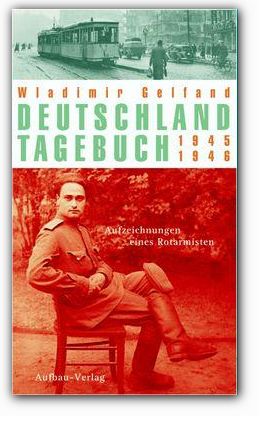
 |
1945
ist Wladimir Gelfand einer von Millionen Rotarmisten, die nach Westen
vorrücken. Ein Teil seiner Familie wird von den Deutschen
ermordet. Als Soldat führt der jüdische Ukrainer ein
persönliches Tagebuch, dem er seine Gedanken und Erlebnisse
anvertraut. Es ist das erste Originaltagebuch eines Soldaten der Roten
Armee überhaupt, das jetzt auf Deutsch vorliegt. In den Band
eingeflossen sind auch Fotos und Briefe. Die veröffentlichten Aufzeichnungen reichen vom Januar 1945 bis zum September 1946. Vor dem Fall Berlins ist der 22-Jдhrige Leutnant und Kommandeur eines Granatwerferzuges. Doch das Kampfgeschehen spielt im Tagebuch nicht die Hauptrolle. Vielmehr besticht der ungeschminkt-ehrliche Blick hinter die militärischen Kulissen. Da scheint es, als hätte jemand die Büchse der Pandora geöffnet: Gelfand erfährt Niedertracht und Antisemitismus. Diebstähle und Alkoholexzesse sind in der Truppe an der Tagesordnung. Ein hoch dekorierter Offizier wird wegen Selbstverstümmelung hingerichtet. Vom geschönt heroischen Bild durch die Propaganda bleibt nicht viel übrig. Als Besatzungsoffizier in Berlin und Umland begegnet er Vergewaltigungsopfern nicht ohne Mitleid, wundert sich aber nicht, dass die Verbrechen nicht geahndet werden. Gegen das Fraternisierungsverbot wetternd, schlittert Gelfand von einer Liebesaffäre in die nächste. Gewalt ist dabei nicht im Spiel, nur Angst vor Syphilis. über deutsche Nachkriegssorgen geht er hochnäsig hinweg. Politik sieht er, der brave Kommunist, meist durch die vorgefertigte Brille und erweist sich damit auch als Kind seiner Zeit. Komisch wirkt es, wenn der stalintreue Gelfand mit der Verherrlichung des noch verbündeten Roosevelt über die Stränge schlägt. Gelfand mit seinen Stärken und Schwächen entspricht weder dem Klischee vom brutalen Besatzer noch dem vom sakrosankten Helden. Seine Aufzeichnungen sollen ihm, der bereits 1983 stirbt, als Quelle für einen Roman dienen. Dass sie jetzt als Buch erscheinen, wäre für ihn vermutlich eine späte Entschädigung. |
| Wladimir Gelfand:
"Deutschland-Tagebuch 1945-1946. Aufzeichnungen eines Rotarmisten". Deutsch von Anja Lutter und Hartmut Schröder. Aufbau-Verlag, Berlin. 357 Seiten, 22,90 € |
| Antje
Weger
|
 German
In 1945 Vladimir Gelfand was one of millions of Red Army soldiers moving westward. Part of his family had been killed by the Germans. As a soldier, the Ukrainian Jew kept a private diary, entrusting his thoughts and experiences to it. This diary is the first original document written by a Red Army soldier to become available in German. The volume contains not only diary entries but also photographs and letters.
The published entries cover the period from January 1945 to September 1946. On the eve of the assault on Berlin, Gelfand is a twenty-two-year-old lieutenant and mortar-platoon commander in the thick of events. Yet combat itself is not the central subject of his diary. Far more important to him is an open, unvarnished view of the reality of war. The pages seem to open a Pandora's box: Gelfand witnesses baseness, antisemitism, looting and drunkenness that have become commonplace in the army. He sees one highly decorated officer destroyed by the pressures around him. Little remains in his notes of the propaganda image of a uniformly heroic Red Army.
After the fighting ends, Gelfand remains in Berlin and its surroundings as an occupation officer. He meets victims of violence and feels sympathy for them, yet he is not surprised that crimes committed by fellow soldiers go unpunished. Protesting against the command's ban on contacts with the German population, he disregards the rules and begins relationships with women. Unlike many other soldiers, however, he never uses violence. He is more preoccupied by the fear of contracting syphilis. He can look down on the postwar problems of Germans, while at the same time interpreting the situation through the ideology of a committed communist.
His views are often contradictory. A loyal Stalinist, he nevertheless admires the American president Franklin D. Roosevelt, an attitude that appears unexpected against the background of official Soviet rhetoric.
With all his strengths and weaknesses, Gelfand fits neither the image of the brutal occupier nor that of the selfless hero. His notes were intended to provide material for a future novel, but his dream of becoming a writer was never realized. He died in 1983, and the diary published decades later became, perhaps, a form of posthumous recognition and belated compensation for his struggle to tell the truth.
Antje Weger