





 Swedish
A Tarnished Portrait of a Soviet Soldier from Defeated Berlin

Sundsvalls Tidning, 15 October 2006
Vladimir Gelfand, Germany Diary 1945–46: Notes of a Soviet Officer.
Translated by Lars Wiklund. Ersatz.
 |
 |
|
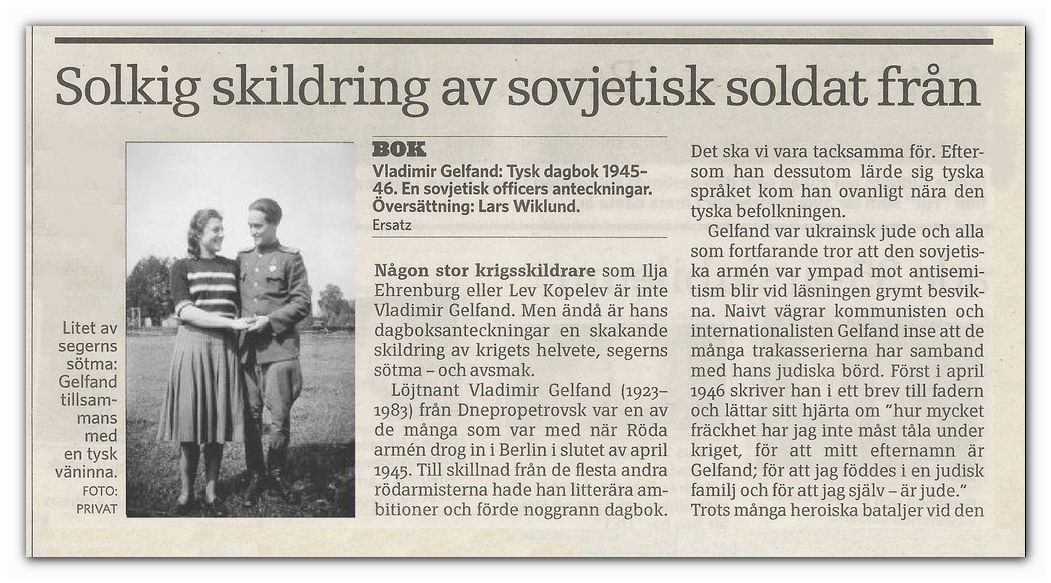
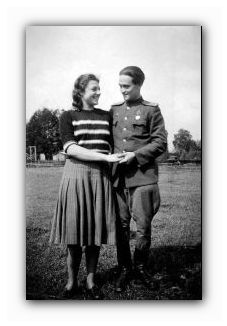
| The sweetness of victory: Gelfand with his German girlfriend. Photo: Private collection |
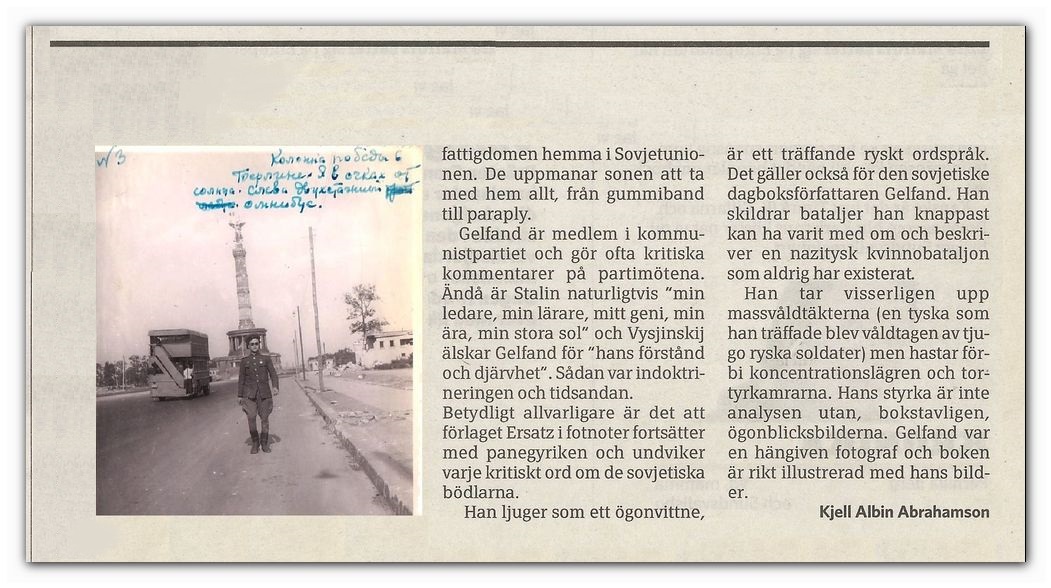
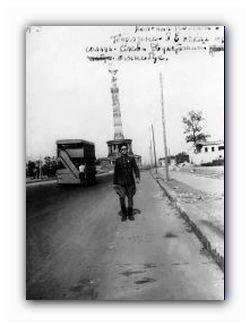
Everyday life during the war: a sightseeing trip through a historic landscape. |
|
Vladimir Gelfand is not as great a chronicler of war as Ilya Ehrenburg or Lev Kopelev. Even so, his diary is a disturbing account of the hell of war, the sweetness of victory and its aftertaste.
Lieutenant Vladimir Gelfand (1923–1983) from Dnepropetrovsk was one of those who entered Berlin with the Red Army at the end of April 1945. Unlike most Red Army soldiers, he had literary ambitions and kept a careful diary, for which later readers may be grateful. He also studied German and therefore came unusually close to the German population.
Gelfand was a Ukrainian Jew, and anyone who still believes the Soviet army was immune to antisemitism will be disappointed by the diary. The Communist and internationalist Gelfand is slow to understand that much of the harassment he experiences is connected with his Jewish background. In April 1946 he finally writes to his father and unburdens himself about the insolence he endured during the war simply because his name was Gelfand and he had been born into a Jewish family.
Despite hard fighting at the front, and despite being wounded, the twenty-one-year-old lieutenant is passed over when medals are distributed. He complains bitterly that awards go to men who drink with the right people, to bullies, provocateurs, staff officers and bureaucrats. Gelfand is not popular with his colleagues either. They resent him, among other things, for refusing to take part in looting a library belonging to the German Academy of Sciences.
He is vain about his clothing and appearance, yet careless about punctuality and military orders. In that respect he is far from alone. The Soviet soldiers in the diary resemble unruly folk heroes more than idealised Red Army men. On 21 January 1946 Gelfand writes of his division near Berlin: “Fights and abuse, desertions and violations of regulations have become normal … Venereal diseases have become an epidemic.”
Vodka flows so freely that men damage their health with it. Gelfand also writes extremely harshly about Soviet women in the army, describing a world in which sexual relations and moral disintegration seem to him inseparable. He calls it an “ocean of moral decay” that swept across wartime Europe in dirty waves.
Despite the official ban on contact with Germans, Gelfand trades with German men and spends nights with German women. He is fascinated by German women and eventually contracts what he calls a “war disease” — gonorrhoea.
Letters from his parents reveal the material poverty of everyday life back in the Soviet Union. They ask their son to bring home practical goods, from elastic to an umbrella.
Gelfand is a member of the Communist Party and at Party meetings occasionally permits himself critical remarks. Yet Stalin remains, in the language of the time, “my leader, my teacher, my genius, my honour, my great sun,” and he admires Vyshinsky for his “intelligence and courage.” Such was the doctrinaire spirit of the period.
The reviewer is more seriously critical of the publisher, arguing that the notes sometimes continue Soviet apologetics instead of confronting the regime’s crimes. The Russian saying that “an eyewitness lies like a witness” is invoked against Gelfand as well. The reviewer doubts some battle descriptions and points to his account of a supposed German women’s battalion that did not exist. Gelfand records mass rape — including the story of a German woman who said she had been raped by twenty Soviet soldiers — but does not discuss concentration camps or torture chambers.
His strength, the review concludes, lies not in analysis but in sharply observed moments. Gelfand was an enthusiastic photographer, and the book is illustrated with many of his photographs.
Kjell Albin Abrahamson