

 |
 |
 |
 |
 |
 |
|
|
|
 |
||
| |
||

|
|
|
|
Roswitha Quadflieg, die jüngste Tochter des Schauspielers, wurde in Zürich geboren und wuchs in einem künstlerisch geprägten Umfeld auf. Sie studierte Malerei, Graphik, Illustration und Typografie in Hamburg, wo sie bereits früh ihr kreatives Talent entdeckte und entwickelte. Zwischen 1973 und 2003 führte sie ihre eigene Verlagswerkstatt, die Raamin-Presse, am Stadtrand Hamburgs, wo sie als Buchkünstlerin und Verlegerin tätig war. In dieser Zeit entstanden zahlreiche kunstvoll gestaltete Bücher, die sich durch hohe handwerkliche Qualität und kreative Gestaltung auszeichnen. Seit 1985 ist Roswitha Quadflieg zudem als Schriftstellerin aktiv. Ihr literarisches Werk umfasst Romane, Theaterstücke und Hörspiele, in denen sie oft die Verbindung zwischen Kunst, Geschichte und persönlichen Erfahrungen thematisiert. Heute lebt sie in Berlin und setzt ihre vielfältige künstlerische Arbeit mit großem Engagement fort. |
»Roswitha
Quadflieg tritt von der
›Bühnenwirklichkeit‹ ein paar Schritte
zurück und erzählt von der Kunst eines Mannes, der
sein Publikum tief bewegt, die ihm am nächsten stehenden
Menschen als solche aber nicht einmal wahrnimmt.«
Hans-Albrecht
Koch, FAZ
»Nicht nur
ein augenöffnendes Plädoyer dafür, Fragen zu
stellen, bevor es zu spät ist, sondern auch dafür,
das Grauen stets auch in den Grautönen zu suchen.«
Nora
Bruckmüller, Oberösterreichische Nachrichten
»Ein
außergewöhnliches Zeitdokument.«
RBB24
Inforadio
»Eine
beeindruckende Vater-Befragung«
Christian
Schröder, Tagesspiegel
»Ein
wertvoller Beitrag zur Erinnerungskultur.«
Hörzu
»Ein
fesselndes Gespräch.«
Tilmann P.
Gangloff, Stuttgarter Zeitung
»Was
Roswitha Quadflieg mit diesem Buch und ihrer kritischen Reflexion
hinsichtlich seines Lebens, besonders anhand des Tagebuchs, geleistet
hat, ist enorm.«
lustaufbuch
»Ein
berührendes Ringen um Nähe.«
Oliver
Kaever, Der Spiegel
»Die Art,
wie Will Quadflieg sich durch die NS-Zeit brachte, ist vermutlich
stellvertretend für viele Biografien:
Überlebensdrang, Pragmatismus, eine gewählte
Blindheit.«
Christiane
Lutz, Süddeutsche Zeitung
»Roswitha
Quadflieg widmet sich Themen, die Haltung verlangen.«
Sigrid
Brinkmann, Deutschlandfunk
»Das Buch
dokumentiert den einzigen Weg zur Geschichte, der möglich ist:
verstehen zu wollen und dabei der Tatsache ins Auge zu blicken, dass
die Handelnden der Welt von gestern den Heutigen auf immer
entrückt bleiben werden.«
Oliver
Kaever, Der Spiegel
»Hier
ringt eine nach Kriegsende Geborene darum, nachvollziehen zu
können, wie es war, in der Nazi-Diktatur zu leben, zum Zeugen
ihres Untergangs zu werden, ein neues Leben zu beginnen. Genau dieses
Ringen macht Ich will lieber schweigen zu einem spannenden
Buch.«
Oliver
Kaever, Der Spiegel
»Es ist
dieses Tagebuch, das die Basis für eine der erstaunlichsten
Neuerscheinungen dieses Jahres bildet. …Was auf diese Weise
entsteht, ist ein atemberaubend spannendes Gespräch mit der
Vergangenheit, das weder in der Pose der Anklage erstarrt noch etwas
beschönigen will.«
Felix
Müller, Berliner Morgenpost
»Im
Nachlass ihrer Mutter stößt die Autorin Roswitha
Quadflieg auf Schriften ihres bekannten Vaters – und
entspinnt damit ein fesselndes Gespräch.«
Tilmann
P. Gangloff, Stuttgarter Zeitung
 |
||
 |
ERGEBNISSE
IM BUCH Gelfand Im
Web suchen: search Seite 84 …als 22-jährige Wladimir Gelfand, geboren in der Ukraine, schreib… search Seite 84 …Endlich in Küstrin«, schreibt Gelfand. »Habe es heut inspiziert. Ei… search Seite 90 ...Wladimir Gelfand schreibt am 28.4.1945 in sein Tagebuch: »Es ist… search Seite 127 ...Bei Wladimir Gelfand geht es am 8. Mai dagegen um die harte grau… search Seite 141 ...Bei Wladimir Gelfand, der mich nun schon eine Weile auf dieser… search Seite 144 ...Auch Wladimir Gelfand führt in den Tagen nach Kriegsende weiter… search Seite 151 ...Wladimir Gelfand hadert in diesen Tagen ebenfalls mit seinem… search Seite 294 ... 43 Wladimir Gelfand: Deutschland-Tagebuch 1945–1946, Aufz… search Seite 294 ... Gelfand: Deutschland-Tagebuch, S. 81. search Seite 296 ... 64 Gelfand: Deutschland-Tagebuch 1945–1946, Aufzeichnunge... search Seite 297 ... 73 Gelfand: Deutschland-Tagebuch, S. 86. search Seite 297 ... Gelfand: Deutschland-Tagebuch, S. 90 f. search Seite 303 ... Gelfand, Wladimir: 90, 96, 132, 145, 147, 154 |
|
|
|
| »Was
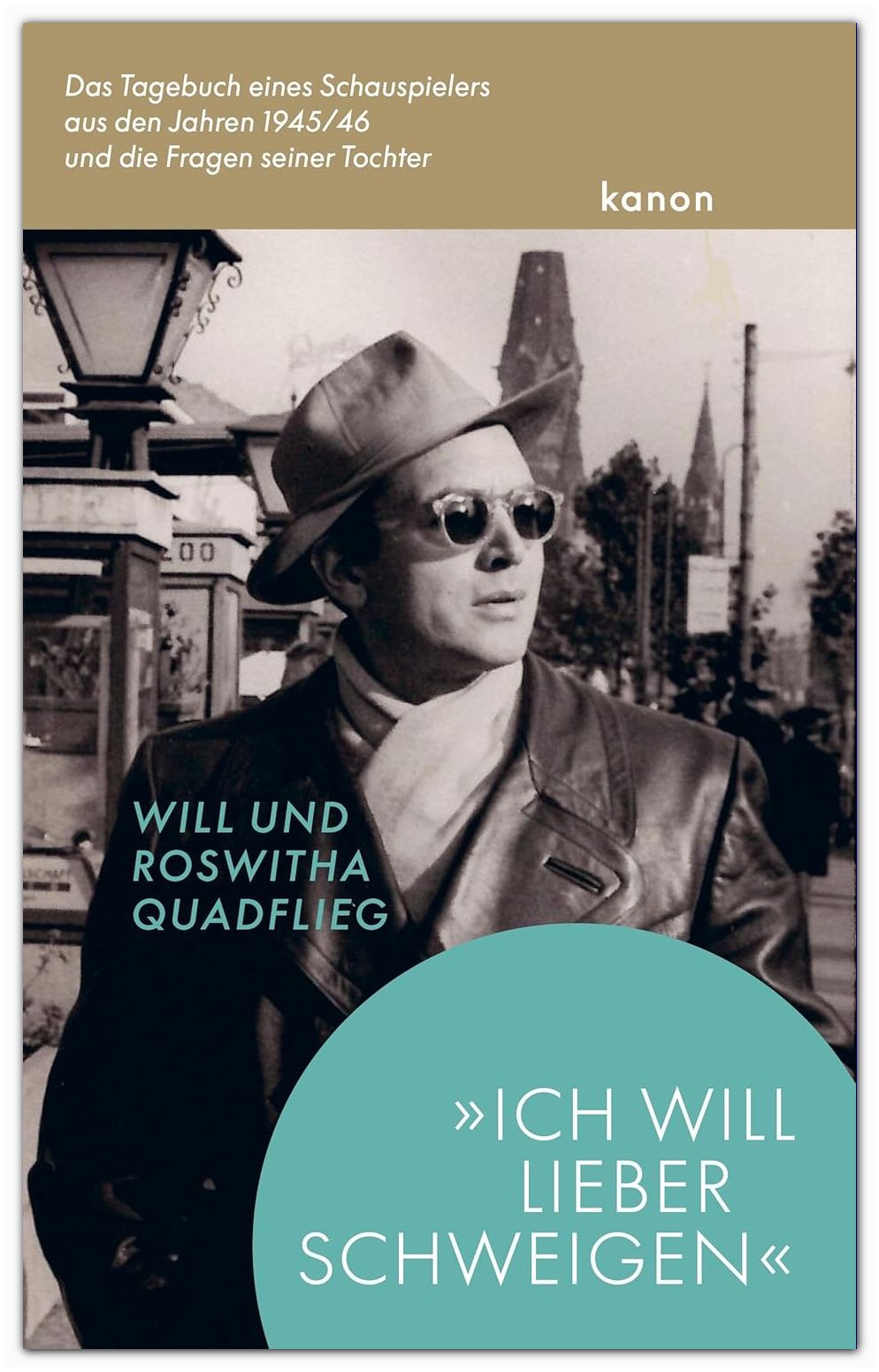
also hast du im Krieg gemacht?« März 1945. Die Rote Armee rückt täglich näher an Berlin heran. Angst und Ver zweifllung grassieren unter der Zivilbevölkerung. Gibt es eine Möglichkeit, zu entkommen? Die Eltern von Roswitha Quadflieg trennen sich. Die Mutter flieht mit zwei Kindern in ihre Heimat Schweden. Der Vater, einer der berühmtesten Schau spieler seiner Zeit, zieht weiter durchs Land, rezitiert Gedichte vor Soldaten der Wehrmacht und fängt an, ein Tagebuch für seine Frau zu schreiben. Als ihre Mutter stirbt, findet Roswitha Quadflieg das Tagebuch zusammen mit zahlreichen Briefen des Vaters. Diese Dokumente zeugen nicht nur von Flucht, Angst, Liebe und der Behauptung einer richtigen deutschen Kultur. Sondern auch von Schuld, falscher Sprache, Lüge und Selbstlüge. Roswitha Quadflieg rekonstruiert 103 Tage im Leben ihres Vaters und konfrontiert ihn posthum damit. Eine beeindruckende Beweisaufnahme, ein erhellendes Zwiegespräch. |
| Zum Stream der
Buchpremiere im Literaturhaus Berlin Buchpremiere: Will und Roswitha Quadflieg »Ich will lieber schweigen« Das Tagebuch eines Schauspielers aus den Jahren 1945/46 und die Fragen seiner Tochter. Roswitha Quadflieg im Gespräch mit Felix Müller. Es liest Michael Evers. Will Quadflieg war ein Star, sein Aufstieg begann im Dritten Reich. Jahrzehnte nach seinem Tod findet seine Tochter Roswitha sein Tagebuch, begonnen kurz vor Ende des 2. Weltkriegs. Es wird Zeit für ein ernstes Gespräch, das es zu Lebzeiten nie gegeben hat. März 1945. Die Rote Armee rückt täglich näher an Berlin heran. Angst und Verzweiflung grassieren unter der Zivilbevölkerung. Gibt es eine Möglichkeit, zu entkommen? Die Eltern von Roswitha Quadflieg entschließen sich zur Trennung. Er, einer der berühmtesten Schauspieler der Zeit, fängt ein Tagebuch für seine Frau an. Als ihre Mutter stirbt, findet Roswitha Quadflieg das Tagebuch zusammen mit zahlreichen Briefen des Vaters. Diese Dokumente zeugen nicht nur von Flucht, Angst, Liebe und der Behauptung einer richtigen deutschen Kultur. Sondern auch von Schuld, falscher Sprache, Lüge und Selbstlüge. Roswitha Quadflieg rekonstruiert 104 Tage im Leben ihres Vaters und konfrontiert ihn posthum damit. Eine beeindruckende Beweisaufnahme, ein erhellendes Zwiegespräch. Darüber spricht die Autorin mit dem Kulturredakteur und Theaterkritiker Felix Müller. Es liest der Schauspieler Michael Evers. Roswitha Quadflieg »Will und Roswitha Quadflieg – Ich will lieber schweigen«, Kanon 2025 |
© Kanon-Verlag
© Will Quadflieg, Roswitha Quadflieg

Will and Roswitha Quadflieg, “I’d Rather Keep Silent”: An Actor’s Diary from 1945/46 and His Daughter’s QuestionsWill and Roswitha Quadflieg, “I’d Rather Keep Silent”: An Actor’s Diary from 1945/46 and His Daughter’s Questions. Publisher: Kanon Verlag Berlin ASIN: B0DQL7PC5S E-book edition. About the author and other contributorsWill Quadflieg, born in Oberhausen in 1914 and deceased in Osterholz-Scharmbeck in 2003, is regarded as one of the most distinguished and internationally known German actors of the twentieth century. His artistic career began in 1937 at Berlin’s Volksbühne, one of Germany’s most important theaters. For decades he exerted a major influence on the German theater landscape, while also appearing in numerous film and television productions that brought him to a broad audience. Among his most outstanding roles was Faust in Gustav Gründgens’s famous 1957 production, still regarded as a milestone in German theater history. Television audiences also remember his impressive performance in Dieter Wedel’s four-part production Der große Bellheim (1992). Until shortly before his death, Will Quadflieg continued to perform on stage with great passion and impressed audiences with the range of his acting. 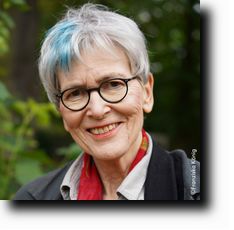 Roswitha Quadflieg. Roswitha Quadflieg, the actor’s youngest daughter, was born in Zurich and grew up in an artistic environment. She studied painting, graphic art, illustration and typography in Hamburg, where she discovered and developed her creative talent at an early age. From 1973 to 2003 she ran her own publishing workshop, Raamin-Presse, on the outskirts of Hamburg, working as a book artist and publisher. During this period she produced numerous artistically designed books distinguished by high craftsmanship and inventive design. Since 1985 Roswitha Quadflieg has also been active as a writer. Her literary work includes novels, plays and radio dramas, often exploring the connections between art, history and personal experience. She now lives in Berlin and continues her varied artistic work with great commitment. Press reviews“Roswitha Quadflieg takes a few steps back from ‘stage reality’ and tells of the art of a man who deeply moves his audience yet does not even perceive the people closest to him as such.” — Hans-Albrecht Koch, FAZ “Not only an eye-opening plea to ask questions before it is too late, but also to seek horror in its shades of gray.” — Nora Bruckmüller, Oberösterreichische Nachrichten “An extraordinary document of its time.” — RBB24 Inforadio “An impressive interrogation of a father.” — Christian Schröder, Tagesspiegel “A valuable contribution to the culture of remembrance.” — Hörzu “A gripping conversation.” — Tilmann P. Gangloff, Stuttgarter Zeitung “What Roswitha Quadflieg has achieved with this book and her critical reflection on his life, especially through the diary, is enormous.” — lustaufbuch “A moving struggle for closeness.” — Oliver Kaever, Der Spiegel “The way Will Quadflieg made his way through the Nazi era is probably representative of many biographies: the instinct to survive, pragmatism, a chosen blindness.” — Christiane Lutz, Süddeutsche Zeitung “Roswitha Quadflieg devotes herself to subjects that demand a position.” — Sigrid Brinkmann, Deutschlandfunk “The book documents the only possible path toward history: wanting to understand while facing the fact that the actors in yesterday’s world will forever remain distant from people today.” — Oliver Kaever, Der Spiegel “Here, someone born after the war struggles to understand what it was like to live under the Nazi dictatorship, to witness its downfall, and to begin a new life. It is precisely this struggle that makes I’d Rather Keep Silent such an absorbing book.” — Oliver Kaever, Der Spiegel “It is this diary that forms the basis of one of the most astonishing new publications of the year. … What emerges is a breathtakingly compelling conversation with the past that neither freezes into a posture of accusation nor seeks to gloss anything over.” — Felix Müller, Berliner Morgenpost “In her mother’s estate, author Roswitha Quadflieg comes across writings by her famous father — and spins from them a gripping conversation.” — Tilmann P. Gangloff, Stuttgarter Zeitung Results in the BookGelfand Search the web Page 84 Page 84 Page 90 Page 127 Page 141 Page 144 Page 151 Page 294 Page 294 Page 296 Page 297 Page 297 Page 303 So What Did You Do in the War?March 1945. The Red Army is advancing closer to Berlin every day. Fear and despair are rampant among the civilian population. Is there any way to escape? Roswitha Quadflieg’s parents separate. Her mother flees with two children to her native Sweden. Her father, one of the most famous actors of his time, continues traveling around the country, recites poems to Wehrmacht soldiers, and begins writing a diary for his wife. When her mother dies, Roswitha Quadflieg finds the diary together with numerous letters from her father. These documents bear witness not only to flight, fear, love, and the assertion of a proper German culture, but also to guilt, false language, lies, and self-deception. Roswitha Quadflieg reconstructs 103 days in her father’s life and confronts him with them posthumously. An impressive examination of evidence, an illuminating dialogue. Stream of the Book Premiere at Literaturhaus BerlinBook premiere: Will and Roswitha Quadflieg — I’d Rather Keep Silent. The diary of an actor from the years 1945/46 and the questions of his daughter. Roswitha Quadflieg in conversation with Felix Müller. Readings by Michael Evers. Will Quadflieg was a star; his rise began in the Third Reich. Decades after his death, his daughter Roswitha finds his diary, begun shortly before the end of the Second World War. It is time for a serious conversation that never took place during his lifetime. March 1945. The Red Army is advancing closer to Berlin every day. Fear and despair are rampant among the civilian population. Is there any way to escape? Roswitha Quadflieg’s parents decide to separate. He, one of the most famous actors of the time, begins a diary for his wife. When her mother dies, Roswitha Quadflieg finds the diary together with numerous letters from her father. These documents bear witness not only to flight, fear, love, and the assertion of a proper German culture, but also to guilt, false language, lies, and self-deception. Roswitha Quadflieg reconstructs 104 days in her father’s life and confronts him with them posthumously. An impressive examination of evidence, an illuminating dialogue. The author discusses this with cultural editor and theater critic Felix Müller. The actor Michael Evers reads. Roswitha Quadflieg, Will and Roswitha Quadflieg — I’d Rather Keep Silent, Kanon 2025. © Kanon-Verlag © Will Quadflieg, Roswitha Quadflieg |