



 |
 |
 |
||
|
|
 |
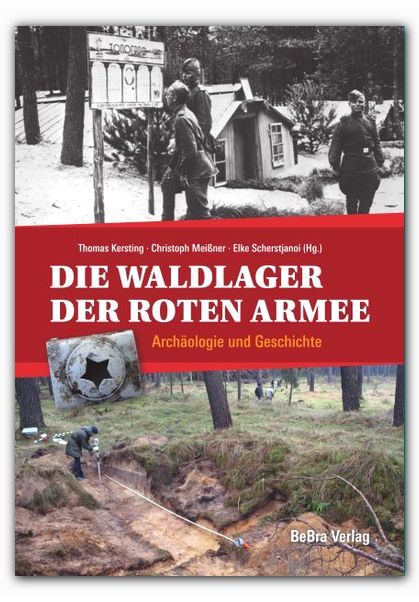
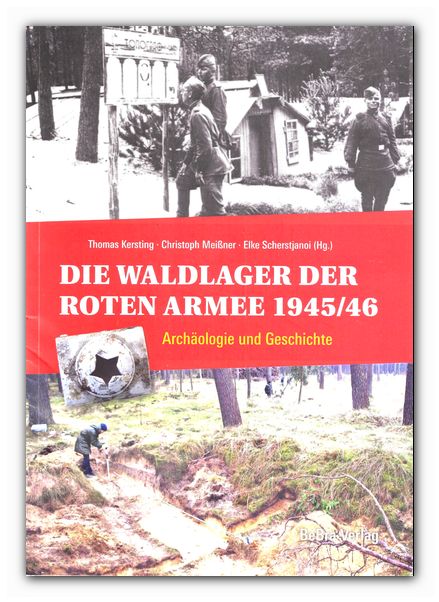
Die Waldlager der Roten Armee 1945/46Archäologie und Geschichte Nach der Kapitulation Deutschlands im Mai 1945 befanden sich Hunderttausende Soldaten der Roten Armee westlich der Oder. Dieses Buch beschreibt den Übergang von einer mobilen Frontarmee, die auf Waldlager und andere schnell zu errichtende Unterkünfte setzte, hin zu einer Besatzungsarmee, die sich in festen Garnisonen einquartierte. Dabei wird anhand archäologischer Funde aus den zahlreichen Waldlagern rund um Berlin das Alltagsleben der sowjetischen Soldaten in der unmittelbaren Nachkriegszeit rekonstruiert und in den historischen Kontext eingebettet. Die Erkenntnisse der zeitgeschichtlichen Archäologie ergänzen das bisherige Bild der Ereignisse um wertvolle und anschauliche Details. |

|
Published on
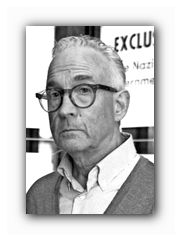 |
Thomas KerstingThomas Kersting, Dr., geboren 1958 in Bonn, studierte Vor- und Frühgeschichte in Bonn und München und ist seit 1993 in Brandenburg beim Landesamt für Denkmalpflege beschäftigt, wo er seit 2009 die Archäologische Denkmalpflege leitet. Er ist Spezialist für Archäologie des Slawischen Frühmittelalters und der Zeitgeschichte sowie Beauftragter für die Ausbildung der Ehrenamtlichen. |
||
Christoph MeißnerChristoph Meißner, geboren 1985 in Meißen, studierte Geschichte, Kunstgeschichte und Politikwissenschaften in Dresden und Berlin. War von 2014–2021 wissenschaftlicher Mitarbeiter im Museum Berlin Karlshorst. Seit 2022 ist er wissenschaftlicher Mitarbeiter an der Heinrich-Heine-Universität Düsseldorf. Er ist Kurator mehrerer Ausstellungen zu Themen der Deutsch-Sowjetischen Beziehungen. |
|||
 |
Elke ScherstjanoiPrivatdozentin Dr. Elke Scherstjanoi ist Zeithistorikerin. 1980 bis 1991 wissenschaftliche Mitarbeiterin am Zentralinstitut für Geschichte der AdW der DDR. Seit 1994 arbeitet sie am Institut für Zeitgeschichte München-Berlin. Forschungsschwerpunkte sind die politische Geschichte der Sowjetischen Besatzungszone und der DDR, der deutsch-sowjetischen staatlichen Beziehungen seit 1945 und deutsch-sowjetischer Nachkriegsbegegnungen, die Geschichte der sowjetische Kriegsfeldpost, der deutschen Kriegsgefangenschaft in der UdSSR, Gedenkpolitik und Oral History. |
||
© BeBra Verlag
 German
Edited by Thomas Kersting, Christoph Meißner and Elke Scherstjanoi
After Germany's capitulation in May 1945, hundreds of thousands of Red Army soldiers were located west of the Oder. This book describes the transition from a mobile frontline army that relied on forest camps and other quickly erected shelters to an occupation army quartered in permanent garrisons. Drawing on archaeological finds from the many forest camps around Berlin, the book reconstructs the everyday life of Soviet soldiers in the immediate post-war period and places it in historical context. The findings of contemporary archaeology add valuable and vivid details to the picture of events known so far.
Publisher: be.bra Verlag; first edition, 31 August 2022
Language: German
Paperback: 160 pages
ISBN-10: 3898091945
ISBN-13: 978-3898091947
Dimensions: 16.6 × 1.2 × 23.4 cm
Paperback: 50 black-and-white illustrations
Price: €24
The Forest Camps of the Red Army 1945/46 — reading sample. Published 13 September 2022.
Dr. Thomas Kersting, born in Bonn in 1958, studied prehistory and early history in Bonn and Munich. Since 1993 he has worked in Brandenburg at the State Office for the Preservation of Monuments, where since 2009 he has headed archaeological monument conservation. He is a specialist in the archaeology of the Slavic Early Middle Ages and contemporary history and is also responsible for training volunteers.
Christoph Meißner was born in Meissen in 1985 and studied history, art history and political science in Dresden and Berlin. From 2014 to 2021 he was a research associate at the Museum Berlin-Karlshorst. Since 2022 he has been a research associate at Heinrich Heine University Düsseldorf and has curated several exhibitions on German-Soviet relations.
Dr. Elke Scherstjanoi is a contemporary historian. From 1980 to 1991 she was a research associate at the Central Institute of History of the Academy of Sciences of the GDR. Since 1994 she has worked at the Institute of Contemporary History Munich-Berlin.
Her research focuses on the political history of the Soviet Occupation Zone and the GDR, German-Soviet state relations after 1945 and German-Soviet post-war encounters, the history of Soviet military field post, German captivity in the USSR, memory politics and oral history.
Back cover: After Germany's capitulation in May 1945, hundreds of thousands of Red Army soldiers were west of the Oder. The book describes the transition from a mobile frontline army, which relied on forest camps and other quickly erected accommodation, to an occupation army quartered in permanent garrisons. Based on archaeological finds from the numerous forest camps around Berlin, the everyday life of Soviet soldiers in the immediate post-war period is reconstructed and placed in historical context. With 130 illustrations, some in color. ISBN 978-3-89809-194-7. Price €24. www.bebraverlag.de.
Bibliographic/copyright page: Bibliographic information of the German National Library. The German National Library lists this publication in the German National Bibliography; detailed bibliographic data are available online at dnb.d-nb.de. All rights reserved. This work, including all its parts, is protected by copyright. Any use outside the narrow limits of copyright law without the publisher's consent is prohibited and punishable; this applies especially to reproduction, translation, microfilming, filming, and storage and processing on DVDs, CD-ROMs, CDs, videos, other electronic systems and internet platforms. © be.bra verlag, Medien und Verwaltungs GmbH, Berlin-Brandenburg, 2022, Asternplatz 3, 12203 Berlin. Editing: Anika Strehlow, Berlin. Cover and typesetting: typegerecht berlin. Typefaces: Utopia, Univers. Printing and binding: Finidr, Český Těšín. ISBN 978-3-89809-194-7.

