



 |
 |
 |
 |
||||
 |
 |
 |
 |
||||
 |
 |
 |
 |
||||
 |
 |
 |
 |
© 2002-2015 Aгентство еврейских новостей
 Russian
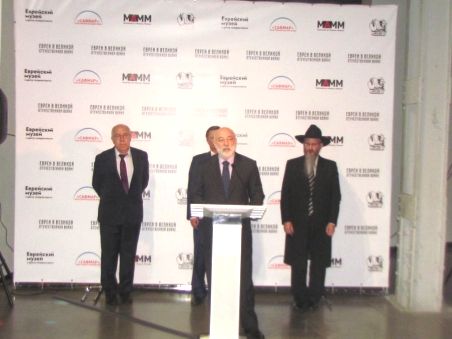
The Jewish Museum and Tolerance Center in Moscow has opened the exhibition Jews in the Great Patriotic War, timed to mark the seventieth anniversary of the end of the Great Patriotic War.
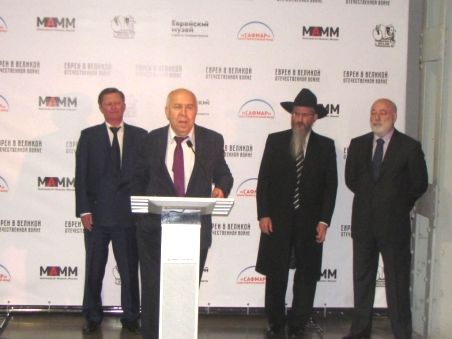
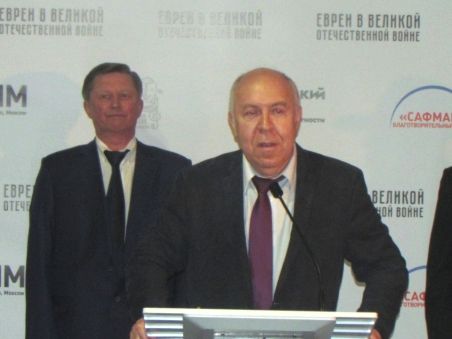
Speaking at the opening, Sergei Ivanov, head of the Russian Presidential Administration and a member of the museum’s Board of Trustees, expressed confidence that the exhibition had already become a significant event in Russia’s cultural and public life and an important step in preserving the truth about the Great Patriotic War — the truth that all the peoples of the USSR stood together against a common enemy, regardless of nationality.
He said a unique feature of the exhibition is that it shows the Jewish contribution to the victory over Nazism through personal materials preserved by descendants.
“Most important are the personal photographs, diaries and letters that descendants have preserved. Such exhibits are always perceived in an especially acute, profound and emotional way. They allow us to feel the atmosphere of those years and the experiences of eyewitnesses, to understand fully the enormous price of victory and, of course, the responsibility that now rests on us — the present generation and all future generations — to preserve peace,” Ivanov emphasized.
Viktor Vekselberg, chairman of the Board of Trustees of the Jewish Museum and Tolerance Center and a well-known businessman, said in turn that the exhibition is “a small part of the vast body of information that the present generation must remember, preserve and pass on to the generations that follow.”
“We want to remember that there were not only victims, but also those who fought. We must remember everything. If we forget anything, the reaction may return,” he said.
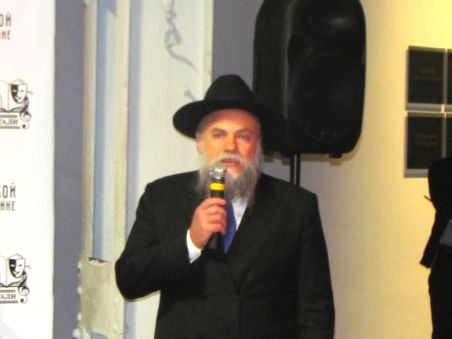
Alexander Boroda, president of the Federation of Jewish Communities of Russia, said that heroes remain alive as long as their memory remains alive.
“We will remember everyone who fought; we will struggle to preserve the memory of Victory and to make sure that these horrors are not repeated. An important step has been taken toward perpetuating that memory, and in the future it can provide a valuable lesson for the younger generation,” the FJCR president stressed.
He also said that the museum would continue with similar exhibitions and would tell the story of the participation of other peoples of the Soviet Union in the Great Patriotic War.
Oleg Budnitsky, academic director of the HSE International Center for the History and Sociology of World War II and Its Consequences and one of the organizers of the exhibition, asked whether it was necessary to single out the Jewish role in the war.
“Death generally made no distinction between ‘Greek and Jew,’ but if they were taken prisoner, a Jew could be certain of death,” he said, recalling that the Nazis murdered 2.7 million Jews — ten percent of all Soviet losses in the war, although Jews had made up only 2.5 percent of the prewar population.
“But as Ehrenburg said, ‘the victim knew how to shoot.’ Our exhibition is devoted to those who shot, who helped keep the army functioning, and so on. You will see human documents that cannot fail to shock,” Budnitsky noted.
He thanked archives and the families of the exhibition’s subjects for their help, and especially highlighted the work of the Center’s leading analyst, Tatyana Voronina, who carried out an enormous amount of work in creating the exhibition.
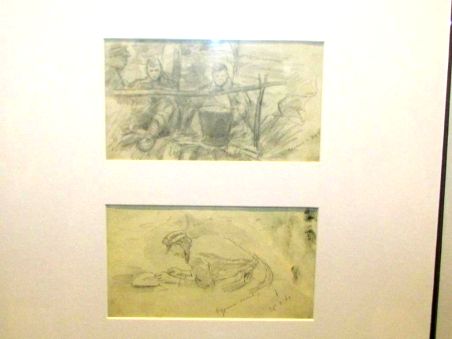
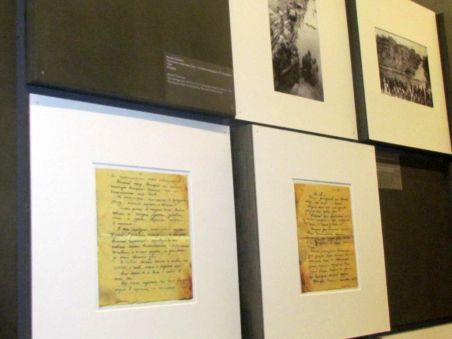
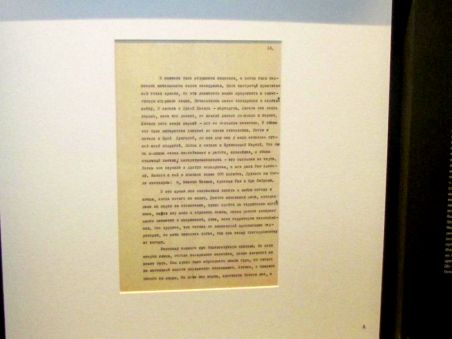
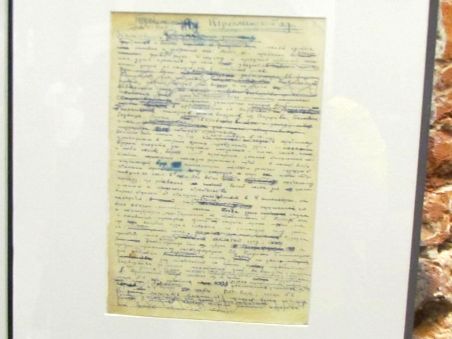
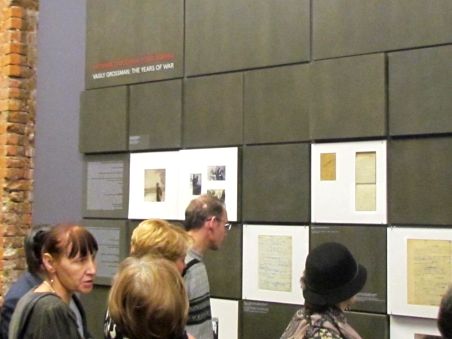
Among the exhibits in the exhibition, which opened with the support of the SAFMAR charitable foundation, are personal documents, drawings, photographs — including images by such famous photographers as Emmanuil Yevzerikhin and Yevgeny Khaldei — decorations and pages from the manuscripts of writer Vasily Grossman, author of the essay on the Treblinka death camp The Hell of Treblinka and the novel Life and Fate. They help viewers better understand the context in which the tragedy of the twentieth century unfolded.
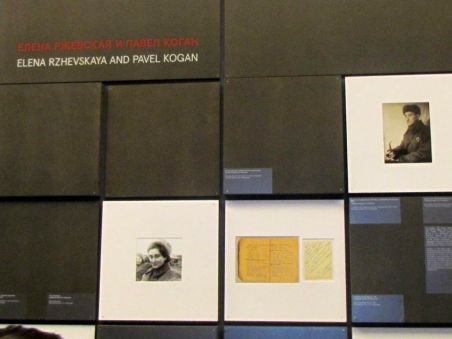
Other figures represented include pilot Polina Gelman, the only Jewish woman awarded the title Hero of the Soviet Union; military interpreter and writer Yelena Kagan, better known as Yelena Rzhevskaya; and Alexander Pechersky, leader of the only successful uprising in the Sobibor extermination camp.
Materials for the exhibition were provided by the State Archive of the Russian Federation (GARF), the Russian State Archive of Literature and Art (RGALI), the Russian State Archive of Socio-Political History (RGASPI), as well as by children and grandchildren of veterans.
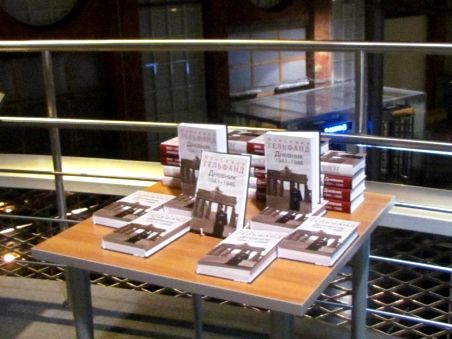
As part of the opening, the museum also presented the first complete publication of Vladimir Gelfand’s diaries covering 1941–1946, prepared by the Jewish Museum’s Research Center.
Gelfand’s son Vitaly said that when he read his father’s diaries after his death, the experience shocked him as deeply as reading The Gulag Archipelago.
It took almost seventeen years, from 1985 to 2002, to transcribe the diary. In 2002, by which time Vitaly Gelfand had moved to Germany, a German edition of the part of the diary devoted to Vladimir Gelfand’s service in Germany in 1945–1946 was published.
In 2005 the German Institute of Contemporary History issued another edition. Historian Elke Scherstjanoi, having learned from a chance remark by Vitaly Gelfand that scenes of a sexual nature had been omitted from the text, carried out a new comparison with the manuscript and secured a corrected edition.
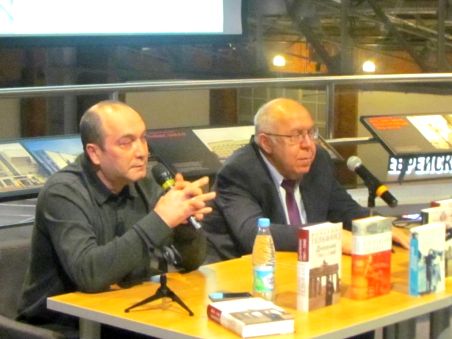
Oleg Budnitsky emphasized that Vladimir Gelfand’s diary is unprecedented in its chronology, scope and detail.
“He wrote all the time and seems not to have feared death at all, making entries almost in the middle of battle. It is not an easy text to read: he writes about humiliation, primitive antisemitism in the army and his own unseemly actions. Taken together, all this makes the diary an extraordinary source for the history of the Second World War,” Budnitsky said.
He gave special thanks to Tatyana Voronina, who made a complete comparison of the entire diary text and managed to find information about a number of people mentioned in it, thereby confirming its authenticity.
For the full set of photographs from the opening of the exhibition Jews in the Great Patriotic War, see the Jewish News Agency photo gallery.
