
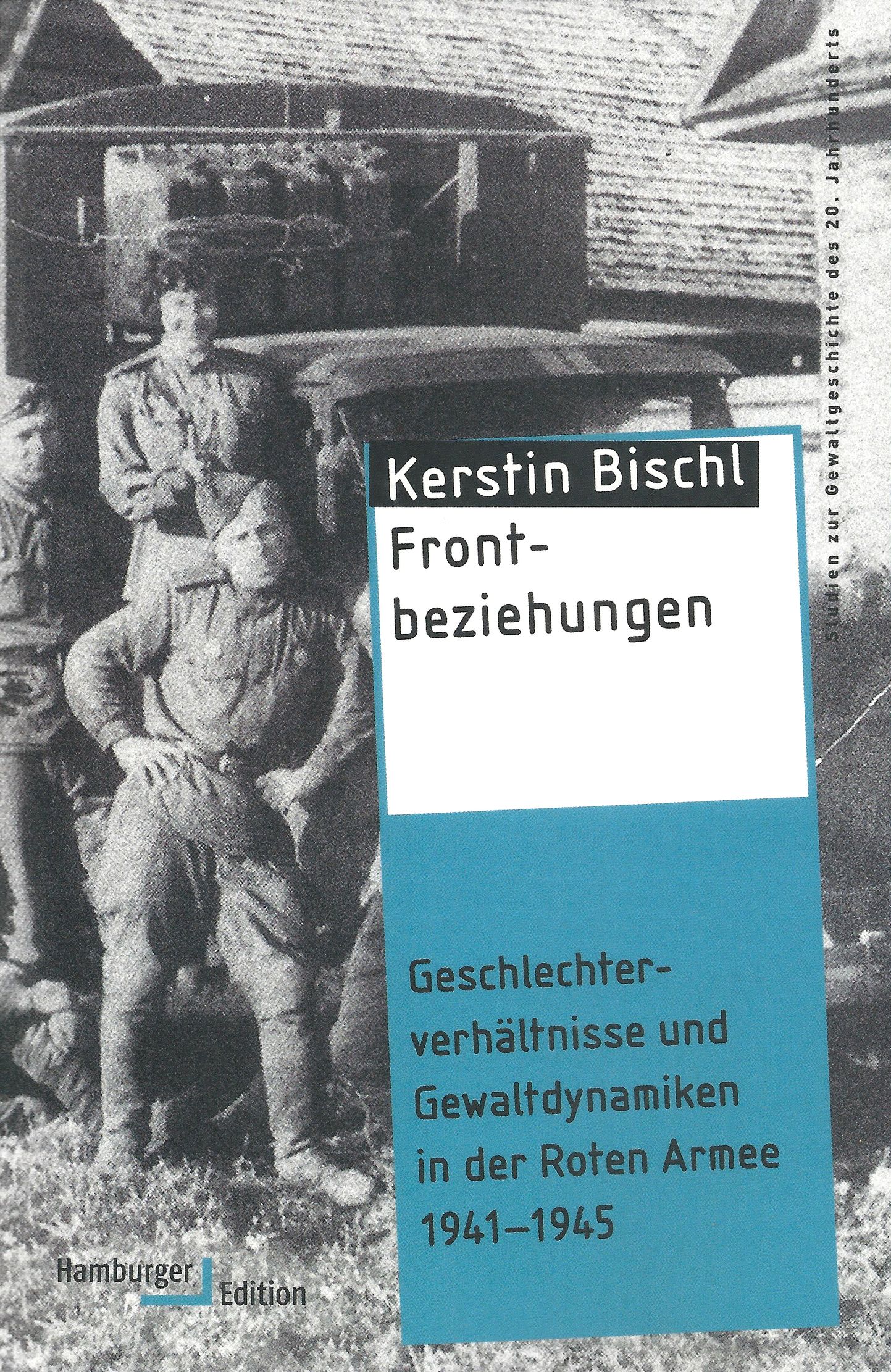


|
||
 |
||
| |
||
|
||
| |
 |

 |
Kerstin
Bischl, Dr. phil., Historikerin, lehrt als wissenschaftliche
Assistentin am Lehrstuhl für Neuere Geschichte Osteuropas der
Georg-August-Universität Göttingen.
Sie
hat Neuere und Neueste Geschichte, Philosophie und Politikwissenschaft
an der Humboldt-Universität zu Berlin, der Freien
Universität
Berlin sowie an der Staatlichen Universität Voronezh studiert;
nach Forschungsaufenthalten in Moskau, Warschau und Freiburg Promotion
am Lehrstuhl für Osteuropäische Geschichte der
Humboldt-Universität zu Berlin. Sie arbeitete als DaF-Lehrerin
in
verschiedenen Berliner Einrichtungen für Geflüchtete,
leitete
von 2009 – 2011 die jährliche Internationalen
Sommerschule
der Historischen Fakultät an der Staatlichen
Universität
Voronezh und war von 2007 – 2015 freie politische
(Jugend-)Bildnerin für verschiedene Träger in Berlin.
Sie
forscht und veröffentlicht zur sowjetischen Geschichte,
Geschlechtergeschichte, und Gewaltgeschichte.
Ausgewählte
Veröffentlichungen: »Female Red Army Soldiers in
World War
II and Beyond«, in: Catherine Baker (Hg.), Gender in
20th-Century
Eastern Europe and the Soviet Union, London 2017, S. 113-126;
»Und dann war ich nicht mehr da. Überlebende
erinnern
sexuelle Gewalt bei der Befreiung«, in: Alina Bothe/Christina
Brüning (Hg.), Geschlecht und Erinnerung im digitalen
Zeitalter
– neue Perspektiven auf ZeitzeugInnenarchive, Berlin 2014, S.
135-156.
|
 |
|
|
 |
 |
|
© 2019 Hamburger Edition HIS
 немецкий
 |
Керстин Бишл, доктор
философии, историк, преподает в качестве
научного сотрудника на кафедре современной истории Восточной Европы в
Университете им. Георга-Августа-Геттингена. Она изучала современную и новейшую историю, философию и политологию в университете Гумбольдта в Берлине, Свободном университете в Берлине и в Воронежском государственном университете; После научных стажировок в Москве, Варшаве и Фрайбурге она защитила докторскую диссертацию на кафедре истории Восточной Европы в Университете Гумбольдта в Берлине. Она преподавала немецкий язык как иностранный в различных учреждениях для беженцев в Берлине, возглавляла ежегодную Международную летнюю школу исторического факультета в Воронежском государственном университете с 2009 по 2011 годы и была бесплатной политической (молодежной) педагогической программой в различных учреждениях Берлина с 2007 по 2015 годы. Она исследует и публикует материалы по советской истории, гендерной истории и истории насилия. Отдельные публикации: «Женщины-солдаты Красной Армии во Второй мировой войне и за ее пределами», в: Кэтрин Бейкер (ред.), «Гендер в Восточной Европе и Советском Союзе 20-го века», Лондон, 2017, стр. 113-126; "И тогда меня там уже не было. Оставшиеся в живых вспоминают сексуальное насилие во время освобождения ", в: Алина Ботэ / Кристина Брюнинг (ред.), Гендер и память в эпоху цифровых технологий - новые перспективы в ZeitzeugInnenarchive, Берлин, 2014, стр. 135-156. (По состоянию на ноябрь 2018 г.) |
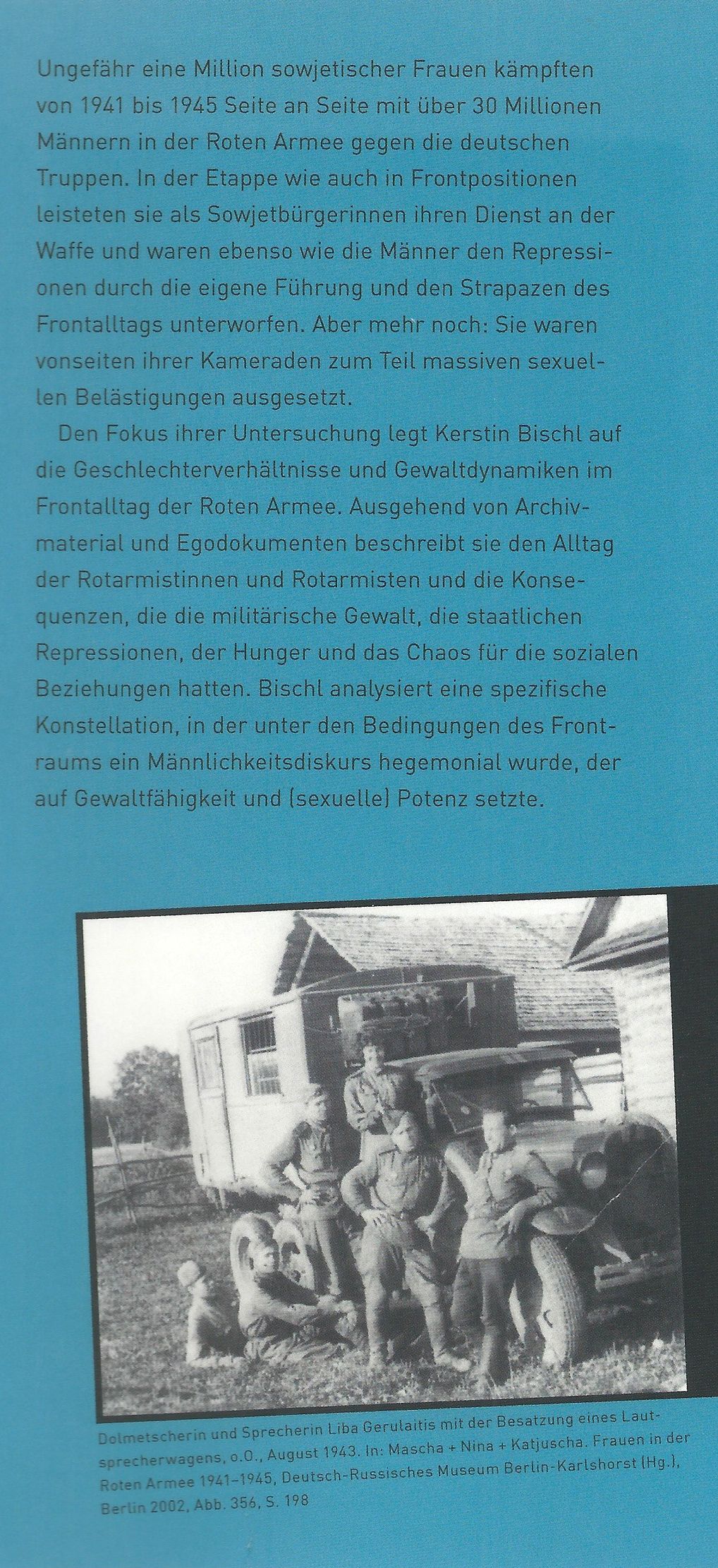
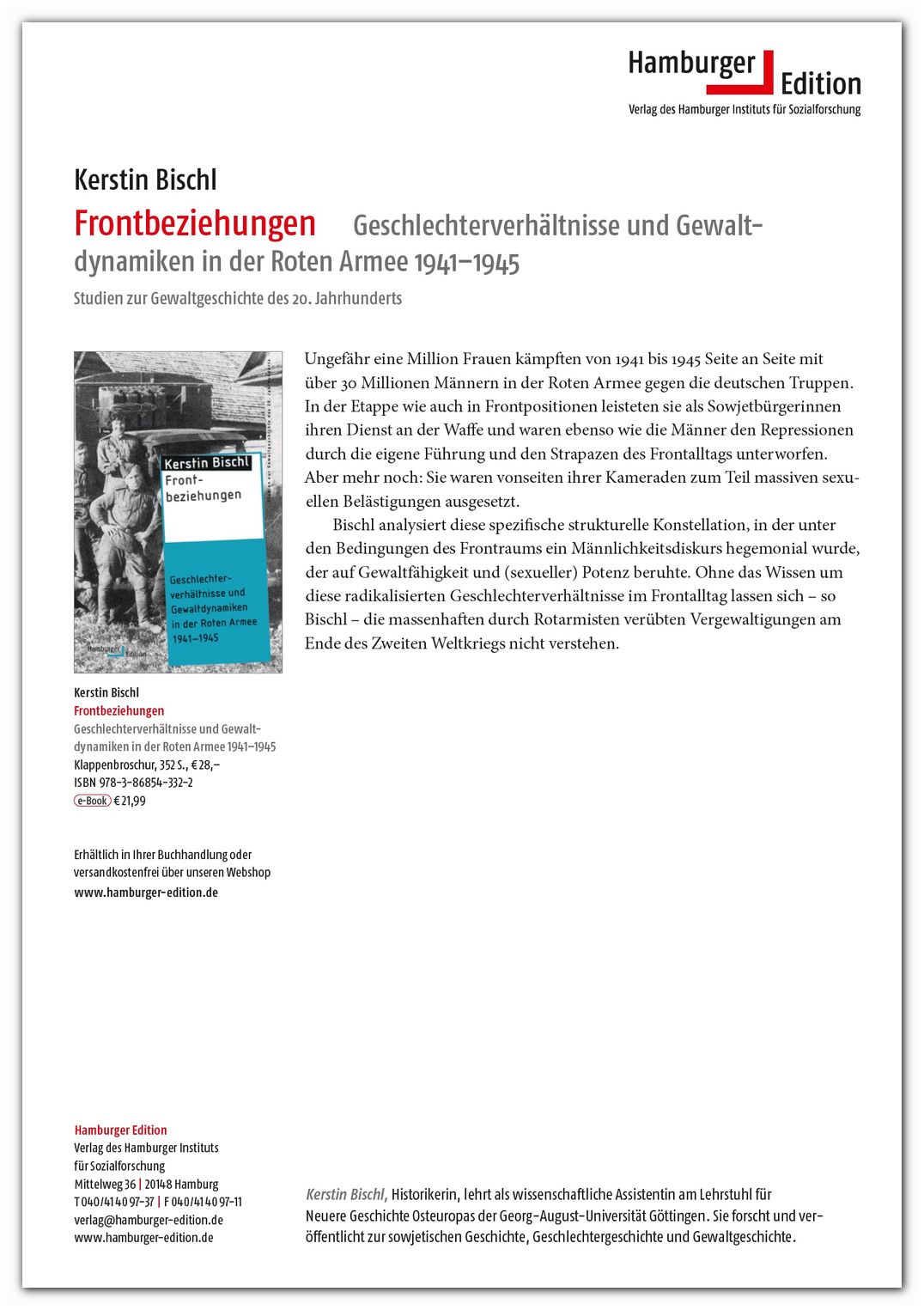
В 1941–1945 годах в Красной армии воевали около миллиона женщин и более тридцати миллионов мужчин. Женщины служили и в тылу, и на передовой. Как и мужчины, они сталкивались с репрессиями собственного командования и повседневными тяготами войны. Кроме того, они подвергались сексуальным домогательствам со стороны сослуживцев: от отдельных инцидентов до широко распространённого насилия.
Бишль исследует особенности организации фронтовой жизни, в которой господствующие представления о мужественности были тесно связаны с насилием и сексуальной силой. По мнению исследовательницы, массовые изнасилования, совершённые красноармейцами в конце Второй мировой войны, невозможно понять без анализа радикально изменившихся гендерных отношений в армейской повседневности.
Керстин Бишль, доктор философии (Dr. phil.) — историк, научный сотрудник кафедры новейшей истории и истории Восточной Европы Гёттингенского университета имени Георга Августа.
Она изучала новую и новейшую историю, философию и политологию в Берлинском университете имени Гумбольдта, Свободном университете Берлина и Воронежском государственном университете. После научных стажировок в Москве, Варшаве и Фрайбурге защитила докторскую диссертацию по истории Восточной Европы в Берлинском университете имени Гумбольдта.
Она преподавала немецкий язык как иностранный беженцам в различных берлинских учреждениях; в 2009–2011 годах руководила ежегодной Международной летней школой исторического факультета Воронежского государственного университета, а в 2007–2015 годах работала в учреждениях Берлина в сфере политического и молодёжного образования.
Её исследования и публикации посвящены советской истории, гендерной истории и истории насилия.
Среди публикаций — «Женщины-военнослужащие Красной армии во Второй мировой войне и после неё» в сборнике под редакцией Кэтрин Бейкер Gender in Twentieth-Century Eastern Europe and the Soviet Union (Лондон, 2017, с. 113–126) и «И тогда меня словно не стало: пережившие сексуальное насилие во время освобождения вспоминают» в сборнике под редакцией Алины Боте и Кристины Брюнинг Gender and Memory in the Digital Age: New Perspectives on Oral-History Archives (Берлин, 2014, с. 135–156). Сведения приведены по состоянию на ноябрь 2018 года.